REVIEW · LANZAROTE
Lanzarote’s First Surf School – 2-hour or 4-hour classes
Book on GetYourGuide →Operated by Surf School Lanzarote · Bookable on GetYourGuide
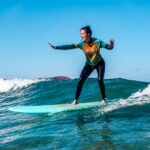
Ready for your first wave experience at Famara? Lanzarote’s First Surf School takes you straight to Famara Beach for hands-on coaching with a small class vibe. You can choose a 2- or 4-hour lesson and match it to your level, from first-timers to surfers polishing technique.
Two things I really like: you’re coached by instructors with 30+ years in teaching and safety, and the lesson setup keeps you from feeling lost in a big crowd. Even when conditions get a bit pushy, instructors stay focused on keeping you safe and moving forward—like the patient guidance from Mattia that’s specifically called out in real experiences.
One consideration: this experience isn’t suitable for non-swimmers or people with heart problems, so you’ll want to be honest about comfort in open water before you book.
In This Review
- Key highlights
- Why Famara Beach Is Such a Smart Spot for Your First Surf Lesson
- 2 Hours vs 4 Hours: Choosing the Right Length for Real Learning
- The Lesson Flow: From Ocean Safety to Your First Clean Pop-Up
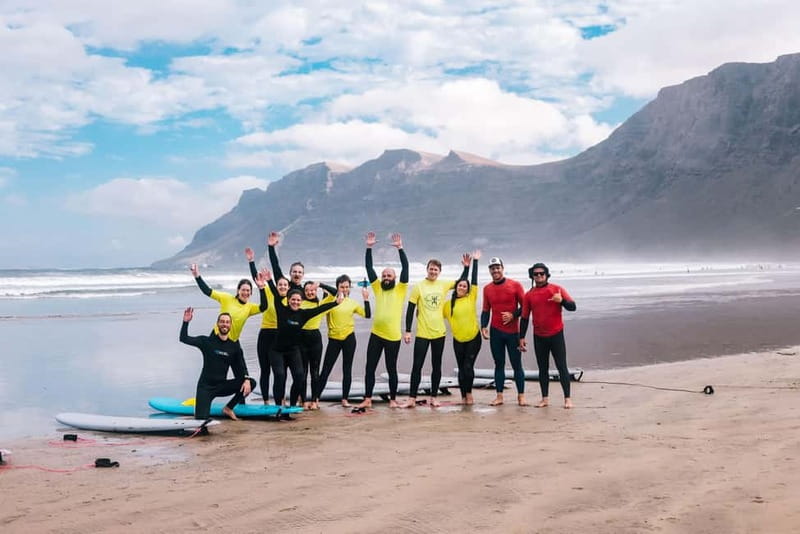
- Small Groups (Up to 8) That Actually Give You Attention
- Gear and Safety: Board, Wetsuit, and Certified ISA/RLSS Instruction
- Beginner Coaching: Paddling, Standing, and Ocean Confidence
- Intermediate Coaching: Technique, Wave Selection, and More Control
- Transport to Famara: Included Ride and a Day That Stays on Track
- What to Bring (and What to Skip) So You’re Not the One Holding Things Up
- Price and Value: Is $59 a Fair Deal Here?
- Should You Book This Surf School in Lanzarote?
- FAQ
- Where does the surf lesson take place?
- How long are the classes?
- What’s included in the price?
- How big are the groups?
- What languages are the instructors?
- Do I need to know how to swim?
- What should I bring?
- What is the cancellation policy?
- Is smoking or alcohol allowed during the lesson?
Key highlights
- Famara Beach training ground: famous Lanzarote surf stretch with plenty of learning space
- Small groups capped at 8: more individual attention when you’re practicing standing up
- Certified instruction: ISA instructor plus RLSS instructor on the team
- Included gear and transport: surfboard, wetsuit, and a ride from the surf school to the beach
- Beginner to intermediate options: first-wave fundamentals or technique and wave-selection help
- Multilingual teaching: English, Spanish, Italian, and French
Why Famara Beach Is Such a Smart Spot for Your First Surf Lesson
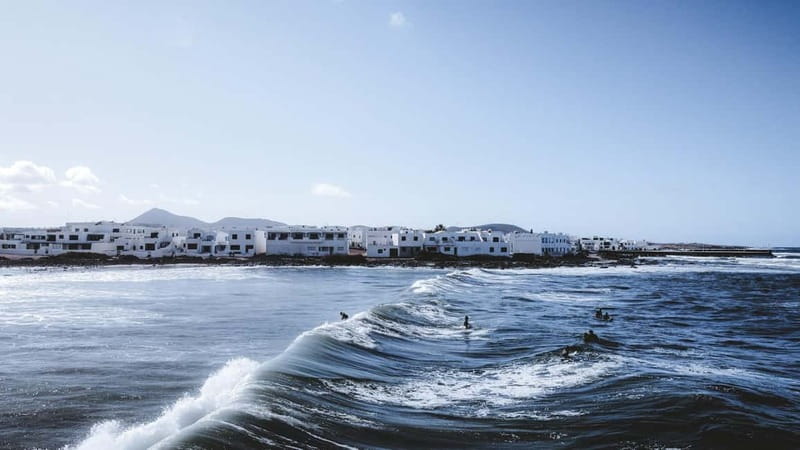
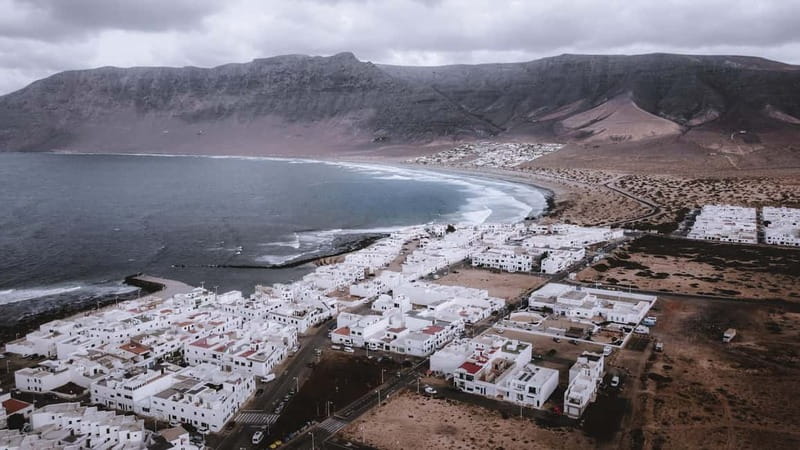
Famara Beach is the main reason this surf school feels like good value. It’s the kind of place where you can actually learn in real surf conditions, not just fake-board drills on calm water. You’re there to practice paddling, pop-up mechanics, and ocean awareness with the real deal underneath you.
What I like about the setting for beginners is that it supports repetition. You’ll get multiple tries, and that matters more than fancy promises. When you’re learning to stand up, your body needs repeats, not speeches.
Also, this school is based at the very first surf school in Lanzarote, which tends to mean they’ve worked out the flow: where to meet, how to explain safety, and how to get you into the water efficiently. One review noted the location was easy to reach by car, which matters if you don’t want your day to hinge on complicated transport.
A few more Lanzarote tours and experiences worth a look
2 Hours vs 4 Hours: Choosing the Right Length for Real Learning
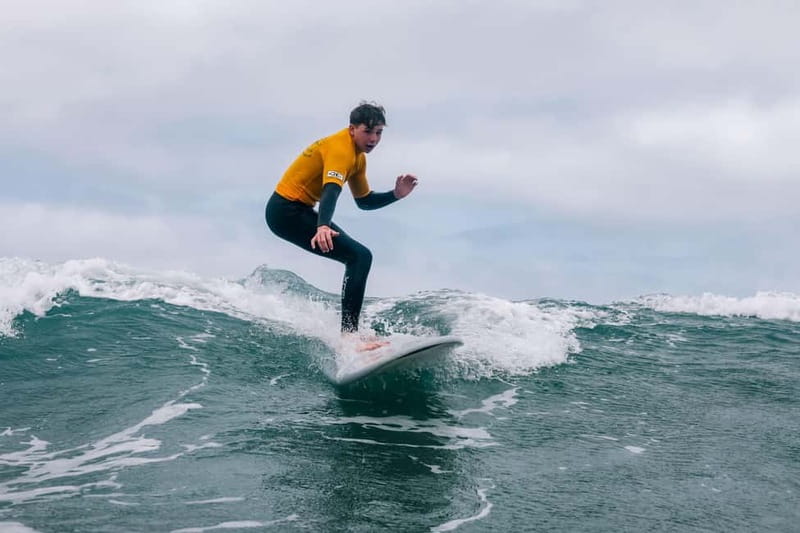
The class options are 2 to 4 hours, and that difference is more meaningful than it sounds. In a shorter session, your goal is usually comfort and control: gear on, ocean safety explained, a few solid attempts at paddling and standing. In a longer session, you’ll typically get more time to repeat the same skills until they start to click.
If you’re totally new, I’d lean toward the longer option if your schedule allows. More time in the water gives you room to get past the awkward stage and start learning what your board wants from you.
If you’re already surfing and just want refinement, the shorter option can work well too. Intermediate coaching often focuses on wave selection and technique tweaks, so you don’t always need as much time as a beginner does—especially if you already know how to get up.
There’s also a note worth planning around: if you’re joining the longer, full option, there’s a lunch break around 12, and you should bring your own snack or lunch.
The Lesson Flow: From Ocean Safety to Your First Clean Pop-Up
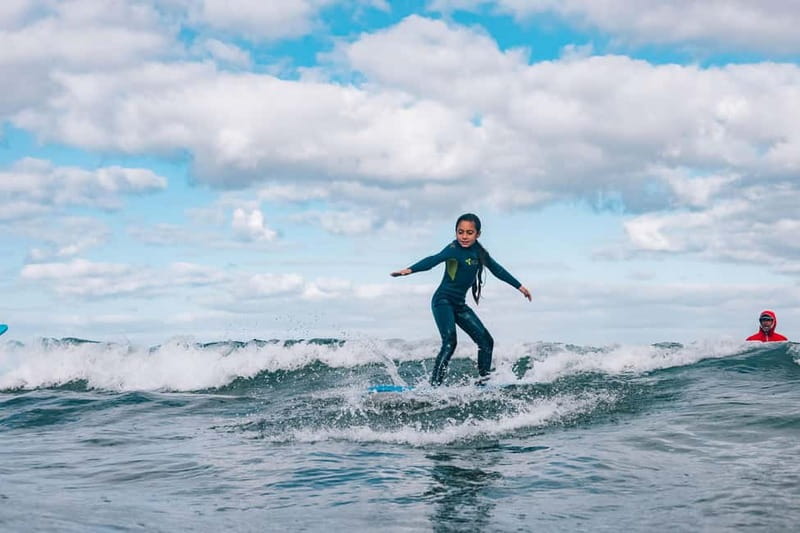
This is not a “stand on the beach and hope” style lesson. The teaching is built around a clear sequence that helps you move from land to water without confusion.
On land, expect explanations that cover ocean safety and how to use your body on the board. The focus is usually practical: how to paddle efficiently, what to watch for in the water, and the basics of the pop-up so you can go from lying on the board to standing.
Then the instruction shifts to the water in a guided way. In one described case, even with stronger currents, the instructor stayed with the group and guided them through the key safety and pop-up fundamentals rather than leaving people to figure it out alone.
If you’re anxious in the surf, that matters. One experience called out how patiently an instructor handled nervousness in the waves. That tells you the school isn’t just teaching technique—it’s also teaching you how to stay calm enough to learn.
Small Groups (Up to 8) That Actually Give You Attention
A class capped at 8 participants is one of the biggest practical wins here. In surfing lessons, the bottleneck is attention. You can’t fix your pop-up timing from across the beach.
In a small group, you get more frequent checks: whether you’re paddling straight, whether your stance is stable, and whether your pop-up is happening in the right sequence. It also helps instructors manage safety without feeling rushed.
That small-group structure shows up in real experiences too. One review specifically appreciated a very small group size because it meant guides could take time with each person. Another emphasized how the instructor never left them alone and kept close guidance throughout.
So even if conditions are lively, you’re less likely to feel like you’re just one more body in the lineup.
Gear and Safety: Board, Wetsuit, and Certified ISA/RLSS Instruction
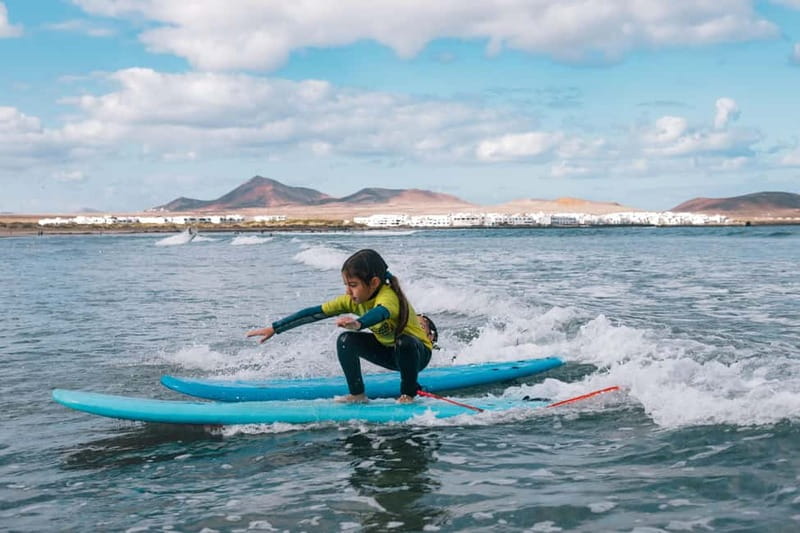
What’s included is a big part of the value. You get the surfboard and wetsuit, plus transport to the beach from the surf school. That’s not just convenience—it removes friction. If you’ve never rented gear in a place, you know how quickly it can turn into time loss and extra costs.
On top of that, the instruction team includes certified ISA and RLSS instructors. That matters because surfing safety is not optional. Real safety includes understanding what’s happening in the water and knowing how to keep everyone moving without creating chaotic risks.
You’ll also follow clear rules. Smoking is not allowed, and alcohol and drugs are also off the table. It’s a common “keep it safe and focused” approach, but it’s good to know up front since surf days can be tempting for party vibes.
A few more Lanzarote tours and experiences worth a look


Beginner Coaching: Paddling, Standing, and Ocean Confidence
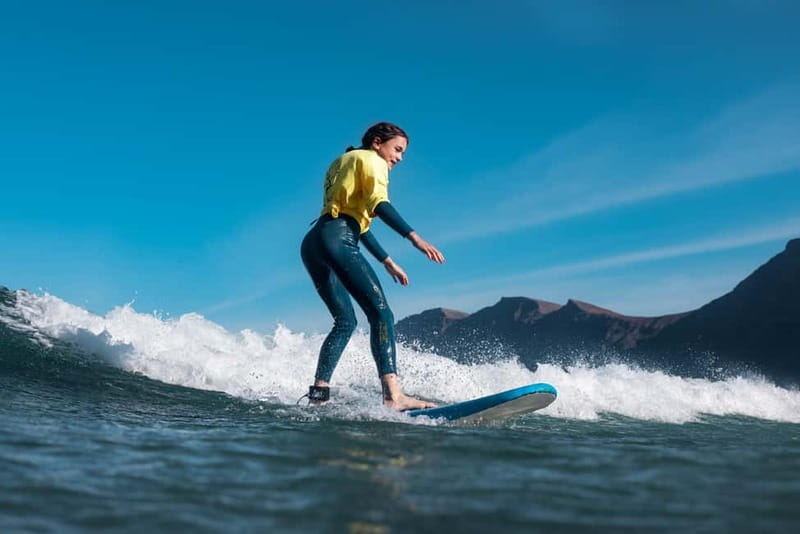
If this is your first time surfing, the lesson is designed around comfort and fundamentals. You’ll learn ocean safety, how to paddle, how to stand up on the board, and how to catch your first waves. That set of skills is the core stack: without it, you’ll just be struggling in the water.
What you should aim for in your head is not perfection. It’s progress. The first goal is getting your timing right enough to stand even if the wave is small. The second goal is building enough confidence to repeat that success.
One first-timer experience described feeling welcomed in a laid-back way. The person got to stand on the board a couple times, which is the kind of early win that helps you keep going.
Also, you might share the session with surfers who are there to refresh skills. That can be comforting for beginners, because it means you’re not stuck thinking only beginners are learning. It also means your instructor can tailor feedback depending on what you’re able to do that day.
Intermediate Coaching: Technique, Wave Selection, and More Control
If you already know how to surf, the lesson shifts toward improvement. The focus becomes refining your technique, improving wave selection, and learning more advanced maneuvers.
Wave selection is a big deal in real surf. You can be good at paddling and pop-up mechanics, but still get stuck catching the wrong waves—ones that close out before you can set your line. In an intermediate class, your coach can help you read the surf better and choose waves that match your skill level.
For technique, you’re typically looking at small changes: where your feet land, how your body sets before the board engages, and how you stay balanced as the wave speeds up. It’s the kind of coaching that can feel simple when explained clearly—and frustrating when it’s not.
If you want that kind of feedback without paying for a private coach, a small group still gives you more chances to get direct help than you’d get in a larger class.
Transport to Famara: Included Ride and a Day That Stays on Track
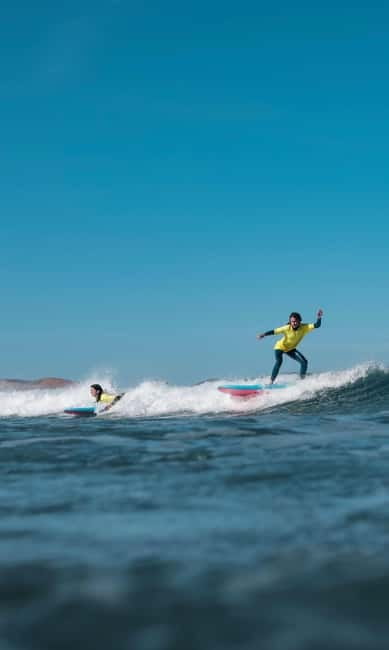
Transport from the surf school to the beach is included. That reduces stress, especially when the surf day is weather-dependent and you want to be in the right place at the right time.
Getting to Famara by car was mentioned as straightforward in at least one experience, which is useful if you’re planning your Lanzarote days with flexibility. Still, even if you’re driving, having the lesson transport built in means less organizing on your end.
Timing is handled with the lesson duration you choose. You can check starting times based on your booking window, but expect the day to be structured around getting you out to the water and working in sessions.
If you’re booking around other plans in Lanzarote, I’d treat this as a half-day anchor activity. Surf lessons can run close to their rhythm once you’re in the flow.
What to Bring (and What to Skip) So You’re Not the One Holding Things Up
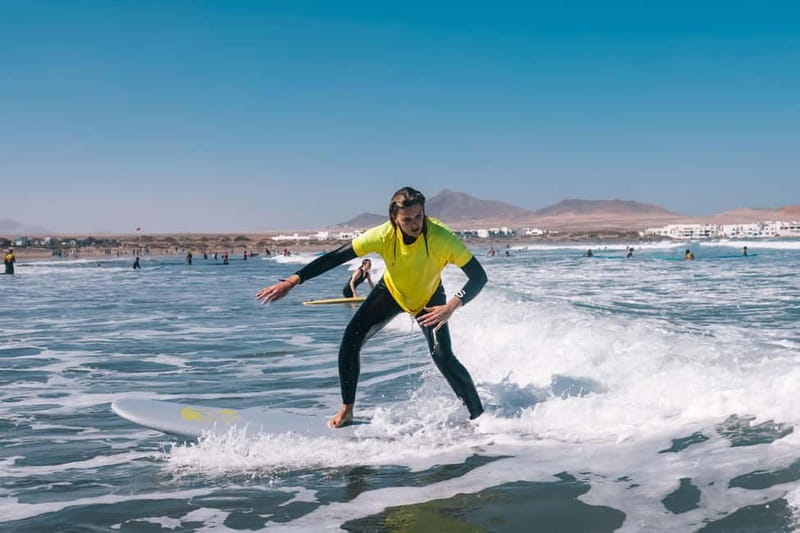
You don’t need much, but you do need the basics. Bring:
- Swimwear
- Towel
- Sunscreen
- Water
And if you’re booked into the longer option, bring your own snack or lunch for the break around 12.
Also, follow the simple rules: no smoking, and no alcohol or drugs. Surf schools typically enforce this for safety and focus, and it keeps the session fair for everyone.
If you’re worried about comfort in the water, remember you’ll be learning with your wetsuit on. That helps, but you still need to be prepared for the feeling of being in real ocean conditions.
One more reality check: this isn’t suitable for non-swimmers. The lesson includes learning ocean safety, but it doesn’t substitute for basic swim ability.
Price and Value: Is $59 a Fair Deal Here?
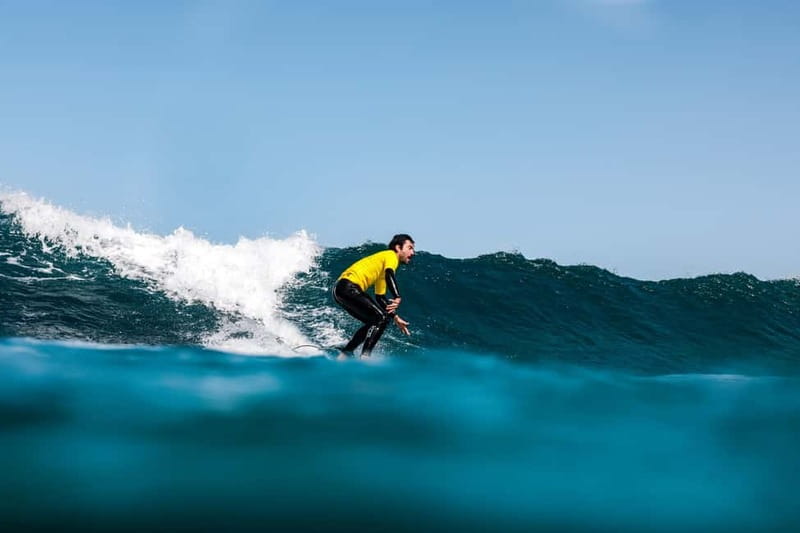
At about $59 per person, this looks like solid value—mainly because the lesson includes the big-ticket essentials.
You’re getting:
- Surfboard
- Wetsuit
- Certified instruction (ISA and RLSS)
- Transport from the surf school to the beach
- English, Spanish, Italian, or French instruction
- Small-group learning capped at 8
If you’ve ever done “surf” where you pay extra for gear, or where the instructor ratio feels thin, you know the hidden costs. Here, those basics are bundled. And small-group attention is a real quality factor in surfing lessons, not a marketing line.
The other part of value is time in the right environment. Famara Beach is the learning zone, and the coaching is structured around fundamentals and safety. You’re paying for a teaching system, not just board rental.
So if you want a beginner-to-intermediate lesson with gear included and coaching that stays close, the price makes sense.
Should You Book This Surf School in Lanzarote?
Book it if you want:
- A structured beginner or intermediate lesson at Famara Beach
- Small-group coaching with more direct feedback
- Included gear and transport so you don’t lose time scrambling
- Instructors who stay patient and safety-focused, even when conditions are more challenging
Consider a different option if:
- You’re not able to swim confidently (this one isn’t suitable for non-swimmers)
- You have heart problems and aren’t sure it’s appropriate for you
- You need a lesson that’s very long and self-guided (this is coached, and it’s designed around set durations)
If you’re arriving in Lanzarote and want an activity that feels both authentic and practical, this is a strong pick. You’ll leave with better ocean confidence, clearer surf fundamentals, and the kind of first-hand progress that makes your next session easier.
FAQ
Where does the surf lesson take place?
The lessons are held at Famara Beach in Lanzarote.
How long are the classes?
You can choose a 2-hour or 4-hour class. The exact starting times depend on availability.
What’s included in the price?
The experience includes a surfboard, wetsuit, certified ISA instructor support, certified RLSS instructor support, and transport to the beach from the surf school.
How big are the groups?
The group is limited to a maximum of 8 participants.
What languages are the instructors?
Instructors can teach in English, Spanish, Italian, and French.
Do I need to know how to swim?
Yes. The experience is not suitable for non-swimmers.
What should I bring?
Bring swimwear, a towel, sunscreen, and water. If you’re joining the longer/full option with a break around 12, bring your own snack or lunch.
What is the cancellation policy?
You can cancel up to 24 hours in advance for a full refund.
Is smoking or alcohol allowed during the lesson?
No. Smoking, alcohol, and drugs are not allowed.