REVIEW · MALAGA
Málaga: Roman Theatre and Alcazaba Guided Tour
Book on GetYourGuide →Operated by Málaga a Pie · Bookable on GetYourGuide
History climbs uphill in Málaga. This compact Roman Theater + Alcazaba tour makes you connect the dots between Roman rule and later fortifications, all while you get city views from the hill. I especially like how the guide turns worn stone into a clear story, and how the walk ends with dramatic outlooks over Málaga’s rooftops. One thing to consider: this is a walking tour with real steps and inclines, so plan accordingly.
I’ve always found the best tours are the ones that give you context fast, then let you enjoy the place. Here, you start at the glass pyramid and move through the Teatro Romano ruins into the Alcazaba citadel with enough time to absorb what you’re seeing. If you show up late, you may miss the visit, and the route is not ideal if you have mobility or back limitations.
In This Review
- 4-6 key things that make this tour worth your time
- Roman Theater + Alcazaba in 90 minutes: why this combo matters
- Start at Pirámide de Cristal: meeting point on Calle Alcazabilla
- Teatro Romano: Augustus-era Málaga in stone, not facts on a page
- Alcazaba walkthrough: Patio de Armas, Puerta del Arco de Cristo, and rampart climbs
- From siege to watchtower: Fortaleza de Gibralfaro and the big-picture defense story
- How the guides teach: humor, photos, and interactive moments
- Who should consider this carefully: steps, timing, and comfort
- Value at about $17: skip-the-line entry and what you really buy
- Should you book this Málaga a Pie Roman Theatre and Alcazaba tour?
- FAQ
- Where do I meet for the Roman Theatre and Alcazaba tour?
- How long is the tour?
- What’s included in the price?
- Are there languages available on this tour?
- What should I bring to the tour?
- Is the tour suitable for wheelchair users?
- Can I bring a pet?
- What happens if I arrive late to the meeting point?
- Is there free cancellation?
4-6 key things that make this tour worth your time
- Skip-the-line entry saves you from wasting your hour waiting around
- Roman Theater first, then Alcazaba, so the timeline makes sense in your head
- Puerta del Arco de Cristo and the citadel walk help you understand how defense and daily life overlapped
- Climbing the ramparts gives you panoramic views without a separate hike
- Professional local guides often use photos and interactive moments to make the site easier to picture
- A good 90-minute length keeps the day moving while still leaving you satisfied
Roman Theater + Alcazaba in 90 minutes: why this combo matters
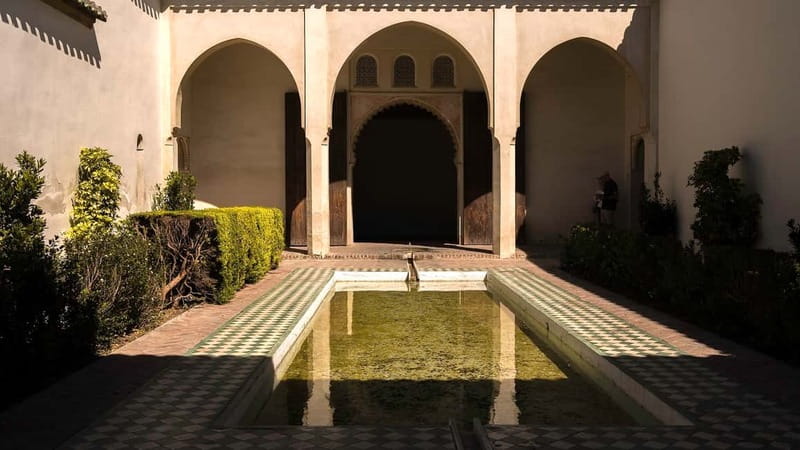
Málaga grew strong under empires, then learned how to defend itself. That’s the core idea behind this tour: you don’t just see two separate attractions, you see one connected story. The Roman Theater sits at the foot of the Alcazaba, so even your walking route sets up the relationship between entertainment, power, and protection.
At the Roman site, you’ll hear how Málaga fits into the Roman world around Augustus, often dated from 27 BC (his rise as first emperor) through AD 14. That helps the ruins feel less like random arches and more like part of a bigger system of rule and culture.
Then the Alcazaba changes the tone. You’re no longer focused on performances and civic life. You’re moving through a fortified citadel, climbing toward the ramparts, crossing key gates like the Puerta del Arco de Cristo, and reaching spaces like the Patio de Armas. It’s a neat shift from “how people gathered” to “how a city survived.”
The payoff is practical. When you leave, you can look at Málaga’s hill and fortifications and understand what you’re seeing. That’s the difference between visiting and actually getting it.
You can also read our reviews of more guided tours in Malaga


Start at Pirámide de Cristal: meeting point on Calle Alcazabilla
Your tour starts at Calle Alcazabilla, at the glass pyramid called Pirámide de Cristal. Look for the orange umbrella. It’s a good landmark when you’re also trying to navigate Málaga’s lanes and viewpoints.
This tour runs about 90 minutes, and it’s timed. There’s no sense in showing up late and hoping you’ll catch up, because the visit depends on arriving at the right starting moment. The site areas also don’t work like a museum where you can wander in at your leisure.
When you start at the pyramid, you’re also starting from the “heart” area where the Roman ruins and Alcazaba connect. That reduces backtracking and helps you keep energy for the hill and rampart sections.
Tip that will help you enjoy the tour: come wearing comfortable shoes and treat the day like it includes a climb. Even if you’re not a hiker, this is still a walk where footing matters.
Teatro Romano: Augustus-era Málaga in stone, not facts on a page
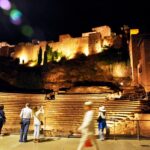
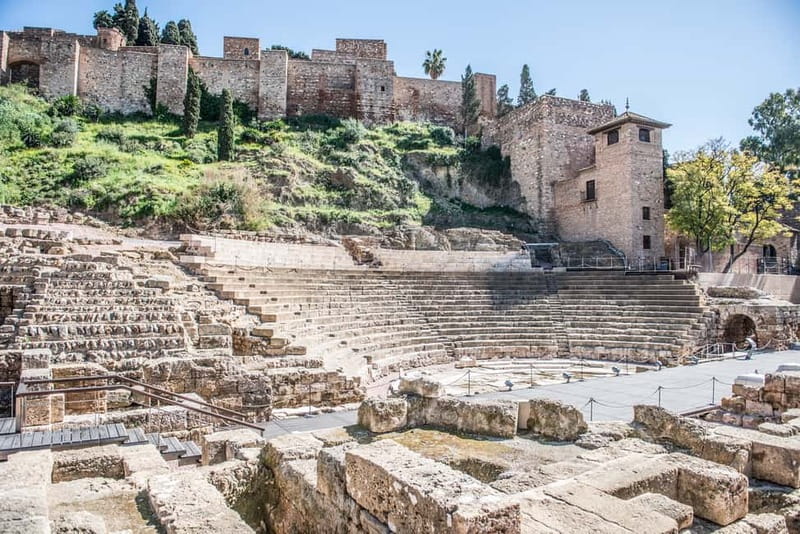
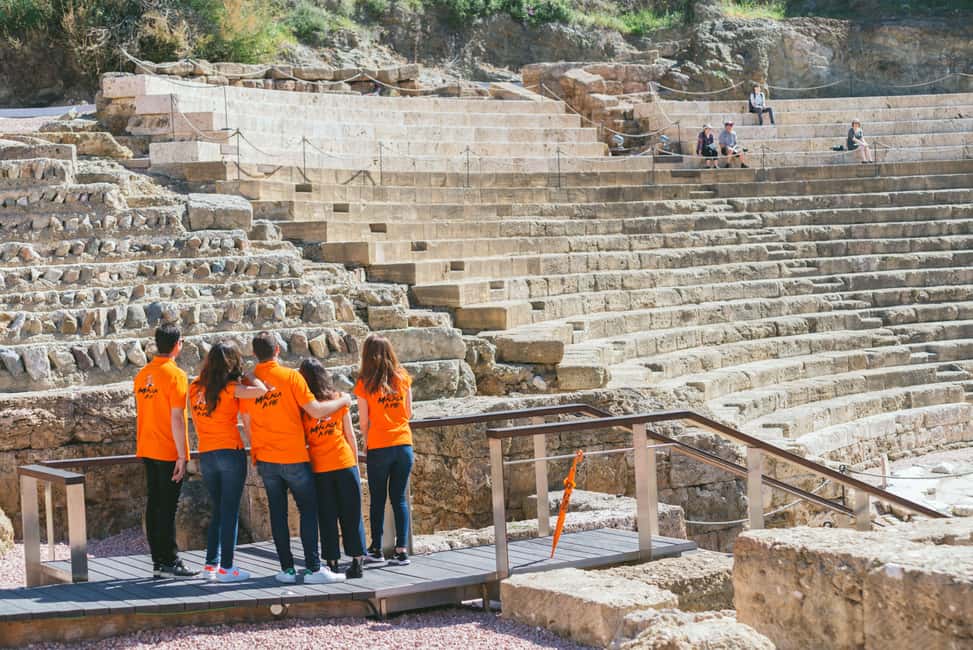
The Roman Theater stop is about 40 minutes. You’ll focus on the Roman Republic-to-Empire transition and the particular place Málaga played in that era. The Teatro Romano is described as the oldest monument in the city, and that matters because you’re standing in a structure that predates the later layers you’ll see in the Alcazaba.
What I like about starting here is the way your eyes adjust. A theater is a specific kind of architecture: it’s built for viewing, acoustics, and gathering. Even if you only catch pieces of it today, the shape tells you what it was made to do.
A good guide makes this come alive with story and visuals. Many guides use photo comparisons to show what parts looked like in the past, or to clarify how the building was used and how it evolved over time. You’ll also get a sense that the Roman world in Málaga wasn’t isolated. It was connected to broader imperial changes happening around Augustus.
And here’s the practical advantage: the Roman Theater is where you “get your bearings.” Once you understand that this hill area has layers of power, the Alcazaba walkthrough feels less like a second stop and more like the next chapter.
Alcazaba walkthrough: Patio de Armas, Puerta del Arco de Cristo, and rampart climbs
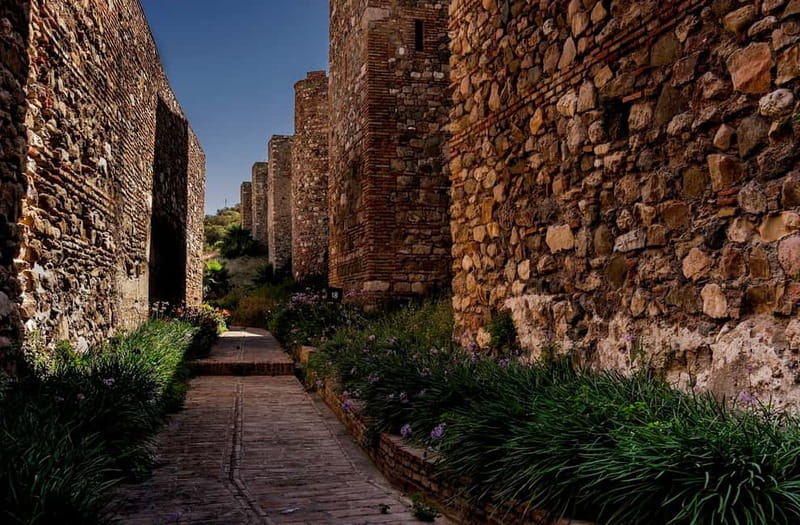
The Alcazaba stop is also 40 minutes, and it’s the part most people remember. The reason is simple: the Alcazaba is a strong example of military architecture, and the tour route guides you through the spaces that explain how the system worked.
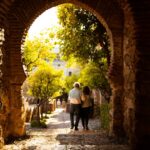
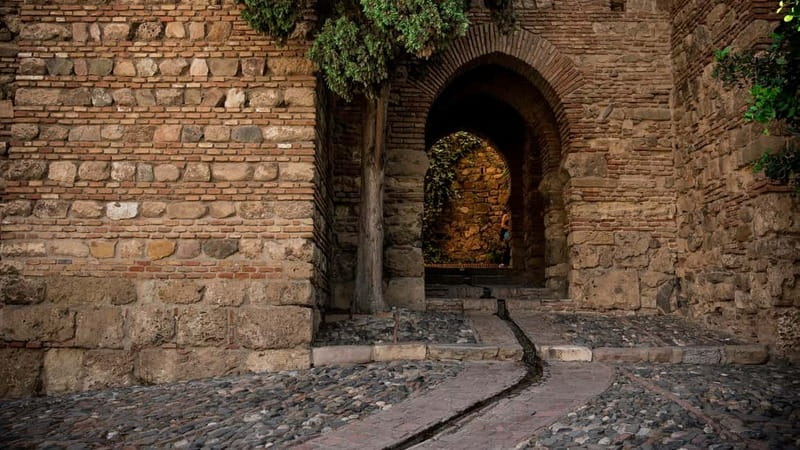
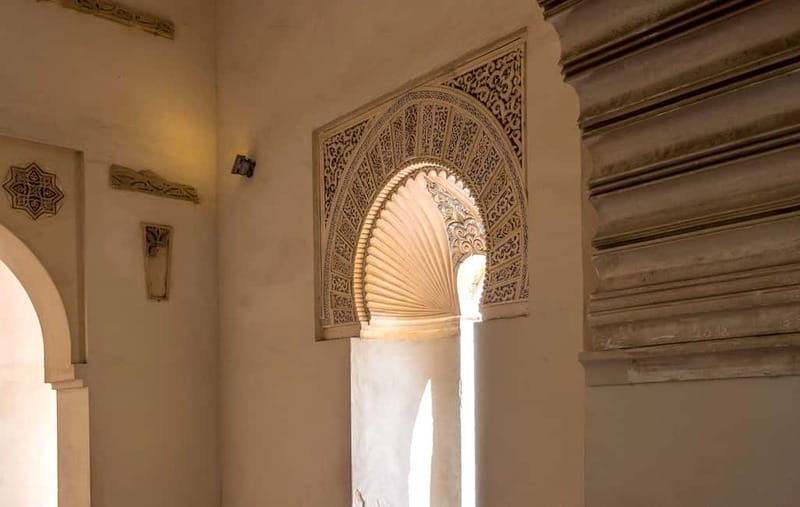
You’ll enter the historic citadel and move through key features such as the Puerta del Arco de Cristo and the Patio de Armas. The Puerta isn’t just a doorway. It’s part of an area that reflects later transformations, including a former chapel connected to the evolution of the site after Roman times.
Inside, you’ll hear how the Alcazaba’s role changed, including the 15th-century Siege of Málaga during the Reconquista and what happened beyond that. That’s important because it explains why the place is layered. Walls weren’t built once and then forgotten. They were adapted, defended, and reinterpreted as political reality changed.
Then come the ramparts. The tour includes climbing the walls and getting views from the hill. This is where the “guided” part pays off. You’re not just walking uphill; you’re walking uphill with points you understand: what you’re looking at, why it mattered, and how the fortifications worked to protect the city.
If you’re sensitive to stairs or uneven ground, you should take that seriously. The experience can still be manageable for some people with limited mobility, but it’s not designed as a flat stroll.
From siege to watchtower: Fortaleza de Gibralfaro and the big-picture defense story
The tour also connects the Alcazaba to what’s next on the hill: Fortaleza de Gibralfaro, built in the 14th century. The big idea is protection. Gibralfaro was created to house troops and defend the Alcazaba from attack, so when you look out from the top, you’re seeing a defensive “system,” not just separate monuments.
This is one of the most satisfying parts of the experience because the views aren’t random. You’re looking out while the guide explains why the fort was positioned where it was and how it related to the walls around the Alcazaba.
And the story of the Siege of Málaga adds weight to what you’re seeing. When your guide ties together timelines—from Roman use of public spaces to later fortifications—you start noticing the city’s geography like it’s a map. The hill isn’t just pretty. It’s tactical.
If you like history but want it to stay grounded, this is a good balance. You’re not trapped in long speeches. You’re in the open air, walking between places, and the guide gives you context that helps your eyes interpret the terrain.




How the guides teach: humor, photos, and interactive moments
This tour lives or dies by the guide, and the strength here is clearly the storytelling style. People come away talking about guides who are funny, engaging, and willing to make history understandable.
You may encounter guides like Dani, Maria, Belen, Fabiola, Natalia, Kevin, or Keko (names shared by past guests). While each guide has their own personality, the common thread is that they explain the site in a way you can picture. Some use photos to show how the area looked before. Others ask quick questions using visible site details, which keeps you alert instead of letting the time blur together.
Another recurring theme is pacing. The Alcazaba portion includes walking and inclines, but the tour tends to move at a steady tempo where you’re not rushed through the important parts. Several guests also highlighted that the route within the Alcazár can feel gradual rather than overly punishing, though you should still expect stairs and climbs.
What you’ll likely appreciate most is the guide’s local context. They connect Málaga’s Roman era, its later fortifications, and the Reconquista period into one coherent storyline. That’s how you avoid the classic “I saw cool ruins” ending.
Who should consider this carefully: steps, timing, and comfort
This tour is not suitable for people with back problems, mobility impairments, or wheelchair users. Even if you’re generally okay walking around town, this is still a hill-and-citadel route with steps.
Even with that caution, it’s fair to say the tour structure helps people who can handle moderate walking. The Alcazaba is compact enough that you’re not wandering for hours, and the Roman Theater stop gives you a different kind of pacing—less steep than the ramparts.
Timing matters too. If you arrive late at the meeting point, you won’t be able to enjoy the visit and you won’t get a refund. That’s the simplest advice I can give: arrive early enough to settle in at Pirámide de Cristal and find the orange umbrella without stress.
What to bring is also straightforward: comfortable shoes. If you’re visiting in warm weather, wear breathable gear and keep water handy for after the tour.
Also note: pets are not allowed.
Value at about $17: skip-the-line entry and what you really buy
At $17 per person for a 90-minute guided walk, this is one of those deals that makes sense if you care about understanding what you see. You’re paying for three things: a local guide, guided pacing through the key points, and entrance included for both the Roman Theater and the Alcazaba.
The skip-the-line benefit matters more than it sounds. These sites can mean waiting while you’re already on a sightseeing schedule. With separate entry, you get into the story faster, and that time savings can be worth a lot when you’re trying to fit multiple stops into one day.
The guide also adds value you can’t easily replicate on your own. You could read signs, sure, but a good guide gives you the timeline: Augustus-era Roman presence, later adaptations, the Siege of Málaga, and the logic behind defensive architecture. The result is that you don’t just collect facts—you build a mental map of how Málaga became Málaga.
If you’re the type who likes history but hates long museum lectures, this format works well: you’re outside, walking between the most important areas, with explanations timed to what’s directly in front of you.
Should you book this Málaga a Pie Roman Theatre and Alcazaba tour?
Book it if you want the fastest path to understanding Málaga’s layered past without spending your time piecing it together. It’s a smart choice for a first visit, especially if you want both the Roman Theater and the Alcazaba in one efficient morning or afternoon block.
Skip it (or choose a different plan) if your mobility is limited or if steps and inclines will be an issue. Also, don’t treat the start time casually. Arrive at Pirámide de Cristal early enough to find the orange umbrella and get settled, or you risk missing the experience.
If you want great value, go for it. For around $17, you get skip-the-line access, both sites, and a guide who can make the story click while you’re standing right where it happened.
FAQ
Where do I meet for the Roman Theatre and Alcazaba tour?
Meet at Calle Alcazabilla, at the Pirámide de Cristal (the glass pyramid). Look for the orange umbrella.
How long is the tour?
The tour lasts about 90 minutes, with roughly 40 minutes at the Roman Theater and 40 minutes at the Alcazaba.
What’s included in the price?
The tour includes a guided walking tour plus entrance tickets to both the Alcazaba and the Roman Theater. There’s also skip-the-line entry using a separate entrance.
Are there languages available on this tour?
Yes. The live guide offers Spanish and English.
What should I bring to the tour?
Bring comfortable shoes. Since you’ll be walking and climbing, comfortable footwear matters.
Is the tour suitable for wheelchair users?
No. The tour is not suitable for wheelchair users and also not recommended for people with mobility impairments or back problems.
Can I bring a pet?
No. Pets are not allowed.
What happens if I arrive late to the meeting point?
If you arrive late, you won’t be able to enjoy the visit, and you won’t receive a refund.
Is there free cancellation?
Yes. There is free cancellation up to 24 hours in advance for a full refund.