REVIEW · GRAN CANARIA
Puerto Rico de Gran Canaria : Parasailing
Book on GetYourGuide →Operated by Gran Canaria Water Sport S.L. · Bookable on GetYourGuide
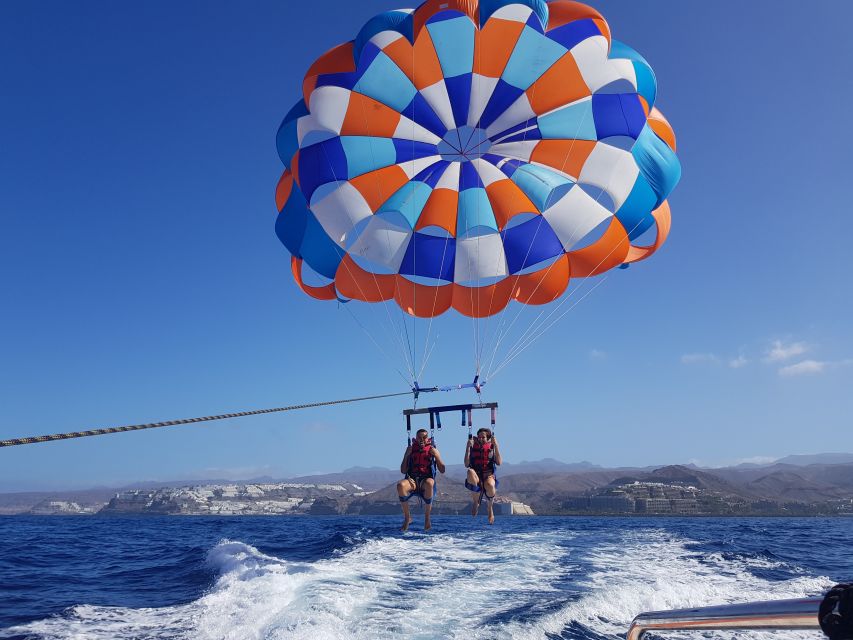
Up in minutes, above the sea. This parasailing flight in Puerto Rico de Gran Canaria sends you up to 300 meters over the water on lines you can choose from 150 to 300 meters, with bright, calm views that feel bigger than the short time in the air.
I like the way the experience is built for confidence. You’re outfitted with a life jacket and harness system, plus insurance, and the crew tends to run things clearly and supportively for first-timers. On many departures, the boat atmosphere is fun too, with lively music and a captain who keeps the mood light.
One trade-off to know up front: the main flight is 10–12 minutes, so if you’re chasing a long, slow glide, it may feel like it ends fast.
In This Review
- Key things that make this parasailing stand out
- Where you meet and how the day starts at Puerto Rico de Gran Canaria
- Choosing 150 vs. 300 meters: how height changes your experience
- The boat ride setup: transfer, instructions, and that pre-flight vibe
- Launching over clear water: what the first seconds feel like
- Your 10–12 minutes in the air: views, calm, and the short-time reality
- Landing back on the boat, plus that playful splash return
- Photos and video: the extra 25€ that can be worth it
- Price and value: is $47 for 10–12 minutes reasonable?
- Who this suits best (and who should skip it)
- Weather, sea conditions, and why your start time can shift
- Should you book Puerto Rico de Gran Canaria parasailing?
- FAQ
- How long is the parasailing experience?
- What height can I choose?
- What is included in the price?
- Is hotel pick-up included?
- What should I wear or bring?
- Is this activity suitable for pregnant women?
Key things that make this parasailing stand out
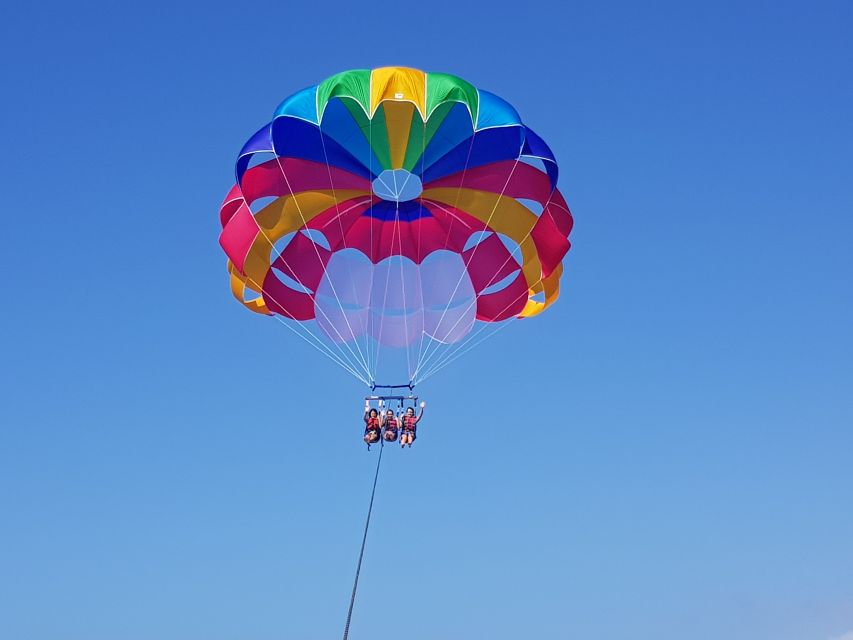
- Up to 300-meter height with line options (150 or 300 meters), so you can match your comfort level.
- Small group size (up to 3 people) for a more personal, less chaotic experience.
- Safety gear included: life jacket, harness system, parachute, and insurance.
- More time flying feel than you might expect, thanks to how the ride is paced.
- Crew personality matters: many trips are described as friendly, reassuring, and fun on the boat.
- A splashy, playful return can be part of the ride back to the pier.
Where you meet and how the day starts at Puerto Rico de Gran Canaria
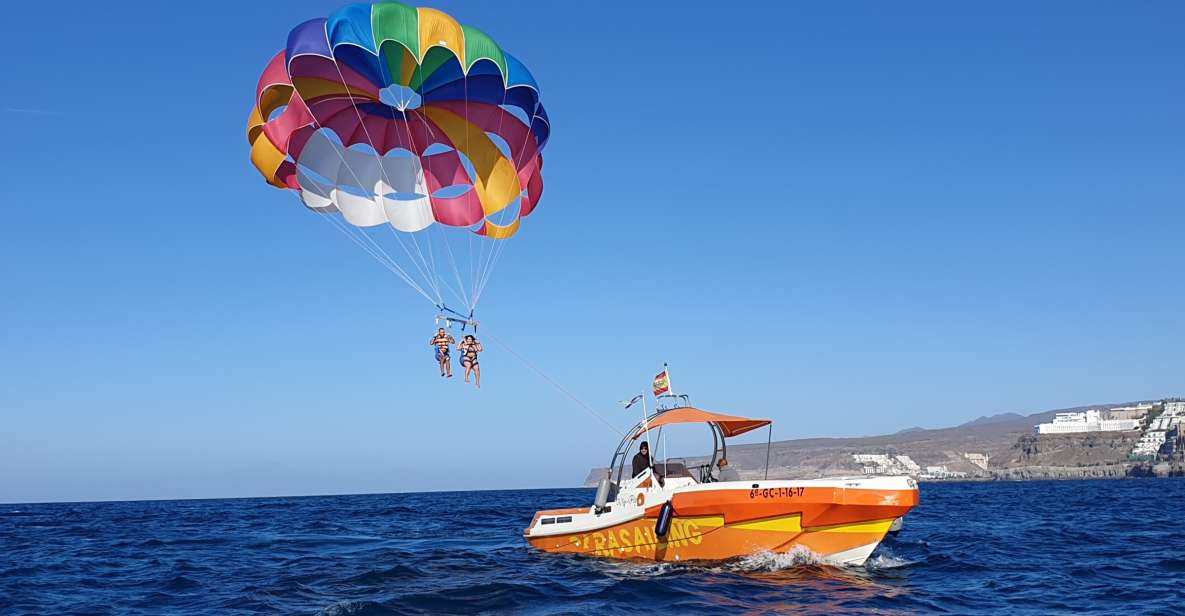
This parasailing activity starts right at the water in Puerto Rico de Gran Canaria, so you’re not juggling a long scenic transfer before you even get to the good part. You’ll enter the pier on the right side, find a restaurant called Grill Costa Mar, and then walk to the office just ahead at the corner of the commercial dock. Look for the big yellow flag.
Plan to arrive with your voucher (printed or mobile) about 15 minutes before the scheduled start. That buffer matters because they want you ready to get into gear quickly once your slot is called. Also, the activity can shift with sea and weather conditions, so arriving early helps you avoid stress.
What to bring is simple: comfortable clothes and beachwear. Leave the heavy stuff at the pier-side edge of your day. There are clear rules: no luggage or large bags, and you’ll want to skip sports shoes and boots. The goal is a smooth harness-and-launch flow.
One more useful detail: this isn’t a big crowd event. The format is designed for a small group experience (limited to 3 participants). That’s a big deal for first-time flyers, because it makes the crew’s instructions easier to follow and the check-ins less rushed.
You can also read our reviews of more tours and experiences in Gran Canaria.


Choosing 150 vs. 300 meters: how height changes your experience
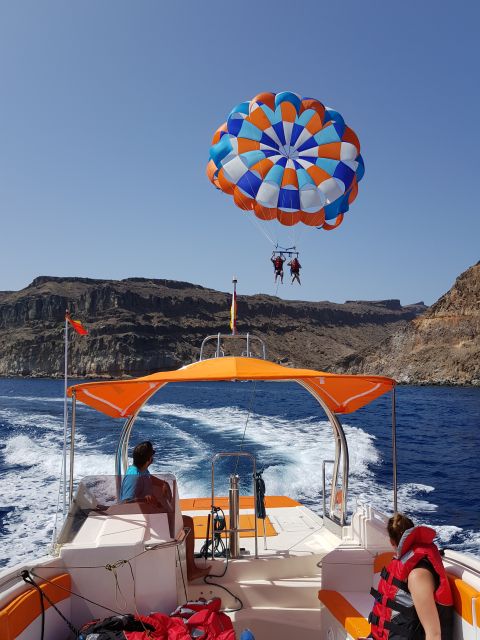
You’ll be able to choose the line height, typically between 150 and 300 meters. That choice affects how you feel and what you notice.
At 150 meters, you still get that wow factor—wide views of coastline and open water—but it can feel a bit more “manageable” if you’re nervous about heights. Some people like starting at this level because it helps them get used to the sensation before committing to the higher option.
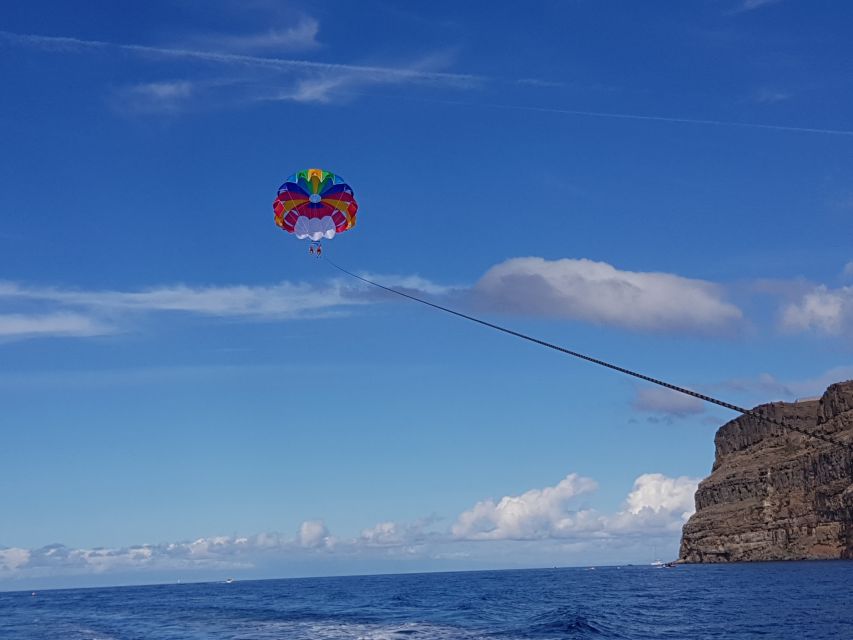
At 300 meters, the perspective flips. You’re looking out farther, and the water looks calmer and more patterned from above. It also tends to feel more dramatic simply because you’re higher and the horizon has more room to breathe. The best part is that you’re not just looking at the sea—you’re seeing the coastline and the shape of the bay in a way you can’t get from the beach.
Either way, you’re towed by a boat through the air, so it’s not a stationary hang. You’ll be moving enough to keep things interesting, but not so chaotic that you can’t enjoy the view.
Practical tip: if you’re unsure, pick the height that matches your nerves, not your bravado. There’s no prize for picking the tallest line if you spend the whole time tense.
The boat ride setup: transfer, instructions, and that pre-flight vibe
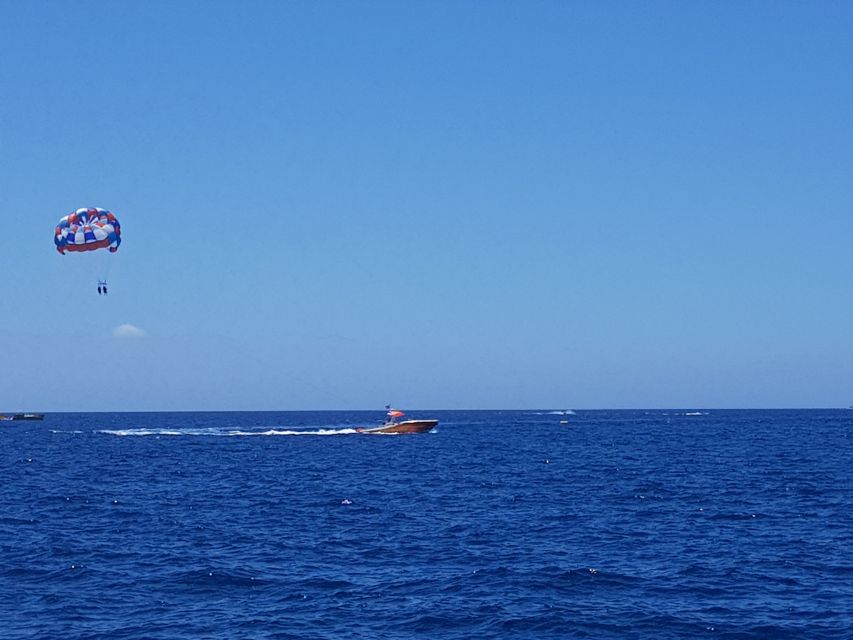
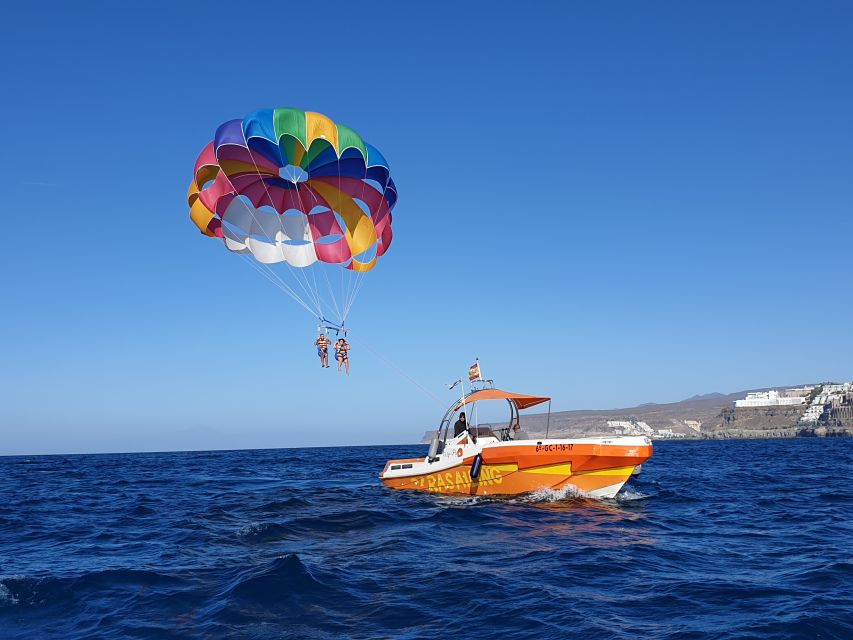
Once you’re checked in, the activity runs like a coordinated operation rather than a free-for-all. You’ll be outfitted with the gear (life jacket, harness system, parachute) and then you’ll head out by boat. Some departures also involve a speed boat ride and then a transfer to another boat, so don’t be surprised if you switch vessels along the way.
This is one of those activities where crew personality matters a lot. In the feedback you’ll see a consistent theme: guides keep things reassuring and light, especially for people trying parasailing for the first time. Some trips are described as having the team go first with other guests, letting you watch and ask questions before your turn. That approach is smart: seeing the process reduces that mental leap from pier to harness.
You may also notice the boat can feel more like a fun outing than a stiff, formal operation. Music on board is mentioned more than once, and the captain style can be upbeat, with names like Messi, Carlos, and Edu popping up in accounts of the experience.
Before launch, listen carefully and ask questions if you want clarity on what happens during the climb and when you return to the boat. One common improvement point from flyers is more guidance on the process of going up and landing. If you’re the type who relaxes with clear steps, it’s worth asking.
Practical tip: keep your hands and stance where the crew tells you. You’re in a harness system; your job is to stay still, breathe, and enjoy the ride.
Launching over clear water: what the first seconds feel like
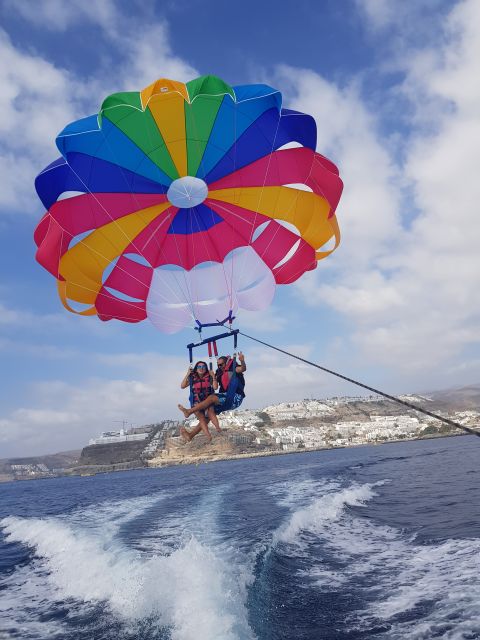
The moment you launch is the whole point. You go from normal sea-level motion to steady air time, with the boat towing you along while the parachute carries you up.
If you’re anxious about heights, this is where the crew’s coaching pays off. The harness system and life jacket are there for safety, but the bigger relief is how they guide you through the moment so you don’t feel thrown into it. Many people describe the ride as surprisingly relaxing once you’re up—quiet enough that your brain stops racing and starts noticing the view.
From up high, you’ll feel the sea’s scale. It’s not just “over water.” It’s a wide, open perspective where you can pick out the coastline and see how the bay sits in Puerto Rico de Gran Canaria. The clear blue water is one of the reasons this area works so well for parasailing: from above, it looks crisp and bright, not murky.
What helps most: treat the flight like a moving observation deck. Focus on small things: the horizon line, the direction you’re traveling, and the way the coastline changes as you gain altitude. That simple attention shift makes the experience smoother.
Your 10–12 minutes in the air: views, calm, and the short-time reality
The total flight experience is 10–12 minutes, and it’s worth planning your expectations around that. You don’t get an all-afternoon glide. You get a concentrated aerial hit: up, view, and then back to sea level again.
But that short window is also part of why many people say it feels better than the timing suggests. When the scenery is good and the crew keeps things comfortable, time can feel faster in a good way. If you choose 300 meters, the view can feel extra “expanded,” which adds to the sense that you’re getting more than just seconds.
What you’ll likely enjoy most:
- the shift from boat ride motion to calmer air time
- the wide view across the water and coastline
- the novelty factor of being suspended with nothing but the harness between you and the sea
If you’re the type who wants to savor every second, mentally plan to capture the first few minutes with your phone, then put it away and just look. The view is the memory you’ll keep.



Landing back on the boat, plus that playful splash return
Landing is the final transition, and it’s usually where nerves can pop back up—so it’s smart to stay focused until the moment you’re secured again.
After the flight, you return onto the boat. Some people specifically asked for more in-brief instruction on how landing works, which tells me you should pay attention even if you feel confident in the air. If you want extra clarity, ask before you go up: Where will you look? What should your body do? How will they guide you back?
Then there’s the ride back to the pier, which can add a fun finish. One detail that stands out in the feedback is that on the way back, the crew may do playful turns and create water splashes. That part is obviously optional in your comfort level—if you don’t like getting wet, keep your expectations realistic—but for many people it turns the return into a little celebratory moment.
Photos and video: the extra 25€ that can be worth it
Your experience includes all the core gear and the boat, but photos and video are not included. That said, there are optional photo/video packages available, and 25€ shows up repeatedly as the price for getting footage or images captured by the team.
If you’re doing this for a birthday, a milestone, or just because you know you’ll want proof later, this add-on can be a smart use of money. The aerial view is hard to fully capture with a phone, especially once you’re focused on staying comfortable in the harness.
If you’re budget-minded, you can skip it and just enjoy the live view. But if you want a clean set of shots that actually show the height and coastline, the package is there for a reason.
Price and value: is $47 for 10–12 minutes reasonable?
At $47 per person, this parasailing experience isn’t just “renting a thrill.” It’s paying for:
- the boat time to tow you
- the parachute and harness system
- a life jacket setup
- insurance coverage
You also avoid extra hassle because you’re not buying your own safety gear or coordinating a DIY setup. For a short activity, that equipment-and-crew value matters.
What’s not included is also clear: there’s no hotel pick-up, and there’s no food or drinks. That means the true cost for you may include a snack stop before or after, plus whatever you spend getting yourself to the pier.
If you’re staying nearby and you want a high-impact, memorable moment, $47 can feel like a fair trade. If you’re expecting a long, cinematic aerial journey, you might feel the time limit. Either way, it’s a very “pay for the moment” type of experience.
Who this suits best (and who should skip it)
This is a great match for people who want:
- a clear, high-view experience over the water
- a short, exciting activity that doesn’t require hours on the day’s schedule
- a small-group environment where instructions feel more personal
If you’re nervous about heights, you may still enjoy it because the crew tends to focus on reassurance and safety steps. The harness setup and life jacket are built in, and the boat-team energy is often described as friendly and calming.
However, there’s one definite “no.” It’s not suitable for pregnant women. Also, if you have any concern about following safety instructions while seated in a harness, be honest with yourself before booking.
Weather, sea conditions, and why your start time can shift
Parasailing depends on wind and sea state. You should expect that schedules can change with prior notice due to weather and sea conditions, and the activity can be canceled if conditions are too rough.
This isn’t a “fault” of the operator. It’s simply how water sports work. So keep your day flexible if you can, and avoid planning another tight activity right at the same time window.
Should you book Puerto Rico de Gran Canaria parasailing?
If you want one standout experience in Puerto Rico de Gran Canaria that’s easy to join, safety-forward, and built around real aerial views, I’d say booking is a strong move. The combination of up to 300 meters, small-group attention, and gear-plus-insurance value makes this a tidy, memorable activity for the money.
Skip it only if:
- you hate the idea of a short flight (10–12 minutes)
- you’re not comfortable following instructions while harnessed
- you’re in a group where pregnancy is a factor (it’s not suitable)
If that sounds like you, book it, choose the line height that matches your comfort, and give yourself permission to enjoy the calm once you’re up. The view is the product here, and in this spot, it’s a good one.
FAQ
How long is the parasailing experience?
The activity runs about 10 to 12 minutes.
What height can I choose?
You can choose between 150 and 300-meter lines.
What is included in the price?
Included are a life jacket, insurance, harness system, parachute, and the boat.
Is hotel pick-up included?
No, hotel pick-up is not included.
What should I wear or bring?
Wear comfortable clothes and bring beachwear. You should arrive with your voucher (printed or mobile). Avoid luggage or large bags, alcohol and drugs, sports shoes, and boots.
Is this activity suitable for pregnant women?
No, it is not suitable for pregnant women.