REVIEW · CARTAGENA
Roman exploration in Cartagena (Spain)
Book on Viator →Operated by Mediterranean Unique Experience · Bookable on Viator
Roman ruins in Cartagena don’t look like ruins for long. This walking tour strings together major Roman Theater and forum-area stops with an easygoing old-city vibe, then finishes with a tapa and drink. I like that entrances are part of the plan, and I like that the guide connects the sites into a story. One watch-out: a few pace and language details can vary depending on your guide and group size, so go in with flexible expectations.
The route starts near the Port area and stays centered on historic sights you can actually reach on foot. Expect a mix of archaeology and city context, plus a bar stop on Calle Mayor where the Roman world turns into something you can taste.
Roman Cartagena in 2.5 Hours: Key Stops You’ll Get
- Roman Theatre Museum + Forum District: the big staged space of Roman public life, plus the surrounding forum finds
- Museo Foro Romano Molinete: outdoor views of baths and the city forum excavation area in the historic center
- Calle Mayor bar stop: a tapa paired with your choice of wine, beer, or a soft drink
- A guide who ties sites to the city: you’re not just looking at stones, you’re hearing how the place worked
- Small-group feel (max 30): generally manageable walking, with some steep steps at the theatre area
In This Review
- First Look: Roman Cartagena Without the Museum Overload
- What $65.17 Buys You (Museums Plus Tapa and Drink)
- Museum of the Roman Theatre and Forum District: The Big Roman Set
- Museo Foro Romano Molinete: Baths and Forum in the Historic Center
- Calle Mayor Tapa Stop: Food as a Cultural Reset
- Pace, Group Size, and English: Plan for How Tours Actually Work
- Meeting Point by the Port: How to Start Smoothly
- Who Should Book This Roman Ruins Walk—and Who Might Skip It
- Should You Book This Roman Ruins Walk?
- FAQ
- How long is the Roman exploration walking tour in Cartagena?
- Where does the tour start and where does it end?
- What time does the tour start?
- Is the tour in English?
- What’s included in the price?
- How many people are in the group?
- Can cruise ship passengers participate?
- Is there public transportation nearby?
- Is the tour suitable for people with mobility concerns?
- Are earphones or audio headsets provided?
First Look: Roman Cartagena Without the Museum Overload
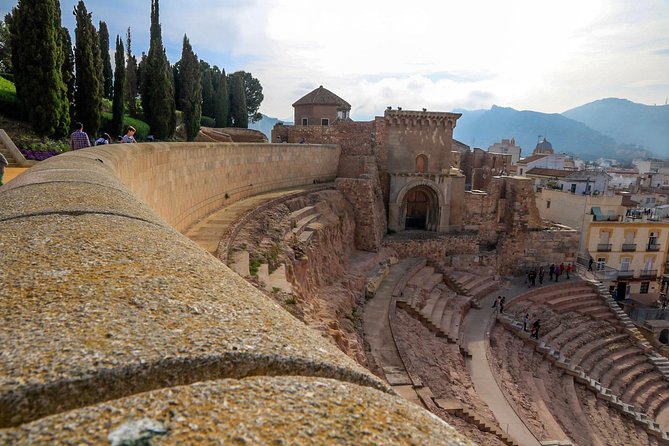
Cartagena is one of those Spanish port cities where layers of time keep bumping into each other. On this tour, you spend roughly 2 hours 30 minutes connecting the dots between the Roman Theatre area and the forum/baths zone—then you finish in the older streets where the city’s everyday life is still happening.
I like the way the tour is built for real attention spans. You’re not hopping between far-flung neighborhoods. Instead, you’re working through a compact historic center that makes it easier to remember what you just saw. And because the plan includes ticketed access at key points, you’re not stuck with only outside views.
Your best bet is to show up ready to walk, listen, and look closely. You’ll likely cover some ramps (good for many visitors), but do note that the Roman Theatre area may involve steep steps depending on where you enter or pause.
What $65.17 Buys You (Museums Plus Tapa and Drink)
At $65.17 per person for about 2.5 hours, value hinges on one thing: you’re paying for more than a guided stroll. Ticketed admission is built into the Roman Theatre museum stop and the Museo Foro Romano Molinete stop, and the tour wraps with a tapa plus a drink.
That food stop isn’t just a random break. It’s scheduled on Calle Mayor, a street people use because it’s central and lively—so you get a local reset right in the middle of the historic core. You can choose wine, beer, or a soft drink, which matters if you’re traveling with different drink preferences.
One more pricing thought: this tour tends to work best when you care about context, not just photos. If you’re the type who wants to know why the Romans were building where they built, the guide component becomes the real value. If you mainly want to glance at ruins quickly, you might feel the time is a bit long—especially if your particular group pace runs slow or your guide pace runs fast.
You can also read our reviews of more tours and experiences in Cartagena.

Museum of the Roman Theatre and Forum District: The Big Roman Set
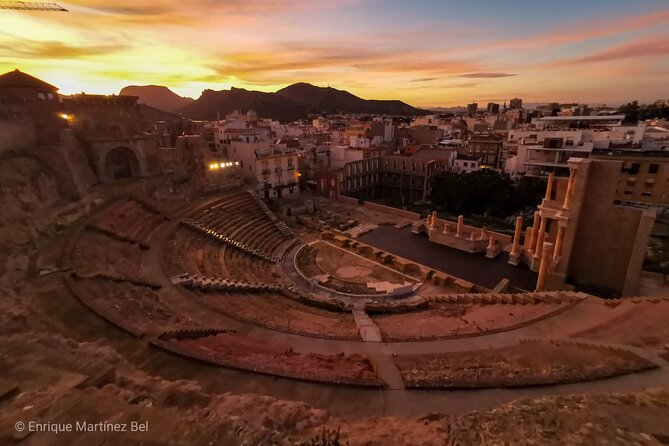
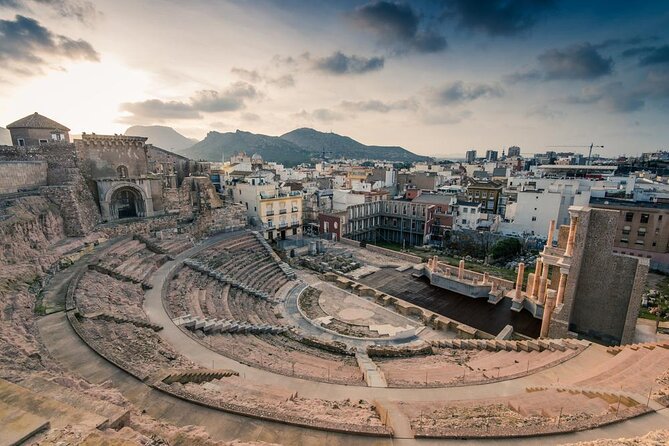
Your first stop is the Museum of the Roman Theatre of Cartagena, an archaeological site tied to the city’s peak Roman building period. The theatre began construction in the late 1st century, which lines up with when the Roman colony saw major urban growth.
This is the kind of site that helps you “see” how Romans used public space. A theatre wasn’t only for entertainment; it was a statement about civic life—where people gathered, where messages and culture traveled, where the city showed off its status.
Nearby, you’ll also see the remains of a cathedral, a reminder that later centuries reused the same ground for new purposes. After that, the tour moves toward the Roman Forum district and includes discussion of more recent finds—so you get a sense that archaeology isn’t just old ruins frozen in time. It’s active discovery, with new information shaping how we understand the city.
Practical tip: if steps are an issue, ask your guide what your easiest route is at the theatre entrance. One review experience flagged that it can be steep there even when the rest of the walking feels manageable.
Museo Foro Romano Molinete: Baths and Forum in the Historic Center
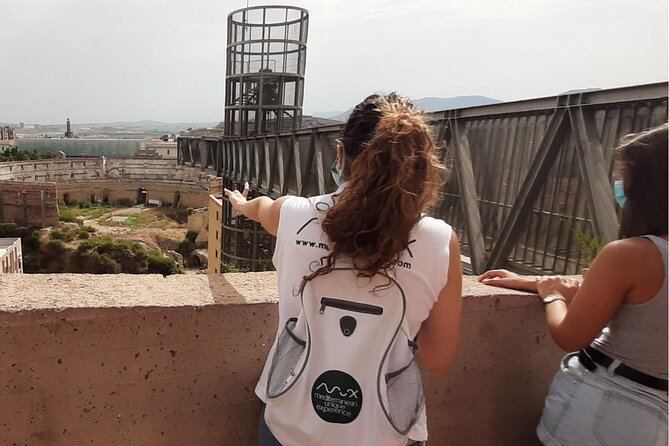
Next comes the Museo Foro Romano Molinete area, where you’ll spend about half an hour. The key here is that you’re seeing the forum-and-baths footprint of the Roman city right in the heart of Cartagena’s historic center.
What makes this stop worthwhile is the way it helps you place the theatre in a broader city map. A theatre is one piece. Baths and a forum network the social and daily life around it. You’re not just learning the headline site—you’re building a mental model for how people moved, met, and spent time.
Also, because this section is in the historical center, it’s easier to connect what you see to what’s still around you. You can look at the excavation area, then glance outward at the surrounding streets and imagine the Roman urban layout beneath your feet.
A realistic consideration: this portion is focused on the excavation area and outdoor site viewing. If you’re expecting every viewpoint to be behind doors and into fully indoor spaces, temper those expectations based on how the site is set up.
Calle Mayor Tapa Stop: Food as a Cultural Reset
After archaeology, the tour shifts to Calle Mayor for a drink and a tapa. This is one of those stops that many people end up remembering because it turns the day from “history lesson” into “lived experience.”
You’ll get a light snack (tapa) and your choice of wine, beer, or a soft drink. I like that the drink choice isn’t one-size-fits-all. It’s easy to keep things pleasant even if you don’t want alcohol.
The main value here is timing. Dropping into a bar stop while you’re still in the old center helps you recharge without losing the thread of the route. You also get a small taste of the city’s daily rhythms—something you can’t really learn from a signboard.
If you have dietary needs or strong preferences, don’t assume the tapa will match every palate. The tour data describes a tapa stop, but it doesn’t specify customized menus—so it’s smart to tell the guide anything you need early in the day.
Pace, Group Size, and English: Plan for How Tours Actually Work
This tour caps at 30 travelers, which is helpful. In theory, a group like this can still feel coordinated. In practice, the difference between a smooth experience and a frustrating one often comes down to pace, sound, and whether everyone can follow.
Some guides are reported as slow and careful, which is great if you want extra time for questions and photos. Others may move quickly, which can be fine if the group stays together—but it’s not ideal if you need more time at each site.
Language is the other variable. The tour is offered in English, but accents and clarity can differ by guide. If you rely on spoken English and listening is hard for you, come prepared to ask for clarification and stand where you can clearly hear.
One more note: audio headsets are not mentioned as part of the tour. If you know you struggle in noisy street conditions, you might want to position yourself closer to the guide whenever the group stops.
Meeting Point by the Port: How to Start Smoothly
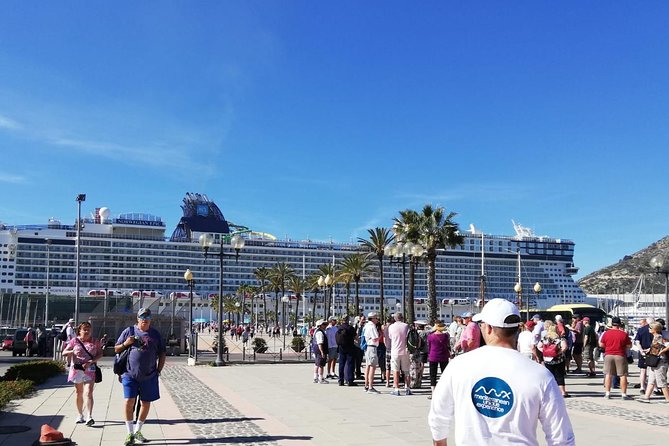
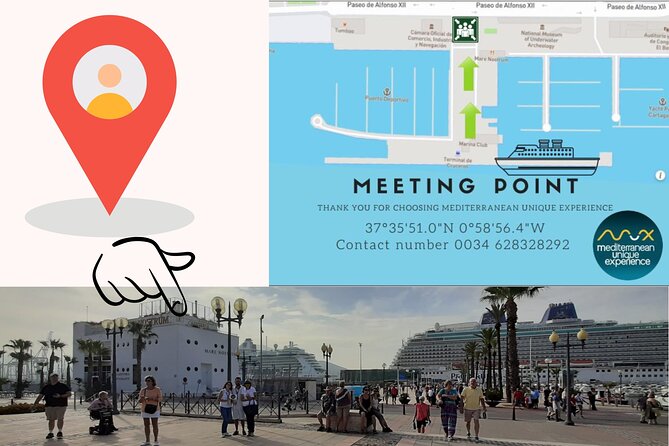
The meeting point is at Mare Nostrum, Puerto deportivo de, P.º Alfonso XII, 30202 Cartagena, Murcia, Spain, and the tour ends back at the same starting point. Start time is 10:00 am.
Two practical tips to keep the morning calm:
- Arrive a few minutes early. Port-adjacent areas can be busy and signage can be inconsistent.
- Have your mobile ticket ready. The tour uses a mobile ticket, and confirmation is received at booking.
If you’re a cruise passenger, you’ll need to provide cruise ship details (ship name plus docking and timing) so the operator can plan around your schedule. That’s a useful detail, because Cartagena days can get crowded fast when multiple ships unload.
Who Should Book This Roman Ruins Walk—and Who Might Skip It
This is a good fit if you want Roman Cartagena explained in plain language while you walk between the key sites. It suits first-timers who don’t want to spend a half-day figuring out what’s most important.
You’ll likely enjoy it more if:
- you care about Roman civic life (theatre + forum + baths)
- you like guided context more than self-guided wandering
- you want a light food stop in a central neighborhood
You might think twice if:
- you need very slow, step-by-step touring every minute (the theatre steps and group dynamics can affect comfort)
- you’re sensitive to sound and don’t do well without headsets
- you’re expecting a perfectly uniform pace regardless of group size and guide style
If your top priority is seeing one specific site for maximum time, this tour might feel like it spreads attention around. But if your goal is to understand how Cartagena’s Roman core worked as a system, it’s a solid match.
Should You Book This Roman Ruins Walk?
Yes, with a smart checklist.
Book it if you want ticketed access to the Roman Theatre museum area and the Museo Foro Romano Molinete stop, plus an included tapa-and-drink finish on Calle Mayor. For many visitors, that combination is exactly what makes a short Cartagena visit feel worth it.
Consider a different option or show up with extra patience if you’re the type who gets annoyed by pace changes, hard-to-hear commentary, or occasional confusion at a meeting point. The best move is simple: arrive early, stand where you can hear, and ask the guide questions when something matters to you (especially around access and stair/step routes near the theatre).
If you like your travel days practical and story-driven, this one is a strong bet for Roman Cartagena.
FAQ
How long is the Roman exploration walking tour in Cartagena?
It lasts about 2 hours 30 minutes.
Where does the tour start and where does it end?
It starts at Mare Nostrum, Puerto deportivo de, P.º Alfonso XII, 30202 Cartagena, Murcia, Spain, and ends back at the same meeting point.
What time does the tour start?
The start time is 10:00 am.
Is the tour in English?
Yes, it’s offered in English.
What’s included in the price?
You get mobile tickets, admission to the Roman Theatre museum stop and the Museo Foro Romano Molinete stop, plus a drink and a tapa during the Calle Mayor stop.
How many people are in the group?
The tour has a maximum of 30 travelers.
Can cruise ship passengers participate?
Yes. Cruise ship passengers must provide ship name plus docking time, disembarkation time, and re-boarding time at booking.
Is there public transportation nearby?
Yes, it’s near public transportation.
Is the tour suitable for people with mobility concerns?
Most travelers can participate. Ramps are mentioned as available, but the Roman Theatre area may include steep steps.
Are earphones or audio headsets provided?
Audio headsets are not listed as part of the tour details provided, so if sound is an issue for you, plan to position yourself closer to the guide.