REVIEW · RONDA
Ronda: Guided Walking Tour with English or Spanish Guide
Book on GetYourGuide →Operated by ANDALUCIA VISIT · Bookable on GetYourGuide
Ronda’s bridges and bullring in one easy walk. This guided stroll hits the big sights fast, especially the New Bridge viewpoints and the Plaza de Toros de Ronda area. You get a guided story of how Ronda developed, plus practical advice you can use right after you finish.
Two things I really like: first, the route focuses on the landmarks that define Ronda’s look and vibe, so you don’t waste time guessing what’s worth your feet. Second, the guide makes the details click—storytelling energy is a constant theme, whether you choose English or Spanish (with guides like Tanya, Gema, and Susanna often praised for clear, confident delivery).
One possible drawback: this is primarily a walk-and-see experience. The big sights are pointed out and explored from the outside and along the streets, so if you want to go inside churches or palaces, plan time and extra ticket costs separately.
In This Review
- Key highlights worth planning for
- A tight, effective route: Pl. de la Merced to Plaza España
- New Bridge and the bullring area: where Ronda’s drama shows up
- Getting the story behind Palace of Mondragon and the street-level city
- Santa María la Mayor: an architectural anchor for the old town
- The famous balcony and the bullfighters’ route: why this town grabs you
- Guide quality: English or Spanish, and what you’ll notice on the ground
- Food and drink tips you can act on right away
- Price and value: $29 for a high-impact introduction
- Who should book this walk—and who might not love it
- Should you book the Ronda guided walking tour?
- FAQ
- How long is the Ronda guided walking tour?
- What languages are the guides?
- Where does the tour start?
- Where does the tour end?
- What’s the price per person?
- What’s included in the tour price?
- Is hotel pickup or drop-off included?
- Is the tour wheelchair accessible?
- What should I bring?
- Does the tour include entrance tickets to sites?
- Can I reserve now and cancel if plans change?
Key highlights worth planning for
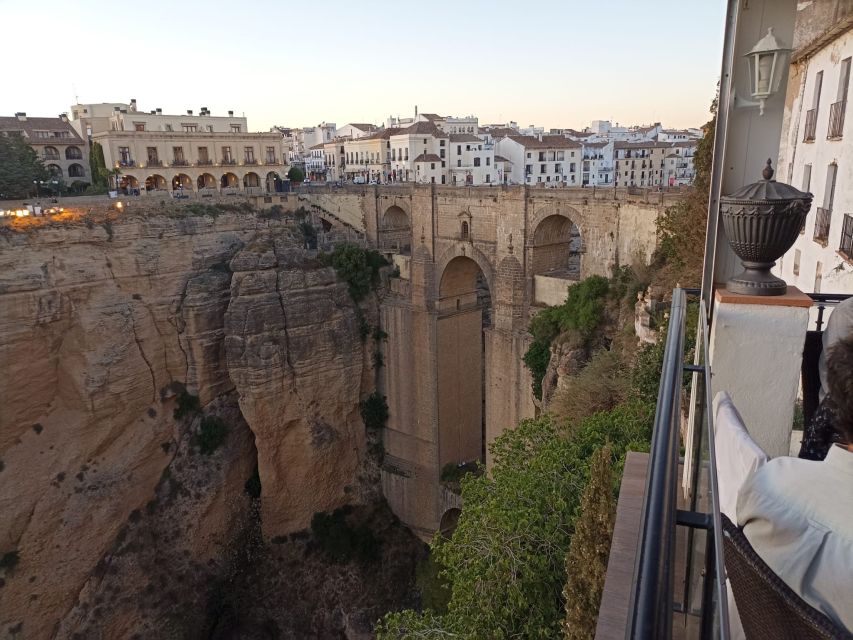
- New Bridge viewpoint time: you’ll get the money shots without needing a scavenger hunt
- Plaza de Toros de Ronda focus: learn the story tied to Spain’s oldest bullring while you’re in the area
- Old town streets and scenic passing sections: not just a straight line—there are memorable street moments
- Classic photo spots and a famous balcony: the balcony stop is built into the route
- Palace of Mondragon + Don Bosco’s House + Santa María la Mayor: multiple architectural stops in one outing
- Food and drink guidance: guides often share what to order and where to go after the tour
A tight, effective route: Pl. de la Merced to Plaza España
The tour starts at Pl. de la Merced, 1, then works its way through Ronda’s key areas on foot, finishing at Plaza España. In about 1.5 hours, you’ll cover enough ground to feel like you’ve “got the town figured out,” which matters in a hill city where one wrong turn can cost you time and energy.
I like that the start and finish points are in central areas. You’re not stuck commuting across town after a tour—once you’re done, you can keep going on your own while things are fresh in your head.
That said, this is still walking in an old, stepped-up town. Bring comfortable shoes and be ready for uneven sidewalks, especially around historic streets and viewpoints.
You can also read our reviews of more walking tours in Ronda
New Bridge and the bullring area: where Ronda’s drama shows up
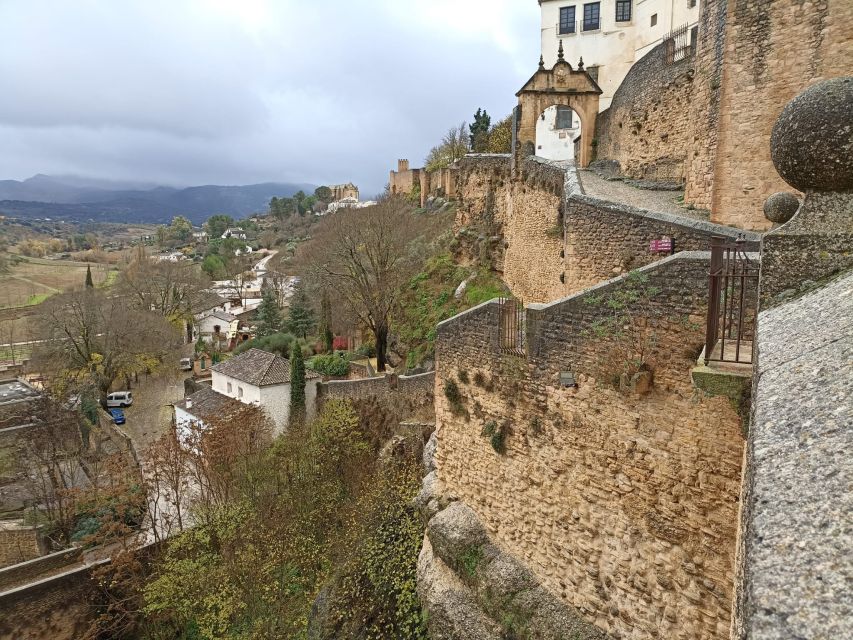
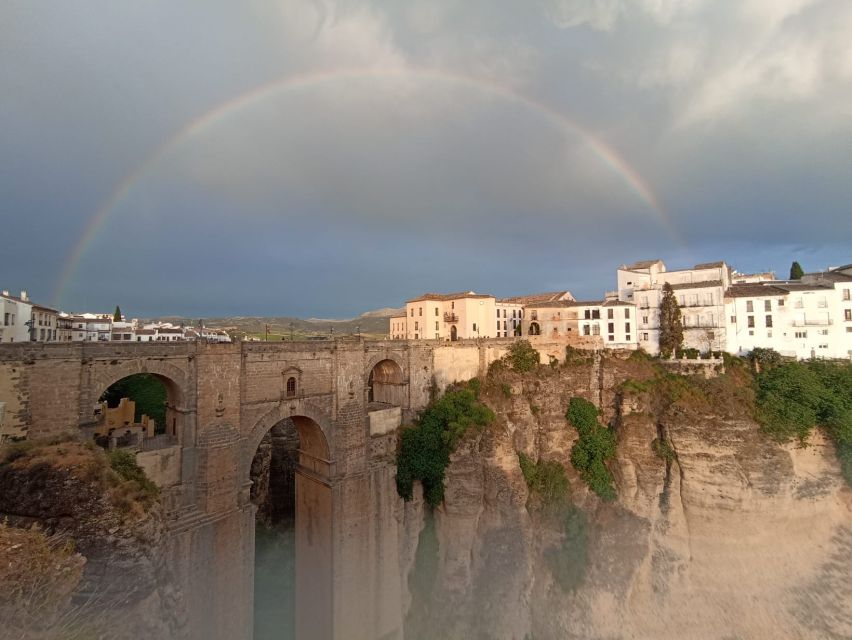
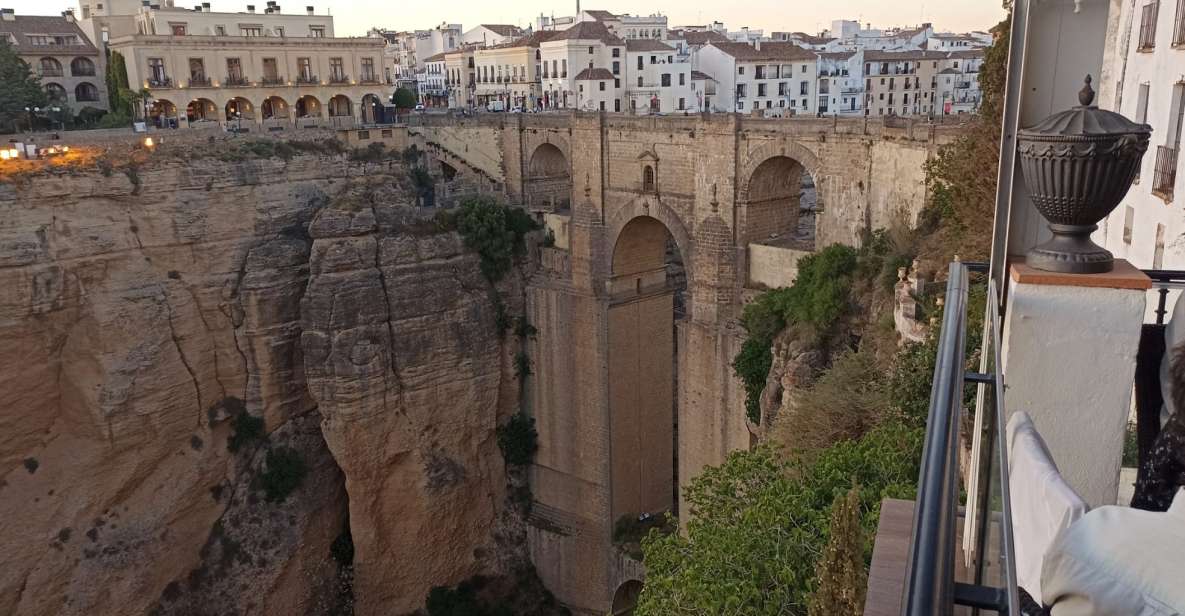
The tour’s main visual payoff is the area around the New Bridge. Even if you’ve seen photos, being on the streets near it hits differently—Ronda is built with dramatic edges, and the bridge is the centerpiece. Expect photo stops and viewpoint time so you can actually frame the gorge and the surrounding hills.
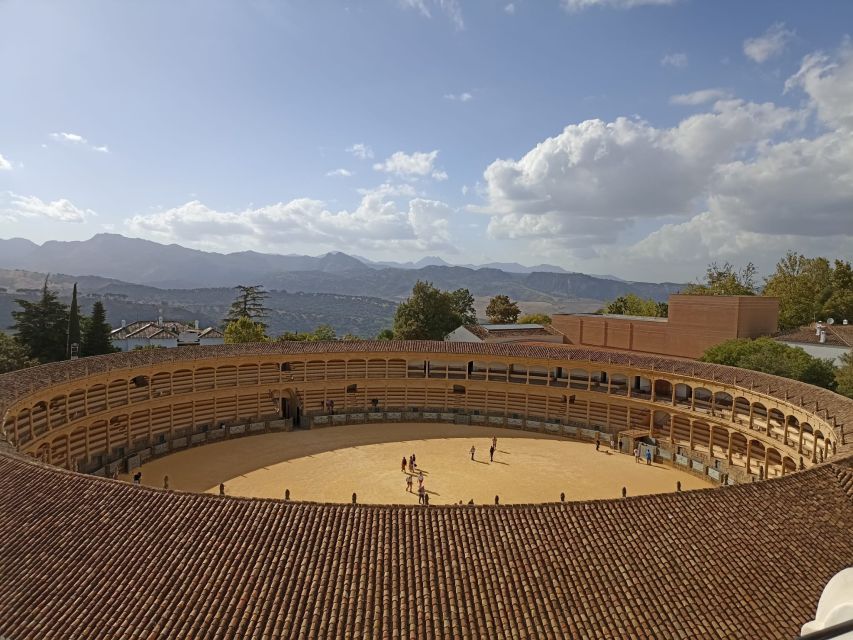
Then you move toward the bullring zone, including the Plaza de Toros de Ronda area. This isn’t just a quick drive-by. The guide explains the significance of Ronda’s bullfighting tradition and helps you connect what you see to the city’s older identity. If you care about how cultural traditions shape a place, this stop does a lot of work for you.
Practical note: the bullring stop is about the experience of the neighborhood—its atmosphere, its layout, and the route tied to bullfighters—rather than a deep ticketed visit. If you want an in-depth look inside the arena itself, you’ll likely want to plan that separately.
Getting the story behind Palace of Mondragon and the street-level city
One of the smartest parts of this walk is that it doesn’t treat Ronda as only scenery. You also get named stops tied to Ronda’s civic and family life.
The route includes the Palace of Mondragon. Even without going inside, it’s useful to have someone point out what you’re looking at. You’ll learn how the palace fits into the city’s story, so later, when you’re strolling past similar-looking buildings, you’ll recognize what matters.
You also pass Don Bosco’s House. I appreciate this kind of stop because it breaks the “bridge-and-church only” rhythm. It helps you understand Ronda as a real town—people lived here, worked here, built lives here, not just postcards.
The only real consideration: since this is a walking tour designed around passing major sights, you won’t get long inside visits unless you arrange them on your own time after.
Santa María la Mayor: an architectural anchor for the old town
The walk finishes with stops in and around the Collegiate Church of Santa María la Mayor area. Churches are often the most information-dense buildings in a town, but they can also be intimidating if you don’t know where to look.
Here, having a guide helps you read the building and understand why it’s a key anchor in Ronda’s old center. You’re not just hearing facts—you’re learning how the church relates to the streets around it, and that makes your self-guided wandering afterward more satisfying.
If you want more than exterior viewing, you may need extra time. Some people like the fact that the tour stays lighter and then they go back later; others wish they had a longer inside window. I’d treat this church stop as a “set up your next visit” moment.
The famous balcony and the bullfighters’ route: why this town grabs you
Ronda’s most famous balcony is part of the walk, and it’s one of those places where the details matter. Standing in the right position and hearing the context makes it more than a viewpoint—it becomes part of the town’s identity.
The tour also covers the bullfighters’ walk connected to the bullring area. This matters because it gives you a route-based sense of what the tradition looked like on the ground. You’ll understand why the nearby streets and lanes feel the way they do, and that helps you navigate Ronda with more confidence after the tour.
If you like history that has a physical presence—routes, plazas, architecture—this section tends to be a big highlight. Guides like Gema and Susanna are often praised for turning the area into a story you can picture, not a list of dates.
You can also read our reviews of more guided tours in Ronda
Guide quality: English or Spanish, and what you’ll notice on the ground
You can choose a live guide in English or Spanish, and the difference shows up in how easily you can follow the details as you walk. This is the kind of tour where good sound matters, because the guide talks while you’re moving through busy streets and tight corners.
A theme in the experience: guides are often described as energetic, organized, and comfortable explaining without relying on notes. Names that come up again and again include Tanya, Gema, Susanna, Lourdes, Desha, Darcia, Anna, and Bella—and many people mention that their pace is comfortable and manageable.
Heat is also part of real Ronda. In warmer months, you’ll appreciate frequent stop moments, and some guides are specifically praised for managing the group in intense conditions and looking for shaded breaks.
One small practical complaint that’s worth listening to: some people wished for an easy little map for tapas spots. If food is your priority, consider saving a note of your guide’s top picks or taking a screenshot of any recommended locations so you can find them quickly later.
Food and drink tips you can act on right away
This is not a “we’ll eat together” type of tour. But it does include tips on local food and drink—often with practical recommendations tied to what you’ll want after you’re done walking.
I like these suggestions because they shorten your learning curve. Ronda can be touristy in the center, and it’s easy to choose a place just because it’s convenient. A good guide helps you pick where to go based on what you’re craving—tapas, a quick bite, or somewhere with a better view or atmosphere.
If you want to make the most of it:
- Take note of the names your guide gives you.
- Use the timing of your day (especially if you’re photographing bridges at golden hour).
- Plan your sit-down meal after the walk, when you’ll have a better sense of what’s nearby.
Price and value: $29 for a high-impact introduction
At $29 per person for a 1.5-hour guided walk, this sits in the “affordable but not free” category. The value comes from focus. Instead of wandering the old streets without a plan, you get a guided path to multiple top sights—New Bridge, the bullring area, Mondragon, Don Bosco’s House, and Santa María la Mayor—plus context that makes your photos and later exploration feel more meaningful.
It’s also priced in a way that works well if you’re short on time. If you only have a couple of hours in Ronda, this kind of orientation tour can be a smart first move.
If you have unlimited time and you’re the type who loves slow museum-style touring, you might decide you’d rather spend that time doing fewer stops with more time inside. But for many people, a guided introduction is exactly the right trade: you get the highlights and a roadmap for what to explore next.
Who should book this walk—and who might not love it
This tour is a great match if you:
- Want a fast, structured way to see Ronda’s main sights
- Like history and culture explained in plain language while you walk
- Want practical food and drink ideas for after the tour
- Prefer a guide who can keep the pace moving without making it feel rushed
It may be less ideal if you:
- Want guaranteed interior access to major buildings (the focus is mainly on seeing and learning from outside and street-level)
- Plan to spend a long time inside churches/palaces during the same outing
- Have very limited mobility needs beyond what a wheelchair-accessible listing implies (you’ll still be navigating historic streets)
Should you book the Ronda guided walking tour?
I’d book it if you’re in Ronda for a day and want to make those hours count. For $29 and about 1.5 hours, you get a tight route to the landmarks that define Ronda—the New Bridge, the bullring area, old-town streets, and key architectural stops—plus the kind of guide-led storytelling that turns a “pretty town” into a place you understand.
Skip it (or plan it differently) if your main goal is deep interior sightseeing in the middle of the tour. In that case, use the walk as your orientation, then come back later for the specific buildings you care about.
FAQ
How long is the Ronda guided walking tour?
It lasts 1.5 hours.
What languages are the guides?
You can choose a live guide who speaks English or Spanish.
Where does the tour start?
The tour starts at Pl. de la Merced, 1.
Where does the tour end?
The tour finishes at Plaza España.
What’s the price per person?
The price is $29 per person.
What’s included in the tour price?
The tour includes a walking tour and a guide.
Is hotel pickup or drop-off included?
No. Hotel pickup and drop-off are not included.
Is the tour wheelchair accessible?
Yes, the tour is listed as wheelchair accessible.
What should I bring?
Bring comfortable shoes.
Does the tour include entrance tickets to sites?
The tour includes the walking experience with a guide. Entrance into specific sites isn’t listed as included, and it’s described more as seeing landmarks from the route than doing ticketed visits.
Can I reserve now and cancel if plans change?
Yes. You can reserve now and pay later, and you can cancel up to 24 hours in advance for a full refund.