REVIEW · SEVILLE
Seville Highlights Bike Tour (English)
Book on Viator →Operated by Seebybike · Bookable on Viator
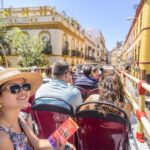
Three hours, zero stress. This Seville highlights bike tour is a fast, fun way to get your bearings and see the city’s most famous sights plus a few corners you might skip on foot.
I like the small-group feel and the fact that the ride is guided with real local context. Guides such as Laura and Ivan can keep things lively while still explaining what you’re actually looking at.
One thing to consider: this is mostly exterior sight-seeing with short stops, so if you want major interior time, you’ll likely need separate tickets later.
In This Review
- Key things to know before you book
- Entering Seville by bike: why this 3-hour format works
- Getting started at SeeByBike: meeting point and the small-group vibe
- Bikes, helmets, and the e-bike option: comfort and control
- Stops 1 to 3: Catedral de Sevilla, Santa Cruz, and the Alcázar exteriors
- Towers and Triana: Torre del Oro, Giralda, and artisan streets
- Plaza de España and Parque de María Luisa: big monuments, real breathing room
- Iglesia de Santa Ana, Real Fábrica de Tabacos, and Palau de San Telmo
- Plaza de América: 1929-era design on display
- Pace, route, and what the guide actually changes
- Price and value: what $42.33 buys you in Seville
- Weather reality: when the tour runs best
- Who this tour is best for (and who should skip it)
- Should you book the Seville Highlights Bike Tour?
- FAQ
- Is the Seville Highlights Bike Tour offered in English?
- How long is the bike tour?
- What is included with the tour price?
- Do I need a hotel pickup?
- Are tickets included for the stops?
- Where do I meet for the tour?
- How big is the group?
- Can kids join?
- What happens if the weather is bad?
Key things to know before you book
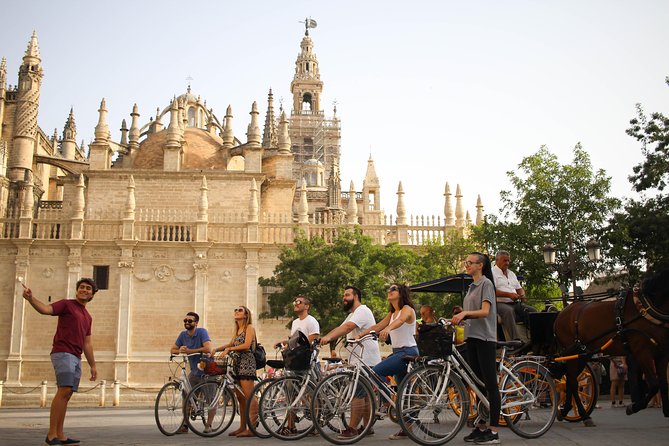
- Bikes, helmets, and baskets included: You start moving right away.
- Maximum group size of 15: Easier to keep track of the route and stay together.
- English-language guidance: Guides like Marta and Daniel are noted for clear communication.
- Most listed stops are exterior views: Plan on photo stops and quick orientation rather than long building visits.
- Route hits classic Seville plus neighborhood flavor: Santa Cruz, Triana, and the big expo-era sights are all on the route.
- A map with recommendations: You leave with practical restaurant and flamenco ideas, not just history.
Entering Seville by bike: why this 3-hour format works
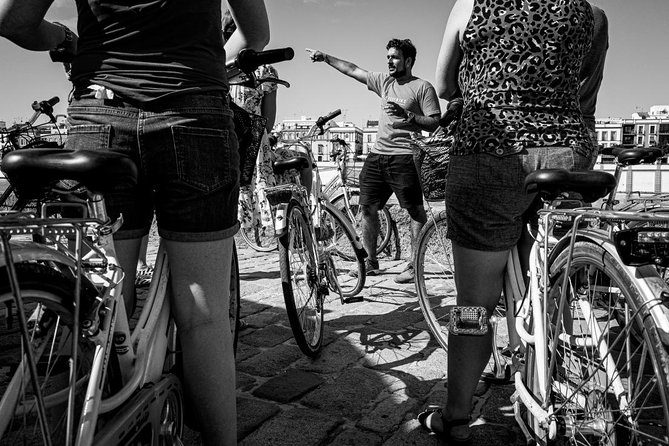
Seville is the kind of city where you can spend days just walking from one pretty corner to the next. The trick is that walking can also eat your time fast, especially on your first day. This tour’s format solves that with a simple promise: cover major landmarks in a short window, without turning your day into a marathon.
You get a ride that feels flexible and easy to follow. The stops are short enough that you keep moving, but long enough to actually look around, take photos, and soak up details like architecture and neighborhood character. It’s also a great way to spot what you want to revisit later.
And because it’s a guided bike tour with a map, you’re not just consuming sights. You’re leaving with a plan—where to go next, where to eat, and how to layer in culture like flamenco once you’re done cycling.
You can also read our reviews of more cycling tours in Seville
Getting started at SeeByBike: meeting point and the small-group vibe
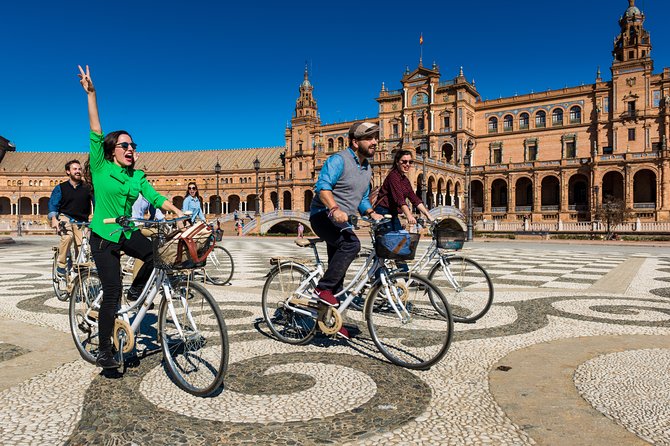
The tour starts and ends at SeeByBike – bike tours Seville, Mercado del Arenal, C. Pastor y Landero, 4, Casco Antiguo, 41001 Sevilla. There’s no hotel pickup, so you’ll want to be comfortable getting yourself to the market area before you roll.
The operation runs with a maximum of 15 travelers, which matters in a city where narrow streets and quick turns are common. A smaller group also tends to make the ride feel less chaotic, and it usually means your guide can help more quickly when someone needs reassurance or a slower pace.
Bikes come with helmets and baskets, and the group size keeps things manageable when you’re parking for photos or crossing streets. One detail that people appreciate: there’s a sense of support on the ride, including a rider at the rear to help keep everyone together.
Bikes, helmets, and the e-bike option: comfort and control
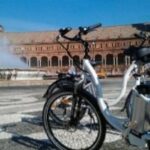
Bikes are included, and that’s a big part of the value. For $42.33, you’re not paying for transportation you’ll still have to manage and figure out on your own. You’re handed a working bike, plus the safety gear that lets you ride confidently through real city streets.
Comfort is also part of the story. Many people talk about bikes being comfortable and well maintained, which is key for a 3-hour ride where you want your energy saved for sightseeing. Helmets are included, so you’re not hunting for one last minute.
There’s also an e-bike upgrade option. That’s not about being lazy; it’s about making the ride feel effortless if you’d rather spend your legs on later walking. If you’re unsure about hills, distance, or simply prefer less effort, the upgrade is worth considering.
Stops 1 to 3: Catedral de Sevilla, Santa Cruz, and the Alcázar exteriors
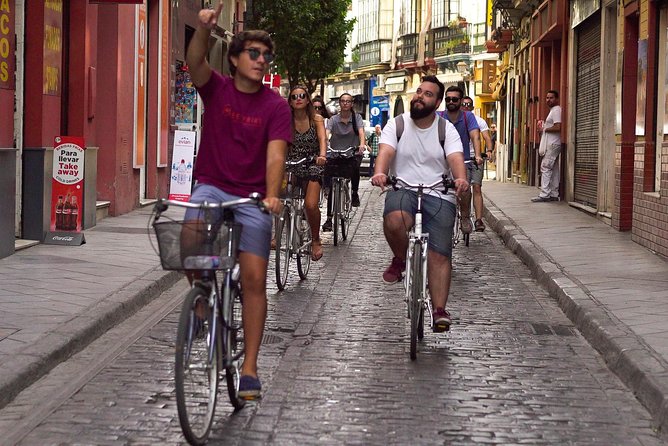
This is a smart early sequence. It starts where most first-timers want to go anyway, then it adds neighborhood atmosphere right away.
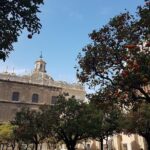
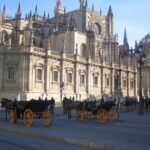
Catedral de Sevilla (exteriors): You get a look at the Seville Cathedral, described as the biggest Gothic cathedral in the world. Since the stop is exterior, you’re not committing to a long ticketed visit here. Instead, you get the dramatic first impression—rooflines, scale, and the sheer presence of the building—without the time cost of entering.
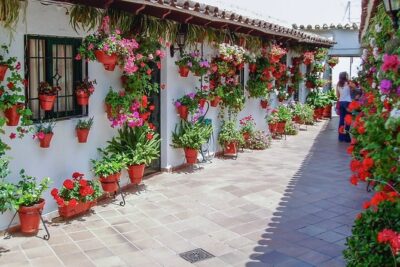
Next is Barrio Santa Cruz (15 minutes). This is Seville’s oldest neighborhood and the former Jewish quarter, known for romantic squares and lanes that you can get lost in. On a bike, the advantage is that you can see multiple faces of the area quickly, instead of walking yourself into decision fatigue.
Then comes the Real Alcázar (exterior). The Alcázar is famous for blending styles—Moorish, Gothic, Mudéjar, and Renaissance influences. Even without going inside on this segment, an exterior view helps you understand why people keep coming back. The mix of textures and design language is visible right away.
Possible drawback here: since these are exteriors with short stops, you may feel a bit of pull to add interior time later if you love architecture. That’s not a flaw; it’s a choice that keeps the ride moving.
Towers and Triana: Torre del Oro, Giralda, and artisan streets
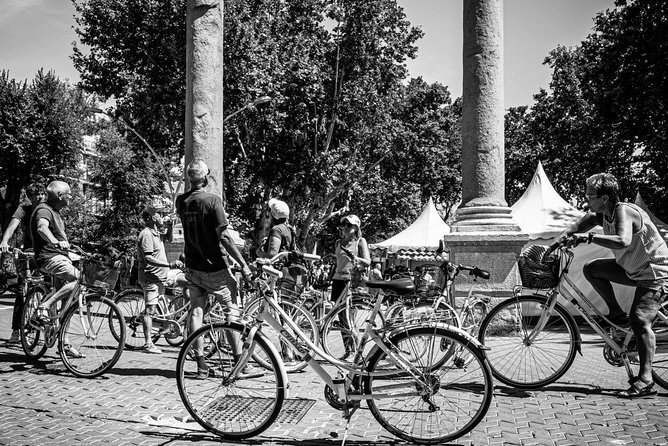
Seville’s skyline is part of the personality. This stretch gives you that vertical “wow” factor, then it lowers the pace into lived-in neighborhood culture.
Torre del Oro is one of Seville’s most photographed landmarks, built in the 13th century to help control access to the port. It’s a quick stop, but the key value is context: you’re seeing a symbol of the city’s trading power, not just a pretty tower.
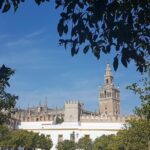
Torre Giralda follows. This bell tower began as a minaret for the Great Mosque of Seville in al-Andalus. That detail matters because it connects the city’s Islamic past to the Christian present you see in many later landmarks. You’re basically learning a timeline in plain sight.
Then you roll into Triana for about 20 minutes. Triana is known for pottery and tile work, plus a strong flamenco culture and local festivals. On the ground, that means you’re near the streets where craftsmanship and performance culture meet. The bike route helps here because you can take in the vibe without spending the whole time searching for the right corners.
If you’re a first-timer, this section is also where you start to feel the difference between Seville’s “postcard” landmarks and the neighborhoods that give them meaning.


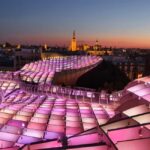
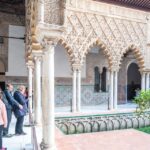
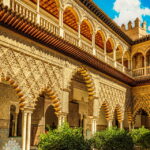
Plaza de España and Parque de María Luisa: big monuments, real breathing room
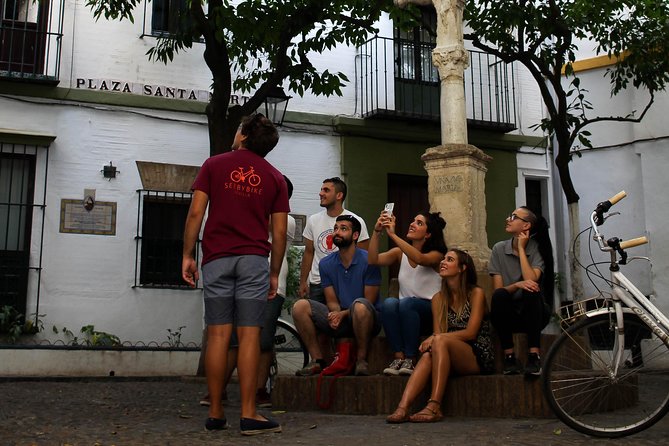
Two of Seville’s signature sights are paired here, and it’s a great combo: one is scale and spectacle, the other is shade and strolling energy.
Plaza de España is the one people point to right away. It’s described as one of Seville’s most impressive landmarks because of its size and grandeur, and it was a site tied to the 1929 Universal Exhibitions. Even as an exterior stop, you’ll get the logic of the design—how the plaza expands visually, how the spaces invite you to linger, and why photographers keep returning.
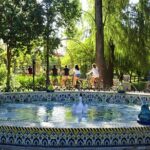
Parque de María Luisa comes next. This is the large green area next to the plaza, with shady avenues lined by hundreds of exotic trees. The description includes fairytale-style buildings, colourful tiled benches, and Moorish fountains and pools. This stop is less about monuments and more about atmosphere, and it’s perfect for catching your breath during the ride.
You might also use this moment strategically: if you see a side street or a viewpoint you want later, this is when you’ll notice it. After a bike tour, those “I should come back here” instincts are gold.
Iglesia de Santa Ana, Real Fábrica de Tabacos, and Palau de San Telmo
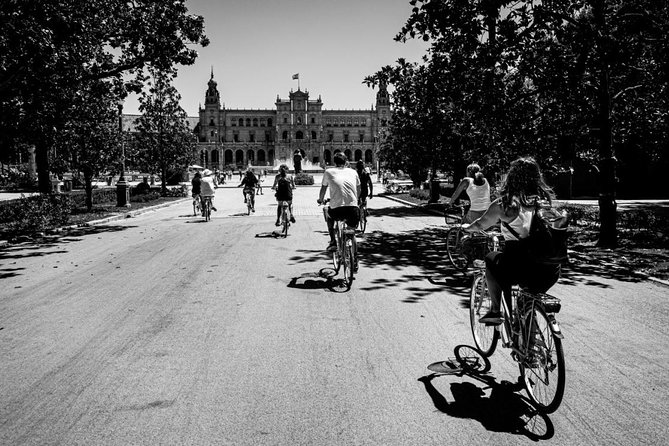
After the big open-air sights, the route shifts toward buildings where Seville’s layers show up in detail.
Iglesia de Santa Ana dates to 1276 and is described as Gothic-Mudéjar in style. The stop highlights the architecture and mentions a high, vaulted interior and religious imagery. Again, since this is a short stop focused on exterior context, treat it like a preview. If the church style calls to you, you can decide later if you want to plan an inside visit.
Then there’s Real Fábrica de Tabacos, which is described as the site that used to be Europe’s most important tobacco factory. Today, it’s the University of Seville. This kind of transformation is one reason Seville rewards repeat visits. You’re not just seeing what’s old; you’re seeing what’s been repurposed.
Palau de San Telmo is next. It’s noted as the city’s finest example of the baroque style, originally built as the seat of the university of navigators. Even in a brief look, the baroque identity is easy to sense in the style of the facade—this is where the tour’s “architecture nerd” value shines without requiring you to read a textbook.
Plaza de América: 1929-era design on display
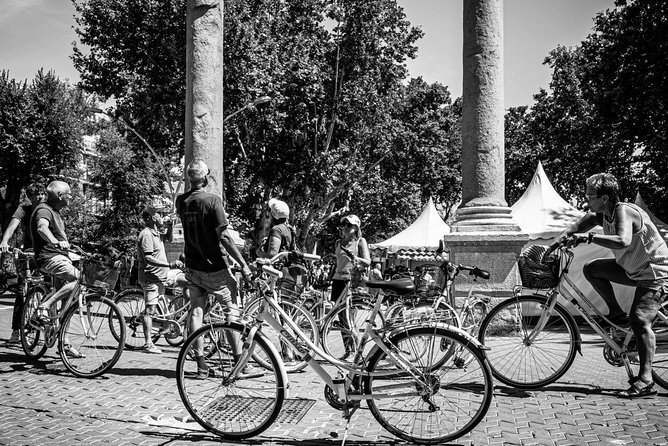
The ride finishes with Plaza de América in Parque de María Luisa. This stop is especially useful if you like architecture and history, because the plaza is presented as part of an exhibition-era design plan.
The area is described as being flanked by:
- the Museum of Popular Arts in a Neo-Mudéjar style to the north
- the Archaeological Museum in a Neo-Renaissance style to the south
- the Royal Pavilion in a Gothic style to the east
It was built for the Ibero-American exhibition in 1929. That means you’re not just looking at one building; you’re looking at a designed setting where different styles share the same stage.
Even if you only give this stop a short amount of time, you’ll probably remember it later because it feels like a little “stage set” of Seville’s design vocabulary.
Pace, route, and what the guide actually changes
A bike tour lives or dies on the guide. Here, the most praised theme is that the ride is both fun and informative without feeling like a lecture.
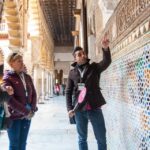
Guides such as Laura and Marta are repeatedly mentioned for being friendly and engaging, with especially strong English. Others, including Daniel and Ivan, are also described as bringing humor and practical explanations that help you connect the landmarks to what’s going on in the city.
The best part for me is that the pace stays relaxed but purposeful. That matters because you’re cycling in real city conditions, and you still want time to enjoy the stops. People also mention the route being safe and easy to follow, with a structured group flow so you don’t spend the ride worrying about where to turn next.
You’ll also get an included map with recommendations—restaurant ideas, flamenco tips, and general advice to keep exploring after the tour ends. One day tours are great, but only if they help you extend the experience. This one tries to do that.
Price and value: what $42.33 buys you in Seville
At $42.33 per person for about 3 hours, this tour is priced like a practical, pay-for-your-time experience. You’re paying for the bike setup, helmet, guide, and insurance, plus a map that steers you toward good local choices after you stop rolling.
Compared with renting a bike and figuring out sights on your own, the value is the guidance. In a city as layered as Seville, a good guide helps you see the details you’d otherwise miss—why a tower exists, what style overlaps mean, and what neighborhood energy to expect.
Could you do this cheaper by biking yourself? Maybe. But if you’re short on time or you want a guided hit list that also adds neighborhood context, paying for the structure is often money well spent.
Also: group size is capped at 15, which helps keep the experience from feeling rushed or overcrowded.
Weather reality: when the tour runs best
This is a tour that depends on good weather. The operator notes the tour needs good weather for it to work properly. If it has to be canceled because of poor conditions, you’ll either be offered a different date or a full refund.
That said, bike tours can still be enjoyable in light rain or gray skies if the route and group can stay safe. The key is to watch the forecast and dress smartly. In Seville, weather can flip quickly, so bring gear that lets you stay comfortable without turning the ride into a cold ordeal.
If you’re traveling during the rainy season or you hate riding on slick streets, you’ll want a flexible mindset and a backup plan for indoor or ticketed sights.
Who this tour is best for (and who should skip it)
This bike tour is ideal if you:
- are visiting for the first time and want a fast orientation
- like seeing major landmarks but also want neighborhood flavor like Santa Cruz and Triana
- want a guided route with safety and clear pacing
- appreciate getting practical recommendations at the end, especially for food and flamenco
You might skip it if you’re the type who wants long, interior-heavy visits as your main goal. Since the listed stops are mostly short exterior looks, you’d likely be happier doing separate ticketed visits where you control the time inside each building.
If you’re on a tight schedule, this is one of those “make tomorrow easier” tours. It gives you a map of Seville in your head—what’s where, what’s important, and what you might want to see longer.
Should you book the Seville Highlights Bike Tour?
I think it’s a strong pick if your priority is to see a lot in a few hours without burning your day on logistics. The mix of major landmarks—Catedral de Sevilla, Real Alcázar, Giralda, Plaza de España—and neighborhood texture like Santa Cruz and Triana makes the tour feel complete for a first pass.
It also helps that you get a bike setup, a guide, insurance, and a map with recommendations. That’s the difference between a ride that ends when you stop pedaling and one that actually improves your next day plans.
If you want to spend hours inside churches and palaces, add those separately. If you want the city’s big picture plus enough context to choose where to go next, this is exactly the kind of tour that earns its spot on day one.
FAQ
Is the Seville Highlights Bike Tour offered in English?
Yes. The tour is offered in English, and guides are described as having excellent English in many experiences.
How long is the bike tour?
It lasts about 3 hours.
What is included with the tour price?
You get a bike (including a helmet and baskets), a guide, insurance, and a map with recommendations.
Do I need a hotel pickup?
No. Hotel pickup and drop-off are not included. The tour starts and ends back at the meeting point.
Are tickets included for the stops?
For the listed stops, admission ticket is marked free. The tour focuses on short exterior visits rather than long interior time.
Where do I meet for the tour?
You meet at SeeByBike – bike tours Seville, Mercado del Arenal, C. Pastor y Landero, 4, Casco Antiguo, 41001 Sevilla, Spain.
How big is the group?
The tour has a maximum of 15 travelers.
Can kids join?
Children must be accompanied by an adult.
What happens if the weather is bad?
The experience requires good weather. If it’s canceled due to poor weather, you’ll be offered a different date or a full refund.