REVIEW · SEVILLE
Sunset Guided Bike Tour in Seville
Book on Viator →Operated by Seebybike · Bookable on Viator
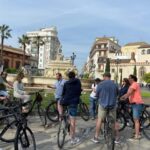
Seville looks different from a bike saddle. I love the smooth, small-group pace and the way the guide strings history together between short stops in Santa Cruz and Triana. The big downside: most of the famous sights are exterior views, so it is not an inside-the-monument tour.
You also get practical extras that make this feel like a real local experience, not just sightseeing. Helmets and insurance are included, and you get a map with restaurant and flamenco pointers for right after the ride.
One more thing to keep in mind: the tour is designed to feel easy, but you still need basic comfort on a bike and an eye for busy city streets.
In This Review
- Key highlights to know before you go
- A 3-hour Seville sunset ride that actually helps you plan your trip
- Meeting at Mercado del Arenal (and how the tour day usually starts)
- The bike experience: comfortable pace, real city navigation
- Stop-by-stop: Cathedral exteriors, Santa Cruz, and the Alcázar look
- Catedral de Sevilla (exterior)
- Barrio Santa Cruz
- Real Alcázar de Sevilla (exterior)
- The Giralda and Torre del Oro: where the skyline tells the story
- Torre Giralda
- Torre del Oro
- Triana: pottery, tiles, and flamenco culture on the way to more open space
- Plaza de España and Parque de María Luisa: classic Seville, but calmer in the evening
- Plaza de España
- Parque de María Luisa
- Iglesia de Santa Ana, San Telmo, and the styles you can spot at street level
- Iglesia de Santa Ana
- Palau de San Telmo
- Real Fábrica de Tabacos and Plaza de América: from industry to institutions
- Real Fábrica de Tabacos (now the University of Seville)
- Plaza de América in Parque de María Luisa
- What you really get for $36.28 (and why it feels like a deal)
- Guides and group vibe: small size, big personality
- Who should book this sunset bike tour
- Should you book this sunset bike tour?
- FAQ
- How long is the sunset guided bike tour in Seville?
- What does the price include?
- Do I need to buy tickets for the stops?
- Is the tour suitable for beginners or families?
- What language is the tour offered in?
- Where do I meet for the tour?
- What happens if the weather is poor?
Key highlights to know before you go
- Two-wheel sightseeing that keeps you moving with short ride segments and frequent story stops
- Santa Cruz and Triana neighborhoods that are ideal for an evening stroll-by-bike
- Major monuments from the outside including Catedral de Sevilla, Real Alcázar (exterior), and the Giralda
- River-and-park magic with Torre del Oro plus Parque de María Luisa and Plaza de España
- Small groups (max 15) with English-speaking guides
- Local tips that go beyond facts, with guide recommendations for food and flamenco
A 3-hour Seville sunset ride that actually helps you plan your trip
This is the kind of tour that helps you get your bearings fast. Seville has so many turns, plazas, and backstreets that the first day can feel like you are wandering. On this bike tour, you move through the city in a smart loop, guided by someone who can point out what to notice and what to ignore.
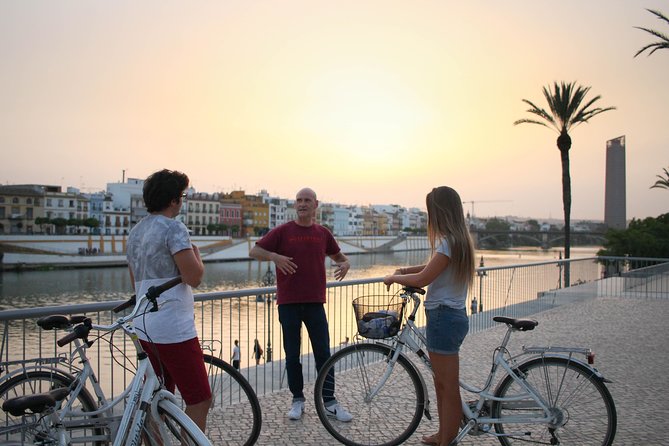
The timing is a big reason to do it. Even when you are not seeing the exact last rays of the sun, the late-day feel usually means cooler air, softer light for photos, and a city that feels less rushed. You will pass through the historic center, then roll into areas that feel slower and greener, so the evening vibe keeps building.
What makes it work is the rhythm: you cycle, stop, look, then cycle again. Reviews emphasize that the pace feels relaxed, with plenty of time to actually see. That matters in Seville, where the monuments are impressive, but the streets are where the character lives.
You can also read our reviews of more cycling tours in Seville

Meeting at Mercado del Arenal (and how the tour day usually starts)
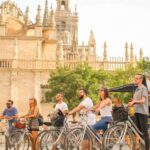
You meet at SeeByBike – bike tours Seville, at Mercado del Arenal, C. Pastor y Landero, 4, in the Casco Antiguo. The area is central, and it is near public transportation, so you are not forced into a long pre-tour trek.
No hotel pickup or drop-off is listed, so plan to arrive on your own. This is one of those practical tours where getting there matters, but once you are gathered, you are ready quickly.
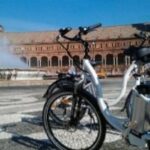
Bikes, helmets, and insurance are included. That is a comforting combo for a city ride. Also, you get a map with recommendations, which is worth paying attention to because it is meant to help you keep going after the tour.
If you are traveling in a small group, you are in good shape. The tour caps at 15 travelers. Reviews mention groups that felt lively but not chaotic, with guides able to give time to questions.
The bike experience: comfortable pace, real city navigation
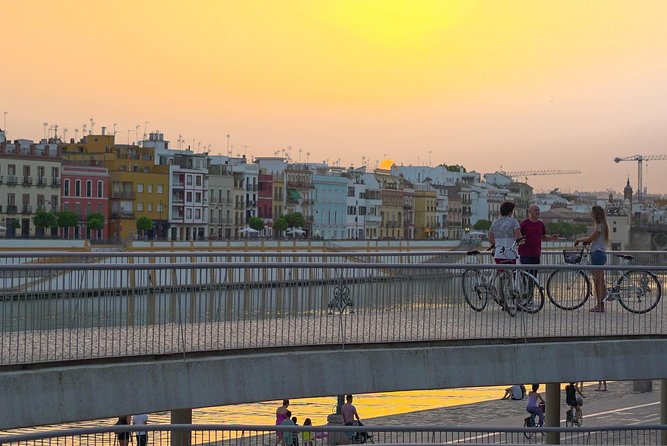
Seville is not flat everywhere, but this tour focuses on bike-friendly neighborhoods and manageable routes. Reviews mention that the streets can feel flat and the ride is not difficult. Still, it is not a guided walk where you can stop and start whenever you want. You need to be comfortable pedaling, braking, and holding your line.
The most common theme in the feedback is that the ride feels safe. People bring up bike paths and the calmer feel around central squares. That does not mean you can zone out, but it suggests the operator chooses routes that keep you from fighting traffic the whole time.
One fair caution: bike condition can vary. One review notes bikes that were old but adequate. That does not mean the bike is unsafe, but if you are picky about modern comfort, plan on a basic-to-average ride.
Stop-by-stop: Cathedral exteriors, Santa Cruz, and the Alcázar look
This tour is built around a classic Seville trio: cathedral area, old Jewish-quarter streets, and the royal palace zone. Instead of long museum time, you get guided exterior viewing plus neighborhood wandering.
Catedral de Sevilla (exterior)
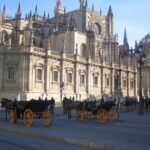
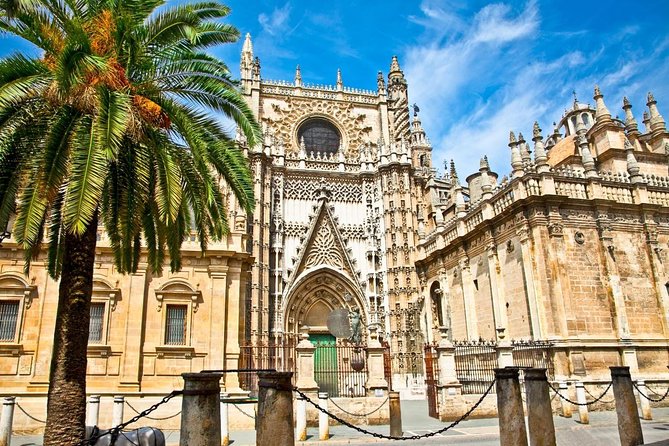
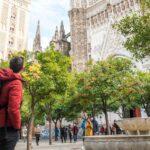
You start near the Catedral de Sevilla. The exterior is a show all by itself, and it is the biggest Gothic cathedral in the world. Even if you are not going inside, the scale of the building reads clearly from the street.
A quick stop like this is smart because it gets you the visual anchor for later photos. You will also hear context that makes the rest of the walk make more sense.
You can also read our reviews of more guided tours in Seville

Barrio Santa Cruz
Then you roll into Barrio Santa Cruz, the old neighborhood and former Jewish quarter. This is where the city’s layout becomes the attraction: romantic squares, tight alleys, and the feeling that you could get lost in the best way.
The guide’s job here is to help you read the neighborhood, not just pass it. You will get points to notice so you do not miss the small stuff that makes Seville feel like Seville.
Real Alcázar de Sevilla (exterior)
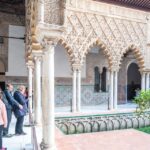
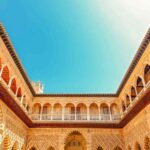
Next is the Real Alcázar of Seville, with the exterior showcasing the blend of Moorish, Gothic, Mudéjar, and Renaissance elements. You get the mix without spending hours waiting or sitting through long interior sections.
If your schedule is packed, this is an efficient way to appreciate the palace style. If you want deeper palace interiors, you can pair this tour with a ticketed follow-up later.
The Giralda and Torre del Oro: where the skyline tells the story
Two of Seville’s most recognizable landmarks appear here, and both connect to the city’s past in ways you can actually picture.
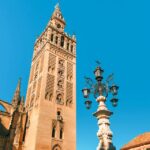
Torre Giralda
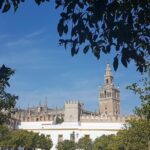
The Giralda is introduced as the bell tower tied to the old Great Mosque of Seville in al-Andalus. The key value of the stop is explanation. Once you understand the origin, the tower stops being just a photo and becomes a timeline in stone.
Even the short time here helps you spot the structure later from other parts of the city.
Torre del Oro
You also stop at Torre del Oro, built in the 13th century to control access to the port. This is the kind of detail that turns a landmark into a story you can repeat to your friends.
You get a great location for evening photos too, because this area sits near the river. That river-adjacent feel ties the historic center to Seville’s everyday life.
Triana: pottery, tiles, and flamenco culture on the way to more open space
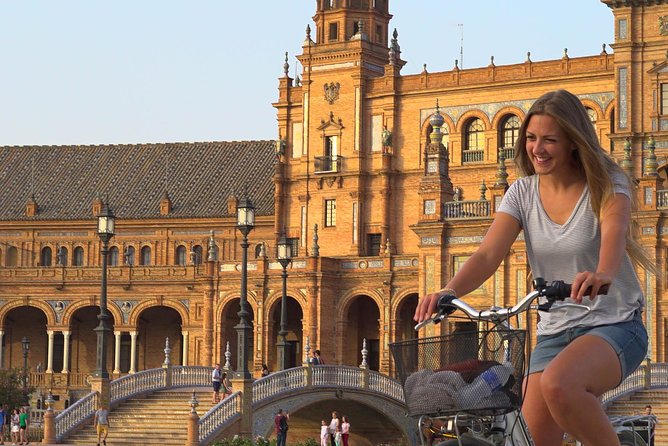
Triana is where Seville’s creative side shows up. The tour brings you through Triana with time to take in the neighborhood vibe. The big themes are pottery and tile work, plus flamenco culture and local festivals.
This is a practical stop because it helps you choose what to do next. Flamenco shows can be hit-or-miss if you book blindly. The map and guide recommendations help you aim better.
You are also getting a shift in scenery. Triana can feel like it has more texture at street level than the cathedral zone. That contrast is exactly why cycling helps. You can cover distance without losing the small street-level details.
Plaza de España and Parque de María Luisa: classic Seville, but calmer in the evening
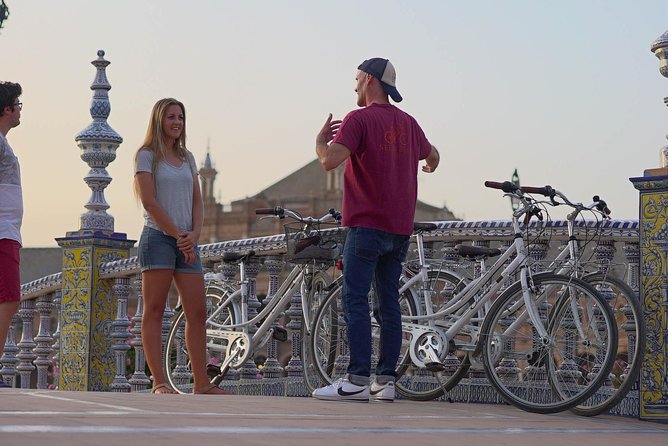
After the historic and neighborhood stops, the tour opens up. You get to Plaza de España and then the surrounding green space of Parque de María Luisa.
Plaza de España
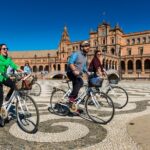
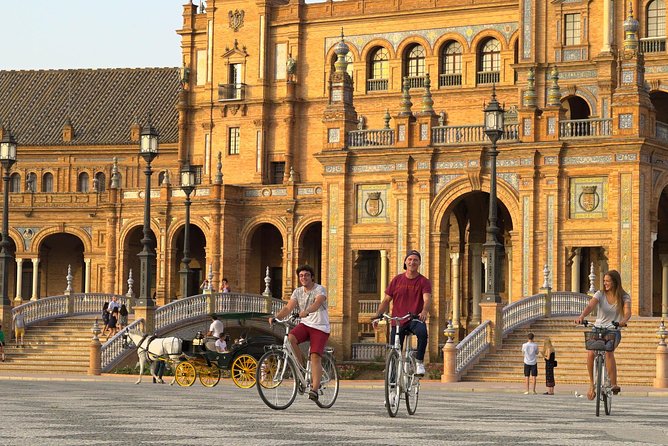
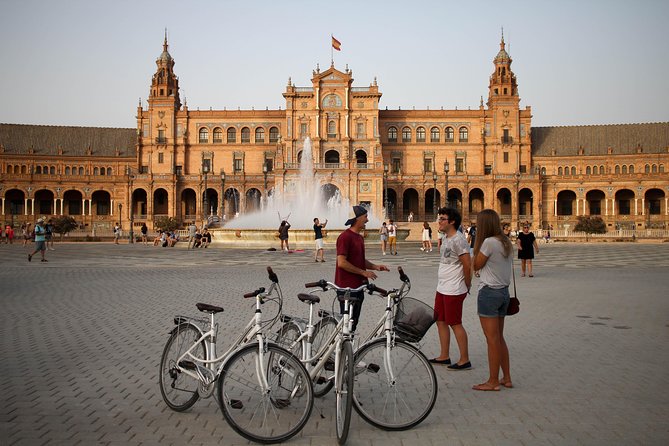
Plaza de España is one of the most iconic spaces in the city, and the tour gives you time to look around without turning it into a long detour. The value here is perspective: you see how the plaza connects visually to the park and how the area feels designed for lingering.
For photos, evening light helps bring out the colors in tiles and architecture.
Parque de María Luisa
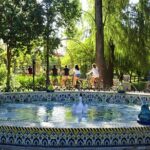
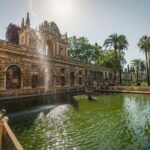
This is the shady, storybook break. You get a large green area next to Plaza de España with rows of exotic trees and broad, walkable avenues. The tiled benches, plus Moorish fountains and pools, make it feel like a garden set designed for people to slow down.
Even though the tour is on bikes, this is one of the best places to let the evening settle in. You are not just viewing buildings; you are taking in the setting around them.
Iglesia de Santa Ana, San Telmo, and the styles you can spot at street level
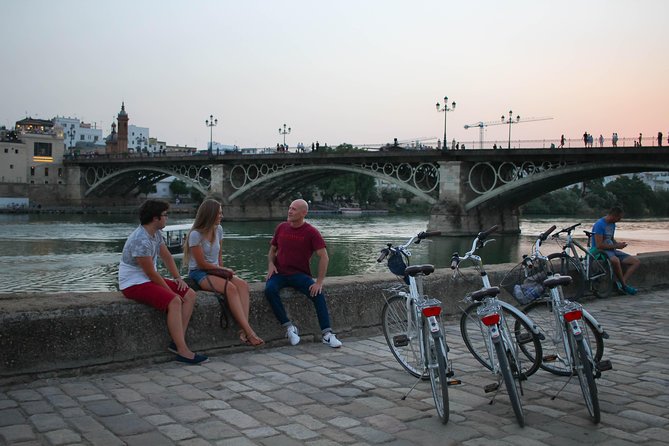
Seville is famous for mixing styles, and this tour gives you several architectural references that are easy to recognize once you know what to look for.
Iglesia de Santa Ana
Iglesia de Santa Ana dates to 1276 and is described as Gothic-Mudéjar in style. You also get the “why it looks different” points: a high, vaulted interior and a wealth of religious imagery.
Even if you only see it for a short stretch, the style label helps. Later, when you spot similar brick-and-detail work elsewhere, you will know what you are seeing.
Palau de San Telmo
Palau de San Telmo is described as Seville’s finest example of baroque style. It also has a historical role connected to the seat of the University of Navigators.
The practical takeaway: you get cultural context, not just a facade. That is the difference between seeing a pretty building and understanding why the city built it that way.
Real Fábrica de Tabacos and Plaza de América: from industry to institutions
The tour ends its “story arc” in areas that show how Seville’s historic buildings became modern public spaces.
Real Fábrica de Tabacos (now the University of Seville)
You stop at Real Fabrica De Tabacos, noted as the place linked to Europe’s most important tobacco factory. Today it functions as the University of Seville, and the tour includes time to have a look inside.
Even if you do not tour for long, this stop gives you a view of Seville beyond pure tourism monuments. It reminds you the city has always worked, produced, and educated, not just posed for postcards.
Plaza de América in Parque de María Luisa
Plaza de América sits within Parque de María Luisa and is flanked by major institutions: the Museum of Popular Arts (Neomudéjar style), the Archaeological Museum (Neo-Renaissance style), and the Royal Pavilion (Gothic style). It is also tied to the 1929 Ibero-American exhibition.
This is a great last-stop theme because it adds a modern layer to what you saw earlier. Seville is not stuck in the medieval past. The city keeps building, reshaping, and repurposing.
What you really get for $36.28 (and why it feels like a deal)
At $36.28 per person, the value comes from what is bundled.
You get:
- Bike and helmets
- Guide service
- Insurance
- A map with recommendations (restaurant and flamenco tips)
- A route that targets major sights in a short window
Most monuments listed are presented as exterior viewing stops, so you are not paying extra for a stack of entrance fees during the ride. That is a big deal if you want to keep your budget predictable.
The map is also more useful than it sounds. Seville is all about choosing your next neighborhood. A guide-led list gives you direction for dinner and evening entertainment instead of forcing you to guess.
And the guide quality matters. Reviews specifically praise guides like Daniel, Ivan, Marta, Laura, and Natalia for mixing humor with clear explanations and for sharing practical recommendations after the tour. That kind of follow-through can be worth real money on its own when you are hunting tapas or flamenco shows.
Guides and group vibe: small size, big personality
This tour runs with a maximum of 15 people. That is important in Seville because it means the guide can slow down for questions without the whole group feeling stuck.
In reviews, guides were praised for humor and entertainment, especially Daniel and Ivan. Marta was highlighted for passion and for making the tour feel like you left with a friend in town. Laura and Natalia also got credit for keeping the group engaged and for being friendly.
Bottom line: you are not just listening to facts. You are getting a street-level perspective, including tips for where to eat and what to do next.
Who should book this sunset bike tour
I think this is a strong match for:
- First-time visitors who want a smart introduction to Seville fast
- People who like seeing neighborhoods, not just monument photo stops
- Travelers who want a guide’s opinion for tapas and flamenco after the ride
- Families looking for a shared activity that is still structured
If you are a brand-new cyclist, you will likely be okay if you can ride at a gentle pace and feel comfortable stopping and starting. Reviews describe the ride as relaxed and safe, but it is still a bike tour, not a stroller-and-everyone-walks setup.
If you expect long interior tours of the cathedral or the Alcázar, you might prefer a ticketed, timed-entry monument plan on another day. This tour is about movement and context, with exteriors and short viewing windows.
Should you book this sunset bike tour?
Yes, if your goal is to get oriented, hit the big highlights, and leave with a plan for dinner and flamenco. The combination of helmets, insurance, a small group, and a guide who shares useful recommendations is a real value.
You should book with extra attention if you are strict about timing. The name is Sunset, and one review mentions that it did not feel like sunset as expected. To avoid disappointment, treat the tour as an evening-friendly ride rather than a guaranteed last-minute-of-sunset moment.
If you want a city you can read at street level, on two wheels, this is one of the best ways to do it.
FAQ
How long is the sunset guided bike tour in Seville?
The tour is listed as about 3 hours.
What does the price include?
It includes a bike, a guide, insurance, helmets, and a map with recommendations such as restaurants and flamenco tips.
Do I need to buy tickets for the stops?
For the stops listed, admissions are shown as free and the tour notes exteriors for major sites like the cathedral and Alcázar. The tour also includes time to look inside the Real Fábrica de Tabacos area.
Is the tour suitable for beginners or families?
It is described as family-friendly and suitable for all ages and skill levels, and most travelers can participate. Children must be accompanied by an adult.
What language is the tour offered in?
The tour is offered in English.
Where do I meet for the tour?
Meet at SeeByBike – bike tours Seville, at Mercado del Arenal, C. Pastor y Landero, 4, Casco Antiguo, 41001 Sevilla, Spain.
What happens if the weather is poor?
This experience requires good weather. If it is canceled due to poor weather, you will be offered a different date or a full refund.