REVIEW · SEVILLE
Seville In Season- City Highlight Tour
Book on Viator →Operated by Hop On Bike Tours · Bookable on Viator
In This Review
- How to Get Oriented in Seville Fast
- Key Points You’ll Appreciate
- Price and What You Actually Get for $36.20
- Meeting Point on the River Walk: Start Where the Route Makes Sense
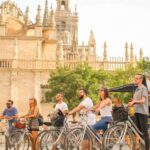
- Riding the Bike Loop: The Real Benefit Is the Pace
- Puente de Isabel II and Triana Bridge Views: Seville’s Waterline Story
- Triana: Flamenco Roots, Ceramics, and Everyday Drama
- Iglesia de Santa Ana: Mudejar Style and the Triana Connection
- Torre del Oro: A Watchtower With a Defensive Past
- Palau de San Telmo: Baroque Power and Seafaring Training
- Real Alcázar Area: Why the Old Royal Palace Feels Different
- Plaza del Cabildo: Quiet Walls, Cathedral Music, and Old Academic Roots
- Real Fábrica de Tabacos: Carmen-Style Romance in a Working Building
- Parque de María Luisa: Exposition-Era Beauty for a Calm Bike Break
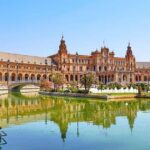
- Plaza de España: The Stage Set Seville Can’t Stop Performing
- Plaza de América: Three Buildings, One Architectural Theme
- Who This Tour Fits Best (and Who Might Want Another Option)
- Should You Book This Seville Highlights Bike Tour?
- FAQ
- How long is the Seville highlights bike tour?
- What does the tour cost?
- Is the tour offered in English?
- How many people are in a group?
- What’s included in the price?
- Where does the tour start and end?
- Do I need separate tickets for the stops?
- What if the weather is bad?
- Can I get a refund if I cancel?
How to Get Oriented in Seville Fast
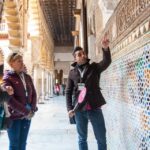
Seville is big on feel and small on time, so a short tour that strings the key landmarks together helps you get your bearings fast. I like this one because it’s built around a 3-hour loop with a relaxed pace and frequent photo stops along the Guadalquivir River and both sides of the city. You’ll glide between neighborhoods and viewpoints instead of spending your morning hunting down directions. The other two big wins for me: the small max group size and the quality of hosting (you’ll see guide names like Marco, Pablo, Veronica, Antonio, and Marcos showing up with practical local context), which keeps the ride fun and not just “checklist sightseeing.”
The one thing to keep in mind: you’re on a bike. If heat is intense or your legs are not ready for an easy-to-moderate ride, you may want to plan for breaks and go slow with the stops.
Key Points You’ll Appreciate
- A tight highlights route in about 3 hours without exhausting long museum hours
- River views + Triana atmosphere from the Puente de Triana area right into the neighborhood streets
- Iconic landmarks in smart order, so you see how Seville’s sides connect
- Helmet, water, and a bicycle included, which makes the “easy button” actually work
- Free entry is stated for each stop, so you can focus on walking a bit and taking photos
- English-guided and small-group (up to 12), which helps you ask questions and not get lost in noise
You can also read our reviews of more city tours in Seville
Price and What You Actually Get for $36.20
At $36.20 per person, this is priced like a value “orientation tour”—and that’s exactly how I’d use it. You’re not just buying transportation; you’re paying for a guide to connect the dots between Seville’s river history, architecture styles, and the stories that make places feel more than postcard images.
You also get the basics that make a bike tour smoother: a bicycle, a homologated helmet, bottled water, and liability insurance. There’s a basket, plus a map and information points (including tips on tapas and points of interest). In practice, that means you start your trip less stressed: you’re not scrambling for directions, and you’re already collecting “where to go next” ideas for later.
Meeting Point on the River Walk: Start Where the Route Makes Sense
The tour starts at Segway Sevilla Tours on C. Álvarez Quintero, 44, Casco Antiguo, 41004 Sevilla. That location matters because it places you close to the historic core and the riverfront—so the first minutes aren’t wasted on commuting.
The activity ends back at the meeting point, which is useful if you’re trying to keep your day simple. Instead of hopping across the city, you end where you started, ready to walk into lunch, find a casual tapas stop, or head toward a bigger-ticket attraction when your feet are ready.
One more practical detail: the tour is offered in English and uses a mobile ticket, so there’s less friction when you arrive.
Riding the Bike Loop: The Real Benefit Is the Pace
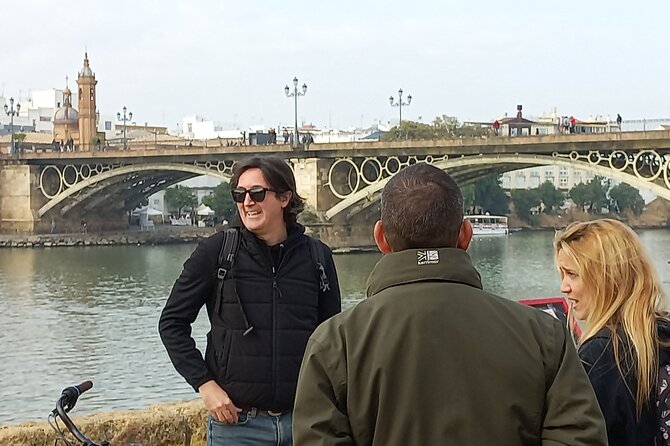
This isn’t a “march and sprint” tour. The time blocks are short—often around 10–20 minutes per stop—so you get quick orientation rather than long-winded stops. That’s good if it’s your first day in Seville (or if you just want the highlights without burning your whole schedule).
You’ll also benefit from how bike tours change your viewpoint. On foot, you feel the distance between monuments. By bike, the route gives you a sense of the city’s layout—especially the relationship between the river, Triana, and the older palace and exposition-era spaces.
Puente de Isabel II and Triana Bridge Views: Seville’s Waterline Story
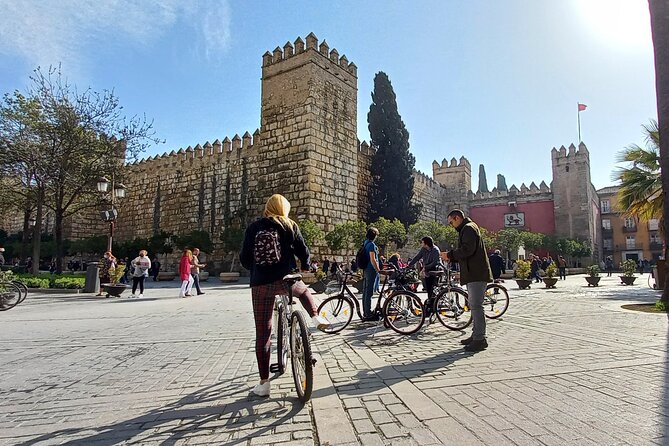
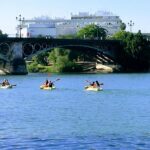
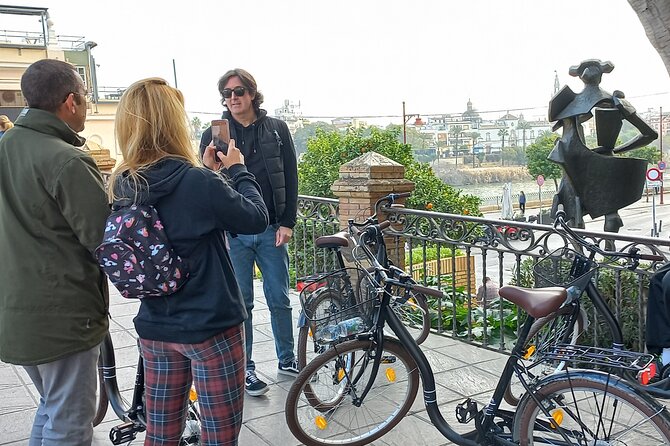
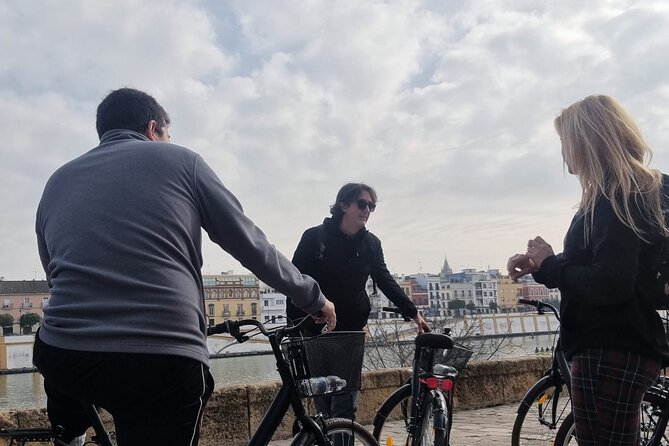
Your tour begins with Puente de Isabel II, also called the Puente de Triana. This is one of those places where Seville instantly makes sense: you get sweeping views toward the Triana neighborhood, and you can physically connect the river to the city’s identity.
The story angle here is the “Port of the Indies” connection. The banks of the Guadalquivir are tied to Columbus-era departures and arrivals—so you’re not just looking at a bridge, you’re seeing the gateway logic of Seville as a trading and navigation hub.
What to do with your time: take a few minutes at the rail for photos, then turn your attention to the neighborhood side. The contrast between “big landmark view” and “authentic neighborhood energy” is the pattern this tour keeps repeating.

Triana: Flamenco Roots, Ceramics, and Everyday Drama
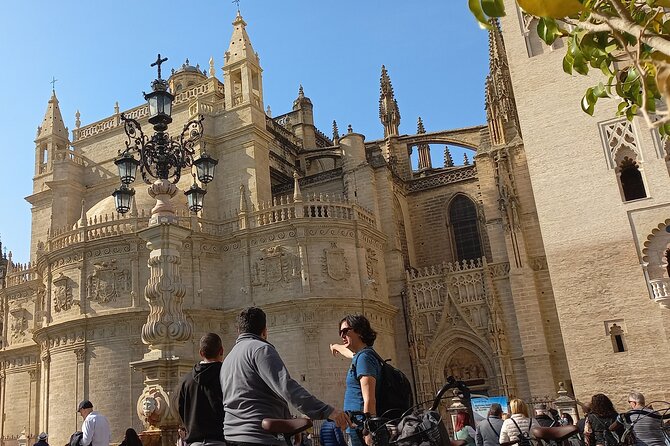
Next comes Triana itself. This neighborhood is famous for flamenco roots, and it’s also linked to other distinctly Seville stories—like important bullfighters and early Moorish ceramic production. That blend matters because Triana doesn’t feel like a themed district. It’s a lived-in place with character.
The tour keeps you there briefly (about 15 minutes), so you’re not going to become an expert on every alley. But you will leave knowing what Triana is “for”: music, tradition, and the kind of street identity that shapes how Seville sounds at night.
Small caution: since you’re riding and stopping quickly, wear comfortable shoes and don’t expect long wandering. Save the deep exploration of Triana for later when you’ve got a map you trust.
Iglesia de Santa Ana: Mudejar Style and the Triana Connection
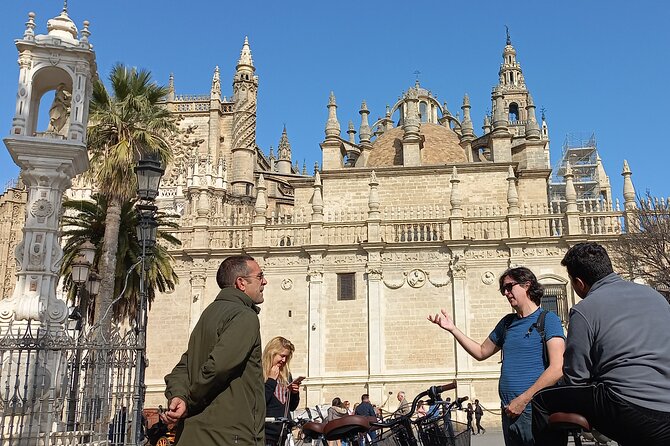
At Iglesia de Santa Ana, you’re told it’s popularly seen as the cathedral of Triana. The details here connect religion, politics, and architecture: after Muslim rule ended in 1248, this church was among the first Catholic churches built in Seville, and it’s noted for Mudejar style.
That’s the kind of stop that pays off later. Even if you barely step inside (and your time here is short), you’ll start recognizing architectural cues in the city. You also get the sense that Triana wasn’t a “side character.” It had serious cultural weight.
Torre del Oro: A Watchtower With a Defensive Past
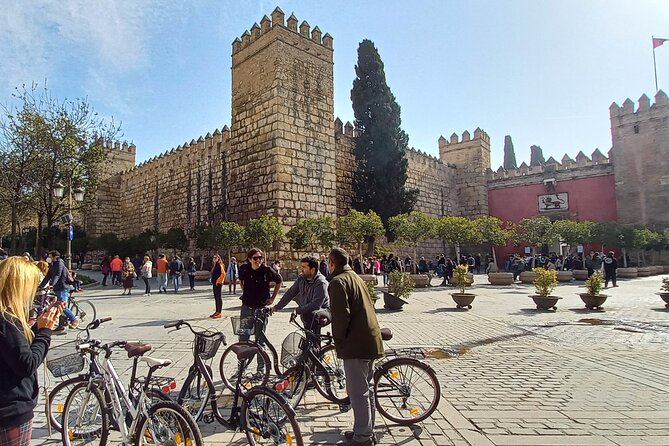
Then you roll to Torre del Oro, one of Seville’s most recognizable landmarks. The key idea: it was an Arab-built watchtower on the river’s left bank, and it originally connected to another tower by a defensive chain across the water.
That’s a fun mental image—Seville as a river fortress—especially after seeing the bridge viewpoint earlier. It also ties back to the idea that ships, goods, and movement shaped what Seville became.
Practical tip: this is a photo-friendly stop. Position yourself where you can see both the tower and the river line, because the stories make more sense when you can picture the geography.
Palau de San Telmo: Baroque Power and Seafaring Training
At Palacio San Telmo, you’re in baroque territory with an institutional present-day use: it’s the seat of the Presidency of the Junta de Andalucía. But the building’s earlier purpose is the intriguing part—it was built in 1682 as a marine academy, training ship pilots, navigators, and high-ranking officers.
So again, this tour keeps circling the same theme: Seville’s ties to the sea and navigation. It’s history you can point to, not just read on a plaque.
Why this stop matters: it’s a reminder that big civic buildings often started as specialized training or defense structures. Seville didn’t just build monuments—it built systems.
Real Alcázar Area: Why the Old Royal Palace Feels Different
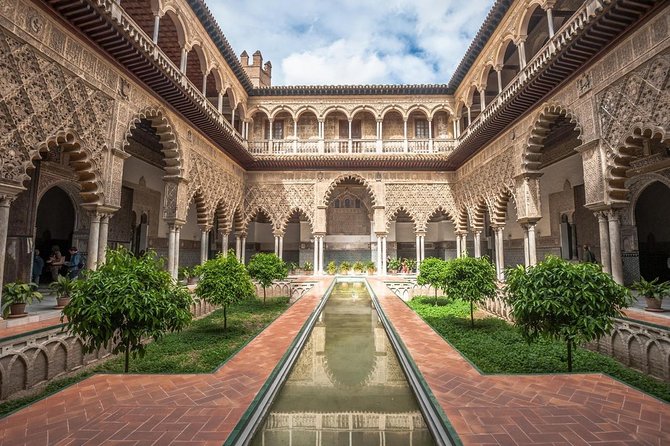
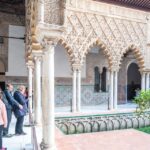
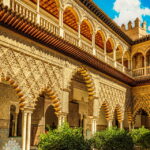
One of the biggest names on the route is Real Alcázar de Sevilla. The term “alcázar” is explained as a fortified palace, and the core idea is that this walled complex served as royal residence across different eras. It’s also described as the oldest royal palace in Europe.
If you’ve seen it in photos, you’ll recognize it immediately. If you haven’t, this stop works as a taste: you get close enough to understand why filmmakers love it, with the tour noting recent production use such as Game of Thrones filming.
Time reality: your stop is about 15 minutes. That’s not enough for a full palace visit, but it’s enough to understand where to go next if you want to spend hours inside later.
Plaza del Cabildo: Quiet Walls, Cathedral Music, and Old Academic Roots
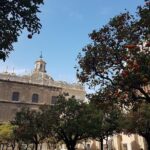
Then you move to Plaza del Cabildo, described as a peaceful haven with deep institutional ties. The space is connected to the old College of San Miguel founded by Alfonso X the Wise, and later it linked to cathedral governance and the choir boys or sixes—because the term “cabildo” refers to cathedral chapter government.
This is also where the tour becomes useful for practical planning: under the painted arches and white marble columns, you’ll find antique and philately shops, plus a candy store connected to convent cloister traditions.
What you’ll get here: a breather. If your legs and attention are starting to flag, this stop is a gentle slowdown where you can look up, take photos, and reset before the next big monument zone.
Real Fábrica de Tabacos: Carmen-Style Romance in a Working Building
Next is Real Fábrica de Tabacos, tied to the story of the opera Carmen. The tour framing includes a bold fact: it’s described as the origin of the majority of cigars made in the continent (with 75% called out). It also places the famous Carmen storyline in Seville’s tobacco factory setting, where the protagonist worked in the factory.
Even if you’re not an opera buff, this stop adds texture. It shows how industry, labor, and storytelling intersect in one building. Seville’s famous for spectacle at night, but it also has working-world grandeur.
Suggestion: keep your expectations realistic. With a short stop, your goal is recognition and context. If you’re curious to learn more, plan a separate longer visit later.
Parque de María Luisa: Exposition-Era Beauty for a Calm Bike Break
Now you get a calmer stretch at Parque de María Luisa, described as Seville’s most beautiful park and linked to the 1929 Hispano-American Exposition. It was once tied to private gardens from the Palacio de San Telmo.
The tour includes a pleasant walk and several explanatory stops at places like Glorieta de Bécquer and Plaza de América. This is where the “3 hours” format really works: you transition from monument intensity into a garden pace without losing the guided context.
Practical feel: if the day is warm, park shade and open paths can feel like a reset button. You’re also more likely to get good photos here without crowds crushing your angles.
Plaza de España: The Stage Set Seville Can’t Stop Performing
Finally, you reach Plaza de España, one of the city’s most iconic spaces. It was designed in Regionalist styles by the architect Aníbal González for the Ibero-American Exposition of 1929. The tour also notes you can see his statue there.
This stop is about scale and design. Even in a short visit, you’ll understand why people spend hours here: it’s a theatrical layout with bridges, tiled surfaces, and viewpoints that pull you from one corner to the next.
How to enjoy your time: don’t try to see everything. Pick one viewpoint and absorb the details, then walk a short arc for a second perspective. With limited time, a smart “two-angle” plan beats rushing.
Plaza de América: Three Buildings, One Architectural Theme
Next to Plaza de España is Plaza de América, where three key buildings were built by Aníbal González between 1913 and 1916 for the exposition. Each building is described as having a different architectural style.
This is a great closing note because it ties the tour together: you’ve gone from river defense and religious architecture to exposition-era design. By the end, Seville doesn’t feel random. It feels layered.
Who This Tour Fits Best (and Who Might Want Another Option)
I’d recommend this bike tour if:
- it’s your first day in Seville and you want a fast orientation
- you like short stops with guidance rather than long museum sessions
- you’re comfortable riding a bicycle and want easy momentum through the city
- you value small-group attention (max 12)
I’d consider a different option if:
- you hate cycling in sun or you’re expecting a very strenuous ride
- you need long, uninterrupted time inside major sites (your stops here are short by design)
- you’re arriving with mobility limits that would make frequent mounting/dismounting hard
It also helps if you’re the type who enjoys asking questions. The guide presence is a key part of the experience, and you’ll hear real local flavor from hosts such as Marco, Pablo, Veronica, Antonio, and Marcos.
Should You Book This Seville Highlights Bike Tour?
If you want a practical “best of Seville” overview in one morning/afternoon block, I think this is a smart buy. The price is reasonable for a guided loop that includes bike basics, water, and structured time at major landmarks. The small-group setup also makes it easier to get answers on the spot—exactly what you want when you’re deciding what to do next.
Book it if you’re planning your first day and want confidence. Skip it if you’re hoping for long interior visits. This is a highlights-and-context tour—so use it as your launchpad, then come back on foot when you want to slow down.
FAQ
How long is the Seville highlights bike tour?
The tour runs for about 3 hours.
What does the tour cost?
The price is $36.20 per person.
Is the tour offered in English?
Yes, the tour is offered in English.
How many people are in a group?
The tour has a maximum group size of 12 travelers.
What’s included in the price?
It includes a bicycle, bottled water, a homologated helmet, liability insurance, a basket, a map, and information points of interest/tapas.
Where does the tour start and end?
It starts at Segway Sevilla Tours, C. Álvarez Quintero, 44, Casco Antiguo, 41004 Sevilla and ends back at the meeting point.
Do I need separate tickets for the stops?
The tour information lists admission ticket free for the stops on the route.
What if the weather is bad?
The tour requires good weather. If it’s canceled due to poor weather, you’ll be offered a different date or a full refund.
Can I get a refund if I cancel?
Yes, you can cancel for a full refund if you cancel at least 24 hours in advance.