REVIEW · SEVILLE
Seville: Italica Roman Ruins City Tour
Book on GetYourGuide →Operated by Naturanda Turismo Ambiental · Bookable on GetYourGuide
Roman ruins that feel weirdly alive.
Italica is the first Roman city built in Spain, and it’s close enough to Seville to feel like a true half-day detour. I especially like how the tour focuses on the amphitheater and the street-level remains of the city, so you’re not just staring at stones. The big drawback to plan for: groups can run large, and timing can slip if a coach arrives late.
Here are two things I really enjoy about this tour. I like the way the guide connects the site to the emperors you’ve heard of—Hadrian and Trajan—and you come away with names that actually make sense. I also love the amphitheater stop, because you get that classic arena feeling fast, plus photo chances and Roman details that most self-guided visits miss.
One thing to consider before you book: transport to the meeting point isn’t included, and if you’re joining with bus timing, you may have to wait for the group transfer schedule to line up.
In This Review
- Key points to know before you go
- Italica From Seville: a smart Roman detour
- How the 2-hour flow works at the main entrance
- The Amphitheatre of Italica: where the best drama happens
- Italica’s ruins and mosaics: seeing Roman daily life
- Hadrian and Trajan stories that actually click
- Skip-the-line entry and group dynamics: smart planning
- Value check: is $21 worth it?
- Who should book Italica, and who should skip it?
- FAQ
- FAQ
- How long is the Italica Roman ruins city tour?
- What is included in the ticket price?
- What is not included?
- Where do I meet the guide?
- Which languages are available?
- Are there any language availability rules for Italian or French?
- Is the tour offered in private or small groups?
- Can I cancel for a refund?
- Can I reserve and pay later?
- How far is Italica from Seville?
- Should you book this Italica tour?
Key points to know before you go
- Skip-the-line entry gets you inside without burning your limited 2 hours
- Amphitheater focus means you’ll see the big showpiece quickly
- Guides bring stories to life (I’ve seen strong performances from Juanra, Miguel, and Jesus)
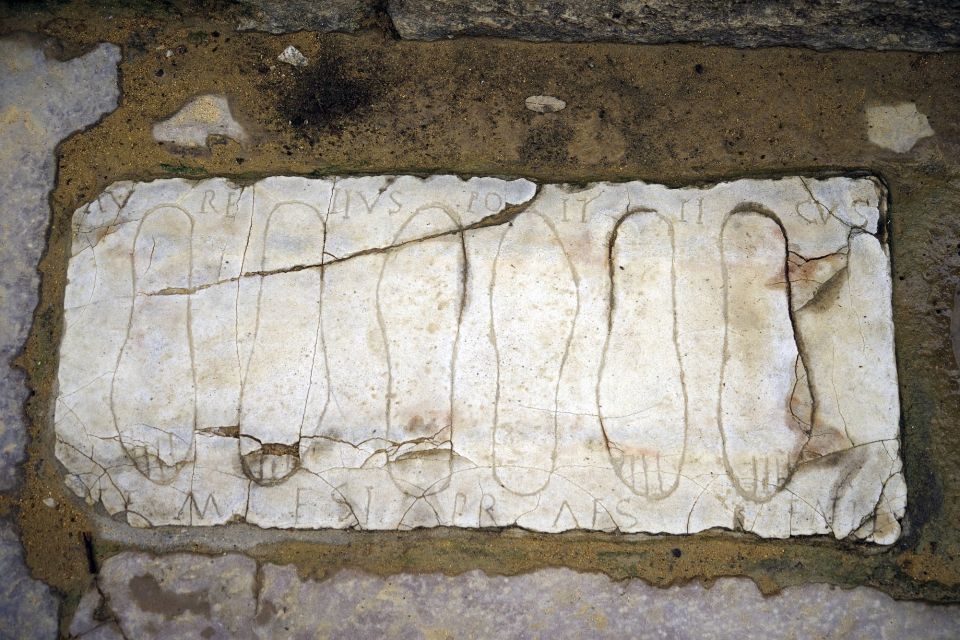
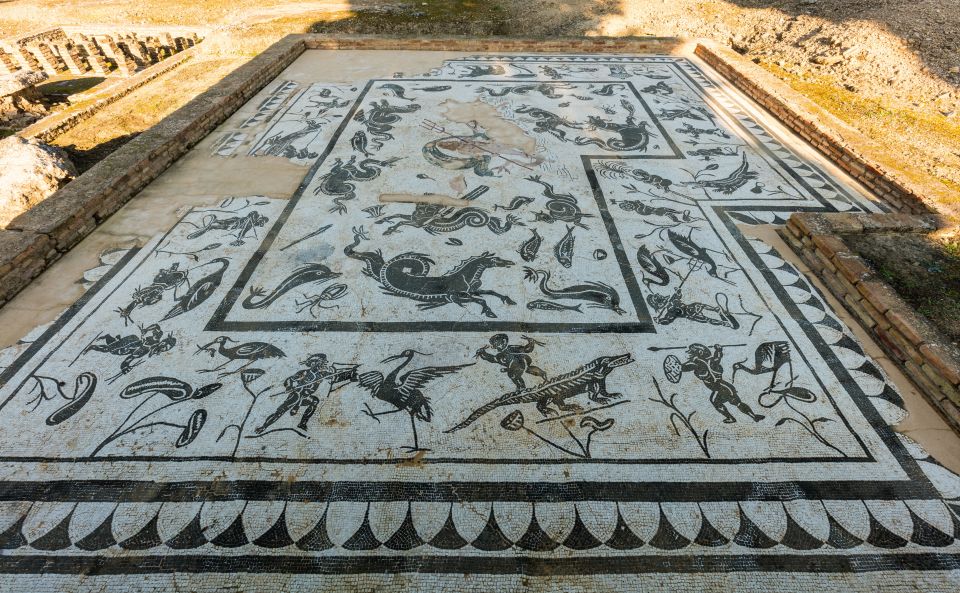
- Mosaics and floor tiles are a major payoff if you like Roman domestic life
- Group size affects comfort and audio when tours mix languages
- You’ll start at the main Italica entrance on Avenida de Extremadura 2
Italica From Seville: a smart Roman detour
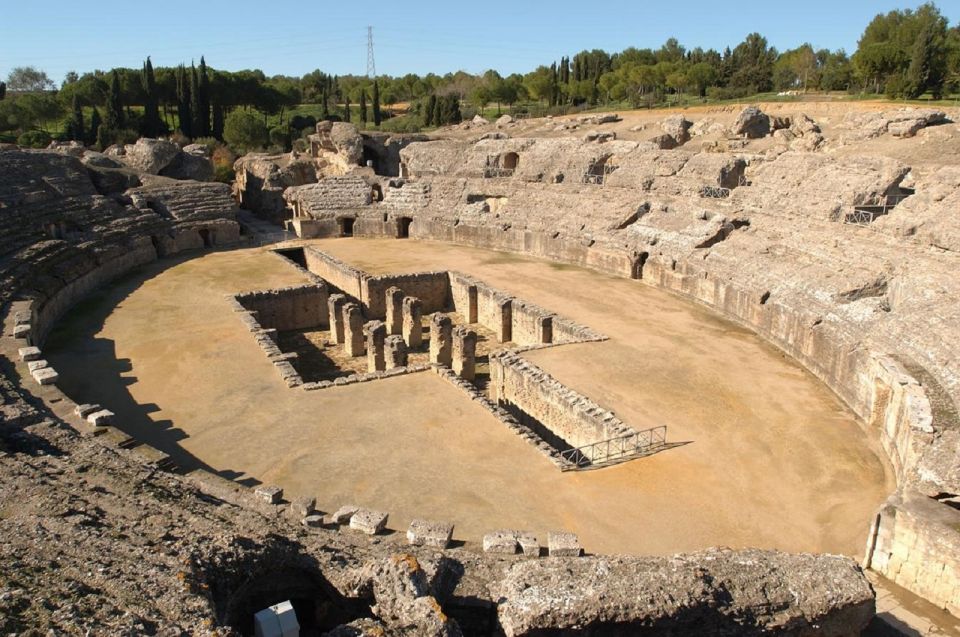
Italica sits in Andalusia, about 8 kilometers northwest of Seville, in the Santiponce area. It was founded in 206 BC after the battle of Ilipa, which makes it feel less like a random ruin and more like a real origin story for Rome in Spain. The second-century expansion under Hadrian and Trajan adds weight to what you’re seeing, even if you only know the emperors by name.
This is also one of those places where Roman Spain doesn’t feel distant. The amphitheater is still the main magnet, and it’s tied to modern pop culture because HBO used it as a filming location for scenes in Game of Thrones. That means you’ll walk in with instant visual recognition, then your guide turns that recognition into context and details you can’t get from a postcard.
If your goal is a single, efficient tour that still feels meaningful, Italica fits. You’re not trying to conquer an entire city; you’re zeroing in on one exceptional archaeological site and letting a guide help you read it.
You can also read our reviews of more city tours in Seville

How the 2-hour flow works at the main entrance
The tour meets at the main entrance to the Italica archaeological site: Avenida de Extremadura 2, 41970 Santiponce. Your guide is waiting there to start you off, which is a big deal when you’re short on time and don’t want to wander around figuring out where the group is.
The timing is structured like a sprint, not a marathon. You get a brief stop at the amphitheater first—think photo moment plus guided orientation (about 15 minutes). Then you shift into the main part of the ruins visit, with the longer guided stretch (about 75 minutes) where the tour slows down and you actually connect the layout to everyday Roman life.
Because it’s only 2 hours, you should plan to move with the group. Bring the right mindset: you’re here to get the big picture and a few standout details well, not to inspect every corner like a solo archaeologist.
The Amphitheatre of Italica: where the best drama happens
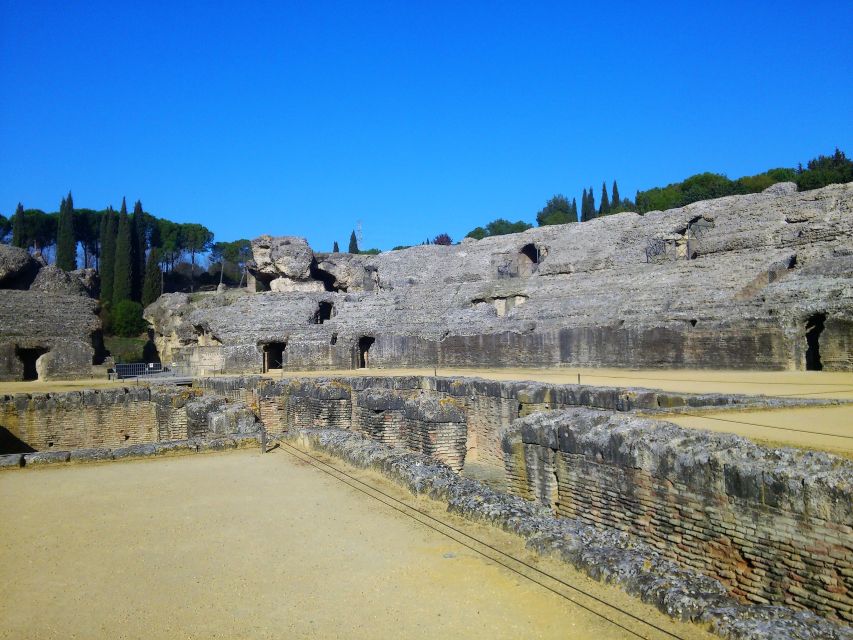
The amphitheater stop is where most people fall in love with Italica. It’s the place you can understand immediately: seating, the arena shape, the sense of how crowds moved. The tour includes a photo stop and a short guided look so you can lock in the layout before you move on.
And yes, it’s connected to Game of Thrones, so you’ll likely spot the same visual mood that stuck in your mind from the TV show. Just don’t stop at the screen-connection. This is where your guide’s stories matter most, because you’ll hear how Romans designed public entertainment and how the site’s features shaped the experience.
One practical tip: after the guided portion ends, you might find time to explore a bit around the amphitheater interior views. I’ve heard people enjoy checking out the area known as the vomitorium and seeing how it frames sightlines into the arena. Even if you don’t go deep on your own, that kind of “one more look” is often what makes the stop feel complete.
Italica’s ruins and mosaics: seeing Roman daily life
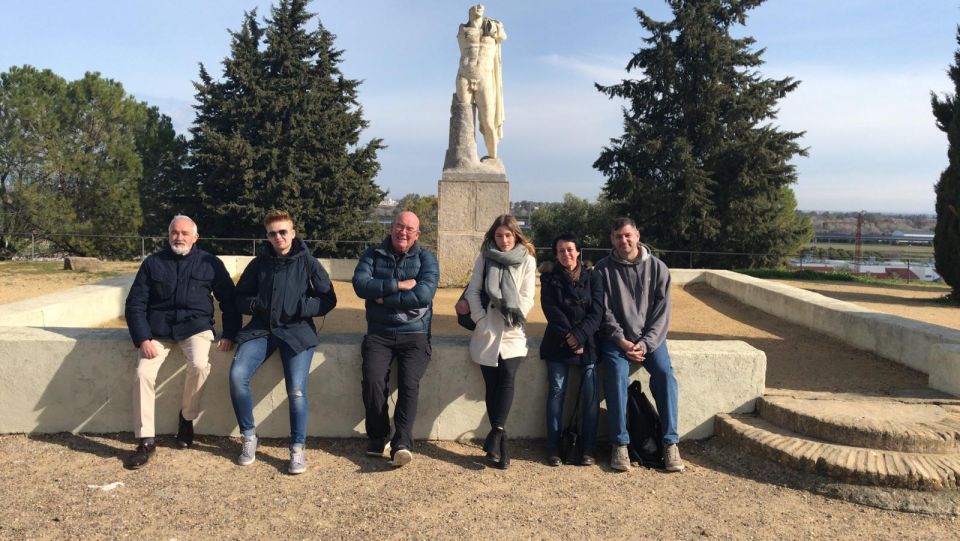
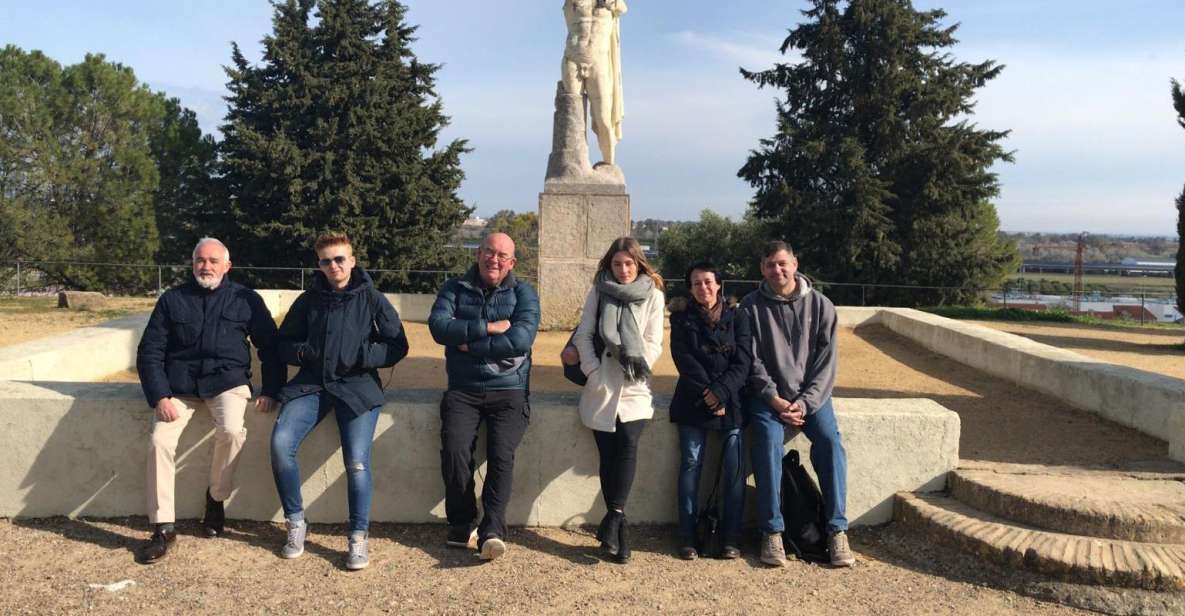
After the amphitheater, the tour moves into the broader Italica remains. This is where I think the value shows up, because the longer 75-minute block gives you time to absorb details instead of just marching past them.
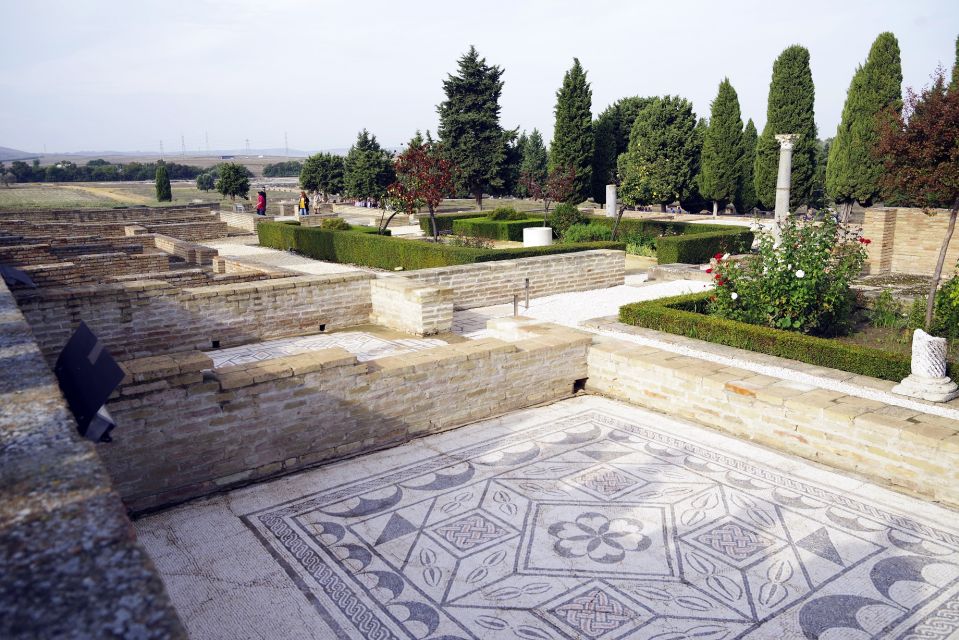
One standout here is the quality of the floor and tile work. You may spot mosaic patterns and decorative floors tied to residential structures—exactly the kind of thing that’s easy to miss if you’re walking alone. If you like Roman art in a human scale (not just grand monuments), this part pays off quickly.
You’ll also get a better feel for how the city was laid out. The ruins aren’t randomly scattered; they hint at homes, routes, and how people lived. A good guide helps you connect those dots, which is why group tours work better here than a quick drive-by.
The city remains are spread out enough that pace matters. If your group is larger, you can feel the pressure of moving forward and not always stopping where you want. Still, the combination of mosaics, domestic remains, and the amphitheater backbone is a strong, focused mix for a two-hour visit.
Hadrian and Trajan stories that actually click
Italica isn’t just ancient rubble. It’s tied to Roman power through Hadrian and Trajan, two of the empire’s most important emperors. The tour framing matters here: you don’t just hear names, you hear why this place mattered and how it grew during the second century.
This is also where guide performance becomes the difference between a good visit and a memorable one. In particular, I’ve seen tours led with real energy and storytelling—names like Juanra, Miguel, Jesus, Carlos, Manuel, and Barbara have shown up in strong guided experiences. The best guides do two things: they keep you oriented, and they make the place feel like it had purpose beyond its ruins.
If you’re the kind of traveler who likes history with scenes and cause-and-effect, this tour’s emphasis on emperors and the city’s expansion gives you that sense of continuity. If you’re more into architecture or art, the amphitheater and mosaics still keep things grounded.
Either way, you’ll come away with a clearer understanding of why Italica is treated as one of the major archaeological sites in Spain.




Skip-the-line entry and group dynamics: smart planning
You’ll get skip-the-line entrance, which is one of the simplest quality-of-life upgrades you can buy in a place like this. When your tour window is only two hours, waiting outside turns your visit into a clock-watching exercise. With the skip, you start seeing things faster.
Languages are another practical factor. Tours run in Spanish, English, French, and Italian, and you can also choose private or small groups. For Italian and French, there’s a minimum number requirement to operate; if that minimum isn’t met, you’ll have options to switch language or get a full refund. It’s worth checking what language you’ll actually be joining before you assume.
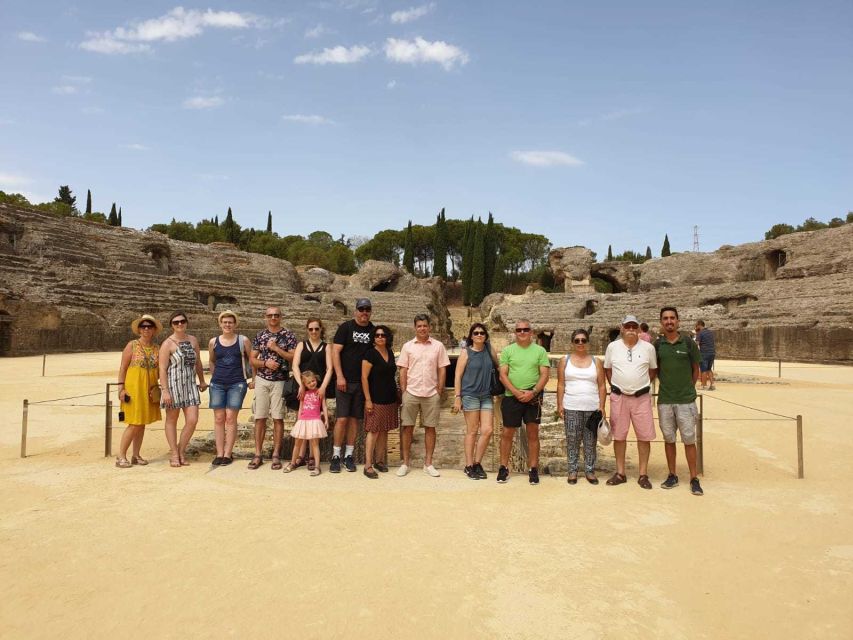
Group size can affect how much you hear. Some tours work smoothly; others can feel stretched if a bus group delays the start or if multiple languages create a back-and-forth in the crowd. If you want the cleanest experience, look for smaller groups when available, or at least choose a language that matches the majority of your group.
Also keep this in mind: transport to the meeting point isn’t included. If you’re coordinating with any bus transfer, build in some buffer. The site visit is short, so being early and ready helps you avoid losing minutes when the group is assembling.
Value check: is $21 worth it?
At about $21 per person for a 2-hour guided tour, the price works out best if you value two things: (1) a focused route through the site and (2) time saved by skipping the ticket line. You’re not just paying for entry—you’re paying for orientation and interpretation, especially at the amphitheater and in the longer ruins segment.
What’s not included matters. You handle transport to Avenida de Extremadura 2 yourself, and food and drinks aren’t part of the tour. That means the total cost depends on how you get there from Seville (and how you handle a snack break, if you want one).
Still, for most visitors, the guided structure is the big win. Italica can be overwhelming if you’re walking without help. With a guide, you’re more likely to leave knowing what you saw and why it mattered, instead of just collecting photos.
If you’re choosing between a self-guided ticket and this guided tour, I’d pick the guided one for a first visit. For a second visit, you might go solo to linger where you liked things best.
Who should book Italica, and who should skip it?
Book this tour if you want a quick Seville-area day plan with a strong Roman centerpiece. It’s especially good for people who like: amphitheaters, mosaics and floor decoration, and history tied to recognizable names like Hadrian and Trajan. Families also tend to do well because the tour can balance big visuals with clear explanations, and the group stays manageable when it’s not oversold.
Skip or reconsider if you dislike group pacing or you know you’ll struggle with mixed-language situations. In larger groups, it can be harder to hear every detail, and you might feel the schedule pressure. Also, if you hate coordinating transport, remember this tour won’t get you to the meeting point.
The best bet for comfort is a private or small-group option, ideally in English (or your preferred language) and with enough time margin so you’re not stressed about late starts from transfers.
FAQ
FAQ
How long is the Italica Roman ruins city tour?
The tour is listed as 2 hours.
What is included in the ticket price?
You get a skip-the-line entrance ticket and a local guide.
What is not included?
Transport to the meeting point and food and drinks are not included.
Where do I meet the guide?
Meet at the main entrance to the Italica archaeological site at Avenida de Extremadura 2, 41970 Santiponce, Seville.
Which languages are available?
The live guide is offered in Spanish, English, French, and Italian.
Are there any language availability rules for Italian or French?
Yes. For the Italian and French tours, a minimum number is required. If that minimum isn’t met, you’ll have the option of another language or a full refund.
Is the tour offered in private or small groups?
Yes. The tour lists options for private or small groups.
Can I cancel for a refund?
Yes. Free cancellation is offered up to 24 hours in advance for a full refund.
Can I reserve and pay later?
Yes. You can reserve now & pay later, meaning you pay nothing today.
How far is Italica from Seville?
Italica is located about 8 kilometers northwest of Seville.
Should you book this Italica tour?
Yes, if you want a short, high-impact Roman stop with skip-the-line entry and a guide who connects the amphitheater and ruins to the emperors behind Italica’s rise. It’s also a strong choice if you’re going to spend most of your day in Seville and you want a tidy plan that doesn’t eat the whole day.
If you’re sensitive to group size and timing, aim for a private/small group option and plan your trip to the meeting point with buffer time. Do that, and you’ll get the good kind of Roman magic: a couple hours that leaves you with more than photos.