REVIEW · VALENCIA
Valencia: World of Illusions Museum Entry Ticket
Book on GetYourGuide →Operated by MUSEO MUNDO DE ILUSIONES VALENCIA · Bookable on GetYourGuide
Your eyes will argue with your brain. This Museum of Illusions in Valencia turns your ordinary senses into a real-time puzzle, with visual challenges that test what you think is logical. I love the way optical illusions turn the gallery into something you actively experience, not just a room you walk through.
I also like that the museum packs in over 70 works plus 20 interactive experiences, so there’s a good chance you’ll have hands-on moments, not only eye candy. One thing to think about: at $15, it may feel like a tough value if you’re going with very young kids, or if you’re expecting a long, guided, explanation-heavy experience.
In This Review
- Key takeaways before you go
- Museum of Illusions in Valencia: what you’re really paying for
- Tickets, skip-the-line, and choosing a time that works
- Stepping into the gallery: how the museum keeps tricks believable
- Interactive installations: the moments that make the experience stick
- Pacing and expectations: why some people feel it’s short
- Price and value: $15 can be great or annoying
- Accessibility and comfort: what you can rely on
- Language inside: how to handle original-language content
- Who should book this ticket?
- Should you book the Valencia Museum of Illusions?
Key takeaways before you go
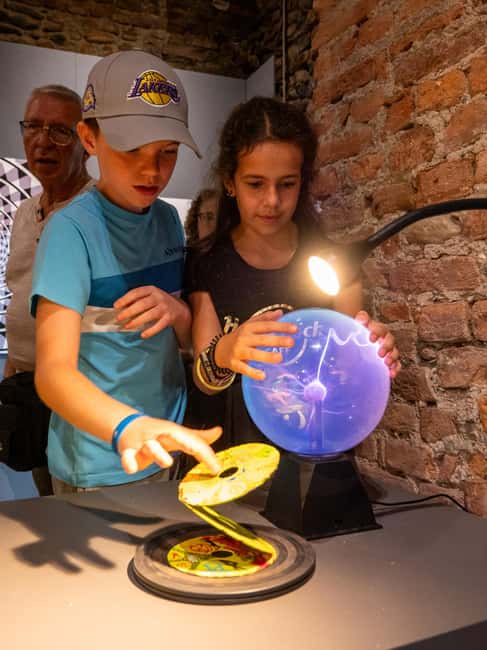
- 70+ works and 20 interactive experiences: enough variety that you won’t feel stuck in one type of illusion.
- Artesanos neighborhood location: easy to reach while exploring Valencia’s local side.
- Skip the ticket line: less waiting time for the fun to start.
- Works through visual logic: it’s built around perception tricks, not a history lecture.
- Best with friends: it’s more fun when you can compare what you see with more than one person.
- Some content is in the original language: go in with an easy attitude and focus on the visuals.
Museum of Illusions in Valencia: what you’re really paying for
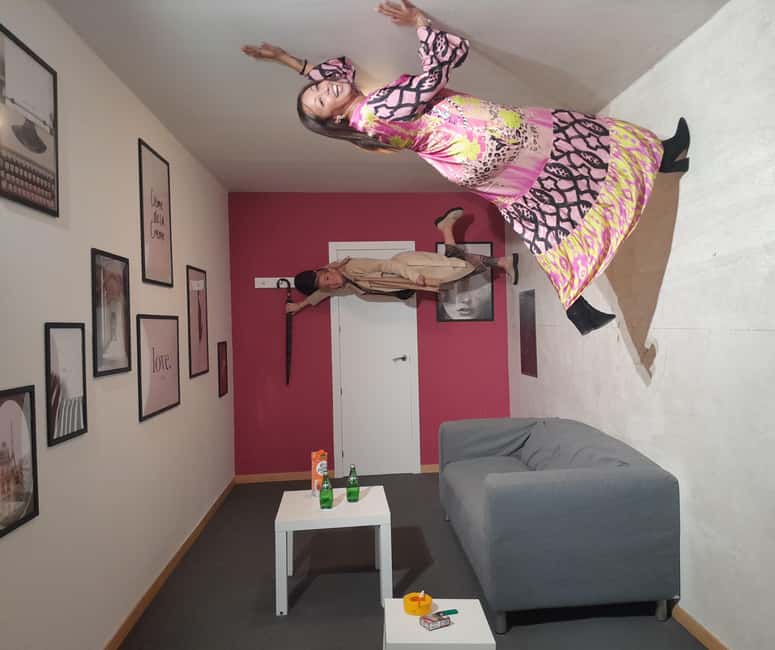
This isn’t a passive museum. It’s more like a sequence of visual problems—little moments that make you stop, look again, and question your own certainty. The whole concept is simple: reality gets bent, and your senses have to keep up.
The museum sits in the Artesanos neighborhood, which helps. You’re not traveling out to a far-off attraction where you only go for one stop. You can fold this into a broader Valencia day with other sights and meals, then come back later with your brain slightly off-balance (in a good way).
At the top end of the experience, you’ll encounter surreal scenes and optical puzzles meant to be seen up close. The museum’s format is built to keep you moving through different setups, so you’re not stuck watching one long presentation.
A few more Valencia tours and experiences worth a look



Tickets, skip-the-line, and choosing a time that works

The ticket is $15 per person and includes museum entrance only. That matters for expectations: you’re buying access to the rooms and installations, not a guided tour with a set narrative.
Good practical note: you can skip the ticket line. That’s worth something in busy travel moments. Instead of spending time waiting, you get to spend time testing your perception.
Your ticket is valid for 30 days, which is helpful if your plans are fluid. You’ll also see starting times when you check availability, so you’ll likely want to pick a slot that matches your day. If your schedule is flexible, this “choose later” approach makes it easier to avoid rushing.
Stepping into the gallery: how the museum keeps tricks believable
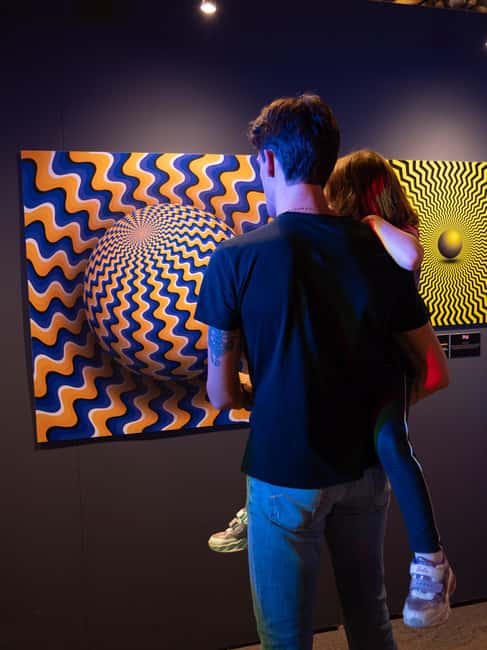
Once inside, the experience is designed around one core idea: your eyes and brain come with habits. The installations try to break those habits—sometimes with perspective, sometimes with how surfaces and angles fool you.
What I like about this style is that you don’t need special knowledge. You don’t need to be an art expert or a science fan to get value from the experience. You just need to look carefully and be willing to admit you might be wrong for a moment.
The gallery moves through different works (over 70 in total), so the museum doesn’t rely on just one clever setup. That helps prevent the “same trick, different wall” feeling. Instead, you’re likely to encounter a mix of visual challenges that reset your attention as you go.
One practical consideration: if you want a lot of staff-led explanation, you might find the experience more self-driven than you expect. Some visitors appreciate that freedom; others wanted more detail on what they were seeing and why it works.
Interactive installations: the moments that make the experience stick
The biggest strength of the Museum of Illusions in Valencia is the amount of interaction. The museum includes 20 interactive experiences among its broader set of works. That’s where your visit becomes more than observation.
Interactive doesn’t just mean pressing buttons. It often means positioning yourself, changing your viewpoint, or responding to what the installation is “asking” from you visually. This is the part where you’ll feel your perception shifting from passive to active. You stop being a viewer and start being part of the illusion.
Why this matters for value: an interactive museum works better when you feel like you’re doing something. Even if some installations are quick, you’re more likely to leave feeling like you participated rather than simply looked around.
Also, these kinds of exhibits tend to spark conversation. More than one person in your group can notice differences, compare interpretations, and laugh at the moments when the illusion wins.
If you’re going as a pair, you might move through faster than expected. Some people recommend going with more than two because it adds a social layer: you can point out what you think you’re seeing, then compare when someone else notices something different.
Pacing and expectations: why some people feel it’s short
Here’s the honest balance: the museum is compact by design. It’s meant to be a string of moments, not an all-day academic program. That can be perfect if you want something light and fun between meals and sightseeing.
But it can also lead to disappointment if you expect a long, drawn-out experience or a lot of narration. One visitor experience described it as barely a few minutes, which tells me that the museum’s pacing can feel too quick if you race through or if the installations don’t land for you.
My advice: don’t rush. If an installation makes you doubt your eyes, slow down. Spend an extra minute. Switch your position. Look from the sides. Even simple adjustments can change what the illusion shows you.
If you’re the type who likes to read every sign and learn every explanation, you may want to mentally budget time for that too. If you’re more of a “show me, don’t tell me” person, you’ll probably enjoy the freedom.
You can also read our reviews of more museum experiences in Valencia




Price and value: $15 can be great or annoying

Let’s talk money. $15 is a straightforward ticket price, and the museum offers enough variety (70+ works and 20 interactive experiences) that it can feel like good value if you enjoy perception games and photo-friendly surprises.
But $15 isn’t automatically a bargain. The value depends on how you experience illusions:
- If you love visual puzzles and hands-on moments, you’ll likely feel satisfied.
- If you’re unsure you’ll engage with interactive exhibits, you might feel like the museum is overpriced.
- If you’re bringing kids, it can be a tougher sell. Some people felt it was not the right fit for children, and that it didn’t justify the price.
So, the best value comes from aligning your visit with your style. If your brain enjoys being tricked (politely), you’ll probably get your money’s worth.
Accessibility and comfort: what you can rely on
The museum is listed as wheelchair accessible, which is a big plus. For planning, you can feel confident that this isn’t an attraction that automatically blocks mobility needs.
As for comfort, there’s no detailed info here about seating or breaks, so if you need downtime, you’ll want to plan accordingly as part of your Valencia day. Keep your visit light if you know you get tired quickly.
Language inside: how to handle original-language content
Some content is shown in its original language. The key here is how to approach it without stressing. You don’t need to perfectly understand text to experience the installations, since the core is visual.
I’d treat it like this: read what you can, then focus on the images and the setups. If you’re relying on explanations to fully enjoy it, you might want to be ready for a more self-guided experience.
Who should book this ticket?
This is a great pick if you:
- love optical puzzles and visual surprises
- want a fun indoor stop that doesn’t require museum knowledge
- enjoy interactive exhibits where you test different viewpoints
- are traveling with friends and want shared “Did you see that?” moments
It may not be your best choice if you:
- need a long, structured guided tour
- expect a heavy explanation format for every exhibit
- are planning a family day and the kids need constant guidance and kid-targeted content
The mixed feedback makes sense. Museums like this can be either a hit or a quick pass depending on your expectations and how patient you are with the playful side of perception.
Should you book the Valencia Museum of Illusions?
I’d book it if you want a practical, fun, photo-and-perception experience that you can fit into a day in Valencia. The math works better when you enjoy interactive exhibits, because the museum includes 20 interactive experiences and 70+ works, not just a couple of gimmicks.
I’d skip it (or rethink) if your main goal is entertainment for very young kids, or if you only enjoy attractions that offer lots of guided explanations. At $15, it’s worth making sure the illusion style matches your taste.
If you’re curious and you like being surprised by your own senses, this ticket is a solid way to spend a chunk of time in Valencia’s Artesanos area.