REVIEW · MALAGA
Visit Oil Mill Museum and Olive Oil Tasting in Ronda
Book on Viator →Operated by LA Organic Experience · Bookable on Viator
Olive oil meets art in Ronda. At LA Organic, you’ll see a modern oil-mill space, stroll through olive groves and organic vineyards, and end with an olive oil tasting you can actually compare side by side.
I especially like the art + agriculture setup, from photo displays designed by Stefano Robotti to installations credited to Philippe Starck. The visit also moves at a human pace, with time to watch a short production video and then focus on the tasting.
One thing to consider: the tour can run in more than one language, so if you only follow English, you may feel like you catch key points a little later than you want.
In This Review
- Key highlights that make this oil mill museum worth your time
- LA Organic’s greenhouse complex: modern oil milling meets curated outdoor views
- The 5-minute video that sets you up for better tasting
- The walk between olive groves and organic vineyards (and yes, there are surprises)
- The oil tasting: compare varieties, then taste with bread and vinegar
- After the tasting: museum time, shopping, and relaxing on the terrace
- Where it fits in a Ronda day: a half-morning plan that doesn’t eat your time
- Price and value: what $30.23 includes (and why it’s more than a sample)
- Optional lunch after your tasting: a simple add-on with local ingredients
- Who should book this oil mill museum experience
- Should you book LA Organic oil mill and olive oil tasting in Ronda?
- FAQ
- How long is the Oil Mill Museum and Olive Oil Tasting tour in Ronda?
- What is the price per person?
- What’s included in the tour price?
- Where does the tour start?
- Is the tour offered in English?
- Is there an optional lunch, and is it included?
Key highlights that make this oil mill museum worth your time
- Art installations built into an working olive setting rather than a typical museum setup
- A short video intro that ties the olive story to how oil gets made
- A guided route between olive groves and organic vineyards with surprises along the way
- Organic olive oil tasting by variety, including a blind-style comparison (bread and vinegar on the side)
- A greenhouse complex that gives you more than one “room” to explore, including terraces
- Small-group feel with a maximum of 30 travelers
LA Organic’s greenhouse complex: modern oil milling meets curated outdoor views
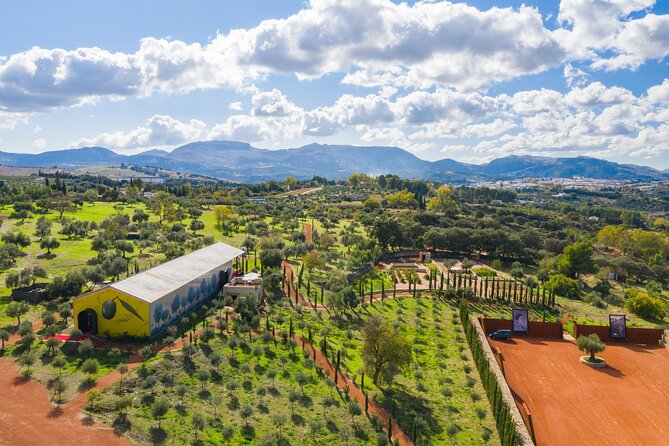
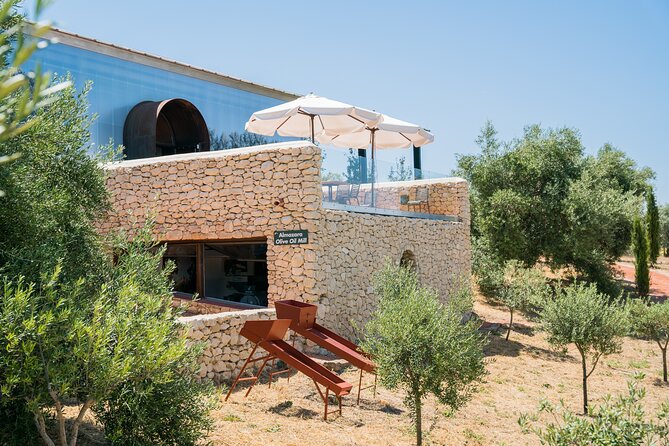
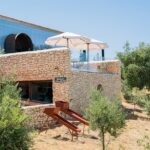
LA Organic is not a dusty, old-world factory tour. It’s a sleek, modern visitor site built to explain olive oil with both hands-on space and visual storytelling. The main starting point is a greenhouse area that gathers several functions under one roof and a couple of terrace viewpoints.
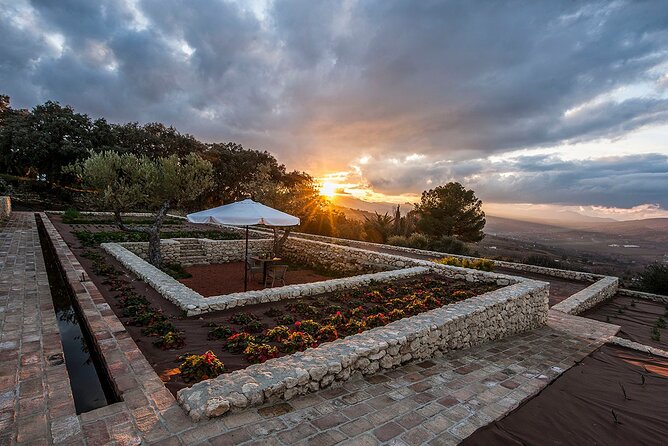
From the first moments, you’re guided into an environment that feels like it was designed for flow: there’s an artisanal oil mill space, a projection room, a gastronomic bar, a dedicated tasting room, and terraces where you can look out over the property. If you like tours that teach without feeling like a classroom, this design helps.
Before the walk begins, there’s also an impressive exhibition of photographs in the car park area, with the space designed by Stefano Robotti. It’s an odd place to start a food tour, but that’s part of the charm: you’re primed to look at the olive world as something cultural, not just agricultural.
You can also read our reviews of more food & drink experiences in Malaga


The 5-minute video that sets you up for better tasting
Early on, you’ll watch a short video—about five minutes—on the history and origins of olive oil, plus the production process. It’s brief by design. The payoff is that when you reach the tasting, you’re not just smelling and guessing.
Here’s what this kind of intro does well: it gives you a simple framework for what to pay attention to. You’ll start thinking in terms of olive variety and how production choices can influence the final oil. That makes the tasting feel less like a sample plate and more like a mini lesson you can actually taste.
The walk between olive groves and organic vineyards (and yes, there are surprises)
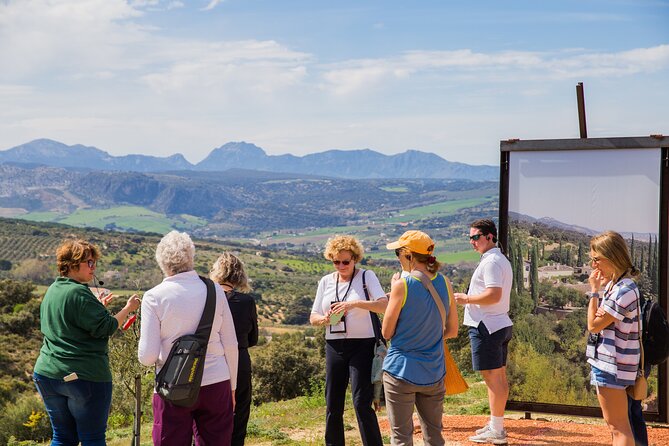
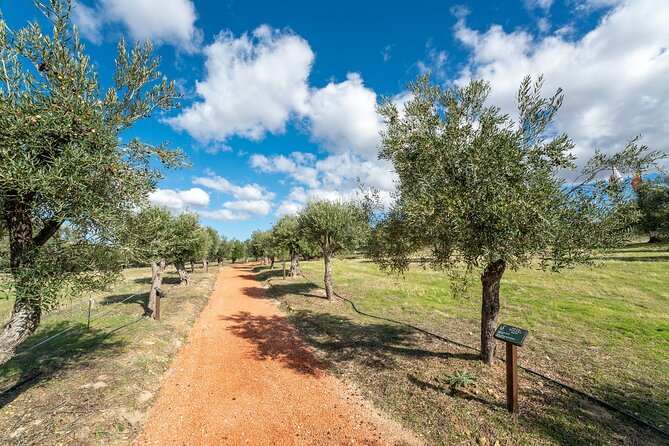
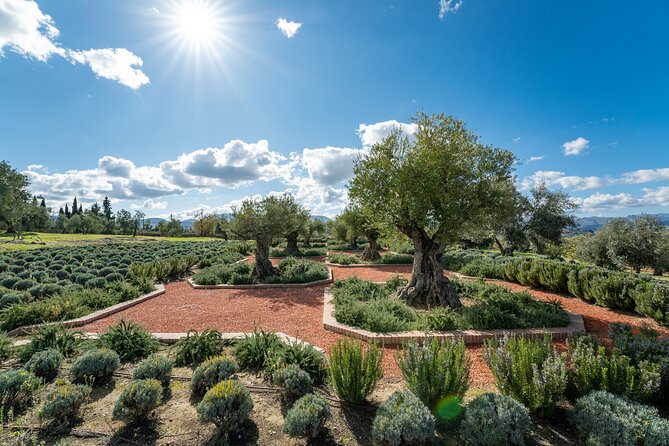
After the video, the tour shifts into outdoors mode. You’ll travel between olive groves and organic vineyards with a guided route. This is the part that most people remember because it connects the tasting to the real inputs: trees, growing conditions, and the land itself.
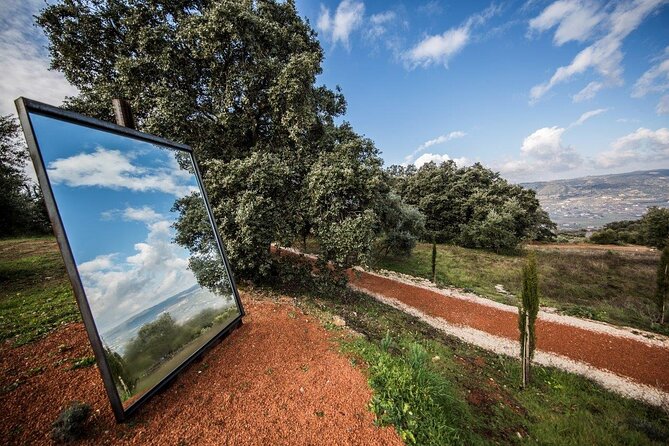
As you walk, the property includes artistic surprises. One theme that comes up in the way this site is described is that art is threaded into the scenery rather than placed beside it. Philippe Starck is associated with some of these surprises, and the overall idea is that you’re meant to look around while you learn.
Practical note: the experience is built around walking, and it’s not just a flat stroll. Wear comfortable shoes. You’ll be on your feet long enough that blister-proof planning is smart.
If you’re sensitive to low light, keep in mind there can be darker museum areas during the visit. You don’t need to turn it into a problem, but bringing your eyes prepared is helpful.
The oil tasting: compare varieties, then taste with bread and vinegar
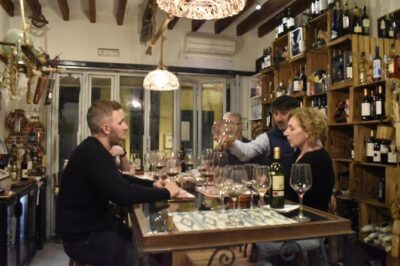
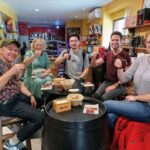
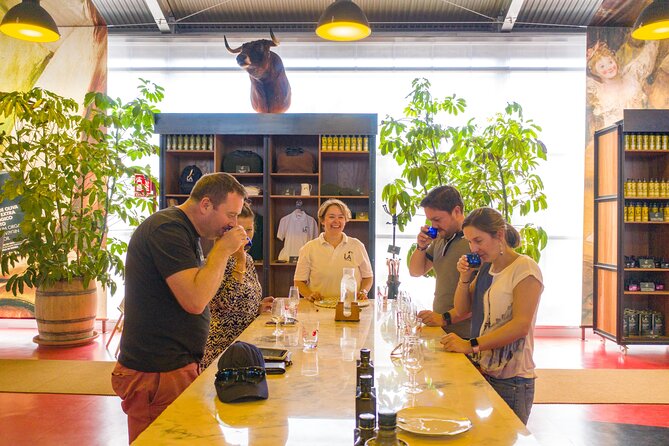
The tasting is the climax, and it’s structured so you can tell differences. You’ll sample organic olive oils from different olive varieties, and the format includes a blind-style component.
In other words, it’s not just: here’s oil, now drink. You’ll taste through a guided process, then move into more hands-on comparison with bread and vinegar. That matters because it changes how you perceive intensity and character. Bread gives you a neutral base; vinegar helps you recalibrate your palate between tastings so you can notice subtle shifts.
What I like about this approach is that it trains you for real buying decisions later. Once you’ve tasted oils side by side, you start to understand why two bottles can look identical at the supermarket but taste totally different in cooking or on bread.
Also, if you ask questions during the tasting, you’re more likely to get meaningful answers. The guides are described as friendly and able to explain what’s happening in the orchard and during processing, and you’ll usually leave with a better sense of what you’re tasting and why.
Guides such as Alina and Ursula come up in the tour experience descriptions, with an emphasis on them giving clear explanations and answering questions.
After the tasting: museum time, shopping, and relaxing on the terrace
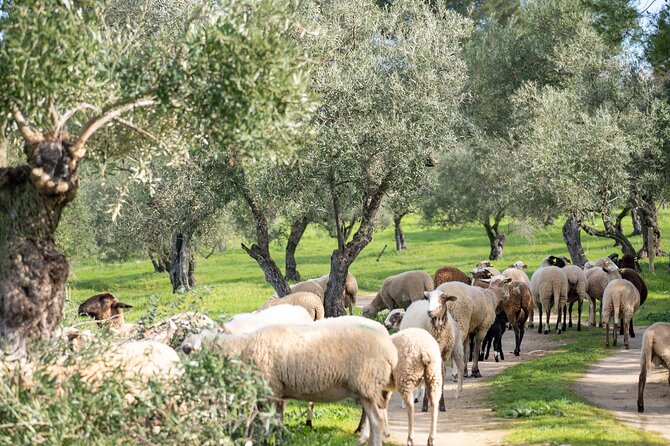
When the tasting ends, you’re not forced to sprint off. The site is set up for lingering. You can return to the museum spaces, spend time in the building at your own pace, and browse for oil purchases if you want to bring bottles home.
There are terraces designed for views, and you may also have the option to grab something from the onsite bar after the tour. One of the nice benefits of this setup is that you can turn a 75–90 minute activity into a more satisfying half-morning by slowing down after the main program.
If you want to make your time count, do the tasting first like planned, then circle back to the most interesting museum area. That way, the tasting sharpens your curiosity instead of replacing it.
You can also read our reviews of more museum experiences in Malaga

Where it fits in a Ronda day: a half-morning plan that doesn’t eat your time
This experience runs roughly 1 hour 15 minutes to 1 hour 30 minutes. That’s a sweet slot. It’s long enough to feel like you did something real, and short enough that you’re not stuck missing half of Ronda.
Start planning around two realities:
- You’ll be driving to the meeting point on the A-367 (so leave buffer time from wherever you’re staying).
- You’ll be walking inside and outside the facility, so build in a little slack even if you’re not moving far.
I like pairing this with a Ronda sightseeing block either before lunch (fresh and energetic) or as a break from the more intense viewpoints. The olive oil tasting gives you a sensory break that still feels local and authentic.
Price and value: what $30.23 includes (and why it’s more than a sample)
At $30.23 per person, this tour isn’t priced like a quick tasting at a shop counter. You’re paying for:
- entry to the oil mill museum experience
- the guided route between olive groves and organic vineyards
- organic olive oil tasting
That combination is what makes the price feel fair. If you only got a tasting, you’d probably compare it to other experiences. But here, the tasting is anchored to the growing environment and production story, which is what makes it educational and more memorable.
The group size cap of 30 also supports value. You’re less likely to feel like you’re in a huge cattle line, and it’s easier to hear explanations and ask follow-up questions.
If you’re the type who reads ingredient labels at home or wants to cook better with fewer regrets, this is the kind of tour where the cost can translate into smarter purchases later.
Optional lunch after your tasting: a simple add-on with local ingredients
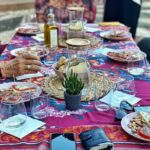
Lunch isn’t included in the base price, but you can add it for €20 per person after the oil tasting. The country menu includes an Iberian assortment with Iberian ham, Payoyo cheese, garden salad, and seasonal fruit.
This is a practical add-on if you don’t want to head back to town hungry right after a guided session. It also keeps you inside the same place long enough to enjoy the terraces and the onsite atmosphere without rushing.
One detail that can help your decision: if you like staying on-site after the tour, the layout supports that. The tasting room, museum areas, and a gastronomic bar mean you’re not stuck waiting in one spot.
Who should book this oil mill museum experience
This tour is a strong fit if you:
- want a food-focused experience that’s tied to how the product is grown and made
- like structured tastings with comparison (not just one oil and done)
- enjoy art installations and unusual museum design that’s integrated with nature
- prefer a small-group style outing with time to linger afterward
It’s also a good choice for families because it’s sensory, visual, and not overly technical. If you’re traveling with kids, the walk + tasting format tends to land well because it’s concrete: you can see the trees, smell the oils, and taste the differences.
Should you book LA Organic oil mill and olive oil tasting in Ronda?
If you care about olive oil beyond the basics, I think it’s worth booking. The main reason is the way the tour ties together three things: a modern museum/production story, a guided walk through organic growing areas, and a tasting that teaches you how to compare oils.
Book it if you want an experience that feels local and thoughtful without being exhausting. Bring comfortable shoes, and go into the tasting ready to pay attention to differences, not just flavors.
If you only want one language throughout, plan carefully. Because the tour can be bilingual, you might want to choose a pace where you’re comfortable catching the flow even when translation happens.
FAQ
How long is the Oil Mill Museum and Olive Oil Tasting tour in Ronda?
It runs about 1 hour 15 minutes to 1 hour 30 minutes.
What is the price per person?
The price is $30.23 per person.
What’s included in the tour price?
The tour includes all fees and taxes, the route between olive groves and vineyard, and an organic olive oil tasting.
Where does the tour start?
It starts at LA Almazara – LA Organic, Carretera Ardales Ronda A 367, KM 39.5, 29400 Ronda, Málaga, Spain. It ends back at the meeting point.
Is the tour offered in English?
Yes, English is one of the offered languages.
Is there an optional lunch, and is it included?
Lunch is not included in the base price. You can add lunch for €20 per person after the oil tasting, with items like Iberian assortment (including Iberian ham), Payoyo cheese, garden salad, and seasonal fruit.