REVIEW · MALLORCA
2-Hour Private Walking Tour Through Palma’s Jewish Quarter
Book on Viator →Operated by Jewish Majorca · Bookable on Viator
A strange statue turns into a full Jewish past lesson. This private 2-hour walk through Palma’s Jewish Quarter connects street names, murals, and surviving landmarks to the people who once lived here. I especially like the way you follow clues like Leather Maker Street and the site of the main synagogue under today’s Montesion Church, and I love that it’s custom-paced for your group rather than a rush-through script. One thing to consider: it is still a walking tour, so plan on moving for the full 2 hours.
For me, the value is in how the guide links small details to big changes—through medieval life, conflict, and the long afterlife of Jewish communities in Mallorca. The tour runs in English, starts at Starbucks Plaça de Cort, and uses a mobile ticket, which keeps things simple. If you dislike history that’s honest about conflict and hardship, you may want to brace yourself for heavier stories.
In This Review
- Quick hits before you go
- Walking Palma like a detective of Jewish traces
- The statue of Jafuda ben Cresques: where the tour goes global fast
- Leather Maker Street and Can Miquel: the bakery built on synagogue ground
- Street names, hidden clues, and a mural tied to the Tower of Love
- The main synagogue site under today’s Montesion Church
- The Street of the Wind: a surprising final turn
- Why a private tour makes this kind of history easier
- Price and what you actually get for $120.68 per person
- Timing, logistics, and how to prepare
- Should you book this Jewish Quarter walk?
- FAQ
- How long is the private walking tour?
- What does the tour cost?
- Is this a private tour or a group tour?
- What language is the tour offered in?
- Where does the tour start?
- What is included in the price?
- What isn’t included?
- Is it suitable for most people?
- What if the weather is bad or I need to cancel?
Quick hits before you go
- Private pacing: Your guide can adjust the pace and the flow for your group.
- Clue-based route: You don’t just see sights; you read the walls and street names like a map.
- Jafuda ben Cresques connection: The route starts with a statue tied to the Catalan Atlas.
- Sinagoga nova site at Can Miquel: You’ll learn how today’s bakery sits on an older synagogue location.
- Tower of Love mural: You’ll stop for a pandemic-era mural connected to a well-documented 1300s story.
- Montesion Church and the main synagogue: You’ll connect what’s there now with what stood there before.
Walking Palma like a detective of Jewish traces
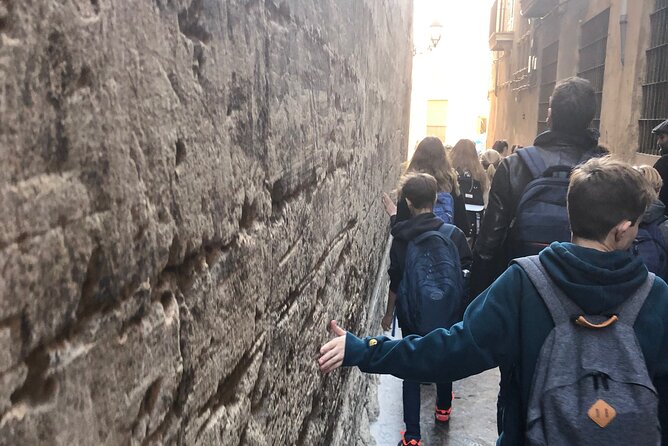
Palma’s old center can feel like a maze. This tour turns that maze into something useful. Instead of treating the Jewish Quarter as one general idea, you walk street by street and learn what each detail signals—where a synagogue once stood, what a name hints at, and how memory is layered into the city.
I like tours that teach you how to notice things on your own. This one gives you that skill. You’re guided to look for signs hidden in walls and in street names that reference a once prominent Jewish past, so the neighborhood starts to feel legible rather than random. And because it’s private, you can ask practical questions without the usual time pressure.
The other big plus is tone. The stories don’t stay polite and museum-like. You’ll hear accounts of conflict and hardship in the 1300s, and the route also connects later chapters in Mallorca to the Jewish experience. A couple guides connected the feeling of pressure and resilience across centuries, not just dates and buildings.
You can also read our reviews of more walking tours in Mallorca

The statue of Jafuda ben Cresques: where the tour goes global fast
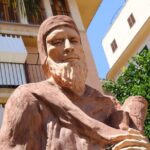
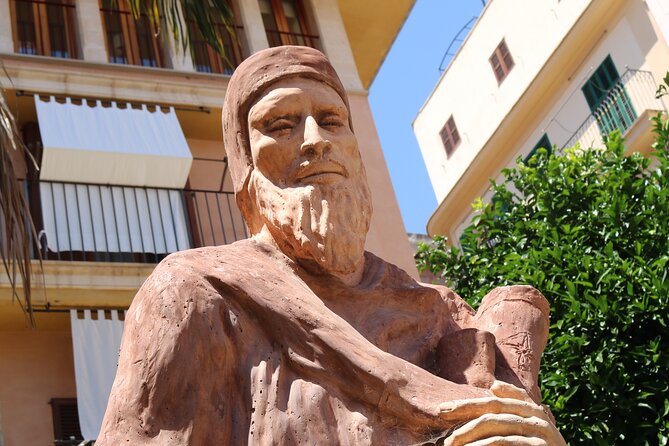
You kick off with a statue tied to Jafuda ben Cresques, a 14th-century Jewish cartographer. Even if you know Palma only as a cruise stop or a beach base, this moment widens the lens instantly. You’ll learn that ben Cresques created the Catalan Atlas, a world-famous map, and that Christopher Columbus might have used it during his travels.
That connection matters because it changes how you picture the people behind the history. Instead of seeing the Jewish community as only local, you get the sense of how ideas and knowledge traveled. It’s a clean start point, too. A statue gives you a clear beginning before the tour starts moving into narrow streets and more subtle clues.
From there, you follow the story down Leather Maker Street, where the guide shifts from cartography to daily life—work, commerce, and the kind of buildings that remain after centuries. It’s a smart transition: maps are big-picture. Streets are human-scale.
Leather Maker Street and Can Miquel: the bakery built on synagogue ground
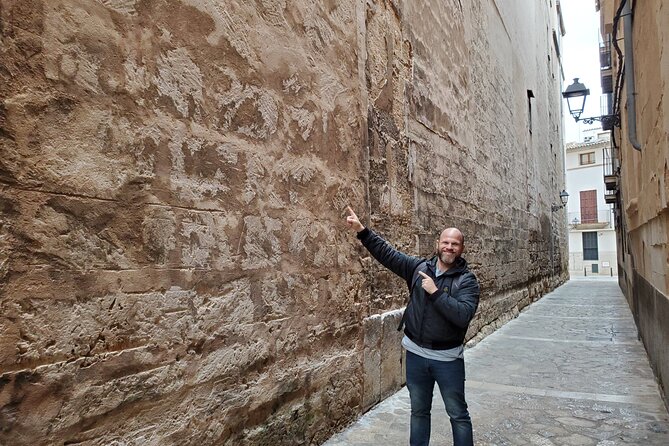
One of the strongest sections is the route along Leather Maker Street, where you’ll learn about a bakery called Can Miquel. The key detail is not just the name—it’s the location story. You’ll hear that this bakery was built on the site of the sinagoga nova, meaning the new synagogue.
This is where the tour becomes more than sightseeing. You’re standing in a place where something sacred once existed, and now a bakery is part of everyday life. That contrast is powerful because you can physically imagine how the city kept changing while using the same ground.
There’s also a practical travel benefit here: you’ll start recognizing the kind of clue the guide looks for. It’s not always a signboard. Sometimes it’s the building layer beneath your feet, sometimes it’s a street that carries a name with memory built into it. If you want to keep your eyes open after the tour ends, this is the exact skill to pick up.
Street names, hidden clues, and a mural tied to the Tower of Love
After the bakery stop, the tour leans into reading Palma’s language. You’ll pause to look for small references embedded in street names and the walls around you that point back to Jewish life when synagogues and community spaces were part of the neighborhood.
Then you’ll take in a mural painted during the pandemic. The story attached to it is specific: it highlights a well-documented 1300s conflict involving two Jews in the Tower of Love, tied to accusations and a brutal local reality. This is not the kind of history you get from a quick photo stop. It’s presented as narrative, so the mural becomes a doorway into how messy and dangerous life could be back then.
A small caution: this portion doesn’t sanitize the past. If you’re booking mainly for architecture and scenic wandering, be ready for the guide to switch gears into real human conflict. I actually think that honesty is part of the tour’s strength. Palma isn’t just a backdrop; it was a lived place.
The main synagogue site under today’s Montesion Church
Next you’ll visit the site where the main synagogue once stood, which is now the Montesion Church area. The tour’s value here is in the connection: you’re not only told that a synagogue existed; you’re pointed toward the geographic and historical logic of how the space transformed.
This kind of stop is why private tours work so well. In a group tour, you might hear a quick mention and move on. Here, you’re given time to connect what you see today with what is missing. That matters emotionally as well as historically. You walk through a modern religious space with an understanding of its older context, and it changes what your photos mean.
I also like that the tour keeps returning to “where,” not just “what.” Knowing the site location helps you build a mental map. After 2 hours, you’ll have a better sense of where Palma’s Jewish Quarter sat in relation to the rest of central Palma, even if the city has changed its shape.
You can also read our reviews of more private tours in Mallorca

The Street of the Wind: a surprising final turn
The route ends this segment by going down Street of the Wind. The tour description notes that you may find something surprising there, and that’s exactly the point of this final beat: it reinforces that Palma’s old center hides clues in plain sight.
Because you’re walking as part of a guided narrative, you’ll likely notice things you’d miss on your own—small references, subtle cues, and the way different streets hold different chapters of the story. Even if what’s surprising for you is a specific detail pointed out by your guide, the experience trains you to treat the neighborhood like an information layer, not just a set of streets.
Why a private tour makes this kind of history easier
At 2 hours and at $120.68 per person, this isn’t priced like a basic group stroll. You’re paying for the private format: only your group participates, and the guide can customize the pace and itinerary. That flexibility is a real deal for this specific subject, because Jewish history in Palma isn’t one neat “checklist.” It comes in threads—buildings, street names, and stories that require attention.
It also helps with questions. If something feels unclear—like how the synagogue locations relate to today’s churches—you can ask right then. In a private setup, the guide can also adjust the route if someone in your group needs an easier path. One guide example highlighted taking extra care to find the easiest route for a handicapped participant, which is a good sign that the operator takes practical needs seriously.
One more value point: English is offered, and the tour includes a mobile ticket. That reduces friction for a short experience where you don’t want a lot of paperwork.
Price and what you actually get for $120.68 per person
Let’s talk value plainly. At $120.68 per person for about 2 hours, you’re not paying for a long day. You’re paying for focused interpretation: the kind that explains why a bakery sits on synagogue ground, why a mural matters, and why a statue points to the Catalan Atlas and global history.
This tour also includes all fees and taxes, which keeps the final bill from turning into a surprise. What’s not included is equally clear: no lunch, no coffee/tea, no alcohol, and no bottled water. So if you’re doing this on a warm day, plan to buy water separately or bring your own if allowed.
The tour is also listed as booked about 44 days in advance on average, which tells me demand is fairly steady. If you have fixed cruise timing or specific dates in mind, it’s smart to reserve early.
Finally, the start point is simple: Starbucks Plaça de Cort, 1, in the Distrito Centro area of Palma. The tour ends back at the same meeting point, which is helpful when you’re matching it to a lunch plan or a cruise departure window.
Timing, logistics, and how to prepare
This is offered in a private walking format with a short, concentrated itinerary. You should come ready to move for about 2 hours. Even though the route is not described as involving heavy obstacles, walking time is still the deal here, so comfortable shoes help.
Because it’s near public transportation, you can treat it as a flexible addition to your day. Service animals are allowed, and most people can participate. If you have mobility limits, it’s worth letting the guide know at the start. With private tours, guides can often adjust how you handle turns and uneven spots.
Also, it’s a good-weather-dependent experience. If weather is poor, the operator offers a different date or a full refund. Palma can shift fast, so keep an eye on conditions the day of your tour.
Language is English, so if you’re traveling with someone who reads better or speaks English comfortably, that’s a smooth match. The guide-led format also means questions are welcome, not just allowed.
Should you book this Jewish Quarter walk?
If you like history that connects directly to real streets—names, walls, and building layers—then yes, book it. This is the kind of tour that helps you see Palma with sharper eyes, and it explains why the Jewish past still shows up in what you can physically find today.
I’d skip it only if your ideal vacation history is mostly light and celebratory. This route includes conflict and hard stories, including a documented 1300s tale connected to the Tower of Love mural and the broader transformation of synagogue sites over time.
For a short stop in Palma—especially if you want more than photos—this private 2-hour format is a strong use of time. You’ll leave with a better sense of where everything fits, plus the habit of noticing the small clues the city keeps for people willing to look.
FAQ
How long is the private walking tour?
It runs for about 2 hours.
What does the tour cost?
The price is $120.68 per person.
Is this a private tour or a group tour?
It’s private. Only your group will participate.
What language is the tour offered in?
The tour is offered in English.
Where does the tour start?
The meeting point is Starbucks Plaça de Cort, 1, Distrito Centro, 07001 Palma, Illes Balears, Spain.
What is included in the price?
The tour includes all fees and taxes.
What isn’t included?
It does not include lunch, coffee/tea, alcoholic beverages, or bottled water.
Is it suitable for most people?
It’s listed as suitable for most travelers, and service animals are allowed.
What if the weather is bad or I need to cancel?
It requires good weather. If it’s canceled due to poor weather, you’ll be offered a different date or a full refund. You can cancel for a full refund up to 24 hours before the experience’s start time.