REVIEW · TENERIFE
2 hours Semi-private surfing lesson in Playa de Las Americas
Book on Viator →Operated by Tenerife Surf Point · Bookable on Viator
First waves feel like magic, fast, thanks to a semi-private surf setup capped at four and a coaching flow that mixes land drills with photo analysis. If you’re short on time in Tenerife but want real instruction, this is built for getting from zero to your first honest attempts quickly. You’ll start with theory, go hands-on in the sea, then get feedback that helps you improve the next time you paddle out.
I like that the lesson is designed for small-group learning, not a crowded group vibe, so your teacher can spot mistakes fast. I also like the practical extras that save effort, like equipment rental included and multi-language teaching such as English and Spanish.
The main thing to consider is simple: the session needs good weather, and you should have a moderate physical fitness level for paddling and repeated pop-ups on the board.
In This Review
- Key things to know before you go
- Playa de las Américas surf lesson: the practical reason this beach works
- The semi-private setup (max four): why it feels different from big groups
- Meeting at Tenerife Surf Point: what your first 15 minutes should feel like
- The lesson flow: theory on land, practice in the sea
- Included equipment rental: less hassle, more time learning
- Photo analysis after surfing: feedback you can use immediately
- Languages and instructor support: you’ll get the message, not just noise
- Price and value for 2 hours: what $132.75 covers (and why it’s fair)
- Who this semi-private surf lesson is best for
- Timing, weather, and the reality of surf conditions
- Should you book this Tenerife Surf Point semi-private lesson?
- FAQ
- How long is the semi-private surfing lesson?
- Is equipment included?
- How many people are in the group?
- What languages are available?
- Where does the lesson start?
- What happens during the lesson?
- What if weather is poor?
Key things to know before you go
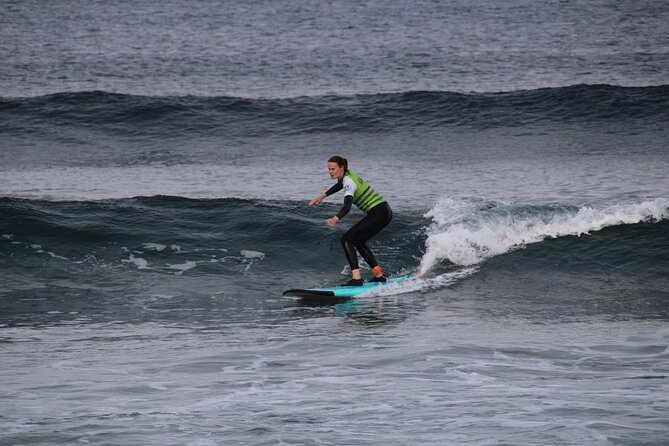
- Small group cap of four: more attention, less waiting in line
- 2-hour format that balances theory, practice, and feedback
- Equipment rental is included, so you travel lighter
- Photo analysis after the session helps you remember key technique points
- Multiple languages available, including English and Spanish
- Semi-private for 2+ people, with a private option if you want one-on-one
Playa de las Américas surf lesson: the practical reason this beach works
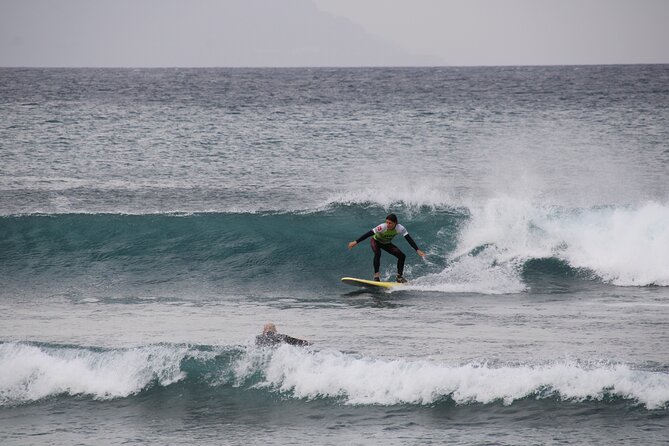
Playa de las Américas is one of Tenerife’s most convenient bases for surf lessons, especially if you’re already in the resort zone and don’t want a long commute. You get the benefit of being near the action while still having a structured teaching program that doesn’t waste your time.
What I like about choosing a lesson here is that it fits the way most visitors travel. You’re not trying to win a marathon or spend a whole day getting coached. The lesson is about focusing on the essentials: how to handle the board, how to time your attempts, and how to build confidence when the ocean is doing its thing.
There’s also a big reality check to keep in mind: conditions vary, and surf lessons on this coast still depend on good weather. When it’s canceled due to poor conditions, you’ll be offered a different date or a full refund, so you’re not stuck losing the money. You just have to be flexible with your Tenerife schedule.
You can also read our reviews of more private tours in Tenerife
The semi-private setup (max four): why it feels different from big groups
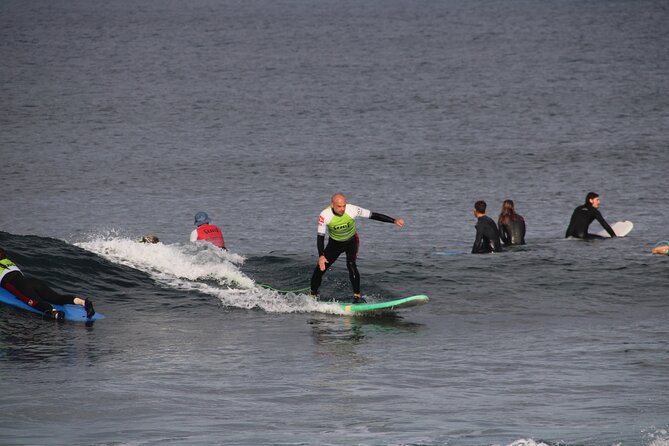
This is a semi-private lesson for 2 or more people, and the group is capped at four. That small number changes everything. In a large group, you can spend half the lesson waiting your turn or just watching. With a cap of four, you get more hands-on coaching and faster corrections.
That matters even if you’re a total beginner. The ocean doesn’t teach politely. If your stance, timing, or balance is off, you’ll feel it immediately. Small-group teaching helps your instructor adjust your technique while you still remember what you just tried.
It also makes the lesson more comfortable for families and teens. One family approach that works well here is pairing older kids with a semi-private format so they get serious coaching without being thrown into a chaotic group environment. If you’re traveling as a couple or with friends, it’s also a nice way to keep the experience together rather than splitting up.
And if you’re reading this and thinking you want full control, there’s a private lesson option too. This specific product is designed for small-group shared learning, not one-on-one.
Meeting at Tenerife Surf Point: what your first 15 minutes should feel like
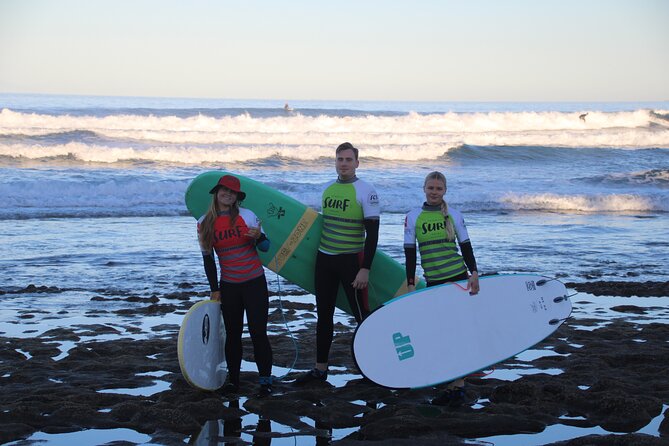
Your lesson starts at Tenerife Surf Point at Av. Rafael Puig Lluvina, 32, 38650 Playa de la Américas, Santa Cruz de Tenerife, Spain. It ends back at the meeting point, so you’re not trying to navigate a new endpoint or solve a transport puzzle after your session.
The meeting point matters more than it sounds. Being near public transportation is a plus if you’re mixing surf with other plans around Tenerife. It also makes it easier if you’re traveling with kids or teens who might need a break between activities.
In the first moments, you should expect a quick setup and an explanation of what’s coming next. Because the lesson includes theory plus a practical part, you’ll likely be guided through how to handle the board and what to focus on before you head into the water. That reduces the “stand there confused” moments that beginner surfers often face.
The lesson flow: theory on land, practice in the sea
This lesson isn’t just paddle-out-and-hope. It’s built around a sequence: theory, a practical surf session, and then photo analysis after the water time.
On land, you’ll get the basics that actually help you in the ocean. Surf theory can be dry, so the best lessons keep it short and tied to what you’ll do next. With this format, the goal is to help you understand the mechanics behind what you’re about to attempt: board position, how to approach waves, and how to get your balance before you commit to standing.
Then you move into the practical part in the sea. This is where you’ll spend your energy learning the real skills: paddling efficiently, timing your pop-up, and adjusting when the wave is bigger or pushier than expected. Even when conditions feel strong, a good instructor keeps you moving and focused rather than letting you freeze up.
One helpful signal from past participants: even when waves can feel big, the coaching approach is supportive. The lesson is designed to help you surf nonetheless, not just watch other people ride.
Included equipment rental: less hassle, more time learning
Here’s a “travel smart” detail I really appreciate: equipment rental is included. That means you don’t need to hunt down surf gear before your Tenerife trip, and you don’t have to worry about packing anything bulky.
For most travelers, the best part of included rental is psychological. When you don’t have gear stress, you can show up ready to learn. You can also arrive with lighter expectations, which sounds small, but it changes how quickly you relax and start trying.
It also helps with families and group travel. Kids and teens often don’t want to carry anything extra. If equipment is handled for you, the lesson becomes one clean activity instead of a mini logistics project.
A few more Tenerife tours and experiences worth a look
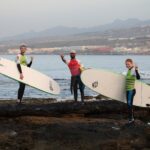
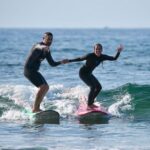
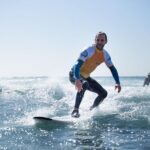
Photo analysis after surfing: feedback you can use immediately
This is one of the most practical parts of the lesson, and it’s also one of the most loved features. After you finish in the water, there’s photo analysis where you get feedback on technique.
Why this matters: surf learning is hard because the ocean moves fast and your body feels different each wave. You might think you did everything right, but your angle or timing might be off. Photos remove some of the guesswork and let you see what the instructor is talking about.
It’s also an easy way to keep learning after you leave the beach. If you ever tried surfing once and felt stuck repeating the same mistake, this kind of visual feedback helps you connect the coaching points to your actual body position and movement.
Past families specifically highlighted that professional photos are taken during the surf and shown afterward for technique analysis. That’s not just for bragging rights. It’s a feedback tool, and it can shorten the time between your first attempt and your second attempt.
Languages and instructor support: you’ll get the message, not just noise
This lesson is offered in several languages, including English and Spanish, plus Russian and Latvian. The value here is that you can focus on learning the surf cues instead of translating on the fly.
It also helps when different people in your group speak different languages. If you’re traveling with friends or family and everyone’s comfort level varies, multi-language support can make the experience smoother.
You may also notice instructor names showing up in participant notes, including Georgios and Francesco. That’s a good sign that the school has an identifiable teaching team rather than rotating through anonymous coaches.
Bottom line: you’re not just paying for access to the beach. You’re paying for instruction, and language matters because surf cues are physical and fast.
Price and value for 2 hours: what $132.75 covers (and why it’s fair)
At $132.75 per person for about 2 hours, this isn’t the cheapest surf experience in Tenerife. But it’s also not trying to be a bargain-bin group class.
Here’s what you’re getting for that price:
- Small-group learning (semi-private for 2+ people, capped at four)
- A structured lesson with theory and practical coaching
- Equipment rental included
- Photo analysis after the session
- Options for instruction in multiple languages, including English and Spanish
- A format designed for a moderate fitness level, meaning you’re not just sitting around
When you compare that to the typical cost of renting gear, paying for lesson time separately, or joining a larger group with slower coaching, the value starts to make sense. You’re paying for instruction intensity and feedback quality. If you’re on Tenerife for a short time, that intensity can be the difference between a fun attempt and a lesson you can build on.
Who this semi-private surf lesson is best for
This lesson is a strong match if you fall into any of these buckets:
First-timers who want real coaching
The theory + practical mix helps you build understanding fast. The small group cap means you’re less likely to get lost or left behind.
Teenagers and younger riders who still need attention
The semi-private structure is often easier for teens than big groups. It keeps the energy up while still giving you guided instruction.
Couples and small friend groups
If you can line up with at least one other person, you can keep the experience together. You’ll get the social fun without sacrificing coaching.
Travelers who don’t want gear hassle
Included equipment rental is a big win if you’re carrying luggage already or you’d rather spend your energy sightseeing than hunting down a board.
Anyone with moderate physical fitness
The lesson expects you can handle paddling and repeated movements. If you’re recovering from injury or unsure about your stamina, it’s worth thinking carefully before you commit.
Timing, weather, and the reality of surf conditions
The duration is about 2 hours, and the session requires good weather. That’s normal for surfing, but it still affects planning. If the lesson is canceled due to poor weather, you’ll be offered a different date or a full refund.
This is one reason I suggest building your Tenerife schedule with buffer time. Surf doesn’t run on human clocks as much as we’d like. If you can keep one flexible window, you’ll feel much less stressed when the ocean decides to be moody.
Should you book this Tenerife Surf Point semi-private lesson?
If you want a surf lesson in Tenerife that feels focused, beginner-friendly, and not crowded, I’d book it. The small group cap of four is the key advantage, because it usually means faster coaching and less wasted time. Add equipment rental and photo analysis, and you get more than just a one-time splash. You leave with feedback you can actually apply.
The only reason to hesitate is the weather dependency and the need for a moderate fitness level. If you’re fit enough for paddling and you can handle scheduling flexibility, this is a smart way to learn surf while staying based in Playa de las Américas.
FAQ
How long is the semi-private surfing lesson?
The lesson lasts about 2 hours.
Is equipment included?
Yes. Equipment rental is included in the activity.
How many people are in the group?
The lesson is semi-private and capped at four people.
What languages are available?
The lesson is available in English, Spanish, Russian, and Latvian.
Where does the lesson start?
It starts at Tenerife Surf Point, Av. Rafael Puig Lluvina, 32, 38650 Playa de la Américas, Santa Cruz de Tenerife, Spain, and ends back at the same meeting point.
What happens during the lesson?
You can expect a mix of theory and practical instruction, plus photo analysis after the lesson.
What if weather is poor?
This experience requires good weather. If it’s canceled due to poor weather, you’ll be offered a different date or a full refund.