REVIEW · BARCELONA
Barcelona: Museu Nacional d’Art de Catalunya Entrance Ticket
Book on GetYourGuide →Operated by Museu Nacional d'Art de Catalunya · Bookable on GetYourGuide
Montjuïc hides a museum built for art lovers. At the Museu Nacional d’Art de Catalunya (MNAC), the big draw is how you move from rescued wall-size Romanesque paintings to Catalan Modernism, and then on to European Renaissance and Baroque works. I especially love the Romanesque mural paintings and the way the museum pairs them with names you already associate with Catalonia and Spain. One catch: the rooftop and terraces are temporarily out of service right now, so plan your views accordingly.
The ticket hits good value for Barcelona: for about $14 you get the permanent collection plus a temporary exhibition, along with a smartphone audioguide in a lot of languages. The museum runs on two floors in the Palau Nacional building, so you’ll want real time to walk, read, and zoom in on details instead of rushing. If you’re hoping to explore fast, you may still enjoy it, but you’ll feel the pressure.
In This Review
- Key takeaways before you go
- Why MNAC’s Palau Nacional setting matters more than you think
- Tickets that feel worth it: what $14 buys you
- Your best 2-floor strategy inside MNAC
- Romanesque mural paintings: MNAC’s star feature
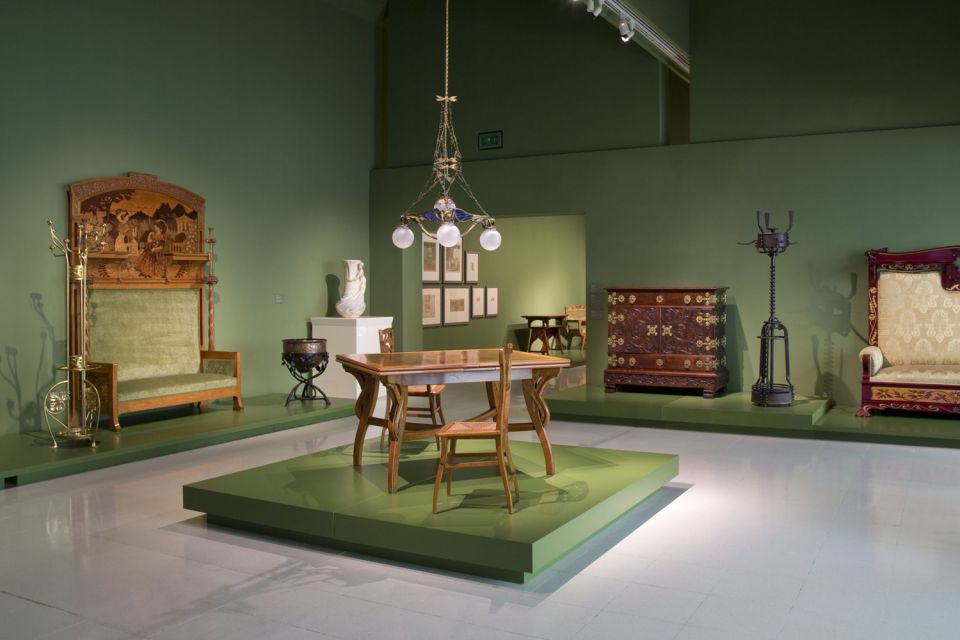
- Catalan Modernism you can connect to real-world names
- European Renaissance and Baroque: where the museum widens your lens
- Photography collection: a quieter stop with big impact
- Rooftop and terraces: the views are part of the pitch, so check status
- On-site cafes and breaks that keep your legs sane
- Getting there and making your time fit a 1-day visit
- Price vs value: why this one is easier than it sounds
- Who should book MNAC and who should plan differently
- Should you book MNAC?
- FAQ
- Where is the Museu Nacional d’Art de Catalunya located?
- How much is the entrance ticket?
- How long should I plan to spend inside?
- What’s included with the ticket?
- Is the rooftop or terrace access available?
- Which languages are available for the audioguide?
- What should I bring for the visit?
- Is there a skip-the-line option?
- When is museum access free?
- Are meals and drinks included?
Key takeaways before you go
- Montjuïc setting: The museum sits in Palau Nacional, built for the 1929 International Exposition, so the building itself is part of the experience.
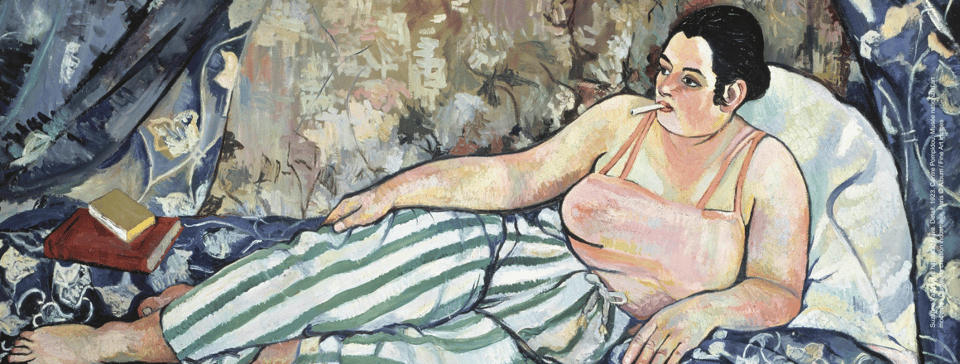
- Romanesque mural paintings: This is where MNAC becomes truly special, with wall-scale works that make you stop and stare.
- Catalan Modernism, not in isolation: You’ll see Catalan Modernism artists connected to Gaudí and Casas, plus other key names.
- European Renaissance and Baroque: Expect major works and styles that broaden what you see beyond Catalonia.
- Audio guide on your phone: The included audioguide supports Catalan, Spanish, English, and more languages, so you can pace yourself.
- City views may be limited: The museum is famous for panorama viewpoints, but the rooftop/terraces are temporarily closed right now.
Why MNAC’s Palau Nacional setting matters more than you think
MNAC is housed in Palau Nacional, one of those Barcelona buildings you can’t help noticing on Montjuïc. It was built for the International Exposition of 1929, and that shows in the scale and the sense of ceremony when you enter. This matters because you’re not just touring rooms with paintings. You’re walking through a setting that was designed to impress.
The other reason the setting matters is pacing. MNAC is big, and it can feel like work if you try to sprint. But the architecture gives you natural pauses. You’ll get moments where you stop, reorient, and then continue. That helps you enjoy the art instead of just checking boxes.
And yes, the view story is real. MNAC is known for Barcelona panoramas from the mountain. But since the terraces and rooftop are temporarily out of service, treat the views as a bonus rather than the main event for this specific visit. You can still find good lookouts from around the building area and the surrounding Montjuïc zone, but don’t build your itinerary around the rooftop.
A few more Barcelona tours and experiences worth a look
Tickets that feel worth it: what $14 buys you
At about $14 per person, the ticket isn’t just an entry pass. It includes:
- Admission to the permanent collection
- Admission to a temporary exhibition
- A smartphone audioguide app
For Barcelona, that combo is the difference between a quick hit and a satisfying day. A lot of city museums charge more when you factor in audio or temporary exhibits, so getting it bundled feels practical. You also skip the ticket line, which is a big deal in a city where queues can eat your time fast.
If you like planning with a checklist, here’s the helpful mindset: you’re paying for a full museum experience across multiple art periods, not only for one highlight room. If you show up with headphones and your phone ready, you’ll get a lot more meaning out of what you see.
Your best 2-floor strategy inside MNAC
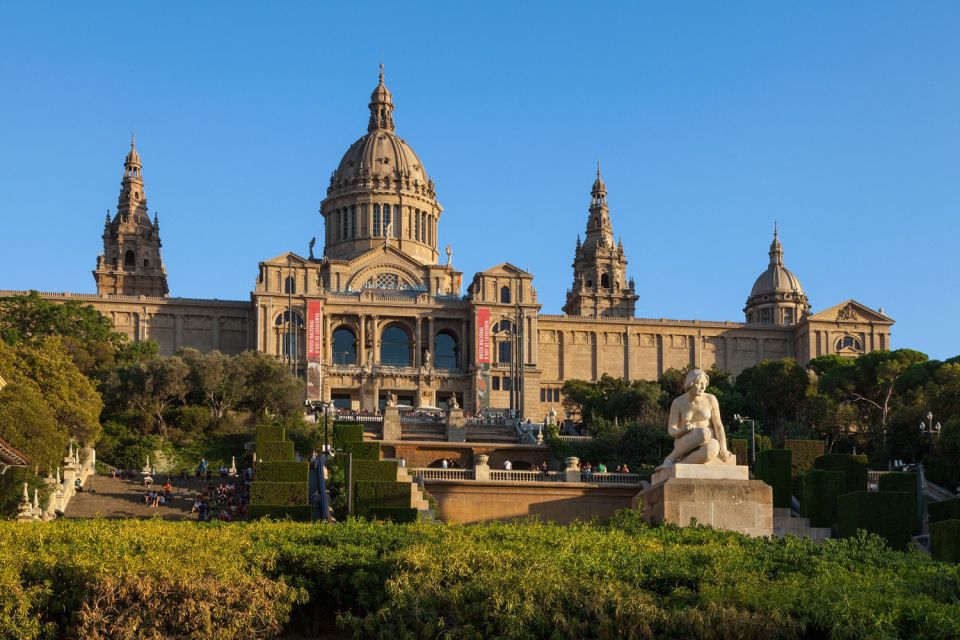
MNAC spreads its collections across two floors. The museum also includes a collection of photography, so you’ll want at least a couple hours and likely more if you actually read wall notes and use the audioguide.
Here’s the route logic I like:
- Start with the core mural and painting areas first, since they’re the museum’s signature.
- Then follow the thread into Catalan Modernism (including artists connected to Gaudí and Casas).
- After that, move into the European Renaissance and Baroque rooms to reset your eyes with different styles and techniques.
- Finish with photography and any temporary exhibition you want to spend longer on.
The museum is designed with sections, so it doesn’t feel like one endless corridor of art. Still, you should plan around walking and time at a few key works. It’s not a museum where you can simply glance and move on.
Also, timing matters at closing. Ticket offices close 30 minutes before the museum closes, and rooms are emptied 15 minutes before closing. That means your last hour should be intentional. If you wait too long to start the final galleries, you may end up cutting your favorite rooms short.
Romanesque mural paintings: MNAC’s star feature
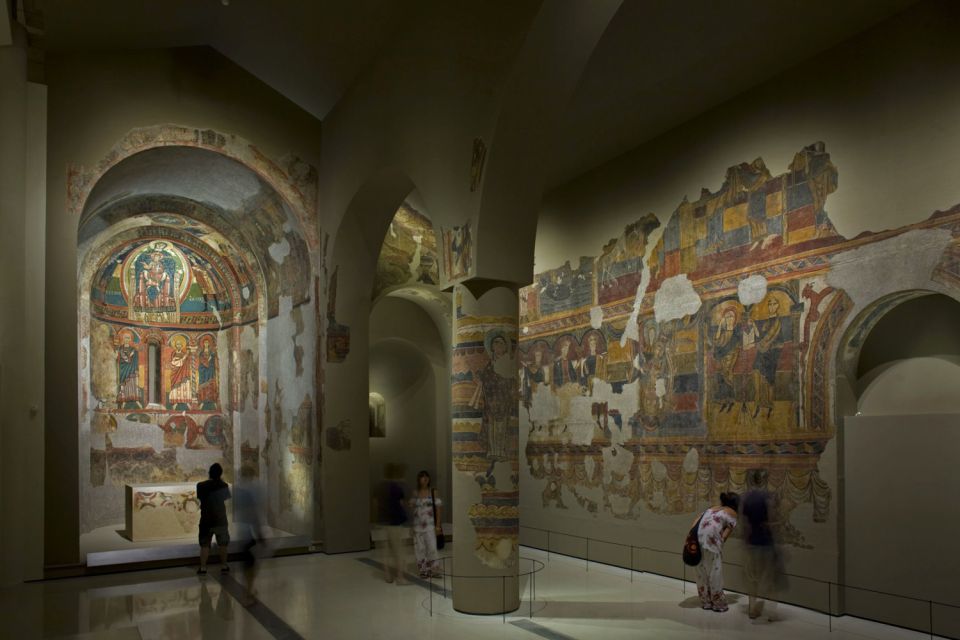
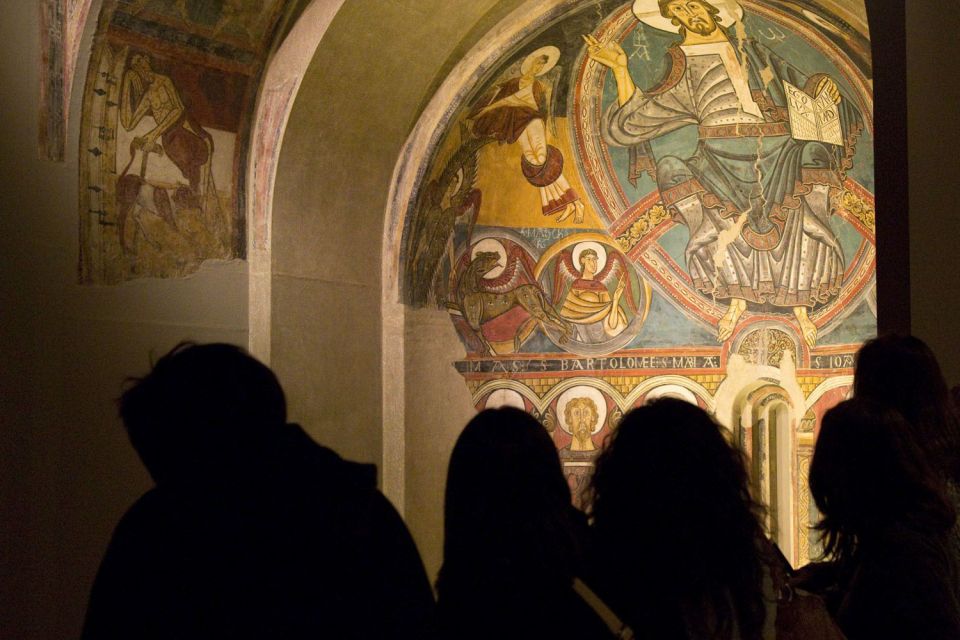
If you’re coming to MNAC for one thing, make it the Romanesque mural paintings. MNAC is often described as having the finest collection of these in the world, and once you’re in front of the murals, the scale hits immediately.
Romanesque murals work differently than panel paintings. They were originally part of churches and architectural spaces, so the imagery is meant to sit where people would naturally see it. MNAC has these works presented as significant artworks in their own right, and that makes the viewing feel closer to how they were meant to be experienced.
What you’ll want to do:
- Give yourself permission to slow down in these rooms.
- Use the audioguide to connect the imagery to context, since religious and medieval symbolism isn’t always obvious at a glance.
This is also where you’ll feel how MNAC differs from a typical art museum. You’re not only admiring brushwork; you’re seeing rescued pieces of cultural space that were preserved and re-homed.
Catalan Modernism you can connect to real-world names
After the medieval and Romanesque focus, MNAC shifts into Catalan Modernism. This is where the museum becomes a bridge between art and the Catalonia you see outside.
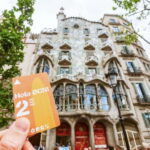
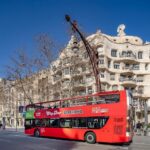
You’ll encounter artists and works tied to the larger Modernist story, including references to Gaudí and Casas. That’s useful even if you’re not an art-history person. It helps you understand that Modernism isn’t just buildings. It’s a whole way of thinking about identity, style, and place.
The museum also gives you a visual contrast. You move from mural-like compositions and older symbolic styles into more modern sensibilities. That makes the shift feel meaningful rather than random.
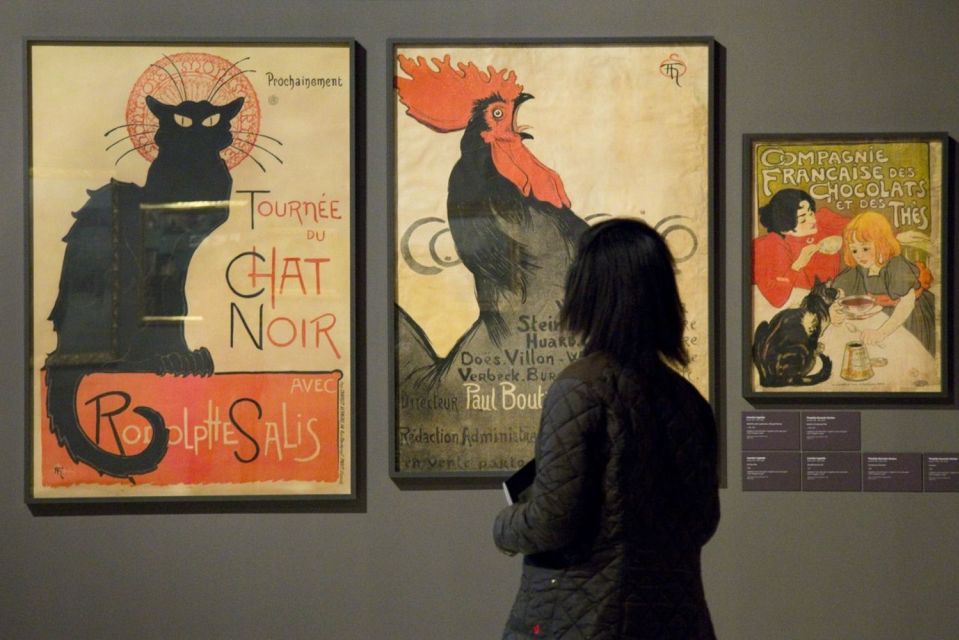
If you enjoy making connections, pair your MNAC visit with what you’ll see around Barcelona later. MNAC gives you a vocabulary for what to look for when you’re walking past architecture, posters, and design details.
European Renaissance and Baroque: where the museum widens your lens
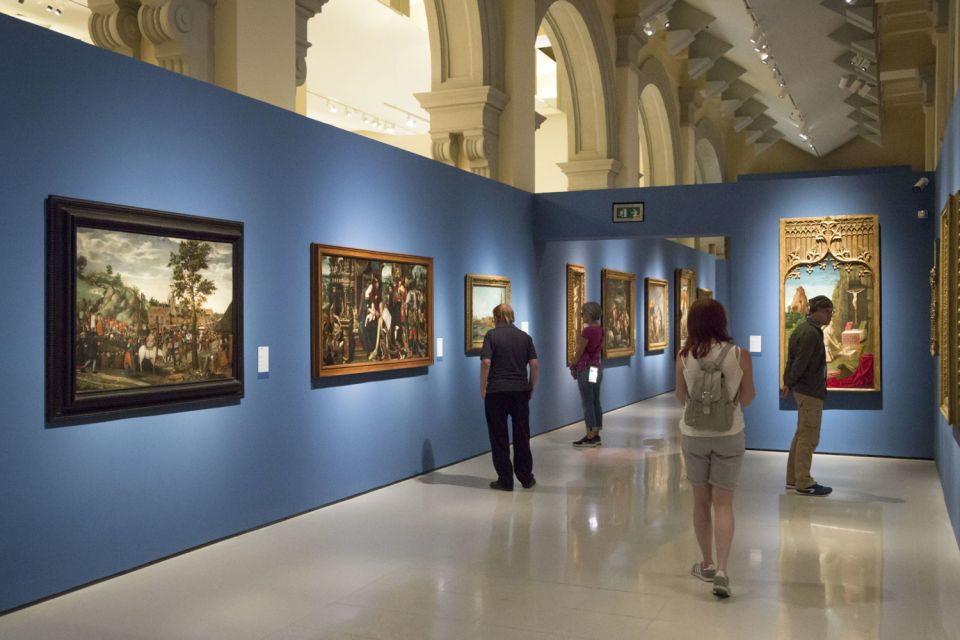
One of MNAC’s best tricks is how it avoids making the visit too narrow. After Catalan Modernism, you get European Renaissance and Baroque painters such as Tiziano and Velázquez.
This helps your day in a practical way. It stops MNAC from feeling like a specialized niche museum. You can treat it like a sampling menu of European art history, with MNAC’s Catalan angle holding the whole thing together.
Baroque and Renaissance works tend to be visually dramatic and technically confident, and that makes them satisfying after the intensity of murals. It’s a different type of attention: less about reading symbols and more about looking at light, composition, and painterly technique.
If you like variety, this part of the museum is where you’ll feel the balance. If you’re the kind of person who hates jumping periods, you might want to spend slightly longer in the Catalan Modernism rooms so the day keeps a clear focus.
Photography collection: a quieter stop with big impact
MNAC also includes a collection of photography. You might not expect that from a museum framed around mural paintings and classic painters, but that mix is a big part of the value.
Photography isn’t just decoration here. It changes how you relate to the museum’s overall mission: preservation. MNAC isn’t only displaying art. It’s also keeping cultural memory accessible through different media.
When you reach the photography areas, take a slower look than you think you need. Even if you’re tired from reading labels, a photo collection can re-center the visit. You’ll get breathing room between rooms packed with major painting scenes.
Rooftop and terraces: the views are part of the pitch, so check status
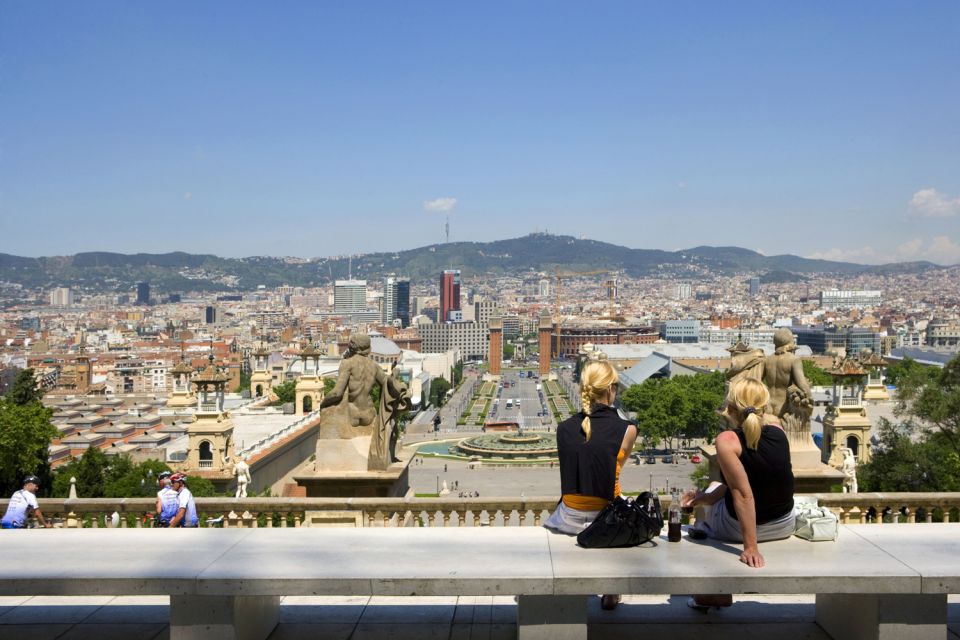
MNAC is famous for panoramic views over Barcelona from Montjuïc. The problem today is simple: the terraces and rooftop are temporarily out of service due to current health regulations.
That means you should adjust your mental checklist. The view experience is still a reason to visit, but it’s not guaranteed in the way it might be on other days. I’d treat your plan as two layers:
- Layer 1: the art, which is the stable reason to go.
- Layer 2: the city views, which depend on access being open.
You can still enjoy wide views from parts of the building area, and some viewpoints around Montjuïc are right there if you’re willing to walk a little. If you’re visiting primarily for skyline photos, I’d confirm access status shortly before you go.
On-site cafes and breaks that keep your legs sane
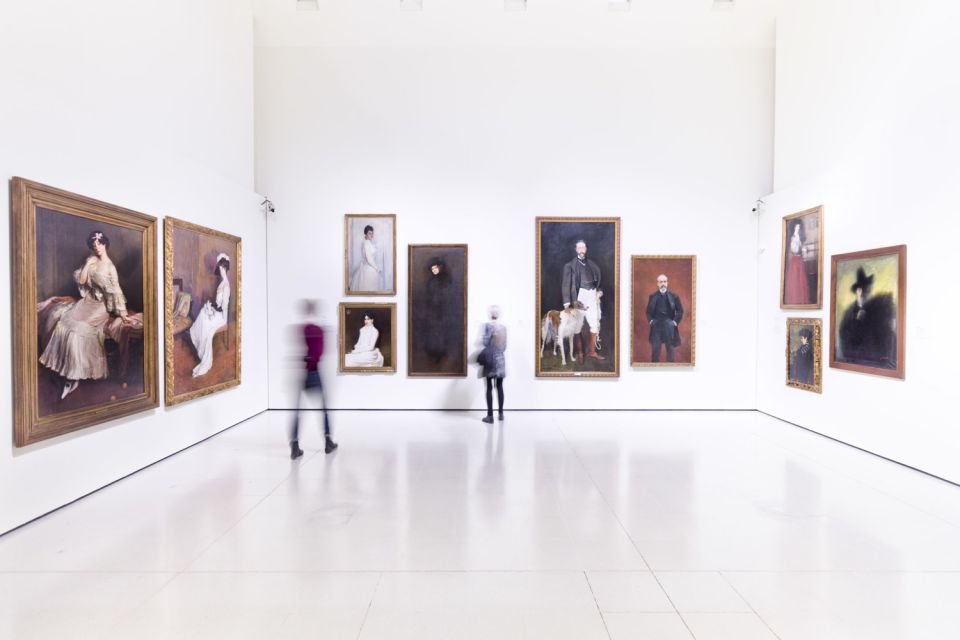
A full art museum day is a leg workout, especially on Montjuïc. MNAC helps you by offering places to relax on site, including cafe areas and spots where you can recharge.
You’ll likely want breaks for two reasons:
- Your eyes need rest after close looking.
- Your phone batteries need a moment for the audioguide and photos.
Some people also note that the surrounding steps and escalators near the area can be part of the practical rhythm of the day. In summer, heat can make the climb feel like a second workout. Build in time to sit down and recover, then continue when you feel ready.
If you’re the kind of person who likes to plan lunch, remember meals and drinks aren’t included in the ticket. You’ll be choosing on your own, so decide ahead of time whether you want a quick snack or a longer sit-down break.
Getting there and making your time fit a 1-day visit
MNAC’s meeting point is Palau Nacional s/n, Parc de Montjuïc, 08038 Barcelona. The area is walkable from the broader Montjuïc zone, and the museum is accessible via metro as well, which is a relief if you don’t want to rely on taxis.
For a 1-day experience, I suggest treating MNAC like a centerpiece. Plan roughly:
- 2 to 3 hours for a solid route with the audioguide and a real look at the main rooms.
- 4 hours if you want to slow down, linger at the Romanesque murals, and spend time with the temporary exhibition and photography.
If you only have an hour slot, you can still see a lot of great work, but you’ll have to choose your focus and accept that you won’t catch everything.
One more timing note: since rooms are emptied before closing, don’t schedule your visit too close to end-of-day. If you arrive late, you’ll feel it immediately once you hit the last galleries.
Price vs value: why this one is easier than it sounds
For $14, MNAC is a strong value because you’re paying for more than a single museum highlight. You’re getting:
- The permanent collection
- A temporary exhibition
- An included audioguide app
The audioguide is especially important here because MNAC’s strengths are partly about context. Romanesque mural paintings, rescued works, and European painting periods all benefit from a little explanation. Having that on your phone means you can choose how much you want to learn without paying for a separate guided tour.
And then there’s the building. Palau Nacional isn’t a neutral container. It’s a major visual experience on its own, and it turns the museum day into something more cinematic than a standard gallery visit.
In short: if you want art, atmosphere, and good use of time in Barcelona, this is one of the simpler picks.
Who should book MNAC and who should plan differently
MNAC fits best if you:
- Love art that changes your perspective, not just the famous names.
- Want Catalonia to make more sense through paintings and preserved murals.
- Like a museum with enough variety to keep you interested for hours.
You might plan differently if you:
- Only want rooftop skyline views, since the terraces/rooftop are temporarily closed right now.
- Hate walking and reading labels. MNAC is a museum day, so you’ll do better if you accept a slower pace and bring headphones.
If you’re with family and someone gets bored easily, consider splitting attention: do the most important galleries first, then use a break at the cafe before finishing with the temporary exhibition. That keeps the day from dragging.
Should you book MNAC?
Yes, if you want a high-value art experience in a world-class building, MNAC is a smart booking. The ticket price makes it easy to justify spending real time here, and the mix of Romanesque murals, Catalan Modernism (with connections to Gaudí and Casas), and European Renaissance and Baroque works gives you variety without feeling random.
The only real reason to pause is if you’re specifically chasing rooftop views. Since the terraces and rooftop are temporarily out of service, your best bet is to go for the art first, then enjoy views only if you can access them.
If you can spare a couple of hours, you’ll leave feeling like you actually saw something that belongs in Catalonia, not just something that happens to be in Barcelona.
FAQ
Where is the Museu Nacional d’Art de Catalunya located?
It’s at Palau Nacional s/n, Parc de Montjuïc, 08038 Barcelona.
How much is the entrance ticket?
The price listed is $14 per person.
How long should I plan to spend inside?
You should plan on spending a couple of hours at the museum to see everything at an unhurried pace.
What’s included with the ticket?
Admission to the permanent collection, admission to the temporary exhibition, and an audioguide app for your smartphone are included.
Is the rooftop or terrace access available?
No, the terraces and rooftop are temporarily out of service due to difficulty managing and complying with current health regulations.
Which languages are available for the audioguide?
The audioguide app supports Catalan, Spanish, English, French, German, Italian, Russian, Japanese, and Chinese.
What should I bring for the visit?
Bring headphones and a charged smartphone.
Is there a skip-the-line option?
Yes, the ticket includes skip the ticket line.
When is museum access free?
Access is free on Saturdays from 15:00 onwards, the first Sunday of each month, and on specific dates including 12 February, 18 May, 11 September, and 24 September.
Are meals and drinks included?
No, meals and drinks are not included in the ticket.