REVIEW · BARCELONA
La Pedrera-Casa Mila Admission Ticket with Audioguide
Book on Viator →Operated by Fundacio Catalunya La Pedrera · Bookable on Viator
Gaudí’s strangest building is also practical. With self-paced audio through Casa Milà (La Pedrera), you can see the lobbies, courtyards, recreated apartment spaces, and finish with roof-terrace views in your own rhythm. My favorite part is how the audio guide turns the building’s odd forms into a clear story about Antoni Gaudí and the life of the Milà family. One thing to keep in mind: if it rains, the roof terrace closes for safety, and that portion can’t be counted on.
The ticket is also a good value if you like architecture that rewards slow walking. You’re covering about 4,500 square metres across five floors with free audio, plus the Espai Gaudí exhibition, so it feels like more than a quick stop. The main drawback is crowd pressure in tight areas, especially on the roof—so go early and move carefully.
In This Review
- Key things to know before you go
- La Pedrera (Casa Milà) is weird in the best possible way
- Ticket value: timed admission plus a free English audio guide
- Price and what you should realistically expect to feel
- Best timing in Barcelona: beat crowds and protect your pace
- Getting in smoothly: check-in, entry flow, and your headset
- La Pedrera itinerary in plain language: what each stop gives you
- Stop 1: La Pedrera interiors—lobbies, curving details, and the courtyards
- Stop 2: The recreated Milà apartment—how people might have lived there
- Stop 3: Exhibition spaces and the Milà family story (Espai Gaudí)
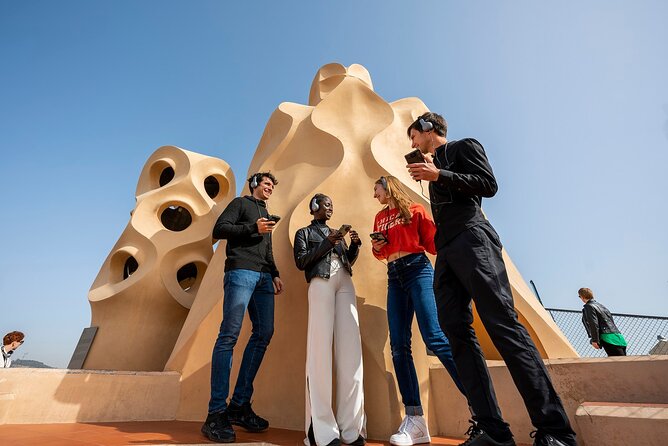
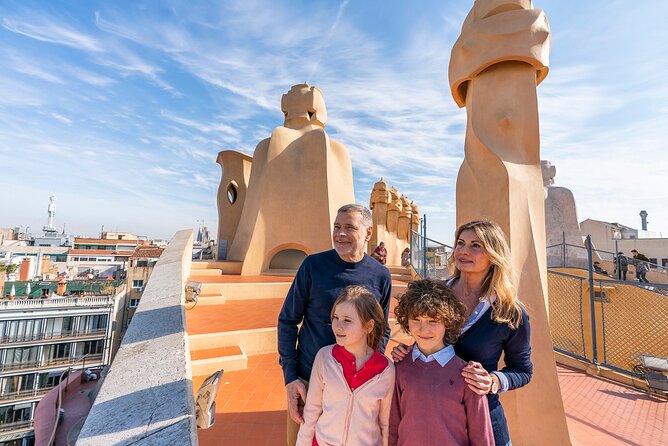
- Rooftop time: corkscrew chimneys and panoramic Barcelona
- How long 90 minutes really means (and how to pace it)
- Who this ticket is best for (and who might want a different style)
- Practical notes that make the visit smoother
- Should you book this La Pedrera audio-ticket?
- FAQ
- Is the audio guide included with admission?
- How long should I plan for La Pedrera with the audio guide?
- Can I go to the roof terrace the same day?
- Is this a self-guided experience or a guided group tour?
- Are tripods or flash photography allowed?
- Is the ticket valid for a specific date?
- What happens if I need to cancel after booking?
Key things to know before you go
- Timed entry and a free headset: grab your audio guide and go at your pace.
- Gaudí everywhere: swirling decorative lobbies, two courtyards (Passeig de Gràcia and Provença), and the apartment recreation.
- Roof terrace is the big payoff: corkscrew chimneys and serious skyline views—when it’s open.
- Lots of space, but some tight corners: the building is designed for movement, yet small rooms can feel crowded.
- Rain changes the plan: roof terrace closure means you should be ready to focus on interiors instead.
- Good visitor flow for a famous site: entry is managed and the experience is limited to a small group size per slot.
La Pedrera (Casa Milà) is weird in the best possible way
La Pedrera, officially Casa Milà, is one of those Barcelona landmarks that looks like it’s doing something just out of reach. It was designed between 1906 and 1912, and it’s the last building Gaudí worked on before he moved his focus toward La Sagrada Família. Even if you think you already know Gaudí, this one often surprises you because the details are both playful and exacting.
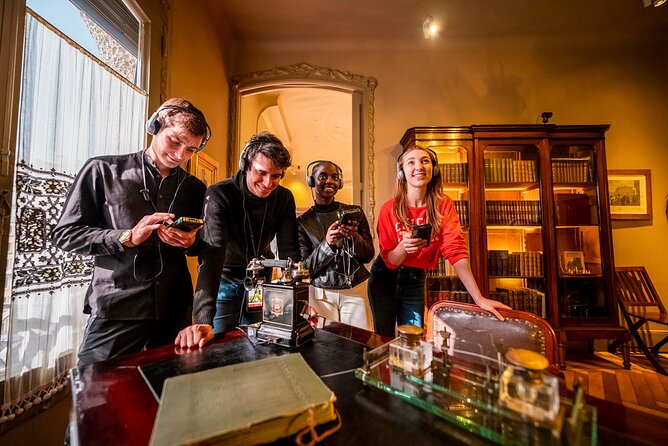
What makes it especially interesting is that the building doesn’t feel like a museum hallway. It feels like a lived-in idea—courtyards, decorative lobbies, and a recreated apartment space that helps you picture what day-to-day life might have looked like inside those walls. And because your ticket includes an audio guide, you’re not stuck guessing why the forms are so unusual.
A few more Barcelona tours and experiences worth a look


Ticket value: timed admission plus a free English audio guide
At $41.03 per person, this ticket might sound steep until you translate what’s included. You’re paying for La Pedrera + rooftop admission, plus a free audio guide and access to about 4,500 square metres spread across five floors. That means you’re not just buying a look at a façade—you’re getting a full indoor-to-outdoor circuit.
You’ll also love the practical side of a mobile ticket. Scan and go, no paper chase. And because the audio guide is included, you don’t need to pay extra for interpretation or rely on your phone’s signal once you’re inside.
The best value angle here: the audio guide is what connects the building’s “why” to your “what.” The apartment recreation and the courtyards make more sense when you hear the commentary about Gaudí’s life and approach.
Price and what you should realistically expect to feel
The interior can be stunning, but it’s not the same kind of experience as a guided tour where someone points things out every few minutes. You’re doing a self-led visit with headset commentary. That can be a win if you like to stop, back up, and take your time—especially in rooms where you’ll want to notice small materials and decorative patterns.
If you’re expecting the roof terrace every single time, plan for the reality that it can close. The experience notes that in rain the roof terrace is closed for safety, and there’s no full or partial refund. So your value depends on your weather luck and your flexibility.
Best timing in Barcelona: beat crowds and protect your pace
This site gets busy, and crowd density matters here because parts of the building are tight. One of the smartest tips from people who enjoyed their visit is to go early. Crowds start showing up around 10:00–10:30, so an earlier entry gives you more breathing room in the courtyards and on the roof.
Also note that the tour is designed for roughly 1 hour 30 minutes (approx.). If you try to rush it, you’ll miss the quieter “click” moments—like noticing how the stair columns frame space or how courtyards pull light into the interior.
Getting in smoothly: check-in, entry flow, and your headset
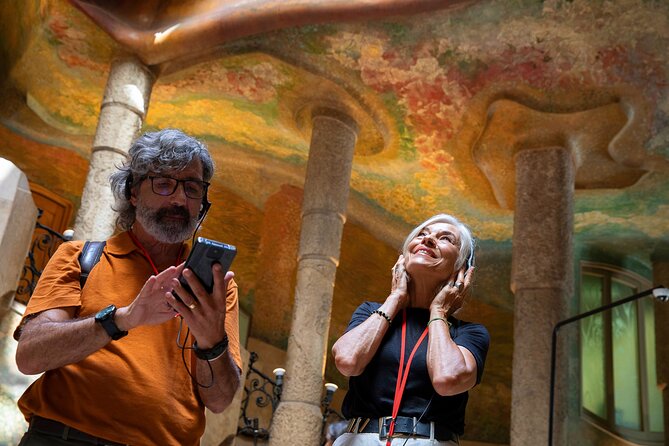
You show up for your reserved time slot at La Pedrera—also known as La Pedrera / Casa Milà—and then you’ll collect your audio guide. The process is meant to be straightforward, and many visitors describe easy entrance and ticket scanning with minimal fuss.
Two practical tips that help:
- Test the audio immediately after you collect the headset, before you commit to walking deep into the route.
- Wear the headset comfortably so you don’t constantly adjust it; the building has many small listening moments that work best without interruptions.
A few people reported occasional audio issues (headphones working spotty at times). If that happens, address it right away rather than waiting until later—you’ll lose more time trying to fix it mid-visit.

La Pedrera itinerary in plain language: what each stop gives you
This is a single continuous visit, but it helps to think of it as sections. The building is organized so you can move from decorative common areas into curated “story stops,” then out to the roof payoff.
Stop 1: La Pedrera interiors—lobbies, curving details, and the courtyards
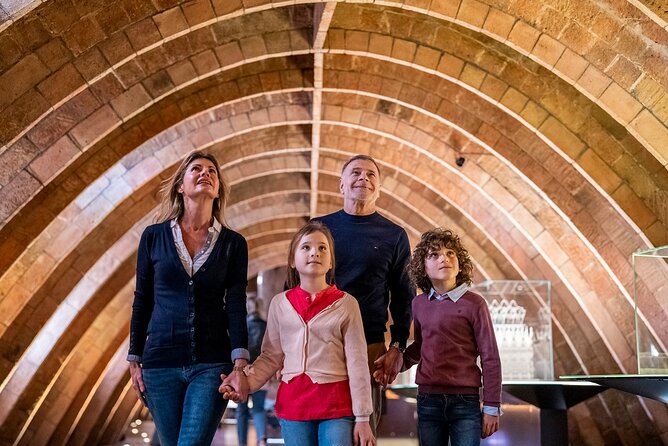
Start inside and let your eyes adjust to Gaudí’s logic: curved surfaces, decorative lobbies, and patterned transitions between spaces. The visit takes you through richly ornamented interiors with typical Gaudí features like mosaics and decorative elements that feel almost playful, even when the spaces are grand.
You’ll also see two courtyards: Passeig de Gràcia and Provença. Courtyards are where Gaudí’s design becomes easier to understand. They frame light and create visual rhythm as you move. If the building is crowded, these are still worth your time, but give yourself slow moments—standing still for a minute here is better than constantly walking.
One drawback to expect: in popular areas, people can bunch up for photos. Since some spaces are narrow, you’ll want to keep your pace calm and avoid stopping in chokepoints.
Stop 2: The recreated Milà apartment—how people might have lived there
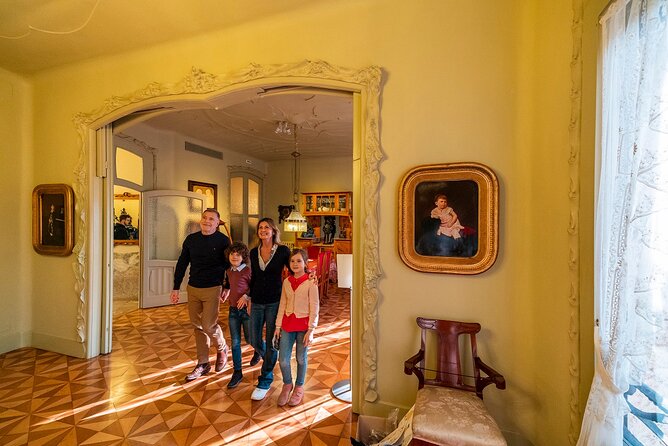
The tour includes entry into the La Pedrera Apartment, which is described as an accurate recreation of how an apartment in the building would have looked during the 20th century. This is one of the best “human scale” experiences in the building. Instead of only admiring architectural shapes, you’re also looking at how those shapes relate to everyday rooms.
This part is especially useful if you’re trying to connect Gaudí’s design choices to lived experience—where furniture placement, room size, and circulation matter. Even if you’re not into interior design, the apartment helps you understand that this was built for real people, not just for spectacle.
Stop 3: Exhibition spaces and the Milà family story (Espai Gaudí)
After you’ve taken in the “home” feeling, you’ll reach exhibition areas including the Exhibition Hall, described as the former residence of the owners—the Milà family. This is where the building shifts from decoration into explanation: you learn more about the architect’s life and works through the Espai Gaudí exhibition.
What I like about this setup is that it gives you context without forcing a lecture. You can read at your speed, then return to the architecture with a better mental framework. It makes the building feel less like a photo and more like a coherent design project.
Rooftop time: corkscrew chimneys and panoramic Barcelona
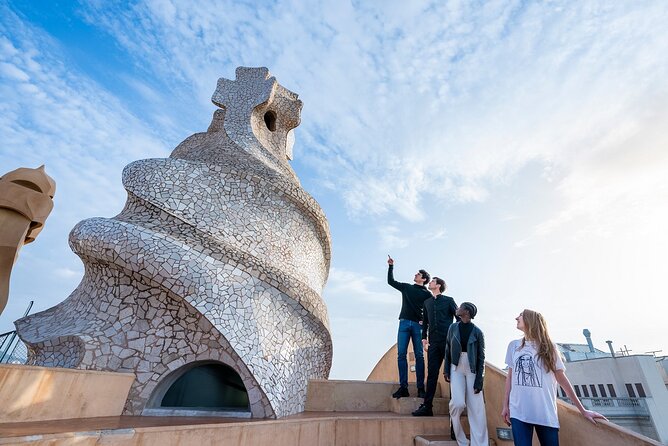
If the roof terrace is open, this is usually the highlight. The visit caps with roof-terrace views, where you can see Barcelona’s skyline and the famous corkscrew chimneys. Even if you’re not trying to memorize every skyline angle, you’ll feel the “Barcelona perspective” instantly because the rooftop sits above the city’s street texture.
Two important reality checks:
- Rain closes the roof terrace for safety, and you won’t get a refund for missed rooftop time.
- The roof is described as a bit tricky if you aren’t paying attention. The safest approach is to move slowly, watch footing, and keep your full attention on where you step.
Crowd behavior can also affect the roof experience. Some visitors pointed out that photo shoots can take up space, making it harder for everyone to get their best view at the same time. If that happens, don’t fight for the front spot. Walk a little, find your angle, then wait for the flow to shift.
How long 90 minutes really means (and how to pace it)
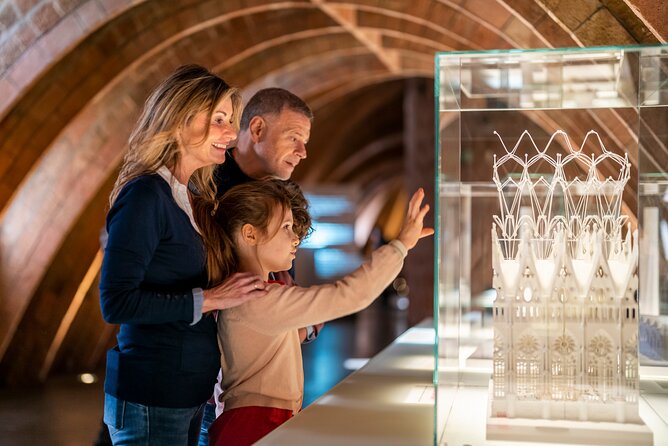
The experience is listed at about 1 hour 30 minutes, and many people stress using that full time. This building rewards a “no-rush” loop: you want time to absorb the courtyards, sit for a moment with the apartment recreation, and still make it to the roof without panic.
Here’s a pacing strategy that works well for independent visits:
- First 30–40 minutes: interiors and one courtyard circuit.
- Middle 30–40 minutes: apartment recreation plus an exhibition stop.
- Final 10–20 minutes: roof terrace (if open) and then any “I want one more look” moments.
If you go early, you’ll naturally speed up because lines are shorter. If you go later, allow a bit of buffer because people bottleneck in decorative areas and on the roof.
Who this ticket is best for (and who might want a different style)
This is a great fit if you like freedom. The audio guide lets you control timing, and you can spend extra time where your curiosity grabs you—courtyards, specific decorative details, the apartment room layouts, or the rooftop views.
You’ll likely enjoy this most if you:
- want Gaudí context without committing to a live tour guide
- like architecture with lots of visual detail and photo opportunities
- enjoy exploring at a comfortable walking pace
You might feel less satisfied if you need constant human guidance. A few visitors expected a guided tour and were surprised to find this is self-led with headset audio. If you love Q&A, spontaneous explanations, and constant attention from a guide, consider a different format.
Practical notes that make the visit smoother
A few details matter because they affect comfort and setup:
- Luggage storage is available at a left-luggage room, which helps if you’re carrying backpacks, suitcases, or strollers.
- Flash photography and tripods are prohibited, so plan for handheld shooting.
- Children must be accompanied by an adult.
- Service animals are allowed.
- The site is near public transportation, which is handy for building a day plan around other Gaudí stops.
One more timing note: the experience is booked fairly ahead of time on average. If you’re traveling in peak season or on a popular weekday, you’ll want to lock in your time slot rather than hoping for luck.
Should you book this La Pedrera audio-ticket?
I’d book this if you want a strong Gaudí experience with flexibility. The combination of timed entry, free English audio, and access to the roof terrace plus multiple interior levels gives you a lot for your money, as long as you can handle self-guided pacing.
Skip it—or at least plan a backup mindset—if rain would ruin your day. Since the roof terrace can close and that change isn’t refundable, you’re betting on weather. If you’re okay treating the interiors and exhibitions as the main event when the roof is shut, you’ll still have a satisfying visit.
FAQ
Is the audio guide included with admission?
Yes. Your ticket includes a free audio guide, offered in English, and it’s used during your self-led visit.
How long should I plan for La Pedrera with the audio guide?
Plan for about 1 hour 30 minutes (approx.) to see the main interior areas and finish with the roof terrace if it’s open.
Can I go to the roof terrace the same day?
The roof terrace is included, but it can close in rain for safety reasons. If it’s closed, it won’t be part of your visit.
Is this a self-guided experience or a guided group tour?
It’s self-led. You’ll use the audio guide commentary and then continue exploring independently after the audio portion ends.
Are tripods or flash photography allowed?
No. Flash photography and tripods are prohibited.
Is the ticket valid for a specific date?
Yes. The ticket is only valid for the day selected at the time of booking.
What happens if I need to cancel after booking?
This experience is non-refundable and cannot be changed for any reason. If you cancel, the amount you paid will not be refunded.