REVIEW · BARCELONA
Barcelona: Sagrada Familia Skip-the-Line Guided Tour
Book on GetYourGuide →Operated by Golden Tour Guide · Bookable on GetYourGuide
Gaudí’s church plays with your eyes.
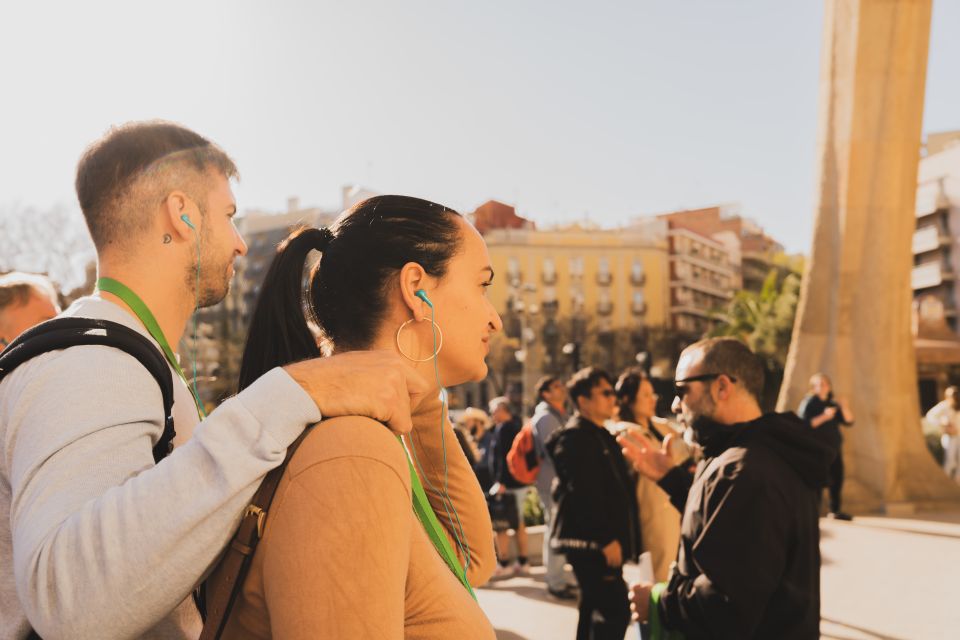
This Sagrada Familia skip-the-line guided tour keeps things moving, so you spend your energy on the big wow moments: the dreamlike interior light and the story behind the facades. I like that you don’t just look around; a certified Barcelona Tourism Authority guide gives clear context as you go, and the headset audio helps you follow without craning your neck. When guides like Ania or Alva lead the group, you can tell they know how to make details click fast.
One thing to plan for: entry is a real church visit, so you’ll hit security checkpoints and you have to dress correctly. If you’re not ready for the metal detector line (expect about 20–30 minutes), or you show up without the proper ID, you could be turned away with no refund.
In This Review
- Key things I’d watch for
- Why a skip-the-line Sagrada Familia tour is a smart move
- Meeting at C/ de Mallorca: how to start without stress
- Security and dress code: the two rules that can ruin your mood
- Nativity Façade: where your guide sets the story
- Inside the basilica: stained glass light and the “woods” idea
- Passion Façade and towers: understanding what came after Gaudí
- Sagrada Familia Schools: why the builder’s families matter
- The Sagrada Familia Museum: sketches, plaster models, and Gaudí’s tools
- Price and value: is $64 for 1.5 hours fair?
- What the best guides do (and why it matters)
- Who this tour suits best
- Should you book this Sagrada Familia skip-the-line guided tour?
- FAQ
- How long is the Sagrada Familia guided tour?
- Does this tour include skip-the-line tickets?
- What is included in the price?
- Where is the meeting point?
- What should I wear to enter the basilica?
- Do I need ID for this tour?
- How long should I plan for security?
- Is the tour in English?
- Is there free cancellation and can I reserve without paying today?
Key things I’d watch for
- Skip-the-line entrance uses a separate entry flow, so you avoid the main ticket queue
- Headset audio in English helps you keep up even when you’re stopping for photos
- Nativity Façade first gets explained as the earliest completed section
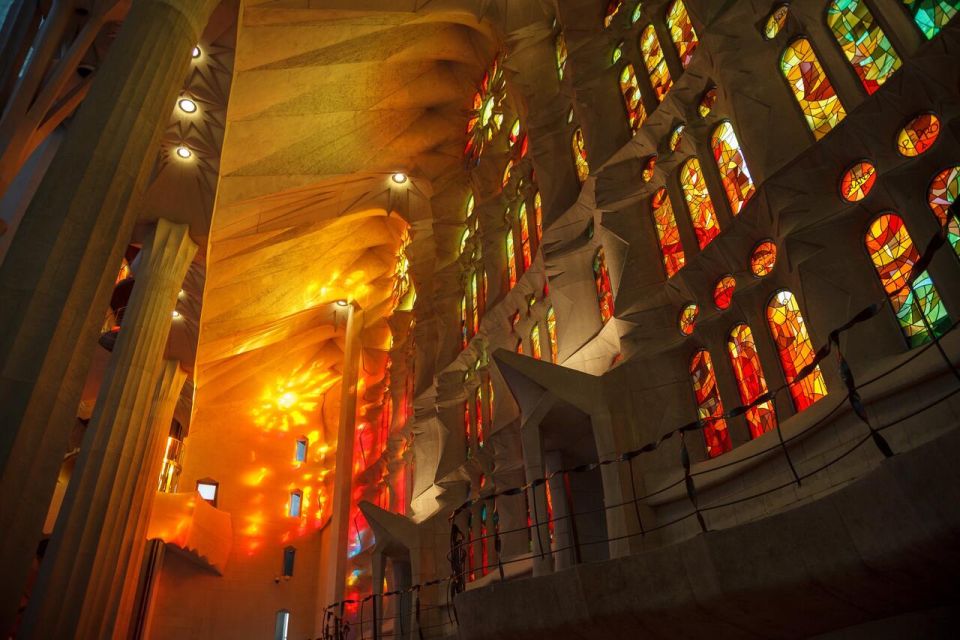
- Interior as a forest walk: you’ll hear about the branch-like columns and the stained-glass “leaf-light” effect
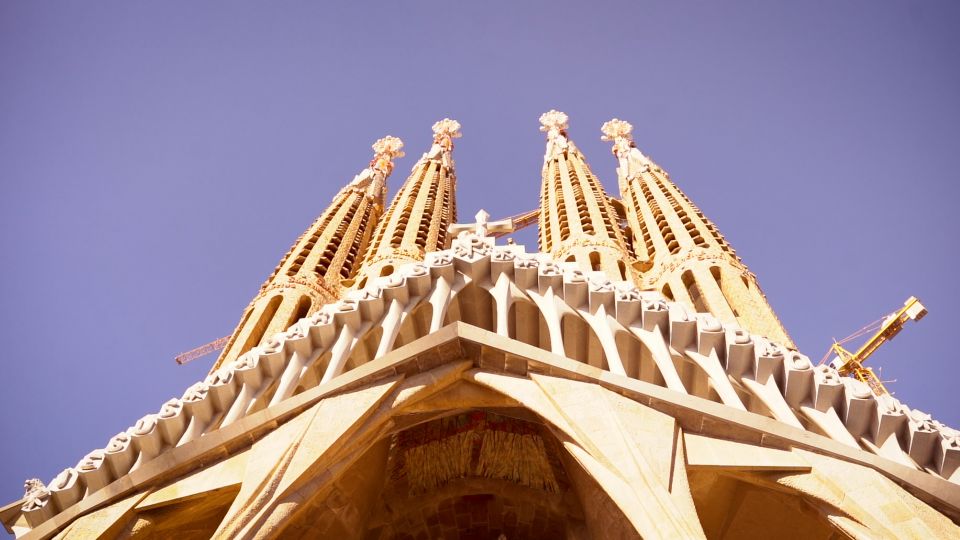
- Passion Façade drama: the angular sculpture story is explained as post-Gaudí work
- Museum plus construction artifacts: you’ll see plaster construction models and Gaudí-related sketches/plans, including an upside-down model
Why a skip-the-line Sagrada Familia tour is a smart move
Sagrada Familia is one of those places where timing matters. Even on a calm day, lines can swallow your visit, and your ticket window is fixed. This tour helps because you get skip-the-line entry through a separate entrance, which keeps you from turning your trip into a waiting game.
The other reason I’m a fan is that Sagrada Familia is packed with symbols and craft logic. If you show up cold, you can still be amazed (you will), but you might miss what you’re actually seeing. With a live guide and audio headsets, you get the building’s “how” and “why” while you’re standing in the exact spots those ideas were meant for.
You can also read our reviews of more guided tours in Barcelona


Meeting at C/ de Mallorca: how to start without stress
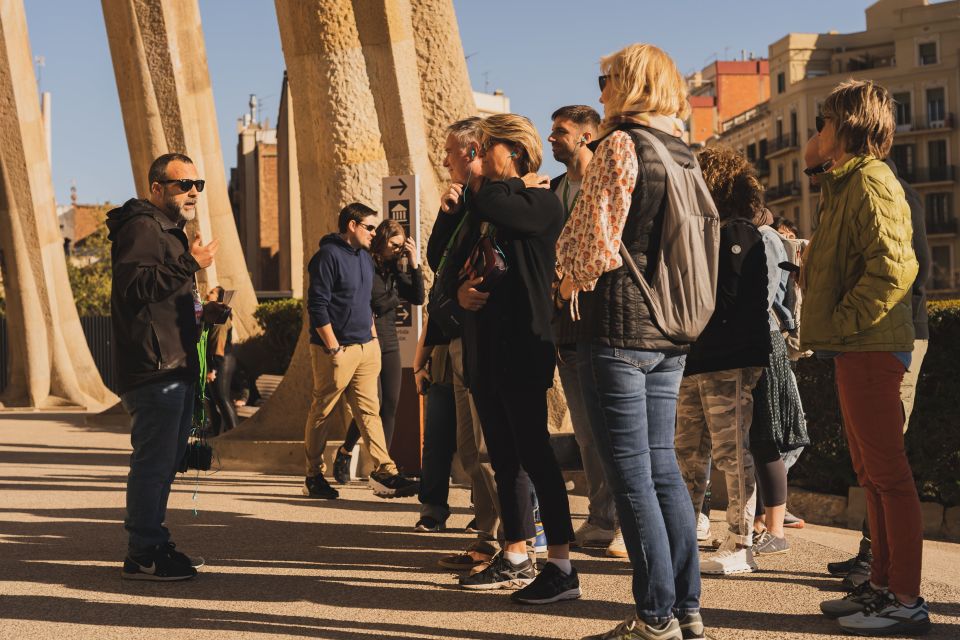
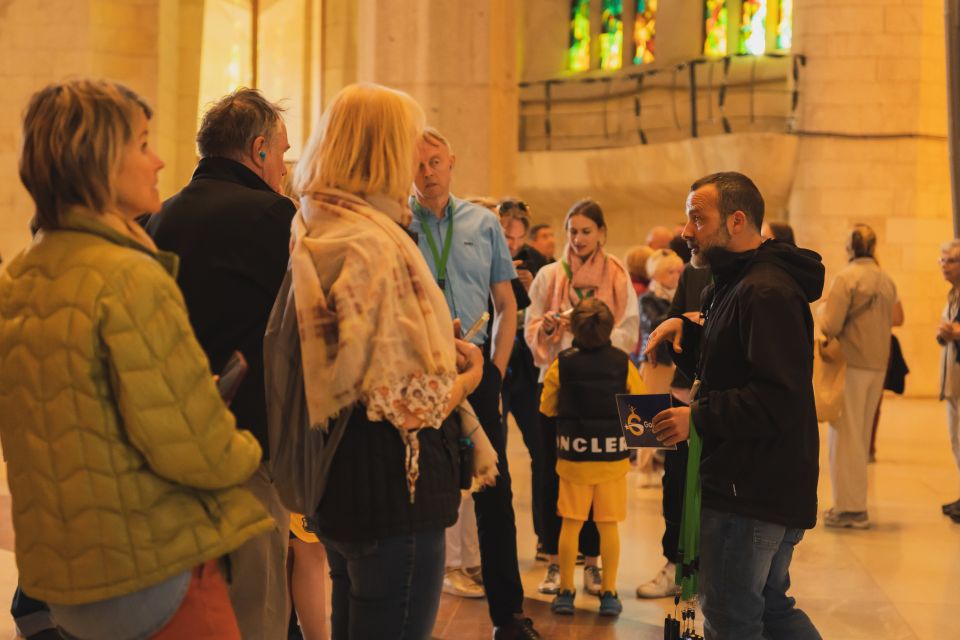
Your meeting point is C/ de Mallorca, 418, at Ringels souvenir shop. You need to find your guide holding a Golden Tour Guide sign inside, and you should arrive 15 minutes early.
I like this setup because it forces a clean start. You’ll get a quick intro before heading toward the basilica entrance, which matters once you hit security and start moving inside. Also, there’s a practical bonus here: restroom facilities are available at the meeting point, so you’re not scrambling later.
Security and dress code: the two rules that can ruin your mood
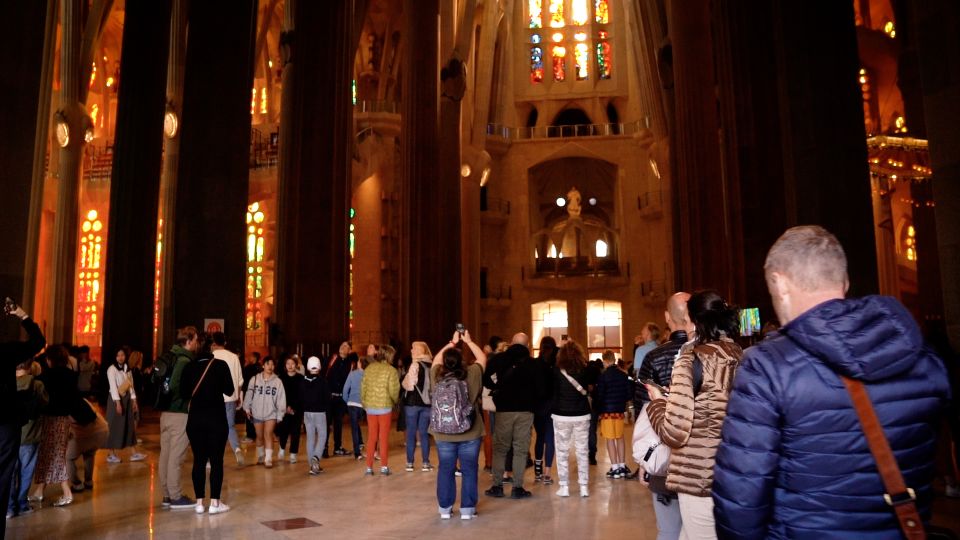
Security is not optional. The tour requires you to pass through metal detectors, and you should plan for about 20–30 minutes of waiting time at the checkpoint. If you’re traveling with kids or you’re tight on time, build that buffer in. Arriving early helps, because it gives you room to clear the line and still be ready to start.
Dress code is also strict because the basilica is a Catholic church. You’re expected to dress appropriately: no tank tops, strapless shirts, short shorts, or sandals. You also can’t wear clothing intended for celebrations or festivities. If you’re unsure, go conservative. Closed shoes and covered shoulders are the safest bet.
One more detail: you must bring an ID to prove your age. If you can’t show the correct proof of age, Sagrada Familia will not allow entry and you won’t be able to get a refund. This is the kind of rule you only notice when you need it, so bring your ID.
Nativity Façade: where your guide sets the story
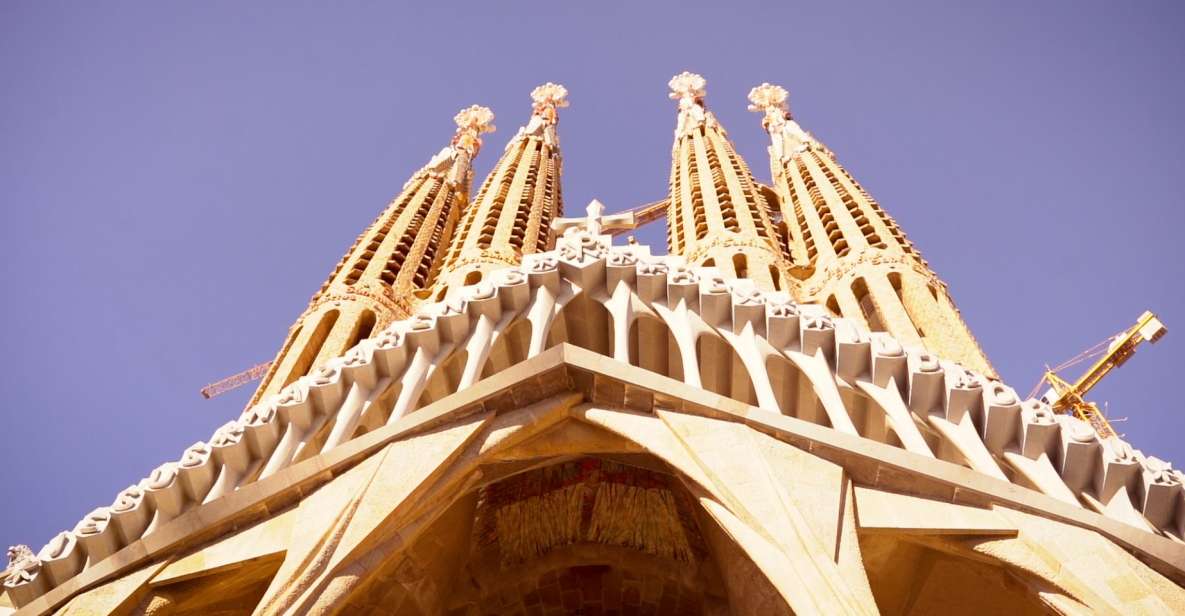
The tour starts by going over the Nativity Façade, described here as the first completed section of the basilica. That’s a smart place to begin because it anchors your visit in something tangible. When you understand what was finished early, you’re better at tracking what still had to be imagined, engineered, and built over time.
You’ll learn what to look for on the façade, not just admire it from a distance. Your guide connects the sculptural program to the broader meaning of the church and Gaudí’s approach to design. This part also sets expectations for inside, where light and geometry do a lot of the storytelling.
Inside the basilica: stained glass light and the “woods” idea
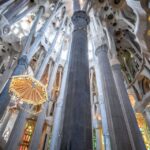
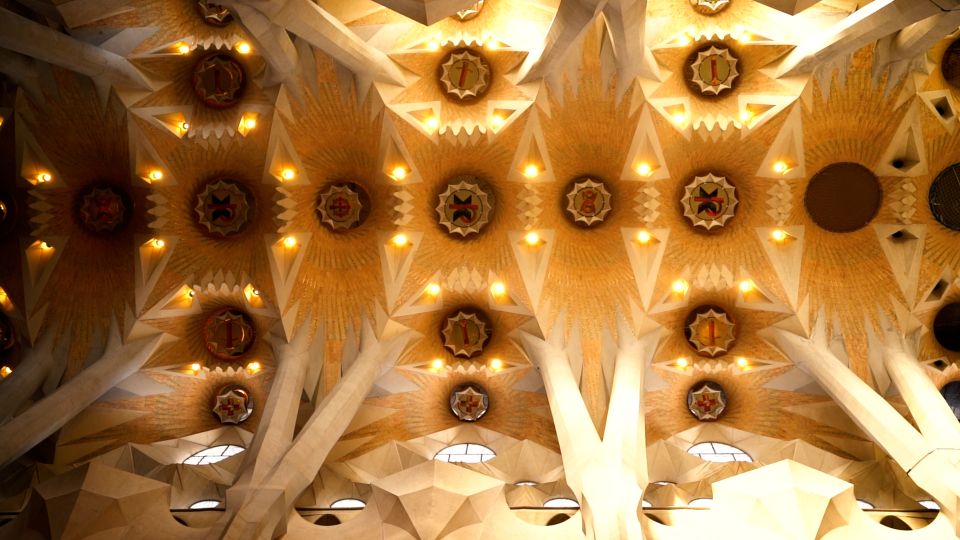
Then you step inside, and the basilica does what it does best. The guided focus here is on the colored light from the stained glass windows and the branch-like columns stretching up toward the ceiling. The guide explains how Gaudí intended the interior to feel like walking through a forest, with light filtering in like you’re among leaves.
This is where an audio headset earns its keep. Sagrada Familia isn’t a single viewpoint. You keep moving your eyes, turning your body, and trying to take photos without missing the explanation. The headset helps you follow while you pause in the spots your guide is highlighting.
A good guide can also help you manage expectations for construction. You’ll hear about the ongoing work and the current predicted completion date shared as part of the tour. That context keeps the visit from feeling like you’re looking at a “forever project” with no end in sight. It becomes a live workshop of craft traditions and engineering decisions.
A few more Barcelona tours and experiences worth a look

Passion Façade and towers: understanding what came after Gaudí
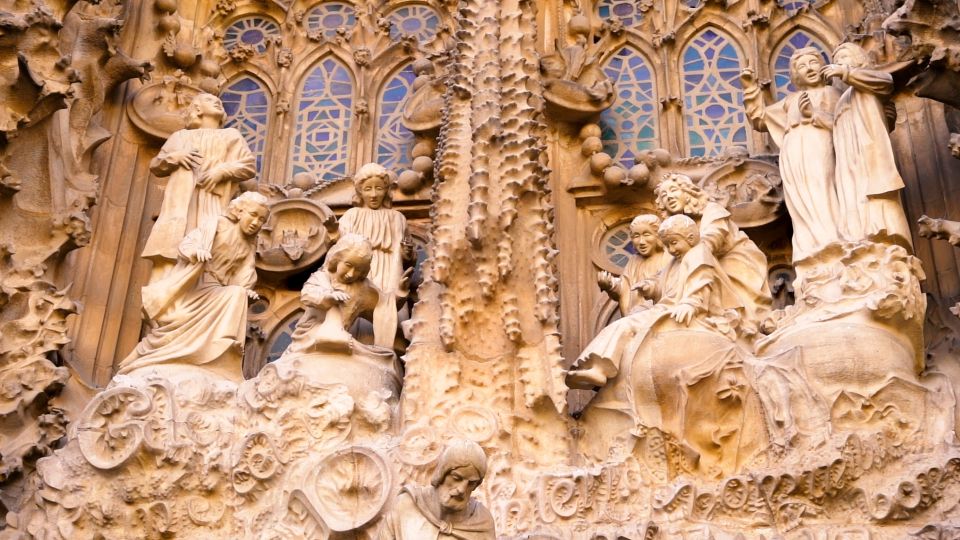
When you exit, the focus shifts to the Passion Façade, representing the story of Jesus’ crucifixion. Your guide points out the mood change that comes with this façade. The tower sculptures are described as stark and angular, and the tour frames this style as something built after Gaudí’s death.
That timing detail matters more than you might think. It helps you see the basilica as an evolving project—one where an original vision meets generations of artists and builders who worked to carry it forward. If you’re the type who likes to understand why things look the way they do, this segment is a strong payoff.
Sagrada Familia Schools: why the builder’s families matter
Next stop: Sagrada Familia Schools, designed for the children of the workers building the basilica. This is one of those sections that adds a human layer to what can otherwise feel like pure architecture.
You’ll learn that the school buildings were reconstructed more than once and even moved locations to make way for the basilica’s footprint. That story reframes the site. It’s not only a monument; it’s a working environment that shaped daily life for people on the construction team.
The Sagrada Familia Museum: sketches, plaster models, and Gaudí’s tools
Your final stop is the Sagrada Familia Museum, where the guide shares original plans and sketches that show how complex Gaudí’s architecture and vision really were. This is where you get to see “behind the magic,” the kind of craft evidence that makes the whole project feel more real.
Expect artifacts from construction, including plaster models, along with museum items tied to Gaudí’s life and the basilica’s history. One highlight called out here is Gaudí’s upside-down model of the basilica. Even if you don’t consider yourself an architecture person, this kind of object makes the design logic feel practical and even a bit playful.
The museum time also gives you a breather. If you’ve spent the morning elsewhere in Barcelona, this stop can help you reset while staying on-topic.
Price and value: is $64 for 1.5 hours fair?
At $64 per person for about 1.5 hours, it’s not the cheapest way to see Sagrada Familia. The fair question is: what are you paying for?
You’re paying for three things that add value quickly:
- Skip-the-line entry through a separate entrance, which saves time and frustration
- A certified English guide plus audio headsets, which helps you absorb more per minute
- Structured stops that take you to the museum and construction artifacts, not just the church floors
Here’s the balanced take. If you’re the kind of visitor who enjoys reading signs and wandering at your own pace, you can always do it independently. But if you want meaning without spending hours searching for it, this format can be worth it. I also think the price makes more sense when you arrive knowing you’ll spend time inside waiting for guided context rather than piecing it together solo.
Also note the trade-off: there’s at least some sentiment that the ticket can feel pricey compared to other Spain attractions. If you’re watching budget tightly, you’ll want to be honest with yourself about how much you care about interpretation versus raw sight-seeing.
What the best guides do (and why it matters)
One pattern that shows up in strong tour experiences is delivery. When guides like Ania, Alva, Aurelia, or Jose lead, the tour pacing feels right: not a lecture you endure, not a rushed walk-through you forget. The headset audio is part of that too, because it lets the guide talk while you stay oriented.
You’ll likely hear a lot of small, specific details: explanations of the facades, why the interior feels like a forest, the meaning behind different sculptures, and the role of workers and their families. That’s the stuff that turns a famous building into a personal experience.
One practical note: in at least one recent case, someone arrived about 10 minutes late, got a call, and the team waited. That doesn’t mean you should count on it, but it does suggest the meeting point and guide handoff process is designed to get people in rather than abandon them instantly.
Who this tour suits best
This works especially well if you:
- want English guidance and don’t want to hunt down facts on your own
- prefer small group energy over big crowd chaos
- care about understanding Gaudí’s ideas, not just taking pictures
- like visits that mix big architecture with museum objects and construction models
If you hate any guided structure at all, or you want to stay in one spot for a long time, you might feel slightly boxed in by the timed flow. But even then, the museum stop and the façade-to-interior narrative are hard to replicate on your own quickly.
Should you book this Sagrada Familia skip-the-line guided tour?
If you’re going to see Sagrada Familia anyway, I’d lean toward booking this one—mainly because skip-the-line entry plus a live English guide with headset audio helps you get more out of the time you’re actually inside. The museum component and the focus on both the Nativity and Passion façades give the visit shape, not just spectacle.
I’d also book if you want help with the details: dress code expectations, the reasoning behind the design elements, and the construction story that continues today. If you’re traveling with strict time limits, this format can save you stress.
If your budget is tight, consider whether you’re the type who truly uses guided interpretation. For some people, paying for a guide is the best part of the trip. For others, it’s extra cost. Honest answer time: will you be satisfied just standing there amazed, or do you want to understand what you’re seeing as you go?
FAQ
How long is the Sagrada Familia guided tour?
The duration is about 1.5 hours.
Does this tour include skip-the-line tickets?
Yes. You get skip-the-line Sagrada Familia tickets and enter through a separate entrance.
What is included in the price?
Included are skip-the-line tickets, a guided tour with a certified guide from the Barcelona Tourism Authority, audio headsets (English), and restroom facilities at the meeting point.
Where is the meeting point?
Meet inside Ringels souvenir shop at C/ de Mallorca, 418, 08013 Barcelona. Look for your guide holding a Golden Tour Guide sign.
What should I wear to enter the basilica?
You need to dress appropriately for a Catholic church: no tank tops, strapless shirts, short shorts, or sandals. Clothing intended for celebrations or festivities is also not permitted.
Do I need ID for this tour?
Yes. You must bring an ID to prove your age, or entry may be denied.
How long should I plan for security?
You should anticipate about 20–30 minutes for the metal detector security checkpoint.
Is the tour in English?
Yes. The live tour guide is English, and the audio headset is also in English.
Is there free cancellation and can I reserve without paying today?
You can cancel up to 24 hours in advance for a full refund. You can also reserve now & pay later.