REVIEW · CORDOBA
Cordoba Mosque and Jewish Quarter Guided Tour
Book on Viator →Operated by Arte De Cordoba S.L. · Bookable on Viator
One building, two religions, zero boredom. This guided Cordoba walk makes the Mezquita-Catedral easier to read and the Jewish Quarter more meaningful, thanks to an art-historian style approach. I love that you get a timed path through the monument’s major eras, from old basilica traces to later expansions. I also like the extra focus on La Judería stops like the synagogue and the Maimonides area. One thing to watch: entry inside is strict about head coverings, and the tour is not ideal if you need very smooth mobility access.
The best part is that you’re not left squinting at walls. You’ll get a guide-led explanation with structure, plus admission tickets that help you skip a common headache of timing. In the group, I like that the pace is managed so you can actually hear what matters. Still, one practical consideration: the meeting point can be confusing if you arrive late or rely on the wrong address, so plan to be early and confirm the exact spot.
In This Review
- Key highlights worth your attention
- Mezquita-Catedral context that makes every arch make sense
- Entering the Mezquita-Catedral: from old basilica remnants to Almanzor
- Why the La Judería walk hits harder than a quick photo loop
- What the guides actually do well (and why it matters)
- Practical logistics you should plan for before you meet
- Price and value: what you’re paying for at $42.24
- Who should book this Cordoba guided tour
- Should you book the Cordoba Mosque and Jewish Quarter guided tour?
- FAQ
- How long is the Cordoba Mosque and Jewish Quarter guided tour?
- Is the tour offered in English?
- What tickets are included?
- Are head coverings allowed inside the monument?
- Where do I meet the group?
- What if synagogue tickets are not available?
Key highlights worth your attention
- Expert art historian guiding instead of a quick facts-only walkthrough
- Mezquita-Catedral storytelling from Visigoth remains through later mosque phases
- La Judería focus with synagogue and artisan souk area stops plus Maimonides reference points
- Small-group feel with a maximum of 30 people and headset listening support
- Tickets included for the Mosque/Cathedral and the synagogue, saving time and money
Mezquita-Catedral context that makes every arch make sense
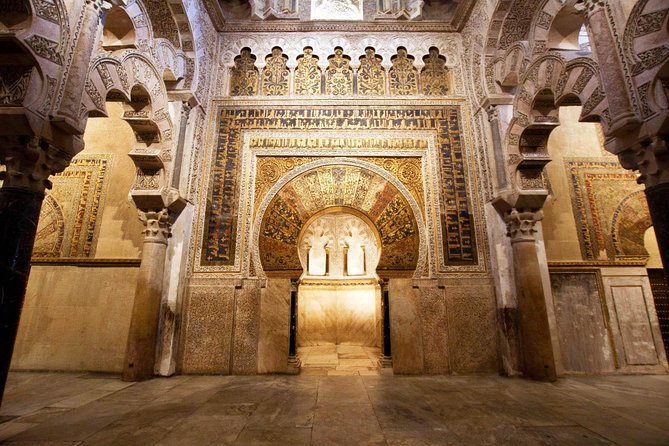
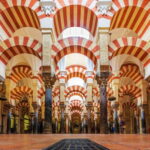
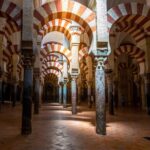
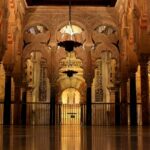
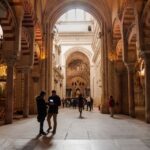
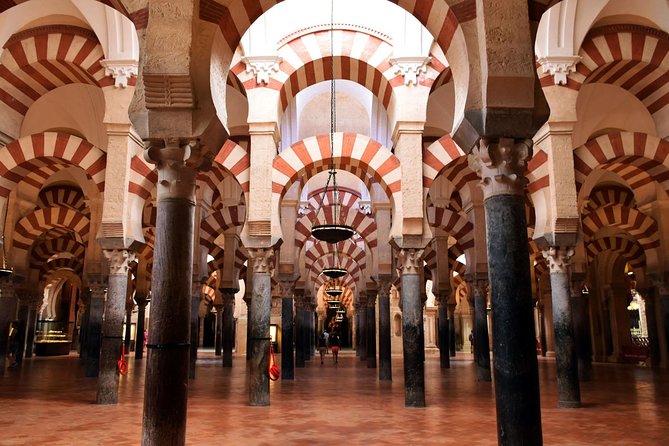
Cordoba’s Mezquita-Catedral can feel like a maze if you just wander in. The building is big, visually intense, and it changes shape over centuries. A guide helps you read it, not just stare at it.
What I like most is the way the story is organized: you start with earlier layers, then you move forward through mosque construction and later Christian adaptation. That turns the visit from a photo stop into a real timeline you can follow.
You’ll also hear how the structure connects to real historical moments, not just decorative details. The tour frames the Mezquita as a living site that kept being reworked, expanded, and repurposed as power changed in the city.
You can also read our reviews of more guided tours in Cordoba
Entering the Mezquita-Catedral: from old basilica remnants to Almanzor
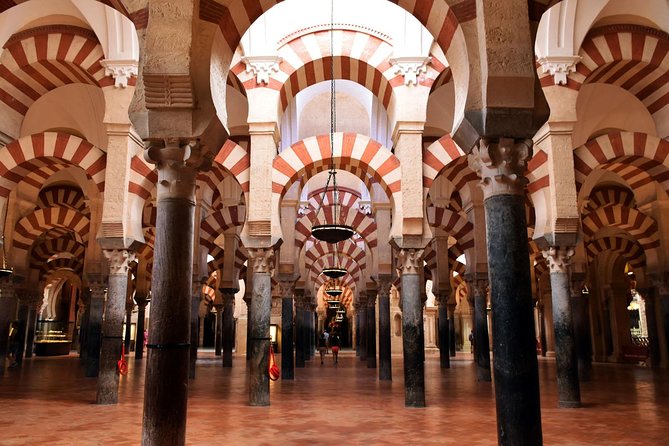
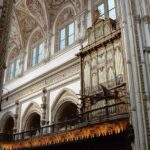
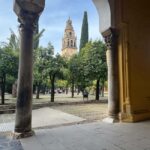
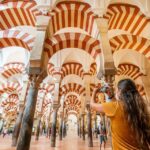
The main stop is the Mezquita Cathedral de Córdoba, and your time inside is about 1 hour 30 minutes. The guide focuses on the building’s stages so you can spot what’s older and what was added later, rather than treating the whole interior as one lump of beauty.
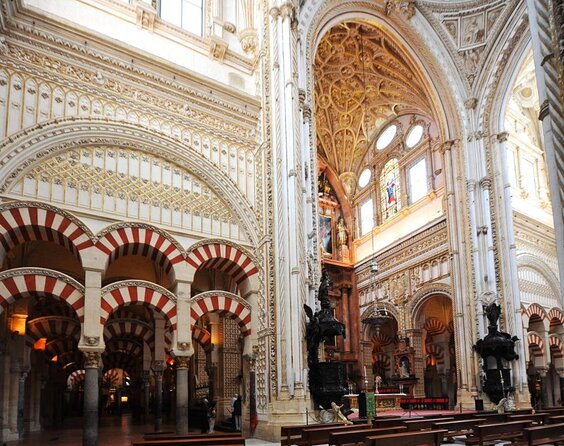
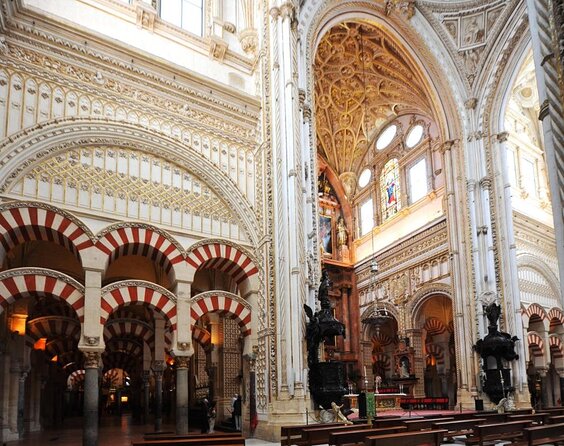
You’ll begin with remnants linked to an older Visigothic basilica of San Vicente still preserved in the complex. From there, you follow the guided route into the old mosque built by Emir Abderraman I, then through later expansions up to the Almanzor period. That matters because the Mezquita isn’t just one architectural style; it’s a series of decisions made over time.
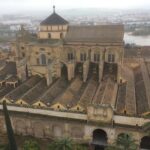
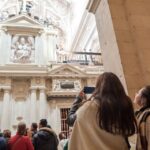
After the Christian conquest, the story shifts. The monument becomes a Cathedral, and the guide explains how the space changed and how new parts were added. There’s also a practical architectural detail worth knowing: the Cathedral era involved the use of existing areas (including warehouses) during enlargement efforts linked to Al-Hakam II and later liturgical needs, and the transept was built later on.
One more note that you’ll feel immediately when you arrive: it’s a cathedral context, so you can’t cover your head inside the monument. If you wear a hat, bring something light that you can remove, and if you’re used to covering for religious reasons, plan ahead.
Why the La Judería walk hits harder than a quick photo loop
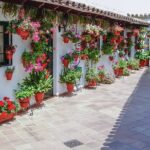
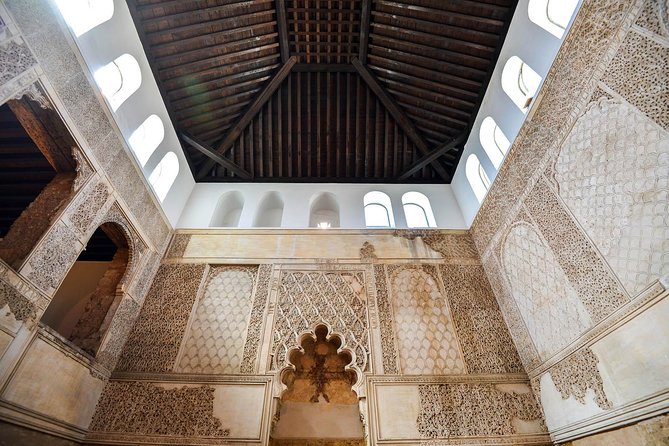
The second part of the tour is La Judería, the old Jewish Quarter area around the Synagogue and surrounding streets. This section is shorter, about 30 minutes, but it’s targeted—built around three landmarks you can actually connect to the larger story of Cordoba.
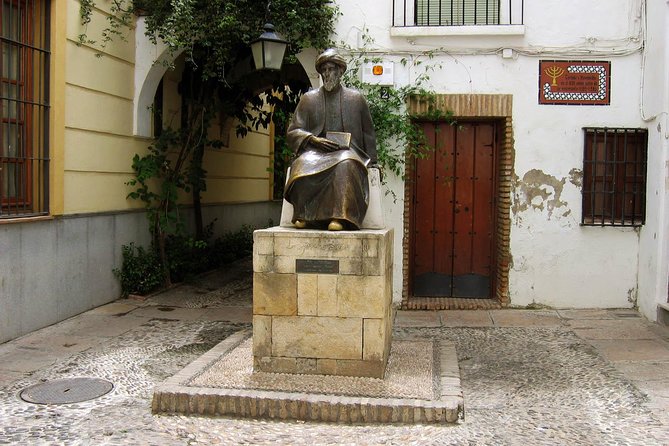
You’ll walk through streets tied to what’s often described as the most famous medieval Jewish neighborhood in the city. The guide points out key stops, including the synagogue, the Souk of the Craftsmen area, and a Monument to Maimonides.
Even with a short time window, the value is in what you’re shown and how it’s explained. Instead of random streets and guesses, you get a guided route that makes the neighborhood feel coherent. If you care about how communities worked—shops, learning, worship—this stop helps you connect the dots fast.
A small caution: narrow streets can mean crowd pressure, and your group may need to line up in tight spots. A few visitors noted that the flow in the Jewish Quarter can be hard when many groups overlap, so aim for the guide’s rhythm and stick close when they reposition you.
What the guides actually do well (and why it matters)
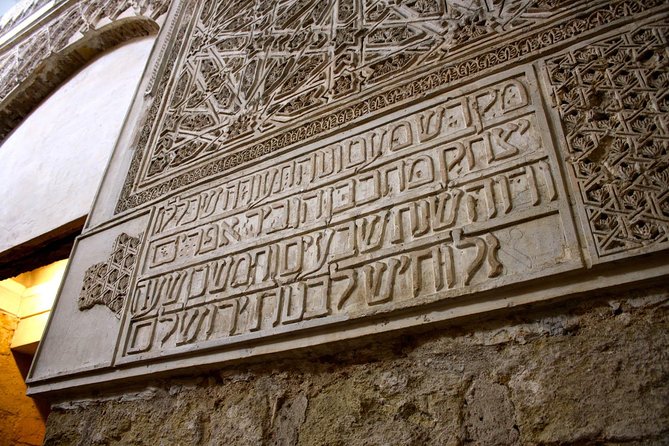
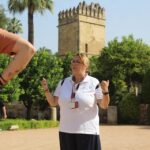
This tour runs as a guided experience with a professional art historian guide, and that shows in the structure. The group size stays capped at 30 travelers, which helps keep the pace human instead of chaotic.
Headsets are used, which is a big deal in the Mezquita Cathedral where sound bounces. You don’t have to lean into someone’s shoulder to catch the important bits. In practice, that means you spend more time looking at what the guide is pointing out and less time trying to hear over other voices.
I also noticed a recurring theme in guide performance: guides like Saray, Fatima, and Anna are described as energetic and question-friendly, while Maria and Alvaro stand out for keeping groups together and steering people toward less congested spots. That last part matters because Cordoba can get busy, and you don’t want to spend your visit stuck behind a wall of people.
One practical style tip from the experience profile: you may be guided to better positions as a group so you can hear clearly. If the guide offers shade breaks outside, take them. Cordoba’s heat can sneak up on you, even if you think you’re fine.
Practical logistics you should plan for before you meet
This tour starts at Baños del Alcázar Califal, Pl. Campo Santo de los Mártires, s/n, Centro, 14004 Córdoba, Spain, and it ends at the Mosque-Cathedral Monumental Site of Córdoba, C. Cardenal Herrero, 1, Centro, 14003 Córdoba.
The meeting details can change by day, so don’t wing it:
- Tuesday to Saturday morning: meet at the main door of the Caliphal Baths next to the sign
- Sunday: meet at the door of the Palacio de Congresos next to the benches
That’s worth repeating to yourself. One unfortunate theme in the feedback is that people missed the start due to being sent to the wrong meeting point. Save time and avoid stress by arriving early and matching your day’s instruction exactly.
You’ll also get a mobile ticket, so keep your phone ready and don’t rely on wandering up at the last second. The tour confirmation is provided after booking, so it’s smart to re-check the meeting instruction right before you go.

Price and value: what you’re paying for at $42.24
At $42.24 per person for about 2 hours, the pricing feels fair because the big-ticket access points are part of the deal. You’re not only paying for a guide—you’re also paying for included admission for the Mosque/Cathedral and the synagogue.
That changes the value equation in a real way. Waiting in line or chasing timed entry can eat half your trip, especially at the Mezquita-Catedral. Here, the admission pieces are handled as part of your guided visit, which is a practical time-saver.
On top of that, the tour gives you a clear learning framework: architecture phases at the Mezquita-Catedral and a structured neighborhood walk in La Judería. For a place where “everything is cool but I don’t know what I’m looking at” is common, a guide who can connect details to timeline is often what turns the visit into a trip highlight.
You should also consider how your attention works. If you want a fast overview and don’t care about historical layering, you might find the information load heavy. Some people felt the pace was more fact-heavy than interactive. Still, the headset system helps, and the best guides in this format are good at keeping the group moving and letting questions land.
Who should book this Cordoba guided tour
Book this if you want Cordoba to make sense quickly. It’s a strong fit for:
- First-timers who feel overwhelmed by the Mezquita-Catedral’s complexity
- People who enjoy architecture plus story-driven context
- Anyone who wants more than a casual skim of La Judería
It’s also a good choice if you like to ask questions. Guides who are described as welcoming and open to queries tend to work well in a group setting.
If you need very specific mobility support, keep expectations realistic. One comment flagged wheelchair accessibility as a difficulty. The route involves indoor monument space and outdoor walking in older streets, so it’s smart to think about your own comfort level and ability to handle crowds and uneven surfaces.
Should you book the Cordoba Mosque and Jewish Quarter guided tour?
If your goal is to leave the Mezquita-Catedral understanding why it looks the way it does, I’d book it. The combination of included admission plus an art-historian guided path gives you more than “see the sights.” You’ll come away with a timeline you can repeat to your future self.
I’d skip it only if you’re strictly chasing a laid-back experience with zero historical detail, or if meeting-point complexity would stress you out. If you’re organized enough to arrive early and match the day’s meeting instruction, this tour is a solid value for a 2-hour window in one of Spain’s most impressive architectural sites.
FAQ
How long is the Cordoba Mosque and Jewish Quarter guided tour?
The tour is approximately 2 hours total. The Mezquita-Catedral stop is about 1 hour 30 minutes, and the La Judería walk is about 30 minutes.
Is the tour offered in English?
Yes. The tour is offered in English.
What tickets are included?
Your ticket for the Mosque/Cathedral is included, and there is also a synagogue ticket included. Admission to those sites is part of the tour.
Are head coverings allowed inside the monument?
No. You are not able to cover your head inside the monument because it is a cathedral.
Where do I meet the group?
The start point is at Baños del Alcázar Califal (Pl. Campo Santo de los Mártires, s/n, Centro, 14004 Córdoba). The specific meeting spot changes:
- Tuesday to Saturday morning: main door of the Caliphal Baths next to the sign
- Sunday: door of the Palacio de Congresos next to the benches
What if synagogue tickets are not available?
The tour notes that it is not responsible for the unavailability of synagogue tickets due to maintenance work.