REVIEW · CORDOBA
Medina Azahara Guided Tour
Book on Viator →Operated by Arte De Cordoba S.L. · Bookable on Viator
Medina Azahara turns abstract dates into real stone. This 3-hour guided trip takes you to the medieval palace-city built as the Caliphate of Córdoba’s seat of government in the 10th century, then helps you read the site like a story. You’ll get an expert-led walkthrough plus an interpretation center that makes the ruins easier to understand.
I especially love the two-transport choices—you can go by shuttle bus from Córdoba or drive yourself with free parking—and the tour still keeps the day moving. Second, I like that your ticket isn’t just a pass; it includes admission, a drink, and a snack, plus the on-site shuttle from the museum area to the archaeological zone.
One thing to consider: the tour is structured and time-tight. If you like lingering, stretching out, and wandering on your own for a long while, this may feel a bit rushed, and you’ll want good shoes for the walking.
In This Review
- Quick hits you’ll actually use
- Medina Azahara: why this palace-city matters
- The 3-hour tour rhythm: what you can expect
- Meeting point and getting there: bus-included vs. free parking
- Option A: bus included from Córdoba
- Option B: go in your own vehicle with free parking
- Why this matters
- What you’ll see at Medina Azahara (and why each stop lands)
- The palace-city walk: reading the stone
- The interpretation center: turning ruins into objects and ideas
- A note on facilities
- Guides and communication: the human engine of the tour
- Price and value: what $30.25 really buys you
- Who this tour fits best (and who should think twice)
- Should you book Medina Azahara today?
- FAQ
- FAQ
- How long is the Medina Azahara guided tour?
- Is admission included in the price?
- Is the tour offered in English?
- Does the tour include transport to the site?
- Where is the bus stop for the bus-included option?
- Can I drive myself instead of taking the bus?
- What’s included besides the guide and admission?
- What fitness level do I need?
- Is free cancellation available?
Quick hits you’ll actually use
- Expert art historian guide who explains what you’re seeing, not just the big headline dates
- English-only, monolingual tour with an audio setup reported to work well
- Bus option from Córdoba OR free parking if you drive, plus a shuttle inside Medina
- Admission + drink + snack included so the price covers more than entry
- Small group size (max 25) makes it easier to ask questions
- Moderate walking on uneven ground means plan for comfort and water
Medina Azahara: why this palace-city matters
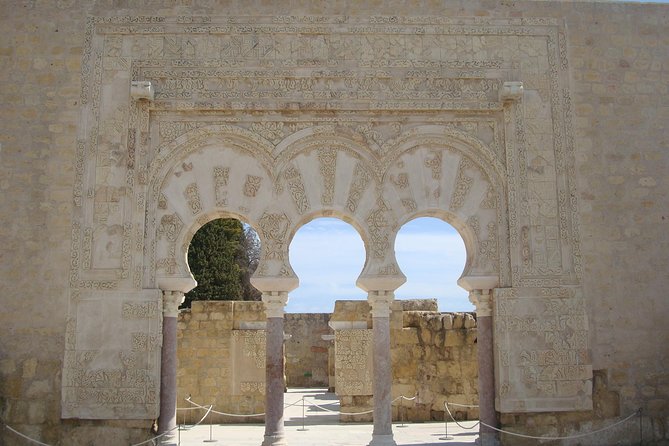
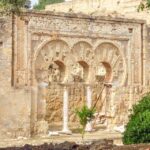
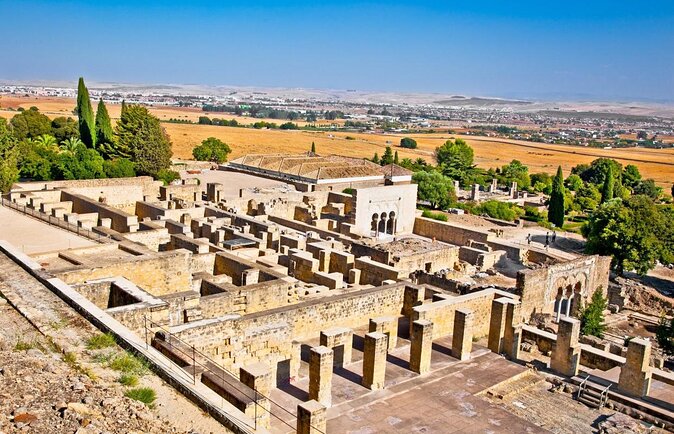
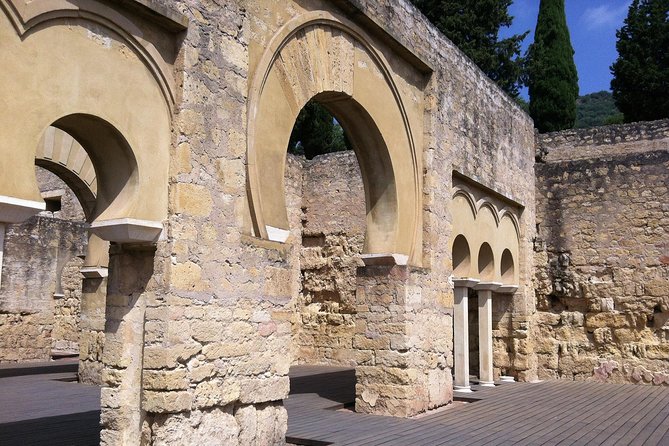
Medina Azahara isn’t just another “old place with ruins.” This is the site of a 10th-century government center—an entire planned city built to project power and order. Córdoba was already important, but the Caliphate wanted a seat that felt grand, controlled, and permanent.
What makes this visit click is how the guide frames the architecture and layout. You’re not only looking at broken walls and foundations. You’re learning why the city was arranged the way it was, how people moved through it, and what the design choices were trying to communicate. Even if you don’t consider yourself a history person, the explanations help the stone stop looking random.
You can also read our reviews of more guided tours in Cordoba


The 3-hour tour rhythm: what you can expect
This experience is about 3 hours, and it’s run at a pace that’s meant to cover the most meaningful parts without dragging. The structure is typically: meet the guide, travel to the site (either by bus option or your own car), then do a guided walk and viewing time, finishing at the interpretation center.
The best part of this timing is that you leave with a coherent picture. You’re not hopping between isolated photo stops. You’re getting a guided line—how this city worked, what different areas were for, and why the excavations matter today.
The trade-off is freedom. One of the most common “check yourself” points is that you don’t get a lot of extra time to roam around by yourself afterward. It’s a guided experience first. If you want a slower pace and more personal wandering, you may feel you could use an extra hour.
Meeting point and getting there: bus-included vs. free parking
Getting to Medina Azahara is half the day’s stress level, and this tour handles it with two clear options.
Option A: bus included from Córdoba
If you pick the bus-included option, you’ll need to be at the bus stop with a previous reservation. The meeting point is between Hotel Eurostars Palace and the Red Cross Hospital. Once you reach that spot, you then meet the expert guide and carry on from there.
This is the option I’d choose if you want a calmer start and you don’t want to worry about timing, traffic, or finding the parking area.
Option B: go in your own vehicle with free parking
If you prefer independence, you can drive and use free parking. This works well when you want to control your departure time or you’re traveling with someone who hates being stuck waiting for a bus.
Either way, once you’re at Medina Azahara, you’ll still benefit from the tour’s internal transport plan: there’s a shuttle bus in Medina that moves you between the museum area and the archaeological site.


Why this matters
Both choices reduce the two big risks on day trips: missing the group and losing time to logistics. The tour is designed so you can spend your energy learning what you came for.
What you’ll see at Medina Azahara (and why each stop lands)
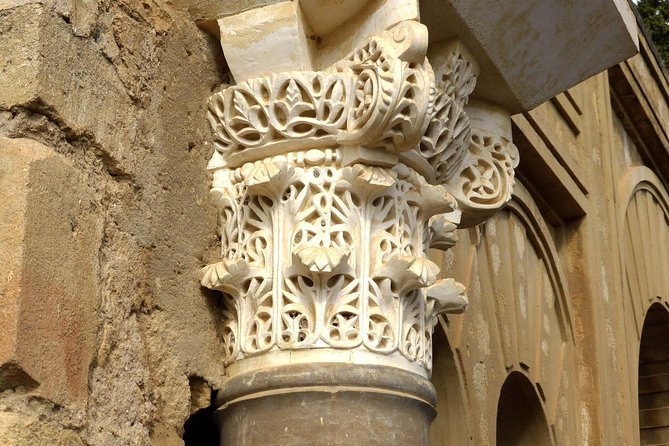
The experience focuses on the central highlight: Medina Azahara itself—its palace-city layout, its monumental architecture, and the layers of what has survived and what’s been recovered.
The palace-city walk: reading the stone
On-site, the guide’s job is to connect the architectural pieces to the bigger picture. That’s where you’ll get the 10th-century context—how the Caliphate used Medina Azahara as a seat of government and why the city’s design reflects that ambition.
This is also where your comfort choices matter. The site involves walking over uneven ground, so wear comfy shoes and plan to move at a guided pace rather than a leisurely stroll. I’d also bring water, because the site can feel hot depending on the season; even in cooler months, conditions can surprise you.
The interpretation center: turning ruins into objects and ideas
After the main guided walking portion, you’ll visit the interpretation center. This is a big deal because it gives you a bridge between what’s still visible outside and what archaeologists have uncovered below the surface.
Inside, you’ll see a collection of ancient objects recovered from the facilities. That museum-style component helps you understand that the site isn’t frozen in “ruin mode.” It’s an active window into daily life, craft, and power—what people built, used, and valued.
If you’ve ever left a ruin feeling like you saw pretty structures but missed the meaning, this stop is your fix.
A note on facilities
One practical point: the bathrooms at the center have been mentioned as needing a bit more care. Not a deal-breaker, but it’s worth knowing so you’re not caught off guard.
Guides and communication: the human engine of the tour
This is a professional, art historian–style guided tour, and that shows in the way people describe the experience. Guides like Maria, Joachim/Joaquin, Almudena, Alejandro, Fran, Carlos, and Ana have been connected with strong explanations and clear pacing in English.
Here’s what you should care about: if you learn best through storytelling and structure, this format should work. The group stays together, the guide keeps you oriented, and you’re given a reason for what to look for.
Also, there’s an audio system used during the tour, and people have reported it functioning well. That matters on open-air sites where you might otherwise strain to hear.
One small consideration: a couple of comments note pronunciation issues at times. The overall takeaway is that the message still lands. Still, if you’re very sensitive to accent clarity, sit where you can hear the guide comfortably.
Price and value: what $30.25 really buys you
At about $30.25 per person, the biggest question is whether you’re paying just for entry, or for a guided experience that adds real value.
Here’s what’s included that makes the math friendlier:
- Professional art historian guide
- Admission ticket included
- Shuttle bus in Medina (museum-to-site)
- Drink and snack included
- English offered as a monolingual tour
In other words, you’re not only buying access to the archaeological area. You’re paying for time you can’t easily recreate on your own: someone who connects what you see to the site’s political and architectural purpose, plus the transport piece that keeps you from losing half your day figuring things out.
A quick reality check: some people note they didn’t use the drink/snack. So don’t assume it’ll be “central” to your memory. Think of it as a small included perk rather than the main event.
Who this tour fits best (and who should think twice)
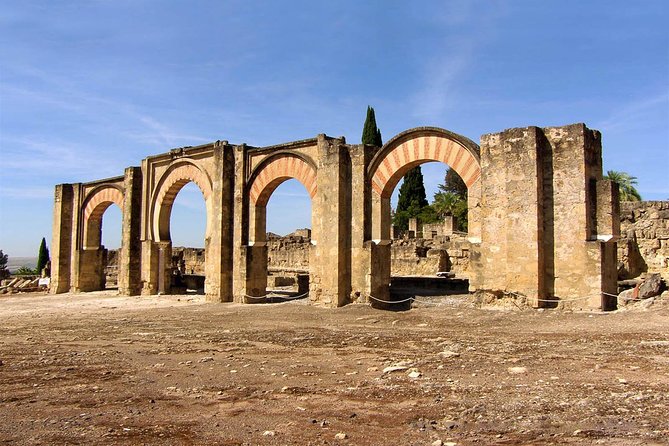
This tour is a strong match if you:
- Want a structured introduction to Medina Azahara in a short window
- Prefer an English-guided format with explanations
- Like small-group settings (max 25)
- Are happy to trade free-roam time for clarity and context
You might want to think twice if:
- You’re the type who needs long unscripted wandering time
- You’re traveling in weather you can’t handle, since the experience includes time outdoors on uneven ground
- You strongly dislike group logistics—even though this tour gives options, you’ll still be meeting and moving as a group
That said, the tour’s organization and guide quality are major reasons people recommend it—especially when you want history to feel real instead of abstract.
Should you book Medina Azahara today?
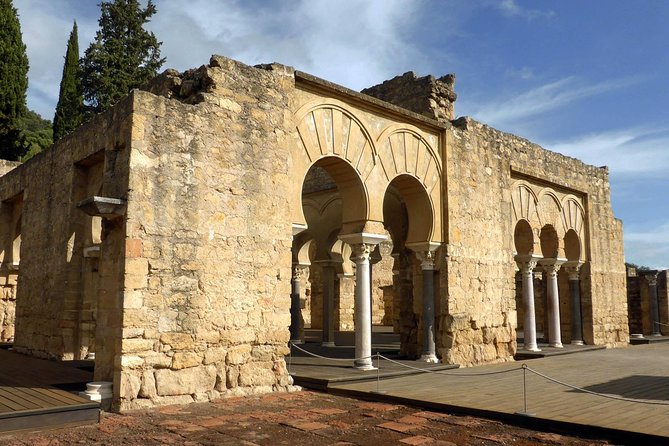
Yes, I’d book it if you want an efficient, guided way to understand one of the most important palace-city sites near Córdoba. The combination of expert-led structure, included admission, and the on-site shuttle makes it good value for the time you spend.
Do it with two practical expectations: bring comfortable walking shoes and water, and accept that the experience is designed to teach you the site—not to give you hours of solo wandering. If that sounds like your kind of day trip, Medina Azahara is worth the effort.
FAQ
FAQ
How long is the Medina Azahara guided tour?
It lasts about 3 hours.
Is admission included in the price?
Yes. An admission ticket is included.
Is the tour offered in English?
Yes. The tour is offered in English and is described as a monolingual tour.
Does the tour include transport to the site?
Yes. You can choose a bus-included option from Córdoba, and there is also a shuttle bus within Medina from the museum to the archaeological site.
Where is the bus stop for the bus-included option?
The meeting point is between Hotel Eurostars Palace and the Red Cross Hospital.
Can I drive myself instead of taking the bus?
Yes. If you go in your own vehicle, parking is free.
What’s included besides the guide and admission?
The tour price includes a drink and a snack, along with the guided experience.
What fitness level do I need?
You should have a moderate physical fitness level, since there is walking involved.
Is free cancellation available?
Yes. You can cancel for a full refund if you cancel at least 24 hours in advance.