REVIEW · SEVILLE
From Seville: Italica Roman City & Medieval Monastery Tour
Book on GetYourGuide →Operated by Naturanda Turismo Ambiental · Bookable on GetYourGuide
Roman gladiators and medieval monks in one half-day. The highlight is Italica, where the birthplace of Trajan and Hadrian makes the Roman world feel close, from mosaics to the amphitheater.
I also like the stop at San Isidoro del Campo. It’s a compact medieval fortress with Mudejar, Gothic, and Baroque features, so the day has real variety.
One watch-out: the schedule is fairly tight, and facilities at the ruins are limited—so use the restroom early and don’t plan on long solo wandering.
In This Review
- Key things I’d zero in on
- Price and what you actually get for $46
- Leaving Seville: the short ride that sets the tone
- Italica Roman city: where the ruins explain the emperors
- The Dragonpit connection at the amphitheater
- Underground passages and the lion den: the darker Roman side
- San Isidoro del Campo monastery: Mudejar, Gothic, and Baroque in one outing
- Tour pace, group size, and guide style (and why names matter)
- What to bring (and what to skip) for a smooth half-day
- Drop-offs back in Seville: plan where you’ll end up
- Should you book this tour?
- FAQ
- How long is the tour from Seville?
- How much does it cost?
- Does the price include transportation from Seville?
- Are entry tickets included?
- What about food and drinks?
- What languages are available for the guided tour?
- Is a private tour available?
- What happens if there aren’t enough people for my language?
- Where does the tour start and end in Seville?
- Is free cancellation available?
Key things I’d zero in on
- Trajan and Hadrian’s birthplace setting makes Italica more than a pretty ruin.
- The amphitheater’s size (25,000 seats) helps you picture what crowds sounded like.
- Gladiator-era spaces like underground passages and a lion-holding area give you a darker angle on Roman spectacle.
- Game of Thrones fans get a direct visual link to the Dragonpit look from the Dragonpit filming location at the amphitheater.
- San Isidoro del Campo’s mixed styles (Mudejar, Gothic, Baroque) add a second time period without feeling like a detour.
- You get a guide plus transport plus entry—which is where tours like this usually earn their keep.
Price and what you actually get for $46
At $46 per person for about 4 hours, the value comes from the bundle: transport from Seville, entry tickets, and a local guide. You’re not just buying sightseeing time. You’re buying someone to explain why Italica matters and how it connects to the region’s later history.
Also, the pacing matters. This tour doesn’t try to be a full-day Roman marathon. Instead, it hits the key “you can’t miss this” parts of Italica and then folds in the nearby monastery so you leave with two distinct stories.
The only real downside in the price equation is what’s not included: food and drinks. So if you’re the type who gets cranky without a snack, plan ahead.
You can also read our reviews of more city tours in Seville

Leaving Seville: the short ride that sets the tone
Most of your time doesn’t vanish in transit. You’ll do a quick coach ride out to Italica (about 20 minutes), then you’ll be back and forth between stops with brief bus segments. That keeps the experience focused: you’re not spending a chunk of your morning waiting around.
The bus experience is also part of the comfort factor. Recent groups noted the coach as large and comfortable, and some mentioned USB charging ports, which is useful because your phone battery will likely drain faster than you think while you’re aiming for photos of mosaics and big stone ruins.
If you’re doing the shared option, you’ll typically split by language when you arrive. If you’re doing the private option, you’ll have more control over the flow (including pickup options, based on where you’re staying).
Italica Roman city: where the ruins explain the emperors
Italica is one of Spain’s most important Roman archaeological sites, and the tour is built around that fact. Guided time on site is about 105 minutes, and you’ll see enough to understand the big picture: Italica was founded in 206 BC and later became the birthplace of Emperors Trajan and Hadrian.
Here’s what I’d focus on while you’re there:
- The amphitheater
This is the “stop everything and look up” moment. It once held around 25,000 spectators, which is hard to picture until you’re standing near the space. The guide helps you connect what you see to how Romans used architecture for spectacle.
- Mosaics and everyday city details
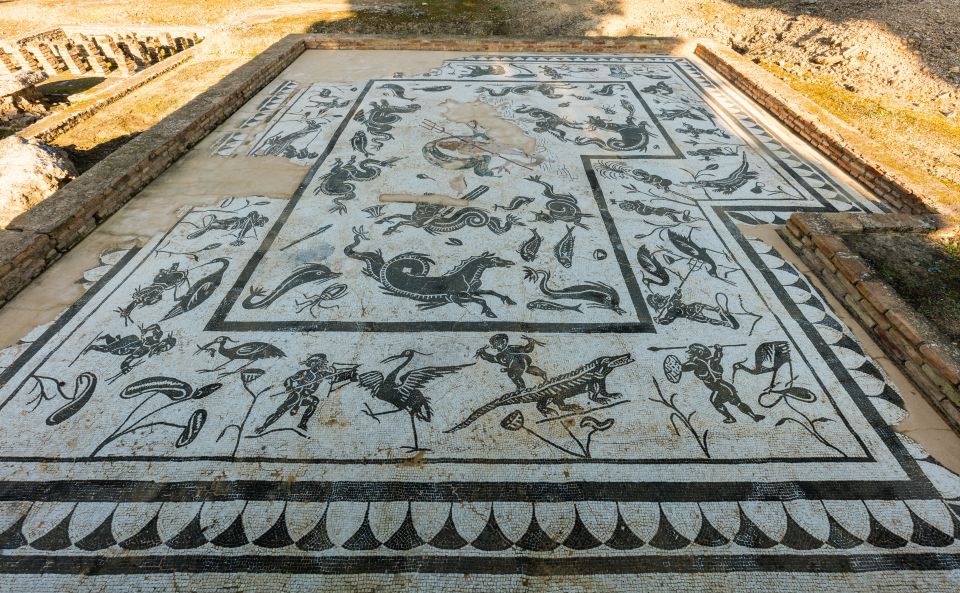
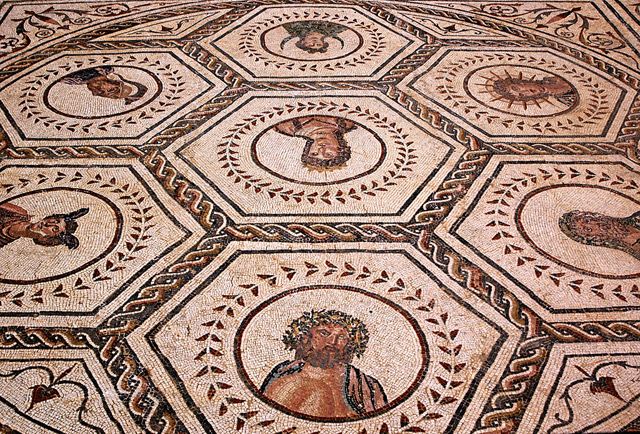
You’ll spend time on well-preserved remains, including intricate mosaics. These aren’t just decoration; they show wealth, taste, and how public and private life looked in Roman times.
- Stories from under your feet
One of the most memorable parts is the glimpse of underground passages that gladiators used, plus the lion-holding den before combat. Even if you’re not a battle-story person, this adds a punch of realism. Roman entertainment was engineered.
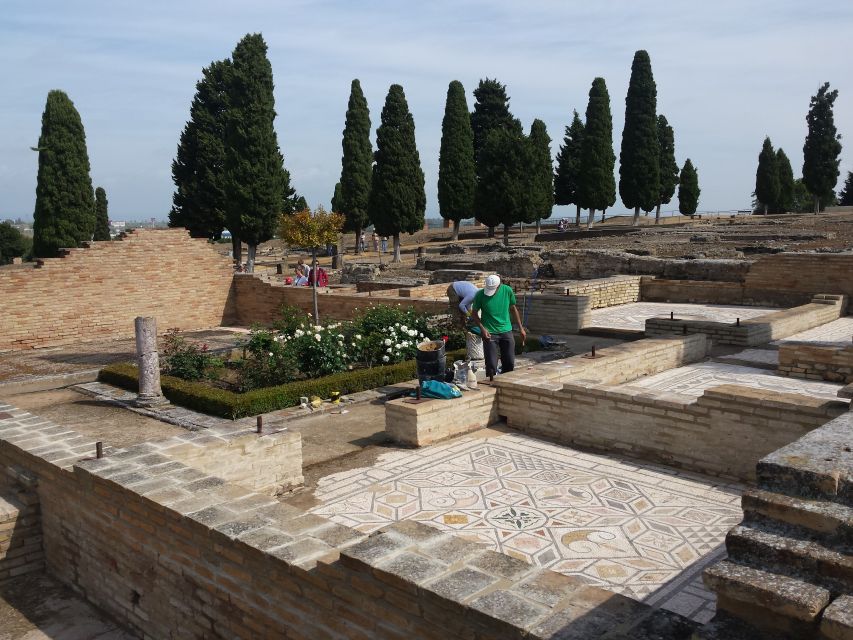
You might also notice that Italica isn’t frozen in time. Some areas feel like an active site, where excavation and restoration are ongoing. The guide can help you read what’s finished, what’s still being uncovered, and what that means for what you’re seeing today.
The Dragonpit connection at the amphitheater
If you’re a Game of Thrones fan, the amphitheater hits extra hard. The tour explicitly points out the Dragonpit connection—the amphitheater at Italica was used for that look in season seven.
What’s nice is that this isn’t just name-dropping. Standing in the space helps you understand why the setting worked: the scale, the stone, and the way the architecture frames drama. You get that two-layer experience—Roman spectacle in real stone, plus modern storytelling echoes.
Practical note: photo angles can take time. If you care about levels and wide shots, don’t assume you’ll breeze through. Build in a few extra minutes in your head for repositioning.
Underground passages and the lion den: the darker Roman side
A lot of Rome tours show you triumph. This one also shows you machinery.
When the guide walks you through the underground routes and the former lion holding area, you get a clearer sense of how battles were staged—where animals were stored, where fighters moved, and how the Romans managed surprise and timing. It’s a quick shift from “pretty mosaic” to “this was a system.”
It also helps you connect the ruins you’re seeing to the way people lived with fear and spectacle as entertainment. That contrast is exactly why this part of Italica feels stronger with a guided explanation than it would on your own.

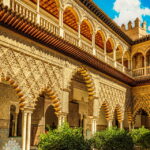
San Isidoro del Campo monastery: Mudejar, Gothic, and Baroque in one outing
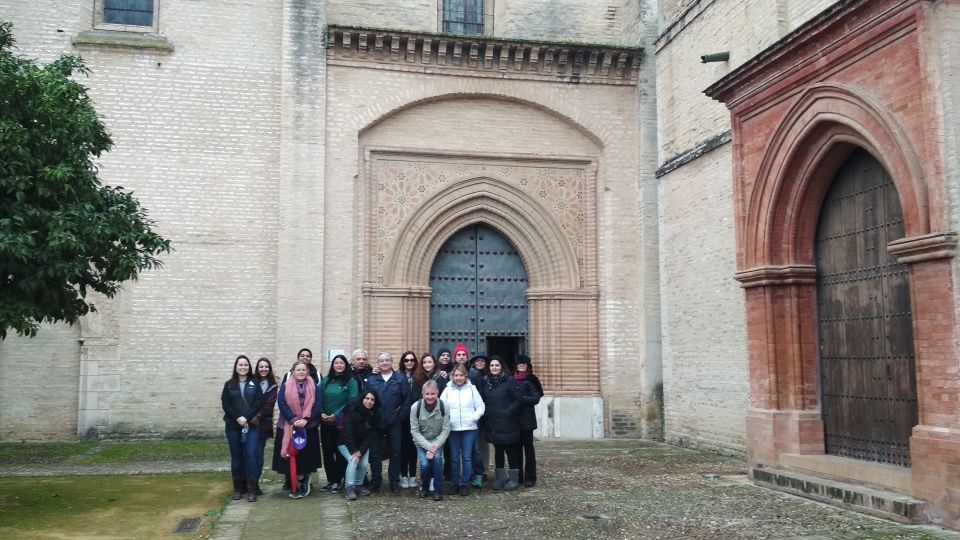
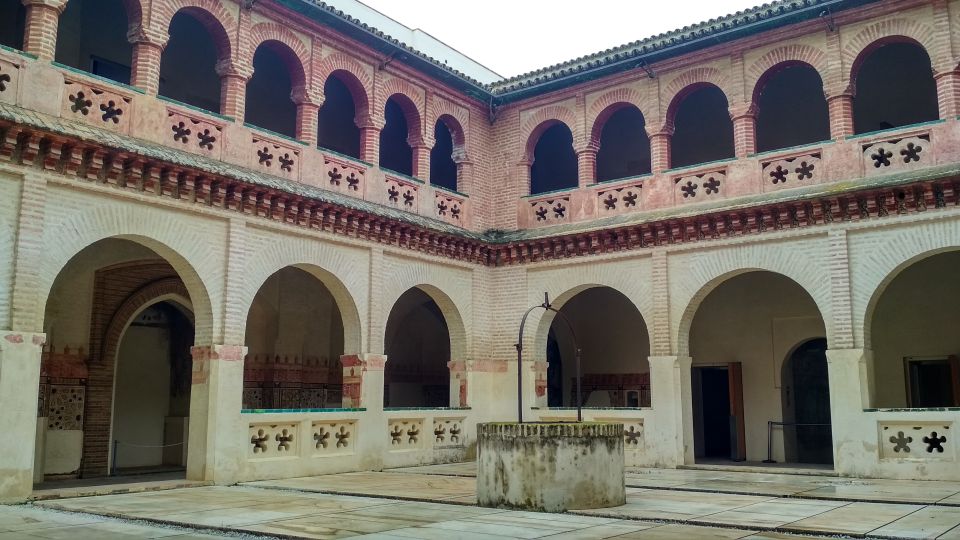
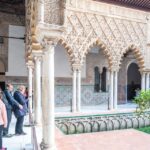
Then you swap out the Roman world for medieval Andalusia at the Monastery of San Isidoro del Campo. The guided portion is about 40 minutes, and it’s close enough that the transition doesn’t feel like travel-fatigue.
This stop is valuable for two reasons:
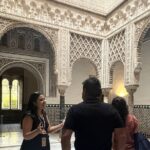
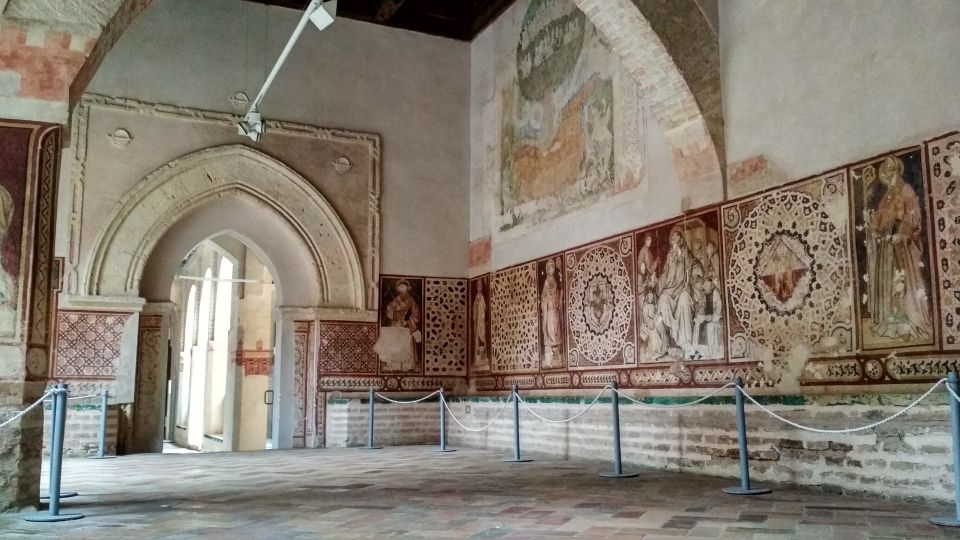
- Architecture layers: you’re looking at a mix of Mudejar, Gothic, and Baroque elements. Even in a short visit, you can spot the stylistic shifts and understand how the site evolved.
- A sense of place beyond a museum: it feels like you’re stepping into a living piece of history—stone that has kept changing roles over time.
One more real-world detail: some areas may not be fully open depending on current conditions, and you might find parts restricted. When that happens, the guide can still point you to the key features that remain visible, so you don’t feel like you paid for a half-empty experience.
Tour pace, group size, and guide style (and why names matter)
The biggest factor in whether a tour feels satisfying is pacing and story quality. This one tends to score well on that front, and you can see the pattern in the guide names people mention most often: Petra, Miguel, Jesus, Carlos Leone, Alberto, Nacho, Jose Luis, Roberto, Rebecca, and Emelio show up repeatedly.
The common thread in these different guides is that they make the stones and mosaics understandable. They also keep the group moving without turning the visit into a speedrun—though time is still limited.
Two pacing notes I’d take seriously:
- It can run longer than the stated 4 hours, especially if traffic affects the schedule. Some groups had time added rather than cut, which is good, but it means you should avoid booking another tight plan right after.
- There’s limited free time at the end of the Roman section. If you love wandering, you’ll want to look at the big-ticket areas first, then leave yourself enough energy for whatever small “bonus moments” you want before the group moves on.
What to bring (and what to skip) for a smooth half-day
This tour is short. That’s good. It also means small choices matter.
Bring:
- Comfortable walking shoes for uneven ground.
- A light snack if you know you get hungry near the end (food and drinks aren’t included).
- Water, especially in warmer months.
Consider:
- Quick access to a restroom: facilities at Italica are described as limited, including toilets that can be less than spotless. Use them when you have the chance.
- Phone storage: amphitheater photos and mosaics are the kind of thing you’ll want to capture, and that can drain storage if you’re not careful.
One comfort perk: several people noted the bus as comfortable, with USB charging on board. If that’s available on your departure, it’s a simple quality-of-life win.
Drop-offs back in Seville: plan where you’ll end up
After the monastery stop, you return by coach and finish with drop-off locations around Seville. The specific list provided includes places like Calle Rastro (12a), Hotel Don Paco, and Calle Trajano (6), with the shared tour also using meeting points that vary by option.
So treat this as a flexible “half-day out” rather than a strict point-to-point return. If you’re staying near one of the listed drop areas, you’ll likely find the end time more convenient.
Should you book this tour?
Book it if:
- You want a high-impact Roman site without needing a full day.
- You like architecture and want contrast: Italica’s Roman world plus San Isidoro del Campo’s medieval layers.
- You’re a Game of Thrones fan and want the Dragonpit amphitheater connection explained in context.
- You value convenience: transport + tickets + guide in one purchase.
Skip or modify your plan if:
- You strongly prefer long solo exploring. This is guided and timeboxed.
- You’re sensitive to discomfort about restrooms. Facilities at Italica are limited.
- You don’t like schedule pressure. Traffic can push the timing beyond the headline 4 hours, so give yourself a buffer afterward.
If your goal is to see the best of Italica and still squeeze in a monastery—without turning your Seville day into a logistical headache—this is a solid pick. It’s short, focused, and the story the guide provides makes the stones feel less like ruins and more like places where real people moved, fought, prayed, and lived.
FAQ
How long is the tour from Seville?
The duration is listed as about 4 hours.
How much does it cost?
It costs $46 per person.
Does the price include transportation from Seville?
Yes. Transportation from Seville is included, and private tour pickup is optional depending on your location.
Are entry tickets included?
Yes. Entry tickets are included.
What about food and drinks?
Food and drinks are not included.
What languages are available for the guided tour?
The live tour guide is available in English, French, Italian, and Spanish.
Is a private tour available?
Yes. You can choose between a shared group tour or a private tour (and small groups are available).
What happens if there aren’t enough people for my language?
A minimum of 4 participants speaking the same language is required to guarantee the tour in that language. If that isn’t met, you’ll be offered an alternative language, a different date, or a full refund.
Where does the tour start and end in Seville?
The meeting point can vary by option. Drop-off locations in Seville are listed, such as Calle Rastro (12a), Hotel Don Paco, and Calle Trajano (6).
Is free cancellation available?
Yes. You can cancel up to 24 hours in advance for a full refund.