REVIEW · GRANADA
Granada: Historic Center and Lower Albaicin Walking Tour
Book on GetYourGuide →Operated by TABLAO FLAMENCO LA ALBOREA · Bookable on GetYourGuide
Granada’s old streets have a way of sticking with you. This 2.5-hour walking tour ties together the city’s main monuments and the lower Albaicín, with stories that connect the Islamic era to the Reconquista that ended in 1492. I especially like the Alhambra viewpoint from the Albaicín side and how the route mixes big-name landmarks with lesser-seen corners of the historic center.
My other favorite part is the guide-style: when you get someone like Pablo or Jaime, the walk doesn’t feel like a checklist. You get clear explanations, good pacing, and real local context that helps you spot what matters as you wander afterward. The one thing to keep in mind is that this is a steady walk on slopes, cobblestones, and narrow streets, so it’s not the right fit for mobility impairments.
In This Review
- Key things to look for on this Granada tour
- Why this Granada walking tour makes sense on a first visit
- Meeting point by Isabel La Católica and Cristóbal Colón
- Historic Center highlights: Corral del Carbón, Alcaicería, and Plaza Bib Rambla
- Saint Ana, the Madraza, and the Royal High Court: institutions you can actually read
- The Cathedral and the Royal Chancillería: power after the Reconquista
- The Royal Jail stop: a smaller moment with big meaning
- Lower Albaicín: narrow streets, Moorish atmosphere, and the Alhambra viewpoint
- What the best guides do here (Pablo, Jaime, Anna, Emilio, Irene)
- Price and value: why $16 feels like a smart deal
- Practical tips before you go: shoes, pace, and photo strategy
- Should you book this Granada historic center and lower Albaicín tour?
- FAQ
- How long is the Granada Historic Center and Lower Albaicín walking tour?
- Where do I meet the guide?
- What’s included in the price?
- What languages are the tours offered in?
- Is the tour suitable for people with mobility impairments?
- What should I bring?
- FAQ
- Is free cancellation available?
- Can I reserve and pay later?
Key things to look for on this Granada tour
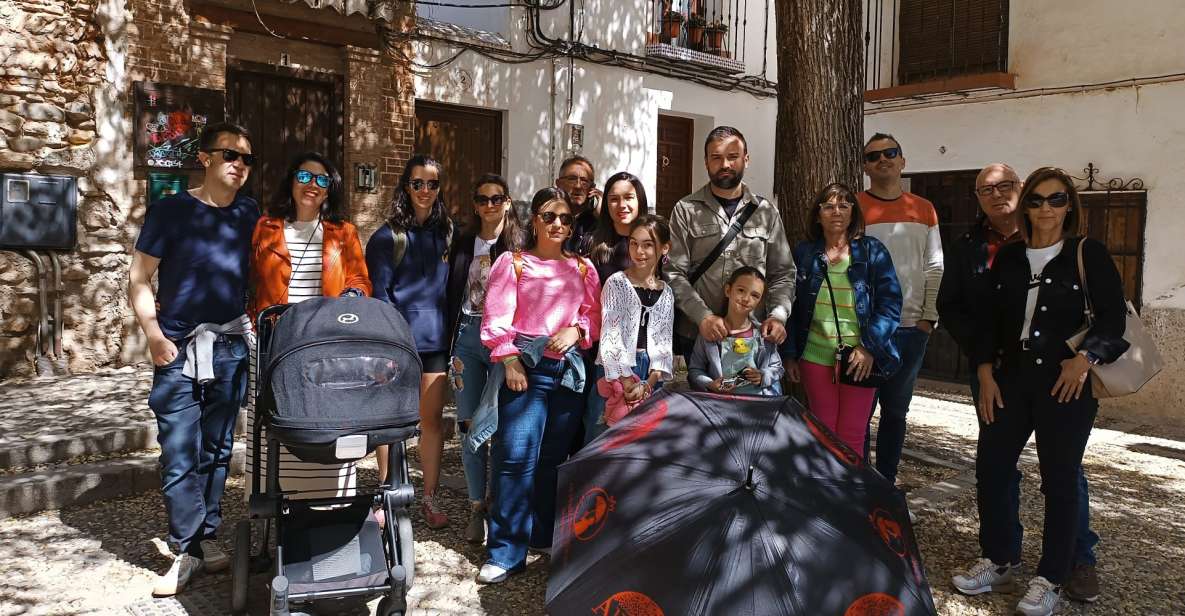
- Catholic Kings meeting point: you start by the monument to Isabel La Católica and Cristóbal Colón
- Historic center highlights: Corral del Carbón, the Alcaicería, Plaza Bib Rambla, and more
- Islamic Granada to 1492: you’ll connect Moorish-era institutions to the later Christian takeover
- A classic Alhambra photo angle: a dedicated stop in the lower Albaicín for views
- Tucked-away texture: narrow Albaicín streets that feel like the past, not a museum set
- Touring-by-story: some guides add cultural moments like a short flamenco interlude
Why this Granada walking tour makes sense on a first visit
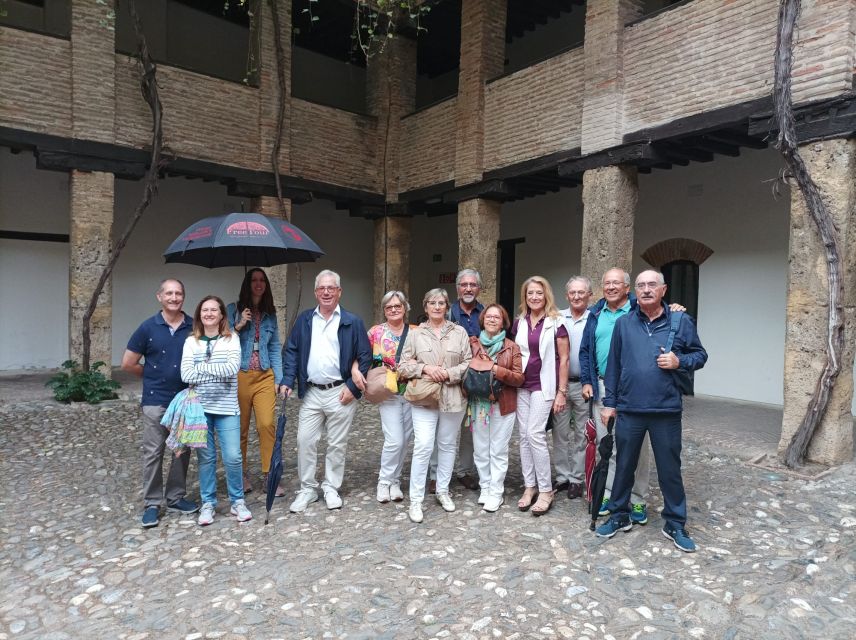
If you only have a short window in Granada, this is the kind of tour that helps you get oriented fast. You cover the historic center’s core sights and then move into the lower Albaicín, where the city’s look and mood shift right away.
I like how the tour is built around understanding, not just seeing. The guide weaves together the city’s multicultural layers, from Islamic Granada through the Christian endgame of the Reconquista in 1492. That context turns landmarks like churches and courts into something you actually understand while you’re standing in front of them.
And at $16 per person, you’re paying for a lot more than “someone walking you around.” You’re buying time saved and story sorted—especially on a day when you might otherwise get overwhelmed by how many monuments Granada has.
You can also read our reviews of more walking tours in Granada


Meeting point by Isabel La Católica and Cristóbal Colón
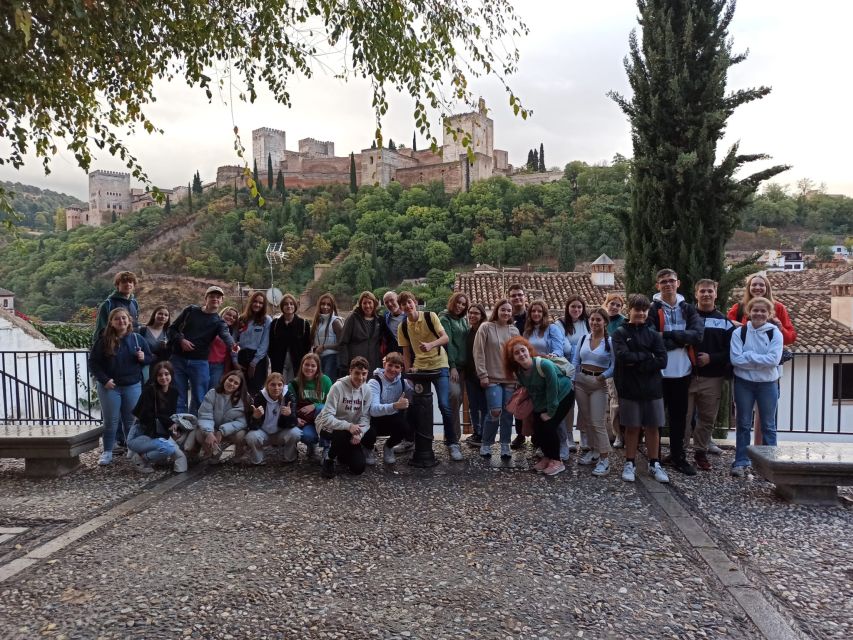
Your tour begins in the center of town by the monument to Isabel La Católica and Cristóbal Colón. It’s a solid starting point because it places you immediately in the thick of Granada’s public-life history—monuments first, then the streets that connect them.
This also helps you mentally map the day. Once you start near the monument, you can understand the flow of the walk: you’ll move through the historic center’s landmark zone first, then angle into the lower Albaicín for the atmospheric streets and the Alhambra overlook.
Bring your patience for the first few minutes. Old-center Granada starts with foot traffic, tight lanes, and street corners that don’t look straight on a map.
Historic Center highlights: Corral del Carbón, Alcaicería, and Plaza Bib Rambla
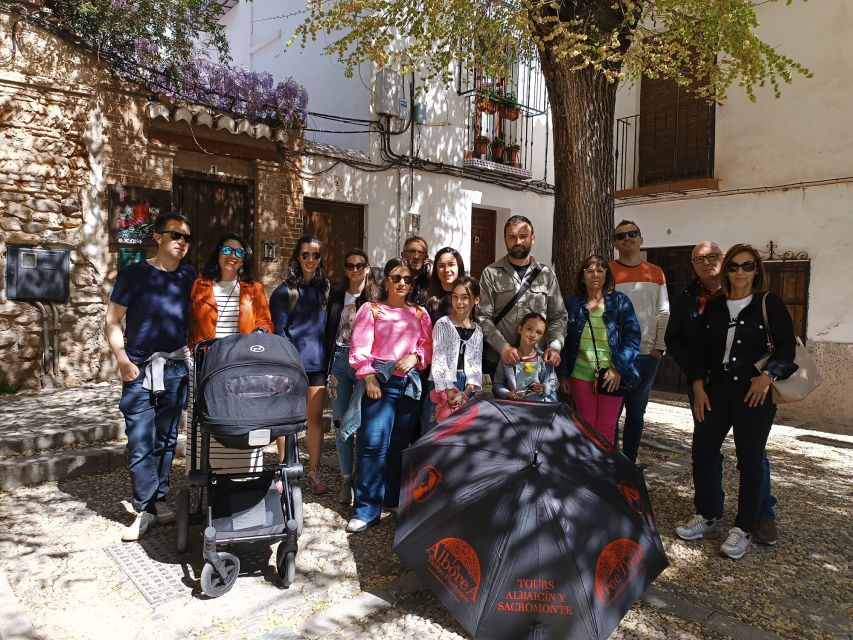
The heart of the walk is anchored by some of Granada’s most famous historic references, and the guide uses them to explain how the city functioned.
Here’s what you can expect in the historic center:
- Corral del Carbón: This is one of those places that’s visually distinctive, but the real value is the story behind what it represented in Granada’s earlier life.
- Alcaicería: You’ll spend time here because the guide uses it to explain the city’s commercial and cultural past.
- Plaza Bib Rambla: A central square where the tour’s “this is where people gathered” theme comes alive.
In Plaza Bib Rambla, you’ll also see the Giants Fountain, a recognizable landmark that gives the square its personality. When a guide points out details like style, placement, and what the site was for, you start seeing the city as built for people—not just for photos.
The upside of this section is clarity. You get a clean early overview of the monuments most first-time visitors want, without trying to cram everything into self-guided confusion.
The tradeoff? Because you’re starting in the busy, central zone, you’ll want to stay alert about the group’s pace. If you’re the type who likes to linger for extra photos, plan to do your real long stops at the viewpoint later.
Saint Ana, the Madraza, and the Royal High Court: institutions you can actually read
One of the tour’s smartest moves is that it includes buildings tied to governance and education, not just sightseeing.
As you walk, you’ll encounter stops such as:
- Church of Saint Ana
- Madraza
- Royal High Court
These aren’t random picks. They’re part of how Granada worked across eras—how power operated, how learning was organized, and how religion and administration shaped daily life.
This is where having a strong guide matters. Guides like Jaime or Anna are praised for making the architecture make sense, not just naming it. Even if you don’t know anything about Granada’s history, you’ll leave with a framework for noticing differences: what feels more “Islamic-era institution,” what reflects later Christian rule, and how both layers sit on top of each other in the same city blocks.
If you’re the kind of traveler who likes to understand why a building looks the way it does, this section is a win.
The Cathedral and the Royal Chancillería: power after the Reconquista
Granada’s story isn’t just about what came before 1492. The city also has a very visible post-1492 imprint, and the tour explicitly connects the end of the Reconquista to the next era of rule.
You’ll see the Cathedral and also important legal/government buildings like the Royal Chancillería. The guide ties these into the larger transition of the city—what changed, what stayed, and how authority expressed itself in stone and space.
This part of the walk is especially useful if you’ve ever looked at two adjacent buildings and wondered why they don’t seem to belong to the same time period. Here, you’ll get a straight answer: different eras, different needs, and Granada’s layered identity showing up in the built environment.
Also, it’s not all heavy. You’ll still get those “wait, look at that detail” moments as you move from site to site. The monuments are close enough to keep momentum, but spaced enough that the stories can land.
You can also read our reviews of more historical tours in Granada


The Royal Jail stop: a smaller moment with big meaning
At some point, the tour includes the Royal Jail. It’s easy to skip places like this on your own, mostly because it doesn’t “sound” as exciting as a palace.
But that’s exactly why it works on this walk. A jail is where you feel how societies enforced order. Pair it with the court stops and the broader legal buildings you’ve already seen, and suddenly the city feels like a system.
This is one of those details that helps you understand Granada as more than architecture. It’s a place where people lived, argued, learned, worked, worshiped, and—yes—got punished. That’s part of why the tour feels more grounded than the typical “here’s what this is called” sightseeing loop.
Lower Albaicín: narrow streets, Moorish atmosphere, and the Alhambra viewpoint
Then you shift into the lower Albaicín, and Granada changes character fast.
The streets get narrower, the corners come sooner, and the vibe turns older. The guide leads you into this part of the neighborhood specifically to evoke the feel of its Moorish past—without turning it into a history lecture that ignores what your feet are doing.
Expect uneven ground and walking that takes focus. Cobblestones and small slopes mean your stride changes. If you’re traveling with knee trouble, plan for slower steps and short breaks. One review notes that guides were patient and understanding when people needed to catch their breath.
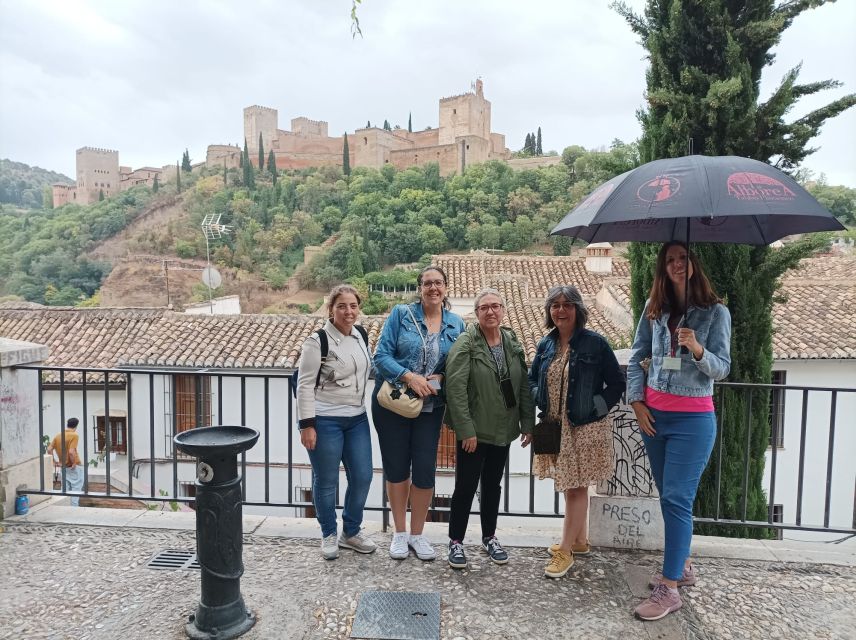
The biggest “yes, this is worth it” moment comes at the stunning viewpoint of the Alhambra. This is one of the most valuable stops because it gives you a view that connects the palace to the neighborhood it visually overlaps. It’s not just “the Alhambra exists.” It’s “this is how it sits over the city.”
If you care about photos, this viewpoint is where you should spend your attention. Don’t treat it like a quick stop. Let the view absorb for a minute, then take your photos from a couple angles.
What the best guides do here (Pablo, Jaime, Anna, Emilio, Irene)
This tour lives or dies by the guide, and the good ones clearly do three things well:
First, they keep the stories organized. You’ll learn about Granada’s Islamic heritage and the Reconquista ending in 1492, but the guide connects those facts to the places you’re standing in front of.
Second, they make the walk interactive. Several guides are singled out for being responsive to questions and for checking in with the group—sometimes even adding small cultural touches like a peaceful flamenco interlude.
Third, they help you see beyond the obvious. For example, guides like Pablo and Jaime are praised for showing the route highlights and also pointing you toward places you can visit afterward on your own. That’s huge value, because it turns one guided session into multiple days of good wandering.
If you get a guide who’s great at English, you’ll still benefit. One guide is noted for having excellent English grammar but a strong accent at times—so if you have trouble with accents, arrive with the mindset to focus on context and key words.
Price and value: why $16 feels like a smart deal
Let’s talk value plainly.
For $16 per person and 2.5 hours of a live guide, you’re not just paying for movement. You’re paying for three things you’d otherwise spend time hunting for:
- Route efficiency through the historic center and into the lower Albaicín
- Cultural context that turns monuments into something you understand
- A guided viewpoint moment with the right placement for Alhambra photos
That’s especially good if you’re trying to hit Granada’s key sites without burning half a day on travel between stops. And because it’s only 2.5 hours, it pairs well with a longer afternoon for self-guided wandering.
If you’re booking on a tighter schedule, the ability to reserve now and pay later can also be a practical advantage. And if your plans change, free cancellation up to 24 hours in advance for a full refund reduces the risk.
Practical tips before you go: shoes, pace, and photo strategy
This tour is simple, but it’s not casual.
You’ll want comfortable shoes. The combination of cobblestones, slopes, and narrow old streets means you’ll feel every step. If you’re used to smooth sidewalks at home, Granada will remind you that old cities were built for feet that walked slowly and locally.
Photo strategy matters too. You’ll have time at the viewpoint, but you’ll be moving between sights. I recommend taking a quick “set up” moment at each major stop—one composed photo first—then letting the guide’s story sink in. If you wait until the end of the story to look around, you’ll miss some of the details that make the monument memorable.
Finally, plan your day around energy. Even fit travelers can feel the push into the Albaicín. If you’re not sure about your stamina, treat this as a “walk with breaks” tour, not a “power through” tour.
Should you book this Granada historic center and lower Albaicín tour?
Yes—if you want a fast, story-driven way to understand Granada’s core and then see the city through the lower Albaicín’s eyes. It’s especially worth booking early in your trip, because it gives you a mental map and historical framework that makes your later wandering more satisfying.
I’d also book it if you like your sightseeing with context. The focus on Islamic heritage and the transition around 1492 helps you connect buildings to the people and systems that shaped them.
Skip it if you need step-free access or you can’t manage uneven cobblestones and hilly walking. In that case, Granada will still reward you, but this specific route likely won’t.
If you book, do one small thing that pays off big: after the tour, pick one stop that intrigued you most—Alcaicería, Madraza, Royal Chancillería, or the Cathedral—and return later for a slower look on your own. That’s how a good guided walk turns into a deeper Granada.
FAQ
How long is the Granada Historic Center and Lower Albaicín walking tour?
The tour lasts 2.5 hours.
Where do I meet the guide?
Meet your guide in front of the monument of Isabel La Católica and Cristóbal Colón.
What’s included in the price?
The tour includes a live guide and the walking tour itself.
What languages are the tours offered in?
The guide offers the tour in Spanish and English.
Is the tour suitable for people with mobility impairments?
No, it’s listed as not suitable for people with mobility impairments.
What should I bring?
Wear comfortable shoes.
FAQ
Is free cancellation available?
Yes, you can cancel up to 24 hours in advance for a full refund.
Can I reserve and pay later?
Yes, you can reserve now & pay later, keeping your travel plans flexible.