A clay day in Barcelona beats scrolling. You get a hands-on ceramics workshop led by a certified artisan, in a small class capped at eight. I love that you are not stuck watching. You are shaping, decorating, and glazing from the first moments.
One thing to plan for: ceramics need drying time, so you may pick up later or arrange shipping (which is not included). The workshop itself is about three hours, but your final piece has its own schedule.
In This Review
- Key Highlights Worth Your Attention
- Stepping Into the Studio in Sants-Montjuïc
- Price and What You’re Really Paying For at $58.65
- What You Learn: From Clay Basics to Decorating Decisions
- Hands-On Making: Shaping Your Cup, Bowl, or Plate
- Adding Texture and Decorations That Look Like You
- Glazing and Kiln Firings: The Magic Happens After Your Hands
- Picking Up Later or Shipping by DHL
- The Workshop Pace: Why a Small Group Helps
- You’ll Want to Bring the Right Mindset (Not Supplies)
- Who This Is Best For in Barcelona
- The Most Praised Parts That Matter in Real Life
- Should You Book This Ceramics Workshop?
- FAQ
- How long is the ceramics workshop?
- Do I need any prior ceramics experience?
- What can I make in the class?
- Is equipment and materials provided?
- Are kiln firings included?
- When will my finished piece be ready?
- Where does the activity meet and end?
Key Highlights Worth Your Attention
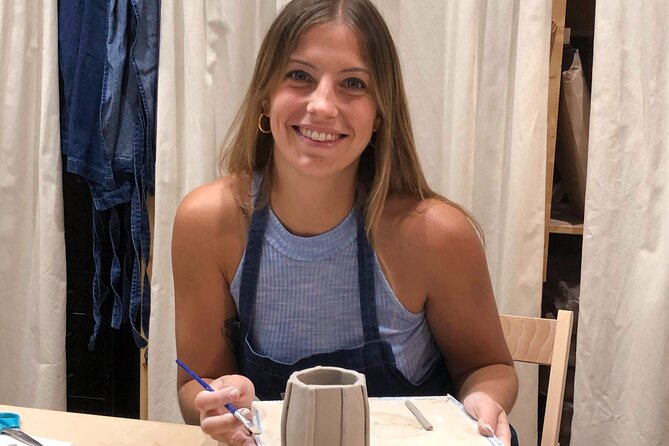
- Small-group class (max 8 people) keeps the pace calm and the attention personal
- Certified artisan instruction helps you learn the ceramics process without guesswork
- Everything is provided: apron, clay, tools, glazing, and decoration supplies
- You’ll make a real usable piece such as a cup, bowl, or plate
- Texture and decoration time so your piece looks like you, not like practice clay
- Kiln firings included, turning your project from wet to durable
Stepping Into the Studio in Sants-Montjuïc
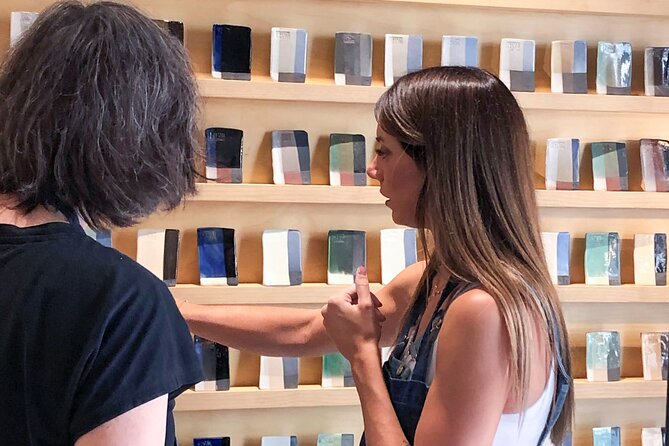
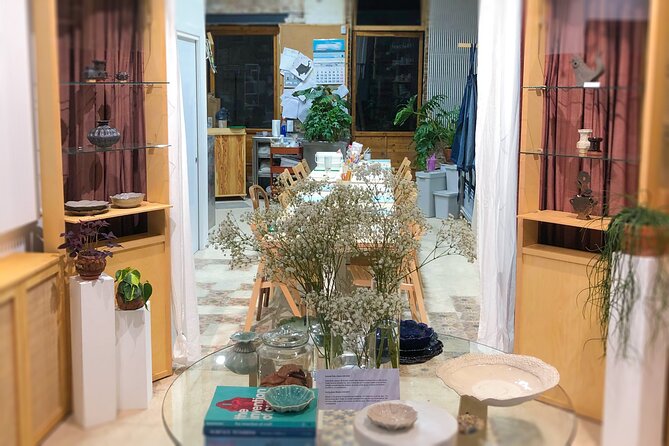
This workshop meets at Carrer de Salvà, 71, in the Sants-Montjuïc area. That location choice matters. You are not schlepping across town to a far-off workshop. And since it is near public transportation, you can pair it with an easy day of wandering before or after.
The class ends back at the meeting point, so you do not have to figure out a second destination. In practice, that means you can keep your plans simple: arrive, make your piece, and then go back to your Barcelona route when you are done.
I also like that the vibe is described as open and friendly. You can come solo or with a friend. When you are learning a tactile skill, it helps if the room feels relaxed enough to make mistakes quickly and move on.
You can also read our reviews of more tours and experiences in Barcelona.



Price and What You’re Really Paying For at $58.65
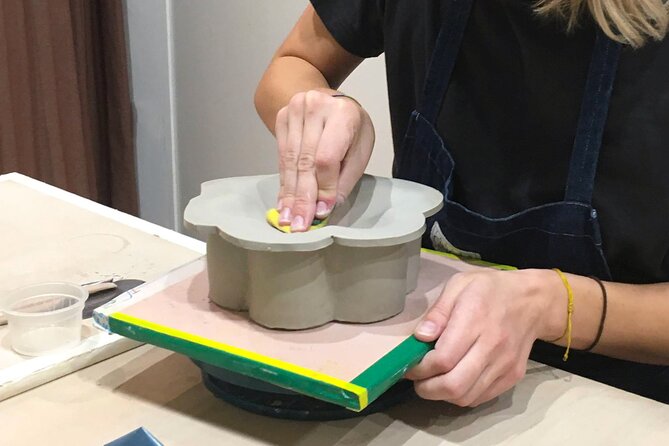
At $58.65 per person for about three hours, this is not a “look and leave” activity. You are paying for materials, firing, and the guided skill-building that turns your idea into an actual ceramic piece.
Here is what your money covers:
- aprons
- ceramic modeling tools
- clay
- kiln firings
- glazing and decoration supplies
- WiFi (included)
- a small-group format led by an expert
The one extra cost to keep in mind is shipping, if you choose to mail your finished piece later. The workshop price does not include shipping, though worldwide delivery is available via DHL.
Bottom line: the value is strongest if you want more than a souvenir. You want a finished, personalized item and a real introduction to how ceramics works.
What You Learn: From Clay Basics to Decorating Decisions
You do not need prior skills. That is a big deal, because ceramics can feel intimidating from the outside. Here, you start with the basics of the ceramics process, including what kinds of clay are used and how decoration fits into the workflow.
In a typical session, you learn by doing. The class walks you through how ceramists build forms by hand, then how to move on to texture and decoration once your shape is set.
From a learning standpoint, you gain two useful outcomes:
- You learn the sequence. What comes first, what happens next, and why the timing matters.
- You learn decision points. Which decorations work well, how texture changes the surface, and how glaze will affect the final look.
Hands-On Making: Shaping Your Cup, Bowl, or Plate
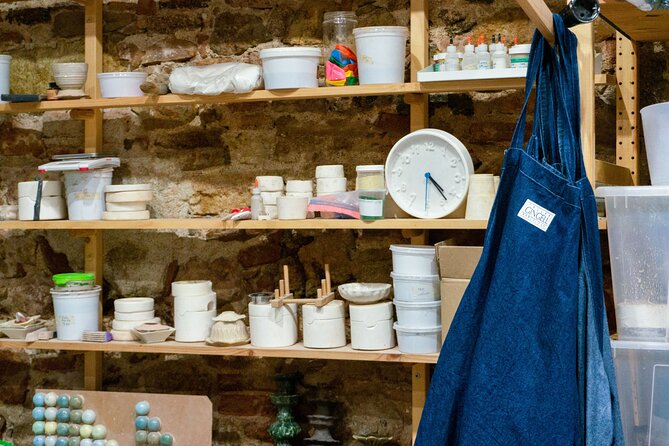
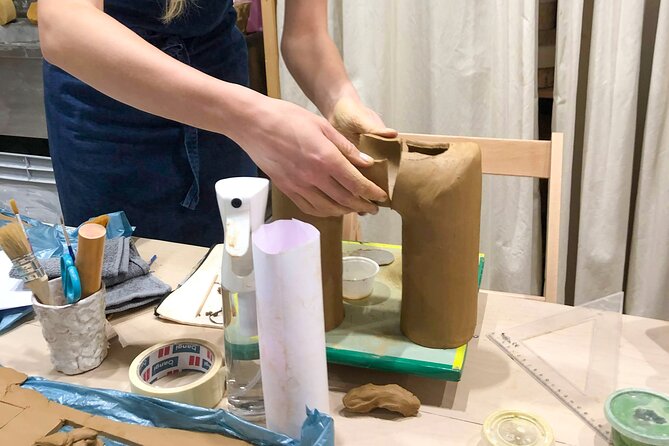
After you arrive, the session shifts quickly from intro to action. Aprons go on, clay and tools come out, and you start forming your piece.
You will choose to make a cup, bowl, or plate. That choice is practical. Different shapes teach you different handling skills. Cups teach how to manage openings and balance. Bowls teach how to keep a smooth interior. Plates reward attention to flatness and edges.
The key is hand-building. You are not relying on a wheel or advanced equipment. The focus is sculpting by hand, so even if you have never touched clay before, you can still learn the fundamentals and create something you will want to keep.
I love workshops like this because you get quick feedback from the room. If your shape is off, you can adjust while the clay is still workable. That makes the process feel less like a test and more like guided building.
Adding Texture and Decorations That Look Like You
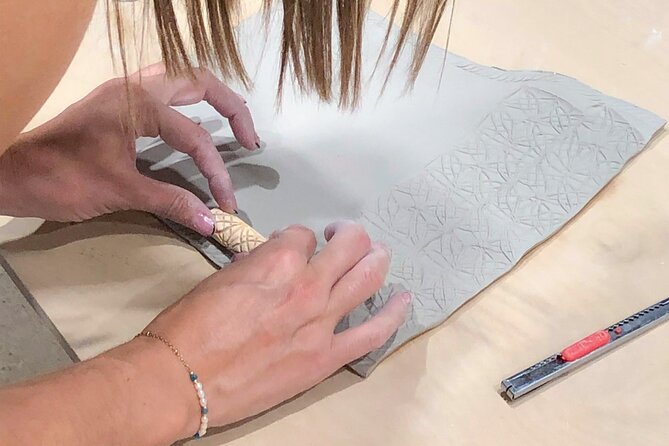
Once your form is complete, you move into texturing and decoration. This is where your piece stops being an exercise and starts becoming personal.
You learn how to add decorative elements and how textures change the feel of the surface. That matters even if you do not think of it as design. Texture influences how light hits the piece and how the final glaze settles.
In a good ceramics workshop, this part also teaches you to slow down. You do not just slap on patterns. You learn how to plan decoration areas and stay consistent enough that the whole piece feels intentional.
If you want a calmer pace, you will probably appreciate that the group size is limited to eight. It makes it easier for the instructor to guide you without rushing you through steps.



Glazing and Kiln Firings: The Magic Happens After Your Hands
Your workshop includes glazing and decoration, plus kiln firings. That part is valuable because glazing is where a beginner can easily lose confidence. You might think the final look depends on luck. Here, you follow the process with the materials and guidance provided.
Kiln firing also takes the workload off you. You do the shaping and decorative work, then the kiln process handles the transformation into fired ceramic.
One note that affects planning: ceramics take time to dry. That is not a flaw; it is the physics of making ceramics. The piece has to be ready before it can be finished and handled safely for pickup or shipping.
Picking Up Later or Shipping by DHL
You have two ways to get your finished ceramics.
Option 1: Pick up or mail about 1 to 2 weeks later
Your piece should be ready roughly a week or two after the workshop. You can either pick it up later or have it mailed. Shipping is available worldwide via DHL, but it is not included in the workshop price.
Option 2: If you are just visiting, swap for a finished piece
If you cannot wait for drying time, you can leave your creation and select one finished handmade item, described as a €25 value item. That is a smart workaround when your trip schedule is tight.
How to decide:
- If you want your exact design and plan to stay long enough, choose the waiting option.
- If timing is your biggest constraint, choose the finished-item swap so you can take something home right away.
The Workshop Pace: Why a Small Group Helps
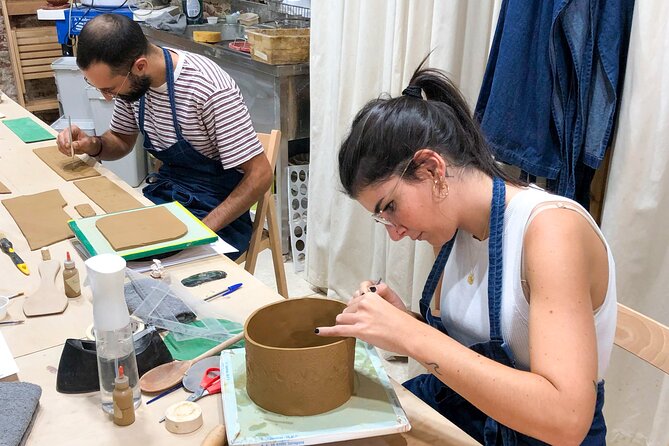
The class is capped at eight people. That changes everything.
In larger classes, beginners often get rushed or left to figure things out alone. In a small group, it is easier to:
- keep your clay from drying too fast while you learn
- get help when you feel stuck on shaping or decoration
- ask questions without losing the instructor’s attention
This also makes the experience more enjoyable. Ceramics is physical work. If the room is too crowded, it becomes stressful. Here, you can focus on learning the steps.
And you do not have to show up as a confident artist. The session is designed for first-timers.
You’ll Want to Bring the Right Mindset (Not Supplies)
You do not need to bring anything special. The workshop provides an apron and the clay and tools you need, plus glazing and decoration materials.
So what should you bring?
- a willingness to get a little messy
- patience for the learning curve
- openness to guidance on technique
Also, plan to spend your attention during the class. Ceramics rewards focus. If you treat it like a quick craft, you might feel disappointed. If you treat it like a mini lesson, you’ll feel proud of what you made.
One small practical touch: WiFi is included. That can help if you want to share the process or look up glaze/ceramics inspiration during breaks, though the main point is hands-on making.
Who This Is Best For in Barcelona
This workshop is ideal if you:
- want an authentic, hands-on activity that feels local
- are in Barcelona for a few days and want a memorable skill experience
- like craft travel, not just sightseeing
- want a small-group class with real instruction
It also works well for couples or friends who want a shared activity without needing experience. And if you are traveling solo, the open, friendly format helps you jump in without feeling awkward.
If you are the type who hates waiting, the drying time could be annoying. But the finished-item swap option helps you avoid the long timeline problem.
The Most Praised Parts That Matter in Real Life
A 5-star rating backed by strong feedback makes sense for a few reasons you can feel in the format.
First: the teaching. Sessions can be led with a welcoming, effective style. In at least one documented experience, the instructor was Wendy, and the overall studio team included Eric for the welcoming side. The big takeaway is the method: clear guidance, hands-on support, and an approach that helps you create something better than you expected.
Second: the results. People leave thinking about ceramics as a hobby, not just a one-off souvenir. That happens when you learn fundamentals, not just craft a decoration.
And third: the simplicity. Equipment is provided. You are not hunting for supplies or worrying about how firing works. The kiln and drying process are handled through the studio workflow.
Should You Book This Ceramics Workshop?
I think you should book it if you want more than a photo moment. For the price, you are getting materials plus kiln firing, and you leave with something that can become a real everyday object.
Choose it especially if you:
- want a small group (max 8) and direct help
- are curious about ceramics processes: clay, shaping, texture, glazing
- can handle the drying timeline, or you’re okay selecting a finished handmade item instead
Skip it if:
- you need your final piece immediately with no waiting at all and you do not want the finished-item swap option
- you hate hands-on activities and prefer watching from a distance
If you fall somewhere in the middle, it is still a great “first ceramics class” choice in Barcelona. The whole experience is built for beginners who want to learn the real craft, not just try a surface-level project.
FAQ
How long is the ceramics workshop?
The workshop runs for about 3 hours.
Do I need any prior ceramics experience?
No skills are required. It is designed for beginners.
What can I make in the class?
You can make a cup, bowl, or plate.
Is equipment and materials provided?
Yes. Aprons, ceramic modeling tools, clay, glazing, and decoration are included.
Are kiln firings included?
Yes, kiln firings are included as part of the workshop.
When will my finished piece be ready?
You can pick up or mail your ceramic piece about 1 to 2 weeks later.
Where does the activity meet and end?
It starts at Carrer de Salvà, 71, in Sants-Montjuïc, and it ends back at the meeting point.