REVIEW · MADRID
Madrid: Avila and Segovia Day Trip with Tickets to Monuments
Book on GetYourGuide →Operated by Fun and Tickets · Bookable on GetYourGuide
Two UNESCO wall cities in one long day. What I like most is the monument tickets handled for you and the guided, headset-assisted walkthrough that makes Ávila and Segovia feel instantly legible. The best part is how the day links big ideas—Roman engineering, medieval defense, and religious reform—without turning it into a textbook.
I also appreciate the practical setup. You ride in an air-conditioned double-decker bus with WiFi onboard, then go inside key sights with an official guide and radio headphones. In English groups, guides such as Laura in Segovia and Elizabeth in Ávila are repeatedly noted for keeping the pace moving and the explanations clear (and not turning every stop into a lecture).
One watch-out: this is a long, walk-heavy day in older stone streets, and it’s not a fit for wheelchair users or people with mobility impairments. Also, lunch isn’t included, so you’ll want a plan for food during the breaks.
In This Review
- Quick Take: What You’ll Really Care About
- Starting in Madrid: San Bernardo Pickup and a Headset-Friendly Day
- Ávila’s Walls: Why This Walled City Feels Like a Time Machine
- Basilica de San Vicente: Romanesque Details You Can Actually Notice
- Ávila Cathedral and Saint Teresa’s Church-Convent Stop
- The Free-Time Break: Aperitif Included, Lunch Up to You
- The Coach to Segovia and the Mood Shift You’ll Feel
- Segovia’s Roman Aqueduct: The Engineering View That Stops You Short
- Segovia Cathedral: The Mix of Late Gothic and Renaissance
- Alcázar of Segovia: The Fairytale Castle That’s Still Surprisingly Practical
- Pace, Walking, and Why Comfortable Shoes Aren’t Optional
- Bus Comfort, Guide Style, and Why Some Tours Feel Better Than Others
- Price and Value: Why $74 Can Beat DIY in One Day
- Should You Book This Madrid to Ávila and Segovia Day Trip?
- FAQ
- How long is the Madrid to Ávila and Segovia day trip?
- What is included in the tour price?
- Which monuments have tickets included?
- Is lunch included?
- Is the tour suitable for wheelchair users or people with mobility impairments?
- What languages are offered, and is WiFi available?
Quick Take: What You’ll Really Care About
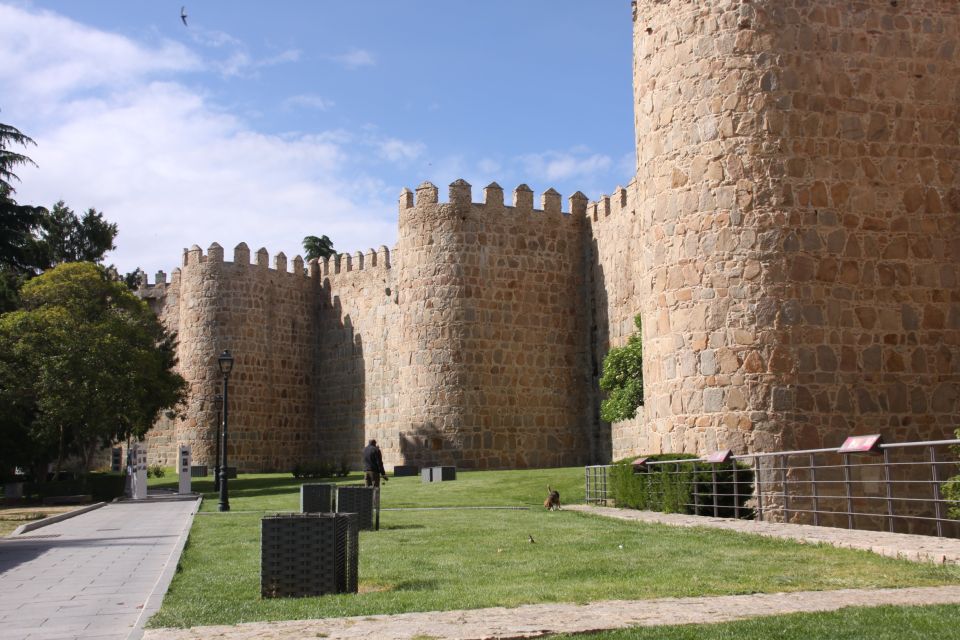
- Ávila’s walls: near-complete 11th-century fortifications around one of Europe’s last walled cities
- Basilica de San Vicente: Romanesque architecture inside a top stop in Ávila
- Church of Saint Teresa of Jesus: 17th-century church-convent tied to her birthplace tradition
- Segovia’s Roman aqueduct: a skyline star and a symbol of the city itself
- Alcázar of Segovia: a medieval castle-palace with the famous ship-bow shape
- Skip-the-line entry: separate entrance access helps you spend more time seeing than waiting
Starting in Madrid: San Bernardo Pickup and a Headset-Friendly Day
Your day begins at Fun and Tickets on San Bernardo, 7. The meeting is set up for groups, so once you’re on board, the trip feels organized from the first minute. Expect a steady rhythm: bus rides between towns, then guided stops where you can actually hear the story.
The bus matters more than you might think. Reviews consistently mention a comfortable double-decker coach, with enough space to settle in for the drive. WiFi is included onboard, but plan for the signal to be inconsistent at times once you’re rolling through rural stretches.
The big practical win here is the radio guide system (headphones). It lets you walk-and-listen instead of standing in a clump while everyone cranes their neck. If you’ve ever done a sightseeing tour where you miss half the explanation because you’re stuck behind someone, this setup directly helps.
A few more Madrid tours and experiences worth a look



Ávila’s Walls: Why This Walled City Feels Like a Time Machine
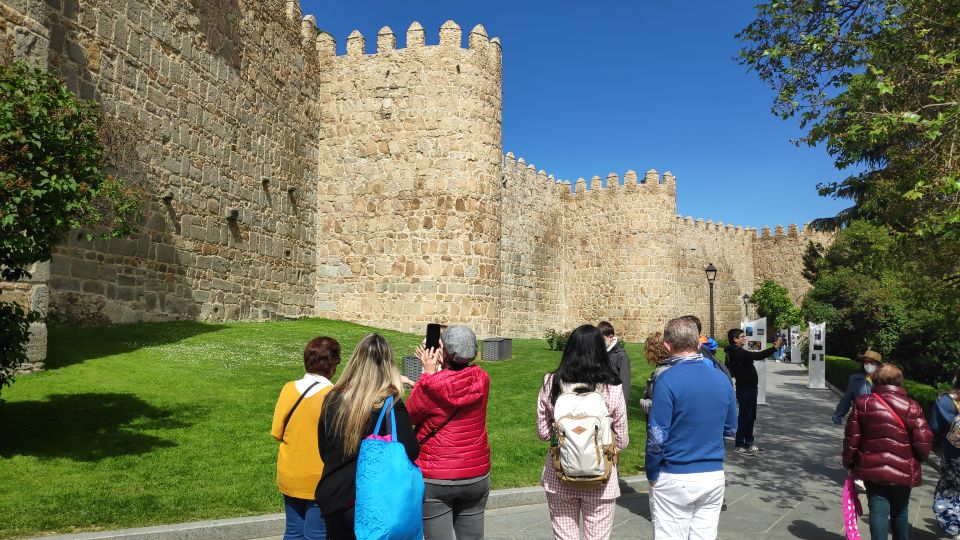
Then you arrive in Ávila and the first thing that hits you is the scale of the walls. These are 11th-century fortifications that still ring the city. The tour focuses on the walls because they’re not just decoration. They show you how this place was built to resist pressure, and they explain why the old town has that distinct “enclosed” feeling.
Even if you don’t do a full wall walk, you’ll get the visual impact fast. You’ll see how the walls sit above the streets and guide your sense of place. It’s also a photo-friendly town: stone, towers, and wide angles that don’t need special planning.
What I like about highlighting the walls early is that it gives you context for everything that comes next. When you later see churches and cathedrals, you understand the city as a protected stronghold—not just a pretty stop on a map.
Basilica de San Vicente: Romanesque Details You Can Actually Notice
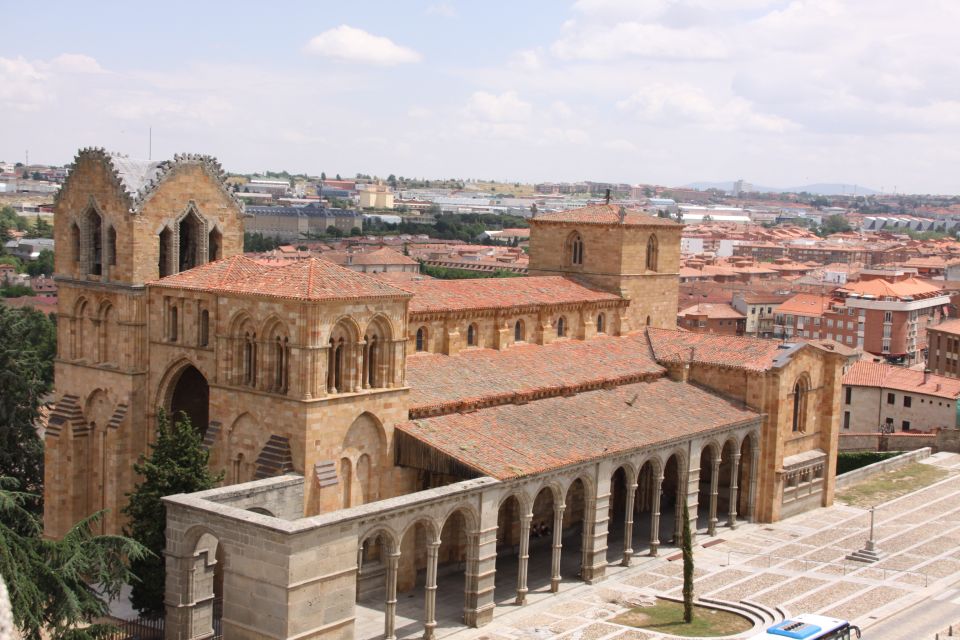
Ávila’s next standout is the Basílica de San Vicente. The tour includes entry, and that matters because Romanesque interiors can be hard to appreciate if you’re rushing past the key features.
This is where you start noticing style in a more hands-on way. Romanesque architecture tends to show up through solid shapes, strong structure, and a carved, grounded look. The guide helps you connect what you’re seeing to the broader development of Spanish church building.
If you’re the type who usually skips inside because you think you’ve seen enough churches, this stop is worth your time. The point isn’t just to say you entered. It’s to get a few specific visual hooks—arches, proportions, and stonework—so the building feels like an artifact with logic behind it.
Ávila Cathedral and Saint Teresa’s Church-Convent Stop
After the basilica, the route keeps you moving through Ávila’s core. You’ll pass the Plaza Mayor and the Cathedral, then head toward the church-convent connected to Saint Teresa of Jesus.
This stop is built around a fascinating religious story. The church-convent of Saint Teresa was built by the Discalced Carmelites in the 17th century, and it’s traditionally linked to the place where Saint Teresa of Ávila was born.
A practical note: these interiors can feel crowded or dim compared with the bright open streets. That’s normal. Go slow with your eyes. Let the guide point out what to look for, because it’s easy to miss the significance when you’re just scanning for big-photo moments.
The Free-Time Break: Aperitif Included, Lunch Up to You
After the main guided portion in Ávila, you get a break and free time. Here’s the detail that helps: the tour includes an aperitif and one drink (with options like wine, beer, soft drinks, and an aperitif during the break).
This is a nice setup if you want a low-stress snack before Segovia without having to hunt immediately. It’s also a good moment to get your bearings in a walled town where streets can twist and turn.
Plan for food. Lunch isn’t included, and the timing of the day can feel full. If you’re hungry later, don’t assume you’ll have a long sit-down window. Treat the included drink/aperitif as a bridge, not a meal plan.
A few more Madrid tours and experiences worth a look



The Coach to Segovia and the Mood Shift You’ll Feel
You regroup at 2:00 PM for the drive to Segovia. On the ride in, you’ll feel the day changing. Ávila gives you fortress energy. Segovia adds grandeur and scale—more open views, more monument visibility, and a city layout that turns major sights into landmarks.
This part of the day also helps you recover a bit. You’re on a comfortable coach again, and the walking windows in Segovia are more concentrated around iconic stops.
If you like a structured day, this is a good balance: you see two UNESCO-listed cities without having to coordinate transport yourself. If you hate being on a schedule, you may feel the day is packed—so focus on what you care about most: aqueduct, cathedral, and the Alcázar.
Segovia’s Roman Aqueduct: The Engineering View That Stops You Short
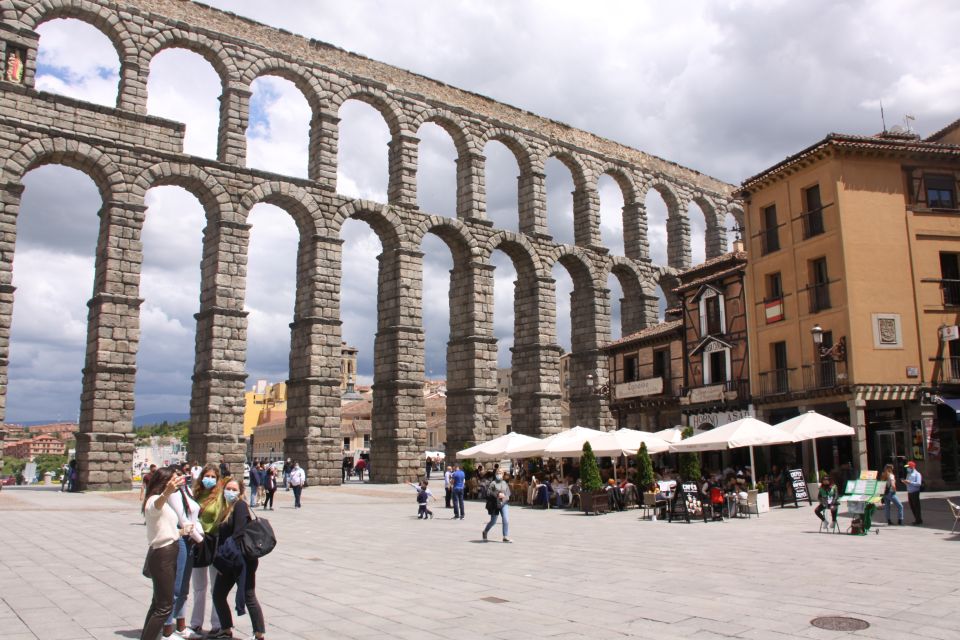
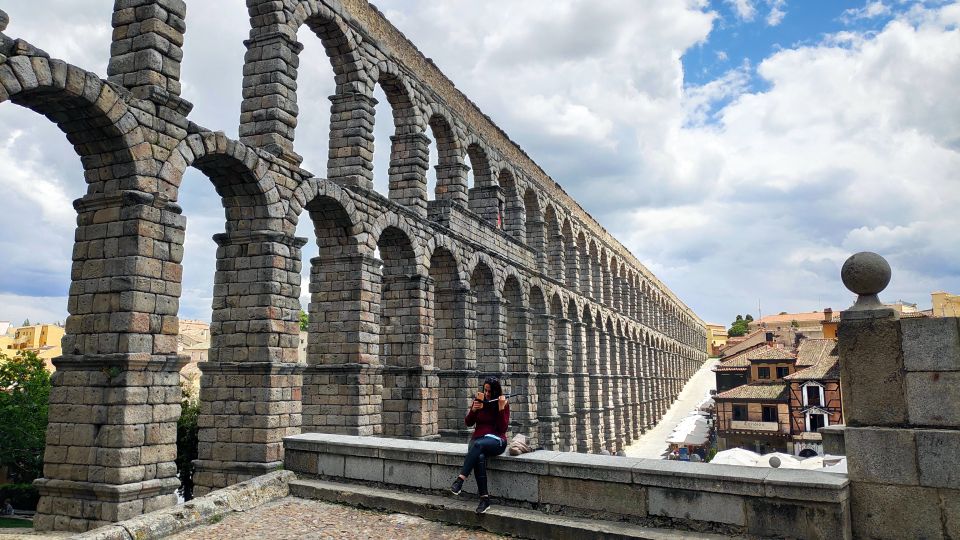
Segovia’s main symbol is the Roman Aqueduct, and you’ll start with it. It’s even on the city’s coat of arms, which tells you how central it is to local identity.
This aqueduct isn’t subtle. It’s a statement structure, built for function and still built to impress. As you approach and take it in, you’ll start seeing why it’s often described as a peak of Roman engineering. The guide helps you understand what you’re looking at—how it spans, how it’s positioned, and why it looks so impossibly straight against the hills and rooftops.
My advice: pause longer than you think you need. This is one of those sights where a second look reveals details—arches, alignment, and the relationship between the structure and the city’s streets.
Even with rain, the aqueduct keeps its character. You’ll still get that dramatic vertical line cutting through Segovia’s urban texture.
Segovia Cathedral: The Mix of Late Gothic and Renaissance
Next up is Segovia Cathedral, dedicated to Our Lady of the Assumption and of San Frutos. The guide highlights the size and the elegance here, and that’s important because the interior can feel like a space that rewards attention.
You’ll notice a blend of late Gothic form with Renaissance features. That combination is why the cathedral has earned a nickname tied to its beauty and stature. It isn’t just a structure; it’s a lesson in how styles overlapped in time.
Practical tip: give yourself a moment to step back once you’re inside. Cathedrals can distort your sense of scale when you’re close up to details. Stepping back helps you see the full design, then you can go back to specific elements.
Alcázar of Segovia: The Fairytale Castle That’s Still Surprisingly Practical
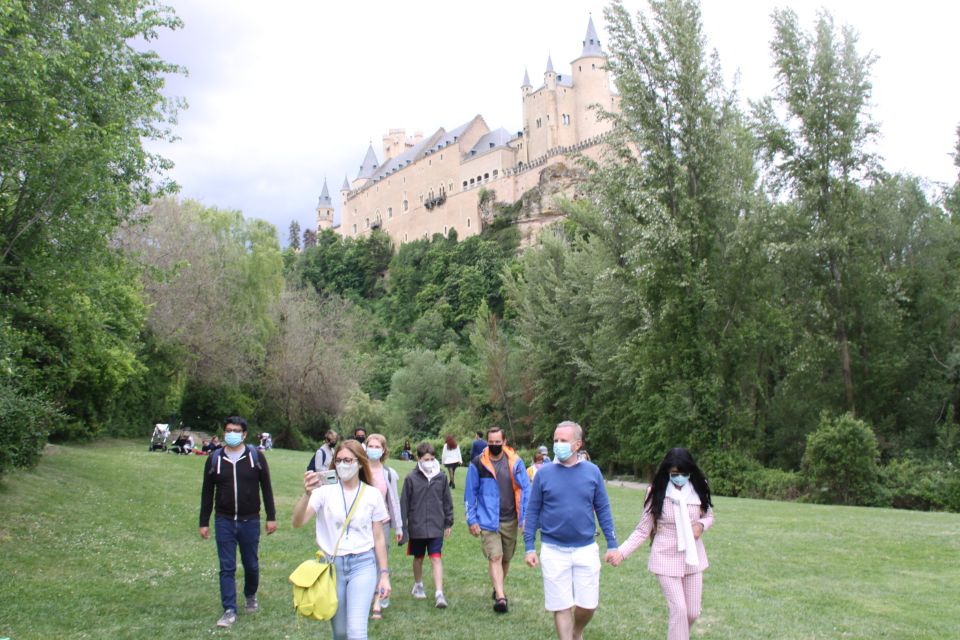
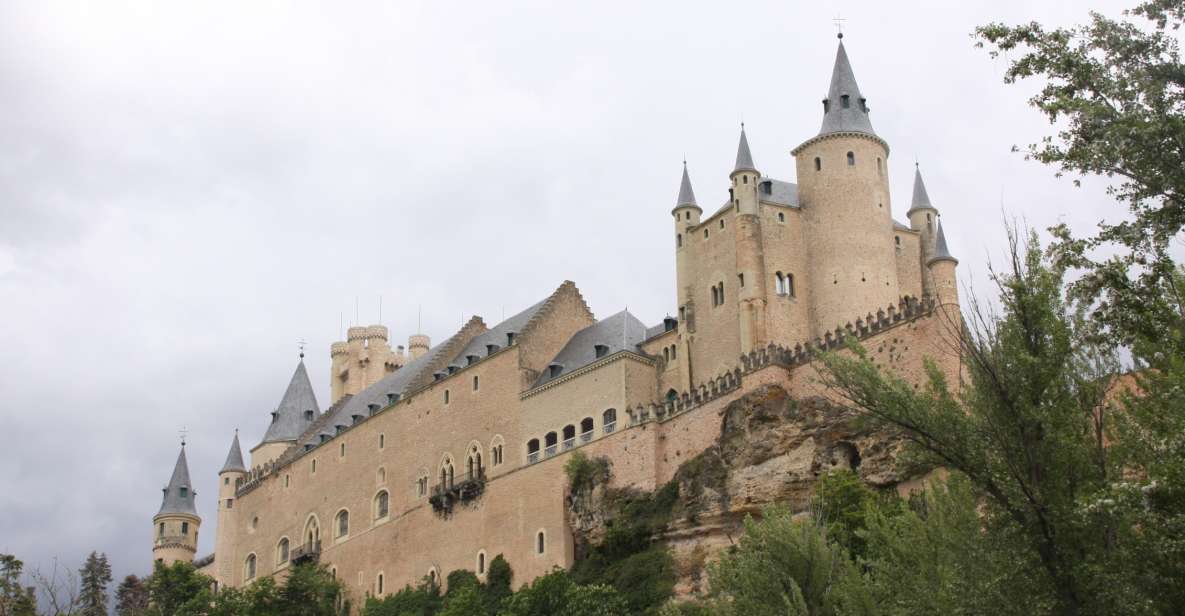
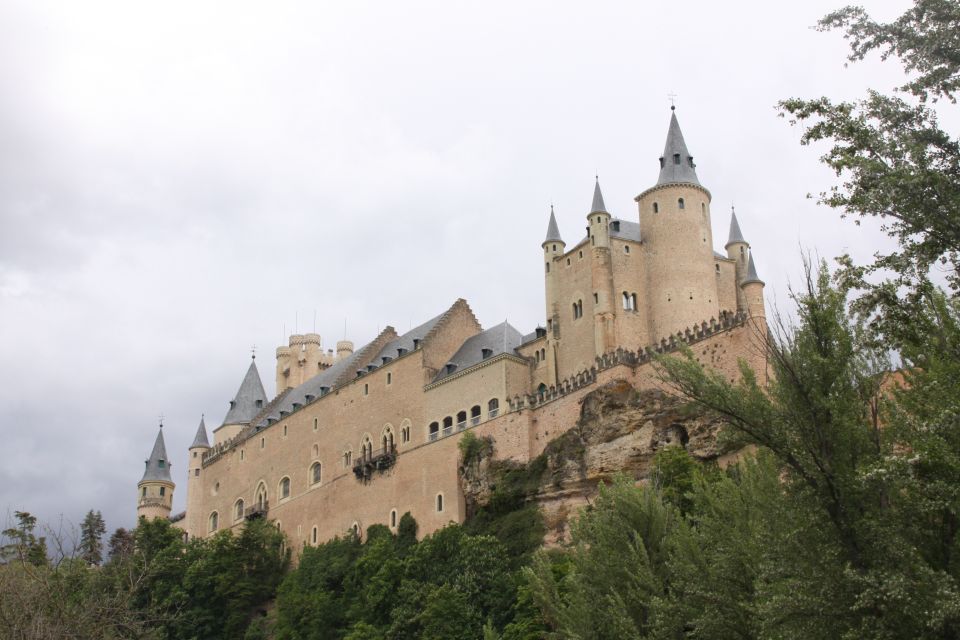
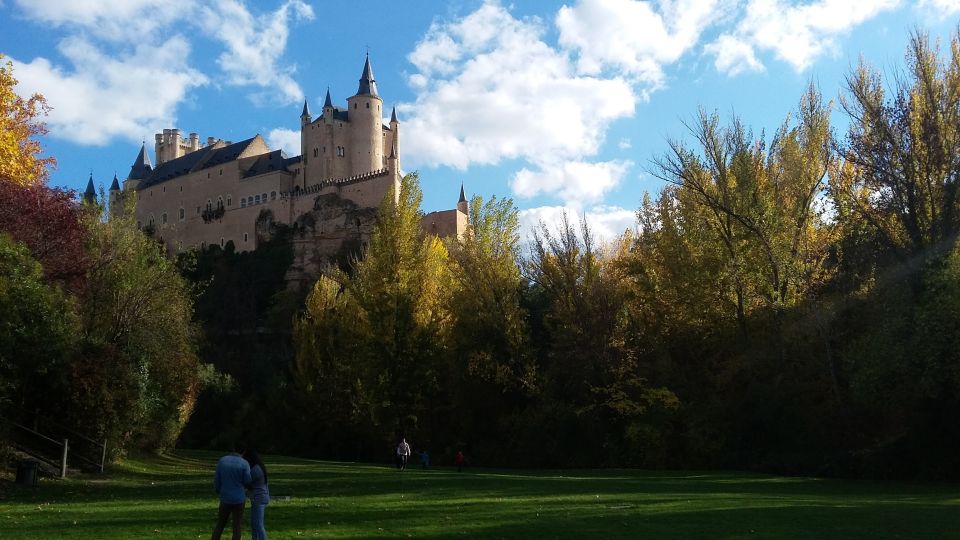
The day’s big medieval payoff is the Alcázar of Segovia. This is a medieval castle-palace perched on a rocky crag at the confluence of two rivers, with the Sierra de Guadarrama in the background. The setting alone explains why this place became a legend.
You’ll go inside, and the guide focuses on the distinctive shapes. One famous comparison is that it resembles a Walt Disney castle, and you’ll also hear about the “bow of a ship” feel to certain forms.
Here’s the best way to enjoy this stop: treat it like both theater and engineering. The theatrical parts are the silhouette, towers, and dramatic angles. The engineering parts are the way the building uses the rock and the rivers for defense and prominence.
If you’ve ever wondered why people get sentimental about castles, this is where the answer shows up. Even if you’re not a “castle person,” the Alcázar is a visual storyteller with clear clues.
Pace, Walking, and Why Comfortable Shoes Aren’t Optional
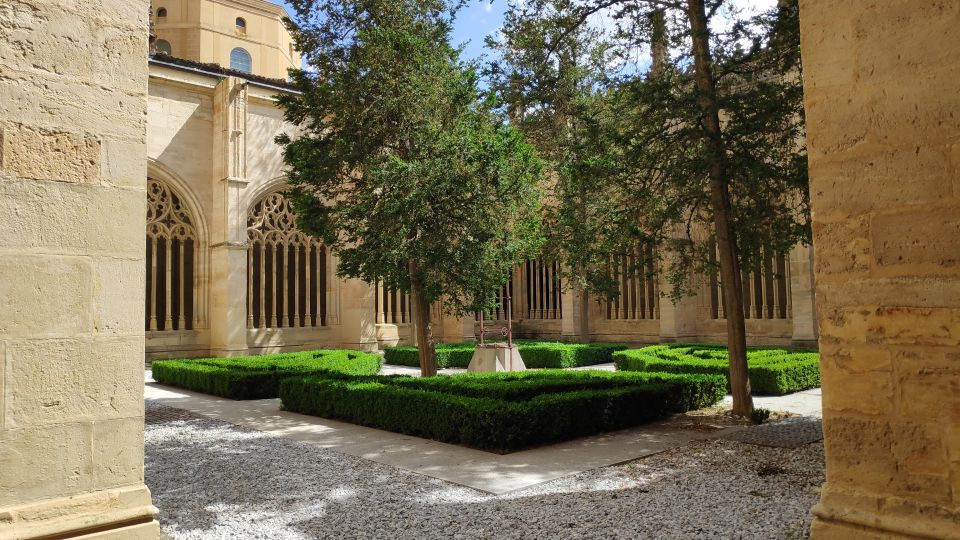
This is a 9-hour day trip, and it moves. You’re going from guided exterior viewing to indoor visits, then back outside into older streets. Expect uneven paving and lots of standing. Reviews also mention extensive walking across both towns.
You’ll want comfortable shoes more than you want a trendy outfit. A trolley won’t play well on medieval streets, so go light and mobile. If you’re carrying a small day bag, keep it easy to manage on stairs and tight corners.
The day is structured to prevent total burnout. There are breaks, and the coach helps you reset between Avila and Segovia and again back to Madrid. Still, if your ideal day includes long, slow wandering with a huge lunch break, this format may feel like too much structure.
Bus Comfort, Guide Style, and Why Some Tours Feel Better Than Others
A lot of day trips fail because the guide talks too much while you stand around. Here, multiple guides are praised for keeping a steady pace: explanation while you walk, then time to look. Names that come up include Rafa, Carlos, Oscar, David, Beatrice, and Clara.
That guide style makes a real difference. With a headset system, you can actually follow the story while moving. And when the guide uses specific local details—why the aqueduct matters, why Saint Teresa’s site is framed the way it is—you walk away with more than screenshots.
The bus adds to the comfort too. Reviews repeatedly highlight the clean, comfortable coach and attentive drivers. If you’re the type who gets motion-sick, you’ll probably still want to sit toward the front, but nothing in the tour description suggests extra rough travel.
Price and Value: Why $74 Can Beat DIY in One Day
At $74 per person, you’re paying for more than transport. Included in the price:
- air-conditioned bus with WiFi onboard
- official guide with radio/headset system
- tickets for major monument interiors: Basílica de San Vicente (Ávila), Segovia Cathedral, and Alcázar of Segovia
- the church of Saint Teresa of Jesus
- an aperitif and one drink during the Ávila break
- skip-the-line entry via separate entrance
DIY can be cheaper sometimes. But DIY gets expensive fast when you factor in tickets, timed entry risk, and the cost of figuring out the order. This tour’s value is that it compresses the key sights into one smooth day with entrance costs handled in advance.
The one cost you must plan for is lunch. Since lunch isn’t included, your overall day spending depends on how you eat during free time.
If you want a day that feels “you did the highlights and didn’t stress about logistics,” this price often makes sense.
Should You Book This Madrid to Ávila and Segovia Day Trip?
I’d book it if you’re:
- in Madrid for a short time and want two UNESCO towns in one shot
- drawn to monuments with clear visual rewards: walls, aqueduct, cathedral, Alcázar
- the kind of traveler who likes a guide to connect details so the sites stick
I’d pass (or at least pick something gentler) if you:
- need step-free access or have mobility limitations, since the tour isn’t suitable for wheelchair users
- get cranky when schedules are tight and free time is limited
- want lunch included or prefer a slower, longer sit-down meal rhythm
If you’re somewhere in the middle, this is still a strong choice. You get major “wow” stops, plus a structured day that keeps the story moving.
FAQ
How long is the Madrid to Ávila and Segovia day trip?
It lasts about 9 hours.
What is included in the tour price?
Transportation by air-conditioned bus, WiFi onboard, an official guide with radio and headphones, guided visits in Ávila and Segovia, and included drinks (1 aperitif and 1 drink).
Which monuments have tickets included?
The tour includes tickets for the Basílica de San Vicente de Ávila, the Cathedral of Segovia, the Alcázar of Segovia, and entry to the Church of Saint Teresa of Jesus.
Is lunch included?
No. Lunch is not included.
Is the tour suitable for wheelchair users or people with mobility impairments?
No. It is not suitable for wheelchair users or people with mobility impairments.
What languages are offered, and is WiFi available?
The guide is available in Spanish and English, and there is WiFi onboard.