REVIEW · MADRID
Madrid: Panoramic Route City Tour
Book on GetYourGuide →Operated by Julia Travel Gray Line Spain · Bookable on GetYourGuide
Madrid clicks into focus from the top deck. This double-decker panoramic city tour is a fast, comfortable way to see the main sights of Madrid, with two big loops you can match to your mood. I like that it’s built for real sightseeing time, not museum-lists and complicated transfers.
What I especially like is the one ticket, two panoramic routes setup, so you can cover both the classic center and the modern Madrid look without overthinking your day. Second, the 14-language audio guide with headphones helps you follow what you’re seeing as you roll past landmarks like Puerta del Sol, Gran Vía, and the Royal Palace area.
One thing to consider: this isn’t a free-for-all hop-on-hop-off system. It’s more like set sightseeing circuits, and you’ll want to plan your day around the ride times and ticket rules.
In This Review
- Quick take: the smartest parts of this panoramic Madrid bus tour
- Price and what your $39 gets you in real terms
- The two-route plan: Historical Madrid vs Modern Madrid
- Route 1 (Blue): the classic loop with Prado-area views and palace energy
- Starting points and museum axis feel: Prado and the Prado-area approach
- Puerta de Alcalá and the plaza rhythm
- Gran Vía, Plaza de España, and the loud-and-proud street view
- Temple of Debod: the viewpoint stop that people remember
- Old-town connectors: Puerta de San Vicente, Puerta de Toledo, and the churchy streets
- Atocha and the green breaks: Botanical Garden and back to Prado
- Route 2 (Green): modern Madrid from Atocha connections to Bernabéu views
- Natural science and museum institutions
- Nuevos Ministerios and the “big corridor” feel
- Santiago Bernabéu: the modern icon moment
- Art, science, and culture: museums and the CSI Science Center
- Toward the classic core again: Puerta de Alcalá and Puerta del Sol
- End-to-end loop shape
- Night Route in summer: the Historical loop under the lights
- Getting the best views from the top deck (and staying comfortable)
- Guided walking tour and the flamenco drink: why these add-ons help
- The 2-hour guided walking tour at 10:45 (tips-based)
- La Quimera Tablao Flamenco near Plaza Mayor
- Audio guide and headphones: what to check before you rely on them
- Ticket rules that matter: 24 hours after redemption, one trip per route
- Weather, crowds, and the best time to start
- Should you book this Madrid panoramic bus tour?
- FAQ
- How long is the ticket valid, and can I ride both routes?
- What’s the difference between Route 1 and Route 2?
- Is there an optional night tour?
- What languages are available for the audio guide and walking tour?
- What’s included in the guided walking tour and when does it run?
- Can I get a full refund if plans change?
Quick take: the smartest parts of this panoramic Madrid bus tour
- Two themed routes (Historical + Modern) on one ticket, so you’re not choosing between old Madrid and new Madrid
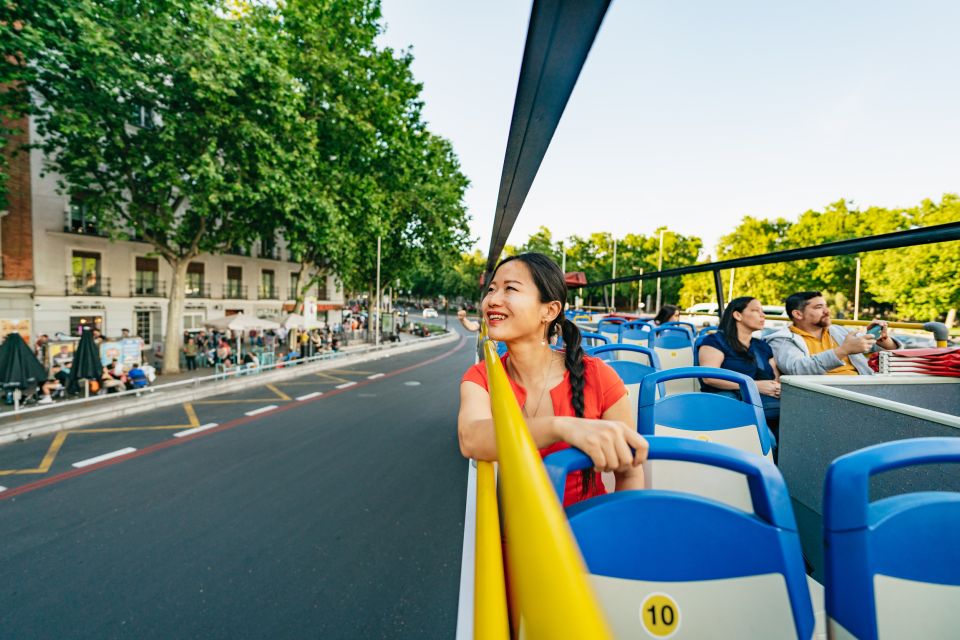
- Top-deck open-air views with sliding roof and air-conditioning when the weather turns
- Audio in 14 languages plus headphones, which is a big deal when you’re moving fast through a big city
- Optional night route in summer using the Historical loop for an illuminated Madrid feel
- 2-hour guided walking tour around the historic center (daily at 10:45) for extra context
- Free drink at La Quimera Tablao Flamenco near Plaza Mayor to add a cultural stop
Price and what your $39 gets you in real terms
At about $39 per person, this tour hits the sweet spot for visitors who want strong orientation without paying for a bunch of separate guided experiences. The main value isn’t just the bus ride—it’s that you get two different panoramic routes on one pass, which means you can cover a lot of Madrid geometry in a short window.
You’re also buying convenience. Madrid is big, and walking from one “must-see” cluster to the next can eat hours. The bus takes you along major corridors so you can spend your energy where it matters: looking, photos, and choosing what to explore deeper later.
Just remember the ticket timing rule: after you redeem it, it’s valid for 24 hours for both routes. That can be great if you’re doing both loops the same day (or one the next day), but it also means you should set your plan before you board.
You can also read our reviews of more city tours in Madrid

The two-route plan: Historical Madrid vs Modern Madrid
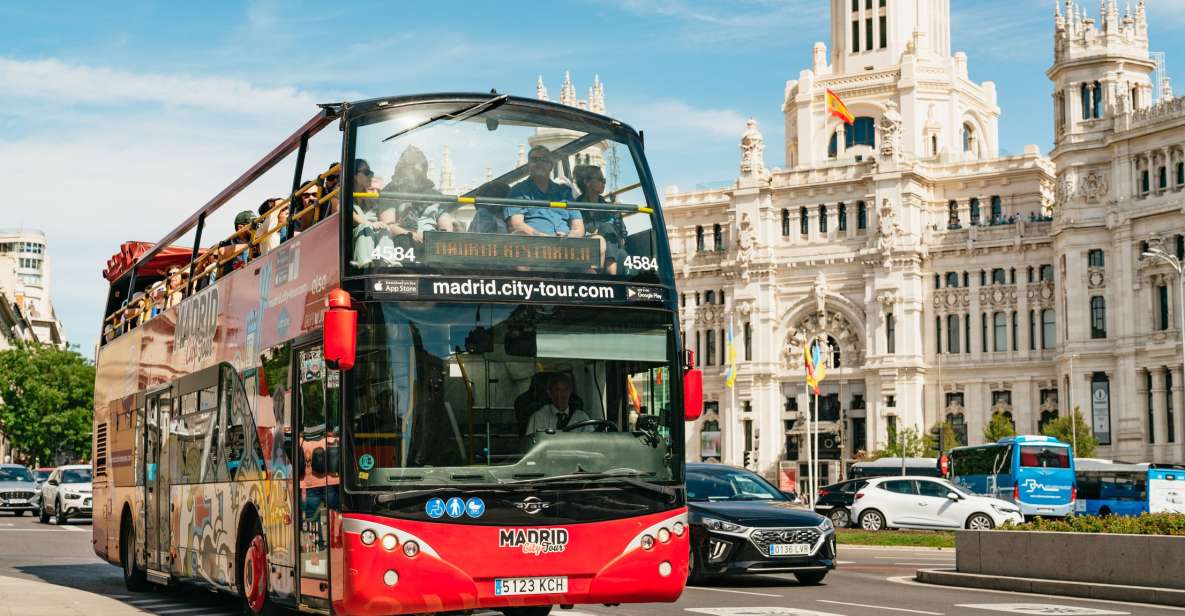
This tour works because it splits Madrid into two understandable themes. Instead of trying to narrate every corner equally, Route 1 is about the city’s monumental core and museum-and-palace axis, while Route 2 shifts toward newer architecture and big modern landmarks.
Route 1 (Blue): Historical Madrid is designed as a circular circuit that sends you through classic sights and the Art Triangle area vibes. You’ll pass the grand streets around Paseo del Prado, key plazas, and viewpoints over the city, including Temple of Debod. It’s the route where you feel Madrid’s older layers stacking up.
Route 2 (Green): Modern Madrid runs from Atocha Station area territory toward neighborhoods and landmarks that feel more contemporary. You’ll see the bright skyline side of Madrid too—think Santiago Bernabéu Stadium and newer architecture zones—so it’s a good match if you’ve only seen postcards of the center and want the full picture.
A practical tip: if you’re short on time, choose Route 1 first. It strings together the most iconic classic monuments in a logical loop. Then, if your schedule allows, Route 2 helps you connect the dots from modern Madrid back to what you already saw.
Route 1 (Blue): the classic loop with Prado-area views and palace energy
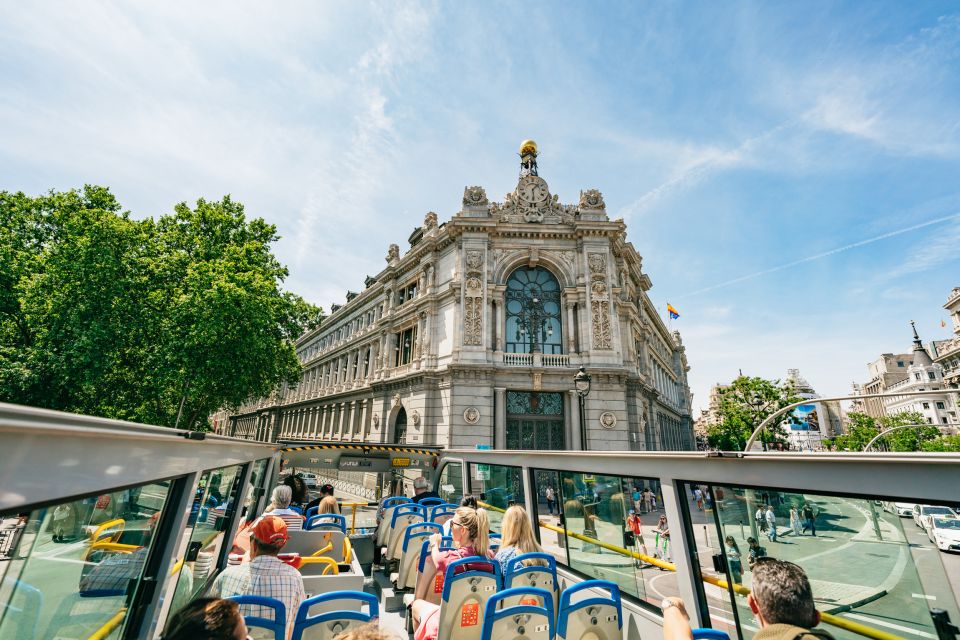
Route 1 feels like the spine of central Madrid. It’s built to move you through places where you’ll recognize the streets even if you can’t name them yet.
Starting points and museum axis feel: Prado and the Prado-area approach
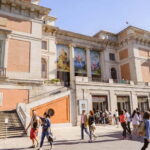
The route includes the Prado Museum area and the broader museum corridor along Paseo del Prado. Even if you don’t go inside the museums, this part matters because it gives you the scale and style of Madrid’s cultural center. You get that long-straight-street perspective that helps you understand why Madrid’s “art triangle” is more than a catchy phrase.
Puerta de Alcalá and the plaza rhythm
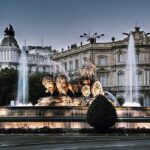
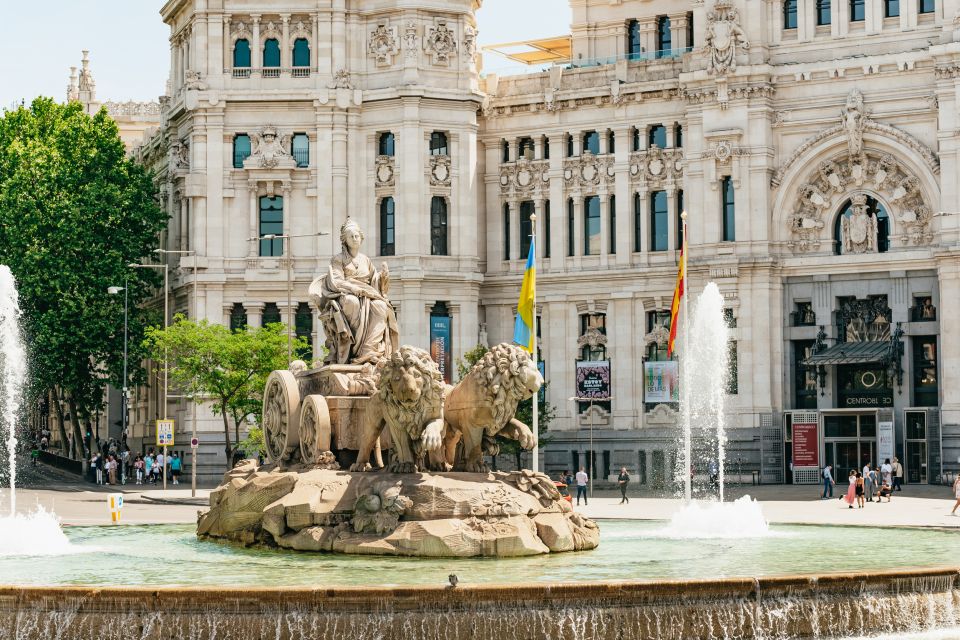
You also pass Puerta de Alcalá, a classic gateway moment that works well from the top deck because you can line up photos with the surrounding avenues. Then you’ll travel through major plazas such as Plaza de Colón and Plaza de Cibeles, which are perfect for orienting yourself. These stops are where Madrid changes from one landmark cluster to the next.



Gran Vía, Plaza de España, and the loud-and-proud street view
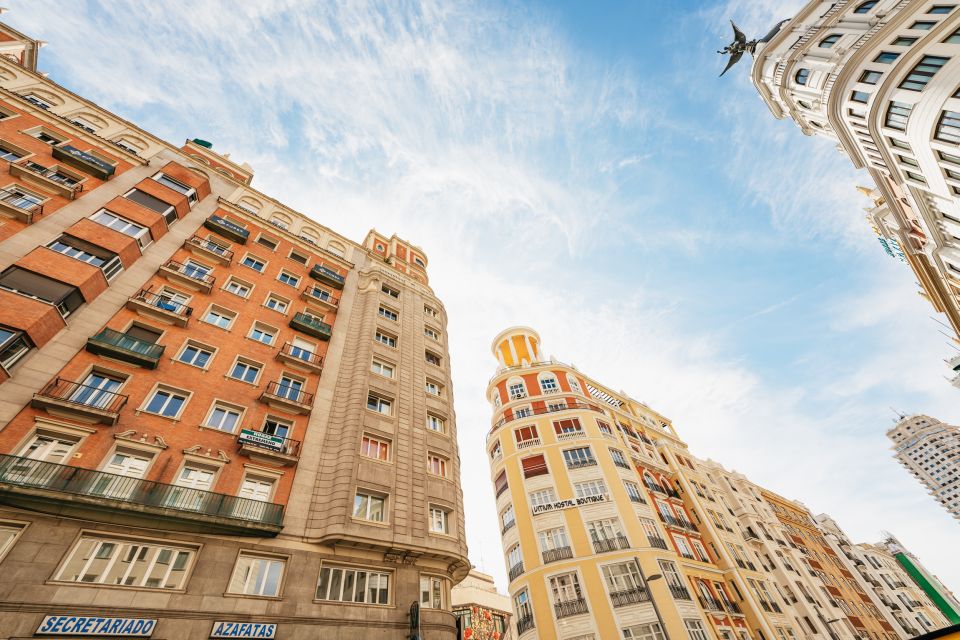
When the tour rolls along Gran Vía, you’ll see Madrid’s big-city energy at street level—broad boulevard, heavy foot traffic zones, and architecture that reads like a timeline. Plaza de España adds another big junction view that helps you understand how the city’s center is structured.
Temple of Debod: the viewpoint stop that people remember
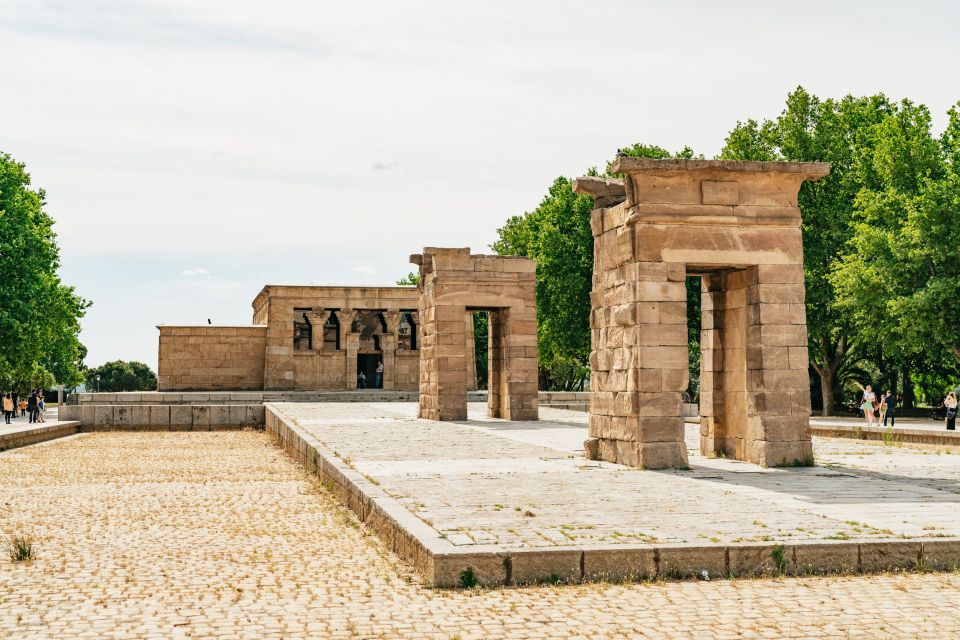
Temple of Debod is one of the most striking inclusions on the Blue route. It’s a unique stop because it gives you a different kind of city view—more “look out over Madrid” than “walk into history.” If you like skyline moments and photogenic viewpoints, this is one of the reasons to book Route 1 rather than only seeing the more obvious monuments.
Old-town connectors: Puerta de San Vicente, Puerta de Toledo, and the churchy streets
From the Debod area, Route 1 continues past Puerta de San Vicente and Puerta de Toledo, plus the Gran Vía de San Francisco corridor and the Colegiata/Mayor area. Even without getting off the bus often, you’re getting the layout of Madrid’s older street blocks. It’s especially useful if you want to come back later and walk specific neighborhoods without getting lost.
Atocha and the green breaks: Botanical Garden and back to Prado
The loop brings you back toward Atocha, and it includes the Botanical Garden area as well as returning toward the Prado Museum end. Those green breaks help the whole route feel less like a straight-line monument parade, and more like a real city circuit.
Route 2 (Green): modern Madrid from Atocha connections to Bernabéu views
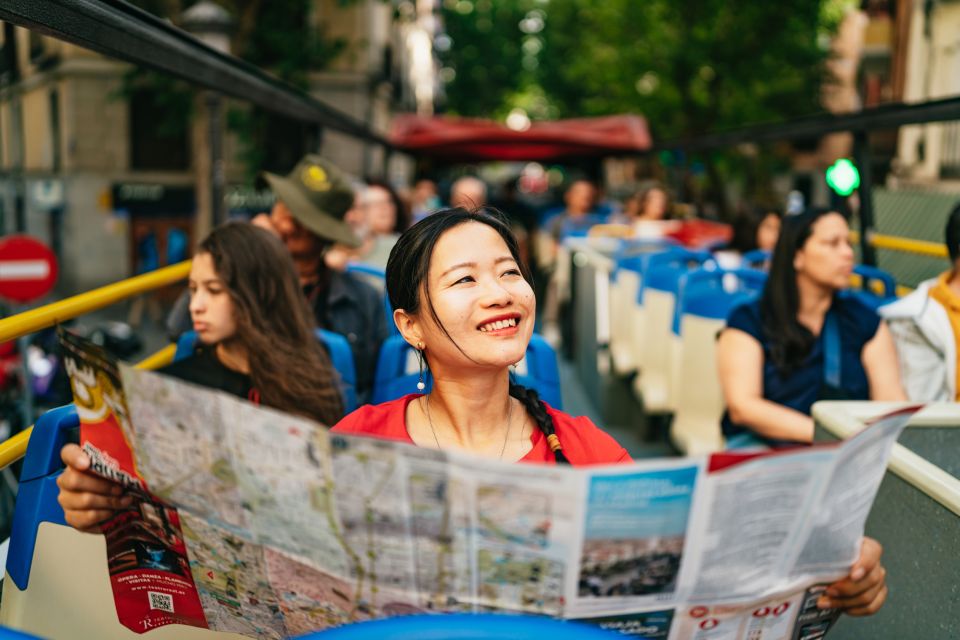
Route 2 is the one you take to understand what Madrid looks like after the postcard center. It leans into major institutions, science and education stops, big modern architecture, and football-stadium scale landmarks.
Natural science and museum institutions
You’ll pass places like the Museum of Natural Sciences and other cultural stops along the route. The benefit here is context: you start to see Madrid as a modern capital with world-class institutions, not only old buildings and royal monuments.
Nuevos Ministerios and the “big corridor” feel
The tour heads through Nuevos Ministerios, a key modern transit and office-zone area. From the top deck, this is a helpful segment for understanding where the city’s working Madrid sits versus where the historic core dominates.
Santiago Bernabéu: the modern icon moment
A major highlight is Santiago Bernabéu Stadium. Even if you’re not there for a match, seeing it from the bus gives you the scale of Madrid’s sports culture and modern development footprint. It’s also a landmark you can easily reference later when you plan a metro walk or a neighborhood wander.
Art, science, and culture: museums and the CSI Science Center
Route 2 includes the CSI Science Center and the Lázaro Galdiano Museum, which helps balance the modern vibe. This is a good part of the day to listen closely to the audio—Route 2 often feels more about understanding modern institutions than recognizing every single facade.
Toward the classic core again: Puerta de Alcalá and Puerta del Sol
To keep this route from feeling disconnected, it swings back toward classic landmarks like Puerta de Alcalá, then Puerta del Sol, and Plaza de las Cortes. That matters because Madrid’s modern and historic city cores overlap. Route 2 helps you see how the two worlds connect in real space, not just in a travel brochure.
End-to-end loop shape
The route includes a circular return toward Plaza Neptuno. The practical takeaway: you can finish Route 2 and still feel like you have a map of central Madrid, not just scattered stops.
Night Route in summer: the Historical loop under the lights
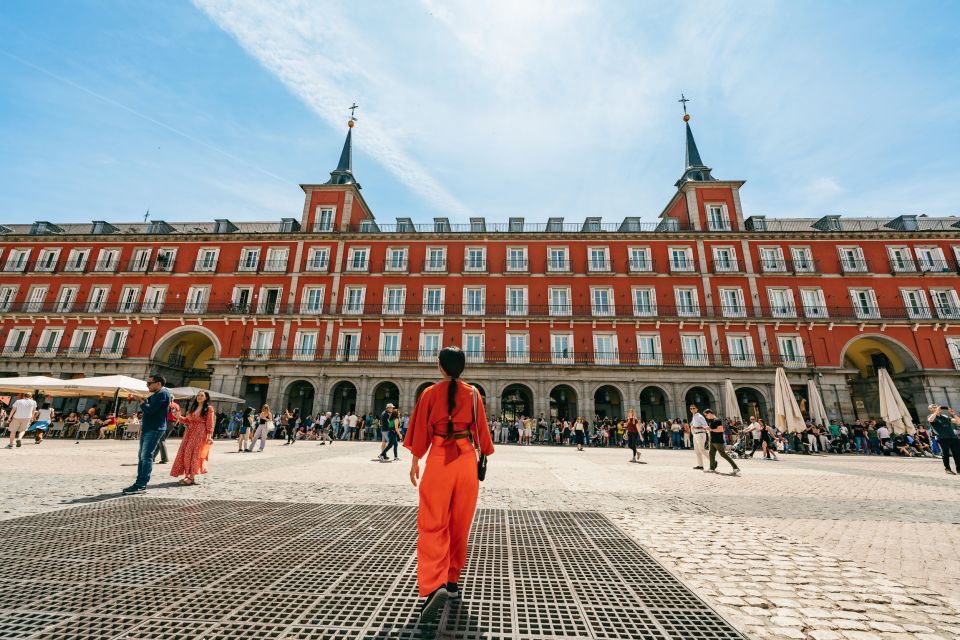
In summer months, you can add a night-time panoramic route that follows Route 1 (Blue). It’s essentially the same historic circuit, but with an atmosphere shift that’s hard to replicate on your feet.
Daytime Madrid is all about angles and stone details. Night Madrid is about glow, contrast, and monument silhouettes. The route includes emblematic stops like the Royal Palace area, Gran Vía, and Temple of Debod—so you’re not just traveling for the sake of it. You’re seeing the places that already matter in the daytime, now presented with a different mood.
If you’re the type who cares about photos, night routes often beat daytime for readability. The city lights do some of the hard work for you.
Getting the best views from the top deck (and staying comfortable)
This bus uses open-top, air-conditioned double-deckers with sliding roofs, which is a practical combo. On sunny days, open-air viewing helps your photos and your sense of the city. When the weather changes, the sliding roof and air-conditioning keep you from turning the tour into an endurance event.
Pick your seat like this:
- If your priority is photos, aim for a spot with a clear line to the left and right street views as the bus turns.
- If your priority is comfort, choose a position that minimizes sun glare if you’re riding midday.
Also: wear comfortable shoes. You’re doing a guided walking tour later (and possibly quick street navigation between stops), so your feet will want a head start.
Guided walking tour and the flamenco drink: why these add-ons help
A lot of panoramic bus tours give you views but not context. This one adds two extras that can make your day feel more complete.
The 2-hour guided walking tour at 10:45 (tips-based)
You can join a 2-hour guided walking tour around the historic center daily at 10:45, starting from the center of Madrid. It runs in either English or Spanish, and it’s based on tips at your expense and discretion, with a suggested price of €10 per person.
This is valuable because the walking tour can turn bus-view landmarks into real streets you understand. It helps you connect what you saw from above with what you’ll want to explore at eye level afterward.
La Quimera Tablao Flamenco near Plaza Mayor
You also get a free drink at La Quimera Tablao Flamenco, just a few steps from Plaza Mayor. That’s not a random add-on. Plaza Mayor is a prime orientation point, and adding an evening culture stop right where you’ll already be looking around makes the tour feel more like Madrid, not just transportation.
You’ll find conditions on board, but the concept is clear: you get a small taste of performance culture plus a drink in a real setting.
Audio guide and headphones: what to check before you rely on them
The tour includes an audio guide in 14 languages, with headphones provided. That’s genuinely useful in Madrid because street names, architectural terms, and landmark context can fly by unless you can track the narrative.
The audio languages listed include:
Spanish, Basque, Chinese, Dutch, English, French, Galician, German, Italian, Portuguese, Russian, Catalan, Japanese, and Arabic.
A practical move: before the bus pulls away, test your headphone connection. Some audio systems can have spotty headphone jacks on any large bus setup. If something isn’t working right, ask right away so you’re not forced to miss the narration for the whole route.
Also, if you’re picky about sound quality, note that the audio experience can vary by route. One route may feel clearer than the other depending on the bus and setup.
Ticket rules that matter: 24 hours after redemption, one trip per route
Here’s the part you don’t want to skim.
- Your ticket covers both routes, but only for 24 hours after redemption.
- You can ride one trip per route.
- Only one trip per route is allowed, so you shouldn’t assume you can repeat the same loop endlessly.
This is why I suggest a simple plan:
- Do Route 1 first for classic landmarks.
- Take a lunch break or a short walk.
- Do Route 2 if you still have energy.
That order helps you anchor your day: once you know the center from Route 1, Route 2 becomes a map of where modern Madrid sits relative to it.
If you accidentally book the wrong validity window, it can be possible to fix it with staff while onboard (you may need to pay the difference). So don’t panic if the ticket language on your confirmation looks confusing—confirm early.
Weather, crowds, and the best time to start
You’ll get the best experience when visibility is good. Sunny days tend to make the top deck feel like a real advantage rather than just a ride.
Crowds also matter because stops along Gran Vía, Plaza Mayor area, and central plazas can fill up. If you want easier boarding and a calmer ride experience, start earlier in the day when you can. It also makes the walking tour feel easier.
In winter, you’ll still enjoy the tour because the bus has air-conditioning and a sliding roof. It just won’t feel as open-air as a summer ride.
Should you book this Madrid panoramic bus tour?
Book it if:
- You want two distinct views of Madrid (Historic and Modern) without building your own transport puzzle.
- You’re short on time and want a structured way to get bearings fast.
- You’ll use the audio guide and want a readable overview you can reference later.
Skip or reconsider if:
- You expect classic hop-on-hop-off freedom where you can jump off whenever something catches your eye.
- You need lots of stops you can personally explore deeply from the bus alone. This is still a sightseeing circuit, so treat it as the map-maker, not the entire city walk plan.
- Your priorities are very niche. Route 2 covers modern icons, but it’s not tailored to deep specialty interests.
My take: for a first trip, this is an efficient, good-value way to understand Madrid’s layout. If you pair Route 1 with the walking tour and then add Route 2, you come away with both the famous monuments and the city’s modern face.
FAQ
How long is the ticket valid, and can I ride both routes?
After you redeem your ticket, it’s valid for 24 hours for both routes. You can take one trip per route, so plan to ride Route 1 and Route 2 within that window.
What’s the difference between Route 1 and Route 2?
Route 1 (Blue) is Historical Madrid, focusing on classic monuments and major central viewpoints, including stops near the Prado area and Temple of Debod. Route 2 (Green) is Modern Madrid, covering modern architecture and major institutions, including Santiago Bernabéu Stadium, plus a return toward Puerta del Sol.
Is there an optional night tour?
Yes. During summer months, you can add a night route that follows the same circuit as Route 1 (Blue). It’s designed for a different experience as landmarks are illuminated.
What languages are available for the audio guide and walking tour?
The audio guide is available in 14 languages (including English, French, German, Italian, Spanish, and others). The guided walking tour is offered in English or Spanish.
What’s included in the guided walking tour and when does it run?
The walking tour is 2 hours around the historic center and operates daily at 10:45 from the center of Madrid. It’s based on tips at your own expense and discretion, with a suggested price of €10 per person.
Can I get a full refund if plans change?
You can cancel up to 24 hours in advance for a full refund. You can also book with reserve now & pay later.