REVIEW · MADRID
Madrid Old City Guided Exclusive Guided Walking Tour
Book on Viator →Operated by Babylon Tours Madrid · Bookable on Viator
Madrid’s old streets come with a guide. This walking tour strings together the big hitters plus the side streets that make the city feel real, with an expert talking as you go. I like that groups stay small and that guides such as Isabella and Sergio keep it interactive, not lecture-y.
Over about 2.5 hours, you get an orientation route from the Royal Palace area down through La Latina to Puerta del Sol. I love the way the day blends royal and religious landmarks with everyday Madrid moments like the Arab Wall and Mercado San Miguel, so you finish knowing where things are.
One thing to factor in is pace and hearing. The walk can feel full-throttle, and headsets are not guaranteed in smaller groups, so staying where you can hear well matters. Also, Royal Palace and Almudena admission isn’t included, so inside time depends on what you choose to pay for.
In This Review
- Quick hits before you set out
- Madrid Old City in 2.5 Hours: What This Exclusive Walk Actually Covers
- Meeting Point to Finish Line: Plaza de la Armería and the Puerta del Sol End
- Stop-by-Stop: Palace, Almudena, and the Official Madrid Mood
- The Arab Wall and Calle Mayor: Where Madrid’s Origins Show Up
- La Latina Squares: Plaza de la Paja, Puerta Cerrada, and the Stuff You Can Feel
- From Arco de Cuchilleros to Mercado San Miguel: Food, Photos, and Old Arches
- Plaza Mayor and Puerta del Sol: The City’s Central Stage
- What Makes the Guides Matter: Isabella, Jaime, Sergio, Jake, Flo, and David
- Price and Value: Is $56.52 Worth It?
- When This Tour Fits (and When It Might Not)
- Should You Book the Madrid Old City Guided Exclusive Walk?
- FAQ
- How long is the Madrid Old City guided walking tour?
- Where do you meet the guide and where does the tour end?
- Is the tour private or part of a larger group?
- What language is the tour offered in?
- Are tickets included for the Royal Palace and Almudena Cathedral/museum?
- Are the other stops free to see?
- What should I bring for the weather?
- How physically demanding is it?
- What happens if a national celebration affects the route?
- Meta note
Quick hits before you set out
- Small-group feel: private or semi-private options, with a professional guide doing the heavy lifting.
- State and sacred landmarks first: Royal Palace and Almudena set the tone before you hit the street-level story.
- Madrid’s Moorish roots: the Arab Wall is old, physical proof of the city’s origins.
- Medieval to modern connects fast: Calle Mayor, Plaza de la Villa, and Plaza Mayor keep the timeline moving.
- Food and strolling pause: Mercado San Miguel is built for snacking and picture breaks.
- Route can reroute: national celebrations may shift the path while aiming to keep the main highlights.
Madrid Old City in 2.5 Hours: What This Exclusive Walk Actually Covers
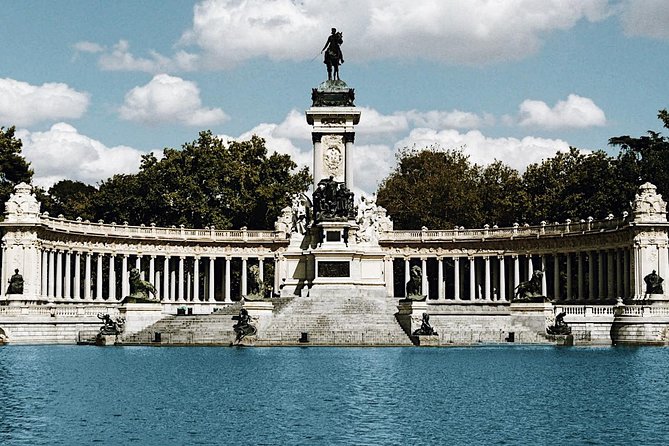
Think of this tour as a guided shortcut through Madrid’s most important layers. You start near the Royal Palace area and finish at Puerta del Sol, then move through the medieval core and the lively neighborhoods that give Madrid its texture.
You’re walking for roughly 2 hours 30 minutes, with frequent short stops where your guide explains what you’re actually looking at. The pace is active, but it’s not a march with zero pauses. People often note there are moments to stand and rest, and the guide narration helps break up the distance.
The tour runs in English and offers multiple daily departure times, so it’s easier to fit into a tight first trip. It also operates in all weather, which is great—just show up prepared with layers. A rain umbrella and comfortable shoes are not optional in Madrid.
One practical note: ticketed interiors aren’t automatically covered. The Royal Palace and Almudena Cathedral/museum have admission fees listed as not included, so if you want inside, you’ll need to handle that separately. Many of the other stops are pass-by exterior views, which still work well because the guide places them in context.
You can also read our reviews of more walking tours in Madrid

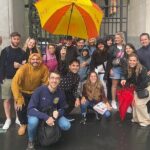
Meeting Point to Finish Line: Plaza de la Armería and the Puerta del Sol End
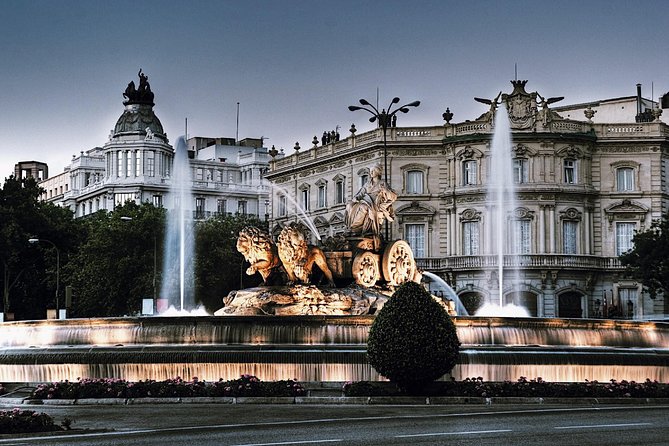
The meeting point is Plaza de la Armería (Pl. de la Armería, Centro, 28013 Madrid). The tour ends at Puerta del Sol, one of the city’s most central squares. That matters, because you’re not stuck dragging yourself back across town at the end.
You check in using a mobile ticket, and you’ll want your phone ready. Also, you’re asked to provide a mobile number with your country code, so the organizer can reach you if needed. Madrid can throw timing curveballs—traffic and pedestrian congestion are real—so give yourself extra time to arrive on location.
The tour is listed as private (only your group participates). Many bookings are small, and that typically means you get more Q&A and more personalized pacing than the big-bus-tour vibe.
Finally, the route can be affected by national celebrations. In those cases, the path may change, but the goal is still to hit the main highlights. No refunds or discounts are mentioned for these reroutes, so treat celebrations as an “expect adjustments” situation, not a dealbreaker.
Stop-by-Stop: Palace, Almudena, and the Official Madrid Mood
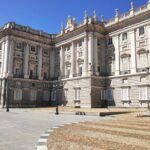
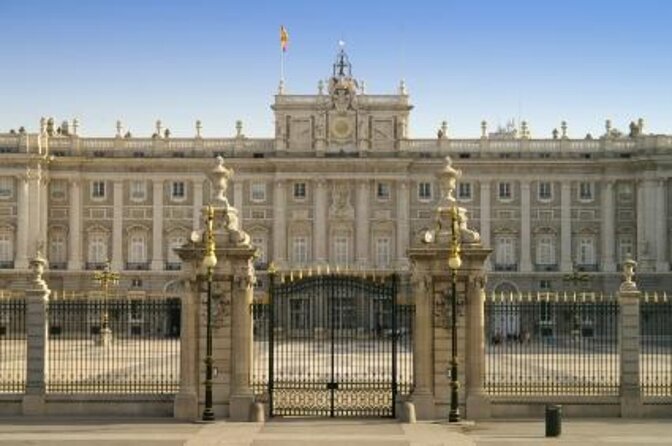
You kick things off at the Royal Palace of Madrid. Even if you don’t go inside, it’s worth seeing in person because it explains a lot about how Spain likes to present power. It was the official residence of the Spanish royal family from Charles III to Alfonso XIII, and today it’s used mainly for state ceremonies.
The tour time around the palace is short, so the goal is orientation: where it sits, why it matters, and how it ties into the city’s bigger story. If you buy a Royal Palace ticket separately, your guide’s timing is designed to let you make the most of that inside time. If you don’t, you’ll still get the “why this place exists” explanation—just not the room-by-room experience.
Next is Museo de la Catedral de la Almudena, tied to Almudena Cathedral. The cathedral is a Catholic church consecrated by Pope John Paul II in 1993, and the museum is part of the church complex. Admission isn’t included, so again, you’ll likely view and learn from what’s available during the stop. If you want a deeper museum visit, plan to add it later.
This first half is an excellent setup. Palace and cathedral aren’t just landmarks—they’re anchors. Once you understand them, the rest of the old-city walk makes more sense: the medieval streets, the Islamic-era remnants, and the modern civic squares all start connecting into one timeline.
The Arab Wall and Calle Mayor: Where Madrid’s Origins Show Up
Now the tour shifts from official buildings to the older bones of the city.
First up is the Arab Wall, also called the Muslim Walls of Madrid, located on Cuesta de la Vega. This is one of the oldest surviving constructions in Madrid, and it’s directly linked to the origins of the city. Seeing a real remnant like this changes the way you think about Madrid. It’s not just a capital of kings and plazas—it has deep earlier roots, and the walls are the physical proof.
From there you walk along Calle Mayor. This street runs between Puerta de Sol and Cuesta de la Vega, and it’s been central since medieval times. In the early modern period, it became Madrid’s main thoroughfare. Your guide’s commentary helps you picture how people moved back when the city was far more compact and street life was the main stage.
Then you hit Plaza de la Villa, one of Madrid’s best-preserved medieval areas. It’s located in the historical zone by the Puerta del Sol Gate, and it’s a key medieval center. Even if you only spend minutes there, it’s the kind of place where you can feel the age in the architecture and street layout.
If your goal is first-time orientation—knowing what matters and where it fits—this section delivers. You go from ancient remnants to the major artery street that shaped everyday movement.
La Latina Squares: Plaza de la Paja, Puerta Cerrada, and the Stuff You Can Feel
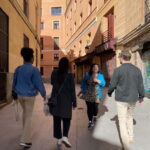
The tour continues into La Latina, one of Madrid’s historic neighborhoods. It occupies much of the oldest section of the city and is made of small narrow streets that are perfect for slow looking, even if you’re not stopping long at each corner.
You then pass Plaza de la Paja, a major marketplace during the 13th and 14th centuries. It’s known for crowded streets filled with life, but the square also gives you a chance to spot quieter moments if you pause. That contrast is part of what makes La Latina memorable: old trade routes still echo, even when today’s energy looks different.
Next is Plaza de los Carros Madrid, a small square with a fountain. It’s a natural place to grab a drink and reset your feet and attention—especially since you’ve been walking since the palace side of town.
Then comes Plaza de Puerta Cerrada, also in La Latina. The key detail here is the site: it’s built on a medieval Islamic fort. That helps you connect the earlier Arab Wall stop to what you’re seeing now. Madrid’s Islamic-era footprint isn’t just in museums—it shows up in foundations and street-level layouts.
This block of the tour works well for people who like to wander, but also want a guide to tell them what to look for so the walking doesn’t turn into aimless wandering.
You can also read our reviews of more guided tours in Madrid

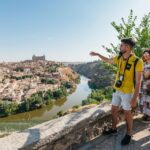
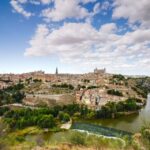
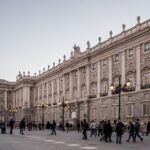

From Arco de Cuchilleros to Mercado San Miguel: Food, Photos, and Old Arches
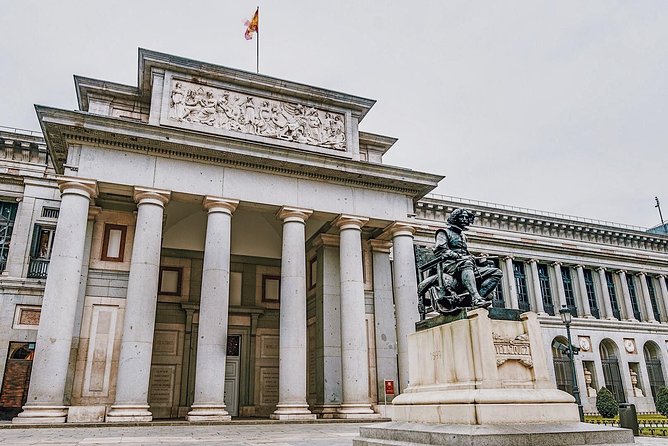
After the La Latina squares, you’ll see Arco de Cuchilleros—an archway with stairs leading up to the 16th-century Plaza Mayor. It’s a classic Madrid connector: one structure linking street life to a grand public square. If you care about street design and how cities funnel movement, this stop is a neat example.
From there, the tour heads to Mercado San Miguel, located near Plaza Mayor. This is a historic market, and it’s well-known for food from across Spain. In practical terms, the market is a great mid-to-late tour break. Even if you don’t buy much, you get to watch, smell, and scan menus while your guide keeps moving the story forward.
You should expect it to feel like a food-photo stop—crowds, lots of options, and a quick feel for regional specialties. It’s also a good moment to check where you are on the map psychologically. After the market, you’re heading toward Madrid’s most famous squares, so your sense of direction usually clicks into place.
Plaza Mayor and Puerta del Sol: The City’s Central Stage
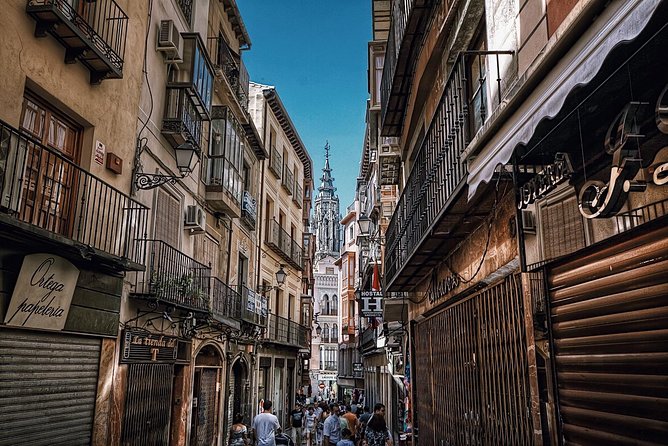
The tour finishes with two heavy hitters.
First is Plaza Mayor. This is the grand arcaded square at the heart of old Madrid. The first building phases are linked to the Habsburg period during Philipp III’s reign, and it used to be the center of old Madrid. Today it’s popular with both locals and tourists, which means it’s lively even when you’re just standing there listening to your guide.
Next you’ll see Real Casa de Postas, a neoclassical administrative building. It housed telegraph service offices of Spain’s National Police force until the building was purchased by Madrid’s regional government in 1985. This is one of those stops that’s easy to overlook if you’re only looking for castles and churches. But it’s a reminder that “old city” also includes the systems that made modern life possible—communication and administration.
Finally, the grand end is Puerta del Sol. It’s a bustling central square and the hub of Spain’s radial road network in the city. It’s also where you’ll find the famous clock whose bells mark the tradition of eating the Twelve Grapes for the new year.
This ending is ideal for planning the rest of your trip. Once you’ve been through Puerta del Sol with context, it stops being just a meeting spot and becomes a navigational anchor.
What Makes the Guides Matter: Isabella, Jaime, Sergio, Jake, Flo, and David
The best part of this tour, in real-life terms, is how the guide turns stones into a story.
Guides like Sergio are described as friendly and clear, with explanations that take their time. Jake gets singled out for filling gaps in Spanish history, including both early colonial themes and World War II context, while still keeping it human and not just dates. Jaime is praised for being energetic and for keeping history interesting, including religious information alongside the political timeline.
There’s also a pattern of guides adding extra “walk with a local” details. Flo is noted for mixing Madrid history with folklore and legends, plus practical info about food. Michele and David are praised for articulating what you’re seeing and for giving recommendations for meals and local entertainment spots.
One more practical point: group size and positioning can affect the experience. A smaller group can feel more like a conversation, and staying near the front can help with hearing. If you’re the type who likes to ask questions, this is the kind of tour where you’ll get chances to use your curiosity.
Price and Value: Is $56.52 Worth It?
At $56.52 per person for about 2.5 hours, the value is mostly in what you avoid: wasted time hunting for context.
Most of the listed stops are exterior views, and many are free to see. The guide’s job is to explain why each place matters and how the pieces connect—from Islamic-era remnants to royal power to Spain’s big public squares. That reduces the “so what am I looking at?” feeling you get when you walk without help.
What’s not included is important: Royal Palace admission isn’t included, and Almudena Cathedral/museum admission isn’t included either. So if you plan to go inside those, your total cost will rise. If you’re okay focusing on the guided exterior stops and using the tour for orientation, the $56.52 price feels more like paying for a tailored walking history lesson.
You’ll also notice it’s booked fairly far in advance on average. That usually means it sells out or schedules get tight in popular travel windows. If your itinerary is fixed, booking early is a smart move.
Also, transportation isn’t included. That’s normal for a walking tour, but it’s worth planning: you want to already be in central Madrid before you meet your guide near Plaza de la Armería.
When This Tour Fits (and When It Might Not)
This tour is a great fit if you:
- are in Madrid for the first time and want a strong sense of geography fast
- like history that’s tied to buildings, street design, and daily life
- want a small-group walking format instead of a big crowd experience
- plan to return later and explore on your own using your new mental map
It might be less ideal if you:
- need frequent seating or long breaks (it’s designed as a walking tour with stops, not a full sit-down excursion)
- strongly prefer museum ticket inclusions or deep time inside major attractions (ticketed entries aren’t included)
- are sensitive to hearing and you end up farther back in a smaller group (headsets aren’t guaranteed for small groups)
The good news: even with those considerations, you still leave with a clear path through the old city and a better understanding of what you’re seeing.
Should You Book the Madrid Old City Guided Exclusive Walk?
Yes—book it if you want an efficient, high-impact intro to central Madrid. The route covers the places that anchor the city: Royal Palace area, Almudena, Arab Wall, Calle Mayor, medieval plazas, La Latina streets, Plaza Mayor, and Puerta del Sol. The tour length is just long enough to build confidence without turning into an all-day grind.
Skip it (or pair it differently) if your main goal is deep indoor museum time. Since Royal Palace and Almudena admission fees aren’t included, you’ll likely need a separate plan for those interiors. And if you’re booking for the hearing-friendly experience, position matters—try to stay where you can hear the guide clearly.
If you’re aiming for the best “first Madrid walk,” this one is hard to beat. You’ll finish with a map in your head, a better sense of Spanish history in the streets, and a few places you’ll actually want to revisit.
FAQ
How long is the Madrid Old City guided walking tour?
It runs for about 2 hours 30 minutes.
Where do you meet the guide and where does the tour end?
You start at Plaza de la Armería (Pl. de la Armería, Centro, 28013 Madrid) and end at Puerta del Sol (Centro, Madrid).
Is the tour private or part of a larger group?
It’s described as a private tour/activity, and only your group participates. There are also private or semi-private walking tour options.
What language is the tour offered in?
The tour is offered in English.
Are tickets included for the Royal Palace and Almudena Cathedral/museum?
No. The Royal Palace admission fee is not included, and admission for Museo de la Catedral de la Almudena is not included either.
Are the other stops free to see?
The stops listed for Arab Wall, Calle Mayor, Plaza de la Villa, La Latina, and several plazas and market area entries are marked as free to visit during the tour.
What should I bring for the weather?
The tour operates in all weather conditions, so dress appropriately. It’s recommended to bring an umbrella in case of rain and a hat during summer.
How physically demanding is it?
You should have a moderate physical fitness level.
What happens if a national celebration affects the route?
If the route is affected by national celebrations, the guide provides an alternative route that still aims to show all highlights. In those cases, refunds or discounts are not provided.
Meta note
If you tell me your travel dates and whether you plan to buy tickets for the Royal Palace and Almudena, I can suggest the best timing to pair this walk with those inside visits.