REVIEW · MADRID
Madrid: Welcome to Madrid Guided Walking Tour in English
Book on GetYourGuide →Operated by Walkative Tours · Bookable on GetYourGuide
Madrid’s story starts before the cathedrals. This English walking tour traces Mayrit from Islamic roots through Habsburg and Bourbon Spain, then lands at the Congress of Deputies. You’ll move site to site like you’re reading Madrid’s timeline with your feet.
I love how it threads the big-name landmarks into one route, especially Gran Vía and Plaza Mayor, so you can actually recognize the city later. I also like the built-in “why it matters” approach, with stops that explain how politics and religion shaped everyday streets around Plaza de la Villa.
One possible drawback: it’s a 2.5-hour walk, so plan on steady walking and some outdoor standing. Bring comfy shoes and be ready for quick photo moments between stops.
In This Review
- Key things that make this tour worth your time
- Entering Madrid Through Its Oldest Name: Mayrit to Modern City
- Meeting Point at Opera Metro: the yellow umbrella trick
- What the 2.5 hours feels like on foot
- Royal Palace to Almudena Cathedral: royal past meets neo-style Spain
- Plaza de la Villa: Madrid in three centuries of architecture
- Plaza Mayor: from public spectacle to darker chapters
- Puerta del Sol: your central Madrid “map in one place”
- Royal Academy of Fine Arts and Goya: art training with a street-level angle
- Gran Vía: the 19th-century makeover you can still feel today
- Seeing the Prado Museum from the outside
- Congress of Deputies: Spanish democracy, tested in real space
- Guides make or break it: what to expect from the people running the show
- Price and value: $31 for a guided orientation you can use all week
- Who should book this tour?
- Small tips that help you get the most out of it
- Should you book the Madrid Welcome to Madrid Guided Walking Tour in English?
- FAQ
- How long is the Madrid guided walking tour?
- Where do I meet the guide?
- Is the tour in English?
- What’s included in the price?
- Is hotel pickup or drop-off included?
- How much does the tour cost?
- Can I get a refund if my plans change?
- Does the tour use a pay-later option?
- Is this a pay-what-you-wish style tour?
Key things that make this tour worth your time
- Islamic-to-Catholic city evolution, starting with Mayrit and moving into later dynasties
- Gran Vía and 19th-century modernization, explained in plain language
- Plaza de la Villa and Plaza Mayor, tied to real events, not just pretty buildings
- Puerta del Sol as your orientation point, where the city’s center makes sense
- Royal Academy of Fine Arts and Goya’s connection, art history mixed in
- A democracy stop at the Congress of Deputies, so Madrid isn’t only about palaces
Entering Madrid Through Its Oldest Name: Mayrit to Modern City
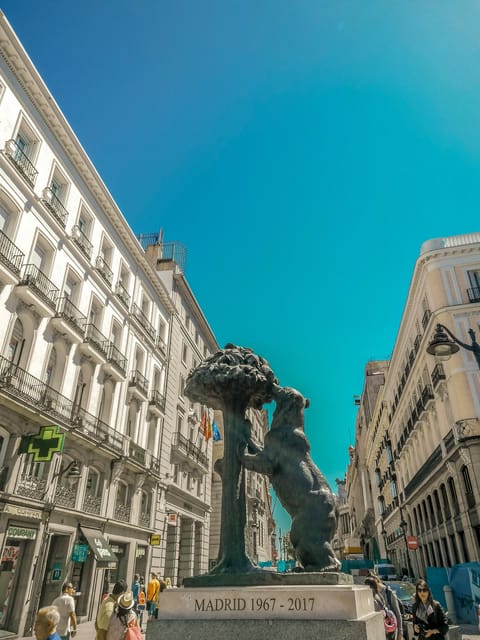
If you only see Madrid as a collection of attractions, you’ll miss the main plot. This tour gives you a clear line through time—from the city’s Arabic roots (Mayrit, a name linked to water) to the later Catholic dynasties that turned Madrid into an important European political center.
What I like about this approach is that it’s not just dates and famous rulers. You get the setting: why a plaza mattered, why a cathedral’s style stands out, and why street design in the 19th century changed how Madrid moved. That’s the kind of context that makes the rest of your trip click.
You can also read our reviews of more walking tours in Madrid


Meeting Point at Opera Metro: the yellow umbrella trick
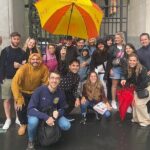
Logistics are simple here, which matters when you’re also trying to enjoy the first hour. You meet at Opera Metro station, outside the Teatro Real, and you should look for the yellow umbrella. It’s an easy landmark, and you’re starting in the heart of central Madrid—exactly where you want to begin when your goal is orientation.
No hotel pickup is included, so you’ll want to be there a few minutes early and ready to walk. The tour is designed as a walking route, so treat it like an active morning/early evening plan, not a sit-and-stare museum visit.
What the 2.5 hours feels like on foot
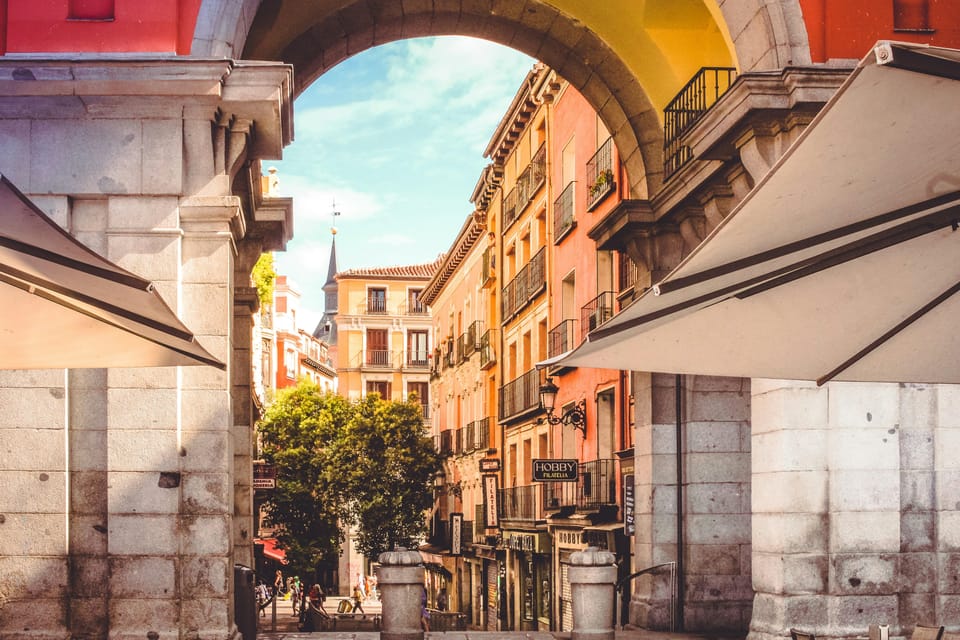
This is a compact tour in time terms, but it covers a lot of territory. You’ll likely spend most of the 2.5 hours outdoors or transitioning between outdoor viewpoints, with the guide keeping the group moving between major stops.
You should wear comfortable shoes and keep your expectations realistic: the tour hits many places, so you won’t linger like you would if you were visiting alone. If you care about photos, be ready to capture your shots quickly and then move on. The upside is that you’ll leave with a mental map of where everything is.
Royal Palace to Almudena Cathedral: royal past meets neo-style Spain
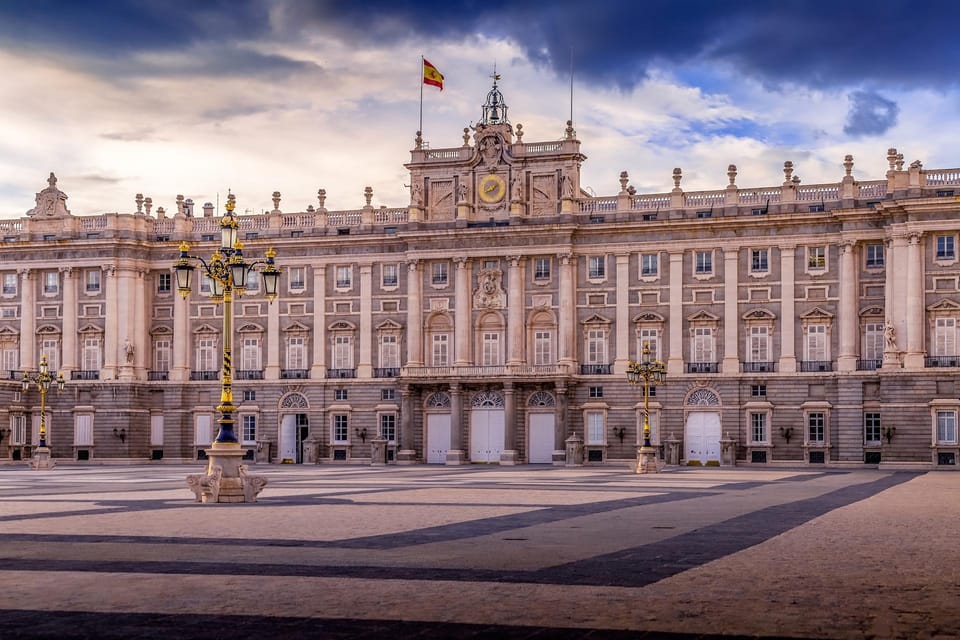
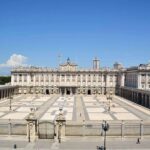
The walk begins close to the Royal Palace. Even if you don’t go inside, that first glimpse matters because Madrid has always organized itself around power—who ruled, where the state showed itself, and what “importance” looked like in stone.
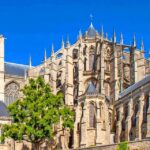
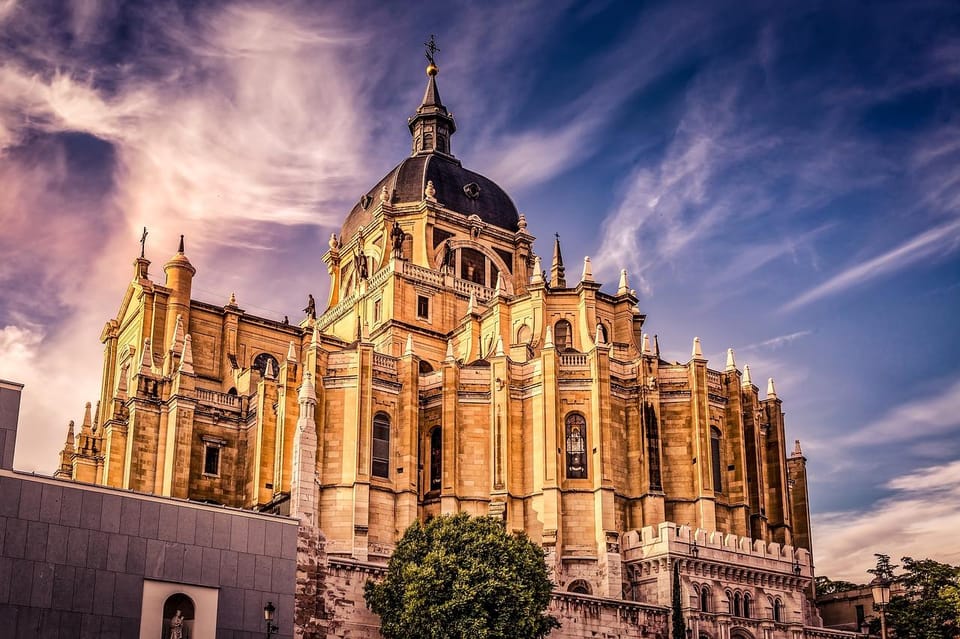
From there, you head toward Almudena Cathedral, which is known for its varied neo-styles. This stop is a good reminder that Madrid’s identity wasn’t fixed in one era. It kept changing its face as tastes, politics, and religious life evolved.
Practical tip: Almudena is the kind of place where people assume they already “know” it. The guide’s job is to point out what to notice so it becomes more than background scenery.
Plaza de la Villa: Madrid in three centuries of architecture
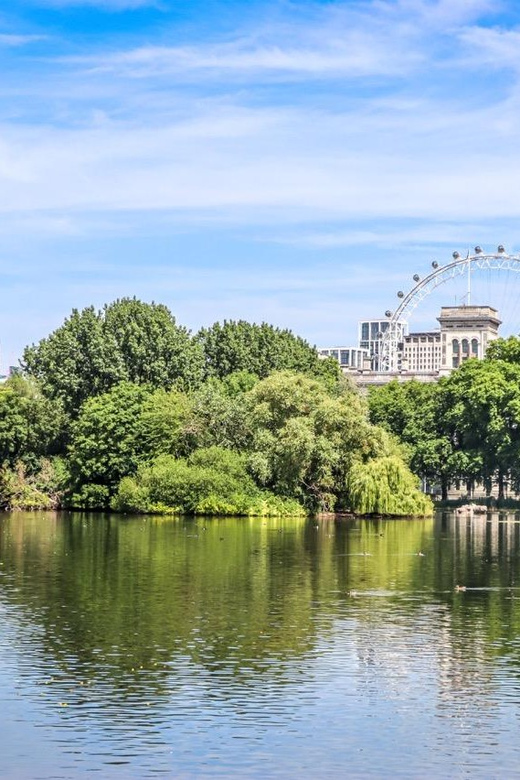
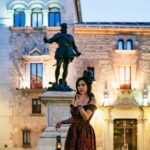
Next comes Plaza de la Villa. This is one of those squares where the architecture basically argues with itself—in a good way. The tour frames it as spanning three centuries, which helps you see the city as layered rather than uniform.
This is a strong stop if you like reading places like clues. You’re not only looking at buildings; you’re learning how Madrid’s growth left marks in street-level design.
You can also read our reviews of more guided tours in Madrid




Plaza Mayor: from public spectacle to darker chapters
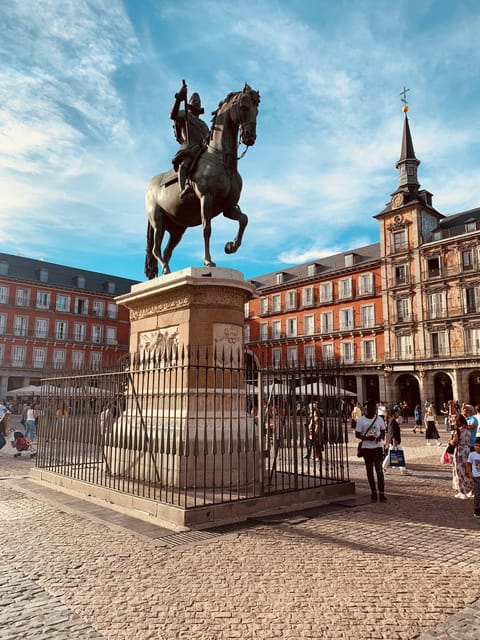
Then it’s on to Plaza Mayor, one of Madrid’s most recognizable spaces. The tour doesn’t treat it like a postcard. It connects the square to events that include Inquisition-era trials and also royal celebrations.
That contrast is the point. Plaza Mayor looks festive today, but it also sits on top of older power structures. Once you understand that, you’ll notice how squares can carry different meanings across time.
Puerta del Sol: your central Madrid “map in one place”
From there you reach Puerta del Sol, Madrid’s busy center—your orientation stop. This is where the tour helps you connect dots: which streets pull outward, where the city’s daily flow gathers, and why this spot became important as Madrid grew.
If you’ve ever wandered Madrid and thought, I can’t tell what’s connected to what, this is where the guide usually fixes that. You’ll come away with a clearer sense of how the city’s neighborhoods relate to the core.
Royal Academy of Fine Arts and Goya: art training with a street-level angle
The walk passes by the Royal Academy of Fine Arts, where artists like Goya once studied. This isn’t “art appreciation class” unless you want it to be. The guide uses the connection to show how Madrid supported talent and culture alongside politics and religious institutions.
It’s also a helpful reminder that Madrid isn’t only about museums. Creative training happened in the city’s public institutions, and you can trace that influence in how Madrid thinks about art.
Gran Vía: the 19th-century makeover you can still feel today
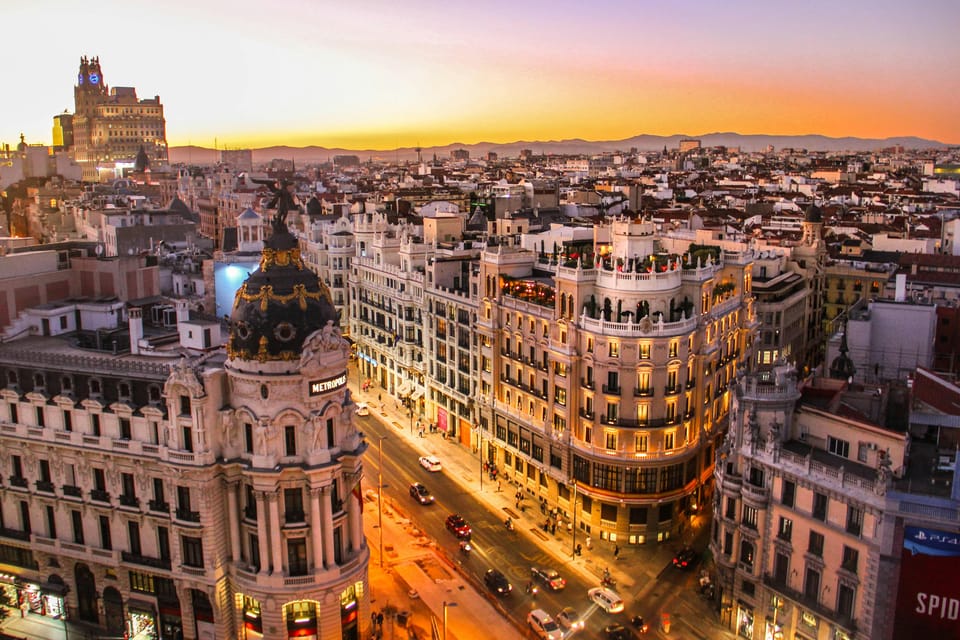
Now comes Gran Vía, and this stop is where the tour often clicks for first-timers. Gran Vía is famous, but you can miss what makes it important. The guide explains how it relates to the 19th-century modernization of Madrid—how the city re-shaped itself as it grew.
This is where you’ll start seeing Madrid’s “planned” energy. The boulevard feels like the city turning toward modern life, not just preserving old power. It’s also a great transition point between old centers (plazas and religious landmarks) and newer, broader avenues.
Seeing the Prado Museum from the outside
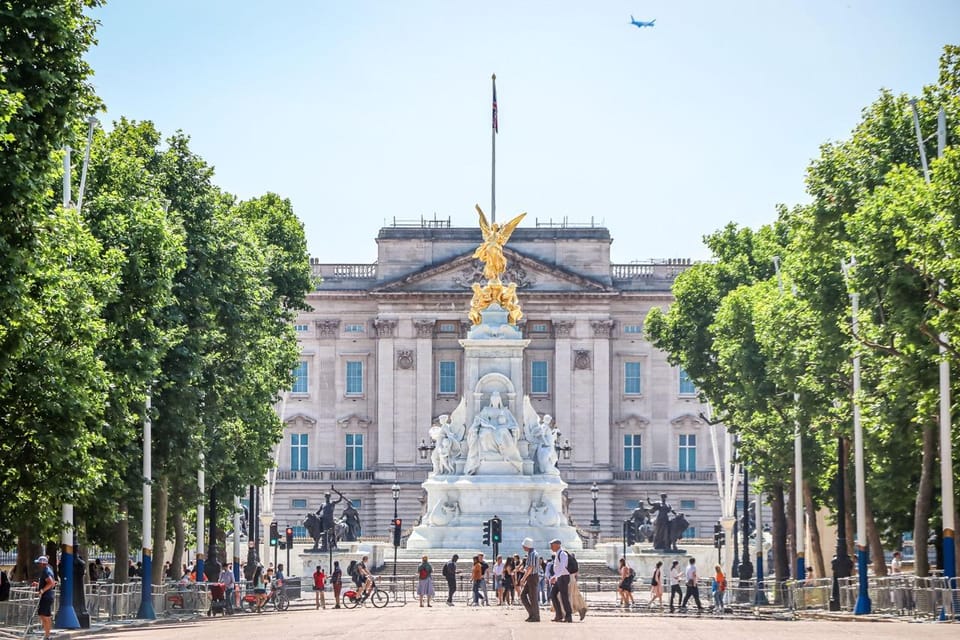
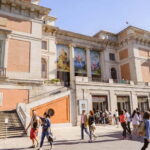
The route includes a stop where you see the Prado Museum. The key value here isn’t the museum ticket—it’s the placement. By the time you arrive at this art landmark, you’ve already heard how Madrid built cultural authority, not just political control.
So even if you don’t step inside during this tour, you’ll understand why the Prado belongs in the same story as plazas and government buildings. Art is part of power too.
Congress of Deputies: Spanish democracy, tested in real space
The tour finishes at the Congress of Deputies. Ending here is smart because it forces you to think past monuments and toward systems—how Spain’s democratic life plays out in real architecture and real public space.
The guide frames the moment as Spanish democracy being tested, and that makes the building feel less like a random landmark and more like a functional piece of the country’s story. It’s one of the best “close the loop” endings you can ask for on a first visit.
Guides make or break it: what to expect from the people running the show
This tour’s success seems strongly tied to the guide style. In the best cases, you get a guide who keeps things moving, explains clearly, and stays friendly without turning the walk into a lecture. Names that stand out in the guide lineup include Sebastian, Adam, Daniel, Joaquin, Esme, Dina, and Duarte.
If you get one of those guides, here’s what you should hope for:
- A dynamic presentation that keeps the group engaged from stop to stop
- Good English delivery that doesn’t get lost in translation
- Humor and story-driven explanations that make history stick
- Room for questions, so you can chase your curiosities
You may also get practical recommendations. Some guides share their favorite places to eat and drink, which is handy when you’re trying to turn a history tour into a full day plan.
Price and value: $31 for a guided orientation you can use all week
At $31 per person for a 2.5-hour guided walking tour, you’re paying for two things: interpretation and efficient route planning. You could technically walk to these places on your own, but you’d need to assemble the context yourself. The guide supplies the connective tissue—Islamic roots, dynastic shifts, modernization, and the political meaning of key spaces.
One detail worth understanding: this tour is part of a general pay-as-you-wish setup. The amount you pay covers the reservation fee and the guide’s payment, and you can reward the guide based on how you felt the tour went. If you’re wondering whether that’s “extra work,” think of it as how you signal your satisfaction directly—without having to compare fixed ticket levels across different tour types.
Also, if you want a smaller, private tour, you can ask the provider to organize it.
Who should book this tour?
This is a great fit if:
- it’s your first time in Madrid and you want a straightforward orientation
- you like history that connects to streets and buildings
- you want major sights covered in a time-efficient way: Royal Palace area, Almudena Cathedral, Plaza de la Villa, Plaza Mayor, Puerta del Sol, Gran Vía, Prado Museum, and the Congress of Deputies
- you enjoy a guide who tells stories (not just facts)
It might be less ideal if:
- you prefer slow museum-style pacing and long stays in one place
- walking distances in general make you uncomfortable
Small tips that help you get the most out of it
Here are a few practical things that make this type of tour smoother:
- Start with good shoes. You’ll cover several stops over 2.5 hours.
- Bring a phone with storage for photos. Some stops move quickly for pictures.
- Be ready with one or two questions. The tour format is set up for Q&A.
- Use the tour as your planning tool. After you’ve seen the route, you can pick what you want to return to on your own.
And if you’re hungry (which you will be), treat this tour as a launchpad. Ask the guide for food and drink suggestions once you’re done—many guides seem happy to share personal recommendations.
Should you book the Madrid Welcome to Madrid Guided Walking Tour in English?
I think it’s a strong first-choice tour for Madrid newcomers. The big win is that it ties together Islamic origins, Catholic-era power, 19th-century modernization, and a final political finish at the Congress of Deputies—without making the day feel like homework.
Book it if you want a guided route that helps you understand Madrid quickly, recognize landmarks later, and leave with a game plan for the rest of your trip. Skip it only if you hate walking or you’d rather spend those 2.5 hours doing a deeper, slower visit in one single site.
FAQ
How long is the Madrid guided walking tour?
The tour lasts 2.5 hours.
Where do I meet the guide?
Meet at Opera Metro station, outside the Teatro Real. Look for the yellow umbrella.
Is the tour in English?
Yes, it runs with a live guide in English.
What’s included in the price?
You get a walking tour and a guide.
Is hotel pickup or drop-off included?
No, hotel pickup and drop-off are not included.
How much does the tour cost?
It’s listed at $31 per person.
Can I get a refund if my plans change?
Yes. You can cancel up to 24 hours in advance for a full refund.
Does the tour use a pay-later option?
Yes. You can reserve now and pay later.
Is this a pay-what-you-wish style tour?
Yes. You join a general pay-as-you-wish tour, where the amount you pay covers the reservation fee and the guide’s payment, and you can reward the guide based on how you feel. If you want a smaller private tour, you can ask for that.