REVIEW · MADRID
Madrid Welcome Tour with Local Guide in Eco Tuk Tuk Private
Book on Viator →Operated by Eco Tuk Tuk - Spain · Bookable on Viator
Zip through Madrid without the stress.
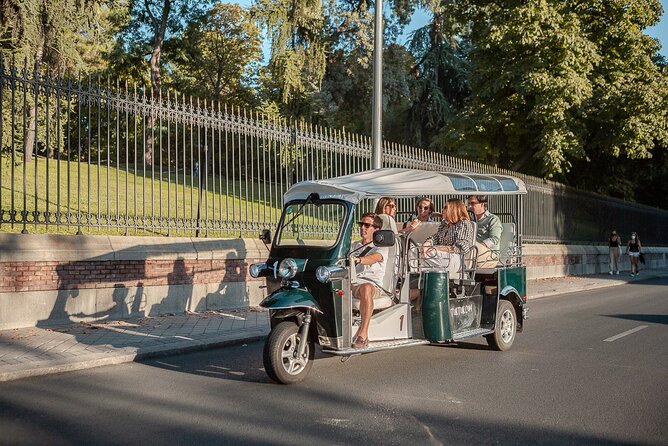
This private Eco Tuk Tuk tour is a fast, comfortable way to see major landmarks across central Madrid, from the Royal Palace area to the art and cathedral zones, with photo stops built in so you’re not constantly stopping to figure things out. It’s also designed to start smoothly, with no lines or waiting.
I especially love two things: the ride itself is 100% electric, quiet, and easy to enjoy for people who don’t want hours of walking; and the guide storytelling adds real context at each stop. I saw lots of praise for guides like Carlos, Enrique and Juan Carlos, Christian, Laura, Manuel, Alejandro, Bobby, Tristan, Fernando, Gustavo, and Roberto, and that shows in how the tour moves beyond postcard facts.
One drawback to plan around: the route and photo stops are fixed, and the tour is time-boxed, so you should treat it as an overview. If you want long hangs inside big-ticket places (or extra museum time), you’ll need to add that separately.
In This Review
- Key points at a glance
- Why this electric eco tuk-tuk tour is such a smart Madrid starter
- Meeting at Puerta del Príncipe: the part you’ll want to do calmly
- The market stop: where you taste Madrid’s everyday elegance
- Basilica of San Francisco el Grande: big-church scale without the wandering
- Atocha station: Madrid’s busy heartbeat in one glance
- The Spanish Courts and the lost steps: civic drama, classic design
- Prado Museum stop: art scale you can’t get from a quick glance
- Los Jerónimos: monastery grandeur and the Philip IV connection
- Cibeles and Neptune: the square where football fans have a place to stand
- Puerta de Alcalá and the formal edge of the city
- Banco de España building: when design meets money
- Plaza de Santa Ana: a square that shows Madrid changing over time
- Almudena Cathedral: the consecration milestone and the museum rooms
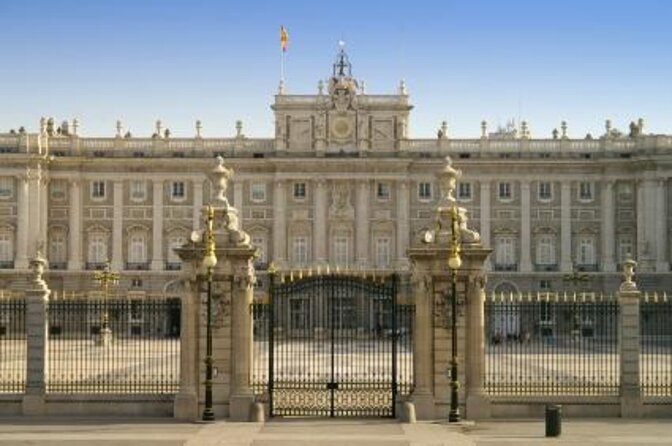
- Royal Palace of Madrid and Sabatini Gardens: ceremony, then calm
- Templo de Debod: the free Egyptian hit near the Spanish Steps
- Price and timing: is $28.66 worth it for you?
- Who should book this Madrid Welcome Tour on an eco tuk-tuk
- Should you book this Eco Tuk Tuk Welcome Tour?
- FAQ
- How long is the Madrid Welcome Tour with Local Guide in an Eco Tuk Tuk?
- Is this tour private or shared?
- What language is the tour offered in?
- What should I bring or expect for weather?
- Where do I meet the guide?
- Are the photo stops customizable?
- Is Templo de Debod included, and is it free?
- Can I bring a pet?
- Is there an age or weight limit?
Key points at a glance
- Electric, private tuk-tuk comfort: up to 4 passengers per tuk-tuk, reserved for your group only
- Winter and rain protection: blankets and protective layers so you don’t bail early
- Built-in photo planning: pre-selected spots you can stop for without interrupting the flow
- Major sights in one loop: Royal Palace, Almudena Cathedral, Prado, Debod, and more
- Guide-led orientation: practical context that helps you decide what to revisit on foot
Why this electric eco tuk-tuk tour is such a smart Madrid starter
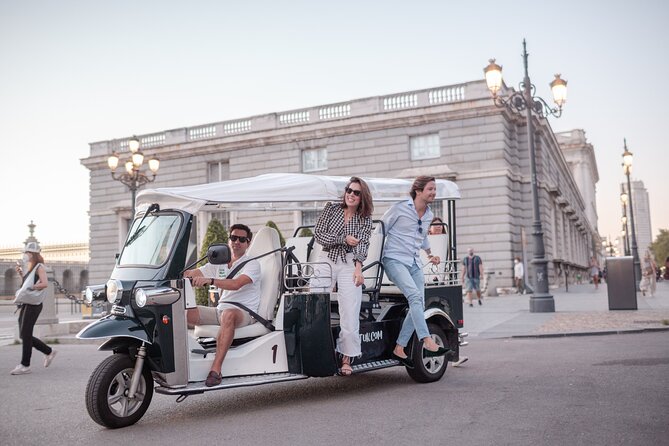
Madrid is big on grand plazas, long views, and famous buildings. The problem is that the classic “see everything” plan usually means lots of uphill walking, line management, and map confusion. This tour’s whole point is to solve that: you ride in a private, electric tuk-tuk and you still get a real sense of how the city pieces connect.
I like how it feels balanced. You’re not stuck in a moving lecture either. The stops are set up so you can get out for photos, get the story, and then roll on to the next spot. And since the tour starts without queues or waiting, you’re not burning your short vacation time on waiting around.
Another small but meaningful detail: blankets and protective layers. In winter or when wind cuts across the streets, those extras make a real difference. It’s the kind of “why didn’t I do this earlier?” comfort that keeps you from rushing through just to get warm.
You can also read our reviews of more guided tours in Madrid

Meeting at Puerta del Príncipe: the part you’ll want to do calmly
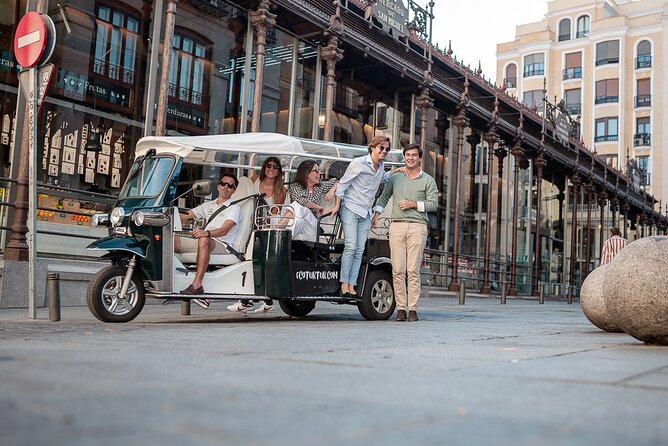
Your start point is at C. de Bailén, 4, Centro, 28013 Madrid, close to the Royal Palace area. The notes say the pickup is at the underground bus station of Plaza de Oriente, right next to the Royal Palace—near the Puerta del Príncipe area.
If you’re using Google Maps, search Calle Bailén 4 or Puerta del Príncipe. The meeting spot is by the stairs that lead to the station, and there should be Eco Tuk Tuk signage to point you to the exact place. One of the repeated strengths from past guests was clear communication and directions, and it’s worth following those directions rather than free-homing your way in.
If you have mobility concerns, the vehicles are described as suitable for older people, and drivers will help you get on. There’s also mention of using an elevator route from the meeting area if needed—just contact the operator in advance so you don’t end up fighting stairs.
The market stop: where you taste Madrid’s everyday elegance
The tour opens with a covered market dating from around 1916. Think local food, delis, and events in an atmosphere that feels more polished than a typical market visit. Even if you’re not planning to buy much, this first stop helps you switch gears from “sightseeing mode” into real Madrid rhythm.
Markets like this are great early because they set your expectations. Madrid’s food culture is social and practical—small bites, good ingredients, and strong opinions about what’s worth eating. Seeing how the space is laid out (and then moving on) makes the whole city feel less intimidating.
A potential drawback: markets can be busy, and time is limited on a tuk-tuk tour. So if you want a long tasting session, plan it for after your tour. Use this stop to get oriented and then decide what to come back for.
Basilica of San Francisco el Grande: big-church scale without the wandering
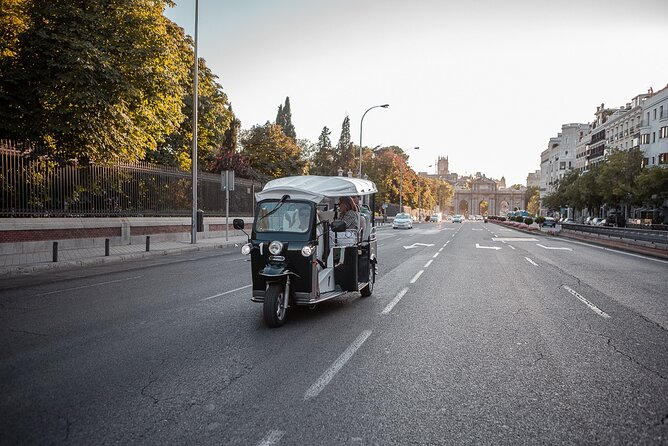
Next you’ll visit the Royal Basilica of San Francisco el Grande, formally the Basilica of Our Lady of the Angels, located in Madrid’s Palace district. This stop is about architectural weight and religious importance in the center of the city.
What I like about this kind of stop on a short tour is that you learn what the area is “made of.” Madrid’s main districts aren’t just backdrops; they’re organized around institutions—religious and civic—so a quick overview here helps you connect later scenes like the courts, squares, and cathedral zone.
If you’re hoping for a full interior visit, check what’s possible on the day. The tour is structured around ride-and-stop experiences and pre-selected photo stops, so it’s not built for slow museum-style pacing at every monument.
Atocha station: Madrid’s busy heartbeat in one glance

Then you hit Atocha railway station, described as a major railway complex near Emperor Charles V Square and the busiest passenger station in Spain, one of the busiest in Europe.
Why this matters on a welcome tour: stations explain how a city moves. Madrid’s travel links, commuting patterns, and everyday life all funnel through hubs like Atocha. You also get a sense of where day-to-day energy lives, separate from the ceremonial sights.
Atocha is also a useful contrast stop. After royal buildings and church landmarks, the station feels more grounded. It helps you understand Madrid as a living city, not just a photo list.
You can also read our reviews of more private tours in Madrid



The Spanish Courts and the lost steps: civic drama, classic design
One of the most detailed stops on the route is the Palace of the Spanish Courts. It was built on the site of the former convent of the Holy Spirit, which served as the seat of Congress between 1834 and 1841.
The exterior details are the highlight here: a neoclassical portico with six Corinthian columns, plus a triangular pediment decorated with reliefs by Pontian Ponzano. Even the lions flanking the entrance have a story: they’re said to be cast from the iron of cannons captured during the African war, and they’re linked to the sculptor mentioned in the tour notes.
Inside, the Session Hall is the famous space, and the library/conference hall is called the hall of the lost steps. Even if you don’t spend long inside, just knowing those names gives you something to hold onto if you later go back for a closer look.
What to consider: civic buildings can have restrictions on access. The tour is framed as a highlights loop, so think of this as an introduction to a key landmark and a prompt for future plans, not a guarantee of long interior time.
Prado Museum stop: art scale you can’t get from a quick glance
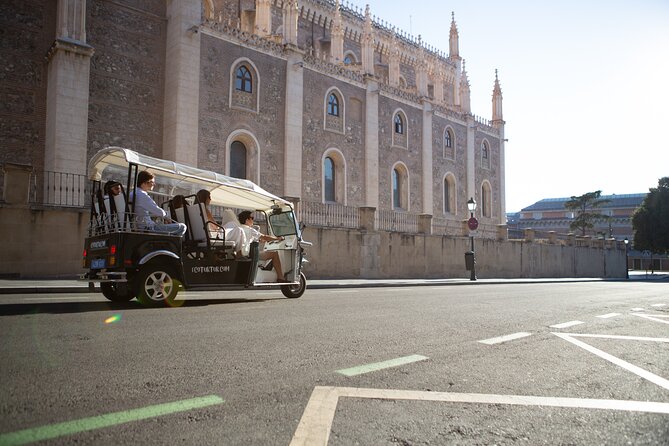
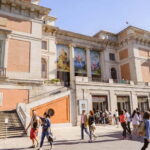
The route includes the Prado Museum area, described as a powerhouse for European painting from the 16th to the 19th centuries. The tour highlights the strongest names and gives you a sense of why art lovers obsess over this place: Velázquez, El Greco, Goya (the most extensive representation), plus Titian, Rubens, and Bosch, along with major collections by many other artists like Murillo, Ribera, Zurbarán, Fra Angelico, Rafael, Veronese, Tintoretto, Patinir, Antonio Moro, Van Dyck, and Poussin.
Here’s what I’d do with this stop: use it as a decision-making moment. If you’re trying to pick which museum to prioritize, Prado is a heavyweight. Seeing it from the outside with guide context helps you decide whether you want to commit to a full ticketed visit later.
Downside: if you want the full Prado experience, this stop is not that. The tour’s time and structure are built around overview and photo points, not deep gallery time.
Los Jerónimos: monastery grandeur and the Philip IV connection

Next comes the ancient monastery of Saint Jerome el Real, popularly called Los Jerónimos, one of Madrid’s important monasteries. The tour notes also point out that nearby there was the Royal Room, which was expanded into the Palace of the Good Retreat during Philip IV’s time.
This is a classic Madrid pairing: religious landmark plus royal-era transformation. It helps you see that the city’s big buildings weren’t isolated projects. They were reused, expanded, and re-purposed across centuries.
The possible downside is pacing. Jerónimos and the surrounding royal/monument area can merit slow walking. On a tuk-tuk loop, you’ll get the main takeaways and a photo angle, and then you’ll want to return if it grabs you.
Cibeles and Neptune: the square where football fans have a place to stand
Then it’s into the story of the famous fountains: Cibeles and Neptune. You’ll learn the idea that the gods occupy prominent positions in a Greek mythological hierarchy and that the rivalry shows up in the real world. The tour describes Atletico Madrid celebrating in Neptune’s square, while Real Madrid celebrates in Cibeles.
The notes also explain a key design-and-history detail: Cibeles and Neptune originally faced each other on the Paseo del Prado as part of Ventura Rodríguez’s original project. After restructuring in the late 19th century, they were relocated and ended up in the center of the squares of Cibeles and Canovas del Castillo.
At Cibeles, you’ll get the material and creator details too: the sculpture of Cybele is attributed to Francisco Gutierrez, while the lions are attributed to Roberto Michel. The goddess is tied to land, agriculture, and fertility and is also used as an icon for Real Madrid supporters.
Practical tip: if you catch this area during a match day mood, you’ll feel the energy. But either way, it’s a great stop to reset after museums and churches.
Puerta de Alcalá and the formal edge of the city
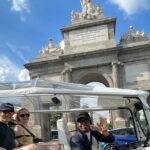
Puerta de Alcalá is one of Madrid’s old royal gates, located in the center of the Independence Square roundabout. The tour places it within a surrounding cluster of major buildings, including Army Headquarters (Palacio de Buenavista), Palacio de Linares (House of America), Palacio de Comunicaciones (formerly the Post Office, now Madrid City Council), and Banco de España.
This stop is valuable because it shows Madrid’s “official face.” You’re not just seeing a gate; you’re seeing how the city planned for state power and civic operations around a visible monument.
You might find it especially helpful if your next day includes planning metro routes or deciding where you want to walk. Gate-and-square layouts often explain why certain streets feel the way they do.
Banco de España building: when design meets money
The route includes the Banco de España headquarters area. The tour describes the building as awarded at the National Exhibition of Fine Arts of 1884, built with the aim of giving the National Bank a headquarters matching the importance of its functions, including issuing coins and banknotes across Spain.
The words are a little playful in tone, but the concept is serious: this building represents the state’s economic center. On a welcome tour, it’s a useful reminder that Madrid’s famous landmarks are not just decorative. They’re tied to power, systems, and national identity.
Plaza de Santa Ana: a square that shows Madrid changing over time
Next you’ll ride to Plaza de Santa Ana, described as an open space in Madrid’s Cortes district dating from 1810. The tour notes that the square has undergone multiple urbanization processes, changing its appearance with shifting fortunes.
I like this stop because it’s less about one monument and more about urban texture. Squares like this are where daily life expresses itself—meeting points, evening walking zones, and the kind of space that makes a city feel human.
Almudena Cathedral: the consecration milestone and the museum rooms
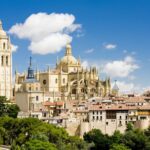
The tour includes Almudena Cathedral, described as Madrid’s most important religious building. It was consecrated on June 15, 1993, by Pope John Paul II and described as the first cathedral consecrated outside Rome.
The cathedral museum is also part of what you’ll learn about, with dozens of objects in multiple rooms covering the diocese’s history, from mosaics to episcopal shields and ornaments.
Why it works on a short ride: the cathedral stop connects your earlier religious landmarks to a modern era milestone. You leave with a sense of continuity, not just a pile of buildings.
Time note: if you want to spend real time inside museum rooms, your tour schedule might not be built for that. Consider it a guided overview that can send you back later for a longer visit.
Royal Palace of Madrid and Sabatini Gardens: ceremony, then calm
You’ll also see the Royal Palace of Madrid. The tour explains it’s the official residence of the King of Spain, though current kings don’t live there, and it’s used for state ceremonies and solemn acts.
Right across is the Sabatini Gardens, placed opposite the palace’s northern facade. They cover 2.66 hectares, which gives you a sense of the space scale behind those palace views.
I like this pairing. The Palace gives you the formality and scale. The gardens give you the visual pause, especially helpful if you’re doing this tour early in your trip and want to keep your energy for walking later.
Possible consideration: the tour can’t customize stops for photos, and you won’t have unlimited lingering time at every exterior. So if you’re obsessed with details, use this stop to choose the exact angle you want to revisit.
Templo de Debod: the free Egyptian hit near the Spanish Steps
Finally, you may stop at Templo de Debod, an ancient Egyptian building now located in Madrid, in the west area near the Spanish Steps. The tour notes place it next to the Paseo del Pintor Rosales on a high where the Mountain Barracks was located. Admission is described as free, and the stop is short.
This is a great closer because it feels different from the royal-civic flow. It’s also a nice reward for enduring the winter air or rain with blankets in hand—free entry plus a cool setting usually makes everyone happy.
Price and timing: is $28.66 worth it for you?
At about $28.66 per person, this tour lands in the value zone for what you get: a private, electric tuk-tuk ride plus guided context plus built-in photo stopping. The real “value math” depends on your group and your pace.
If you hate long walks or you want a clear first-day orientation, this is the kind of ticket that pays off quickly. You cover a lot of the city center in a short window and you come away with a shortlist of where you want to spend more time later.
If your ideal day is slow and museum-first, you may find the structure too fast. The tour is built as an overview loop, and some stops are external/photo focused by design. In that case, treat it as a pre-planning tool: do this early, then build the rest of your trip around what you care about most.
Duration also matters. The tour is listed as about 1 to 4 hours, so your stop mix should be shaped by time and the loop. If you’re choosing between shorter and longer, go longer if you want more stops and fewer “rush feelings.”
Who should book this Madrid Welcome Tour on an eco tuk-tuk
I’d recommend this tour if:
- you’re visiting for the first time and want a fast sense of where things are
- your group includes people who don’t want to walk nonstop (the vehicles are described as suitable, and drivers will help you get on)
- you want a guided overview that helps you plan the next days, especially with major landmarks like Prado, Almudena, and the Royal Palace area
- you’re traveling in cooler months and appreciate blankets and protective layers
I wouldn’t make this your main plan if:
- you want a full deep dive into museums and interiors with lots of unhurried time
- you need a flexible, stop-anywhere itinerary. The photo stops and route are pre-set.
Should you book this Eco Tuk Tuk Welcome Tour?
Yes, if you want a smooth first look at Madrid without turning your vacation into a logistics test. The electric tuk-tuk comfort, the comfort gear for weather, and the fixed photo plan make it easy to relax while still hitting the big names.
Book it early in your trip, so you can use the orientation to guide your walking days. And if you’re the type who likes details, treat each stop as a teaser that helps you decide what to revisit with tickets and time.
FAQ
How long is the Madrid Welcome Tour with Local Guide in an Eco Tuk Tuk?
It runs for about 1 to 4 hours, depending on the selected experience length and the route flow.
Is this tour private or shared?
It’s a private tour/activity, and only your group participates. Tuk-tuks are reserved privately, with a legal maximum of 4 passengers per tuk-tuk.
What language is the tour offered in?
It’s offered in English.
What should I bring or expect for weather?
The tour provides blankets and protective layers against rain and wind. The tour takes place in rain or heat, and can only be cancelled under extreme conditions.
Where do I meet the guide?
The meeting point is C. de Bailén, 4, Centro, 28013 Madrid, near the Royal Palace area (Plaza de Oriente underground bus station by the Prince’s Gate).
Are the photo stops customizable?
No. Stops for photographs are prearranged, and the itinerary can’t be modified.
Is Templo de Debod included, and is it free?
Templo de Debod is included as a stop, and admission is listed as free.
Can I bring a pet?
No. Pets are not allowed for security reasons.
Is there an age or weight limit?
Yes. Minimum age is two years (babies are not allowed) and there is a minimum weight requirement of 9 kg.