REVIEW · MADRID
Madrid Historical Tour with Local Guide in Eco Tuk Tuk Private
Book on Viator →Operated by Eco Tuk Tuk - Spain · Bookable on Viator
Madrid in an electric tuk-tuk is a fun switch. You get a private ride with a local guide, and the stops are set up to help you get your bearings fast without wasting time in crowds. I especially like the novelty of touring by electric tuk-tuk and the way it pairs sightseeing with smart photo stops.
One thing to plan for: the route and photo stops can’t be changed on the day, so you’ll want to match your expectations to a pre-set highlights loop.
In This Review
- Key things to know before you go
- Electric Tuk-Tuk Comfort: how this tour actually feels in Madrid
- Private tour pacing: why it’s better than fighting crowds
- Price and value: what $28.66 gets you here
- Stop-by-stop Madrid: what you’ll see and why it matters
- Covered market (circa 1916): food, delicatessen, and atmosphere
- Royal Basilica of San Francisco el Grande: a landmark in the Palacio neighborhood
- Atocha station: the busiest hub with a strong sense of movement
- Palace of the Spanish Courts: lions, iron, and the “lost steps”
- Madrid’s sports plazas: gods for Atlético and Real fans
- Prado Museum zone: European masters and the painting world
- San Jerónimo el Real (Los Jerónimos): Gothic with Renaissance influence
- Monumental gate ordered by Carlos III (inaugurated 1778)
- The Plaza area around big institutions: Buenavista, Linares, Communications, and the Bank of Spain
- Plaza de Santa Ana: an open square in the Cortes neighborhood
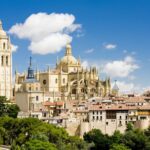
- Almudena Cathedral and its museum: the story of Madrid’s diocese
- Royal Palace (Palacio de Oriente) and the gardens that frame it
- Templo de Debod: the Egyptian surprise near Plaza de España
- Guides, storytelling, and the kind of questions you’ll get answered
- Who this tour fits best (and who might want something else)
- Should you book this Madrid Eco Tuk-Tuk Historical Tour?
- FAQ
- Is this tour private?
- How long is the Madrid historical tour?
- What language is the tour offered in?
- What’s included in the price?
- Do we skip queues or waiting?
- Is the Temple of Debod admission free?
- Are there age or weight limits?
Key things to know before you go
- Electric, 100% sustainable tuk-tuk ride: smooth and comfortable for short, efficient touring.
- Private vehicle for just your party: pacing feels calmer than big bus groups.
- Blankets and protective layers provided: helpful for cool mornings and windy days.
- No-queue / no-wait start: the tour is designed to keep your time moving.
- Pre-set photo stops only: you’ll stop where they plan, not wherever you spot a perfect angle.
- Guide-led storytelling: you get context as you pass major landmarks and neighborhoods.
Electric Tuk-Tuk Comfort: how this tour actually feels in Madrid
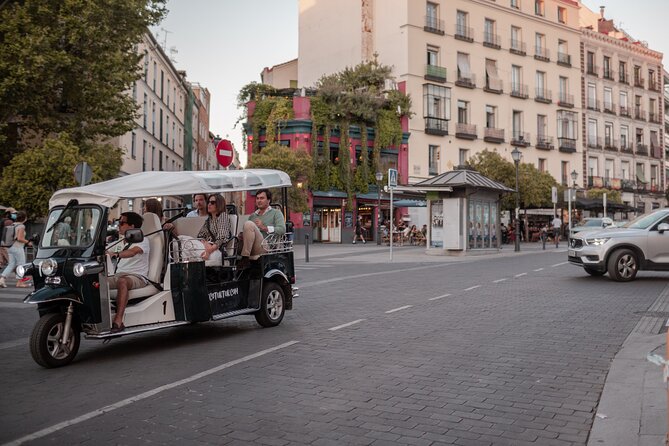
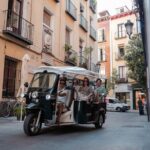
Madrid is a great walking city, but it can also be a sore-leg city. This tour uses a compact electric tuk-tuk so you can see a lot without doing the long haul on foot. The ride is also designed to be accessible for older people, with drivers who can help you get on and off safely.
You’re also not stuck “chauffeur-style” in silence. The guide builds the trip around what you’re looking at—churches, plazas, famous buildings—then ties it to the way Madrid thinks and talks. That’s what turns a drive-by into a real orientation.
And yes, it’s winter-friendly. Blankets and protective layers are part of the experience, so even when the weather bites, you’re not stuck freezing just because you want a view from the right angle. That’s a small detail that makes a big difference in comfort.
You can also read our reviews of more guided tours in Madrid

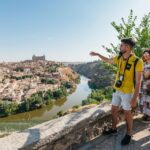
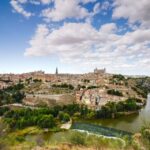
Private tour pacing: why it’s better than fighting crowds
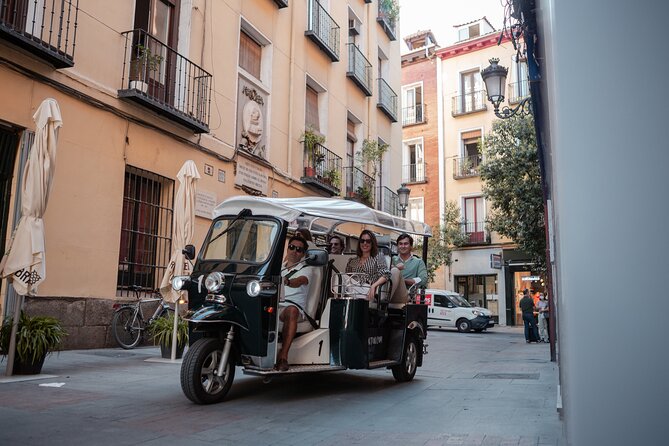
This is private for your group. That matters in Madrid, where a packed landmark day can turn into stop-and-go frustration. With your own tuk-tuk reserved for your party, you can move as a unit, ask questions when they fit, and take photos without the constant pressure of a mass schedule.
Another practical benefit: you start in a way that avoids queues or long waiting. You’re not trying to win a ticket line before you even get moving. Instead, you’re on the route, and the guide is doing the work of connecting sights to stories.
If you’re traveling with kids, a private setup usually helps. One-family feedback praised it as a way for children to enjoy the history without getting bored, and it stayed fun even for ages that can be picky. If you’re a solo traveler, the private format also keeps the experience personal instead of turning into a group commentary rhythm.
Price and value: what $28.66 gets you here
At $28.66 per person, the big value isn’t just the vehicle—it’s the way you’re guided through Madrid’s “greatest hits” in a short time. For first-timers, that’s hard to replicate on your own without spending time planning routes, figuring out what’s near what, and guessing which landmarks matter.
Also, the pricing is tied to how many tuk-tuks your group needs (up to the legal maximum of 4 passengers per tuk-tuk). So your per-person cost can make more sense as the group grows. For a family or a small group of friends, it’s often a cost-effective alternative to doing multiple taxis plus a paid guide.
One reality check: this isn’t an open-ended “wander anywhere” tour. The route is set, and stops can’t be swapped. If you want total freedom to chase your own interests, you may feel slightly boxed in. But if you want efficiency plus guided context, it’s a strong deal.
Stop-by-stop Madrid: what you’ll see and why it matters
The route is designed like a fast tour of Madrid’s identity: markets and everyday life, major religious landmarks, civic power, the art world, and classic plazas with big names behind them. You’ll also get built-in moments to refuel or use the bathroom during the ride breaks, which is a real quality-of-life win in a day of sights.
Covered market (circa 1916): food, delicatessen, and atmosphere
The tour starts with a covered market dating to around 1916. This is one of those Madrid stops that helps you understand the city beyond monuments. You’ll see an elegant food-focused setting—delis, local bites, and the kind of atmosphere you can’t get from a quick street glance.
What I like about this kind of start: it flips you out of tourist mode. Instead of only thinking about palaces and churches, you’re learning how Madrid gathers, eats, and shows off local flavors. Even if you don’t buy anything, it’s a fast cultural reset.
You can also read our reviews of more private tours in Madrid



Royal Basilica of San Francisco el Grande: a landmark in the Palacio neighborhood
Next comes the Royal Basilica of San Francisco el Grande (officially the Basilica of Our Lady of the Angels), located in the Palacio neighborhood within Madrid’s historic center. Churches here aren’t just religious stops; they’re architecture lessons and neighborhood anchors.
This is a good stop if you like big-scale landmarks. It’s also useful for first-timers because it’s the kind of place you might miss unless a guide points out why it matters in the city’s geography and development.
Atocha station: the busiest hub with a strong sense of movement
Then you roll to Atocha station, a major railway complex near Plaza del Emperador Carlos V. It’s the busiest station in Spain and one of the main hubs in Europe. Even if you’re not catching a train, it helps to see how Madrid connects to the rest of the country.
Why this works on a tour: it gives you a practical mental map. When you understand where Atocha sits, planning day trips (or simply getting around) becomes less stressful.
Palace of the Spanish Courts: lions, iron, and the “lost steps”
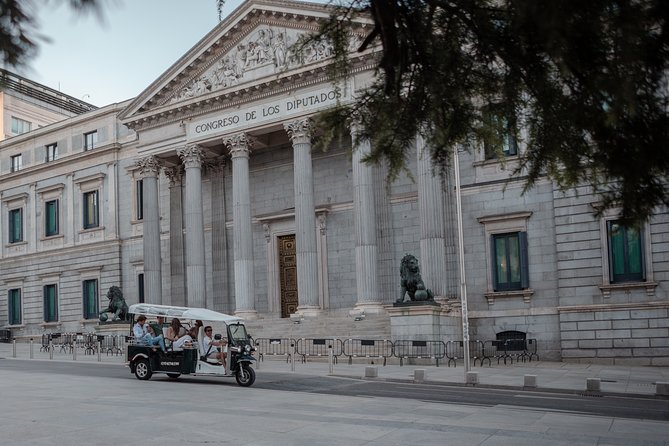
The Palace of the Spanish Courts is a big civic stop built on the site of a former convent used as the seat of Congress between 1834 and 1841. The facade details you’ll notice—columns, reliefs, and the famous lions at the entrance—add personality to what can otherwise feel like another government building.
One detail worth paying attention to: the lions flanking the entrance are linked to iron from cannons captured during the war in Africa, cast by the same sculptor mentioned with the facade. That’s the kind of story that makes you look up instead of looking through.
Inside highlights include the Session room and the library or conference room sometimes called the lost steps room. If you’re the type who likes to understand what you’re standing in front of, this stop gives you plenty to talk about later.
Madrid’s sports plazas: gods for Atlético and Real fans
The tour then taps into Madrid’s passion by stopping at the plazas where the city’s gods appear. In Plaza del Dios del Mar, Atlético de Madrid fans celebrate victories; in Cibeles, Real Madrid celebrates. The message is simple: this city ties emotion to place.
If you want a Madrid experience that’s not purely architectural, this is it. You’ll see how everyday pride gets built into the skyline and public squares.
Prado Museum zone: European masters and the painting world
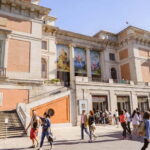
A key art moment is the Prado Museum area. The guide frames it as a top-tier museum for European painting, with works from the 16th to 19th centuries. Art historian and Hispanicist Jonathan Brown has said it’s one of the world’s most important museums for European painting, and that’s the angle the tour brings you in on.
This is a great stop even if you don’t plan to spend hours inside. The aim is context and orientation: you’ll learn why the Prado matters, so if you later go for a full museum visit, you’ll walk in with a map in your head.
San Jerónimo el Real (Los Jerónimos): Gothic with Renaissance influence
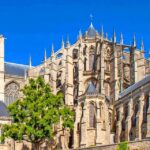
Right next to the Prado area, you’ll also visit the Parish Church of San Jerónimo el Real, popularly known as Los Jerónimos. It’s late Gothic with Renaissance influences from the early 16th century.
Important note: the original building has been remodeled and restored many times across the centuries. That means the church you see now carries layers of history rather than a single moment frozen in time—exactly the kind of reality you want from a guided “what to notice” stop.
Monumental gate ordered by Carlos III (inaugurated 1778)
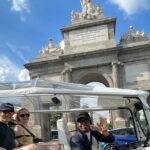
Then comes a monumental gate built by order of Carlos III to replace an earlier 16th-century gate, inaugurated in 1778. This type of stop is perfect for photo time because it gives you a strong backdrop and a sense of scale.
The drawback here is also basic: if you’re hoping for long museum-like time inside, this is more about seeing and learning. It’s a “look, understand, and move” moment.
The Plaza area around big institutions: Buenavista, Linares, Communications, and the Bank of Spain
You’ll also see the surrounding zone with major institutional buildings: Buenavista Palace (Army Headquarters), Linares Palace (America House), the Communications Palace (formerly the Post Office and now Madrid City Council), and the Bank of Spain. Seeing them together helps you understand the city’s power geography—how administration and culture sit next to each other.
One stop in this area includes a building described as decorative and tied to the National Bank headquarters purpose—again, a clue that even “finance” architecture in Madrid tells a story, not just a function.
Plaza de Santa Ana: an open square in the Cortes neighborhood
Then you hit Plaza de Santa Ana, an open space in the Cortes neighborhood dating from 1810. It’s gone through multiple urbanization phases, which explains why it feels like a living space rather than a preserved relic.
This is also a good mental break in the day. After heavy architecture and big monuments, a plaza stop lets you reset and take in the rhythm of the city.
Almudena Cathedral and its museum: the story of Madrid’s diocese
The Almudena Cathedral is Madrid’s most important religious building, consecrated on June 15, 1993 by Pope John Paul II. There’s also an Almudena Cathedral Museum with dozens of objects telling the story of the diocese of Madrid.
Inside, the museum is organized into twelve rooms with items ranging from mosaics to episcopal shields and ornament. If you like symbolism and religious art, this stop is your chance to connect the cathedral to a broader narrative about Madrid itself.
Royal Palace (Palacio de Oriente) and the gardens that frame it
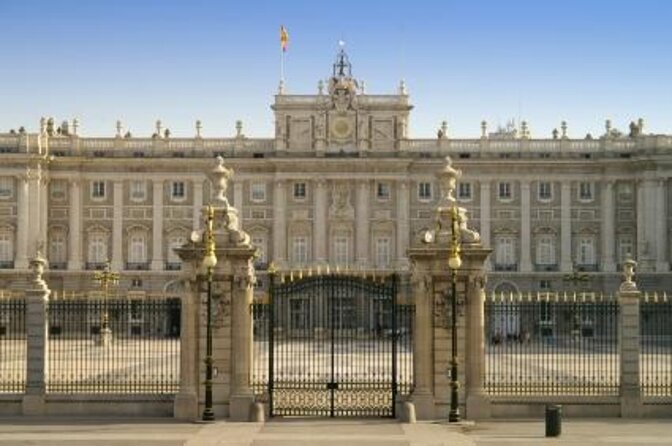
Next is the Royal Palace area—Palacio de Oriente, surrounded by the Campo del Moro and Sabatini gardens. Construction began in 1738 and lasted seventeen years, and Carlos III established his habitual residence there in 1764. The location also reflects a replacement story: the Palace of the Austrias burned on Christmas Eve of 1734.
These garden-framed views are a big reason this section works on a tuk-tuk. You don’t just see buildings; you get context for how Madrid’s royal area is staged for views and ceremony.
Campo del Moro can be visited during the day, and the Sabatini gardens cover about 2.66 hectares and sit in front of the north facade of the Royal Palace between Bailén street and the San Vicente slope.
Templo de Debod: the Egyptian surprise near Plaza de España
Finally, the tour reaches Templo de Debod, an ancient Egyptian temple now located in Madrid. It sits west of Plaza de España near Paseo del Pintor Rosales on a hill where the Cuartel de la Montaña once was.
Here’s the practical win: admission is free, and the stop is listed as around 10 minutes. That makes it a perfect capstone if you still want a “wow” moment without draining your whole schedule.
If you’re aiming for a photo finish, this is a strong candidate because it’s different from the rest of the architecture on the route.
Guides, storytelling, and the kind of questions you’ll get answered
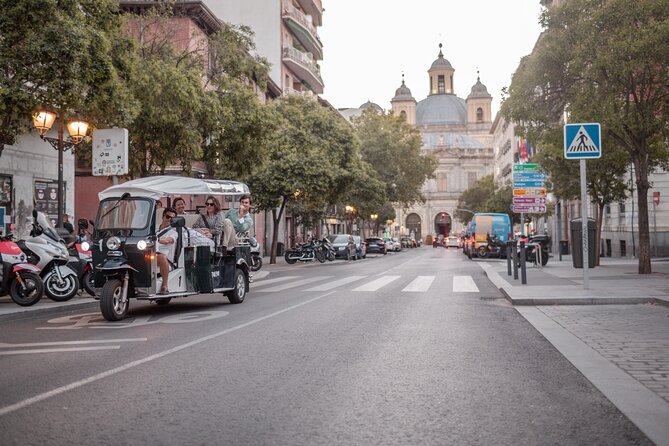
One pattern in the best experiences with this tour is how much energy the guide brings. In past group experiences, guides like Carlos, Laura, Christian, Fernando, Gloria, Clara, Alejandro, Juan, Sandra, and Nerea show up as memorable—often with a mix of humor, local pride, and clear answers to questions.
That matters because Madrid can feel complicated fast: neighborhoods, naming, architecture styles, and why certain plazas get associated with certain teams or events. A good guide helps you connect the dots while you’re still close enough to ask.
It’s also worth noting a small caveat: one shorter feedback mention was that the sound system wasn’t great on one ride. That’s not guaranteed, but if you’re very sensitive to audio clarity, keep that in mind.
Who this tour fits best (and who might want something else)
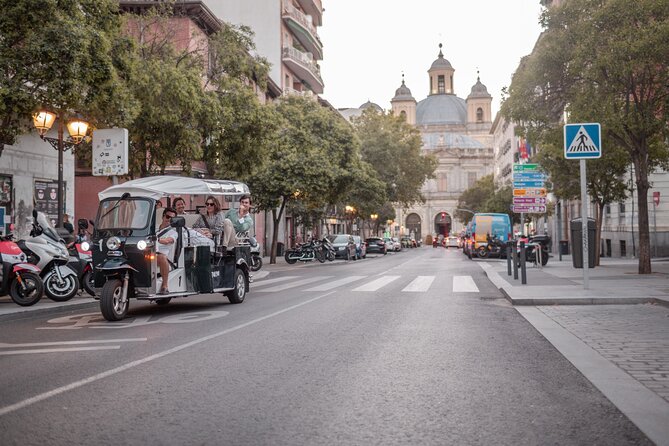
This tour is ideal for first-time visitors. You’ll see major landmarks across different parts of the city, and you’ll learn how to structure your next steps: which neighborhoods deserve more time, which museums are worth planning around, and where you might want to return on a calmer day.
It’s also a great option if you want less walking. The ride keeps you moving while still getting real stops and guided context.
If you’re the kind of traveler who hates fixed schedules, or you want to linger at one site for a long stretch, this might feel limiting. The route and photo stops are pre-arranged, and the tour can’t be modified.
Should you book this Madrid Eco Tuk-Tuk Historical Tour?
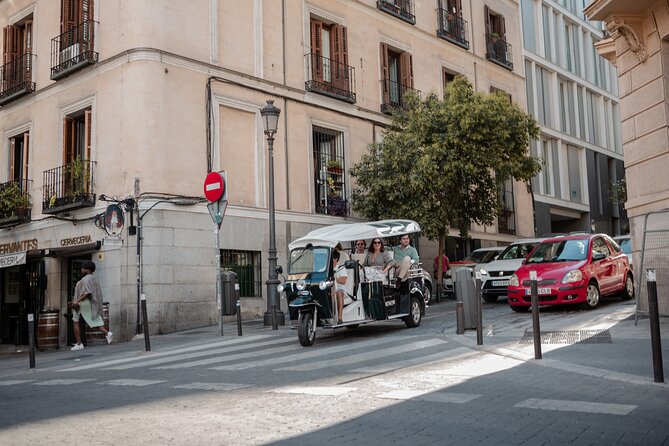
If you want a smooth, private way to learn Madrid’s main sights in a short window, I think this is a strong pick. The electric tuk-tuk adds fun without sacrificing comfort, and blankets help you stay out in the weather longer than a typical outdoor walking day.
Book it early in your trip too. Getting oriented first makes the rest of your days smarter. You’ll leave with a clearer map of where Madrid’s big landmarks cluster, and you’ll know what to revisit when you have more time.
If your top priority is total freedom to customize stops, then you’ll likely be happier with a self-guided route. But for most first-timers, families, and couples who want an efficient start, this one is worth the money.
FAQ
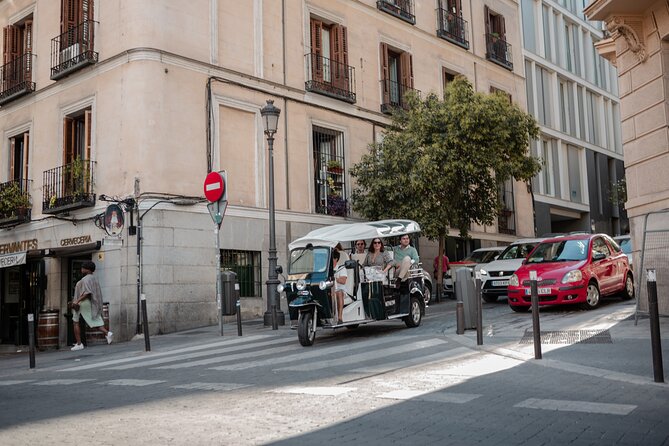
Is this tour private?
Yes. It’s a private tour/activity, reserved just for your group.
How long is the Madrid historical tour?
The duration is listed as 1 to 4 hours (approx.).
What language is the tour offered in?
The tour is offered in English.
What’s included in the price?
Included items are the expert companion guide/driver, a private vehicle for your group, an electric and sustainable tuk-tuk, pre-selected stops for photographing, and blankets/protective layers for rain or wind.
Do we skip queues or waiting?
The tour starts without queues or waiting.
Is the Temple of Debod admission free?
Yes. Admission for Templo de Debod is listed as free.
Are there age or weight limits?
Yes. The minimum age is 2 years (babies not allowed), and there is a minimum weight required of 9 kg.