REVIEW · MADRID
Madrid Oscuro: Torture, Ghosts, Crimes and Legends
Book on Viator →Operated by Tours Madrid | TOURSTILLA · Bookable on Viator
Madrid turns dark after dusk. Madrid Oscuro is a walking tour built around spooky legends and crime tales tied to real streets and landmarks. Two things I love are how the guide turns the city into a story map and how the stops stay practical with no entrance fees needed.
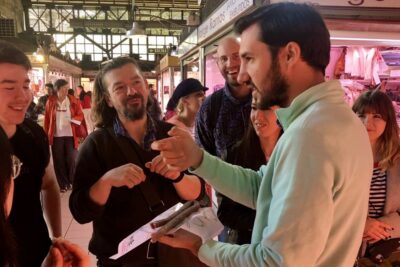
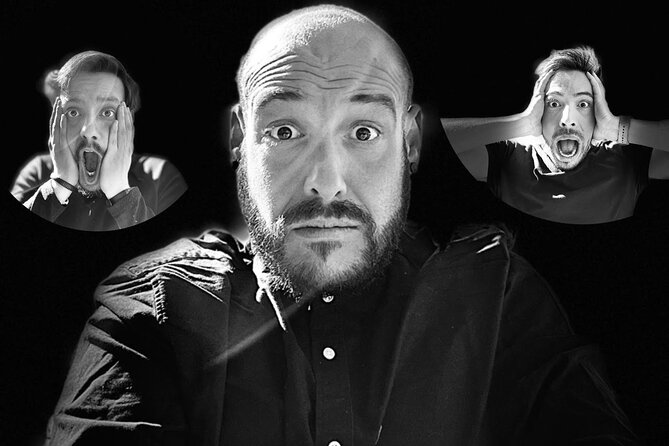
I also like the small-group feel (max 26) and the way guides keep people engaged, with some guides (like David Onion and Jacquelyn) using theater-style acting to bring characters to life. One possible drawback: if you prefer daytime, light sightseeing, this route leans hard into ghost, Inquisition-style dark history, and satanic-tinged legends.
In This Review
- Key highlights worth knowing
- A 2½-hour walk through Madrid’s darker corners
- Price and logistics: low cost for a guided story route
- Start at Plaza Mayor, end near Plaza de Oriente
- Stop-by-stop: what each location adds to the story
- Plaza Mayor: the meeting point and the mood setter
- Iglesia de Santa Cruz: the cursed church stop
- Pasadizo del Panecillo: the Alley of Hunger
- Plaza del Conde de Miranda: Raimundita’s ghost
- Accidente Aereo: fallen angel and satanic rites in Madrid
- Calle Mayor: fallen angel and satanic rituals
- Real Iglesia Parroquial de Santiago y San Juan Bautista: Captain Sanchez
- Plaza de Oriente: Vallecas file and first cemetery in Madrid
- Guides make or break a spooky walking tour
- What to bring: keep it comfortable, not just curious
- Who should book Madrid Oscuro?
- Should you book Madrid Oscuro?
- FAQ
- How long is the Madrid Oscuro tour?
- Is the tour offered in English?
- Where do I meet, and where does the tour end?
- Do I need to pay entrance fees at the stops?
- Is a tip included in the price?
- How big are the groups?
- Can I get a mobile ticket?
- What if plans change and I need to cancel?
- Is the tour accessible for most travelers, and can service animals join?
Key highlights worth knowing
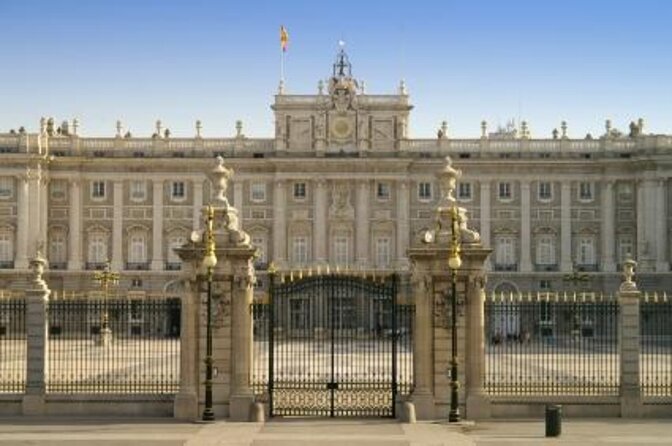
- 8 landmark stops with free admission at each stop and a clear path from Plaza Mayor to Plaza de Oriente
- Creepy but fact-focused storytelling, mixing ghost lore with real historical shadows like the Spanish Inquisition
- Guides who perform, with some (like David Onion, Jacquelyn, and Paul) using character reenactments and audience interaction
- English mobile-ticket tour with printed materials and a teaching-tool style approach during the walk
- Good value pricing for a 2 hours 25 minutes guided route, plus free cancellation up to 24 hours in advance
- No food included, so you’ll want to plan for water or a pre-tour snack
A 2½-hour walk through Madrid’s darker corners
This tour is built for people who like their city stories with a little bite. You’ll move through central Madrid, stop at a run of recognizable places, and get a sequence of tales that blend ghosts, true crime, and the kind of grim religious history that shows up in Madrid’s older chapters.
What makes it especially fun is that it isn’t just one spooky stop and then you drift off. It’s a string of locations with names that already sound like plot points: the Alley of Hunger, a cursed church, a fallen-angel theme, and a ghost story tied to Raimundita. The guide does the heavy lifting, stitching these sites together into one atmosphere.
If you’re the type who likes connecting dots—how a street name or a landmark nickname can hint at a legend—you’ll enjoy the way the tour keeps pulling you forward. It’s also a good choice if you’ve already done the standard big-sights route and want something that feels more like a mystery game.
You can also read our reviews of more tours and experiences in Madrid.

Price and logistics: low cost for a guided story route

The listed price is $3.62 per group (up to 15), and you’re signing up for a structured 2 hours 25 minutes walk. That’s usually where the value shows: you’re paying for a local guide who knows how to pace a story across multiple stops rather than just buying access to a single site.
A few details matter for planning:
- It’s offered in English, and you’ll get a mobile ticket.
- Each stop is marked as admission free, so you’re not getting hit with extra entry fees along the way.
- The group limit is up to 26. That’s small enough for interaction, but large enough that the energy stays lively.
- There’s printed material and teaching tools along the route, plus a link for personalized recommendations after the tour.
One more note: the tip isn’t included. The tour ends with the tip conversation, and at least one guide’s suggestion that popped up around $15 is a useful baseline if you’re unsure. (If you’re already a “pay what feels right” person, just plan to budget something for your guide at the end.)
Start at Plaza Mayor, end near Plaza de Oriente
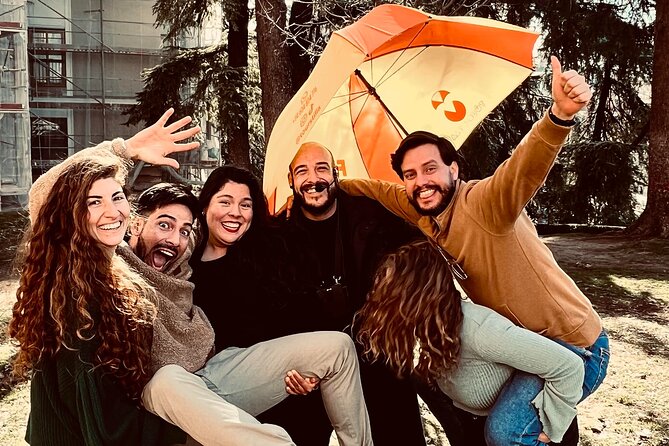
You’ll meet at Plaza Mayor in central Madrid. The tour flows onward through the historic core, and it finishes at Plaza de Oriente, near the Royal Palace area.
That matters because it means you’re not walking an aimless loop. You get a clear beginning-to-end route, and you can often line it up with dinner afterward without having to re-trace your steps.
It’s also close enough to public transportation that you can keep it flexible. If you’re arriving from another part of town, you won’t feel stuck with a long “get there” slog before the stories begin.
Stop-by-stop: what each location adds to the story
Below is the feel of the route, in the same order you’ll visit the key places. Think of this as your map for what kind of tale you’ll likely be hearing next.
Plaza Mayor: the meeting point and the mood setter
You begin at Plaza Mayor, a natural gathering point where the guide can brief you and set expectations. This is where you get oriented, and where the tour’s tone becomes clear: Madrid Oscuro is aiming for spooky atmosphere without turning into total chaos.
From here, you’re not just sightseeing—you’re transitioning into a string of legends. Expect the guide to frame how the next stops connect, because the tour works best when you understand there’s a theme running through the walk.





Iglesia de Santa Cruz: the cursed church stop
Next up is Iglesia de Santa Cruz, described as the cursed church. This is the kind of stop where the guide’s storytelling style really matters. Some guides go for chilling narration; others add reenactment bits that make the scene feel closer than a typical history lecture.
The takeaway for you: don’t treat this as a quick “look and move on.” Give it your attention. This stop is designed to push the ghost-and-religion side of the tour.
Potential drawback: if you’re expecting a calm, respectful church visit that focuses mainly on architecture and art, the tour’s dark framing may feel like a tonal shift.
Pasadizo del Panecillo: the Alley of Hunger
Then you’ll head to Pasadizo del Panecillo, the Alley of Hunger. A narrow alley setting is perfect for this kind of story route: it helps the guide create a more intimate, shadowy pace.
For you, this stop is where the tour starts to feel like a legend you could stumble into. It’s not about learning museum facts. It’s about experiencing how Madrid’s smaller passageways become stage sets for old tales.
Tip: slow down here and stay with the group. In tight walkways, people naturally drift, and you’ll miss the best parts if you fall behind while taking photos.
Plaza del Conde de Miranda: Raimundita’s ghost
At Plaza del Conde de Miranda, the theme shifts to Raimundita’s ghost and the Apostolic Nuncio. This stop connects the supernatural vibe with names and roles that suggest a deeper historical thread.
This is one reason the tour keeps working even if you’re skeptical. It’s not just random haunting. The guide links the story to power and influence—so the legend has a social “why,” not just a scary “what.”
Accidente Aereo: fallen angel and satanic rites in Madrid
Next is Accidente Aereo, labeled as a fallen angel stop and tied to Satanic Rites in Madrid. This is one of the more intense points of the route.
A good way to approach it: listen for how the guide organizes the story—how it’s presented as a legend with darker historical echoes—rather than judging it like a court case. If you can keep an open mind, this stop lands as one of the most memorable.
Consideration: the content leans darker. If you’re sensitive to heavy religious-crime themes, you might find it a lot. You can still enjoy the walk and keep your head in the “storytelling” mode.
Calle Mayor: fallen angel and satanic rituals
You’ll continue to Calle Mayor, again with fallen angel and satanic rituals themes. This repetition isn’t a mistake; it’s a way to build escalation. You’re seeing how the same kind of legend-energy can be threaded through more than one street, not trapped in a single location.
For practical value, this also helps you remember the route. Once you associate Calle Mayor with the darker themes, you’ll feel the tour’s pacing click.
Real Iglesia Parroquial de Santiago y San Juan Bautista: Captain Sanchez
At Real Iglesia Parroquial de Santiago y San Juan Bautista, the story becomes a Crime of Captain Sanchez. This is where the tour leans more into true-crime flavor rather than pure folklore.
This stop is important because it broadens the tour beyond “ghosts only.” You get another kind of narrative engine, one that sounds like it could have real consequences even if the supernatural layer still shows up in how Madrid legend-making works.
If you like mysteries with suspects and motive-like storytelling (instead of just apparitions), this is a highlight.
Plaza de Oriente: Vallecas file and first cemetery in Madrid
The tour ends at Plaza de Oriente, where the themes include the Vallecas file and the first cemetery in Madrid. Ending on a cemetery-related theme gives the tour a weighty final note.
For you, it also helps with logistics: Plaza de Oriente is a good final drop-off area, especially if you’re staying in the Royal Palace zone afterward. It’s the kind of ending that makes you feel like you’ve walked out of a story, not just finished an itinerary.
One more thing: the guide’s final stretch usually includes a push to connect the themes you’ve heard across the full walk. If you’re curious, hang around long enough to catch that wrap-up.
Guides make or break a spooky walking tour

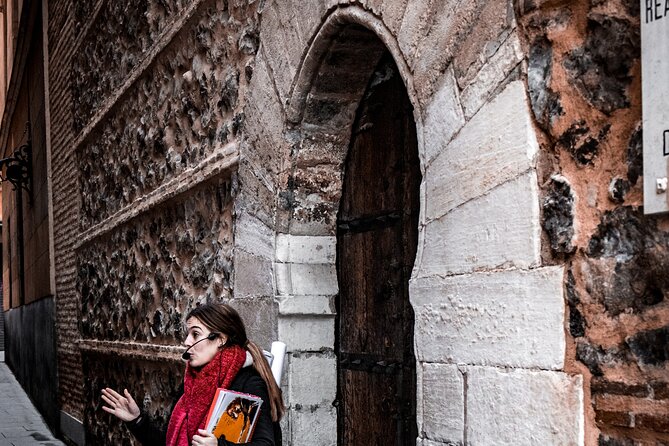
What turns Madrid Oscuro into something more than a list of legends is the guide performance. People consistently mention guides who keep energy high and make characters feel real.
Names that show up strongly include:
- David Onion, described as fun and theater-minded, bringing stories to life
- Jacquelyn, praised for keeping the tour interactive and engaging
- Paul, noted for reenactments and a strong sense of humor
- Other guides mentioned include Nicole, Iñigo, Lidia, Jose, Adrian, Rambo, and Ana
Even if the specific guide changes, the pattern matters: you’re paying for a guide who knows how to act out a scene, not just explain it. That’s why the 2 hours 25 minutes can feel fast.
If you’re traveling with teens, this matters even more. More than one mention points out that younger people stayed interested, which is rare for dark-history tours.
What to bring: keep it comfortable, not just curious

This is a nighttime-leaning style of experience, even if you’re not specifically going at night. You’ll be outside for a long stretch with a story rhythm that expects you to listen, not just walk and scroll.
Two planning tips tied to what’s provided:
- No food or drink is included, so plan to have water or a snack before you start.
- Wear layers. One of the recurring bits of advice was simple: dress for cold wind.
Also, bring your best “slow down and listen” mindset. If you treat it like a sprint between photos, you’ll miss the punchline moments where the guide’s character work makes the story stick.
Who should book Madrid Oscuro?
This tour fits best if you like any of these:
- Ghost stories mixed with real city locations
- True-crime style narration and Spanish Inquisition–era dark themes
- A walking tour where you’re expected to participate, not just follow quietly
- An English guide-led route with printed tools and post-tour recommendations
It may not fit as well if you want:
- A traditional museum-style explanation of landmarks
- A purely historical walk without spooky overlays
- A lighter “good vibes only” evening
Should you book Madrid Oscuro?

I think you should book it if you’re craving something off the usual Madrid track. The low entrance-fee setup, the structured 2 hours 25 minutes route, and the story-driven guides make it good value, especially for a first-time “dark Madrid” experience.
If you’re on the fence, here’s the quick decision rule I’d use: if you can handle creepy legends and enjoy a guide who performs, you’ll likely have a fun night. If you want purely factual sightseeing with a neutral tone, you may find the themes too intense.
Either way, this is the kind of tour that gives you a reason to look at central Madrid after you’ve already seen the big names. It turns familiar streets into a living mystery.
FAQ
How long is the Madrid Oscuro tour?
It lasts about 2 hours 25 minutes.
Is the tour offered in English?
Yes, it’s offered in English.
Where do I meet, and where does the tour end?
You meet at Plaza Mayor, Centro, Madrid, and the tour ends at Plaza de Oriente, Centro, 28013 Madrid, near the Royal Palace.
Do I need to pay entrance fees at the stops?
No. The stops are marked as admission free, and the tour notes that entrance fees are not required.
Is a tip included in the price?
No. The tip to the guide is not included and is given at the end of the tour.
How big are the groups?
The tour has a maximum of 26 travelers.
Can I get a mobile ticket?
Yes. The tour includes a mobile ticket.
What if plans change and I need to cancel?
Free cancellation is available. You can cancel up to 24 hours in advance for a full refund. If you cancel less than 24 hours before the start time, the amount paid is not refunded.
Is the tour accessible for most travelers, and can service animals join?
Service animals are allowed. It also says most travelers can participate, and it’s near public transportation.