REVIEW · SEVILLE
Private Tour Jewish Quarter, center and Plaza de España
Book on Viator →Operated by Víctor Fernández · Bookable on Viator
Seville hides its Jewish past in plain sight. This private, English-led walk from Plaza de Santa Cruz to Plaza de España threads together mosques, synagogues, churches, city walls, and opera-flavored street stories into a 2-hour route with Víctor Fernández. I love how the guide keeps the details clear and human, not lecture-y. One possible drawback: it’s a walking tour in a hilly old center, so wear shoes you trust.
Two things I especially like: you’ll get inside Iglesia de Santa Maria la Blanca, where the old synagogue site and Murillo-related art link religion and art in one place, and you’ll end with big, postcard-quality sights over Seville’s UNESCO cluster before walking into the calm of Parque de María Luisa. The pace is focused, so you may want extra time after the tour to linger on your favorite spots at your own speed.
In This Review
- Key Points to Know Before You Go
- From Plaza de Santa Cruz to Plaza de España: What This Tour Really Does
- Stop by Stop: How the Story Unfolds
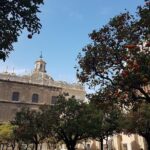
- Setting the scene around Seville’s layered squares
- City walls, Sephardic enclosure, and where the past sits
- Entering Iglesia de Santa Maria la Blanca (and why it matters)
- Courtyards, the narrowest street, and opera cues on the walls
- Pogroms, expulsion, and Susona’s legend
- A “City of Opera” stroll through the places artists used
- A top-of-the-map view over Cathedral, Giralda, and Alcázar
- The Walk Expands Beyond the Old Jewish Quarter
- Torre del Oro and the city’s “modern” reconfiguration
- Universidad de Sevilla in the Royal Tobacco Factory
- Parque de María Luisa and Plaza de España: The Grand Finish
- Price and Value: Is It Worth $189.87?
- Who This Tour Fits Best
- Should You Book This Tour?
- FAQ
- How long is the tour?
- Where do we meet and where does the tour end?
- Is this tour private?
- What language is the tour offered in?
- How is the ticket delivered?
- What is the price for this experience?
- Are any entrances included, such as Iglesia de Santa Maria la Blanca?
Key Points to Know Before You Go
- Private group up to 12 for one set price: ideal for families, friends, or a small crew who want control over the pace.
- Two big themes, one route: Sephardic Seville and opera-era storytelling, linked through streets, plaques, and viewpoints.
- A real interior stop: you enter the temple at Santa Maria la Blanca, not just look from outside.
- UNESCO views in the middle of the walk: Cathedral, Giralda, Real Alcázar, and the Archivo de Indias get their moment.
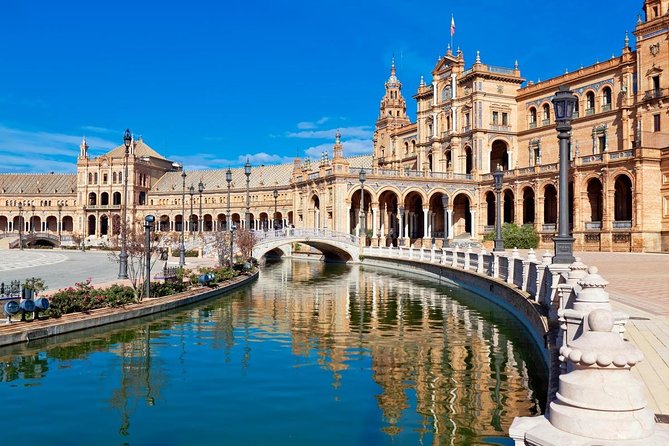
- A clean finale near Plaza de España: Parque de María Luisa and its historic pavilions set you up for the big open space ending.
- Víctor Fernández guides the story: from witty explanations to practical tips for what to see next.
From Plaza de Santa Cruz to Plaza de España: What This Tour Really Does
This tour is built around overlap—how Seville’s layers stack on top of each other. You start in the older core, where you’ll hear how different communities once shared the same urban space at different times. The result is more than “Jewish history in Seville.” It’s how daily life, art, power, and belief shaped the same few blocks again and again.
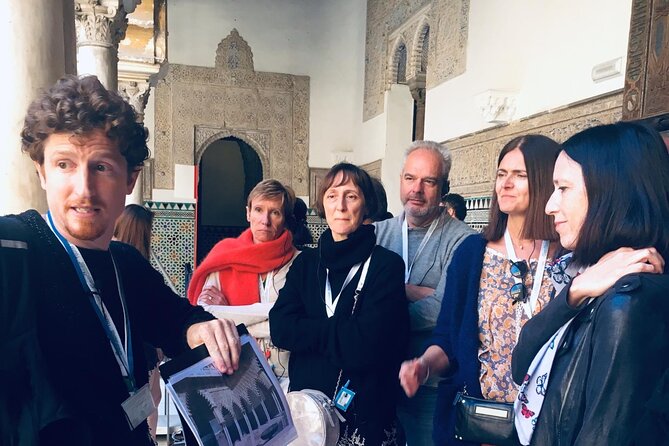
I like that it’s a private format. With a small group, you can ask follow-up questions without the guide racing ahead. And with only about 2 hours total, the walk feels like a fast way to orient yourself—especially if it’s your first day in Seville or you want one strong history-and-architecture thread without committing to a full day.
You can also read our reviews of more private tours in Seville



Stop by Stop: How the Story Unfolds
Setting the scene around Seville’s layered squares
You begin with context. The guide frames the relationship of Jewish people in Seville, and points out how the city’s footprint held multiple places of worship over time—described as a spot where a mosque, a synagogue, and a church existed in the same area. You also get a quick introduction to Murillo, one of Spain’s most important painters, with attention to his remains and why his name appears along this route.
Why this helps you: it prevents the usual problem—seeing buildings as isolated monuments. Instead, you start recognizing the city as a timeline written in stone and street names.
City walls, Sephardic enclosure, and where the past sits
Next comes the “fortress Seville” angle: walls and gates, and what the enclosure where the Sephardim lived consisted of. The walk also includes a stop tied to the necropolis, so you understand where the city’s boundaries weren’t just defensive lines—they shaped community life, including burial grounds.
Then the story shifts to Spain’s Golden Age with Don Juan, placed next to his statue. It’s a clever pivot. Even if Don Juan isn’t Jewish history, it shows how Seville’s cultural life kept evolving through literature and theater.
Entering Iglesia de Santa Maria la Blanca (and why it matters)
One of the best moments is Iglesia de Santa Maria la Blanca. You see the site of an old synagogue and then connect it to a wider map of Jewish quarters across Spain through plaques tied to the Caminos de Sefarad network.
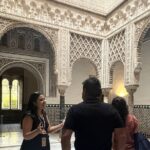
You also go inside the current temple. The timing here matters: being indoors lets you focus on objects and artistic choices without the chaos of outdoor crowds. You’ll learn about the works of Murillo exhibited there, which is a nice bridge between cultural history and art history.
Practical note: this stop includes a free admission ticket as part of the visit, so you’re not hunting for entry costs mid-walk.

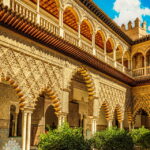
Courtyards, the narrowest street, and opera cues on the walls
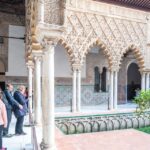
After the serious context, the walk softens into lanes and courtyards. You’ll see the neighborhood’s beautiful courtyards and pass through some of the narrow streets—one of them highlighted as the city’s narrowest. The guide also points out Rosina’s balcony for the playful opera connection with Figaro the Barber of Seville.
This is where Seville feels like a stage. The neighborhood is tied to UNESCO’s City of Opera theme, and the guide uses that angle to help you remember what you’re seeing.
A small bonus you’ll likely appreciate: you also learn about an old Seville aqueduct along the way. It’s a reminder that “history” in Seville isn’t only temples and tombstones. It’s plumbing, engineering, and the everyday systems that made neighborhoods livable.
Pogroms, expulsion, and Susona’s legend
Then you get the heavier chapter: the 14th and 15th centuries, and the vicissitudes of the Hebrew people—especially the pogrom and the definitive expulsion ordered by the Catholic Monarchs. The guide keeps these events grounded in place, so you’re not just memorizing dates.
You’ll also hear about Susona, including the legend tied to her name. Legends can sound vague, but in a neighborhood walk they do a useful job: they connect what happened to how people later told stories about it.
A “City of Opera” stroll through the places artists used
Another section of the walk turns into a cultural geography lesson. The neighborhood’s scenic, storybook look attracted European artists as a backdrop for novels and plays. You’ll move through the old Jewish quarter streets in a way that’s meant to help you feel those scenes rather than just picture them.
This part is valuable because it changes how you look at the same street twice. On day one, you see a pretty alley. On day two (or after this tour), you see the political and cultural reasons that alley mattered.
A top-of-the-map view over Cathedral, Giralda, and Alcázar
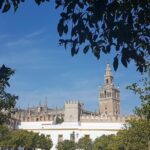
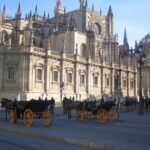
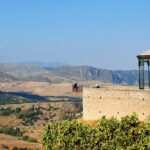
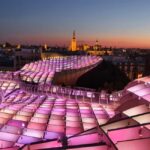
At a viewpoint point, you’ll get one of the best angles of Seville. You’ll be looking out with the Cathedral, Giralda, Real Alcázar, and the Archivo de Indias in sight. The Archivo de Indias is a UNESCO World Heritage Site, and the guide links the viewpoint to the city’s big story: Seville as a crossroads where empires, faiths, and wealth collided.
Even if you’ve seen these monuments from afar already, this moment helps you understand how they relate to each other in space.
The Walk Expands Beyond the Old Jewish Quarter
Torre del Oro and the city’s “modern” reconfiguration
Once you leave the historic center a bit, the tour shifts gears. You’ll understand the relevance of Torre del Oro and then hear about Seville’s new configuration about a century ago, during the Ibero-American Exposition.
You’ll see examples of that era’s architecture and urban plan, including buildings like the Alfonso XIII hotel and major avenues such as the Constitution. This matters because it explains why Seville can feel both medieval and modern at the same time—because it was.
If you like “why is this street wide?” questions, this is your answer.
Universidad de Sevilla in the Royal Tobacco Factory
Next comes a place with a literary twist: Universidad de Sevilla, located in the old Royal Tobacco Factory. The guide explains how Mérimée was inspired to create Carmen after seeing elements connected to this kind of manufacturing setup.
There’s also an angle about French politics and administration shaping the spread of these types of factories in Spain under the Bourbons. You’ll get trade and factory context, plus literary connections to French authors.
This stop is a good reminder that history is often economic. People didn’t just pray and write plays. They worked, organized labor, and built industries that later became settings for literature.
Parque de María Luisa and Plaza de España: The Grand Finish
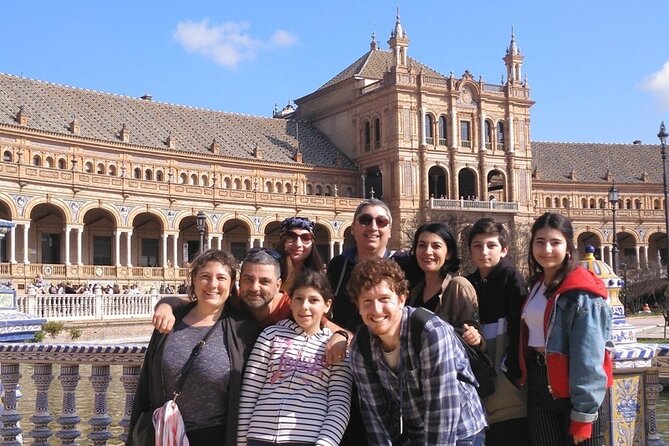
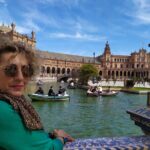
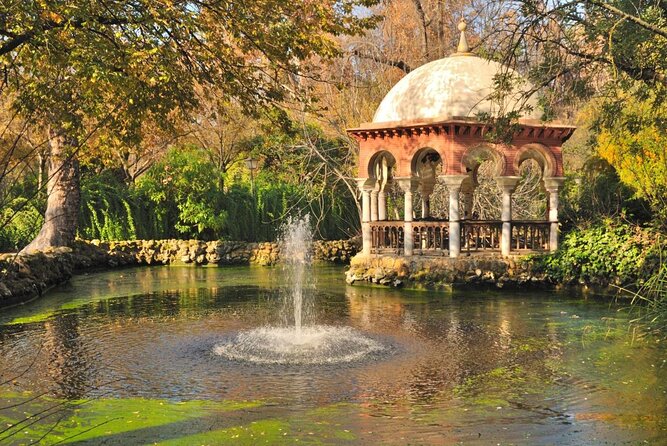
You end in the park realm. Parque de Maria Luisa is tied to a French garden architect named Forestier. Later, it became a site for the Ibero-American Exhibition, and some old pavilions remain—like the Spain pavilion that gives its name to today’s Plaza de España.
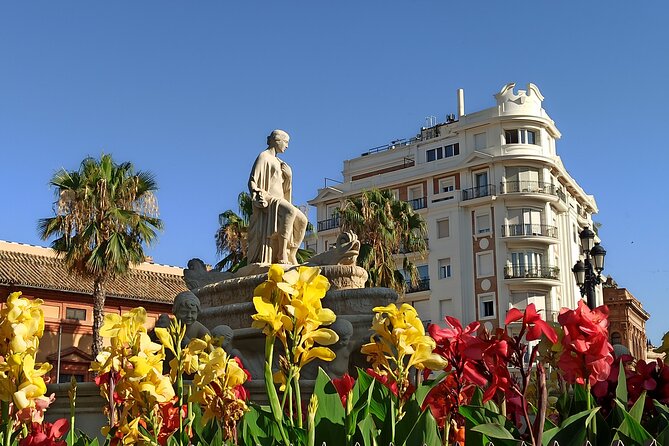
The end point is Plaza de España itself, in the gardens of María Luisa. This finish works well because it slows you down. After dense street-level history, you get breathing room, wide sightlines, and a chance to absorb what Seville looks like when it opens up.
Price and Value: Is It Worth $189.87?
The price is $189.87 per group (up to 12) for about 2 hours. That setup can be surprisingly good value if you travel with a small crew.
Here’s the math in plain terms:
- If you fill 12 spots, it’s roughly $15.82 per person.
- For 6 people, it’s about $31.65 per person.
- For 4 people, it’s about $47.47 per person.
Is it worth it? If you care about Jewish history in Seville plus key landmarks—without wasting time figuring out what to see on your own—then a private guide can pay off fast. You also get a mobile ticket and English guidance, and the itinerary includes free admission tickets at the listed interior/exterior stops (notably Santa Maria la Blanca, plus free admission at Universidad de Sevilla and Parque de María Luisa).
Also, it’s often booked about 122 days in advance. That’s a hint that the route is popular, so if you have fixed dates, book sooner rather than later.
Who This Tour Fits Best
This is a strong choice if:
- you want a private history walk without losing time to a large-group pace
- you like connecting street-level details to bigger cultural themes (Sephardic life, expulsion, opera ties)
- you want a guided path that ends at Seville’s most famous plaza
It may be less ideal if:
- you’re the type who prefers slow museum time over street stories
- you dislike walking in older neighborhoods with narrow lanes
Should You Book This Tour?
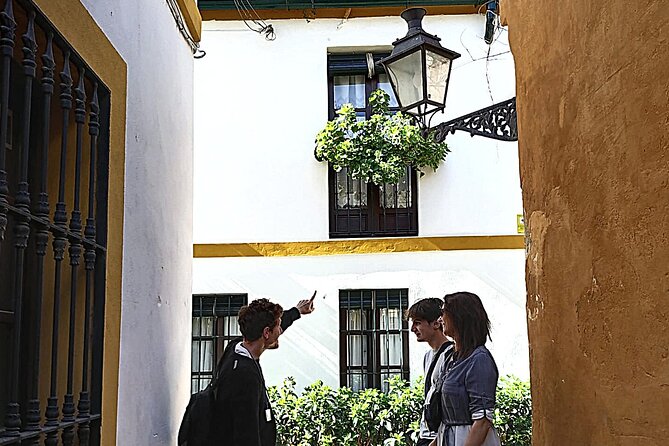
Yes, if you want a tight, high-impact route that combines Jewish Quarter storytelling with the Seville you’ll recognize immediately—then lands you at Plaza de España with great views along the way. The biggest reason to book is the structure: you get an interior stop at Santa Maria la Blanca, plus viewpoints that tie the old city to UNESCO-listed monuments.
If you’re on a tight schedule, this gives you an organized thread you can build on later. And if you’re traveling with 4 to 6 people, the group pricing makes the private format feel especially sensible.
FAQ
How long is the tour?
It runs for about 2 hours.
Where do we meet and where does the tour end?
You meet at Plaza de Santa Cruz and finish at Plaza de España, in the gardens of María Luisa.
Is this tour private?
Yes. It’s a private tour/activity, and only your group participates.
What language is the tour offered in?
The tour is offered in English.
How is the ticket delivered?
You get a mobile ticket.
What is the price for this experience?
It costs $189.87 per group, for up to 12 people.
Are any entrances included, such as Iglesia de Santa Maria la Blanca?
The listed stops include free admission tickets where indicated, including the Iglesia de Santa Maria la Blanca stop, and free admission at Universidad de Sevilla and Parque de Maria Luisa.