REVIEW · SEVILLE
Sevilla Daily Bike Tour
Book on Viator →Operated by All Of Seville · Bookable on Viator
Seville’s best shortcuts are made on two wheels. This bike tour strings together major landmarks with quick stops so you cover more than walking, fast. I like that the route is not strenous/flat enough for most people, and that the small group size keeps the pace comfortable.
My favorite part is the way the guide turns big sights into understandable stories. If your guide is someone like Emilio, Fernando, Pierre, Matteo, Milena, or Melina, you’ll get plenty of city context, plus tailored recommendations for the rest of your trip. You also get solid orientation without feeling rushed.
One thing to think about: most stops have admission not included, so you’ll likely pay extra for the places that are ticketed. And since the tour runs outdoors, very poor weather can affect the date.
In This Review
- Key things to know before you ride
- Why this 3-hour Seville bike loop works for first-timers
- Getting started at C. Arjona: bikes, mobile ticket, and a comfortable pace
- Triana energy: Iglesia de Santa Ana and Palau de San Telmo
- Tobacco, power, and paperwork: Real Fábrica de Tabacos and Archivo General de Indias
- Seville’s biggest icon: Catedral de Sevilla, UNESCO status, and Torre del Giralda
- Alcázar to gardens: Real Alcázar, Jardines de Murillo, and what to notice
- Torre del Oro and the Maestranza bullring: riverside history and a cultural symbol
- Maria Luisa Park and Plaza de España: slow down in the green and the 1929 showpiece
- Price and value: what $36.20 buys in real sightseeing time
- Timing tips for heat, rain, and tricky city traffic
- Who this tour is best for (and who should skip it)
- Should you book the Sevilla Daily Bike Tour?
- FAQ
- How long is the Sevilla Daily Bike Tour?
- How much does the tour cost?
- Is the tour offered in English?
- How many people are in the group?
- Where is the meeting point and where does the tour end?
- Do I get a mobile ticket?
- Is admission included for the sights?
- Is the tour suitable for most people?
- When should I book?
- What’s the cancellation policy if weather is bad?
Key things to know before you ride
- A small group (max 15): easier conversation and a pace that can match your fitness.
- Route feels easy: the ride is described as not strenous and very flat.
- Fast, focused sightseeing: 10–15 minute stops let you tick off major sites efficiently.
- One admission is included: Archivo General de Indias is ticketed in the tour price.
- Several stops are free: Murillo Gardens, Maria Luisa Park, and Plaza de España don’t require admission.
- Guides add meaning: multiple guides (like Emilio and Fernando) are praised for stories, humor, and Seville tips.
Why this 3-hour Seville bike loop works for first-timers
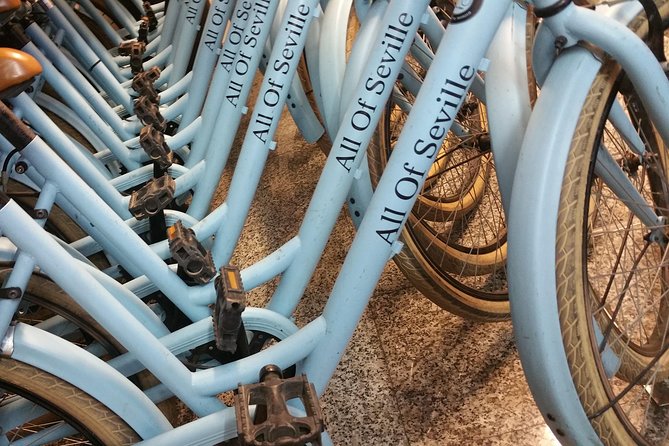
Seville is big, spread out, and full of slow-moving streets. That’s exactly why a bike loop feels like a cheat code. In about 2 hours 40 minutes to 3 hours, you can move between top highlights while still getting moments to stop, look, and absorb what you’re seeing.
What makes this tour especially practical is the structure. The stops are short—mostly 10 to 15 minutes—but they’re placed where the sight matters. This means you’re not just riding past the headline buildings. You’re getting a guided framework so the Cathedral, Alcázar, and the parks make sense as you go.
I also like the “small-group” approach. With a cap of 15 travelers, the tour doesn’t feel like a school bus. It’s easier to ask questions, get your bearings, and keep the energy from turning into a sprint.
You can also read our reviews of more cycling tours in Seville

Getting started at C. Arjona: bikes, mobile ticket, and a comfortable pace
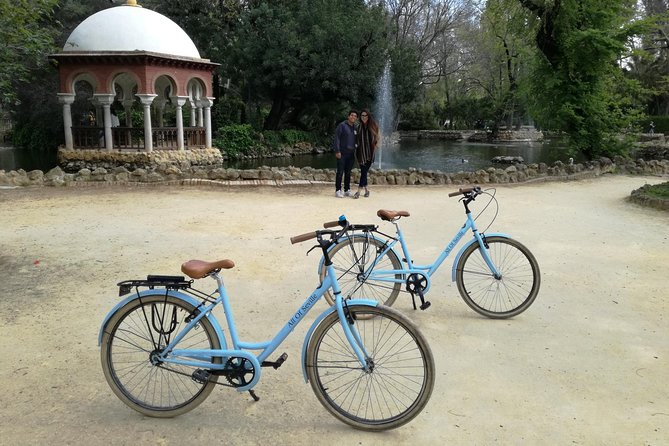
You meet at C. Arjona, 8, Casco Antiguo, 41001 Sevilla, and the tour ends back at the same meeting point. It’s also described as near public transportation, which helps if you’re mixing bike time with other plans in the city.
The tour includes a mobile ticket and is offered in English. Confirmation is sent at booking, and the experience runs with a minimum of 2 people.
The pace is a big deal here. The tour is described as suitable for most people, and riders note the route is flat and not difficult to navigate. One review even flags that the ride wasn’t strenous at all. That matters in Seville, because even if you’re not a serious cyclist, you still want to enjoy the ride—not feel like you’re working for your sightseeing.
A small bonus: because the group is limited, you’re more likely to meet a few friendly people and chat during the stops and roll-through moments.
Triana energy: Iglesia de Santa Ana and Palau de San Telmo
Your first stop is the Iglesia de Santa Ana, described as the oldest church in Seville and built in the 13th century. It’s in the heart of Triana, which is one of the best neighborhoods to understand first because it feels local, not museum-quiet. Even with only about 10 minutes, this is a good “beginner lesson” on how Seville’s religious and neighborhood life overlap.
Then you move to the Palau de San Telmo, often associated with the city’s “port neighborhood” story. The tour frames it through historical religious ties linked to San Pedro González Telmo, explaining how cult devotion shaped places in that wider area around 1600. The key value here isn’t that you’ll finish a long building tour. It’s that you’ll connect the site to a bigger Seville timeline.
If you like neighborhood texture more than nonstop monuments, this opening stretch is a smart way to set your mental map early.
Practical note: these early stops are 10 minutes each, and admission isn’t included for them.
Tobacco, power, and paperwork: Real Fábrica de Tabacos and Archivo General de Indias

Next up is the Real Fábrica de Tabacos, the Royal Tobacco Factory of Seville. The tour explains it as the headquarters of Europe’s first tobacco factory, and it highlights the building as the most important industrial warehouse in Spain from the 18th century. That’s a useful pivot: Seville isn’t only palaces and cathedrals. It also ran major industry, and this building shows that scale.
Then comes one of the clearest “included-value” stops: the Archivo General de Indias. This is where the story gets sharper. You’ll understand why it matters for the history of the Americas and the economic and cultural relationships between Europe and the New World. Admission is included here, which is a rare win on a tour where most other sights ask you to buy tickets separately.
Time is about 15 minutes. That might sound short, but for a historical archives stop, it’s often the right length: you’re there to understand what the archive represents, not to become a professional researcher in a single afternoon.
Seville’s biggest icon: Catedral de Sevilla, UNESCO status, and Torre del Giralda

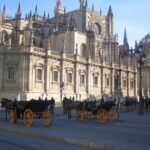
After tobacco and paperwork, you hit the “main stage”: Catedral de Sevilla. The tour frames it as the largest Gothic cathedral in the world, with UNESCO recognition since 1987. Even if you don’t go in for a long visit, you get a better sense of how enormous it is and why people build entire conversations around it.
From there, the tour points you to the Torre Giralda. The explanation is essential: the Giralda traces back to a main mosque site, with the minaret idea continuing after the cathedral’s arrival. The result is a tower that keeps the city’s layered identity visible—religious architecture, changed over time, but still speaking the same physical language.
Both of these stops are about 15 minutes, and admission is not included for the Cathedral or Giralda on this tour.
Why this pairing works: the tour doesn’t treat them like two separate attractions. It links them, so your mental picture of Seville’s religious evolution becomes clearer as you stand there.

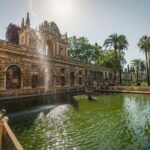


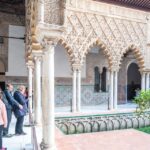

Alcázar to gardens: Real Alcázar, Jardines de Murillo, and what to notice
The Real Alcázar de Sevilla is next, and the tour describes it as the oldest palace in use in Europe, with origins dating back to the 11th century when Muslim authorities built a fortress in a strategic spot. It’s also labeled as UNESCO World Heritage.
Stop time is about 15 minutes, and admission is not included here. In other words, treat this part as a guided orientation to what you’ll notice if you return later for a full visit. The Alcázar is one of those places where seeing it once with a story helps you enjoy it more if you do go again.
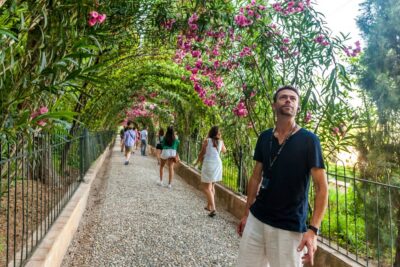
Then the tour turns outward into open air with Jardines de Murillo. This is where you shift from palace walls to viewpoints and monuments. The tour points out the Columbus Monument in Paseo de Catalina de Ribera inside the Murillo Gardens. It also mentions the Cid Campeador statue on Avenida del Cid.
This stop is 15 minutes, and admission is free. It’s a nice breather in a tour that otherwise packs big architecture back-to-back.
Torre del Oro and the Maestranza bullring: riverside history and a cultural symbol
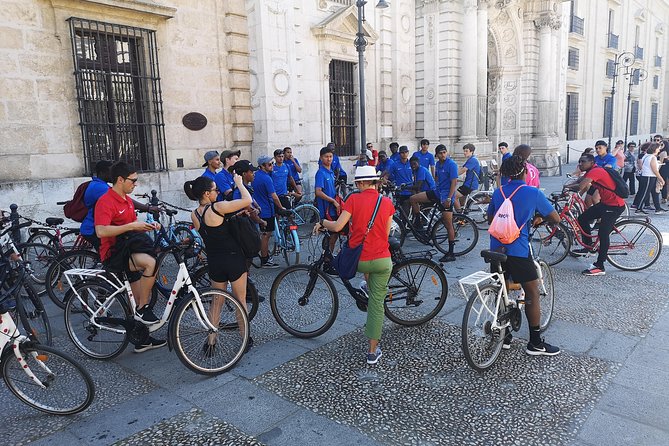
You’ll then ride to Torre del Oro, a tower built in the first third of the 13th century during the last moments of the Taifa kingdoms. The tour includes a vivid detail: its Arabic name is tied to the idea of golden tiles reflecting in the river like gold. Even if you only pause briefly, this kind of description makes the tower feel less like a random photo stop and more like part of a working city.
Next is the Plaza de Toros de la Real Maestranza de Caballería, described as the oldest bullring in Spain. The tour connects it directly with bullfights during the April Fair and emphasizes its status as a major tourist monument in Seville. Admission is not included on the tour.
This sequence works because it shows two versions of Seville’s identity:
- river trade and power symbolism (Torre del Oro)
- spectacle, ritual, and tradition (the bullring)
Each is about 15 minutes, so again: you’re getting the guided map, not a long museum session.
Maria Luisa Park and Plaza de España: slow down in the green and the 1929 showpiece
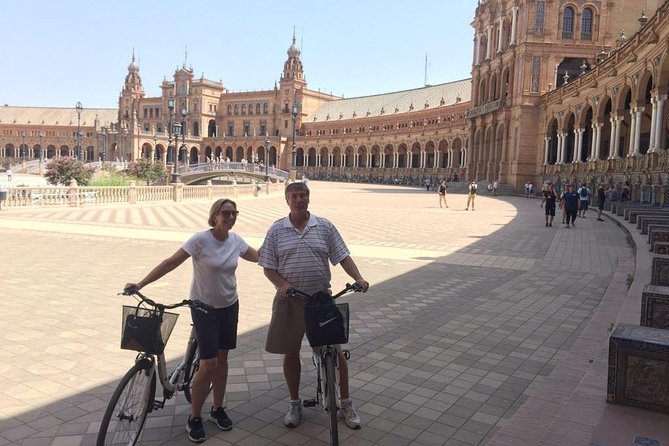
You finish with the most “walk-and-breathe” style stops. The tour heads to Parque de María Luisa, described as one of the city’s favorite places to see nature without leaving Seville. Stop time is about 15 minutes, and admission is free.
The tour points you to named areas inside the park—like Glorieta de Bécquer and the Isla de los Pájaros—and also mentions larger sections such as Monte Gurugú. It frames this as a plan of 40 hectares, mixing history with botanical spaces. Even if you only spend a short stop here, it helps you understand why this park is where people want to be after seeing heavy monuments.
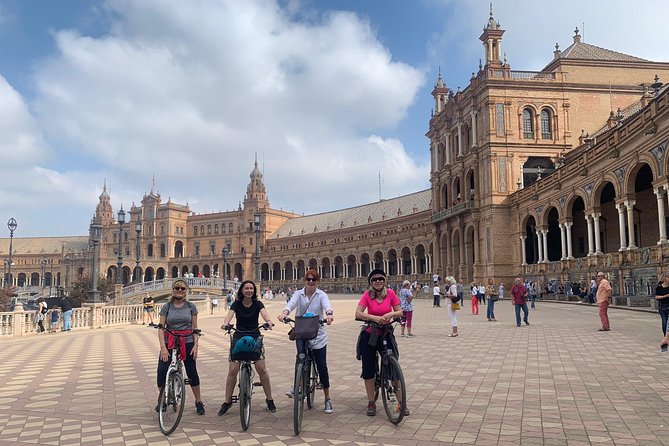
Then you reach Plaza de España, also free. Designed by architect Aníbal González for the Ibero-American Exposition of 1929, the square is described as a palace-square unique in the world. This is one of the clearest “wow” finishes on the tour: you get light, scale, and strong visual order that makes Seville’s architecture feel almost theatrical.
Stop time is about 15 minutes, and you’ll return to the meeting point after the loop.
Price and value: what $36.20 buys in real sightseeing time
At $36.20 per person, this tour sits in the budget-friendly zone for a guided highlight circuit. The value comes from the math: you’re seeing a lot of top locations in about 3 hours, and you’re doing it with direction so you don’t waste time wandering between far-apart sights.
It’s also smart that the tour includes Archivo General de Indias admission while other major sites are ticketed separately. That included stop helps justify the price if you were already curious about colonial history and how Europe and the Americas were documented and connected.
The only “watch-outs” on value:
- Many stops are not included for admission, so your total day cost can rise if you decide to go inside several buildings.
- Short stop times can feel like photo-and-facts if you’re hoping for long interior visits.
So I’d treat this tour as an excellent way to get your Seville bearings fast, then build the rest of your day with targeted ticketing for what you most want to see up close.
Timing tips for heat, rain, and tricky city traffic
Seville’s outdoor time can vary a lot depending on your day. One rider notes that doing the tour on a Saturday evening helped because it was cooler and less busy, especially during hot July. That’s a strong hint for you: plan your bike time for a period when streets feel calmer and the weather feels kinder.
There’s also a practical warning about street conditions: traffic around 5:45 to 6:30 can make things tricky, even if the route is otherwise manageable. If you’re traveling with kids or anyone who needs extra patience, consider choosing a start time outside the busiest rush window.
And while the tour requires good weather, it’s also clear from a review that it can still run in conditions like rain without ruining the experience. If the weather becomes genuinely unsuitable, you’ll be offered a different date or a full refund.
Who this tour is best for (and who should skip it)
This bike tour fits you best if:
- You want maximum highlights in minimal time.
- You’re on your first visit and need an easy way to understand how neighborhoods connect.
- You prefer a pace that’s not strenous, with time to stop and look.
It might not be ideal if:
- You want to spend long periods inside major monuments on the same day (most interiors aren’t included and stop time is short).
- You’re expecting a tour that reads like a full museum day rather than a curated highlight loop.
Should you book the Sevilla Daily Bike Tour?
Yes, if you want a practical overview and a guided route that keeps you from zigzagging across Seville without a plan. The small group, flat ride, and guide-driven stories are a great combo for first-time orientation. You also get the smart “value mix” of one included admission (Archivo General de Indias) plus multiple free park and square stops.
Before you book, do one quick reality check: decide which ticketed sights you want to revisit after the tour. This works best as your kickoff—then you return on your own time to the places that grabbed you most.
FAQ
How long is the Sevilla Daily Bike Tour?
It lasts about 2 hours 40 minutes to 3 hours.
How much does the tour cost?
The price is $36.20 per person.
Is the tour offered in English?
Yes, it’s offered in English.
How many people are in the group?
The tour has a maximum of 15 travelers.
Where is the meeting point and where does the tour end?
You meet at C. Arjona, 8, Casco Antiguo, 41001 Sevilla, Spain, and the tour ends back at the meeting point.
Do I get a mobile ticket?
Yes, it uses a mobile ticket.
Is admission included for the sights?
Archivo General de Indias includes admission. Most other listed sights show admission as not included, while Jardines de Murillo, Parque de María Luisa, and Plaza de España are free.
Is the tour suitable for most people?
The tour states that most travelers can participate.
When should I book?
On average, it’s booked about 10 days in advance.
What’s the cancellation policy if weather is bad?
You can cancel for a full refund up to 24 hours in advance. The experience requires good weather, and if it’s canceled due to poor weather, you’ll be offered a different date or a full refund.