REVIEW · SEVILLE
Seville: Electric Bike City Tour
Book on GetYourGuide →Operated by Scoonet Sevilla · Bookable on GetYourGuide
Two hours on scooters makes Seville click, and the route keeps you moving. I like the electric ride (fast, fun, and easy to learn) and the live guide in English or Spanish. One catch: even though it’s marketed as an e-bike tour, you’ll ride electric scooters, so plan on scooter time, not pedal biking.
This is a practical way to get your bearings in Seville. You’ll cover big names like the Real Alcázar and Seville Cathedral, but you also get the in-between places that feel more local than a standard hop-on hop-off stop. The pacing is built for a 2-hour overview, so if you want a slow museum day, you may feel a little rushed.
In This Review
- Key things that make this tour work
- Electric scooters instead of e-bikes: set your expectation early
- Where you start at SCOONET near Centro Comercial Galería
- Riverfront opener: Torre del Oro and Puente de Isabel II
- Puente de Triana and San Telmo Palace: the ride to María Luisa’s big squares
- Parque de María Luisa: where Seville slows down
- Plaza de España in two wheels: why the stop timing matters
- From Tabacco Factory to the Alcázar: Seville’s power buildings
- Archives of the Indies photo stop: the small pause that helps you connect dots
- Finishing near the river: the Tower of Gold moment
- Guide style, pace, and safety: what I’d watch for
- Price and value: what $23 buys in real time
- Who should book this Seville electric scooter tour
- Should you book? A quick decision guide
- FAQ
- FAQ
- How long is the Seville electric scooter tour?
- Where does the tour start?
- What sights will we see during the tour?
- Is food or drinks included?
- What languages is the live guide available in?
- Is this tour suitable for people with mobility impairments?
Key things that make this tour work
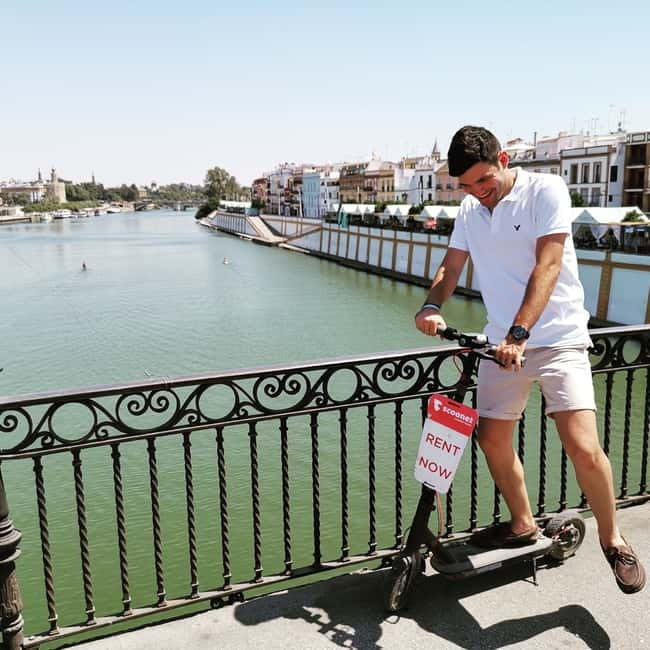
- Electric scooters, not bicycles: easier street handling and quick sight-to-sight movement
- A guided overview in a small group feel: you get context without getting stuck behind a huge crowd
- Riverfront-to-palaces route: it links Seville’s postcard views with its power-and-empire buildings
- Plaza España plus the historic core: you see the city’s “wow” areas and the slower historical anchors
- Photo stops built in: you’re given a chance to grab images at key points like the Archives of the Indies
- Family-friendly energy: kids stay engaged, and the guide keeps an eye on safety and brakes
Electric scooters instead of e-bikes: set your expectation early
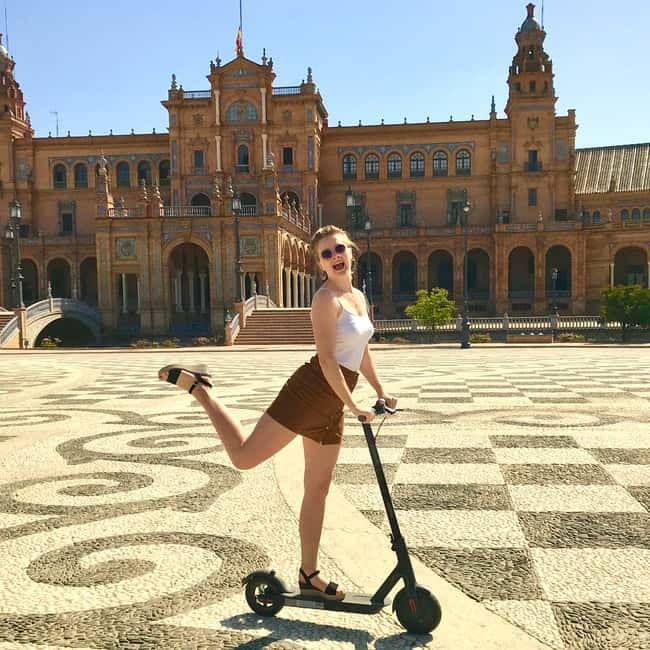
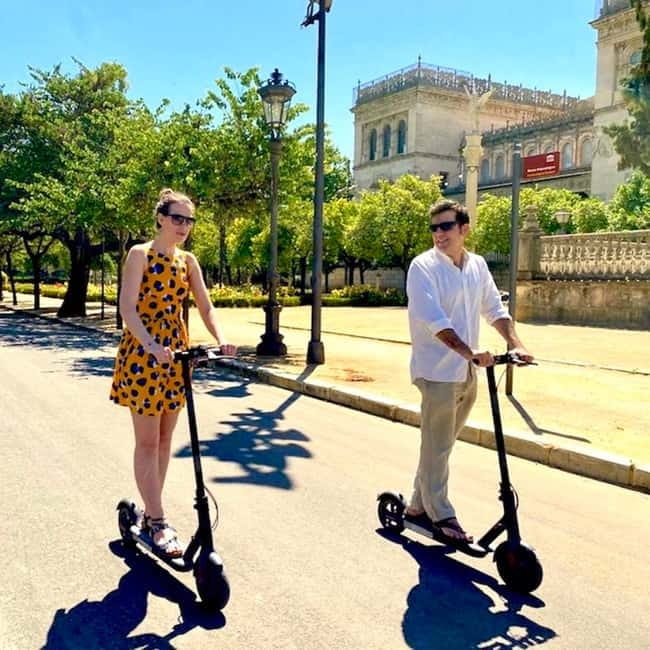
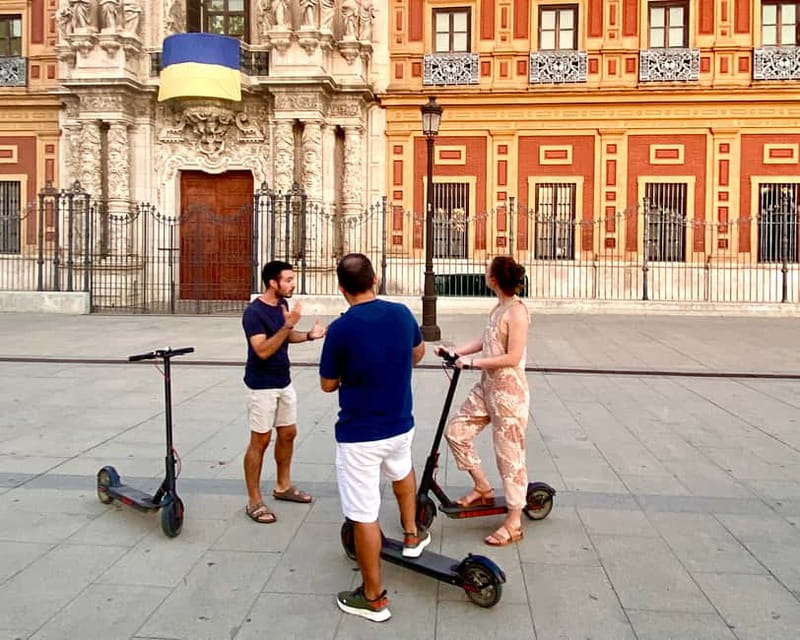
Let’s clear up the first surprise: the experience is often described as an e-bike tour, but the actual ride is on electric scooters. That matters because scooters change the whole feel of the trip. You move more like a local commuter, threading between streets and crosses, and the stop-and-go rhythm is part of how you cover Seville efficiently.
The upside is control. You learn quickly, and once you get the hang of braking, the tour becomes a smooth way to connect major sights without the “why are we still walking?” moment. The downside is the learning curve for nervous riders—so don’t expect the first street segment to feel effortless if you don’t ride anything like this at home.
You can also read our reviews of more cycling tours in Seville



Where you start at SCOONET near Centro Comercial Galería
You meet at the store called SCOONET at Centro Comercial Galería. I like this setup because it’s not hidden behind a labyrinth of landmarks; it’s a clear meeting point you can aim for while you’re figuring out Seville.
A practical tip: show up ready to roll right at the start time. One guide-led ride can feel long if you’re waiting around, and the shop timing can be strict—so plan to arrive close, not early and wandering.
Riverfront opener: Torre del Oro and Puente de Isabel II
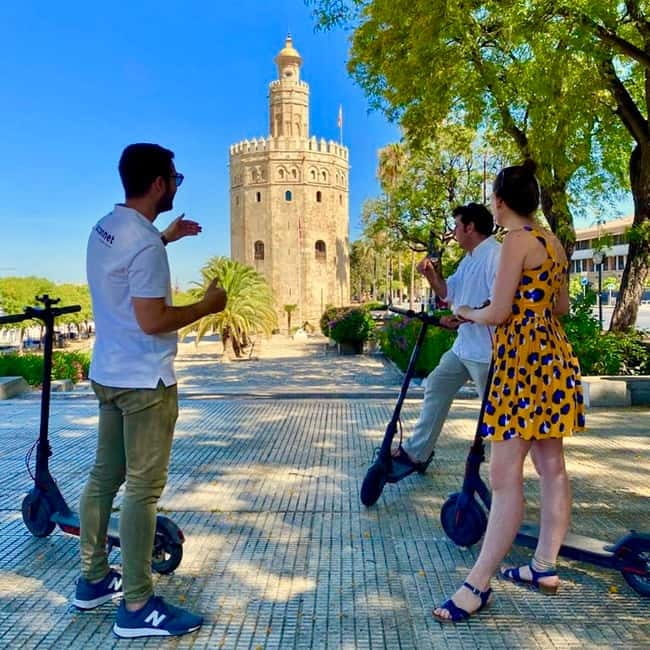
The tour begins with a strong “Seville at water level” start: Torre del Oro and the nearby bridges. This is a smart choice. Starting near the river gives you an immediate sense of the city’s layout and why so much history clumped around these crossings.
Then you ride to Puente de Isabel II, which is one of the key bridge areas that frames the river views. On a two-hour tour, this section is where you get that first visual payoff, and where you also settle into the scooter pace—learning lines, stopping smoothly, and understanding how the group stays together.
If you’re traveling with kids or teens, this part tends to be easier for them too. You’re moving through recognizable scenery quickly, and the river setting is usually a relief from the hottest streets.
Puente de Triana and San Telmo Palace: the ride to María Luisa’s big squares
From the river, you head toward the area leading into the grand open spaces: you’ll pass by Puente de Triana on the way to Parque de María Luisa, and you’ll see Palacio de San Telmo along the route.
Puente de Triana is described as the city’s most popular bridge, and that label makes sense in context: it’s a high-energy connector between neighborhoods. You don’t linger here for long, but you get the geography and the vibe. That’s important if it’s your first day and you’re trying to remember what everything looks like when you’re off the scooter.
San Telmo Palace adds a different flavor. Even without long stops, it’s the kind of landmark that helps you understand Seville as more than just streets and churches—it’s also institutions, power, and shifting roles through time.
Parque de María Luisa: where Seville slows down
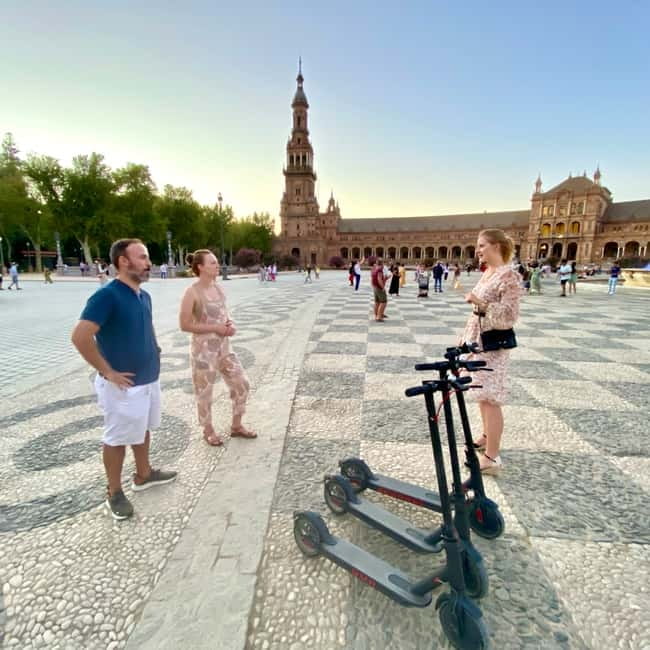
Once you reach Parque de María Luisa, the tour makes room for a longer stop—about twenty minutes. This is where I like the tour’s design: it doesn’t treat Seville like a checklist of buildings. It gives you breathing space in a green setting tied directly to Plaza España.
For many first-time visitors, this is the calm intermission. You’re still moving, still learning, but it feels like a pause before the city’s biggest “pose for photos” moment.
If you’re traveling in summer heat, this park segment can be a practical relief. And if you’ve got kids, parks are where their attention usually stays on the environment instead of zoning out mid-history.
You can also read our reviews of more city tours in Seville


Plaza de España in two wheels: why the stop timing matters
Plaza de España is the headliner, and you get a dedicated stop (about twenty minutes). This is the sort of place where you can do two things at once: appreciate what it represents in the city, and still get photos without turning your tour into a half-day detour.
What makes this work on a short e-scooter loop is timing. The tour doesn’t try to turn Plaza España into a long guided lecture. Instead, it gives you enough time to take it in, then pushes you onward while you still have energy.
Also, because this stop sits in the wider Maria Luisa zone, you’re not bouncing across random streets. It feels like a coherent flow: park → plaza → historic core.
From Tabacco Factory to the Alcázar: Seville’s power buildings
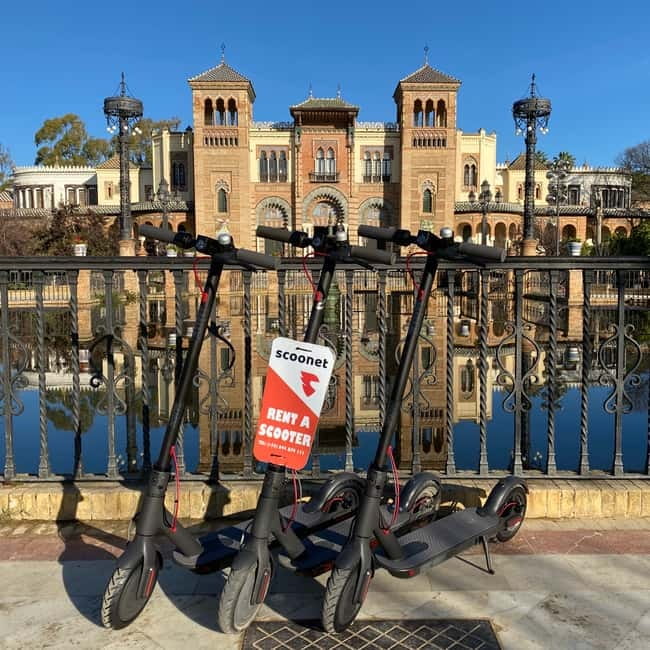
After the plaza, you head into Seville’s historic center and hit some of the big authority buildings: the Antigua Fábrica de Tabacos, the Alcázar of Seville, and then Seville Cathedral.
The Antigua Fábrica de Tabacos stop gives you a different kind of history lens. You’re not only chasing royal palaces and cathedral domes—you’re also looking at industry and labor tied to the city’s development. Even if you’ve seen plenty of Europe’s “big monuments,” this adds a layer that feels more human and grounded.
Then comes the Alcázar of Seville, and it’s placed well in the route. It’s early enough that you’re still fresh, but late enough that you’ve already seen the “Seville looks like this” overview. On a two-hour tour, that balance helps you remember what you saw and why it mattered.
A short visit to Seville Cathedral follows. Cathedral time can be tricky in short tours because it’s easy to rush. Here, the goal is orientation, not deep study. You leave with a sense of where it fits in the story of the city.
Archives of the Indies photo stop: the small pause that helps you connect dots
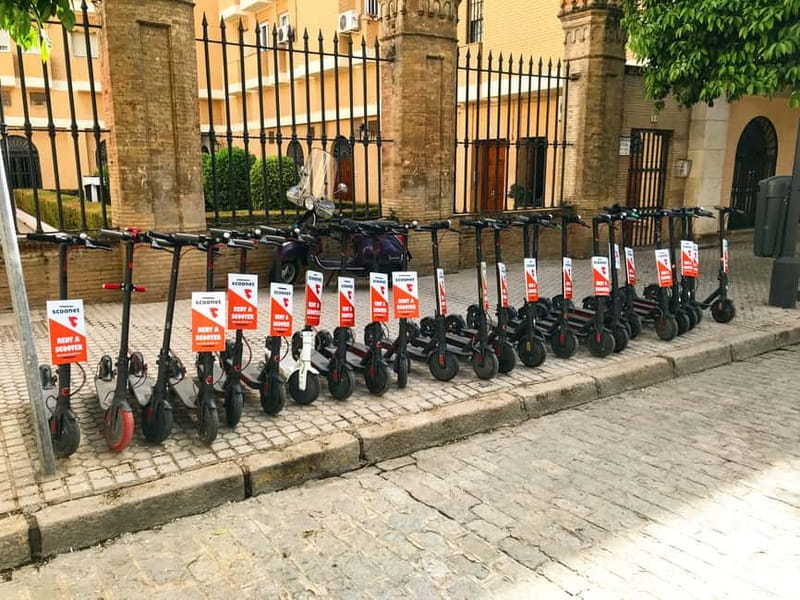
You’ll also stop for photos at the General Archive of the Indies. This is one of those stops where a short photo moment is actually useful. You see the building, you get a visual anchor, and your guide’s context helps you place it relative to the rest of what you’ve seen.
In a quick tour format, photo stops work best when they’re tied to the narrative. This one is built into the flow, so it doesn’t feel random. You’re not just clicking pictures—you’re capturing a link in the bigger chain of Seville’s history.
Finishing near the river: the Tower of Gold moment
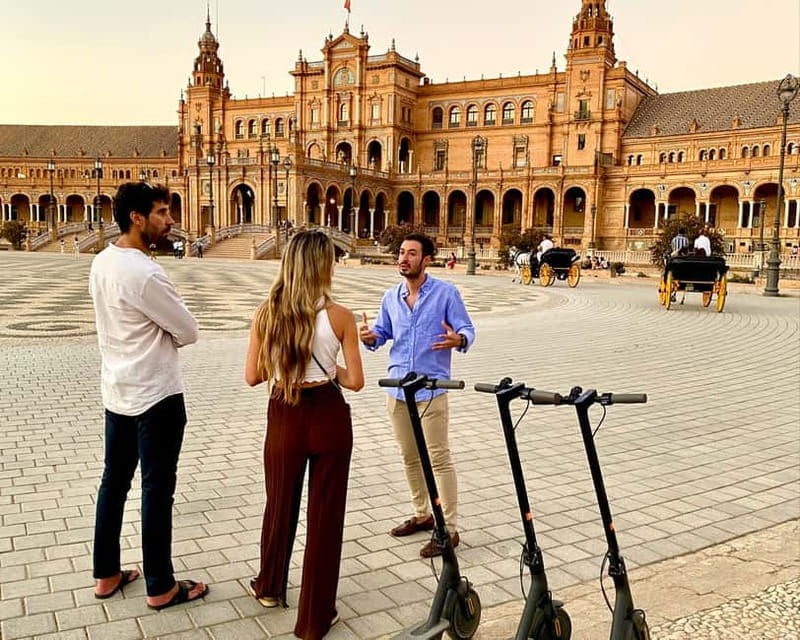
The tour wraps up near the river with a final look at Torre del Oro, sometimes described as the Tower of Gold. If you felt the riverfront earlier as a “getting oriented” segment, this later repetition helps it stick in your memory.
The value here is simple: you end where the city makes sense visually. By the time you’re done, you’ve crossed major junction points—bridges, palace areas, cathedral zone—so the river finish feels like a natural reset rather than a sudden stop.
Guide style, pace, and safety: what I’d watch for
The best version of this tour is when your guide keeps it lively and structured. In multiple cases, guides like Luis and Francisco are noted for being friendly, funny, and able to explain history and architecture in a way that holds attention. That matters because Seville history can get heavy fast if the delivery is dry.
Pace-wise, this is built to fit two hours. That means more “efficient sightseeing” than “slow wandering.” One thing you might notice is that the ride can be stop-and-go, especially around busy corners or tighter streets. That’s not a dealbreaker—it’s often part of staying together and staying safe.
On safety: the tour format is designed so the guide watches the group and helps with confidence. Brakes matter here. If you’re bringing kids, make sure they understand how to use them before you hit any busier roads, and expect the guide to slow down and check that everyone is okay.
Price and value: what $23 buys in real time
At about $23 per person for two hours, the value is strongest for people who want structure without a full museum day. You get live guidance, the key “greatest hits” landmarks, and the benefit of not spending half your trip just crossing from one neighborhood to another.
The equipment is included, which is a hidden cost saver if you’re comparing it to solo scooter rentals. And it can be cost-competitive even if you’re an experienced city walker—because scooters cut down transfer time dramatically.
One practical budgeting move: compare rates before you commit. A reader noted an extra cost difference of around £19 when comparing booking paths. Even if your numbers vary, it’s worth checking so you don’t overpay just because it feels convenient.
Who should book this Seville electric scooter tour
Book it if:
- You want a fast, guided first-day overview that helps you plan the rest of your Seville time
- You’re traveling with kids or teens who need movement to stay engaged
- You prefer seeing multiple landmarks in one block rather than committing to long walks between distant sites
- You want context on major buildings like the Alcázar, Cathedral, and Archives of the Indies
Skip it (or consider a different option) if:
- You need mobility accessibility accommodations—this tour isn’t suitable for people with mobility impairments
- You want long, unhurried stops inside major sites (this is an overview ride, not an in-depth entry tour)
- You expect a pedal e-bike. This ride is scooters, and that’s the whole point of the experience
Should you book? A quick decision guide
If your goal is to learn the city and get oriented quickly, this is one of the smartest ways to do it in two hours. The route strings together the riverfront and the historic core so you don’t waste your day guessing where to go next.
If you’re sensitive to scooter handling or you dislike stop-and-go movement, give yourself extra margin for the first stretch and pick a calmer time of day if you can. Early starts tend to be easier for avoiding crowd pressure, and that makes it feel more relaxed even with a tight schedule.
FAQ
FAQ
How long is the Seville electric scooter tour?
The tour lasts 2 hours.
Where does the tour start?
You start at the store called SCOONET, located at Centro Comercial Galería.
What sights will we see during the tour?
You’ll visit or pass by stops including Torre del Oro, Puente de Isabel II, Palacio de San Telmo, Parque de María Luisa, Plaza de España, Antigua Fábrica de Tabacos, Alcázar of Seville, Seville Cathedral, and a photo stop at the General Archive of the Indies.
Is food or drinks included?
No. Food and drinks are not included.
What languages is the live guide available in?
The live tour guide is available in English and Spanish.
Is this tour suitable for people with mobility impairments?
No. It is not suitable for people with mobility impairments.