REVIEW · BARCELONA
The Spanish Civil War & Franco Barcelona Walking Tour
Book on Viator →Operated by Nostos Tours · Bookable on Viator
Civil War history in Barcelona can surprise you. Unlike the usual guidebooks-and-mirrors routine, this tour reads the city with a Spanish Civil War lens, then ties it to Franco’s dictatorship in places you’ll actually pass today. I love that you don’t just hear dates—you get clear explanations of the factions and the working-class/anarcho-syndicalist period, with historic images to match the streets. I also like the way the guide turns the Old Town into a kind of evidence board, pointing out traces you’d normally walk right by. My only caution: it’s walking-heavy, and the experience works best if you’re ready to ask questions.
This is a small-group stroll (up to 25 people) through sensitive history without turning it into a lecture. You’ll hear from guides who’ve built their tours for clarity—people like Henrieta, Filipa, Evan, and Yannis are named in past groups for being able to explain complicated politics in plain language. Expect stops that range from the central Placa Catalunya hub to churches and plazas where destruction and memory sit side by side.
In This Review
- Key highlights to know before you go
- Why a Spanish Civil War walking tour in Barcelona feels different
- The 2.5-hour pace: group size, meeting point, and what to bring
- Plaça de Catalunya: the “center of gravity” stop
- La Rambla: connecting Civil War meaning to an everyday street
- Antic Hospital de la Santa Creu: a 15th-century anchor
- Basilica de Santa Maria del Pi: the Civil War connection you might miss
- Placa Sant Felip Neri: beauty, then the memory hits
- Untangling Civil War factions and the working-class story
- Guide quality: when hard history is explained clearly
- Price and value: what $47.16 buys you in Barcelona
- Who should book this, and who might want a different style
- Should you book this Spanish Civil War & Franco Barcelona tour?
- FAQ
- How long is the Spanish Civil War & Franco Barcelona walking tour?
- Where does the tour start?
- Is the tour offered in English?
- What is the group size limit?
- Are tickets/admission included at all stops?
- Do I need to pay for a guide radio headset?
- Do I have to cancel in advance to get a full refund?
- What happens if the weather is poor?
- Is public transportation nearby, and is the tour accessible for most people?
Key highlights to know before you go
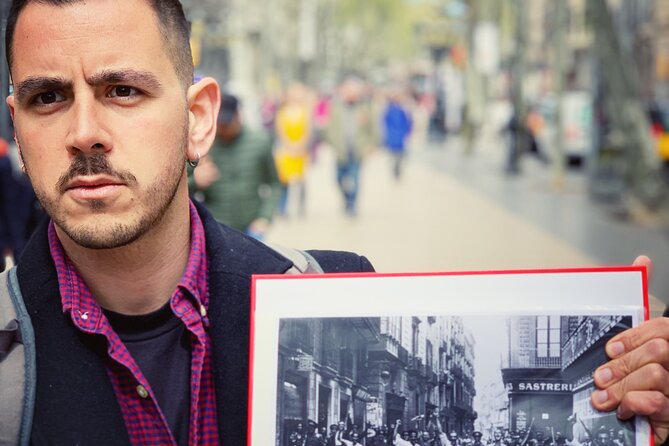
- A Civil War walk built around sites, not monuments: you’ll learn how the conflict shows up in ordinary streets.
- Photos and posters that make the story stick: historic visuals are part of the teaching method.
- Politics explained in human terms: you’ll sort out Republican groups and the long shadow of Franco’s rule.
- Working-class and anarcho-syndicalist focus: you get context for Catalonia beyond kings and generals.
- Five Old Town stops with distinct moods: plazas and churches that feel very different, even when the story is the same.
Why a Spanish Civil War walking tour in Barcelona feels different
Barcelona has plenty of famous history to chase—yet most walking tours stay in the comfort zone: architecture, art, beaches, maybe a quick war mention. This one does the opposite. It gives you a historic lens for seeing the city itself, and it keeps the focus on how the Spanish Civil War and Franco’s aftermath shaped Barcelona’s identity.
The biggest value is not the topics alone. It’s the method. You’re not handed a timeline and released. Instead, you connect the political chaos to specific places—central squares, busy street sections, and older buildings that anchor memory in stone and layout. You also see historic images during the walk, which helps you understand why certain stories matter, even when there’s no big monument shouting the message.
And because the subject is complicated and sensitive, the best guides bring clarity. Past groups have credited guides for explaining both sides of the conflict with enough depth to make the moving pieces make sense, including the period from 1936 into late 1938 and how different Republican factions affected the city. That kind of structure turns confusion into comprehension fast.
You can also read our reviews of more walking tours in Barcelona



The 2.5-hour pace: group size, meeting point, and what to bring
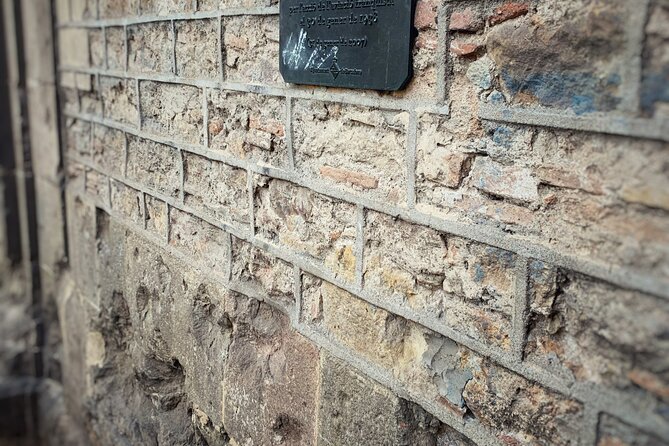
Plan for about 2 hours 30 minutes of walking. The tour is short enough to fit early in a trip, but long enough that your legs will notice. Wear comfortable shoes; this is not the kind of stroll where you’ll stop every five minutes.
Logistics are simple:
- Meet at Foot Locker, Pl. de Catalunya, 20, Ciutat Vella, 08002 Barcelona.
- It ends in a different location, so don’t plan an immediate appointment right after.
- The group can include up to 25 travelers.
- It’s offered in English.
There’s also an audio add-on to consider. A 1€ per person guide radio headset is paid at the meeting point to an external provider. It’s not included in the base price, so if you’re traveling with a group or you prefer to hear every detail cleanly, this is money well spent.
Finally, weather matters. This activity requires good weather, and if it’s canceled for poor conditions, you’ll be offered another date or a full refund.
Plaça de Catalunya: the “center of gravity” stop
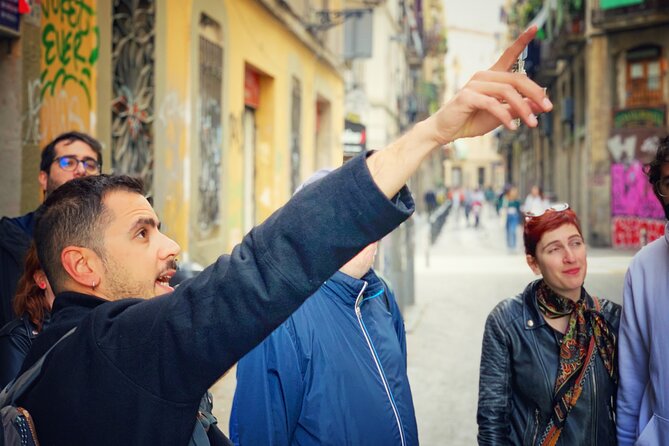
Your first stop is Placa Catalunya, a key place during the Civil War. Even if you’ve walked through this square a hundred times on your way to somewhere else, the tour reframes it: you learn why this type of central meeting space became important when politics turned dangerous.
This stop works as a warm-up in two ways. First, it gives you a baseline map in your head—what’s where and why it matters. Second, it sets expectations for the tone of the walk. The tour isn’t looking for trivia. It’s building a thread from place to place so you can track the war’s impact across Barcelona’s Old Town.
Time here is brief (around 10 minutes), so I suggest you treat it like an orientation stop. Listen closely and ask one clarifying question early if you’re still fuzzy on the overall context.
La Rambla: connecting Civil War meaning to an everyday street
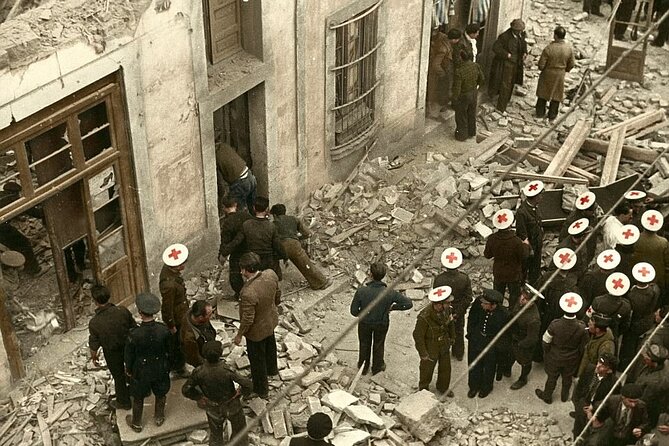
Next comes La Rambla, described as having various Civil War-related sites. This is one of the clever parts of the route: the story is set in motion on a street many people see as just shops and foot traffic.
As you move along, you’ll get guided connections—how the conflict and its aftermath can be read into the city’s layout and public life. It’s not about turning La Rambla into a museum. It’s about training your eye: you start to notice that the street’s “present-day normal” sits on top of a past that was far from normal.
This stop is also short (about 10 minutes). Don’t expect a long pause. Instead, use it to lock in the tour’s approach: short explanations tied to the ground in front of you.
Practical tip: La Rambla is busy. If you tend to lose details in crowds, the radio headset add-on becomes even more useful.
Antic Hospital de la Santa Creu: a 15th-century anchor
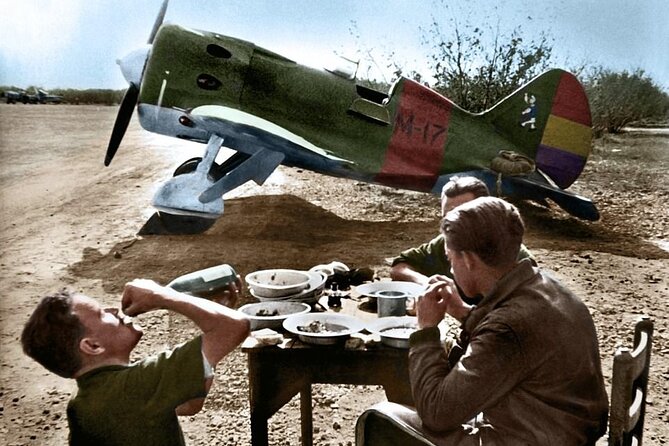
Your third stop is Antic Hospital de la Santa Creu, a 15th-century hospital. The value here is the contrast. You’re standing with something old—built long before the war—while your guide ties it into the Civil War story as part of Barcelona’s layered timeline.
This is the kind of stop that makes the tour feel more grounded than history-from-a-book. Buildings and institutions carry their own time signatures. Seeing an older hospital in the middle of a walk focused on 20th-century conflict helps you understand that war doesn’t arrive on blank paper. It overlays existing systems and structures.
The stop runs about 5 minutes, so again, think of it as a “point-and-explain” moment. If you’re the type who loves questions, this is a good place to ask what you should look for next—because the tour’s strongest moments come when you know what kind of detail the guide is searching for.

Basilica de Santa Maria del Pi: the Civil War connection you might miss
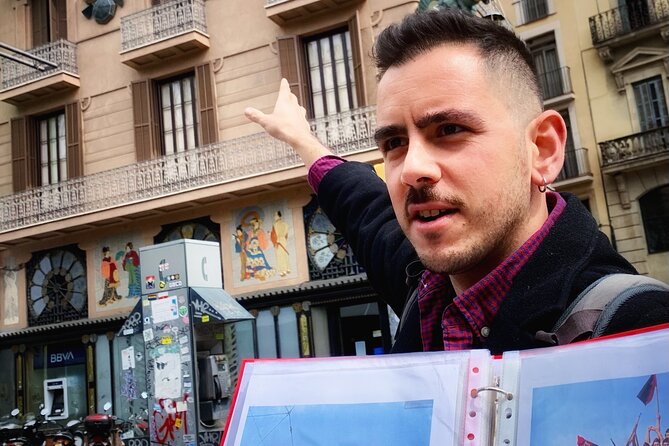
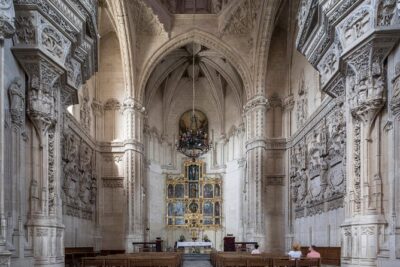
The Basilica de Santa Maria del Pi is your next stop. It’s an older church, and the tour includes a “hidden connection” to the Civil War. Here’s the key detail for your planning: admission is not included.
That means you may not be going inside for a full visit as part of the included price, or you may face entry rules that depend on the church’s operations. Either way, the tour’s main job is to point out the Civil War connection tied to this place and the story the building helps tell.
This stop is about 5 minutes, so the takeaway is not a long interior experience—it’s recognition. You’ll leave with a new habit: noticing that sacred and civic spaces can carry political memory in subtle ways.
If you strongly want to see inside, check locally whether entry is available on the day and what the church requires—then decide if it’s worth paying separately.
Placa Sant Felip Neri: beauty, then the memory hits
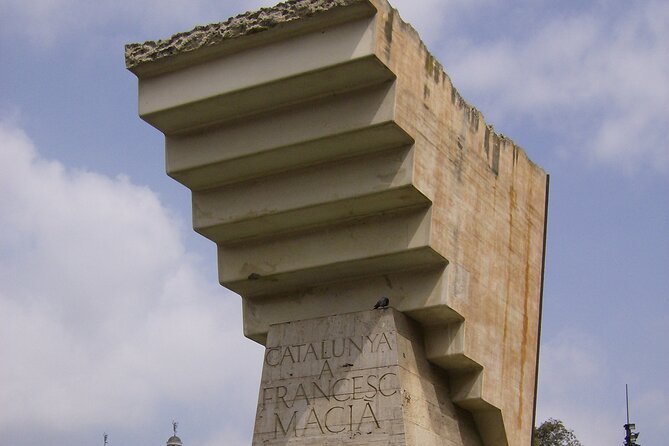
The final stop is Placa Sant Felip Neri. The tour describes it as mystically beautiful, but also one of the most visceral reminders of what the Civil War destroyed.
This is the stop where the tour’s emotional logic clicks. The walk has moved through context, factions, and explanations. Now you stand somewhere that changes the mood. Instead of abstract politics, you feel the “aftermath geography”—how destruction and survival can live in the same small space.
Time is short (around 5 minutes), but this is the kind of stop where I’d slow down mentally even if the group keeps moving. If your guide shows photos or posters here, pay attention to what the images are meant to explain. The goal is understanding the weight behind the visuals.
Because this stop can hit hard, it’s also where good guides manage the tone carefully. You’ll want your guide to keep it respectful and focused on the human impact, not sensational drama.
Untangling Civil War factions and the working-class story
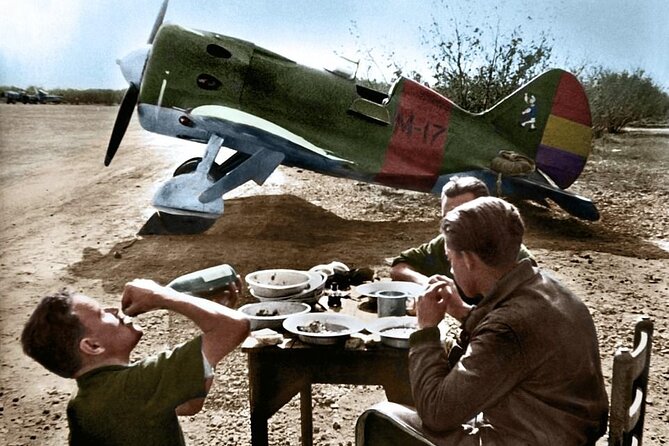
Most people arrive knowing the headline version: Franco versus the Republicans. The real learning starts when a guide clarifies the moving pieces—how different groups inside the Republican side interacted, and why the working-class struggle mattered so much in Barcelona.
On this walk, you learn about:
- the many political groups and factions involved in the Civil War
- the region’s working-class history and the anarcho-syndicalist period
- stories from Franco’s dictatorship
- how historic images fit the places you’re standing in
This is valuable because it answers a common problem: Barcelona can feel like it has multiple histories at once, and without context you may misread what you see. With the tour’s framework, you start to understand why certain political identities still matter in Catalonia today.
I especially like that the guide doesn’t pretend the conflict was simple. Instead, you’re encouraged to ask questions and get answers tailored to what you’re noticing on the route. In past groups, guides like Henrieta and Filipa were praised for communicating the complexity clearly, with details that go beyond quick social-media-style summaries.
Guide quality: when hard history is explained clearly
This tour lives or dies on the guide. The subject isn’t light, and you can feel the difference between a guide who recites facts and one who teaches thinking.
In past groups, guides named included Henrieta, Filipa, Evan, Yannis, Chrisa/Chrysa, Evangelos, and Onno. The common thread across strong feedback is communication: patient explanations, lots of room for questions, and the use of historic images like posters and photographs so you’re not just hearing.
One guide detail I’d call out from those experiences: some guides have a background outside typical tour guiding—one example mentioned a guide who is also an archaeologist. That kind of training tends to show up in how the tour interprets the city’s clues rather than treating buildings as scenery.
So when you book, look at it like this: you’re not paying only for a walk. You’re paying for an instructor who can hold attention while talking about politics, war, and memory in an approachable way.
Price and value: what $47.16 buys you in Barcelona
The price is $47.16 per person, with a 2.5-hour runtime and a maximum group size of 25. That works out well when you think about what’s included: a guide who specializes in a complicated and sensitive topic, historic images shown on the walk, and a route that connects political history to specific Barcelona locations.
If your goal is Barcelona-with-context—meaning you want your time to teach you something you can’t get from looking at a map—this price feels fair. The added cost to consider is the 1€ radio headset option, plus any separate admission that might be needed if you want deeper access to the Basilica de Santa Maria del Pi beyond what’s included.
Is it the cheapest way to spend a couple hours? No. But it is one of the better ways to spend a couple hours when you care about how the city’s identity formed.
Who should book this, and who might want a different style
This tour is a great fit if:
- you want more than architecture and want 20th-century context in Barcelona
- you enjoy walking tours that teach, not just transport
- you’re willing to follow a thread across multiple plazas and buildings
It’s also a smart choice at the beginning of your trip. Once you’ve learned how to “read” the city through this war-and-dictatorship lens, you’ll notice details on your own afterward.
You might want to skip or consider another option if:
- you don’t enjoy walking or you’re sensitive to crowd noise (headset helps)
- you only want big, obvious monuments rather than subtle place-based clues
- you’re looking for a casual overview without political complexity
Should you book this Spanish Civil War & Franco Barcelona tour?
If you’re even mildly curious about how Barcelona became Barcelona, I’d book it. This is one of those experiences that turns the Old Town from a pleasant set of streets into a story you can understand. The route is short, focused, and built around real places—plus the historic visuals help a lot when the topic gets hard to hold in your head.
My final advice is simple: bring good walking shoes, be ready to ask questions, and don’t expect a quick “facts only” stop. Go for the connection—between what happened, where it happened, and why the city still carries traces of that past.
FAQ
How long is the Spanish Civil War & Franco Barcelona walking tour?
It runs about 2 hours 30 minutes.
Where does the tour start?
The meeting point is Foot Locker, Pl. de Catalunya, 20, Ciutat Vella, 08002 Barcelona, Spain.
Is the tour offered in English?
Yes, it is offered in English.
What is the group size limit?
The tour has a maximum of 25 travelers.
Are tickets/admission included at all stops?
Admission is free at some stops, but not at all. For example, Basilica de Santa Maria del Pi lists admission as not included.
Do I need to pay for a guide radio headset?
A 1€ per person guide radio headset is paid at the meeting point to an external provider, and it is listed as not included.
Do I have to cancel in advance to get a full refund?
Yes. You can cancel up to 24 hours in advance for a full refund.
What happens if the weather is poor?
The tour requires good weather. If it’s canceled due to poor weather, you’ll be offered a different date or a full refund.
Is public transportation nearby, and is the tour accessible for most people?
It’s near public transportation, and most travelers can participate. Service animals are allowed.