REVIEW · VALENCIA
Valencia: Art & Architecture Guided Tour with Monuments Tickets
Book on Viator →Operated by Valencia & Go · Bookable on Viator
Valencia’s art is hiding in plain sight. This guided walk threads together medieval gates, palace stories, and church interiors that feel like you stepped into another century. I like it because the route is built for walk-up access to big-name spots without the hassle. You’ll also hear how Valencia’s different eras layered on top of each other, from Roman and Moorish traces to Gothic and Baroque artwork.
I love two things most: the small group size (max 20) and the fact that major entrances are handled for you. Stops like San Nicolás (frescoes) and the Lonja de la Seda (UNESCO) include admission, so you spend less time figuring out tickets and more time looking closely. Guides such as Benito, Uriel, Monika, Manuel, and Anais are repeatedly praised for turning buildings into clear stories you can actually remember.
The main trade-off is that it’s still a walking tour through the old center. Expect a solid stroll (about 2–3 miles is common), plus you’ll spend time outdoors between sights, so plan for heat and consider the weather reality—this experience requires good weather.
In This Review
- Key Highlights to Expect
- Price and Value: What $66.54 Gets You
- Where You Start: Plaça de la Verge and a Route Built for Walking
- Small-Group Touring in Practice (Max 20)
- Stop 1: Torres de Serranos and Valencia’s Medieval Wall Story
- Stop 2: Palau de la Generalitat and Why So Many Palaces Appear
- Stop 3: San Nicolás de Bari y San Pedro Mártir (The Fresco Moment)
- Stop 4: La Lonja de la Seda and Valencia’s Silk Power
- Stop 5: Valencia Cathedral, the Holy Chalice, and Layered Art
- Stop 6: Placa de la Mare de Deu and Finishing in the Right Place
- What to Do Before You Go (So You Enjoy Every Minute)
- Who This Tour Suits Best
- Should You Book This Valencia Art & Architecture Tour?
- FAQ
- How long is the guided tour?
- Is the tour offered in English?
- Which tickets are included?
- Are there any stops with free admission?
- Does the tour include hotel pickup?
- What is the cancellation policy?
Key Highlights to Expect
- Small group (max 20): a pace that feels human and lets you actually look at details.
- Major ticketed interiors included: San Nicolás, Valencia Cathedral, and La Lonja de la Seda.
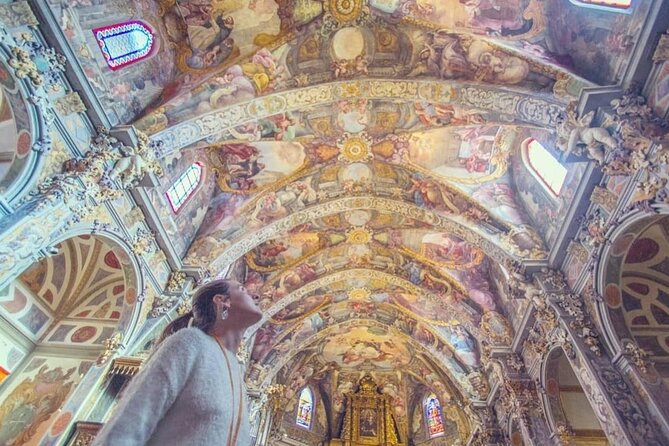
- The Valencian Sistine Chapel moment: restored frescoes at San Nicolás that truly stop people in their tracks.
- UNESCO civil Gothic, not just churches: La Lonja de la Seda explains why silk made Valencia powerful.
- Cathedral + Holy Chalice: your visit includes the Cathedral’s famous relic story and layered art.
Price and Value: What $66.54 Gets You
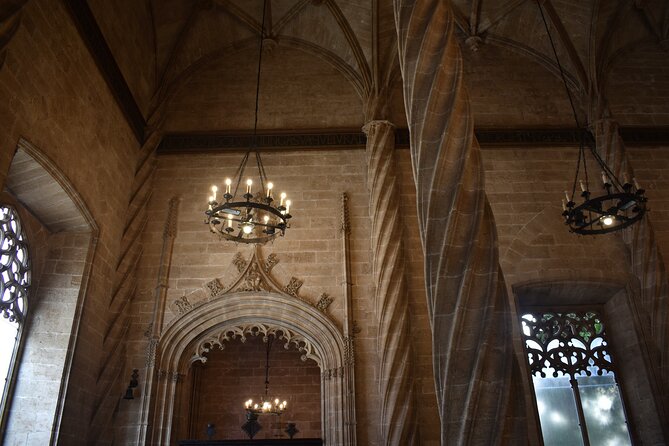
At $66.54 per person for roughly 3 hours, the price makes sense because you’re buying more than a walk. You’re paying for a professional art historian guide and for pre-included admission to the most time-consuming stops. In plain terms: you’ll get access and context for the big hitters, without turning your day into a ticket scavenger hunt.
Here’s the value angle that matters for you. The tour includes entry for San Nicolás, Valencia Cathedral, and La Lonja de la Seda—the three “you can’t really miss these” stops on the route. Add to that the guide’s job (explaining what you’re seeing, and why it matters), and the cost lines up well for a short stay in Valencia.
And one more practical bonus: people consistently mention skipping lines. Even if you’re comfortable winging it, time saved is real in Ciutat Vella, especially when churches and famous monuments get crowded.
A few more Valencia tours and experiences worth a look



Where You Start: Plaça de la Verge and a Route Built for Walking
You meet at Plaça de la Verge in Ciutat Vella, and the tour ends back in the same neighborhood. That location is convenient because it keeps you inside the historic center where most of the key sights are clustered. It also helps you build a mental map of Valencia quickly—handy if you plan to wander on your own after.
This isn’t a “get on a bus, look at buildings from far away” style of sightseeing. The walking route lets you reach places that feel close-up rather than postcard-sized. If you want big architecture without the tourist-bus squeeze, this is the format.
One more logistic note: there’s no hotel pickup. You’ll be arriving under your own steam, so give yourself a few minutes to find the meeting spot and settle in before the start.
Small-Group Touring in Practice (Max 20)
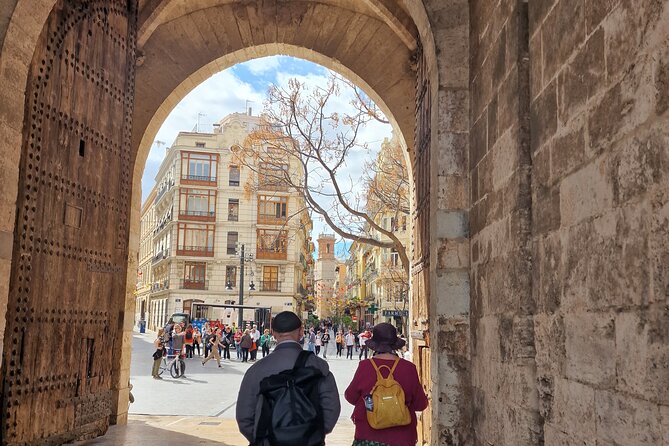
A max group size of 20 sounds small on paper—and it matters once you’re moving through active plazas and church doors. In this kind of setting, smaller groups do three things for you:
First, you don’t get stretched out. That means you hear the guide at each stop and can still move as a unit.
Second, you’re more likely to actually get inside and settled quickly at ticketed sites.
Third, you have enough time to ask questions without losing the whole flow.
This also explains why so many guide names show up in feedback. When a guide like Benito, Uriel, Monika, Manuel, or Anais has a small group, they can explain details instead of rushing through facts.
Stop 1: Torres de Serranos and Valencia’s Medieval Wall Story
The walk begins at Torres de Serranos (Torres de Serranos / Serranos tower area). This is more than a photo stop. Your guide sets the stage with Valencia’s early fortifications—what this gate guarded, how the medieval walls were connected, and the role the Turia River played in the city’s shaping.
You’ll also learn why these towers feel dramatic even today. They weren’t built just for show; they were part of a working defense system. This opening works well because it gives you a framework before you step into churches and palaces that were built on top of earlier layers.
Time here is around 20 minutes, and entry is free for the stop.
Stop 2: Palau de la Generalitat and Why So Many Palaces Appear
Next is the Palau de la Generalitat, with about 20 minutes on the clock. Tickets aren’t included at this stop, so treat it as a guided exterior or orientation moment rather than a long interior visit.
Still, it’s a smart stop. Valencia didn’t just build one grand palace. The guide connects the dots on why you see so many high-status buildings around Barrio del Carmen. If you’ve ever walked past a row of grand facades wondering who lived there and why, this is the kind of context that makes the street look different afterward.
You can also read our reviews of more guided tours in Valencia





Stop 3: San Nicolás de Bari y San Pedro Mártir (The Fresco Moment)
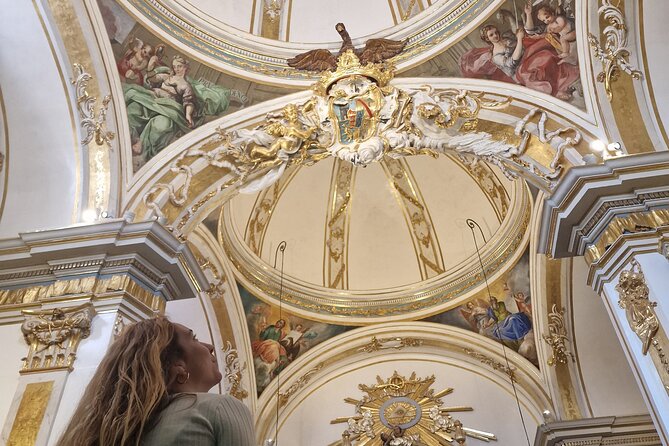
If you love art, this is the stop you’ll remember. The tour brings you to Parroquia de San Nicolás de Bari y San Pedro Mártir, widely described as the Valencian Sistine Chapel.
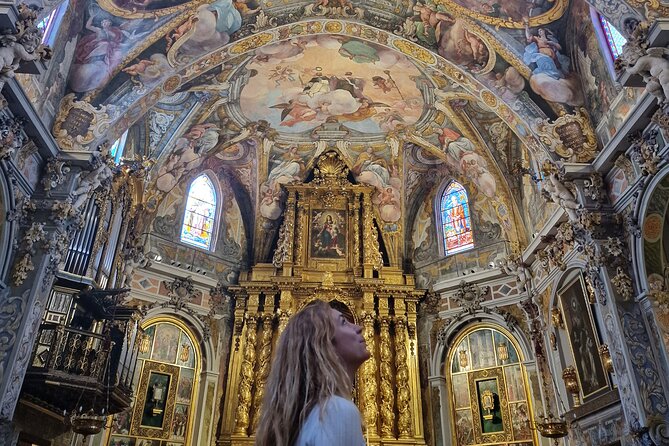
The highlight is the fresco program: nearly 2,000 square meters of restored paintings, covering the vault and making the ceiling feel like it goes on forever. The description also compares the surface area to Rome’s Sistine Chapel—so you know you’re looking at something designed to overwhelm in the best way.
You also get historical depth in a way that helps you understand the building, not just admire it. The site is described as nearly 700 years old, and the story runs backward before it becomes Gothic and Baroque. Saint Nicholas was a worship place in Roman times, later became a mosque, and then a Christian church. That sequence explains why the church reads like a conversation between eras—especially where Gothic structure meets Baroque decoration.
Admission is included here, and the stop is about 30 minutes. Many guides use that time to point out what to look for in the ceiling and how the artworks relate to the architecture beneath.
If a musical light show set to music is running inside during your visit, don’t treat it as optional. It’s often the moment that makes people stop filming and just watch.
Stop 4: La Lonja de la Seda and Valencia’s Silk Power
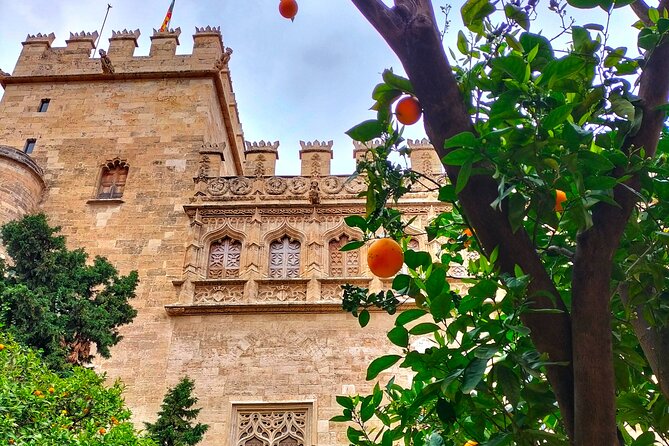
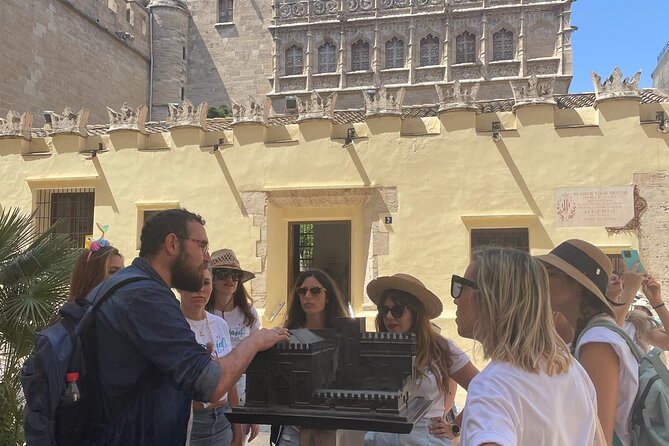
Next up is La Lonja de la Seda (Silk Exchange). This is one of the biggest “surprise” factors for first-time visitors. Gothic architecture often gets associated with grand cathedral exteriors, but here you see civil power—commerce, law, and wealth—translated into stone.
It’s also a UNESCO World Heritage site (declared in 1996), and you’ll learn why. This building is presented as an exceptional example of civil Gothic and as evidence of how important Mediterranean trade was when it was built.
One stat to keep in mind: it was built in about 15 years in the 15th century. The speed and purpose explain why the structure feels so confident. You’ll enter and get guided time to understand what silk meant here—how this wasn’t just a pretty building, it was a working engine for the city.
Admission is included and the stop is about 30 minutes. If you like architecture but also like why people built things (money, trade, institutions), this stop tends to land hard.
Stop 5: Valencia Cathedral, the Holy Chalice, and Layered Art
Then comes Valencia Cathedral, and it’s packed with the kind of details that make a guide worth it.
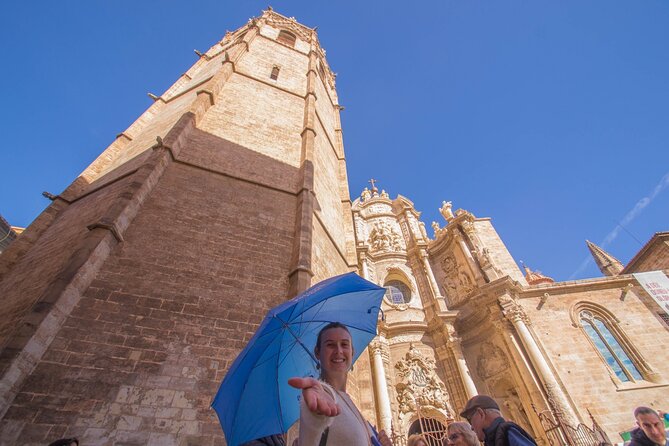
The building sits on earlier history: it began on an old Roman temple and later had a phase as a mosque. Over time, you see elements spanning from Romanesque to Baroque, with construction starting in the 13th century and continuing through major reforms.
But the reason people get excited is what’s inside. The tour highlights the Cathedral’s Holy Chalice, and you’ll also hear about the story connecting it to the Last Supper. The guide also mentions that popes John Paul II and Benedict XVI used this relic during Eucharist celebrations on their visits to Valencia.
You’ll also learn about art inside the Cathedral, including Renaissance frescoes on the High Altar area. The description notes they were rediscovered about a decade ago when a Baroque vault covering them was removed. That kind of “art hiding in plain sight” story is exactly what makes guided cathedral time more rewarding than a quick walkthrough.
Admission is included here, and the stop is about 30 minutes. It’s enough time to look up, not just look at a doorway.
Stop 6: Placa de la Mare de Deu and Finishing in the Right Place
The tour ends at Placa de la Mare de Deu, where the basilica and cathedral presence makes the square feel like a stage set for history. This is a good ending point because it brings you back to the center of everything you just learned.
You’ll spend about 20 minutes here. Admission is free for this stop, and it works like a wrap-up: your guide points out the last key cultural cues so the place looks less like random stone and more like a deliberate city plan.
What to Do Before You Go (So You Enjoy Every Minute)
Because this is a walking tour through old stone streets and church interiors, a little preparation helps a lot.
Wear shoes you trust. You’ll be on your feet for most of the 3 hours.
Bring water and plan for shade breaks. One common comment is that guides try to keep the group comfortable, even stopping at shops when it’s hot.
If you’re sensitive to crowding, start your day earlier rather than later. Churches and ticket lines can build up in the afternoon.
Also, mentally set expectations: this is not an art museum “stand and stare” experience. It’s architecture and storytelling, with time inside the places where the art is actually built into the walls and ceilings.
Who This Tour Suits Best
This tour is a great fit if you fall into any of these categories:
- You want a first-time orientation to Valencia’s old center, but with real art and architecture stops.
- You care about why buildings exist—trade, power, and religion—rather than just facts.
- You’re short on time and want the key monumental sites grouped into one smooth 3-hour format.
- You enjoy church interiors beyond the exterior selfie.
It may not be perfect if your top priority is long, slow time inside one building. The pacing is designed to cover multiple major sites. Also, while it’s offered in English, a small number of experiences note occasional English smoothness issues depending on the guide.
Should You Book This Valencia Art & Architecture Tour?
I’d book it if you’re visiting Valencia for a short window and you want your time to count. The combination of a professional art historian guide, included entries for San Nicolás, La Lonja de la Seda, and Valencia Cathedral, and the small-group format makes it a strong value play.
Skip it (or at least rethink it) if you hate walking, or if you want deep, unhurried time in just one or two monuments. This tour is made for breadth and context, not slow solitude.
If you want one plan that turns Ciutat Vella from a maze into a story, this is a smart choice.
FAQ
How long is the guided tour?
The tour runs for about 3 hours.
Is the tour offered in English?
Yes, the tour is offered in English.
Which tickets are included?
Admission tickets are included for San Nicolás Church, Valencia Cathedral, and La Lonja de la Seda.
Are there any stops with free admission?
Yes. The tour includes stops where admission is marked free, including Torres de Serranos and the final stop at Placa de la Mare de Deu.
Does the tour include hotel pickup?
No, hotel pickup is not included.
What is the cancellation policy?
You can cancel for a full refund up to 24 hours in advance. If you cancel less than 24 hours before the start time, the amount paid is not refunded.