REVIEW · VALENCIA
Valencia: Historical Walking Tour
Book on GetYourGuide →Operated by DescubreValencia · Bookable on GetYourGuide
Valencia doesn’t waste time grabbing your attention. This Historical Walking Tour turns the Old Town into a clear story, from medieval walls to grand monuments, with an official guide you can actually ask questions to (and guides like Amparo and Carmen are known for doing it well). I especially like how the route is compact, so you cover big sights without losing the plot.
I love the way it stacks the city’s must-sees into one walk: Torres de Serranos, Plaza Redonda, City Hall, the cathedral, the Silk Exchange, and the Central Market area. At $17 for about 2 hours (up to 135 minutes), it’s a straightforward value play if you want orientation fast and ideas for the rest of your stay.
One thing to plan for: monument tickets aren’t included, so you may want to check what you’ll need before you go inside places that charge.
In This Review
- Key Things I’d Pick Up Fast on This Walk
- Getting Your Bearings in Valencia’s Old Town (Torres de Serranos to Plaza Redonda)
- Plaça del Ajuntament and the Post Office Detail Most People Miss
- City Hall to the Cathedral: Big Power in a Small Area
- The Silk Exchange: Why Valencia’s Trade Story Matters
- Valencia’s Art Nouveau Swing at the Main Railway Station
- Central Market Stop: What to Do With the Time You Still Have
- How the Guide Makes or Breaks the Experience
- Price and Time: Is $17 Worth It?
- Practical Stuff That Helps the Tour Go Smoothly
- Who This Walking Tour Fits Best
- Should You Book This Valencia Old Town Tour?
- FAQ
- How long is the Valencia Historical Walking Tour?
- Where does the tour start?
- What languages are the guides available in?
- What is included in the price?
- Are monument tickets included?
- Is the tour wheelchair accessible?
- Can I record the tour audio?
Key Things I’d Pick Up Fast on This Walk
- Torres de Serranos as your opener: medieval power in stone, right at the start
- Plaça del Ajuntament stop: elegant civic architecture and the big public-square vibe
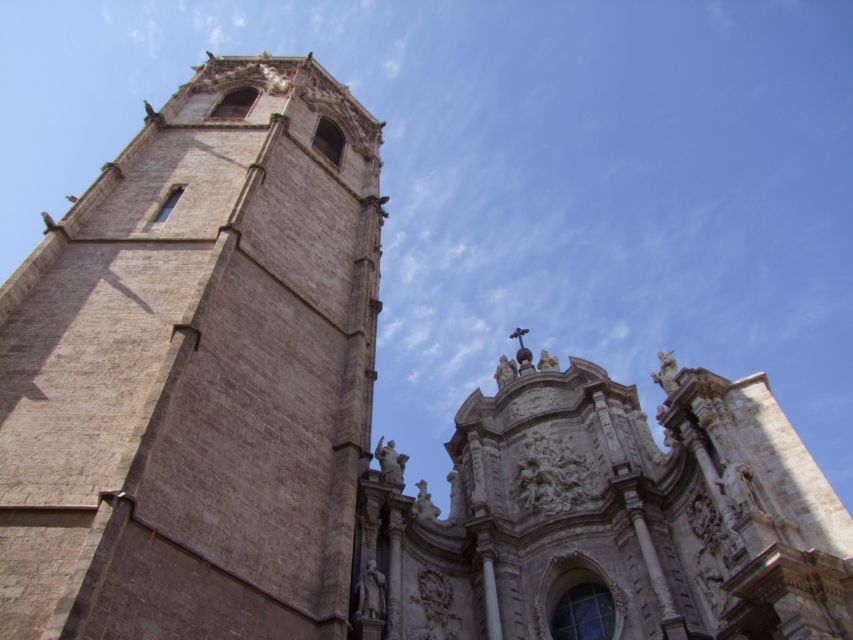
- Cathedral + Silk Exchange: religion and trade, shown side by side
- Art Nouveau at Valencia’s main railway station: a neat contrast to the older parts of town
- Plaza Redonda tucked into narrow streets: you see it, then you get why it works
- Q&A at the end: ask for next-day ideas while the route is still fresh in your head
Getting Your Bearings in Valencia’s Old Town (Torres de Serranos to Plaza Redonda)
You start near Torres de Serranos, a dramatic set of monumental city gates. Even if you only have one or two days in Valencia, starting here makes sense: you get the city’s defensive past first, so the rest of the walk has context.
The guide begins with a short guided segment (about 15 minutes), then you move toward the quieter but memorable feel of the old quarter. Next up is Plaza Redonda, a small circular square that you’ll notice more because it feels slightly unexpected in the maze of narrow streets. The guide’s job here is key: they help you read the geometry and location instead of just pointing and moving on.
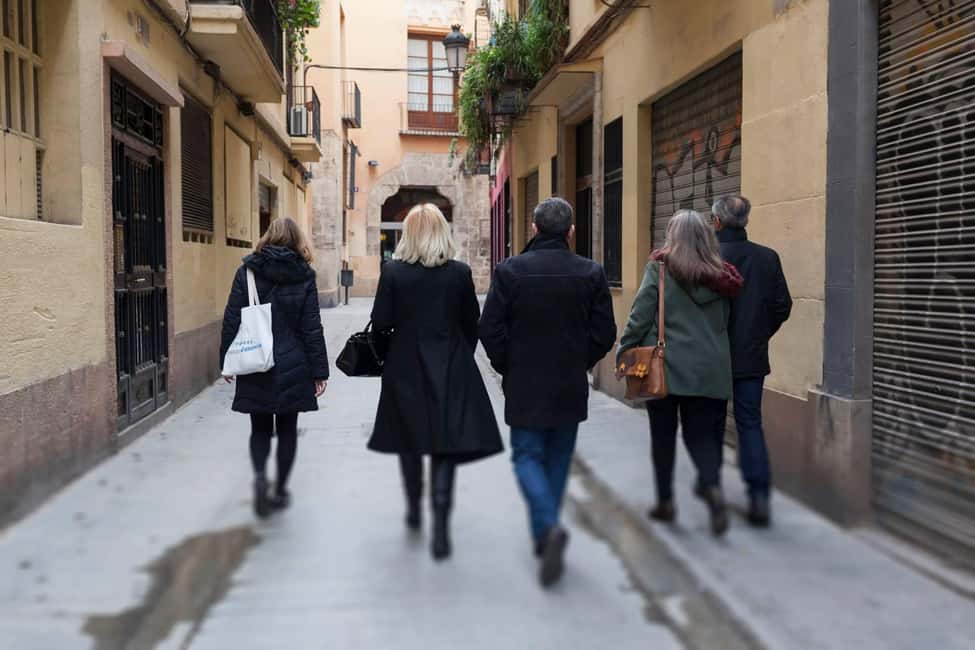
In practical terms, this opening section is where you learn the rhythm of walking in Ciutat Vella. Streets twist, landmarks pop into view, and the guide helps you avoid the common mistake of wandering without a mental map. If you like feeling confident in a city quickly, this part does its job.
You can also read our reviews of more walking tours in Valencia
Plaça del Ajuntament and the Post Office Detail Most People Miss
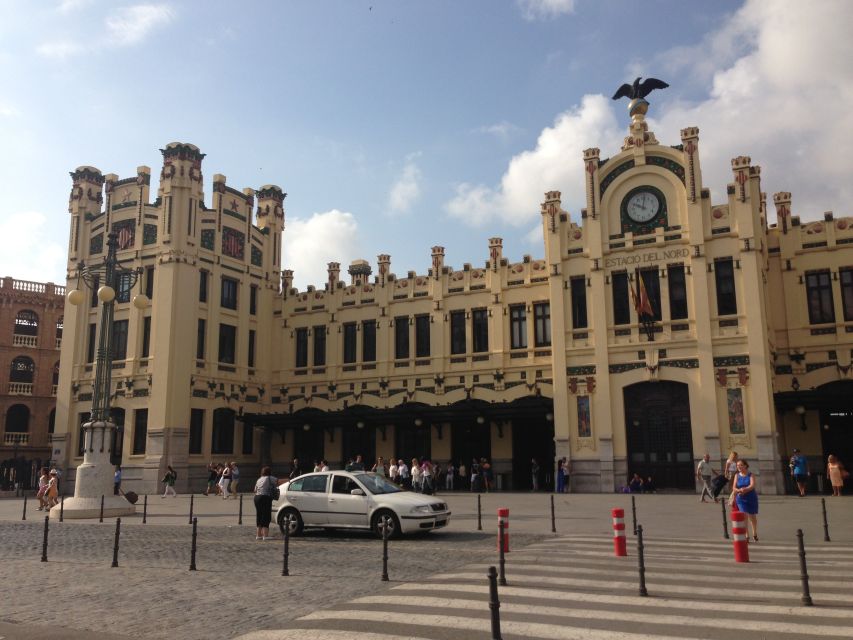
After you leave the gates behind, the tour shifts to civic Valencia at Plaça del Ajuntament, the city’s largest public square. This is one of those places where your eyes want to do the work, but the guide helps you see the architecture with purpose.
One highlight here is the Post Office building, described as having an eclectic design by Miguel Angel Navarro. You don’t need to be an architecture nerd to enjoy this. What you’re really getting is a sense of how Valencia balances older identity with newer flourishes—and how official buildings announce pride.
This section is also a good example of why a guided walk is worth it. You could stumble around the square on your own, but you’d probably miss what to look for. With a guide, you get the why behind the facade and you start noticing details like rooflines, symmetry, and how buildings frame open space.
City Hall to the Cathedral: Big Power in a Small Area
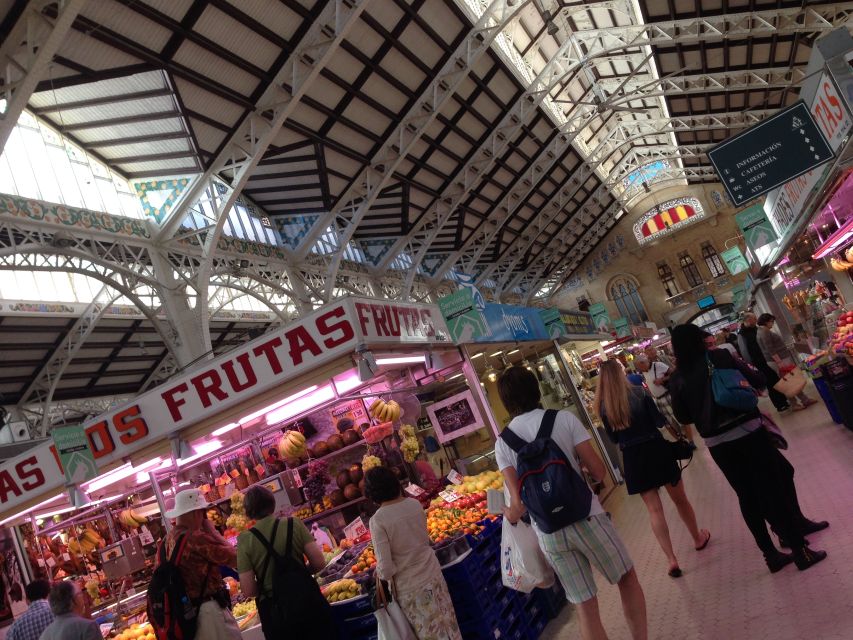
From the square, the route threads through the old center toward the cathedral. This part of the walk works because it’s not just sightseeing. It’s a lesson in what power looked like in different eras—civic authority near the square, religious authority in the cathedral area.
There’s also a stop where you pass the old bullfighting ring and see its scale. The exact moment matters: you’re walking, you’re not standing around, and you get a quick understanding of how this site fits into the city’s urban structure. Whether you love bullfighting as a cultural topic or prefer to treat it as history only, it’s a useful marker of what the city once celebrated in public.
One plus: you’ll get a guided pace that keeps you moving, with enough time to pause at the right spots. It’s also the kind of section where you can ask questions and get answers while you’re standing in the right place.
The Silk Exchange: Why Valencia’s Trade Story Matters
Next comes the historical Silk Exchange, and this is where the tour often clicks for people. If you only think of Valencia as food and beaches, the Silk Exchange gives you a different angle. It shows how money, craftsmanship, and international links shaped the city.
This stop is valuable because it’s not abstract. You’re looking at a specific building tied to how Valencia prospered. Even if you don’t go inside for tickets (tickets aren’t included), the exterior experience still teaches you what to notice and why it matters.
This is also a good moment to slow down mentally. Trade buildings have their own language—patterns, entrances, and layout—so listening helps you see more than surfaces. If you’re the kind of person who likes connecting art and society, you’ll enjoy this segment.
Valencia’s Art Nouveau Swing at the Main Railway Station
After the older monuments, you’ll reach a contrast point: Valencia’s main railway station and its Art Nouveau character. The tour’s ability to shift styles like this is one reason it’s a strong orientation walk. Valencia isn’t one era. It’s a layered city.
From a practical viewpoint, this station stop is also helpful for planning. You’ll start recognizing where transit sits relative to the Old Town, which makes it easier to decide how you’ll move around later. If you’re trying to avoid getting lost on your own, this is a quiet win.
And it’s just fun to see how different the city looks once you trade centuries-old stone for architectural flourishes from the Art Nouveau period. The guide’s explanations are what turn the contrast into something you remember.
You can also read our reviews of more historical tours in Valencia



Central Market Stop: What to Do With the Time You Still Have
The walk includes time at Central Market (about 15 minutes). This isn’t a long, slow market crawl. It’s more like a taste of what the market represents—an easy way to make the food side of Valencia part of your mental checklist.
What I like about this setup is that it doesn’t trap you. You get a quick visit, then you’re free to go deeper on your own afterward. That matters because market shopping is personal: some people want ingredients, others want snacks right then, and others prefer photos and atmosphere.
Bring comfortable shoes for this section. Even if you’re not planning to buy anything, you’ll want to walk the aisles and soak in how busy and practical the market feels.
How the Guide Makes or Breaks the Experience
This tour is built around an official guide, and the strongest comments point to the same pattern: the guide explains the city in a way that feels like it connects. Guides such as Amparo and Carmen are repeatedly named for keeping people engaged and handling mixed-language groups.
You may see English and Italian running at the same time for parts of the walk. That’s harder than it sounds, but it’s a real advantage. If you’re traveling with others who speak different languages, you won’t have to split off to feel included.
Also, the tour is designed with a Q&A moment at the end. That matters because it lets you convert what you saw into a plan. You can ask what’s worth your limited time, what to skip, and how to organize your next day without wasting hours.
Price and Time: Is $17 Worth It?
At $17 per person for roughly 2 hours (up to 135 minutes), the value is strong if you want orientation and a guided overview rather than a long museum day. You’re paying for time, structure, and interpretation: someone telling you what you’re looking at and why it formed the way it did.
You’ll also notice what’s not included: monument tickets. That’s the only real friction point. If you love going inside everything immediately, you might feel like you’re leaving some boxes unchecked. But if you’re okay with seeing key exteriors and learning what to plan for later, this is a smart way to get your bearings.
The overall time is also a gift. Two hours is long enough to feel like you did something meaningful, but short enough to still handle lunch, a short self-guided walk, or an evening out without your feet plotting a revolt.
Practical Stuff That Helps the Tour Go Smoothly
Here’s what you’ll want to have ready:
- Comfortable shoes are a must. You’re walking through the Old Town.
- Audio recording isn’t allowed, so don’t plan on recording your guide’s narration.
- Meeting point can vary depending on the option you booked, so check your confirmation details before heading out.
- The tour is wheelchair accessible, which is a real plus for mobility planning.
One small tip: if you’re the type who likes photos, pause when the guide pauses. Trying to sprint ahead for a perfect shot can break the flow and you’ll miss the explanation that goes with the view.
Who This Walking Tour Fits Best
This is a great match if:
- you want a first-day orientation to Valencia’s Old Town
- you’re curious about how trade, architecture, and public power shaped the city
- you prefer a guided overview over jumping straight into tickets and long lines
It may be less ideal if you want a slow, deep dive where you sit and linger for long stretches. This walk is structured to cover the highlights efficiently. Think of it as your map made human—then you go personalize it afterward.
Should You Book This Valencia Old Town Tour?
Yes—if your goal is to see Valencia’s key monuments in a single, well-paced morning or afternoon and come away knowing what you’re looking at. At $17, with a live guide and a route that hits Torres de Serranos, Plaza Redonda, City Hall, the cathedral, the Silk Exchange, and Central Market, it’s a solid value choice for most first-time visitors.
If you’re hoping for nonstop inside-tickets at every stop, you’ll want to plan those separately since tickets aren’t included. But the trade-off is that you still get the story and the highlights without committing to extra entry costs during the walk.
If you care about getting next-day recommendations while everything is fresh, take this tour early in your trip. It makes the rest of Valencia feel easier to navigate.
FAQ
How long is the Valencia Historical Walking Tour?
It runs for about 2 hours, with a duration range of 2 hours to 135 minutes.
Where does the tour start?
There are starting locations near Torres de Serranos, at C. de la Blanqueria, 1. Meeting point can vary depending on the option you book.
What languages are the guides available in?
The live guide is available in English, Spanish, and Italian.
What is included in the price?
The price includes a bilingual guide and a monolingual guide (as stated by the activity).
Are monument tickets included?
No. Tickets to monuments are not included.
Is the tour wheelchair accessible?
Yes, the tour is wheelchair accessible.
Can I record the tour audio?
No. Audio recording is not allowed.