REVIEW · VALENCIA
Valencia Private Walking Tour with Official Valencian Guide
Book on Viator →Operated by Valencia & Go · Bookable on Viator
Old Valencia can feel like a maze. This private walk gives it a map in real time. You’ll cover big landmarks tied to Valencia’s Roman, Muslim-Christian, and modern commercial eras, with an official guide who shapes the stories to what you care about.
What I like most is that it’s truly private (just your group) and the pacing is flexible, so you’re not stuck with a herd. Second, you get a tour focused on the city’s “under-the-stones” meaning—how walls, gates, churches, and civic buildings connect into one timeline.
One consideration: it’s a walking orientation tour, not a ticketed museum day. A couple of stops don’t include entry tickets, so if you want lots of inside-the-building time, you may need to plan extra visits after.
In This Review
- Key highlights to expect
- Starting in Ciutat Vella: a tour that helps you orient fast
- Placa de la Mare de Déu: Roman and medieval Valencia in one starting block
- Torres dels Serrans: the medieval gate that sets the tone
- Palau de la Generalitat: civic power in a single neighborhood
- Mercat Central de Valencia: the market stop that has the ticket included
- La Lonja de la Seda: UNESCO-grade trade history, even without entry
- Plaça del Ajuntament: finishing with civic squares and modernist edges
- The guides are the real engine: what you can learn from their approach
- Private pacing versus included access: where expectations should match reality
- Timing in the heat: when to book so you actually enjoy it
- Who should book this tour, and who might skip it
- Should you book Valencia Private Walking Tour with Official Valencian Guide?
- FAQ
- What’s included in the private walking tour?
- Does the tour include entry tickets to the sights?
- How long is the tour?
- Where does the tour start and end?
- What language is the tour offered in?
- What’s the best time to book in summer?
Key highlights to expect
- Private by design: only your group participates, with your guide able to adjust the commentary to your interests.
- Official Valencian guide + art historian angle: you’ll hear how art, architecture, and power shaped the streets you’re standing on.
- Old Town anchors that fit together: Roman ruins, cathedral/basilica area, medieval gate, and the market district all connect.
- Mercat Central ticket included: the one major market stop is covered with admission included.
- Silk and civic landmarks are still part of the story: even when entry tickets aren’t included, you’ll learn what to notice before you see them later.
- Summer timing advice: book early (around 09:00–10:00) or later in the evening (about 18:30) to avoid peak heat.
Starting in Ciutat Vella: a tour that helps you orient fast
You start in Ciutat Vella at Plaça dels Furs, right in the thick of the historic center. The tour ends at Plaça de la Mare de Déu, so your route naturally funnels you toward Valencia’s core “old city spine.” That matters because Old Valencia is easiest when you can connect dots in your head. After two hours, you’ll have a clearer sense of where the markets sit, where the civic buildings dominate, and which streets feed into the cathedral-area world.
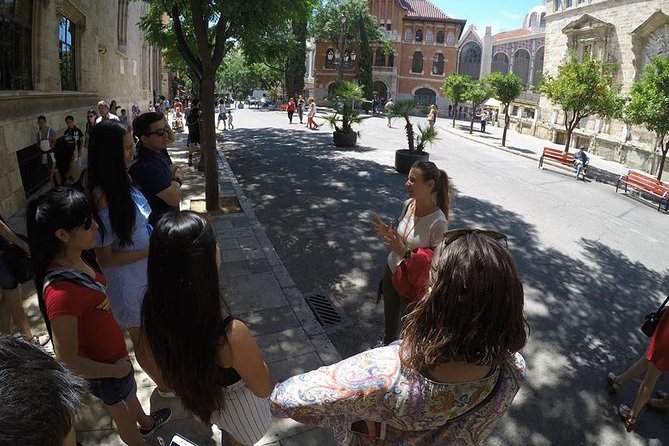
This is also the kind of private tour that works well if you’re not trying to “do everything.” You can ask questions as you go, stop for a photo without losing the whole group, and keep the pace reasonable. It’s built for moderate physical fitness—good shoes matter, but you’re not signing up for a hike.
Price-wise, it’s $127.03 per person. For a private guide, that’s not unusual in a major European city, but value depends on what you expect. If you’re happy with exterior viewing, street-level context, and a guided path that sets up future visits, it can feel like a smart buy. If you’re expecting lots of included monument entries, you may feel the cost more sharply.
You can also read our reviews of more walking tours in Valencia
Placa de la Mare de Déu: Roman and medieval Valencia in one starting block
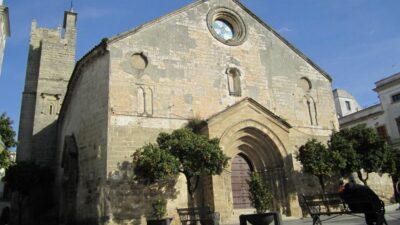
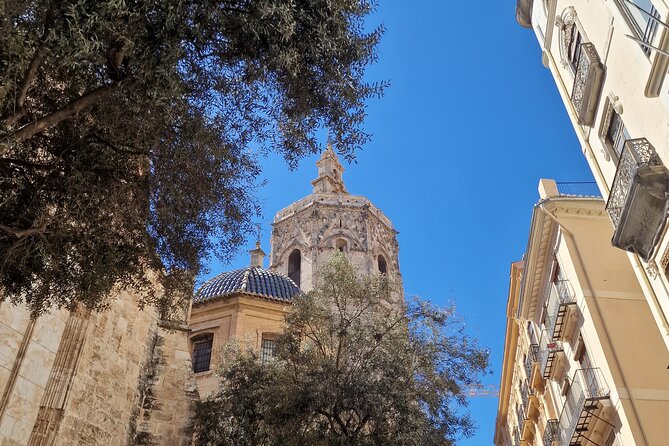
The tour’s first stop is Plaça de la Mare de Déu, where you get a concentrated view of Valencia’s big historical layers. From here, the guide ties together key anchors—Roman ruins, the cathedral/basilica zone, and the broader story of Valencia’s wall lines and shifting cultures.
What I’d watch for in this area is how the city’s meaning changes by layer. You’re not just looking at buildings; you’re learning how the location itself kept being reused and reworked. The tour description points to seeing the basilica and cathedral area plus the main Roman ruins, and also hints at the “antic pieces” of Muslim and Christian wall. That’s a useful framing: Valencia’s identity isn’t a single era—it’s a stack.
The stop is about 20 minutes, and the admission is listed as free for this segment. In practice, that usually means you’re not paying for a ticket just to access viewpoints and learn what you’re seeing. You’ll also get a few practical tips aimed at improving your stay—exactly the kind of advice that turns a first visit into a second visit worth doing.
A quick practical note: this is a prime area for photos, but it can also be busy. If you care about getting clear pictures, ask your guide where to stand for the best angles before you start shooting.
Torres dels Serrans: the medieval gate that sets the tone
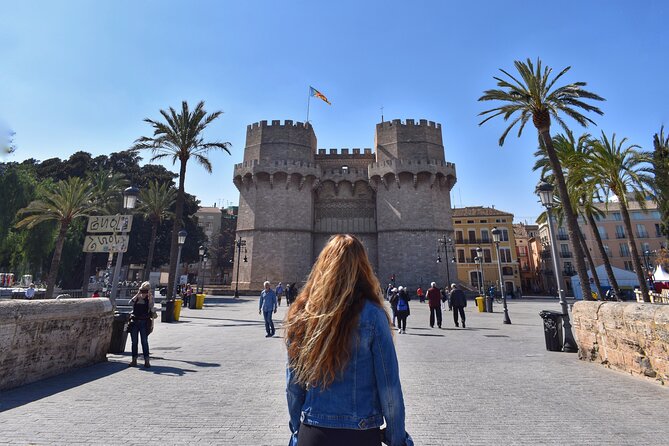
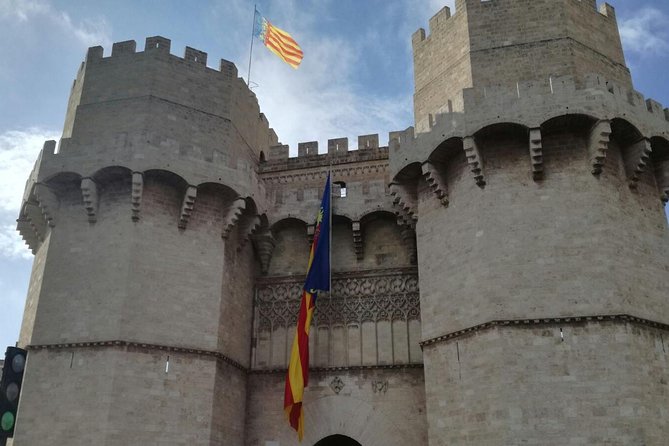
Next comes Torres dels Serrans, described as the ancient main gate into the city during the XIV–XIX centuries. This is where the tour’s “timeline” starts to feel physical. A gate is a boundary, and it’s also a statement: who controlled entry, what trade mattered, and how a city defended itself.
The stop runs about 15 minutes, and admission is listed as free. Again, that points to learning from the street and the structure itself without needing ticketed access. If you’re the type who loves details, this is a great place to ask the guide what changed over time—how a gate can exist through different political eras while still marking the same urban idea.
Also, towers in Valencia often help you understand the direction the city grew. Even if you don’t know the streets yet, you’ll start linking landmarks into a mental map.
Palau de la Generalitat: civic power in a single neighborhood
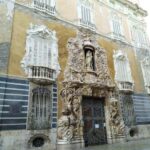
The Palau de la Generalitat stop is listed at 20 minutes, with admission not included. The focus here is on why this palace matters and why multiple palaces sit in the same neighborhood. That’s a useful lesson for first-timers: civic buildings aren’t randomly sprinkled. They cluster because government, representation, and prestige like each other nearby.
Since entry isn’t included, plan on learning from what you can see from outside and from the guide’s interpretation—how the building’s role fits into Valencia’s story. If you later want inside views, this stop effectively gives you the reading assignment: you’ll know what to look for before you go back.
This also works for different travel styles. If you love politics and institutions, you’ll get meaning from the “why here?” angle. If you prefer art and architecture, the guide can often translate civic design into the language of symbols and influence.
Mercat Central de Valencia: the market stop that has the ticket included
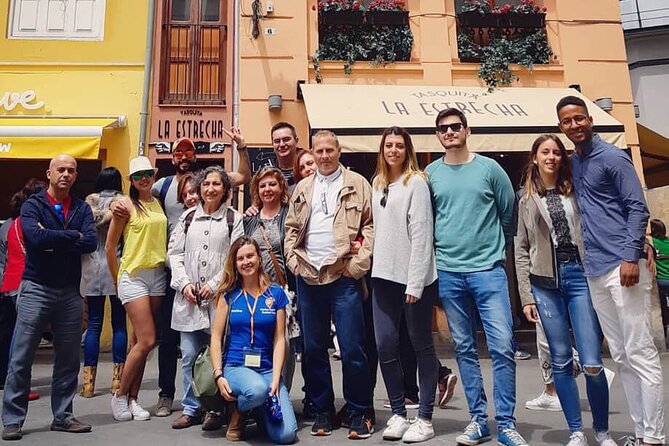
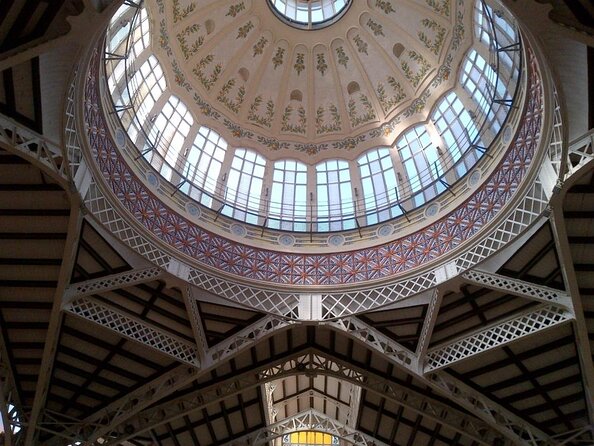
Now for the sensory payoff: Mercat Central de Valencia. This is described as the biggest central market in Europe and a modernism symbol, with the best fresh products in Valencia. The tour includes the admission ticket for this segment (about 15 minutes).
Even if you don’t plan to shop, this is where your guide’s advice becomes practical. Markets aren’t only about food—they’re about how people live and eat, how the city runs day to day, and how modern identity connects to older trade patterns.
Because your time here is time-boxed, come with a small plan. If you want to buy something edible, decide whether you’re thinking fruit, sweets, or something you can carry. If you just want to browse, bring your patience for stalls and crowd flow. The guide can point out what to look for so you don’t spend your whole market moment trying to figure out what’s worth your attention.
Value tip: since the ticket is included, this is also the easiest stop in the itinerary to justify the overall price. You’re paying for guided context and you’re not paying extra just to be in the market space.
You can also read our reviews of more guided tours in Valencia






La Lonja de la Seda: UNESCO-grade trade history, even without entry
La Lonja de la Seda is the Silk exchange, UNESCO world heritage, from the XV century. Admission is listed as not included, so you’ll likely appreciate it more through explanation than through being inside.
This stop is still worth it for one reason: silk trade shaped Valencia’s wealth and street-level power. You can see that in how the city’s architecture and commerce talk to each other. Even from outside, the guide’s job is to tell you what the building communicates and why the exchange mattered.
If you’re the sort of traveler who likes to connect the dots between food, money, and architecture, this is a nice bridge from the market stop you just saw to the broader commercial identity of the city. And if you later decide to return specifically for interior views, this segment helps you know what to aim your attention at.
Plaça del Ajuntament: finishing with civic squares and modernist edges
The tour ends at Plaça del Ajuntament, the new Town Hall Square. Admission is listed as free for this stop, and it’s about 15 minutes. The guide focuses on eclectic and modernist buildings here, plus the feel of the civic center as a place where Valencia shows its public face.
This ending is smart. It gives you a “now” feeling after the tour works through older layers. If you want to keep exploring after the two hours, you’re placed right in an area that’s naturally useful for wandering, shopping, and finding your next meal without backtracking across the whole old town.
If you’re thinking in practical terms: ending near the town hall area makes it easier to transition to daytime galleries, evening plans, or quick tram/walk connections.
The guides are the real engine: what you can learn from their approach
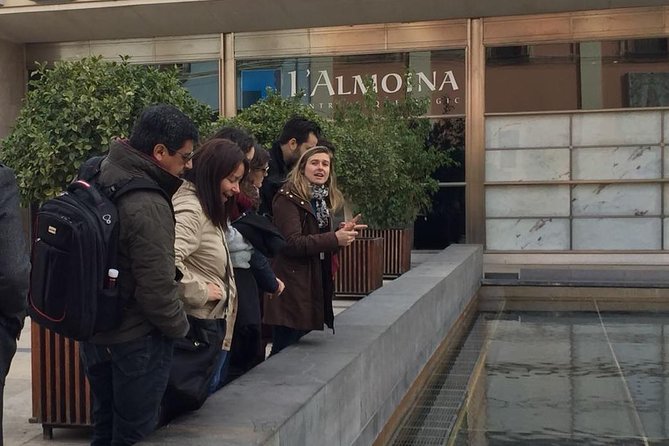
This tour is sold as an official guide experience, and the strongest theme in real-world feedback is the guide quality. Names like Sonia, Monika, Joaquin, Catalina, Paulinho, Wojtek, and Fernando show up with common threads: friendly delivery, clear English, and a habit of answering questions without rushing.
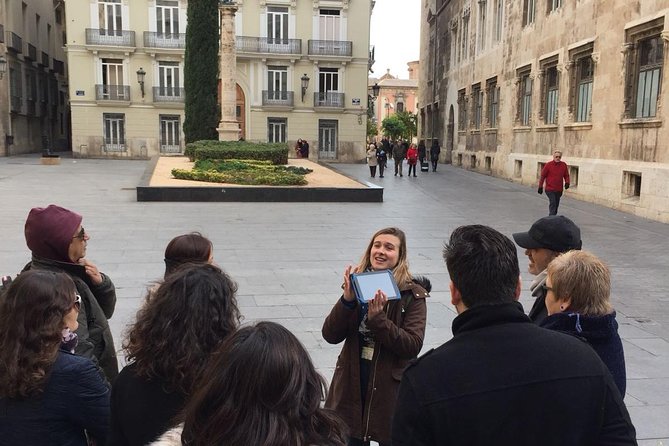
One pattern I’d pay attention to: guides tailor the story. You might get more architecture, more language and cultural context, or more practical “what to do next” advice. Some guides also use visual aids like maps and images on a tablet, which helps when you’re trying to follow details while walking.
I also like that the pace is described as workable for different needs. People mention having an elderly family member keep up, and others mention children learning history at an age-friendly level. That’s a good sign for a private orientation tour—less strain, more listening, fewer stressed moments.
Private pacing versus included access: where expectations should match reality
Here’s the key trade-off. Your time with the guide is focused on highlights and connections. The itinerary includes tickets for Mercat Central, and it labels other segments as free or not included. That means you should not treat this as a full “entry ticket” day.
If you want inside access to major monuments, you’ll likely need to add separate visits after the tour. The good news: the tour sets you up for those choices. After hearing why places matter, you’ll know which ones deserve your paid time later.
Also, because this is a walking tour, you’re going to move through areas where you can see a lot quickly. That’s ideal for orientation. It’s not ideal if you want long museum-style stops.
Timing in the heat: when to book so you actually enjoy it
Valencia summers can be intense. The guidance is clear: during July, August, and September, book early (around 09:00–10:00) or later (around 18:30), since it stays light until about 22:00. Running tours mid-day (roughly 11:30 to 17:00) is described as warm and difficult.
So here’s my practical advice: if you’re visiting in peak summer, treat the tour time as part of the plan, not an afterthought. An excellent guide can’t fix heat fatigue. Start early, take your water seriously, and wear something breathable.
Even outside summer, this is a historic center walk, so plan for sun and a bit of standing. The tour is short enough to manage, but you’ll still want comfort.
Who should book this tour, and who might skip it
Book it if:
- You want a private orientation to Old Valencia in about two hours
- You care about how Roman, medieval, and civic layers fit together
- You like market time and want guided context at Mercat Central
- You’d like a guide to give you stay-long tips so you can plan the rest of your trip
Consider another option if:
- You want lots of included monument entries and indoor time
- You plan to spend the whole day inside museums right away
- You prefer group tours for cost reasons (this one is private by design)
Should you book Valencia Private Walking Tour with Official Valencian Guide?
Yes—if you want a smart first pass at Old Valencia, this is a solid choice. The price is reasonable for a private, official-guide format, and it includes the one ticket-heavy stop that most first-timers care about: Mercat Central. You’ll leave with a clearer map, better instincts for where to go next, and enough story context to make later visits feel easier.
If you’re spending only one day in Valencia, this tour can serve as your “get oriented” foundation. If you have more time, think of it as your roadmap: you’ll know what to return to and what to skip.
FAQ
What’s included in the private walking tour?
The tour includes a walking tour in Valencia and a professional art historian guide. The tour ticket format includes a mobile ticket.
Does the tour include entry tickets to the sights?
Mercat Central de Valencia has admission included. Some other stops are listed as free, and some are listed as not included (for example, Palau de la Generalitat and La Lonja de la Seda).
How long is the tour?
The tour lasts about 2 hours.
Where does the tour start and end?
It starts at Plaça dels Furs, Ciutat Vella, 46003 València, and ends at Plaça de la Mare de Déu, Ciutat Vella.
What language is the tour offered in?
The tour is offered in English. It may be operated by a multi-lingual guide.
What’s the best time to book in summer?
For July, August, and September, it’s best to book early in the morning (around 09:00–10:00) or later in the evening (around 18:30) because it’s very warm during the middle of the day.