REVIEW · JEREZ DE LA FRONTERA
Jerez: Historic Center Guided Tour
Book on GetYourGuide →Operated by Andalusia Tour Travel · Bookable on GetYourGuide
Jerez history walks differently with a great guide. This 2-hour walk through the historic center of Jerez de la Frontera turns big names and old buildings into a simple story you can follow on foot, with Muslim and Christian neighborhoods, sherry culture, and architectural details you can actually see.
Two things I really like: first, the tour leans hard on storytelling, and the guides I’ve seen leading these walks (like Rose, Lucia, and Martina) are the kind who make facades and street corners feel like evidence, not trivia. Second, the optional tasting of 2 Jerez wines is a smart payoff at the end. One consideration: Alcázar and the cathedral interiors are not included, so you’ll mainly enjoy the exteriors and the context around them.
In This Review
- Key points worth knowing before you go
- Why Jerez’s historic center is about more than sherry
- Plaza del Arenal to San Miguel’s Gothic edge
- Alcázar walls, and the Muslim-Christian neighborhoods lesson
- Tartessians and the early roots you can actually remember
- Church of San Dionisio: the Mudejar moment to slow down for
- Jerez Cathedral façades: Gothic, Baroque, Neoclassical, without the ticket stress
- Squares, palaces, and the old Town Hall site
- Finishing with two Jerez wines: how to make the tasting count
- Price and value: $26 for a guided walk with real structure
- What you’ll actually feel during the 2-hour walk
- Should you book the Jerez Historic Center guided tour?
- FAQ
- How long is the Jerez Historic Center Guided Tour?
- Where does the tour meet?
- What languages are available?
- Is the Alcázar interior included?
- Is the cathedral interior included?
- What is included in the price?
- Is the sherry tasting included?
- Is the tour wheelchair accessible?
- Are there any booking restrictions?
- Is a private group available?
Key points worth knowing before you go
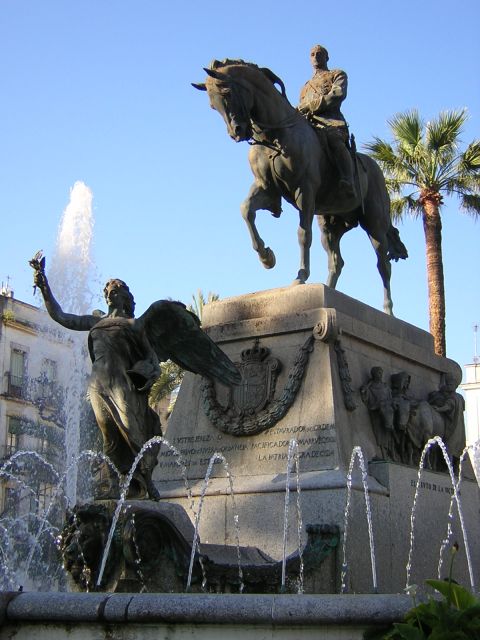
- Meet at Plaza del Arenal and start with a local-feeling walk instead of jumping straight into major monuments
- San Miguel to the Alcázar walls gives you a clear route through shifting eras of Jerez
- San Dionisio stands out as the only Mudejar church in town, and it’s worth slowing down for
- Cathedral façades span styles from Gothic to Baroque to Neoclassical, even without interior tickets
- Sherry tasting is optional and pairs well with what you just learned about the city’s identity
- Guides drive the experience with clear English/Spanish/French and lots of on-the-ground interpretation
Why Jerez’s historic center is about more than sherry
Jerez de la Frontera is famous for sherry, but this tour helps you see that sherry is only one layer of the city. The walk connects the city’s control of territory, its religious changes over time, and the way different cultures built side-by-side. That’s why the old streets feel logical rather than random.
I also like how the tour frames Jerez as a crossroads. The highlights point you from early settlers (including the Tartessians) through Phoenicians, Romans, Visigoths, and Moors. If you like history that you can physically map onto streets and walls, this format fits you well.
The route is designed for first-time visitors too. You get a focused overview in two hours, plus enough specifics to make you notice details later when you’re on your own. It’s not trying to do everything; it’s trying to give you the right mental hooks.
You can also read our reviews of more guided tours in Jerez De La Frontera



Plaza del Arenal to San Miguel’s Gothic edge
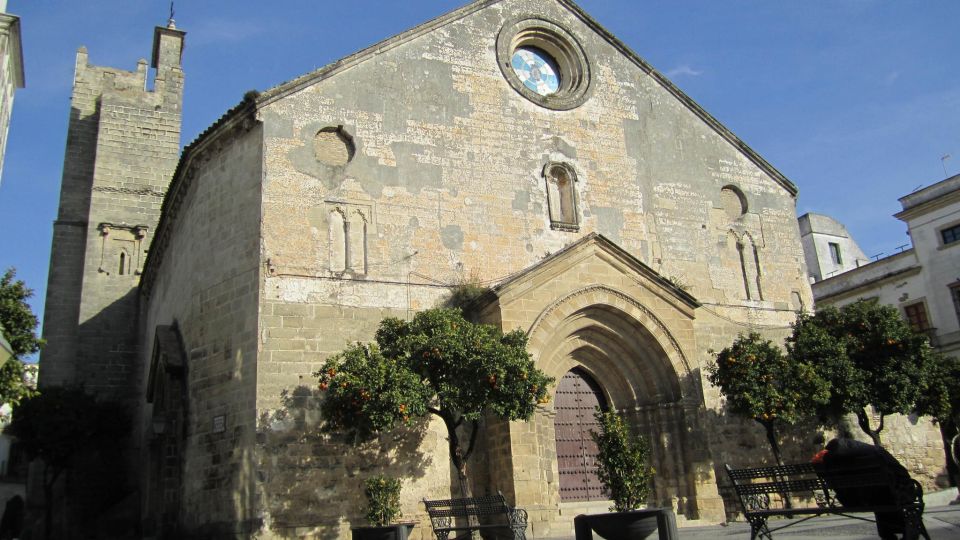
The tour meets in Plaza del Arenal, which is a good starting point because it puts you in the rhythm of central Jerez right away. From there, you set off toward the neighborhood of San Miguel. This is where you start seeing the city’s later religious architecture taking shape.
A key moment here is the Gothic church in the San Miguel area, along with the typical streetscape around it. I like this early segment because it teaches your eye what to look for: shape, proportions, and the way buildings announce power through design, even when you’re just passing by.
There’s also a practical win. By starting with one neighborhood and one style shift, you’re not overwhelmed by names and dates. You can follow along because the guide is tying what you see to what came next.
Alcázar walls, and the Muslim-Christian neighborhoods lesson

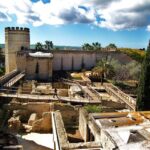
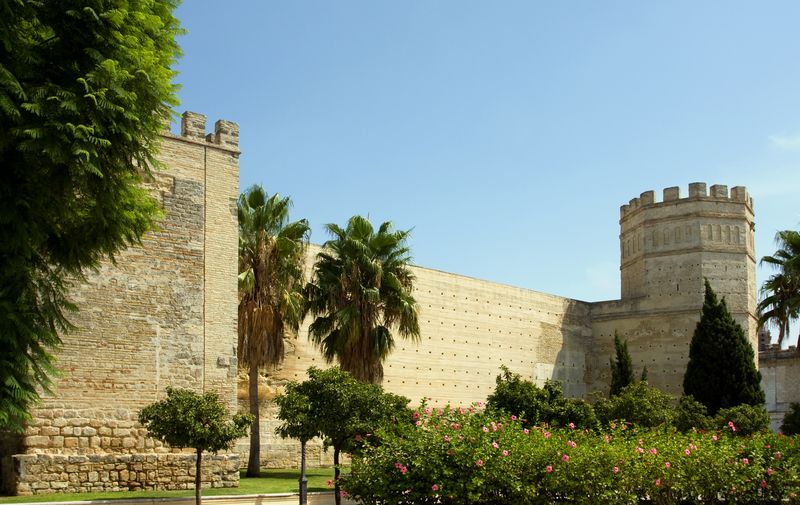
The walk doesn’t treat the Alcázar as a distant landmark. Instead, you focus on the defensive wall of the Alcázar and the surrounding area where Islamic and Christian influences overlap. Even without an inside visit, the exterior wall and nearby monuments give you a sense of how Jerez protected itself and evolved.
This is the point in the tour where the city starts to feel like a timeline you can walk through. You’ll learn how different eras left different marks, and why you can spot those marks in architecture, street layouts, and religious buildings. The guide approach matters here; a strong guide helps you connect the visible with the historical.
One consideration for your expectations: the Alcázar interior is not included, so you’ll want to treat this as an orientation and interpretation stop. If you’re the type who needs inside access, you can still enjoy the stop, but you may later decide to add separate tickets on another day.
Tartessians and the early roots you can actually remember
Jerez’s earliest chapter can sound vague in a classroom. On this tour, the guide points you toward the story of the Tartessians, described as the first settlers attributed to the area. Then you move through major waves—Phoenicians, Romans, Visigoths, and Moors—so the city’s layers stop feeling like separate facts.
I like how this works on the ground. When you’re looking at walls, church fronts, and town squares, the history feels less like a list and more like a series of solutions to real life: settlement, trade, defense, worship, and governance.
If you’re curious about sherry too, this section helps you understand the broader setting. Jerez wasn’t built for wine alone; it built an identity over centuries. Once you know that, sherry becomes easier to place as part of a longer story, not just a label on a bottle.
Church of San Dionisio: the Mudejar moment to slow down for
The tour includes a stop at the Church of San Dionisio, described as the only Mudejar church in town. That alone makes it a must-pay-attention stop, because Mudejar style is all about cultural overlap—design language that reflects contact and adaptation.
If you like architecture, this is the kind of place you’ll appreciate even from the outside, because the style has recognizable signals. The guide’s job here is to help you see what you might otherwise miss: what elements point to Mudejar influence, and how that fits into Jerez’s bigger Muslim-Christian story.
Even if you’re not an architecture buff, the stop can still click. The tour’s broader theme is how Jerez absorbed different cultures, and San Dionisio becomes a physical example of that absorption.




Jerez Cathedral façades: Gothic, Baroque, Neoclassical, without the ticket stress
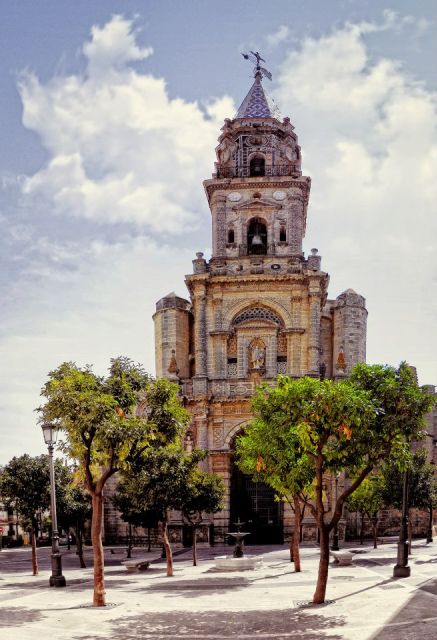
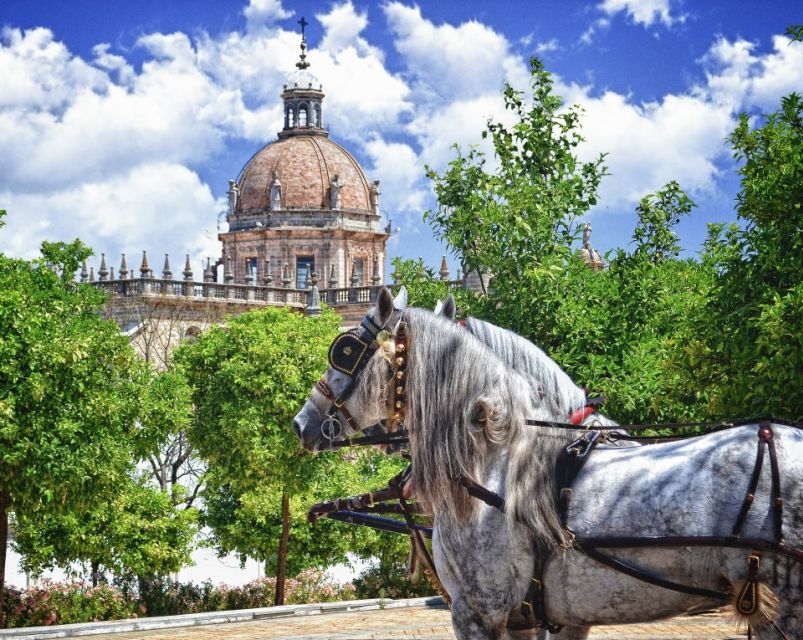
You’ll also see the cathedral’s Gothic, Baroque, and Neoclassical façades. This is a smart inclusion because you get multiple style periods in one view, and the guide can help you sort out what’s what.
The big practical note: cathedral interior access is not included. So you should treat this as a façade-focused experience—look at fronts, details, and the way different architectural ideas were layered over time. Many people love this approach because it’s fast, visually clear, and doesn’t require you to manage extra entry logistics mid-walk.
This is also a good moment for photos, especially if the lighting cooperates. The guide’s commentary can help you frame what you’re photographing, so it doesn’t become random pretty-stone pictures.
Squares, palaces, and the old Town Hall site

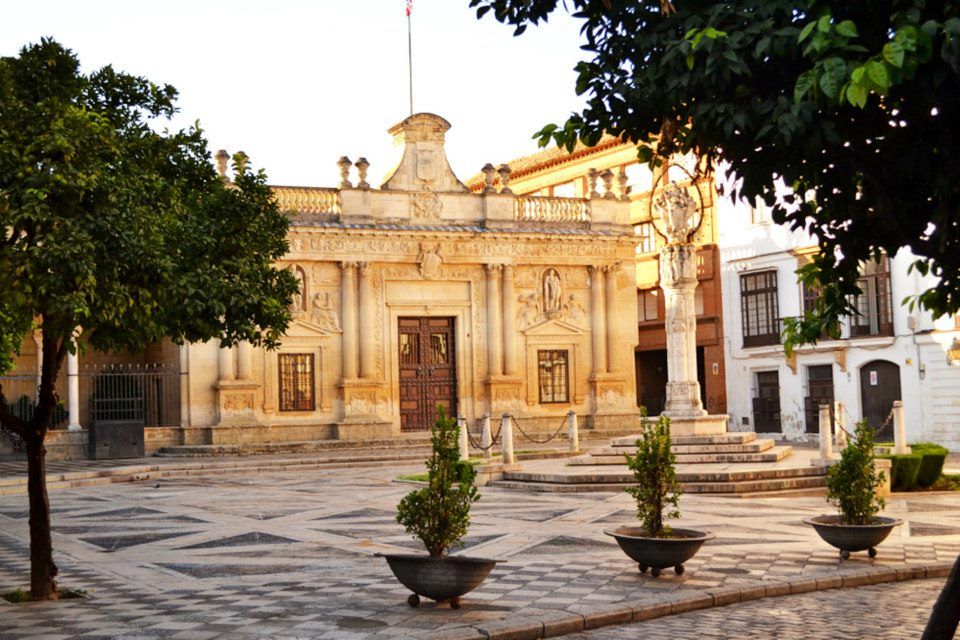
As you continue, the tour moves through decorative squares and palaces, including the site of the old Town Hall. These stops matter because they show you the city’s public life. Churches are important, but town squares and civic sites tell you how people gathered, governed, and performed community rituals.
I enjoy segments like this because they break the pattern of only-looking-at-monuments. Instead, you’re reading Jerez as a lived-in city: where decisions were made, where people walked, and where architecture shaped daily habits.
You may also pick up everyday local details from the guide along the way. One theme that comes up in this kind of Jerez-focused storytelling is the city’s connection to orange trees and local food culture. Even if the exact shop stops vary, the guide usually helps you notice the small cues that make the city feel like home for locals.
Finishing with two Jerez wines: how to make the tasting count
The tour offers an option for tasting 2 Jerez wines, which is a great way to turn the city’s cultural story into something you can taste. Sherry can feel intimidating at first—different styles, terms, and aging methods—but a guided tasting makes it simpler because you get context, not just a glass.
I like that the tasting is tied to the end of the walk. By then, you’ve already learned that Jerez is the center of sherry production in Spain. That background makes the tasting feel earned rather than like a generic add-on.
Some departures may include a bit of extra entertainment around the tasting experience, and flamenco can show up depending on what’s scheduled at the moment. If you’re into live performance, you’ll likely enjoy the atmosphere of a classic tabanco setting when it lines up with your visit.
What you should do during the tasting: ask the guide what makes each wine different and what to look for as you taste. Even simple questions like how it’s made or how it’s typically served can turn two sips into a real learning moment.
Price and value: $26 for a guided walk with real structure
At around $26 per person for a 2-hour guided experience, the value comes from what’s included and what isn’t. Your guide and the fees and taxes are included, which matters because it keeps the tour straightforward.
The trade-off is the same one you’d expect with a tight historic-center walk: tickets are not included, and inside visits to the Alcázar and cathedral aren’t part of this stop. So the tour is best viewed as interpretation and orientation. You’ll come away knowing where to go next if you want more ticketed sites.
For many travelers, that’s exactly the right balance. You get a guide to connect the dots, plus a tasting option if you want the sensory payoff. If your goal is only inside entry to big-ticket sites, you might feel this is more of a guided overview than a site-all-day pass.
For people who want context, this price is fair. You’re paying for the guide’s ability to translate eras into street-level meaning—what to notice, why it matters, and how Jerez became Jerez.
What you’ll actually feel during the 2-hour walk
This is a walking tour, so the success depends on comfort and pace. Wear comfortable shoes and bring water, especially in warmer months. The route includes changes in surfaces and stretches where you’ll pause to look at details, so you’ll want your feet ready.
Group size can also shape the vibe. The experience notes private group availability, and that often makes the conversation feel more like a friendly walk with someone who knows the city. Even in standard group formats, you’ll usually get enough attention for your questions.
There’s also a heads-up about language. English, Spanish, and French are offered, and some visits may run simultaneously in two languages. That doesn’t usually hurt your experience, but it can affect how directly the guide speaks to your specific group if you’re nearby someone else’s language track.
Wheelchair access is supported, which is important if you’re traveling with mobility needs. You’ll still want to confirm your meeting point and route details with the operator before arrival, since meeting point can vary depending on the option booked.
Should you book the Jerez Historic Center guided tour?
Book it if you want a focused, guided way to understand Jerez beyond sherry labels. This works especially well for first-time visitors because the tour connects Muslim and Christian neighborhoods, touches standout architecture like San Dionisio, and gives you a clear timeline from early settlers through later powers.
Skip it or add something else if your main goal is interior access. Since Alcázar and cathedral interiors are not included, you’ll want to pair this with separate tickets if you’re chasing inside rooms.
If you love good guiding, this tour is a strong bet. Names like Rose, Lucia, Martina, Charo, Angel, and Marta show up across departures, and the common thread is story-driven walking that helps you look longer at façades, squares, and street corners.
You only have two hours—use them well. This tour tends to do that by giving you context you’ll carry into the rest of your Jerez day, including what you taste at the end.
FAQ
How long is the Jerez Historic Center Guided Tour?
It lasts 2 hours.
Where does the tour meet?
The meeting point is in Plaza del Arenal, though it may vary depending on the option booked.
What languages are available?
The live guide is available in English, Spanish, and French.
Is the Alcázar interior included?
No. Tickets are not included, and inside visits to the Alcázar are not part of this tour.
Is the cathedral interior included?
No. Tickets are not included, and inside visits to the cathedral are not part of this tour.
What is included in the price?
Your guide and all fees and taxes are included.
Is the sherry tasting included?
A tasting of 2 Jerez wines is available as an option you can choose.
Is the tour wheelchair accessible?
Yes, it is wheelchair accessible.
Are there any booking restrictions?
Yes: the tour requires a minimum reservation of 2 adults, and a booking of 1 adult and 1 child is not allowed.
Is a private group available?
Yes, a private group option is available.