REVIEW · BURGOS
Visit a winery of the 19th century and its draft
Book on Viator →Operated by La Bodega del Tesoro · Bookable on Viator
A few stair steps and the whole place changes. You start in a modest set of buildings, then end up in cellars tied to wine-making traditions from the 1800s at La Bodega del Tesoro. What makes it special is the way the restoration shows off spaces that were literally kept away from the public for decades, then reopened with a clear plan for education and tastings. I love the focus on hands-on details, and you’ll like how small-group the experience feels.
My favorite part is the barrel-room setting plus the tasting itself, where the wine is presented as small production, not mass-market noise. The only real drawback to plan around: you’re paying for a guided format that’s short (about 1 hour 30 minutes), so you won’t have hours to wander solo afterward.
In This Review
- Key things you’ll notice at La Bodega del Tesoro
- The setting: a small village winery with a big sense of place
- Entering the 19th-century spaces: downstairs to the barrel room
- What you learn about carbonic maceration and traditional winemaking
- The tasting: 2 wines, snacks, and small-production pours
- The guide factor: personal, detailed, and actually talkative
- Timing and logistics: simple, short, and guided
- Who should book this winery tour (and who might skip it)
- Practical tips to get the most from your 90 minutes
- Should you book La Bodega del Tesoro?
- FAQ
- How long is the winery visit?
- What is included in the ticket price?
- How much does it cost per person?
- What language is the tour offered in?
- How big are the groups?
- Is the tour refundable if I cancel?
Key things you’ll notice at La Bodega del Tesoro
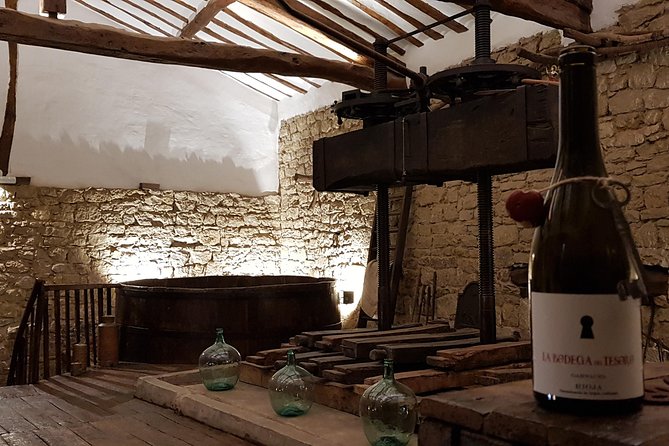
- 19th-century restoration: spaces that were closed for around 30 years are now shown in an organized way.
- Barrel room + caves: you go below, then keep going into caves/hillside areas tied to the property.
- Carbonic maceration focus: the tour explains a traditional method used here.
- Small-production tastings: you sample limited runs and other small releases rather than generic pours.
- Snacks included: you get food to go with the wines, not just sips.
- Max 10 people: the group size helps the guide keep it personal and conversational.
The setting: a small village winery with a big sense of place
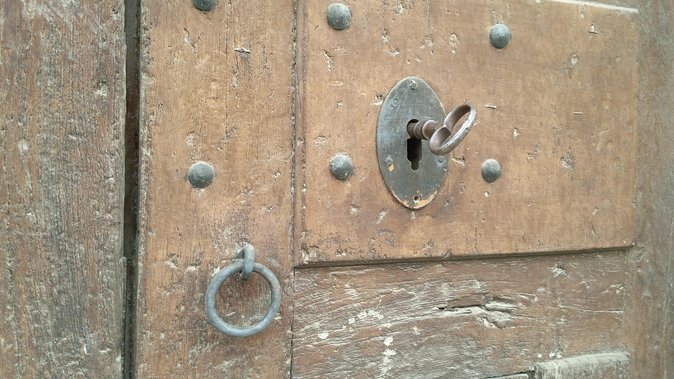
This is the kind of tour that can fool you at first. You arrive in a small town feeling like you’ve shown up to a few plain buildings. Then you step inside and the place feels cared for in a very intentional way—tasteful, organized, and clearly restored rather than patched up. It makes sense why the winery had to be closed for years: it needed time to come back properly.
La Bodega del Tesoro is the star of the show, and it’s tied to the period when it opened in 1881. That date matters because you’re not just visiting something old. You’re seeing how an old site can be explained in modern terms—how the maker’s choices and the room design shape what ends up in the glass.
If you like wineries that feel like places where decisions were made, not theme parks, this format should click for you. You’ll get an actual walk through, plus the story of how the property stayed hidden and then reappeared with care.
You can also read our reviews of more wine tours in Burgos

Entering the 19th-century spaces: downstairs to the barrel room
One of the quickest ways to understand what you’re paying for is the physical journey. You descend a few flights of stairs and you immediately shift from “above-ground curiosity” to cool, cellar air. That’s where the barrel room comes in, tied to the winery’s older roots and presented as a lived-in production area.
A big part of the value here is the contrast. The restoration makes the setting readable: you can see what belongs to wine-making life—barrels, the working rhythms of the space, and the way the rooms are laid out. You also get short narrated material (short movies) that sets the context, so you’re not guessing why anything is the way it is.
I like that the tour doesn’t treat the cellar as a dark hallway with random facts. It’s framed as a working environment. You’ll walk, listen, and then move into tasting mode before your brain gets bored.
What you learn about carbonic maceration and traditional winemaking
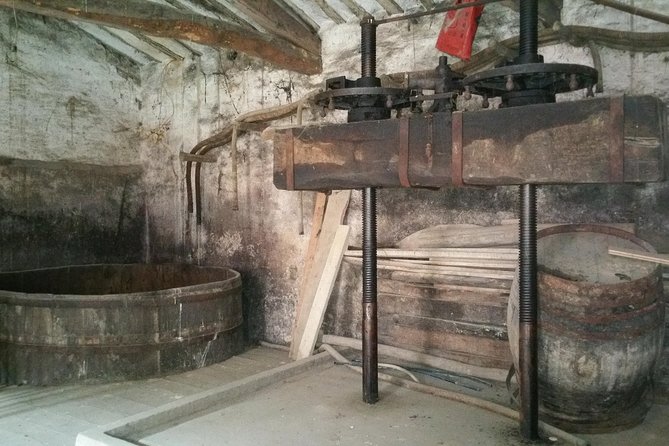
The winery’s tour centers on how wine was traditionally made here through carbonic maceration. Even if you don’t know the term, the guide’s approach helps it make sense. You’ll connect the method to the style of wine you’re tasting, which is the difference between collecting facts and actually understanding what your palate is doing.
This matters because wine talk can drift into vague territory if there’s no structure. Here, the explanation gives you a framework. Instead of just tasting and moving on, you taste with a lens: method, production choices, and how the winery thinks about its own output.
Also, the conversation tends to be grounded in real-world wine business considerations, not just romantic vineyard talk. You’ll hear about regional ideas, competition, terroir, and changing habits—enough context to leave with a clearer picture of how a place like this survives and evolves.
The tasting: 2 wines, snacks, and small-production pours
Tasting is built into the ticket. You’ll get admission included plus a tasting of 2 wines with snacks. That’s a practical combo: two pours is the right number for learning without turning it into a race. Add snacks and the whole thing stays comfortable even if you’re not used to tasting rooms.
The tasting flow also helps you stay engaged. In the cellar/barrel setting, you may get a sample tied to the process—there’s a moment where a barrel gets opened and you taste what’s coming from that small-production context. Limited quantities matter because it changes the vibe. You’re not tasting the same lineup that’s always available; you’re tasting what the winery has made and is ready to share.
Then you move on to the vinoteca area, where you get samples of other small productions plus nibbles of homemade appetizers. From the way it’s presented, it feels like the winery is showing you variety without losing the thread of what the place is about. You also might find hot and cold food on the patio of the bar area, which helps if you want something a bit more substantial during the short visit.
For value: yes, it costs $65.17 per person, but it includes the admission and the tasting experience (not just a “buy-a-glass” model). For a 90-minute guided visit in a setting like this, it’s the kind of price that makes sense if you enjoy wine education and don’t want to figure out timing yourself.
The guide factor: personal, detailed, and actually talkative
This is the kind of winery tour where the guide can make or break it, and it sounds like the guide experience here is strong. One named guide you might get is Jose, and his style is detail-heavy. You’ll get more than a script. The talk includes terroir and region dynamics, and it also touches the business side of wine—how competition and changing habits affect what a winery does.
You’ll also see short narrated movies before the walk through. That’s useful. It gets you oriented fast, which matters because once you’re underground, it’s easy to feel like you’re just following someone through rooms. The intro helps you understand what you’re seeing before you get lost in the beauty of old stone.
With a maximum of 10 travelers, questions are welcome and the guide can respond without rushing. That’s a big reason this tour earns strong marks for being both fun and informative without feeling like a lecture.
Timing and logistics: simple, short, and guided
This runs about 1 hour 30 minutes. That time window is perfect for fit-and-finish touring: enough to see key spaces, learn the method, and taste without wasting your day. It also means you should treat it like a scheduled activity, not a casual stop.
Start is at C. Cuevas, 45, 26214 Cuzcurrita de Río Tirón, La Rioja, Spain, and the tour ends back at the same meeting point. The meeting point being close to parking helps. In a small village like this, that can be the difference between enjoying your start and feeling stressed searching around.
The ticket is mobile, so you can keep it on your phone. You’ll want to show up ready to follow the group—this is not the sort of place where you wander freely for long stretches.
Who should book this winery tour (and who might skip it)
Book this if you like:
- Old wineries that are explained well, not just photographed.
- Wine tasting with context—method, region, and why certain choices matter.
- Small-group experiences where you can ask questions and get real answers.
Skip it if you want a long, self-guided winery day. This tour is short by design, and you’ll taste a set number of wines and move on. It’s not a half-day tour with a lot of free time.
It also fits well if you don’t want a complicated plan for transport and scheduling. If you’re already in the area, this gives you a structured winemaking experience without needing to build your own itinerary.
Practical tips to get the most from your 90 minutes
A few small moves make the experience smoother:
- Eat lightly before you go (the snacks help, but you’re still tasting and learning).
- Bring a question or two about what you like in wine—sweet vs. dry, light vs. structured, fruit vs. earthy.
- Use the time for comparison: taste the first wine, then treat the second as a contrast, not the same flavor again.
- Pay attention when they explain carbonic maceration; it’s one of the tour’s anchors.
If you’re visiting several wine stops, keep this one early or at a point where your palate isn’t fully tired. The tour’s value comes from noticing differences.
Should you book La Bodega del Tesoro?
I think you should book if you want a focused, well-led winery visit that teaches you while you taste. The combination of barrel room + caves, a clear method spotlight like carbonic maceration, and included snacks makes it feel like you’re getting more than a quick pour. With a small group size and guides who are willing to share detailed context (Jose is one example), it’s built for understanding, not just consumption.
If you’re looking for a big, flashy factory-style tour with lots of independent time, this might feel too compact. But if your idea of a great wine day is a real working place, a short walk through history, and a tasting that makes sense in your head afterward, this one is easy to recommend.
FAQ
How long is the winery visit?
The tour lasts about 1 hour 30 minutes.
What is included in the ticket price?
Admission is included, along with a tasting of 2 wines and snacks.
How much does it cost per person?
The price is $65.17 per person.
What language is the tour offered in?
The tour is offered in English.
How big are the groups?
The experience has a maximum of 10 travelers.
Is the tour refundable if I cancel?
This experience is non-refundable and cannot be changed, and the amount paid will not be refunded if you cancel or request an amendment.
If you want, tell me your travel dates and what other winery stops you’re considering nearby—I can help you pick the best order so tastings don’t start to blur together.