REVIEW · MADRID
Andalusia: Cordoba, Seville & Granada from Madrid – 4 Nights
Book on Viator →Operated by Julia Travel S.L · Bookable on Viator
Four cities, one big story. In five days you’ll trace Spain’s Moorish-to-Christian mix across Cordoba and Granada, with the Mezquita and the Alhambra as the headline acts. The whole thing starts and ends in Madrid, so it feels like a focused escape rather than a complicated relocation.
I especially like two parts: the guided Mosque-Cathedral experience in Cordoba and the included entry to Alhambra + Generalife Gardens in Granada. On many runs, the guide team matters a lot here—Grace often gets praised for being funny and story-driven, while local guides like Sergio can turn the Granada time into something you remember.
One thing to plan for: the schedule is intense. The walking pace and how smoothly the narration works in English can vary, so if you need a slower tempo or guaranteed English-only explanations, you should think carefully before booking.
In This Review
- Key things to know before you go
- A fast loop through Andalusia’s biggest monuments
- Madrid start: what the day one logistics feel like
- Cordoba: Mezquita Cathedral plus the Jewish Quarter walk
- Seville’s essentials: Santa Cruz, Plaza de España, and cathedral exterior
- Granada and the Alhambra day: big sights with strict rules
- Granada beyond Alhambra: free day and El Albaicín option
- Toledo on the return: quick medieval street reality check
- Hotels and meals: what 4-star usually means in Spain
- Optional flamenco and add-ons: how to choose without wasting time
- Walking pace, English narration, and the coach rhythm
- Value for $949.11: what you’re paying for and what you’re not
- Should you book this Andalusia circuit?
- FAQ
- How long is the tour and where does it start in Madrid?
- How many nights of accommodation are included?
- What are the major included attractions?
- Is breakfast included?
- Do I need a passport for the Alhambra?
- Does the coach have a bathroom?
- What luggage can I bring?
- Is hotel pickup or drop-off included in Madrid?
- What is the cancellation timeline for a refund?
Key things to know before you go
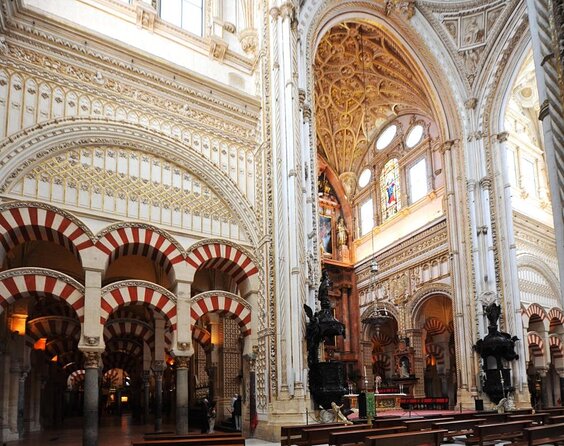
- Mosque-Cathedral (Cordoba) and Alhambra/Generalife (Granada) are included
- Seville hits Santa Cruz, Maria Luisa Park, Plaza de España, plus cathedral exterior
- Group size stays limited (max 40) with an air-conditioned coach
- Four nights in 4-star hotels, with breakfast included each morning
- Passport is mandatory on the Alhambra visit day
- Toledo adds the three-cultures story on the return trip to Madrid
A fast loop through Andalusia’s biggest monuments
This tour is built for people with limited time who still want the “wow” factor. You’re not just seeing cities—you’re moving through layers of influence: Islamic architecture, Catholic Spain, and the older Jewish presence that echoes through neighborhoods and street patterns.
The pacing is the deal. You’ll get guided context in each place, then a bit of breathing room to wander on your own. That structure is great if you want convenience and confidence (figuring out where to go is half the battle in these big historic centers).
You can also read our reviews of more tours and experiences in Madrid.


Madrid start: what the day one logistics feel like
You begin at 8:00 am from Meliá Castilla in Madrid, and you’ll end back at the same meeting point after the last stop. There’s no hotel pickup or drop-off, so you’ll want to be at the meeting place on time rather than improvising last-minute transit.
You ride in an air-conditioned coach, and there’s no bathroom on the coach. Many trips are still manageable because toilet stops get spaced out, but you’ll feel the time pressure more than on a do-it-yourself trip. Bring small essentials—water, a snack you trust, and good walking shoes—because this itinerary expects you to be ready.
Group size matters here: maximum 40. That’s small enough to feel organized, but big enough that timing and seating can still get a little chaotic if the group has mismatched needs.
Cordoba: Mezquita Cathedral plus the Jewish Quarter walk
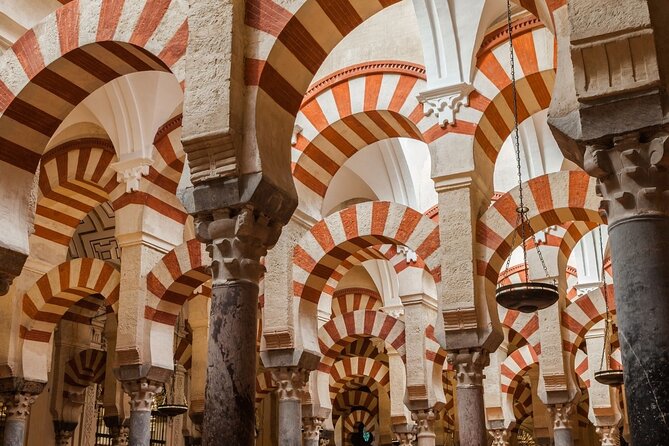
Cordoba is the kind of city where the streets almost explain the story for you. The star stop is the Mezquita Cathedral de Cordoba, where your guided visit focuses on the mosque-cathedral complex first, then flows into the older lanes of the Jewish Quarter.
This is one of the best values on the itinerary because the monument is huge and details get lost if you wander without context. With a guide, you learn how to “read” what you’re seeing—arches, transitions of style, and why the place feels both Islamic and Catholic at the same time.
After the Cordoba block, you drive onward toward Seville. That means you’ll arrive with some energy left, but you won’t have the luxury of a long evening. If you’re the type who wants to linger over sunset photos, plan to be efficient with free time when it appears.
Seville’s essentials: Santa Cruz, Plaza de España, and cathedral exterior
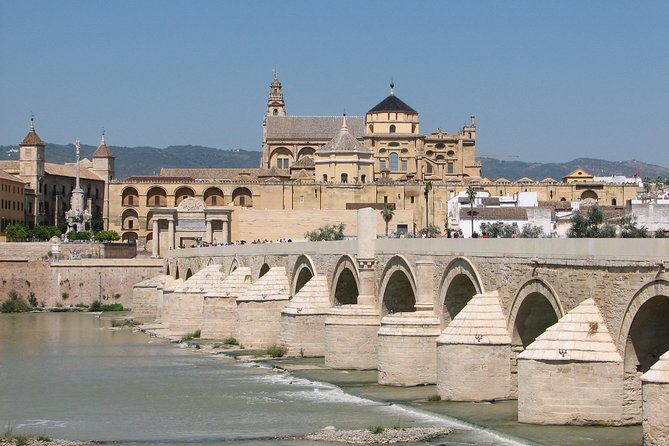
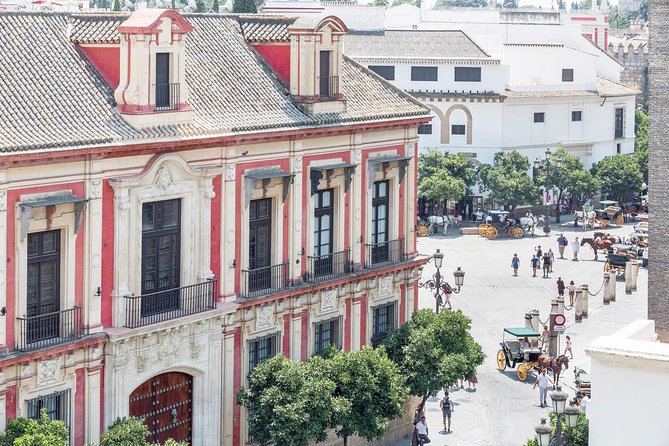
Seville is where the tour leans into atmosphere. You’ll spend time in Barrio Santa Cruz, then move through Maria Luisa Park and Plaza de España—three stops that give you classic Seville visuals fast.
You also get a scheduled visit to the Cathedral of Seville, but here’s the catch: you’re seeing the exterior, not the full interior. That doesn’t make it useless (the building still dominates the cityscape), but it can feel like a missed opportunity if your top priority is standing inside the cathedral itself.
You’ll get an afternoon of free time in the historic center, with an optional flamenco add-on depending on how you want to spend your evening. If you’re a “I must see the full set” person, note that the Real Alcázar of Seville is not part of the included sightseeing here. Some people handle that by booking their own tickets and slot times, so you might want to do the same if you care deeply about the palace side of Seville.
Granada and the Alhambra day: big sights with strict rules
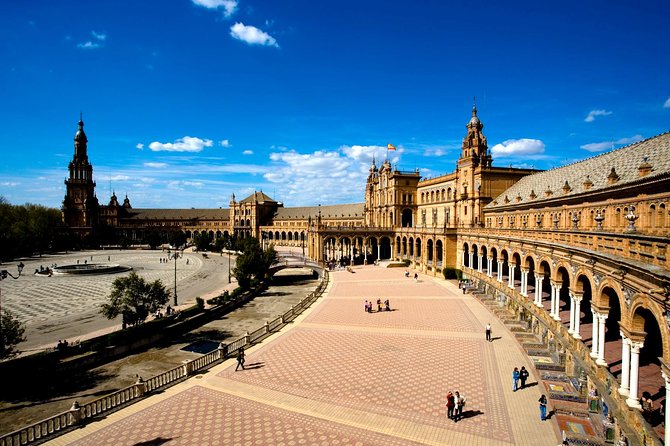
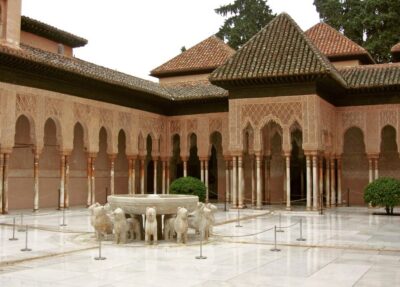
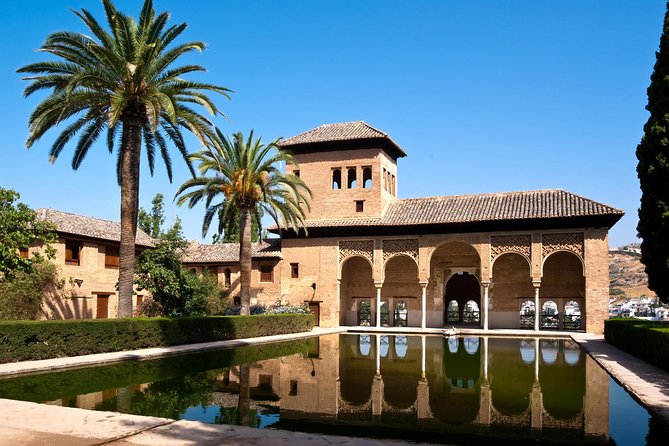
Granada is the emotional high point for most schedules like this, because Alhambra + Generalife hits hard. Your included visit covers the Alhambra complex and the Generalife Gardens in about three hours with a guide.
This is the day where planning pays off. The tour info says it is mandatory to present your passport on the Alhambra visit day. If you forget it, the entire visit can become a problem. Also, times can be tight once you’re inside, so you’ll want to move with purpose rather than stopping for every viewpoint.
Alhambra works best when you understand the basics: why courtyards, water channels, and geometric design aren’t just decoration—they’re how the site communicates power and daily life. The guide time helps you avoid the common trap of thinking you’re just looking at pretty walls.
An optional flamenco option may be offered in the Sacromonte quarter. Some people love that connection between performance and place; others prefer to keep their time for Granada neighborhoods.





Granada beyond Alhambra: free day and El Albaicín option

On the next day, you get a more flexible Granada setup. Breakfast comes first, then you’re free to explore on your own. The idea is that Granada is more than the palace complex—its Muslim heritage blends into the Christian city grid through neighborhoods, churches, and older streets.
If you want a guided second day, there’s an optional El Albaicín experience. The tour description highlights the neighborhood’s World Heritage status and the way Muslim heritage shows up in spaces that later became Christian use (like older mosques turned into churches). There’s also an option to include Sierra Nevada time depending on the program.
This is where you can slow down. If Cordoba and Seville felt like “see it fast,” this day can turn into “understand it.” Still, it’s optional—so if you choose self-guided wandering, you’ll get better results by having a short plan. Pick one or two viewpoint zones and one or two streets to return to. Otherwise, Granada’s hills can swallow time quickly.
Toledo on the return: quick medieval street reality check
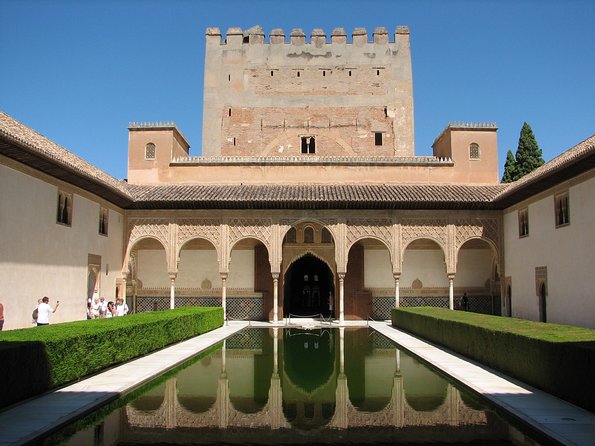
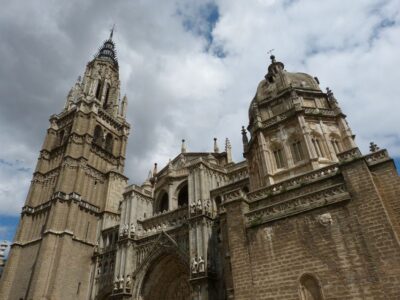
Toledo is added on the way back to Madrid, and it delivers the three-cultures perspective in a compact format. You’ll drive north, then enjoy a short guided tour through the old town’s narrow streets. It’s described as an imperial city with Christians, Moorish, and Jewish histories shaped into the architecture and town layout.
The time is short, so you’ll get the most out of Toledo if you go with curiosity rather than checklist mode. Focus on what the town layout teaches you: how hills, defensive lines, and street turns keep the medieval vibe intact.
You’ll then continue back to Madrid and finish at the meeting point. If you’re the type who hates rushed exits, this last-day structure is the one you’ll feel most—so plan to save your “final exploring” energy for Madrid, not Toledo.
Hotels and meals: what 4-star usually means in Spain
The tour includes four nights in hotels in a 4-star category, but Spain’s star system can feel different from what people expect elsewhere. The tour notes also explain that “standard-grade” is often around 3–4 star quality, while “superior-grade” is typically closer to true 4-star with better locations and facilities.
Based on on-the-ground feedback patterns, hotel quality can be solid, but there are occasional complaints about food service—especially later in the trip. Breakfast is included for all four mornings, but lunches and dinners are not guaranteed unless specified during the program. That means your dining experience can vary day by day.
If the upgrade option exists (like superior rooms), it’s usually the easiest way to reduce stress. It can also help when you’re exhausted from walking—because a comfortable bed and a good bathroom setup can matter more than you expect on day four.
Optional flamenco and add-ons: how to choose without wasting time
Flamenco fits Andalusia like a soundtrack fits a movie. This tour includes the option of flamenco in Seville and an optional Gypsy flamenco performance connected with Sacromonte in Granada.
The key word is optional. Some extra tours and add-ons can feel like a pay-to-speed-up choice, and not everyone finds every add-on worth the money. For example, people have criticized certain extra experiences like a Seville river cruise/boat-style add-on as less satisfying than hoped.
Here’s my practical advice: pick one “performance” night and skip the rest unless you’re very sure. Also, one recurring tip is to confirm how excursions are paid for. If you don’t carry cash euros and you’re counting on cards, ask in advance whether the optional side trips accept credit cards. It saves headaches.
Walking pace, English narration, and the coach rhythm
This itinerary has a lot going on in relatively few days. Even when the guides keep things at an easy speed, you’ll spend time on your feet in old city centers with uneven pavement, lots of stairs, and tight streets.
You’ll also want to be realistic about narration. Even though the tour is offered in English, some runs have had reports of explanations starting in Spanish and then switching to English later. That can be frustrating if you rely on the guide for context and you’re trying to follow along while walking.
If you’re concerned, choose your strategy early:
- Wear shoes that don’t slip on cobblestones.
- Take short pauses when you need them rather than trying to sprint.
- Ask the guide (politely) about how they handle English explanation timing at the start of the day.
And remember: the coach has no bathroom, so plan for toilet breaks like a normal person, not like you’re on a quick afternoon shuttle.
Value for $949.11: what you’re paying for and what you’re not
At $949.11 per person, the cost is not just for travel—it’s for convenience plus a packed route. You’re paying for:
- four nights of hotel lodging
- air-conditioned coach transport
- guided visits in Cordoba, Seville, Granada, and Toledo
- included entrance to major sights like the Mosque-Cathedral, Seville Cathedral (as listed), and the Alhambra + Generalife complex
- travel insurance
- breakfasts (4)
What you’re not paying for is time. And some key sights may not be fully included—for instance, Seville’s cathedral visit is listed as exterior. If the interior of Seville Cathedral or specific palace stops matter most to you, you may want to budget for separate tickets and time on your own.
So the value comes down to your travel style. If you want a guided highlight circuit with minimal planning and you’re happy with a fast pace, this can feel like good value. If you want deeper time in each city, you’ll likely do better splitting Andalusia into longer stays and handling tickets directly.
Should you book this Andalusia circuit?
Book it if you:
- want a structured, guided route across Cordoba, Seville, Granada, and Toledo without figuring out logistics
- care about the big monuments and want entrance included
- like meeting a guide at each stop and using free time to wander, not to research
Skip it or rethink it if you:
- need slower walking and more time in each city
- consider Seville Cathedral interior or the Real Alcázar a must-do, since this tour lists cathedral time as exterior and does not include Alcázar
- want strict English-only narration at all times (some experiences suggest translation timing can vary)
My bottom line: this is a strong “greatest hits” plan. It’s best when you treat it like a fast cultural sampler—and then come back later for the slower, deeper versions of the places that hooked you.
FAQ
How long is the tour and where does it start in Madrid?
It runs for about 5 days. It starts at 8:00 am at Meliá Castilla on C. del Poeta Joan Maragall, 43, Tetuán, Madrid, and it ends back at the same meeting point.
How many nights of accommodation are included?
Four nights of accommodation are included as part of the tour.
What are the major included attractions?
Included entrance covers the Mosque of Cordoba, Seville Cathedral, the Alhambra complex, and the Generalife Gardens, plus guided visits in Seville, Cordoba, Granada, and Toledo.
Is breakfast included?
Yes. Breakfast is included for 4 mornings.
Do I need a passport for the Alhambra?
Yes. Presenting your passport is mandatory on the day you visit the Alhambra complex.
Does the coach have a bathroom?
No. There is no bathroom on the coach.
What luggage can I bring?
You can bring 1 regular suitcase and 1 handbag per person. Extra luggage may be charged, and luggage handling is the customer’s responsibility.
Is hotel pickup or drop-off included in Madrid?
No. Hotel pickup and drop-off in Madrid are not included.
What is the cancellation timeline for a refund?
You can cancel up to 6 days in advance for a full refund. If you cancel 2–6 days before the experience starts, you get a 50% refund, and less than 2 days before means no refund.