REVIEW · BARCELONA
Barcelona Authentic Paella and Sangria Cooking Class
Book on Viator →Operated by Foodies Xp · Bookable on Viator
Paella lessons beat another tapas stop. In this small-group class (max 20), you start with a cava welcome, then you cook paella hands-on with an English-speaking chef and finish with a shared three-course meal: pan tomàquet, paella, and Catalan cream. The best part is how practical it feels—knife skills, sauce decisions, and timing, all explained while you’re doing it.
One possible drawback: the “wow” setting isn’t always what people picture. A few past sessions noted venue differences (some were less rooftop-like, with signage or setup that wasn’t obvious), so I’d treat the location vibe as flexible rather than guaranteed.
In This Review
- Key Highlights You’ll Actually Care About
- A Welcome Cava and What You Really Learn
- Pan Tomàquet: The Starter That Explains the Whole Country
- Seafood Paella (Plus Options) and the “Timing” Skill
- Sangria and Wine: The Drink That Makes the Evening Click
- Catalan Cream: Ending Like a Local (Not Like a Tourist)
- Where You Meet Matters: Carrer de Badajoz and Getting There Smoothly
- Small Group Size and Chef Styles (Luc, Christina, Tommy, Benjamin)
- Price and Value: Is $120.94 Worth It?
- Potential Drawbacks to Plan Around (No Surprises, Please)
- Who This Class Suits Best
- Should You Book This Paella and Sangria Class?
- FAQ
- How long is the Barcelona paella and sangria cooking class?
- What language is the class offered in?
- What’s included in the meal?
- Is there a cava welcome?
- Where does the class meet?
- How big is the group?
- Do I get a ticket on my phone?
- When will I receive confirmation?
- Can I bring a service animal?
- What is the cancellation policy?
Key Highlights You’ll Actually Care About
- Cava welcome that kicks the evening off like a local aperitivo
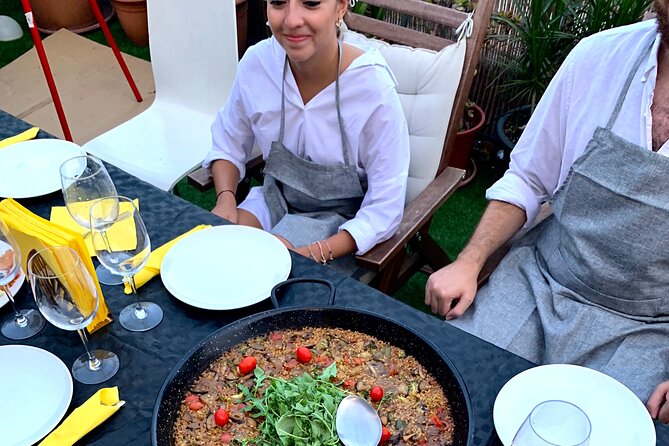
- Hands-on paella coaching with seafood, chicken, or vegetarian options available
- Starter to dessert: pan tomàquet, paella, then Catalan cream
- Sangria or wine served with the meal for a true Spanish finish
- Small group energy where you can ask questions while you cook
A Welcome Cava and What You Really Learn
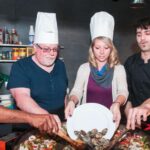
This class is built around one big idea: you shouldn’t just watch paella being made. You should do the work. You’ll get a short intro from the chef, plus the ingredients you’ll use, and then it’s into the kitchen workshop.
The pacing helps. You’re not stuck waiting for a lecture. You’re chopping, mixing, and following steps as they happen, with the chef nearby to answer questions. If you’re a beginner, that matters. If you cook at home, you’ll still appreciate the “why” behind the process—especially how paella steps connect to flavor and texture.
You’ll also notice the class doesn’t treat paella like a single dish and call it a day. The menu includes a starter, dessert, and a drink pairing—so you leave with a fuller picture of how a Barcelona meal feels, not just one recipe.
You can also read our reviews of more cooking classes in Barcelona
Pan Tomàquet: The Starter That Explains the Whole Country
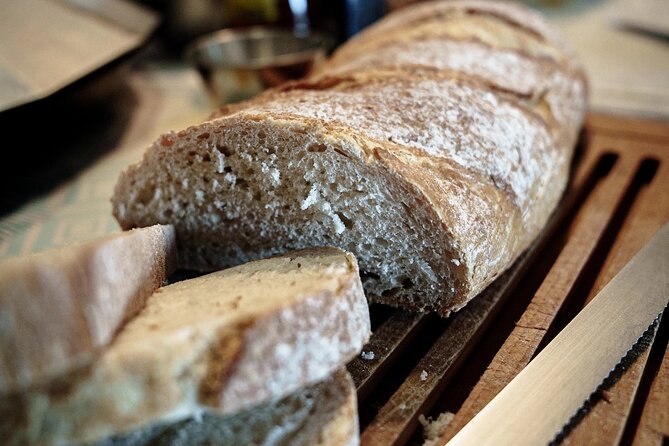
The starter is Spanish pan tomàquet—tomato rubbed bread. It’s simple, but it’s not casual. The flavor comes from good olive oil and the right tomato-mash texture, plus a sensible amount of garlic.
In sessions described by guests, you may even help with prep that feeds into the whole experience. One person highlighted chopping ingredients they used for the sangria and paella. Another noted learning tomato, garlic, olive oil spread on bread. Either way, pan tomàquet is a great warm-up because it uses the same core ingredients you’ll see again and again in Spanish cooking: tomatoes, olive oil, and garlic working together.
Practical tip: don’t overthink it during prep. The chef’s instructions matter most. Your job is to follow their rhythm and taste as you go, if tasting is part of the flow in your group.
Seafood Paella (Plus Options) and the “Timing” Skill
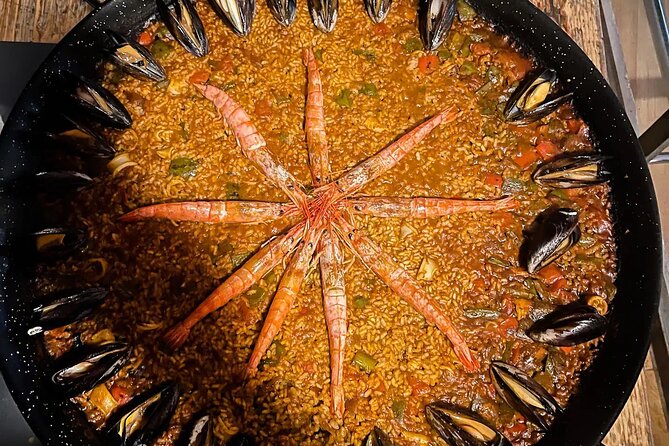
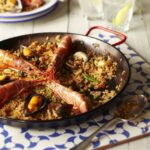
The main event is paella, and it can be customized with seafood, chicken, or a vegetarian-friendly version. Seafood paella is the example on the menu, but the key takeaway is choice.
Here’s why this class is worth your time even if you’ve had paella before: you learn process, not just ingredients. Paella is one of those dishes where timing changes the result. Getting the heat right, adding ingredients at the right moment, and managing the cooking stages is where the flavor locks in.
Some guests noted that a few steps can be partially prepared ahead of time, so not every person gets every stirring moment. That’s normal for group cooking. Still, you should expect hands-on instruction through the key steps and plenty of chances to ask questions. If you’re the type who wants maximum participation at every station, I’d watch for how your group is structured when you arrive and ask the chef where your help is most needed.
Also, remember this is a learning class, not a performance. If your goal is to learn how to recreate the dish later, ask about substitutions (shellfish you can’t find at home, rice type, or how to adjust if you cook for fewer people).
Sangria and Wine: The Drink That Makes the Evening Click
You’ll get sangria or wine with the shared meal. The class starts with cava, too, so you’ll be in the Spanish aperitivo mood early.
Sangria here isn’t just a sweet afterthought. It’s part of the pacing: you’re cooking, then you shift into a relaxed meal mode. Several guests called out how refreshing it was and how well it tied everything together.
One balanced caution: a couple of comments suggested beverage options were limited during the meal. That doesn’t mean it’s watered down or bad. It just means you should treat it as a paired, included beverage—not an open bar.
Practical tip: eat slowly once you sit down. Sangria goes down easy. Paella is filling. If you keep a steady pace, you’ll enjoy the dessert instead of skipping it by accident.
Catalan Cream: Ending Like a Local (Not Like a Tourist)
Dessert is Spanish Catalan cream. You’ll get that sweet, comforting finish that feels very “Spain, evening after dinner” rather than heavy cake-shop energy.
It’s also a smart part of the menu choice. After handling savory cooking, learning bread-with-tomato flavors, and eating paella, the cream gives you contrast. It makes the whole class feel like a real dinner, not a snack session with cooking.
A few more Barcelona tours and experiences worth a look

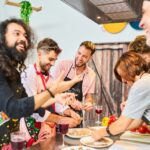
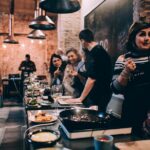

Where You Meet Matters: Carrer de Badajoz and Getting There Smoothly
The meeting point is Carrer de Badajoz, 115, Sant Martí, 08018 Barcelona, Spain. The activity ends back at the meeting point, so you don’t need to plan a separate return.
Two practical realities to keep in mind from prior experiences:
- Some guests said the directions or address listing didn’t match the actual location on the day.
- One guest mentioned difficulty finding the venue due to no signage.
So do this simple thing: arrive early enough to get your bearings, and read any updated location notes you receive before you go. Barcelona neighborhoods work best when you’re not sprinting at night. Plan to arrive with a little buffer.
Good news: the tour is near public transportation, so you’re not trapped in “either I taxi or I’m late” territory.
Small Group Size and Chef Styles (Luc, Christina, Tommy, Benjamin)
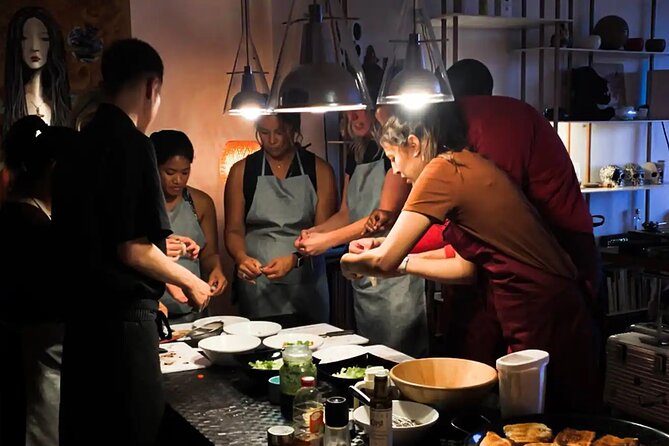
This class caps at 20 travelers, which is a sweet spot. Big enough for fun, small enough to keep a back-and-forth vibe while you cook. Guests described an interactive setup where people could ask questions and the chef stayed engaged.
Chef personalities come through in the details people shared. Reviews named chefs like Luc, Christina, Benjamin, and Tommy as great hosts who guided step-by-step and kept things comfortable—whether you’re a seasoned cook or brand new. Some chefs were described as patient and engaging, and others as fun and direct.
What that means for you: you’re more likely to leave with clarity. Paella isn’t hard, but it has steps that feel confusing until someone explains them in plain terms. The chef role here is that translator.
One thing to watch: a few guests felt hands-on time was uneven for everyone. If your priority is maximum stirring/chopping time, arrive ready to participate and ask early how your group will rotate tasks.
Price and Value: Is $120.94 Worth It?
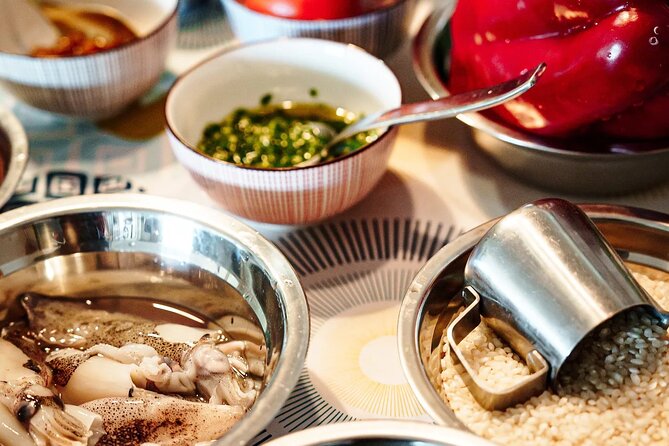
At $120.94 per person for about 2 hours 30 minutes, the value comes from what’s included—not just the recipe.
You’re paying for:
- instruction from a professional chef
- ingredients and tools for a real cooking workflow
- a structured three-course meal (starter, paella, dessert)
- sangria or wine included with the meal
- a small-group setting where you can interact
If you compare this to a normal dinner out, you’re not just buying food. You’re buying the experience of making it and learning how to recreate parts of it later. That’s why the high approval rate makes sense in practice: when the class hits well, it feels like your money went to both education and a satisfying meal.
When it might feel less worth it: if you arrive expecting a very specific premium setting (like a rooftop moment), and your session ends up in a different type of venue. A couple of guests described venue disappointment when expectations leaned toward a rooftop setup. In that case, the cooking and meal might still be good, but the “experience package” feels smaller than promised.
My advice: think of the main value as the cooking + dinner. Let the venue be a bonus, not the core reason you book.
Potential Drawbacks to Plan Around (No Surprises, Please)
This is the honest part. Most classes run smoothly, but the details that affect your satisfaction include:
Venue expectations can vary.
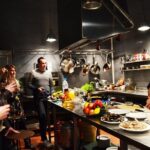
Some comments referenced rooftop or “view” vibes, while others described an industrial room setup instead. If a rooftop atmosphere is a must for your trip, confirm the exact venue details as close to departure as possible.
Location details need extra attention.
At least one guest reported the address didn’t match where the class was held that day, and another mentioned no signage. Give yourself time, and don’t be shy about asking directions once you’re nearby.
Not every step is fully hands-on for everyone.
A couple of guests said ingredient prep may be done ahead of time, so participation can be limited for some tasks. You can still learn a lot, but manage your expectations about “every minute in front of the pan.”
Diet or paella choice isn’t always what people expect.
The tour info says options can include seafood, chicken, or vegetarian-friendly choices. Still, one guest said they weren’t offered anything other than seafood paella. If this matters to you, ask ahead of time what choices your date actually supports.
Beverage availability may be limited.
One comment asked for more beverage options throughout the meal. If you love drinks, know it’s included as part of the pairing, not unlimited.
Who This Class Suits Best
You’ll probably love this if you:
- want a hands-on paella lesson instead of a sit-and-watch show
- like Spanish food built on olive oil, tomatoes, and straightforward ingredients
- want a social evening with a small group where talking isn’t forced
- enjoy learning from a chef who explains steps clearly while you cook
It also works well for families and couples. Guests described comfortable group sizes and even family outings where kids participated and said it was a highlight.
You might reconsider if you:
- book primarily for a specific rooftop or view expectation
- need a location that’s extremely easy to spot without signage (and don’t want to arrive early to search)
Should You Book This Paella and Sangria Class?
If your goal is real Spanish cooking skills plus a full three-course meal, this is an easy yes. The class format is exactly what you want on a trip: you learn, you eat what you made, and you leave with tips you can use later.
Book it if you’re flexible about venue atmosphere and you’re excited to cook. It’s also a smart pick if you don’t want to spend your evening guessing where to find the best paella.
Skip or confirm more carefully if rooftop views are the top priority for you, or if you need specific dietary substitutions beyond what’s stated. With the right expectations, you’ll get a fun, practical Barcelona evening with paella, sangria, and Catalan cream done the way locals actually eat it.
FAQ
How long is the Barcelona paella and sangria cooking class?
It lasts about 2 hours 30 minutes.
What language is the class offered in?
The class is offered in English.
What’s included in the meal?
You’ll have a starter (Spanish pan tomaquet), the main paella (with options like seafood, chicken, or vegetarian-friendly), and dessert (Spanish Catalan cream), plus sangria or wine.
Is there a cava welcome?
Yes. You start with a refreshing glass of cava from the chef.
Where does the class meet?
The meeting point is Carrer de Badajoz, 115, Sant Martí, 08018 Barcelona, Spain, and it ends back at the meeting point.
How big is the group?
The tour has a maximum of 20 travelers.
Do I get a ticket on my phone?
Yes. It’s a mobile ticket.
When will I receive confirmation?
Confirmation is received at the time of booking.
Can I bring a service animal?
Yes. Service animals are allowed.
What is the cancellation policy?
You can cancel for a full refund up to 24 hours before the experience starts, and free cancellation is available as described.