REVIEW · MADRID
Barcelona Day Tour by High-Speed Train from Madrid.
Book on Viator →Operated by World Experience · Bookable on Viator
One train ride, two cities, one packed day.
This Madrid to Barcelona day trip blends round-trip high-speed rail with a guided walking route through Gaudí’s world, the Barri Gòtic, and the Sagrada Familia exterior. You also stop at MUHBA (Museum of Ancient Ruins of Barcelona), which is a nice change from only seeing facades.
I love two things most: the convenience of having the train ride handled with round-trip tickets included, and the way the day focuses on real neighborhoods instead of just photo stops. The MUHBA ticket is included, and guides can make a big difference—names like Lucas, Mirko, Han, Mateo, and Jimena show up again and again in past groups for clear explanations and friendly pacing.
The main drawback is simple: this is a walking-and-stairs day, and Sagrada Familia tickets aren’t included. If you want to go inside, you’ll need to plan that separately, and if you move slowly (or hate heat), this schedule can feel like a sprint.
In This Review
- Key things to know before you go
- Atocha to Atocha: the high-speed train rhythm you’ll feel all day
- Madrid check-in and the meeting point: where your day can go right
- Passeig de Gràcia in 30 minutes: seeing Gaudí’s style in fast mode
- Plaça de Catalunya for 90 minutes: the easy way to get oriented
- Barri Gòtic and Plaza Real: the Gothic Quarter when the details matter
- El Born: narrow streets, old vibes, and room to breathe
- Arc de Triomf plus Sagrada Familia exterior: what you’ll get and what you must add
- The final transfer back: Sants to Madrid without losing daylight
- Price and value: is $414.49 worth it?
- What to pack so your feet don’t revolt
- Guide quality: why names keep showing up
- Who this day trip is best for (and who should skip it)
- Should you book this Barcelona Day Tour from Madrid?
- FAQ
- What time does the tour start?
- How long is the Barcelona day tour from Madrid?
- Are round-trip high-speed train tickets included?
- Is Sagrada Familia entry included?
- Is MUHBA (Museum of Ancient Ruins of Barcelona) included?
- Is the tour offered in English?
- What’s the group size limit?
- Do I need to bring a passport or ID details?
- Is meals or hotel pickup included?
Key things to know before you go
- Round-trip high-speed train tickets are included: you start in Madrid and end back at Atocha.
- MUHBA ruins visit is included: you get a ticketed look into ancient Barcelona.
- Sagrada Familia is exterior-only on this tour: inside entry needs separate tickets.
- A small group (max 10): easier to stay together on a day with lots of transfers.
- You will walk a lot: plan for cobblestones, stairs, and a long time on your feet.
Atocha to Atocha: the high-speed train rhythm you’ll feel all day
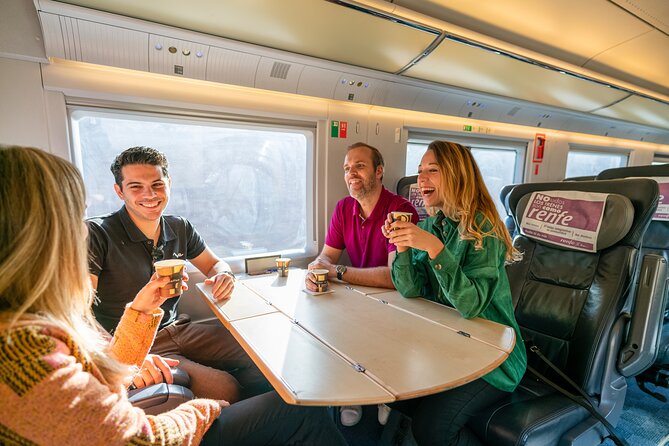
This tour is built around one long rail day: you leave Madrid’s Estación de Atocha for the Barcelona ride (about 2 hours 30 minutes), then you return the same way to Atocha (about 2 hours 30 minutes). The train part is a big part of the value because it removes the stress of coordinating schedules, platforms, and seat logistics on your own.
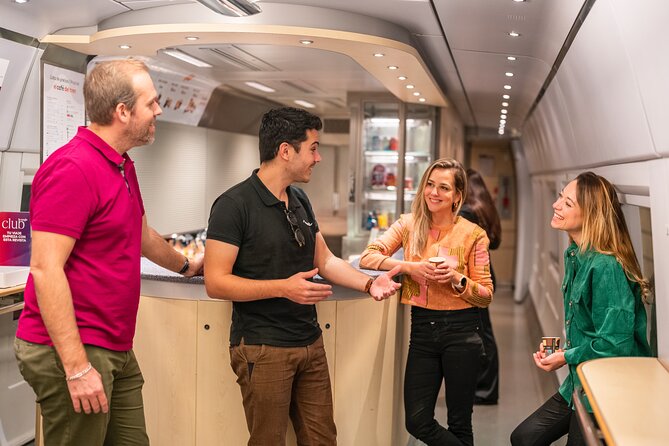
Start time is 7:00 am, and the departure you get is scheduled between 07:00 am and 08:00 am. That early start is the trade-off for squeezing Barcelona highlights into one day. The good news is you’ll have time on the train to reset: sit back, grab snacks if you want (train food is available for purchase), and let the day unfold in chunks rather than as one continuous scramble.
One practical note: the departure is fixed and the train won’t wait. If you miss the right time window, you can lose the whole tour. So I’d treat check-in like it’s for a flight—arrive early and keep your phone charged. The tour also requires you to provide a full name and passport/ID number, plus a phone number for pre-check-in, so the paperwork is part of the experience.
You can also read our reviews of more tours and experiences in Madrid.



Madrid check-in and the meeting point: where your day can go right
Your start point is at Community of Madrid Arganzuela in Madrid, and you should be there about 20 minutes before departure. That buffer matters because this is a tight day: once you leave the station, there’s no slack built in.
If you’re new to Spain’s train stations, you may find it intimidating at first. A lot of the anxiety comes from not knowing which line or terminal you should be in. The best way to reduce that feeling is to follow the instructions closely, have your phone ready for tickets, and keep passport/ID information handy.
Also, keep in mind that the tour description notes two transfers during the day, often including a metro transfer to avoid delays. Translation: expect some moving around city transit points and a bit of walking between steps. This is normal for the route, but it’s not the “sit and admire” type of day.
Passeig de Gràcia in 30 minutes: seeing Gaudí’s style in fast mode
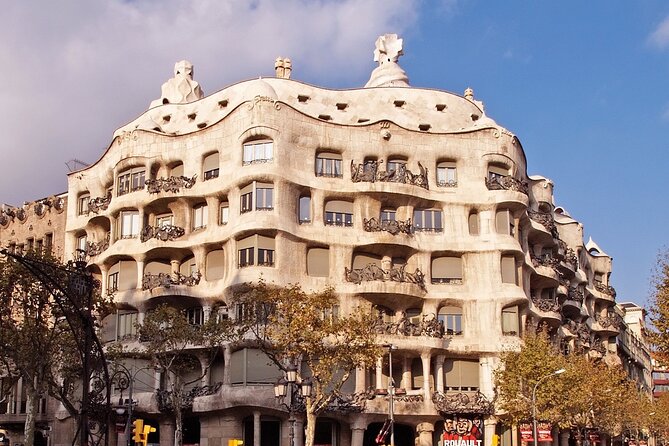
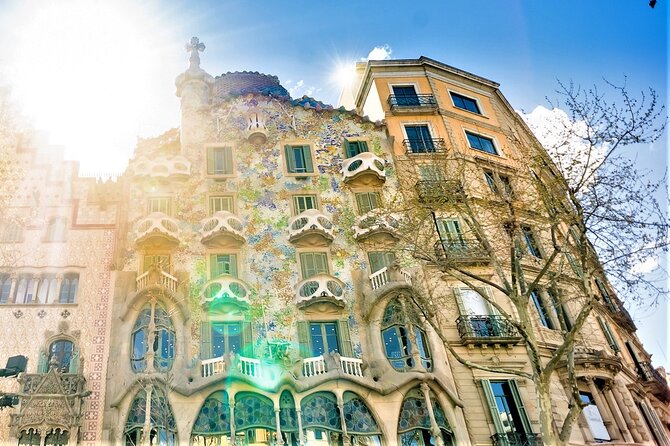
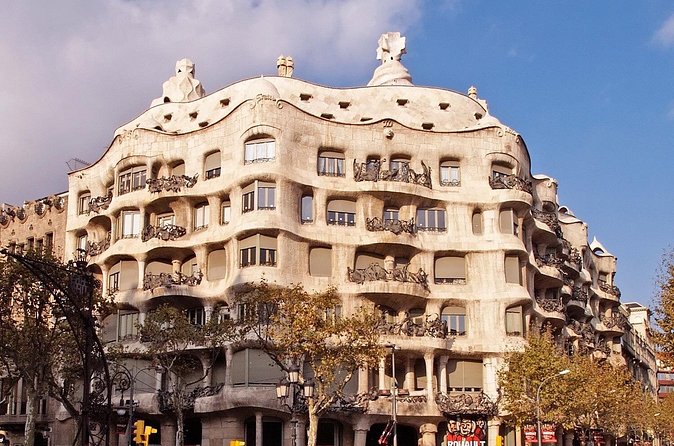
Your first Barcelona neighborhood stop is Passeig de Gràcia, Barcelona’s main avenue for architecture. You’ll spend about 30 minutes here, which is short, but it’s a smart shortcut: this street is where Gaudí’s style is impossible to ignore, with famous buildings like Casa Batlló and La Pedrera.
In a short window, you’re not touring interiors—you’re getting the visual context and the story behind the shapes, materials, and design choices. That matters because later streets (and later buildings) start making more sense when you understand what you’re looking at.
The drawback is that 30 minutes can feel like a teaser if you love architecture and want deeper access. If you’re dreaming of inside visits to Casa Batlló or La Pedrera, this day trip won’t replace a dedicated Gaudí day. But it will give you the mental map so your next stroll on your own feels way more rewarding.
Plaça de Catalunya for 90 minutes: the easy way to get oriented
Next comes Plaça de Catalunya, with about 1 hour 30 minutes for continued walking and orientation. This square is one of those places that helps you understand Barcelona’s layout. Think of it as a crossroads where the city’s energy is concentrated, and where your walking tour starts to feel like a real route rather than a list of sights.
If you haven’t visited Barcelona before, this portion is especially helpful. You’ll start building a sense of direction—what’s “toward the Gothic Quarter,” what’s “toward the older streets,” and where you are relative to major neighborhoods.
The trade-off: this time is still on foot, and the day is only getting longer. Wear shoes you’d be happy wearing for an 8–10 mile walk, not just for a gentle city stroll.
Barri Gòtic and Plaza Real: the Gothic Quarter when the details matter
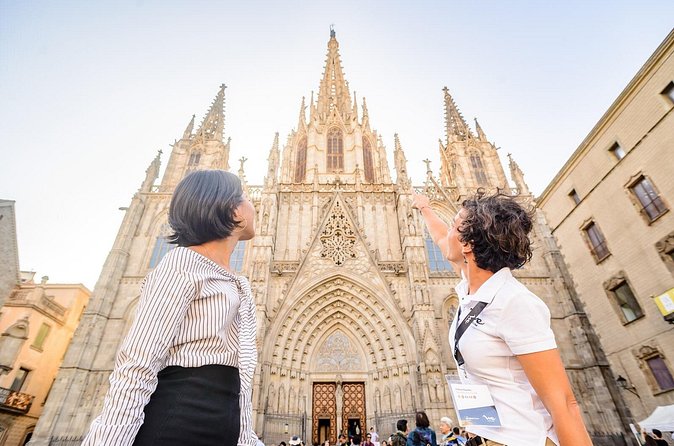
The tour then spends about 3 hours in the Gothic Quarter (Barri Gòtic), including stops at key squares and a museum ticket. This is one of the best blocks of the day because you’re mixing “big wow” moments with the quieter, atmosphere-building ones.
You’ll visit Plaza Real, a gorgeous square with lively street life, and you’ll also see Plaza Sant Jaume, the political heart of the city. These aren’t just pretty backdrops. They’re useful anchors for understanding how Barcelona’s civic life evolved alongside its architecture.
Then comes the MUHBA stop: Museum of Ancient Ruins of Barcelona. The included ticket here is a true value add. Instead of only looking at buildings from the outside, you get to stand where older layers of the city were preserved. It’s one of the few chances on a one-day trip to “zoom out” and grasp how deep the city’s timeline goes.
A smart way to handle this area: pause when the guide pauses. In the Gothic Quarter, the most interesting moments often happen when you slow down—right after you turn a corner, or when you notice the scale of a street narrowing toward a square.
Lunch is on your own afterward. This is both good and slightly risky: good, because you can eat what you actually want; slightly risky, because you’ll be walking again afterward. I’d plan to eat early in your free window so you aren’t racing hunger later.






El Born: narrow streets, old vibes, and room to breathe
After the Gothic Quarter, the tour moves to El Born for about 1 hour 30 minutes. This neighborhood feels like stepping deeper into the older street web—smaller lanes, twisty routes, and an easy sense that you’re walking through history rather than just looking at it.
The value of El Born in this itinerary is timing. You’ve already done the civic squares and museum portion, and now you get a neighborhood that’s more about wandering with purpose. It’s a breather compared to the heavier museum stop.
One practical point: El Born is still walk-forward. If your feet start talking back here, that’s normal. This is usually the point in the day where you’ll be grateful you brought water earlier and didn’t rely on snacks only at the end.
Arc de Triomf plus Sagrada Familia exterior: what you’ll get and what you must add
The final big highlight is Sagrada Familia. The tour takes you up toward it and includes a look at the exterior of Gaudí’s unfinished masterpiece, plus time for photos. It’s paired with Arc de Triomf, a striking 19th-century monument that once served as part of the Universal Exposition route.
Here’s the key detail you should not miss: Sagrada Familia tickets are not included. That means your tour time at the basilica is about seeing and photographing the exterior, while the interior experience requires a separate ticket purchase.
If you’ve ever seen interior photos of Sagrada Familia, you already know why this matters. This tour can still be worth it for the exterior alone—Gaudí’s facades are powerful even from the outside—but if your dream is to walk inside, plan that add-on well.
I’d also mentally prepare for crowds. Even with a guided schedule, Sagrada Familia is one of the most in-demand sites on earth, so tickets can sell fast. If you’re set on the interior, treat ticketing like it’s part of booking the tour, not a last-minute idea.
The final transfer back: Sants to Madrid without losing daylight
After the Sagrada Familia portion, you’ll transfer back toward Sants (about 30 minutes) and then head back to Madrid’s Atocha by train (about 2 hours 30 minutes). The day ends where it began, with the same rail rhythm.
One thing I’d watch: this late-day section can feel rushed if earlier parts ran long due to transit confusion, ticket scanning problems, or meeting-up issues. A few past experiences show that finding the group at the right moment, especially after lunch or transit transfers, can be the difference between a smooth return and a stress spiral.
So keep your group identity simple: stay near your guide and near your group, and don’t assume you can roam freely and “catch up later.” On this route, catching up can become a chain reaction.
Price and value: is $414.49 worth it?
At $414.49 per person, this is not a budget day trip. The value comes from what you’re paying for:
- Round-trip high-speed train tickets are included
- A guided walking tour covers multiple neighborhoods
- MUHBA entry is included
- The group size is capped at 10 people
- It’s offered in English
For many people, that price starts to make sense because you’re paying for convenience plus interpretation. You’re not just commuting; you’re getting a structured route through neighborhoods that can be confusing if you’re figuring it out yourself on a tight schedule.
But here’s when the value can feel shaky: if you assumed Sagrada Familia interior tickets were included, you’ll end up paying extra. And if you’re expecting a low-walking, low-stairs day, the schedule won’t match. Some people also need extra guidance to board trains confidently, and the day relies on you being present and ready when the rail segment begins.
So I’d treat this as a “high-speed rail plus city guide” product, not as a guaranteed stress-free itinerary. If you’re the kind of person who follows check-in instructions well and packs practical gear, it’s likely worth it.
What to pack so your feet don’t revolt
This is a walking-focused itinerary. Based on the way the day is structured and how people describe it, you should plan for a lot of time on foot, plus stairs. Some escalators may not work, and the route includes moving between neighborhoods and transit points.
Bring:
- Comfortable walking shoes with solid grip (cobblestones happen)
- Water (heat can add up fast)
- A small snack if you’re someone who gets hungry early
- A light layer (mornings can feel cooler; afternoons can feel hot)
If you have mobility limitations, this trip may be too demanding. Even people without mobility issues sometimes find stairs tiring by mid-afternoon. The day is doable, but it’s not a gentle stroll.
Guide quality: why names keep showing up
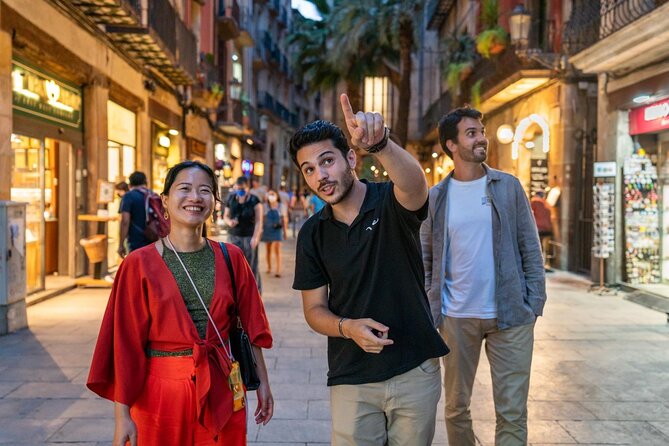
Guides are the heart of this kind of day trip. In past departures, people repeatedly praised specific guides such as Lucas, Mirko, Han, Mateo, and Jimena for making the city make sense—architecture details, neighborhood context, and pacing that helps you keep moving without feeling lost.
You should also be aware of a common pattern: this day trip may involve you meeting one set of guidance early in the process, then connecting with another guide in Barcelona after the first rail segment. When it works, it feels smooth. When it doesn’t, it creates confusion. So rely on the meeting instructions and keep an eye on your phone.
Who this day trip is best for (and who should skip it)
This experience is best for you if:
- You want a Barcelona highlights crash course from Madrid
- You like walking tours but can handle a long day
- You want Gaudí context plus older-city neighborhoods
- You’re excited by MUHBA and the Gothic Quarter squares
You should think twice if:
- You need Sagrada Familia interior included and don’t want extra ticket planning
- You have trouble with long walking time, stairs, or heat
- You’re uncomfortable with early-morning train logistics and want constant staff help boarding each segment
Should you book this Barcelona Day Tour from Madrid?
If you’re time-crunched and you like the idea of seeing Barcelona’s biggest hits with a guide, I think this tour is a solid option—especially because MUHBA is included and the train ride is handled round-trip. The exterior-only Sagrada Familia stop is the big catch, so decide upfront whether you want to add interior tickets.
My rule: book it if you’re organized, comfortable walking, and willing to plan the Sagrada interior separately. Skip it if you want a light, flexible city day or if train boarding stresses you out.
FAQ
What time does the tour start?
The tour starts at 7:00 am, and the coordinated departure time is scheduled between 07:00 am and 08:00 am.
How long is the Barcelona day tour from Madrid?
It’s listed at about 13 hours 30 minutes (approx.).
Are round-trip high-speed train tickets included?
Yes. Round-trip high-speed train tickets between Madrid and Barcelona are included.
Is Sagrada Familia entry included?
No. Sagrada Familia tickets are not included. The tour includes the exterior and time for photos.
Is MUHBA (Museum of Ancient Ruins of Barcelona) included?
Yes. Tickets to visit MUHBA are included.
Is the tour offered in English?
Yes. The tour is offered in English.
What’s the group size limit?
The tour has a maximum of 10 travelers.
Do I need to bring a passport or ID details?
Yes. Full name and Passport/ID number are mandatory to confirm the booking.
Is meals or hotel pickup included?
No. Meals and drinks are not included, and hotel pick up is not included.