REVIEW · FUERTEVENTURA
Fuerteventura : Corralejo Surf Lesson
Book on GetYourGuide →Operated by Surf-Therapy · Bookable on GetYourGuide
First waves start with good coaching in Corralejo. You’ll get beach theory on how waves form, plus in-water practice guided step by step, so the ocean doesn’t feel mysterious for long. I also like the small-group size (max 8) and the fact the instructor can teach in English, Spanish, and Italian, which helps everyone get on the same page fast.
One thing to plan around: this isn’t for younger kids. It’s not suitable for children under 14, and pickup is strict—drivers wait no longer than 5 minutes after the scheduled time.
In This Review
- Key highlights
- Surfing in Corralejo: Why this place works for beginners
- Pickup and the short van ride from Corralejo
- Beach theory: waves, currents, safety, and how to stand up
- Practice time: following your instructor to the best surf spot
- Instructors in three languages: how coaching style affects progress
- The 4-hour schedule: what it feels like in real time
- What to bring (and what to wear) for an easy lesson day
- Price and value: is $59 worth it?
- Who this surf lesson is for (and who should skip it)
- Should you book the Corralejo Surf Lesson?
- FAQ
- How long is the Corralejo surf lesson?
- Where does pickup happen?
- What’s included in the price?
- What languages are offered?
- How big is the group?
- What should I bring?
- Is this lesson suitable for children?
Key highlights
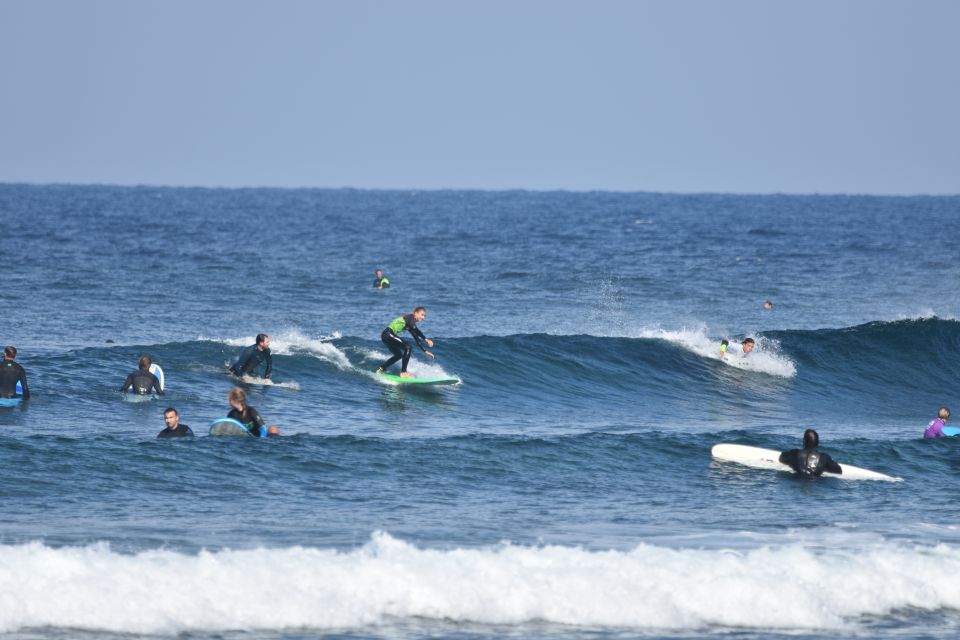
- Small group setup (max 8) means more attention while you’re learning to stand up and balance.
- Theory on the beach first covers waves, currents, and safety measures before you hit the water.
- English, Spanish, and Italian instruction keeps beginners from getting lost on key terms.
- A qualified instructor picks the spot after learning the conditions and deciding where you’ll get the best chances.
- 4-hour total session includes pickup, teaching, practice, and a return to Corralejo.
Surfing in Corralejo: Why this place works for beginners
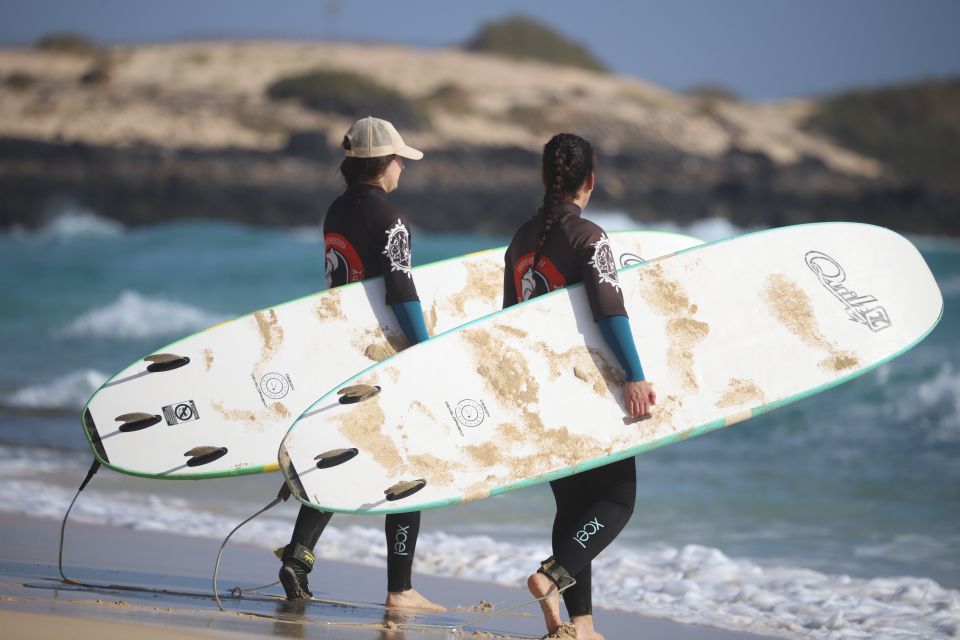
Corralejo is a smart setting for a surf lesson because you’re not just thrown into the sea. You start with the basics that make surfing possible anywhere: how waves are created, how currents move around, and what safety looks like when conditions are changing.
What I like about this lesson format is the way it connects the ocean to your body. When you learn the shape of waves and why currents matter, standing up on the board stops being luck. You can start building a repeatable skill: timing your pop-up, keeping your balance, and understanding when it’s worth paddling and when it’s not.
Also, the lesson is built around short, practical chunks. You’ll study concepts on land, then follow your instructor to the best surf spot for that session. That matters because surfing isn’t just one wave—it’s a sequence of conditions, and learning to read them is part of the value.
A few more Fuerteventura tours and experiences worth a look

Pickup and the short van ride from Corralejo
The experience starts in Corralejo, with hotel pickup and drop-off included. You meet at your pickup location in Corralejo, then get in a van for about 15 minutes to reach the training area.
That short ride is more than just transportation. It’s usually what gives your instructor time to set the plan for the day—what the ocean is doing, and where you’ll get the safest, most learnable waves. If you’re the kind of person who likes to know what comes next, you’ll appreciate that the lesson doesn’t feel rushed from the first minute.
One logistics point you should take seriously: the driver waits no longer than 5 minutes after the scheduled pickup time. If you’re staying somewhere that’s easy to miss or hard to spot from the street, give yourself a buffer. Surf lessons are fun, but you don’t want your day to start with stress.
Beach theory: waves, currents, safety, and how to stand up
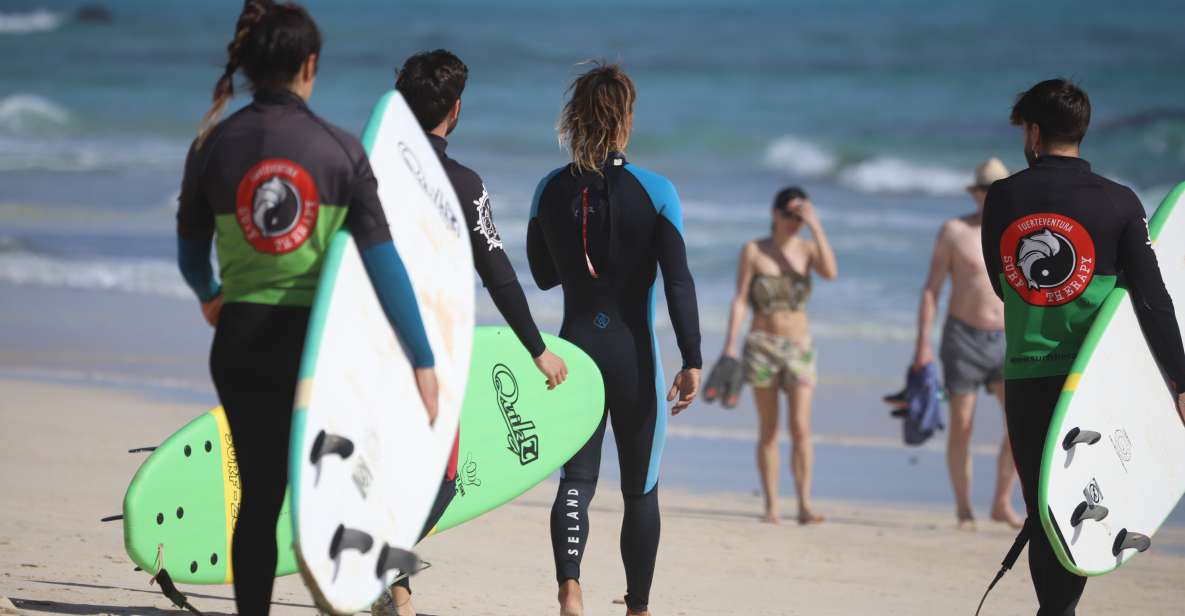
You’ll spend about 3.5 hours in the class portion, and it’s organized so you’re not memorizing facts—you’re learning what you’ll actually use.
The theory part includes:
- how waves form
- currents and why they matter for where you swim and how you return
- different types of waves
- safety measures
- how to stand properly on a board
This is the key difference between a “try it once” experience and a real lesson. When you know what you’re looking at, you stop reacting blindly. You start asking better questions, like: Is this wave breaking in a way that helps me stand? Is the current pulling me off line? Is it safe to go out right now?
And the safety piece isn’t just a warning sign. It’s what lets beginners progress without feeling like every paddle is a gamble. In surf coaching, the fastest learners are usually the ones who understand the rules of the water as much as the technique.
Practice time: following your instructor to the best surf spot
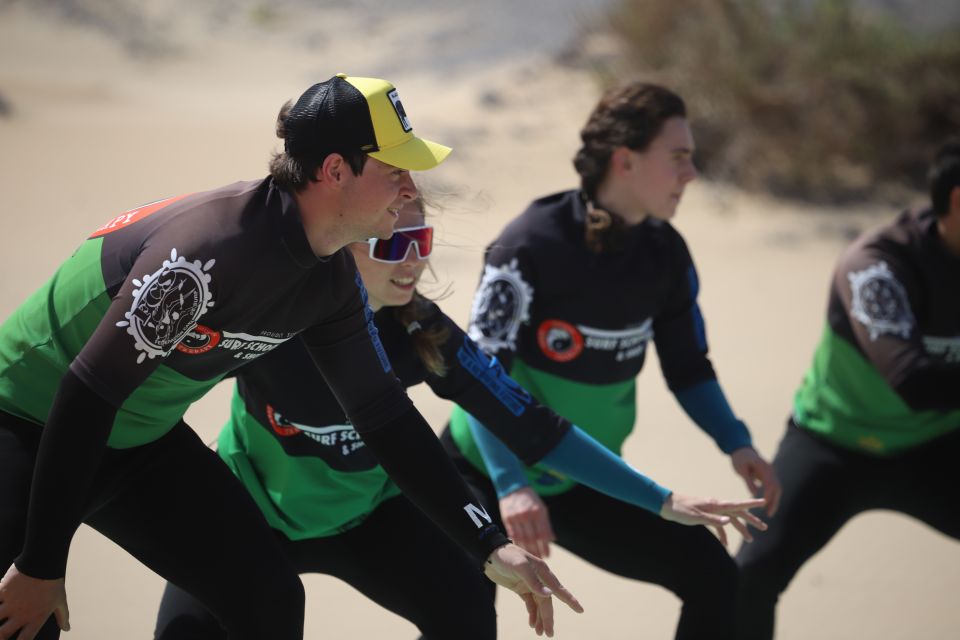
After the beach instruction, you’ll head out to practice. The lesson includes a guided shift from classroom to ocean, with your instructor following you to what they determine is the best place to surf that day.
This part is where a small group really pays off. With a limit of 8 participants, you’re less likely to feel like you’re waiting your turn. You get more chances to reset after a wipeout, get corrections on your stance, and try again with the same mental checklist.
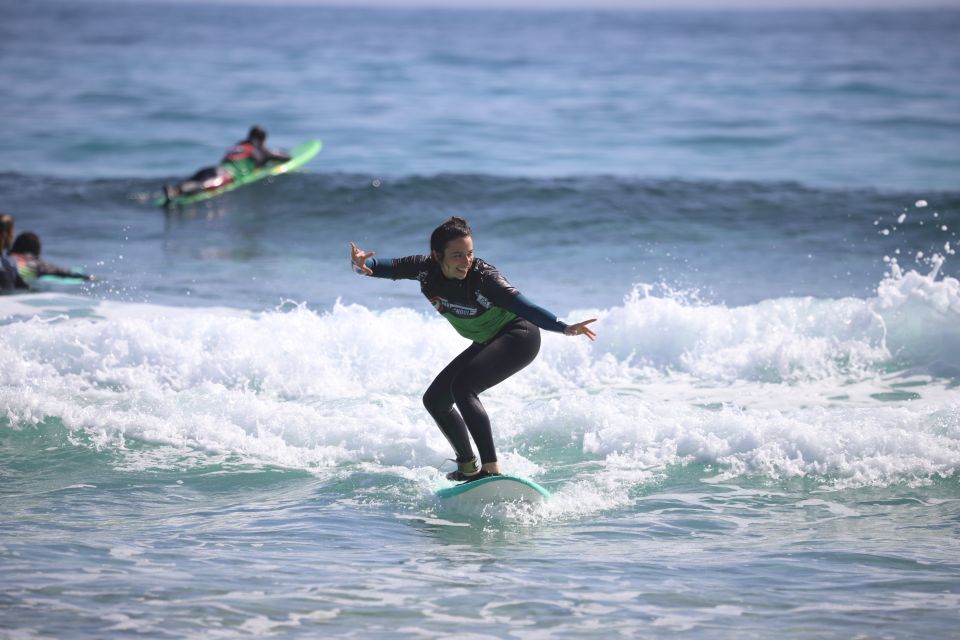
What you’ll be working toward is simple but not easy: paddling at the right moment, getting into position, and doing your pop-up with balance. The instructor’s job is to shorten the learning curve—turning your first shaky stands into something you can repeat.
Also, because the lesson is designed around both theory and practice, you’ll usually have a better sense of why you’re getting certain outcomes. If you catch a wave and can’t stand, the fix isn’t vague. It’s tied back to what you learned about wave type, current flow, and body position.
Instructors in three languages: how coaching style affects progress
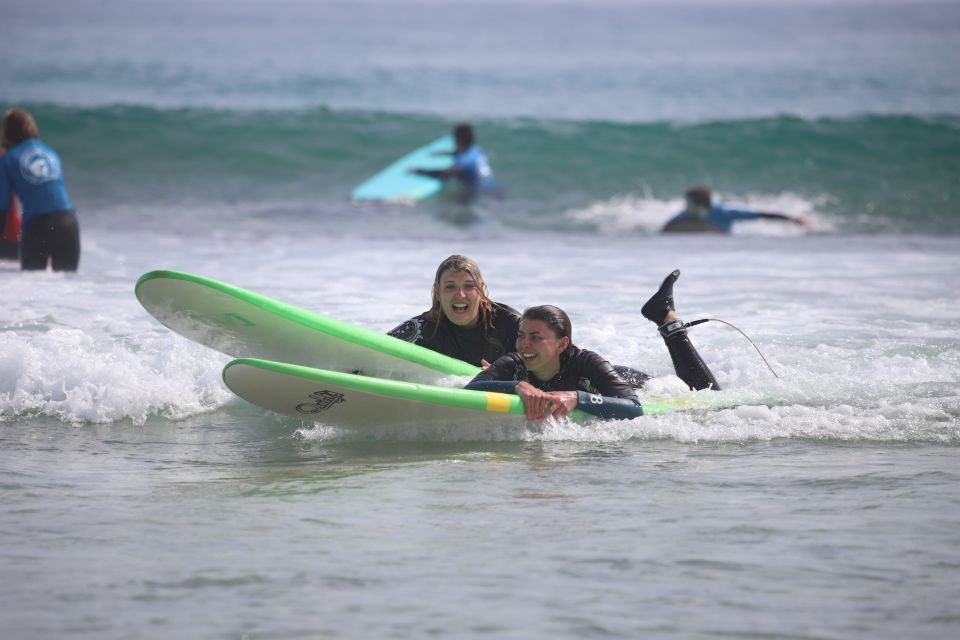
One of the most praised parts of this experience is the teaching. The instruction runs in English, Spanish, and Italian, and that’s not a small detail when you’re learning something as physical and timing-based as surfing.
In the past, instructors like Marco have stood out for ocean and condition understanding—especially around tides and changing situations. Another instructor, Chris, is noted for phrasing lessons in a way that helps things “click” for people. Martin is described as attentive and guiding.
What that means for you: even if you’ve never surfed before, you’re less likely to freeze when an instruction is said quickly. Clear coaching language matters because surf skills build fast once your brain understands the cue.
You’ll also benefit from how instructors manage mixed ability. Some sessions include people who are brand new and people with a little experience. The coaching style aims to help both: pushing beginners toward confidence while still giving intermediate surfers useful adjustments.




The 4-hour schedule: what it feels like in real time
The whole lesson is about 4 hours, including pickup and drop-off. In practice, it breaks down like this:
- meet in Corralejo
- 15 minutes by van to get to the session area
- 3.5 hours of class time (theory and then water practice)
- 15 minutes back to Corralejo
The schedule is long enough to do more than one attempt cycle. That’s important. Surf learning isn’t one big moment—it’s a set of reps. The day feels like you progress from learning the ocean to learning your body on the board.
The van time also helps keep energy levels reasonable. You don’t want to arrive already tired and end up spending the first part of the lesson reacting instead of learning.
What to bring (and what to wear) for an easy lesson day
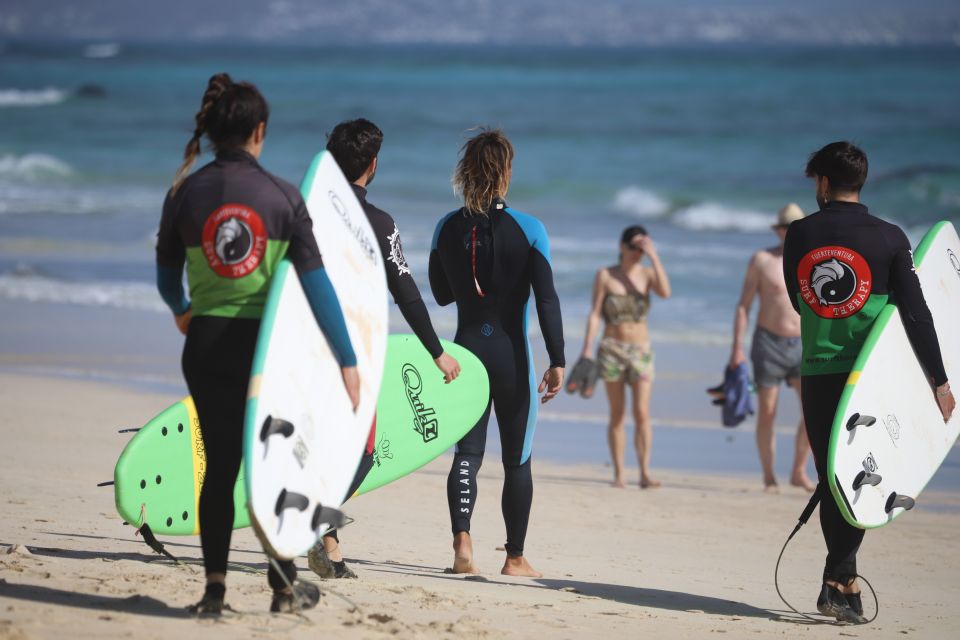
This is one of the simplest parts to prep, because the list is short.
Bring:
- swimwear
- towel
- water
Wear swimwear so you’re ready immediately when you get to the beach and into the water. Bring a towel because you’ll want a quick dry-off after practice. And yes, water matters—4 hours on the coast adds up, even if you’re not doing something “intense” the whole time.
Also, plan to follow any instructor guidance about when to go in, when to rest, and how to move around safely. The safety measures taught during the lesson are there for a reason.
Price and value: is $59 worth it?
At $59 per person for 4 hours, this lesson is positioned as a solid value when you care about real instruction, not just a quick thrill.
Here’s why that price can make sense:
- Small group size (max 8) helps reduce “waiting around” and increases coach attention.
- Pickup and drop-off in Corralejo is included, so you’re not paying for separate transport to make the timing work.
- The teaching includes both theory on the beach and practice on the water, which is usually where most of the learning happens.
- You’re working with a qualified instructor who teaches waves/currents/safety and then guides where you should surf.
If your goal is to learn how to stand up, understand wave behavior, and build comfort in the ocean, the lesson structure supports that. If your goal is purely a short photo moment with no patience for instruction, you might find it better to keep expectations realistic—this is coaching, not a random tryout.
Who this surf lesson is for (and who should skip it)
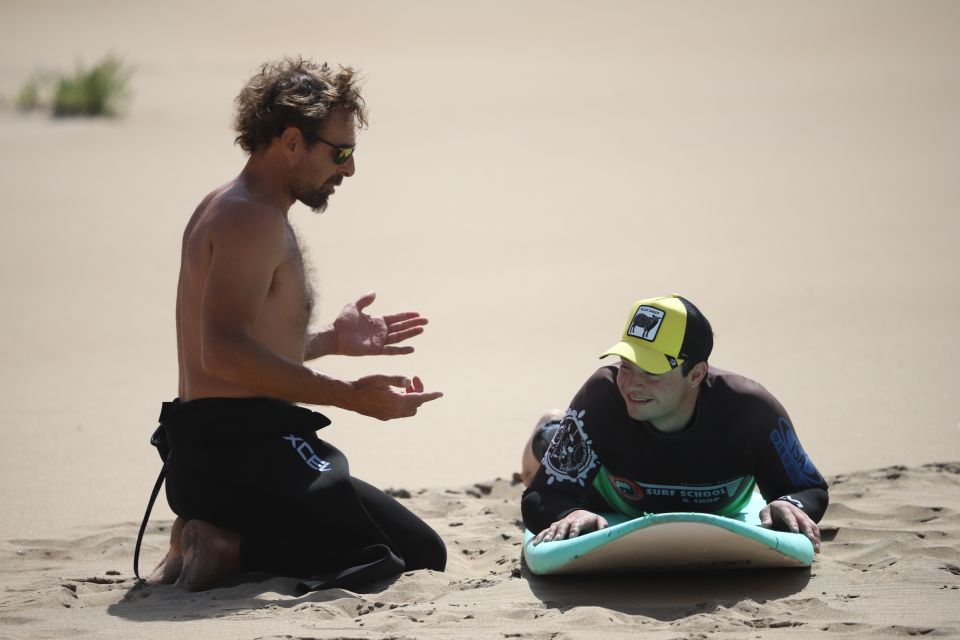
This activity fits best if:
- you’re open to learning the basics of surfing (waves, currents, safety, standing)
- you want guided practice rather than solo experimenting
- you like small-group instruction where you get corrections
It’s not suitable for children under 14. That doesn’t mean it’s only for adults, but it does mean you should make sure everyone in your group is old enough.
If you’re nervous about getting out into the water, start with the fact that the lesson begins with safety and technique planning. You also get a “real day” structure—van pickup, beach learning, then water time—so it’s not chaos.
Should you book the Corralejo Surf Lesson?
I’d book it if you want an organized first surf experience with coaching you can actually follow. The combination of beach theory, small-group attention, and a process that brings you to the right surf spot is a strong mix for first-timers.
You should pause and reconsider if:
- your schedule makes pickup timing hard (that 5-minute wait is real)
- you’re traveling with someone under 14
- you want something shorter or purely recreational with no safety/tech teaching
If you match the target audience—learning-focused, ready to paddle, ready to listen—this lesson looks like a good use of a half-day in Fuerteventura.
FAQ
How long is the Corralejo surf lesson?
The lesson lasts about 4 hours total.
Where does pickup happen?
Pickup and drop-off are included in Corralejo. You’ll be asked for the name of your hotel in Corralejo.
What’s included in the price?
Hotel pickup and drop-off in Corralejo are included, along with the surf instruction and the theory and practice session.
What languages are offered?
The instructor teaches in English, Spanish, and Italian.
How big is the group?
The group is limited to 8 participants.
What should I bring?
Bring swimwear, a towel, and water.
Is this lesson suitable for children?
It is not suitable for children under 14.