REVIEW · TENERIFE
Group Surf Class in Playa de Las Américas with Photographs
Book on Viator →Operated by Shaka Surf School Tenerife · Bookable on Viator
Surfing in the Canaries feels way more doable here. I love the small groups (max 4 per instructor, with up to 8 total) and the clear theory-to-water flow, with instructors like Marco and Ciro coaching step by step. The main drawback is the session is only about 2.5 hours, so you might want more time once you start standing.
You meet at C. México, 3 in Playa de las Américas, just a short walk from the beach, which keeps the day from feeling stretched out. After you paddle and ride, you get a quick stretch, then head back for water, juice, snacks, and a shower.
This class works for many levels, including adults and children, and it’s offered in English. One note to keep in mind: the sea can get crowded with other surf schools, so you’ll be focused on your skills and timing rather than chasing empty water.
In This Review
- Key highlights worth knowing
- Where you start in Playa de las Américas (and why it matters)
- The first phase on land: technique, board position, and safety rules
- Warm-up to first waves: how they help you get oriented fast
- Group surfing with up to 4 per instructor: what you actually get
- In the water: expect small, workable conditions and real encouragement
- The “after surf” routine: stretching, snacks, shower, and gear care
- The best souvenirs here are the photos (and the t-shirt helps)
- Price and value: $47.06 makes more sense when you count what’s included
- Who this Tenerife surf class suits best
- Practical tips to get more out of your 2.5 hours
- Should you book this Playa de las Américas surf class?
- FAQ
- How long is the group surf class?
- Where do I meet for the lesson?
- Is the surf lesson taught in English?
- What gear and extras are included?
- How many people are in the group?
- What happens if weather is poor?
- Can I cancel and get a full refund?
Key highlights worth knowing
- Max 4 students per instructor helps you get hands-on attention when you’re learning.
- Theory before the waves covers board position, paddling, takeoff, and safety rules.
- Warm-up + coached practice keeps your first attempts from feeling random.
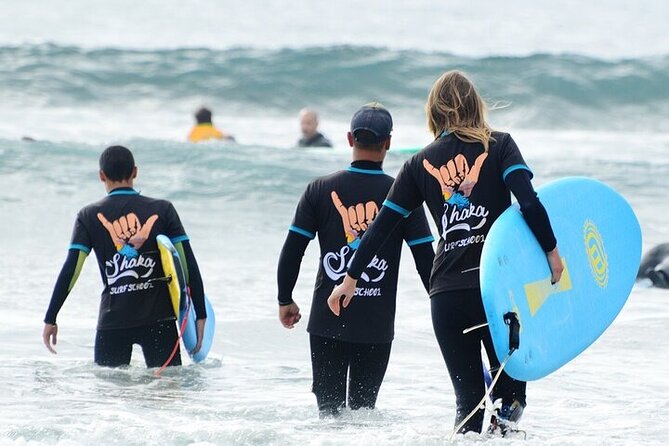
- Booties, wetsuit, board, and t-shirt are provided, so you’re not juggling gear.
- Professional photos are part of the deal and get emailed after.
- Stretching and a post-session shower make the whole experience feel organized, not just “get in the water and hope.”
Where you start in Playa de las Américas (and why it matters)
Your lesson begins at Shaka Surf School Tenerife at C. México, 3 in Arona (Playa de las Américas), about 30 meters from the beach. That “close to the action” detail sounds small, but it actually changes your vibe. You spend less time traveling, and more time focusing on what you’re doing with the board.
This is also one of those practical meet-up setups: you’re near public transportation, and the school’s hours run daily from 9:00 AM to 9:00 PM. If you’re juggling a day of Tenerife sightseeing, it’s easier to fit in a surf session without it swallowing your whole schedule.
A few more Tenerife tours and experiences worth a look
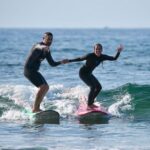
The first phase on land: technique, board position, and safety rules
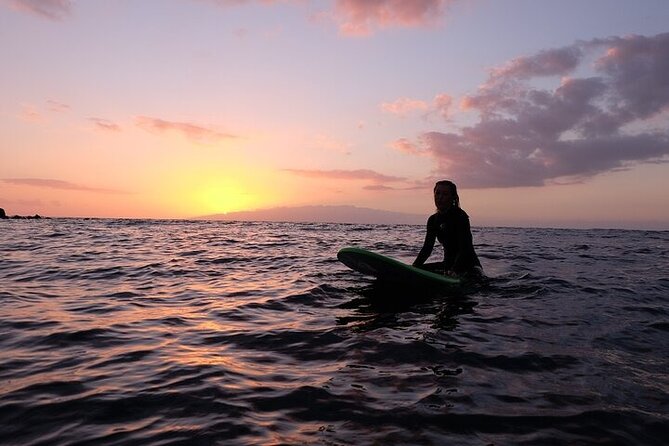
Before you ever paddle out, you do a theoretical part where the instructor explains technique and how to move on the board. This is where the lesson earns its reputation for being solid for first-timers. If you’ve ever tried a new sport and felt lost, you’ll recognize the difference: you’re not starting from guesswork.
They cover the basics you’ll use immediately:
- How to position yourself on the board
- How to enter the water
- Paddling basics
- Takeoff mechanics
- How to ride the wave
- Safety regulations
I like that this theory isn’t just “listen quietly.” The structure is set up so you can apply it quickly: you learn the shape of the movement, then you practice it. Instructors like Luca and Davide are known for explaining and demonstrating clearly (and sticking with you through the early steps).
Warm-up to first waves: how they help you get oriented fast
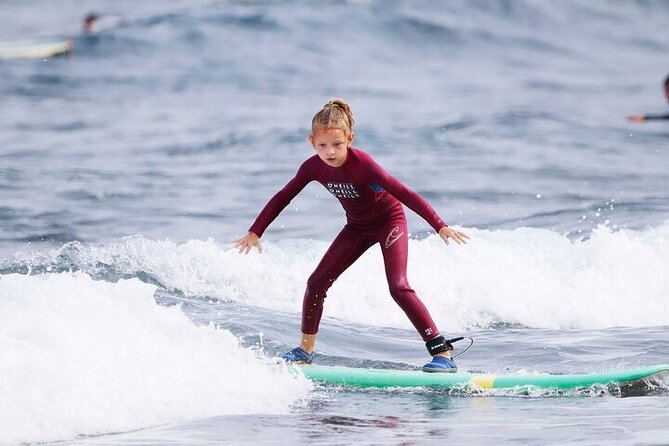
After the theory, you do a little warm-up, then it’s time for the water practice. This matters because surf is a body-and-timing sport. If you only jump straight in cold, you lose your coordination before you even catch your first wave.
The course is built around staying close to your instructor. They’re in the water with you, and they’re not just watching from shore. That hands-on approach is exactly what makes the difference between feeling safe and feeling like you’re in your own way.
One small piece of good advice that comes from the instructors’ mindset: when you’re trying to get the rhythm, focus on the next wave, not just the one you missed. One smart tip shared during a lesson was to aim for the second wave. It’s a simple cue, but it helps you stop spiraling after attempt one.
Group surfing with up to 4 per instructor: what you actually get
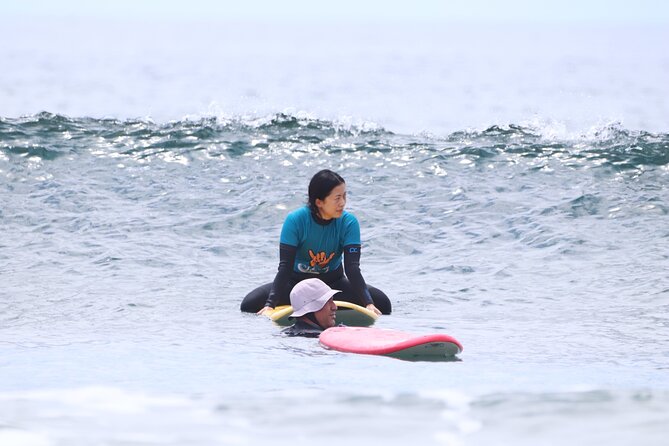
The lesson runs with a maximum of 4 people per instructor. If there’s a larger group, they’ll add 2 or more instructors so the quality stays high. In practice, this means you’re not just part of a big class where you wait your turn.
You’ll get guidance for what your body is doing—paddling, where your weight sits, and how to get into position for takeoff. When you’re brand-new, that direct coaching is gold. It’s also useful if you’re more experienced, because you can refine specific points instead of repeating the same beginner drills forever.
Also, the size cap helps with safety. Surf lessons can be chaotic when there are too many boards in one area. Here, at least, the instructor-to-student ratio is kept tight, and that typically translates into better attention in the water.
In the water: expect small, workable conditions and real encouragement
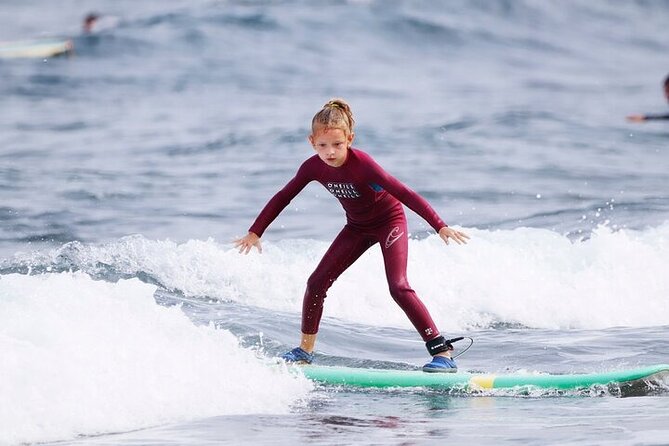
Most people can participate, and the lesson is designed for both beginner and advanced levels. For beginners, the expectation is clear: you’ll focus on catching manageable waves and learning the sequence that leads to a ride.
From the practical side, here’s what you should be prepared for based on past experiences:
- The water can be not too deep, which helps confidence while you practice standing and turning.
- There can be stones/rocks near the waterline, so even with protective booties, you might feel bumps on the knees if you’re getting up and down on uneven ground.
- The sea may be busy, since multiple surf schools operate in the same area. That doesn’t ruin the lesson, but it means you should listen closely to timing and where you’re placed in the lineup.
What surprised many people is how quickly it clicks when someone is adjusting your position in real time. Coaches like Marco, Ciro, and Daniele have a reputation for being supportive, using humor, and repeating key points until it makes sense. You’re not expected to become a surfer in one session. You’re expected to leave with a wave experience that feels achievable.




The “after surf” routine: stretching, snacks, shower, and gear care
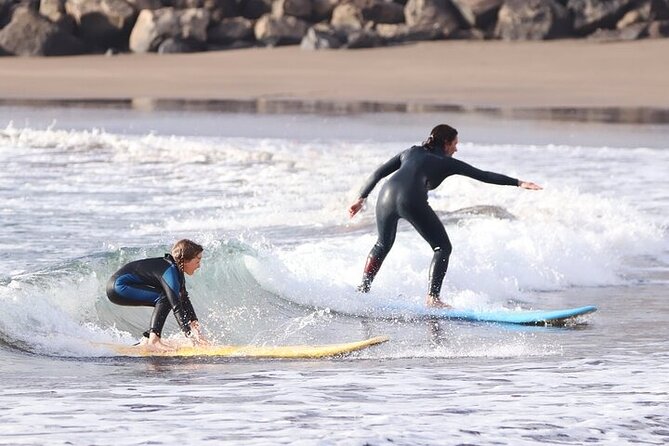
Once class ends, you do 2 minutes of stretching on the beach. It’s short, but it’s a great way to get your body back under control before you head home. Surf uses muscles you may not think about, and a quick stretch helps prevent that stiff “what did I just do to myself” feeling.
Then you return to the school area where they offer:
- Water
- Juice
- Snacks
- Shower access
- A place to get cleaned up and change
Another detail worth mentioning: personal items are kept safe. One lesson description specifically notes that personal belongings are locked up in the office while you’re out surfing. That kind of setup reduces the stress of worrying about your phone or keys while you paddle.
The best souvenirs here are the photos (and the t-shirt helps)
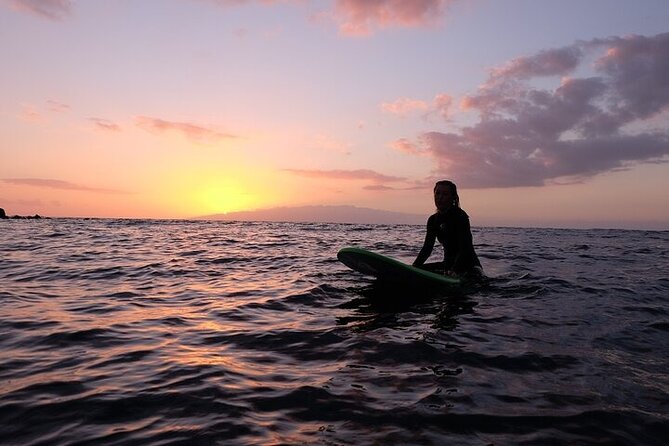
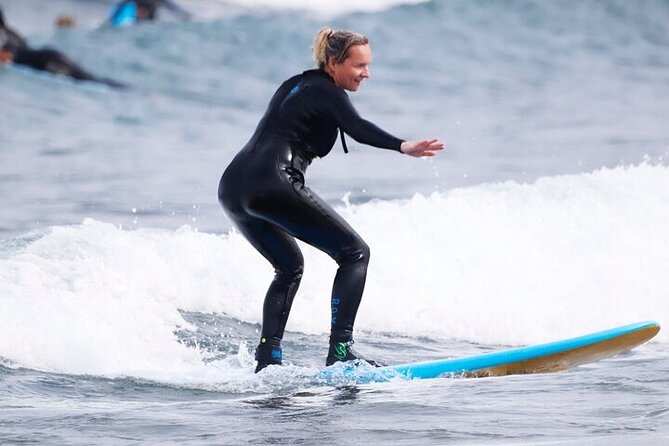
A big reason people rebook surf lessons—or recommend them right away—is the photo package. Your group gets professional photos, and they’re shared by email afterward. In one account, the included setup included a t-shirt so the photographer can easily spot you in the water.
This is not just a nice-to-have. For most first-timers, the hardest part isn’t standing for three seconds—it’s remembering what happened once your brain is busy coordinating everything. Photos give you a clean record of progress and a story you can actually share later.
Price and value: $47.06 makes more sense when you count what’s included
At $47.06 per person, this surf class is priced as a budget-friendly way to get real instruction instead of just renting a board. The value gets stronger when you tally what’s part of the package.
You’re typically not paying extra for the stuff that usually adds up:
- wetsuit and booties
- board
- t-shirt for photo visibility
- snacks, water, and juice afterward
- shower access
- professional photos
That’s why the price feels reasonable for a 2 hours 30 minutes session with structured coaching. Even if you’re only riding a few waves, you’re buying safety guidance, gear, and an instructor who helps you learn the basics correctly.
One caution: the “time you want more” complaint comes up. If you’re the type who loves a new challenge and wants to keep practicing, you may finish the session thinking you could do another hour. That’s not a flaw in the teaching. It just means surf can become addictive once you feel stable.
Who this Tenerife surf class suits best
This class is a great fit if:
- You’re a first-time surfer who wants a clear starting plan.
- You’re traveling with mixed experience levels and want the group to stay small.
- You want coaching in English.
- You care about leaving with photos, not just memories.
It’s also a decent choice if you’re trying surf as a family activity. They teach both adults and children, and the lesson structure supports different abilities by focusing on skill steps rather than performance pressure.
If you’re an advanced rider looking for big adrenaline, you might find this session more about fundamentals and positioning. That said, the group can include advanced students, and instructors often adjust support so you still get useful feedback.
Practical tips to get more out of your 2.5 hours
Here are the real-world things that help you get better results in a single session:
- Arrive early enough to settle. You want time to check in and get ready before the theory starts.
- Listen for the wave-queue advice. The instructors guide you on timing and which waves to try; focus on their plan, especially if it gets crowded.
- Treat your booties as part of the lesson. They help with sharp ground contact, but the shoreline can still be rocky.
- Expect instruction to repeat. Surf learning is step-by-step. If someone like Ciro or Marco says the same key cue more than once, it’s not because you’re slow—it’s because the cue builds muscle memory.
- Mentally reset between attempts. That second-wave focus tip is a good mindset. One miss doesn’t mean you’re doing everything wrong.
And one more: if you’re nervous, use the fact that the instructor is beside you. Feeling safe doesn’t just mean rules on paper. It means someone is actually watching what you’re doing and adjusting in the moment.
Should you book this Playa de las Américas surf class?
If you want a surf lesson that feels organized, small-group, and beginner-friendly, I’d book it. The best part is the combination: tight coaching, theory that tells you what to do, and a real post-session setup with snacks, shower, and photos. For a one-day “I want to do it for real” experience in Tenerife, it’s strong value.
Skip it only if you’re specifically hunting for long practice time or want an all-day surf session. This is a focused lesson. You’ll learn a lot quickly, but you may leave wanting one more round in the water—because that’s usually what good surf coaching does.
FAQ
How long is the group surf class?
The class runs about 2 hours 30 minutes.
Where do I meet for the lesson?
The meeting point is at C. México, 3, 38660 Arona, Santa Cruz de Tenerife, Spain, about 30 meters from the beach.
Is the surf lesson taught in English?
Yes. The experience is offered in English.
What gear and extras are included?
You’ll receive a wetsuit, booties, and the surfboard. A t-shirt is also provided for photo visibility, and the package includes water, juice, snacks, a shower, and professional photos.
How many people are in the group?
The course keeps a maximum of 4 people per instructor. The overall activity has a maximum of 8 travelers.
What happens if weather is poor?
This experience requires good weather. If it’s canceled due to poor weather, you’ll be offered a different date or a full refund.
Can I cancel and get a full refund?
Yes. You can cancel up to 24 hours in advance for a full refund. If you cancel less than 24 hours before the start time, the amount paid is not refunded.