Old Barcelona still has pulse. This 2h15 walking tour by Luca stitches together the Gothic Quarter and El Born so you understand what you’re looking at, not just where it is. The small-group setup keeps things personal as you move on foot through narrow streets and open squares.
I really like how much of it happens in places most people skim or skip—especially the MUHBA stops. You’ll see Roman remains at the Temple d’August and then shift to the Medieval Jewish neighborhood at MUHBA El Call, with the guide connecting the dots as you go. The other thing I love is Luca’s energy: lively, funny, and packed with details that make the old streets feel current.
One thing to consider: it’s a walking tour, and on warm days the route can feel sunny and hot. If you’re sensitive to heat, plan for sun protection and water, and don’t expect long indoor breaks.
In This Review
- Key highlights worth your time
- A small-group Gothic Quarter walk that actually helps you see
- Pl. de Sant Jaume: the political center that shaped 2,000 years
- MUHBA Temple d’August: four Roman columns in the middle of the old city
- Catedral de Barcelona: seeing the Gothic cathedral without the crowds inside
- MUHBA El Call: walking through the medieval Jewish neighborhood
- Sant Felip Neri: Gaudí’s favorite church and a square with a dark past
- El Born / La Ribera: medieval streets, today’s energy
- Santa Maria del Mar: why people love this church
- El Fossar de les Moreres: the political conflict behind the stones
- How much time you’ll actually spend walking (and staying sane in heat)
- Price and value: what $13.27 buys in old Barcelona
- Who should book Luca’s Hidden Old Barcelona tour
- Should you book it?
- FAQ
- How long is the Gothic and El Born walking tour?
- Where does the tour start and end?
- What language is the tour offered in?
- Is admission included for all stops?
- Is this tour small-group?
- How do I get the ticket?
- Is the tour suitable for people with reduced mobility?
- Are service animals allowed?
- Is there free cancellation?
Key highlights worth your time
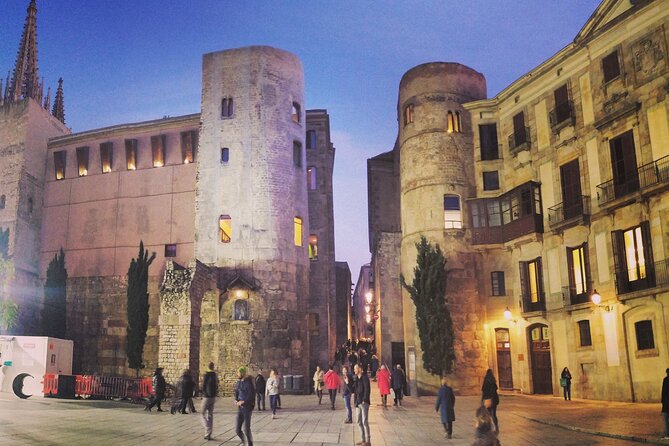
- MUHBA Temple d’August: four Roman columns and a quick lesson on ancient Barcelona
- Gothic Quarter focus: you get meaning, not just photos outside the cathedral
- El Call (MUHBA): the medieval Jewish neighborhood, explained in context
- Sant Felip Neri: Gaudí’s favorite church site, plus the Spanish Civil War story
- El Fossar de les Moreres: a strong stop for understanding the Barcelona vs. Madrid conflict
- End near Mercat del Born: easy to keep exploring after the tour
A small-group Gothic Quarter walk that actually helps you see
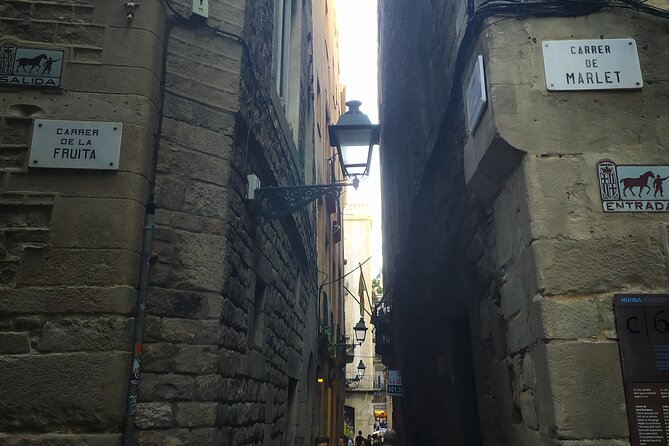
This is built as a true old-town walking tour, not a bus ride with quick stops. The group size caps at 15, which means you’re more likely to hear the guide clearly and ask questions without getting swallowed by a crowd. You’ll cover about three miles total, so it feels active but not exhausting for most people.
You start in Pl. de Sant Jaume (Ciutat Vella) and finish in the El Born Centre de Cultura i Memòria / Mercat del Born area. That matters because you end in a lively pocket of old Barcelona where it’s easy to grab a snack, keep wandering, or plan your next stop.
Logistics are straightforward: you get a mobile ticket, and the meeting point is near public transportation. The tour runs in English, and it’s designed so most people can join. One note: it’s not suitable for reduced mobility, though the company says they can adapt the pace for your own needs or arrange a private experience if needed.
You can also read our reviews of more tours and experiences in Barcelona.

Pl. de Sant Jaume: the political center that shaped 2,000 years
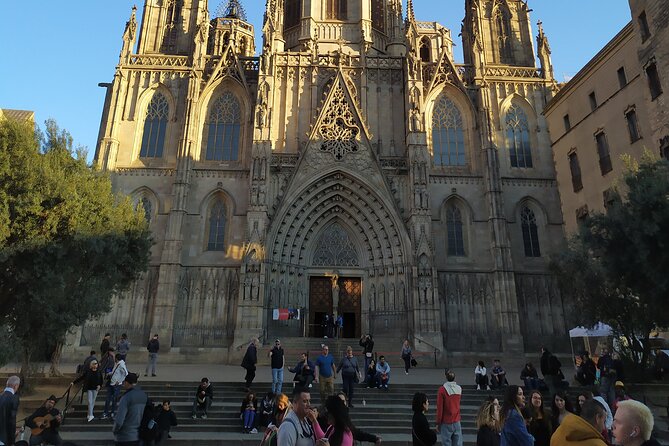
Pl. de Sant Jaume is where power shows up in stone. The square has served as Barcelona’s political and social center for the last 2000 years, with the Town Hall and the regional government nearby.
What I like here is the framing. When you understand that this square has been a “decision-making hub” for centuries, the rest of the Gothic Quarter stops feeling like isolated sights. Instead, it reads like a story where each building and street slot into the bigger timeline.
MUHBA Temple d’August: four Roman columns in the middle of the old city
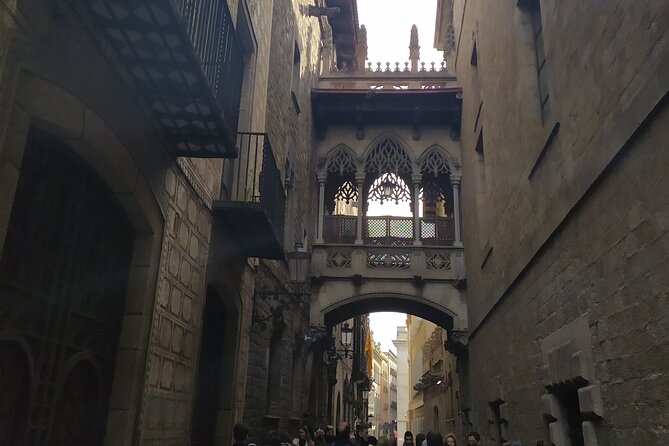
Next you hit MUHBA Temple d’August—one of those Barcelona moments where you realize the city didn’t start from scratch. This stop centers on four columns from the huge temple of Augustus, once located here.
Even with only a short time at the site, the guide’s job is to make it click: Roman Barcelona wasn’t imaginary. It was here, and you’re looking at physical evidence that survives under later layers. If you usually think of the Gothic Quarter as “medieval only,” this is the gut-check that changes your perspective.
Catedral de Barcelona: seeing the Gothic cathedral without the crowds inside
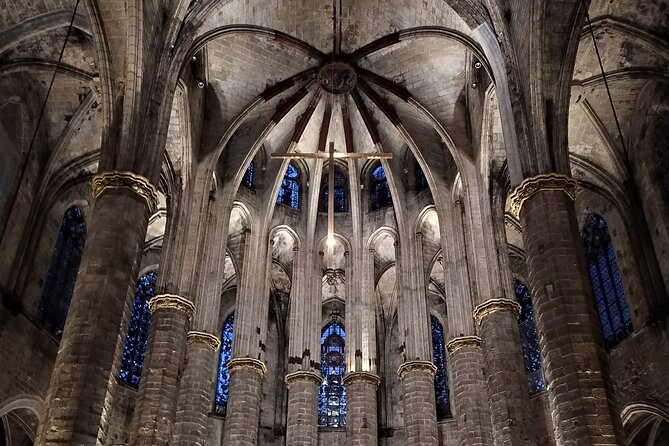
At the cathedral, the tour focuses on the outside. Entry is not included, so don’t count on going in during this walk.
Still, this works well because the guide can point out what matters visually—how the Gothic style shows up, and how the cathedral fits into the surrounding streets and squares. If you later want to go inside on your own, you’ll already know what to look for and where to spend your time.
A small extra highlight here rounds out the cathedral area, giving you a better sense of what makes the Gothic Quarter feel distinctly itself—tight streets, big history, and lots of layers in a small space.
MUHBA El Call: walking through the medieval Jewish neighborhood
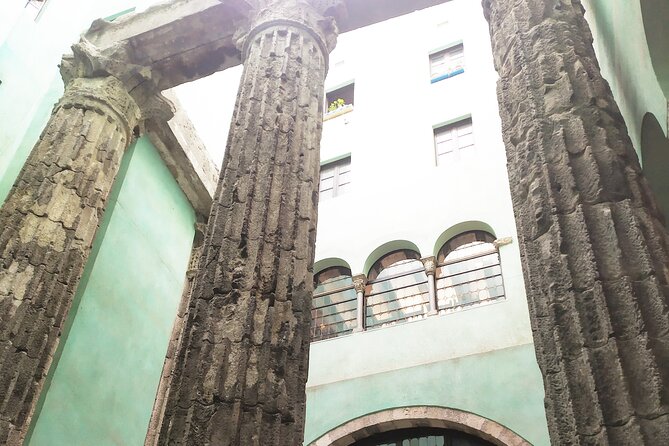
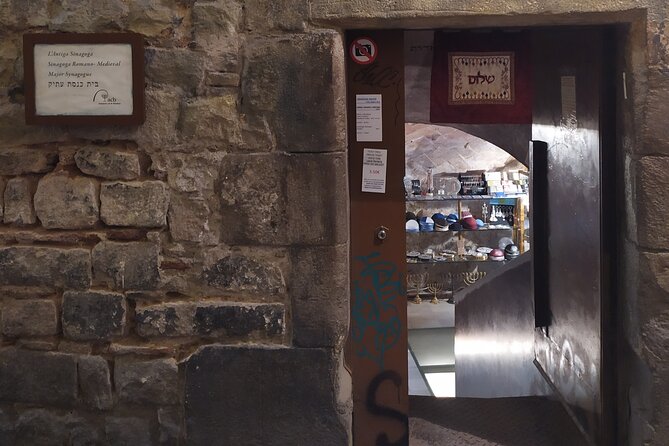
Then you shift into MUHBA El Call, the medieval Jewish neighborhood. This stop is short, but it’s meaningful because it covers a part of old Barcelona that doesn’t always get top billing in casual sightseeing.
I like that the guide doesn’t treat it like a trivia stop. Instead, the explanation helps you understand how communities lived side by side and how the city changed across centuries. Once you’ve heard that context, the streets start to make sense as a lived-in space rather than a set of backdrops.


Sant Felip Neri: Gaudí’s favorite church and a square with a dark past
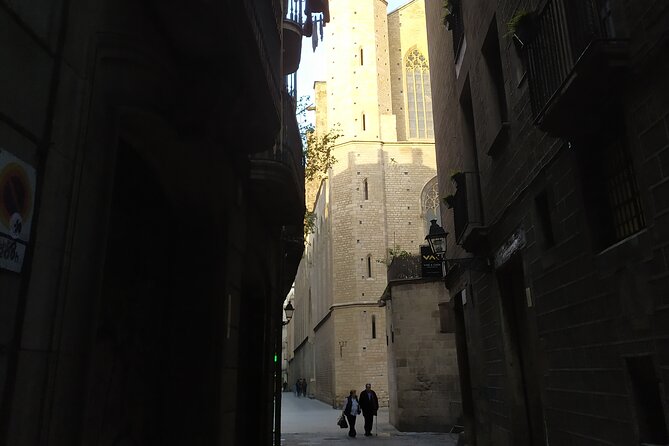
This is one of the stops that turns a “cute square” into a serious moment. Sant Felip Neri is described as Gaudí’s favorite church in his lifetime, and the walk includes the story of the site’s dark recent past, tied to the Spanish Civil War.
Barcelona does this well: it keeps beauty in view while acknowledging the weight underneath. You’ll take in the little square’s charm, then the guide brings in the historical layer so you understand why places like this matter beyond architecture.
El Born / La Ribera: medieval streets, today’s energy
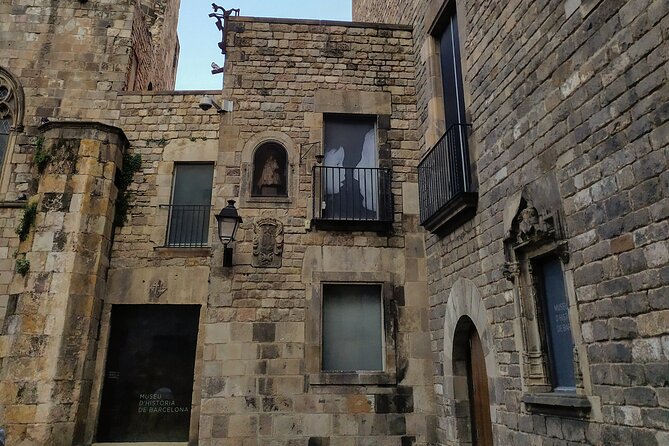
After the more solemn stops, you move into El Born / La Ribera, the important medieval neighborhood where Barcelona’s character shows up fast. The walk gives you about 30 minutes here, which helps because Born is a “look slowly” area.
This is where you’ll start noticing street geometry, the way plazas open up, and how the neighborhood shifts in feel from block to block. It’s also a good mental reset: you’ve got history loaded in your brain, and now the guide shows you how that history shapes the way the area feels now.
From there, you also stop at Passeig del Born, described as the medieval entertainment square. Even if you only get a few minutes, it’s a useful lens—suddenly you see how public space was used for more than religion and politics.
Santa Maria del Mar: why people love this church
Next comes Basilica de Santa Maria del Mar, often described as the church people love most in Barcelona. Here the tour keeps it brief—about 10 minutes—but it’s the kind of stop where a quick explanation can change everything you notice.
This is a strong counterpoint to the bigger, more famous feel of some other cathedrals. Santa Maria del Mar has a sense of belonging to the city’s everyday life. With the guide’s notes, you’ll likely understand why it earns devotion and why it shows up in so many conversations about Barcelona’s identity.
El Fossar de les Moreres: the political conflict behind the stones
One of the most powerful stops is El Fossar de les Moreres. It’s set up as a key place to understand the political conflict between Madrid and Barcelona.
I find these stops matter because Barcelona’s history isn’t only about art and architecture. It also includes identity, tension, and the way politics can land on specific locations. When you understand that the city’s old layout is tied to real events, the Gothic Quarter stops being just scenic.
How much time you’ll actually spend walking (and staying sane in heat)
The tour lasts about 2 hours 15 minutes, and you’re on foot the whole time. That pace is generally friendly, but it does mean you’ll want to show up prepared.
If the weather is warm, plan for it. One of the real-world issues that pops up from past experience is sun exposure—being on the sunny side of the street in hot, humid conditions can wear you down. Bring water, wear sunscreen, and consider a light hat. Also, if you want less heat stress, aim for a morning slot rather than the hottest part of the day.
Price and value: what $13.27 buys in old Barcelona
At $13.27 per person, this is priced like a budget-smart walking tour, and it’s also doing a lot in that time. You get a professional guide, a tight route of major historical stops, and a mix of themes: Roman remains, medieval neighborhoods, civil war memory, and the politics that still echo.
The biggest value win is quality of interpretation. You’re not paying for a long list of random photo spots. You’re paying for someone to connect those sites into a readable story while you walk—especially at MUHBA Temple d’August, MUHBA El Call, and El Fossar de les Moreres.
Two small practical notes on cost clarity: the cathedral exterior is part of the tour but admission isn’t included, and many other stops are described as free. So your money goes mostly toward the guide and the guided route, not entrance fees.
Who should book Luca’s Hidden Old Barcelona tour
This is a great match if you:
- want an early or first-day tour to build context for the Gothic Quarter and Born
- like history that explains why places look the way they do
- prefer small groups and walking over crowded, fast-moving sightseeing
It also works well if you want a guided path through places with layered stories. From Roman columns to a medieval Jewish neighborhood to a civil war-related site, the tour keeps jumping time periods in a way that helps you see Barcelona as one evolving city, not separate theme parks.
If you need lots of mobility support, check your needs first. The tour says it isn’t suitable for reduced mobility, though the team can adapt your pace or arrange a private experience.
Should you book it?
I’d book this if you want a guided walk that helps you read Barcelona. The best part is the balance: you get major architectural moments like the cathedral area and Santa Maria del Mar, but you also get MUHBA stops and political context that make the Gothic Quarter and El Born feel alive.
If you hate walking in heat or you can’t handle uneven old-city streets, you might consider other options. But if you’re game for about three miles of history-by-foot, this is strong value and a smart way to understand what you’ll keep seeing long after the tour ends.
FAQ
How long is the Gothic and El Born walking tour?
It lasts about 2 hours 15 minutes.
Where does the tour start and end?
It starts at Pl. de Sant Jaume, 3, Ciutat Vella, 08002 Barcelona, and ends at El Born Centre de Cultura i Memòria / Mercat del Born, Plaça Comercial, 12, Ciutat Vella, 08003 Barcelona.
What language is the tour offered in?
The tour is offered in English.
Is admission included for all stops?
Admission is free for several stops, but the cathedral stop is listed as not included since you explore the outside.
Is this tour small-group?
Yes. It has a maximum of 15 travelers.
How do I get the ticket?
You get a mobile ticket.
Is the tour suitable for people with reduced mobility?
The tour is not suitable for people with reduced mobility. The provider notes they can adapt the tour to your pace, or arrange a private experience if needed.
Are service animals allowed?
Yes, service animals are allowed.
Is there free cancellation?
Yes. You can cancel for a full refund up to 24 hours before the experience starts.