REVIEW · MALAGA
Paella Cooking Class with English Guide in Malaga
Book on Viator →Operated by Kulinarea · Bookable on Viator
Paella class in Malaga is surprisingly fun. This one mixes Atarazanas Market shopping, a hands-on cooking session, and a full meal with drinks, all in English. I like that you learn where the ingredients come from, not just how to stir the pan.
My other favorite part is the tasting lineup before you cook: you start with three extra virgin olive oil tastings, then you move on to gazpacho, sangria, and churros. One consideration: if you’re using directions from your phone only, you’ll want to double-check the exact meeting spot at Kulinarea, because getting it slightly wrong is easy in this area.
You’ll also want to think about diet needs ahead of time. It’s not recommended for celiac disease or severe allergies due to cross-contamination risk, and it’s not aimed at vegans.
In This Review
- Quick hits
- Paella cooking class in Malaga: what makes this one feel real
- Atarazanas Market: the ingredient lesson (daytime classes only)
- The modern kitchen in the SOHO Art District (where the magic happens)
- Before you cook: olive oil tastings, gazpacho, sangria, churros
- Seafood paella with smart adaptations for vegetarian and meat versions
- Alcohol and drinks: wine, beer, sangria, plus a regional wine pairing
- English guide and instruction style: what you’ll actually do
- Timing: daytime vs evening/Sunday classes (and what changes)
- Logistics in Malaga: getting there, what to bring, and how to avoid confusion
- Who should book this Malaga paella class?
- Dietary reality check (important)
- Price and value: is $84.69 per person worth it?
- Should you book this paella cooking class in Malaga?
- FAQ
- Is the Atarazanas Market visit included?
- How long is the paella cooking class?
- What language is the tour offered in?
- What’s included in the price?
- What paella do you cook?
- Is this class suitable for celiac disease or severe allergies?
- What’s the group size?
Quick hits
- Atarazanas Market is included only in the daytime class (Mon to Sat), so timing matters.
- Three olive oil tastings set up the flavors before the paella even hits the pan.
- You cook a seafood paella, with adaptations available for vegetarian and for no-fish meat versions.
- The menu isn’t just paella: gazpacho, sangria, and churros are part of the experience.
- Small groups: max 14 travelers, so you get real instruction time.
- You leave with a Kulinarea apron as a take-home souvenir.
Paella cooking class in Malaga: what makes this one feel real
When you sign up for a paella cooking class in Malaga, you’re really buying three things at once: ingredient knowledge, cooking instruction, and a meal you actually sit down to enjoy. This experience hits all three. You start with a market-style look at seasonal products, then you cook in a modern kitchen in the SOHO Art District, and then you eat what you made with local drinks.
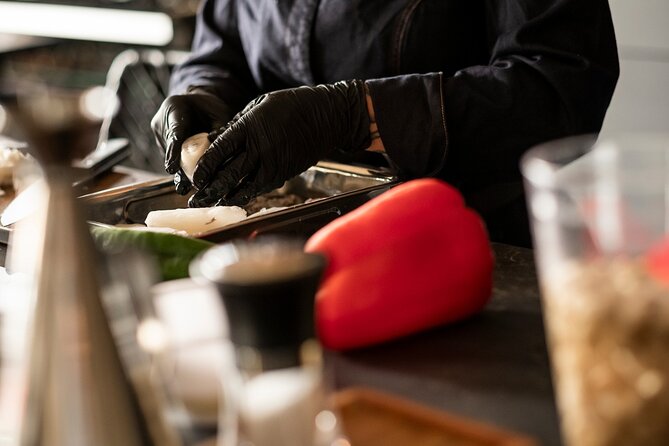
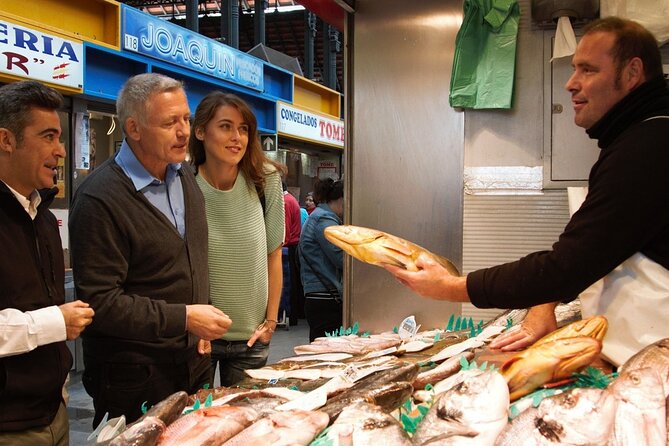
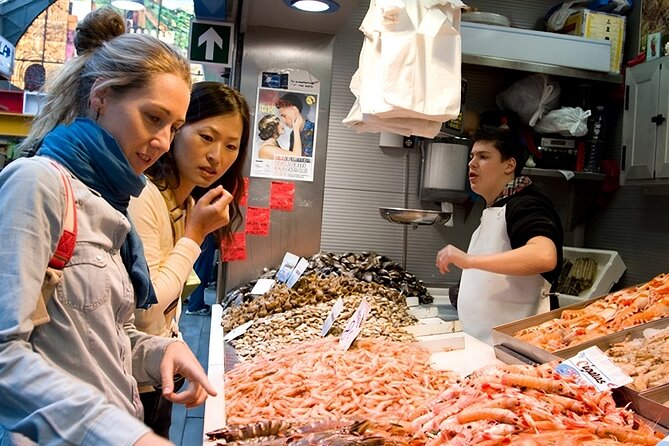
The key is that the market part isn’t window dressing. Choosing your ingredients in Atarazanas Market helps you understand why some paella tastes “right” in a way that’s hard to copy later. And once you’re in the kitchen, the lesson sticks because you’re working with what you picked.
You can also read our reviews of more guided tours in Malaga



Atarazanas Market: the ingredient lesson (daytime classes only)
If you book the daytime class from Monday to Saturday, the visit to Atarazanas Market is included. That’s where you get introduced to seasonal produce and to the mix of meats and seafood used in Spanish cooking. In practical terms, you’re learning what “seasonal” means in Malaga, and you’re seeing the real variety that a paella depends on.
Two things to keep in mind. First, the market is closed on certain holidays, including 1/1, 6/1, 28/2, Thursday and Friday of Holy Week, 1/5, 15/8, 19/8, 8/9, 12/10, 1/11, 6/12, 8/12, and 25/12. If your trip lands on one of those, expect that the market piece may not run.
Second, this is a shopping-and-learning stop, not a long guided walk through historic sights. You’ll get enough context to make smarter choices later, but you’re not turning the whole day into a market marathon.
The modern kitchen in the SOHO Art District (where the magic happens)
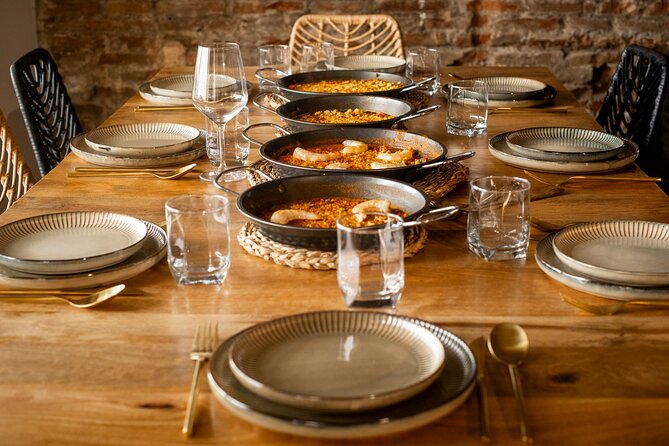
After the market, you head to a modern kitchen in the SOHO Art District. This matters more than it sounds. A clean, organized workspace makes it easier to follow steps, chop efficiently, and understand timing. In a paella lesson, timing is everything, and good kitchen flow keeps the class from feeling chaotic.
The meeting point is Kulinarea, at Avenida de Manuel Agustín Heredia, 24, Distrito Centro, 29001 Málaga. The activity ends back at the meeting point, so you’re not left figuring out your way afterward with a full stomach and a wine buzz.
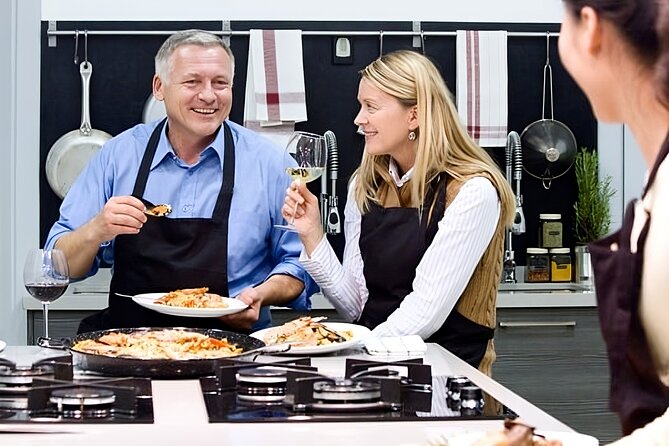
And yes, the group size helps. With a maximum of 14 travelers, you’re less likely to get stuck watching from the sidelines.
Before you cook: olive oil tastings, gazpacho, sangria, churros
One smart reason people love this class is that the food isn’t limited to paella. Before cooking begins, you enjoy a tasting of three extra virgin olive oils. This is a flavor education, plain and simple. You start noticing how different oils can shift aroma and taste, which helps when you’re seasoning and finishing later.
Then the menu moves through:
- Gazpacho as a starter
- Sangria as part of the drink flow
- Churros as dessert
These aren’t random extras. They create a rhythm: cool, refreshing starter, then the drink-and-cook energy, then a sweet finish. If you’re traveling with friends or family, it also means there are multiple moments to taste and talk, not just one long waiting stretch.
Seafood paella with smart adaptations for vegetarian and meat versions
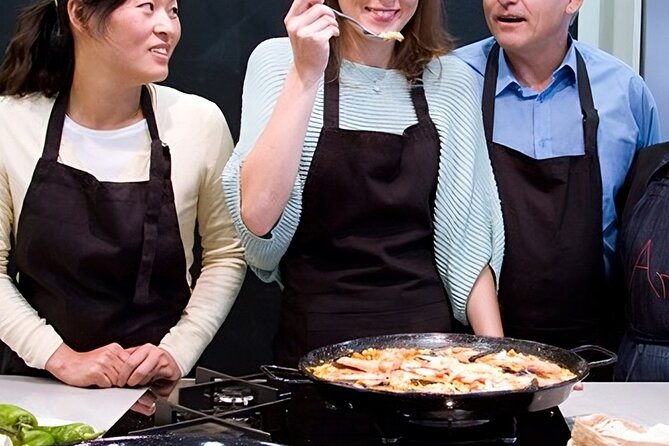
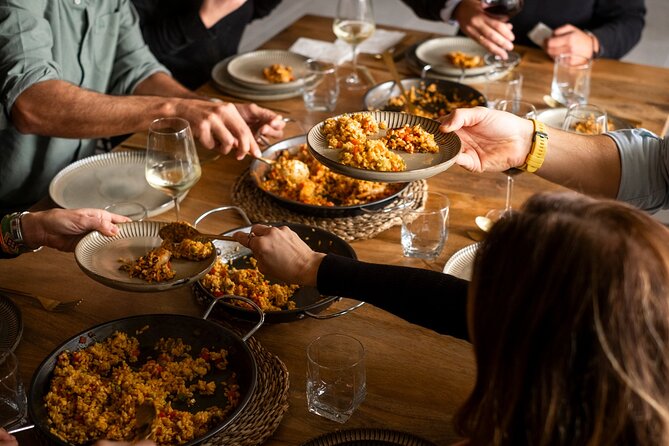
The main event is seafood paella. The experience is set up so the paella can be adapted for vegetarians (vegetable paella) or for people who don’t eat fish (meat paella). That’s a big deal if your group isn’t eating the same way.
Here’s how to think about it: you’re learning the paella method, not memorizing one fixed recipe. The technique you pick up should translate across versions—what goes in first, how flavors build, and how you handle the “finish” so the pan doesn’t turn into something mushy or flat.
If you have strict dietary needs beyond vegetarian or no-fish—especially celiac or severe allergies—see the dietary section below. Paella classes can be delicious, but cross-contact is a real concern when you’re working in a shared kitchen.
You can also read our reviews of more cooking classes in Malaga

Alcohol and drinks: wine, beer, sangria, plus a regional wine pairing
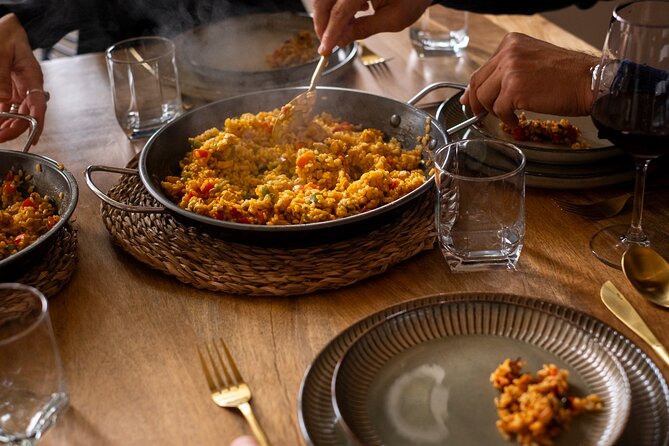
The class includes alcoholic beverages: wine, beer, and sangria, plus snacks. You also get an excellent regional wine made with local grape varieties. That pairing helps you connect the food flavors to what locals drink with them.
One review detail worth considering: the wine experience can feel generous. The important takeaway for you is that the class includes drinks by design, so plan your evening accordingly. If you’re mixing this with other plans later that require sharp attention, consider doing it earlier.
Also, since you’re eating what you cook, you’re not getting a light snack and sending people back out into the city. You’ll sit with your group and enjoy the meal.
English guide and instruction style: what you’ll actually do
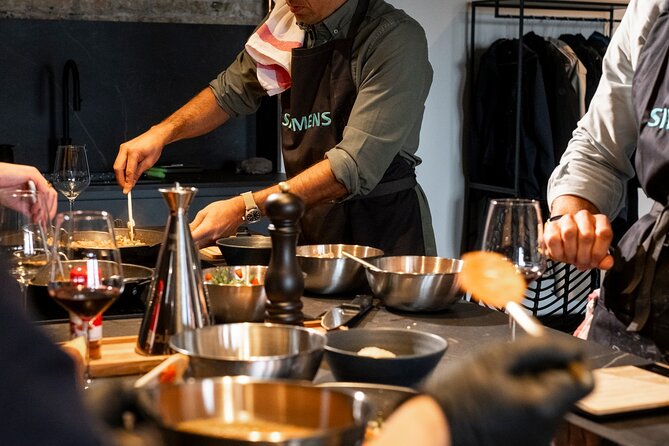
This is offered with an English guide, and the teaching approach shows up clearly in the feedback. Guides like Anais and Pepo are described as warm and welcoming, with clear explanations and patience. Chefs such as Alba also get named for being coordinated and for giving solid guidance during prep and cooking.
In practical terms, you can expect a pace that works whether you’ve cooked before or not. Paella is technical enough that beginners benefit from step-by-step direction, while more experienced cooks like knowing the specific tricks tied to flavor and timing. The class is structured to get everyone involved rather than making you stand back while the chef performs.
And because you’re in a small group, you’re more likely to get answers when something doesn’t click right away.
Timing: daytime vs evening/Sunday classes (and what changes)
The tour summary lists an approximate duration of 4 hours. But the experience also has two different formats in practice: the evening and Sunday class lasts 3 hours, while the daytime class is longer because it includes the market.
So if your priority is the Atarazanas Market ingredient walk, book the daytime option (Monday to Saturday). If your priority is just the cooking and eating, the shorter evening/Sunday session may suit you better.
Either way, it’s still a half-day type of commitment, which is ideal in Malaga when you’re trying to keep your days flexible.
Logistics in Malaga: getting there, what to bring, and how to avoid confusion
This class starts at Kulinarea and ends back there. It’s near public transportation, which makes it easy to plug into a normal Malaga day. That said, directions to the meeting spot can be tricky if you’re arriving on foot and relying on imprecise wording.
My advice: put the exact address into your maps app, and if you’re early, walk in and confirm the entrance before the class start time. You’ll save stress and avoid the frustrating moment of realizing you’re at the wrong shop.
What to bring is simple:
- Wear comfortable clothing you don’t mind getting a little smell on (cooking happens).
- Bring an appetite. You’re eating a full paella meal plus dessert.
- If you’re sensitive to alcohol, consider timing and pace. The drinks are part of the experience.
Who should book this Malaga paella class?
This is a strong pick if you want an authentic Spanish paella experience in a setup that’s more hands-on than touristy. It’s especially good if you:
- want to learn paella technique you can repeat later
- enjoy food tours that include tasting, not just watching
- like small group classes (max 14) where you’re not lost in a crowd
It’s also a nice family-friendly style class in terms of structure: market input, guided cooking, then shared meal.
If you’re traveling solo, it can still work because you’ll sit with other people and eat together. If you’re traveling with a mixed diet group, ask about vegetable paella and meat-no-fish options early.
Dietary reality check (important)
This experience is not recommended for celiac disease or for anyone with a severe allergy that needs to avoid cross-contamination. It also isn’t recommended for vegans. If your needs are more complex than vegetarian or no-fish, you should check directly before booking.
Price and value: is $84.69 per person worth it?
At $84.69 per person, you’re paying for more than a cooking lesson. You’re getting:
- a guided paella cooking experience in a modern kitchen
- lunch
- drinks (wine, beer, sangria) and snacks
- an included regional wine
- dessert (churros) plus gazpacho
- an olive oil tasting before cooking
- and a take-home Kulinarea apron
In other words, the price covers instruction, ingredients, and a full food-and-drink meal. That’s often where cooking classes become good value: you’re not separately paying for lunch, tastings, and multiple beverages. If your alternative plan is eating paella in a restaurant plus buying a separate market or food experience, this can end up feeling like a smarter bundle.
Should you book this paella cooking class in Malaga?
I’d book it if your goal is a hands-on Malaga food day that ends with a meal you helped make, plus tastings that teach you why the flavors work. The small group size, the olive oil tasting, and the fact that the class adapts the paella for vegetarian and no-fish diets all push it toward the practical end of the market.
I’d think twice if you need strict allergy safety (especially celiac) or you’re vegan. And if you’re the type who hates meeting-point uncertainty, be proactive about finding Kulinarea at the exact address before the start.
If you want paella as a skill, not just a dish, this class is one of the better ways to spend a half day in Malaga.
FAQ
Is the Atarazanas Market visit included?
It’s included only with the daytime class from Monday to Saturday. The market is closed on certain holidays, so the market portion may not run on those dates.
How long is the paella cooking class?
The daytime class is about 4 hours. The evening and Sunday class lasts 3 hours.
What language is the tour offered in?
The experience is offered in English.
What’s included in the price?
Lunch is included, along with alcohol (wine, beer, sangria), snacks, and a take-home Kulinarea apron.
What paella do you cook?
The class includes seafood paella, with adaptations available for vegetarians (vegetable paella) and for those who do not eat fish (meat paella).
Is this class suitable for celiac disease or severe allergies?
No. It’s not recommended for celiac disease or for anyone who has a severe allergy that needs to avoid cross-contamination.
What’s the group size?
The class has a maximum of 14 travelers.