REVIEW · MALAGA
Paella Cooking Class in Malaga
Book on Viator →Operated by Spain Food Sherpas · Bookable on Viator
Paella starts at the market, not the kitchen. This Malaga class is built around Atarazanas Market ingredient picking and hands-on cooking with a chef who guides you step by step. I love how you’re not just learning technique—you’re sampling local foods along the way (including Aloreña olives and olive oil). One practical note: there’s no hotel pickup, so you’ll need to get to the meeting point on your own.
I also like the pacing. You move from stalls to a modern kitchen in the Soho area, snack, then cook, then eat what you made with beer or regional wine. It’s offered in English and capped at 12 people, so it stays personal instead of chaotic.
In This Review
- Key Things You’ll Notice Right Away
- Market First: Atarazanas and the Foods Behind Paella
- The “local foods” moment that makes it feel different
- The Short Walk to Soho: From Stalls to a Modern Cooking Kitchen
- Olive Oil, Gazpacho, and the Starter Game Plan
- Paella From Scratch: Sofrito, Rice, and Pan Timing
- What’s good to know for your own kitchen later
- What You Actually Eat: Snacks, Sangría, Churros, and Your Paella
- Drinks and age rules
- Vegetarian option
- The Guides and Chef Factor: Why This Feels Personal
- Price and Value: Is $84.69 Worth It?
- Who This Class Is Best For (and Who Might Skip It)
- Practical Logistics: Meeting Point, Timing, and Smooth Start
- Should You Book This Paella Class in Malaga?
- FAQ
- Where does the experience start?
- How long is the paella cooking class?
- Is the class offered in English?
- What’s included in the price?
- Is there a vegetarian option?
- Is hotel pickup included?
- Are there any age rules for drinks?
- What’s the cancellation window for a full refund?
Key Things You’ll Notice Right Away
- Atarazanas Market ingredient hunt led by your guide, with time to ask questions
- Olive oil tasting plus local snacks like Aloreña olives and roasted almonds
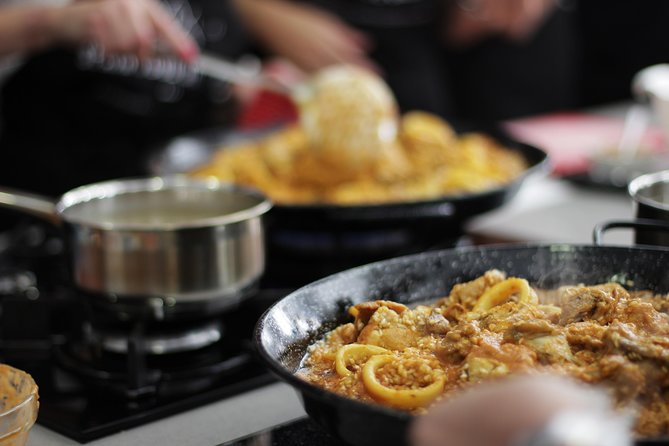
- Chef-led paella coaching with a clear sequence (sofrito, then building the pan)
- Gazpacho before the paella, including the classic raw-tomato/pepper style
- Small group size (max 12), so you actually get hands-on time
- You’ll get recipes to take home and recreate the basics
Market First: Atarazanas and the Foods Behind Paella
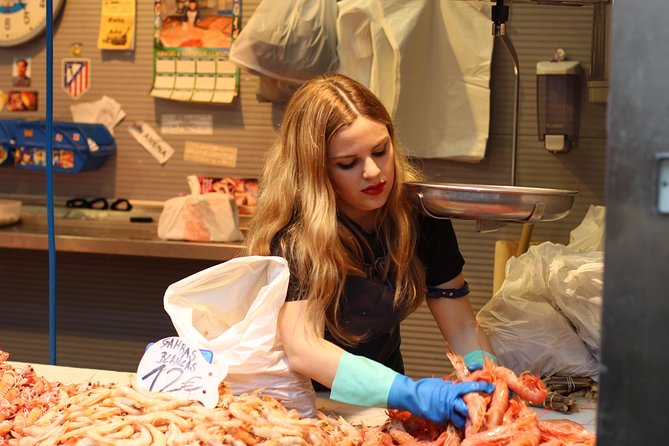
The class kicks off at Kulinarea (Avenida de Manuel Agustín Heredia, 24, Distrito Centro, 29001 Málaga). From there, you meet your chef and/or guide and head straight into Atarazanas Market, where the point isn’t sightseeing—it’s shopping with context.
Your guide walks you through what to look for at the stalls. Expect a focus on fresh fruit and vegetables, plus the kinds of cured and shelf-stable goodies that turn a home-cooked paella into a real Malaga meal. This is where you’ll pick up key ingredients with your chef’s guidance, so you don’t end up guessing later.
One thing I appreciate: you’re learning how food gets chosen, not just how it gets cooked. Paella is simple in theory, but the details matter—rice choice, broth quality, and how your ingredients behave in the pan. Starting at the market is a smart way to connect those dots.
You can also read our reviews of more cooking classes in Malaga

The “local foods” moment that makes it feel different
Before you ever touch the paella pan, you sample a mini lineup of Malaga flavors. From the class format, you can expect things like:
- Aloreña olives (one of the local olive types you won’t find the same way elsewhere)
- roasted almonds
- extra virgin olive oil tasting
- tostón de bacalao, a local salt-cod topping served on thick, rustic cateto bread with orange
That tasting section matters because it sets your palate. You start noticing salt, fat, acidity, and aroma—then paella stops being a mystery dish and starts being a set of understandable building blocks.
The Short Walk to Soho: From Stalls to a Modern Cooking Kitchen
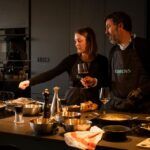
After the market portion, you head to the cooking venue. It’s only about a five-minute walk and located in Malaga’s Soho district, which means you’re not spending the whole morning in transit. You go from the indoor energy of a market into a clean, modern kitchen setting where everything is laid out for cooking.
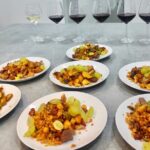
In the kitchen, you start with a small tasting of local snacks and then move into drinks and starters. The class format includes tastings and the full meal you’ll eat at the end, so the kitchen time doesn’t feel like a waiting room. It feels like work you actually want to do.
Chef support is a big part of why this is worth doing as a class instead of just cooking on your own. You’re not left with a recipe and good luck. The chef provides step-by-step direction and practical tips—exactly what you need when paella timing can make or break results.
Olive Oil, Gazpacho, and the Starter Game Plan
Before paella, you make gazpacho and you learn why the “starter” matters. The class treats gazpacho as more than just something cold to eat. You’ll learn the baseline idea: a much-loved Andalucian chilled soup typically made with raw tomatoes, cucumbers, and peppers, then whizzed up until it’s smooth.
Why I like this sequence: it sets you up for flavor balance. Paella can be rich. Gazpacho brings acidity and freshness so the rest of the meal tastes clearer and more interesting.
Then comes the olive oil tasting. Expect to sample olive oils and get guidance on what you’re experiencing. Even if you don’t become an olive oil expert overnight, you’ll learn what to pay attention to: aroma, bitterness, and how the oil behaves in savory dishes.
This is also a nice moment for questions. If you’ve had Spanish food on your trip and wonder why certain flavors hit differently, this is when your guide and chef can connect the dots.
Paella From Scratch: Sofrito, Rice, and Pan Timing
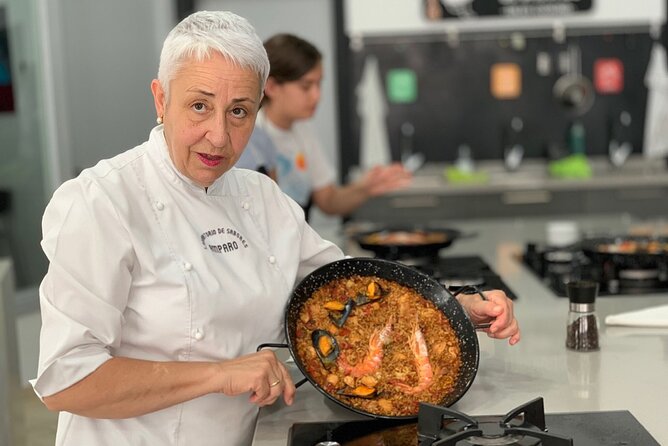
Now for the main event: cooking your paella.
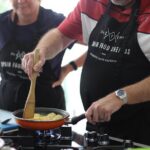
You’ll cook in a structured way with the chef walking you through what to do and why. The class format focuses on the essentials:
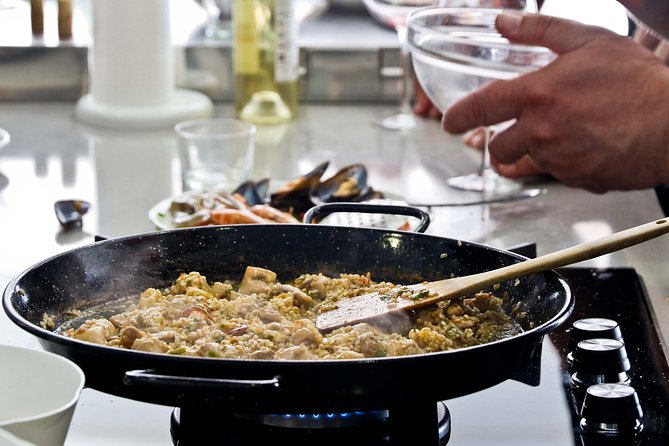
- Make a sofrito base sauce first
- Bring paella ingredients together gradually in the pan
- Learn about the rice and the ingredients to use
That sofrito step matters because it’s the flavor engine. A lot of people think paella is all about the final mix in the pan. It isn’t. It’s about building flavor before the rice ever takes over.
The chef’s hands-on direction is what you want here. Paella is one of those dishes where a small adjustment—heat level, timing, broth behavior—changes everything. In a small group (max 12), you get more chances to ask and more chances to correct before it turns into a bland or uneven result.
A few more Malaga tours and experiences worth a look

What’s good to know for your own kitchen later
Even if you never cook paella again (it happens), you’ll still learn technique you can reuse. This class gives you a recipe set to take home and the process framework to follow. And that’s the real value of a cooking class like this: not just a meal today, but clearer instincts for dinner tomorrow.
What You Actually Eat: Snacks, Sangría, Churros, and Your Paella
This experience isn’t only a cooking session. It includes the parts that make Malaga food feel like Malaga.
From the class menu format, expect:
- gazpacho (starter)
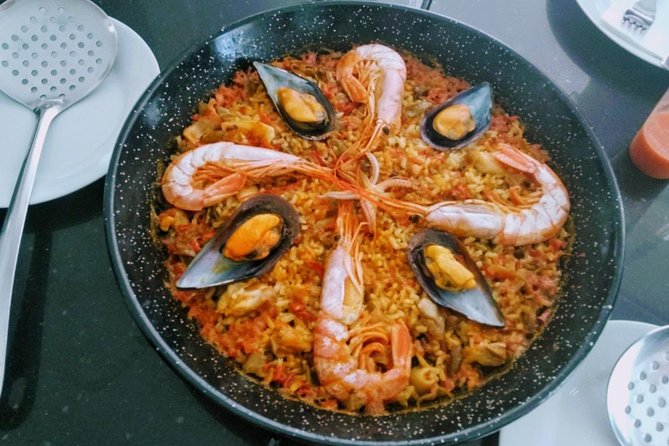
- mixed paella (main)
- sangría (starter or part of the drink flow)
- churros (dessert)
- fresh fruits to finish
- wine or beer paired with what you’re eating
There are also snack touches in between, including the market tasting items and the kitchen snacks. The olive oil tasting and snack round isn’t filler. It’s part of the education.
Drinks and age rules
Minimum drinking age is 18. Alcohol is part of the standard menu experience (wine or beer and sangría), but one review also notes there can be a non-alcohol option. So if you want to skip alcohol, it’s smart to ask when you book or ask your guide when you arrive.
Vegetarian option
A vegetarian option is available if you advise at booking. That’s important, because paella depends on more than swapping one ingredient. You’ll want the class format adapted so you still get the real process, not just a plate with a few changes.
The Guides and Chef Factor: Why This Feels Personal
The best classes feel like a conversation with food. This one leans into that.
The format includes your chef meeting you at the market and a guide helping run the market side with history and food context. In real terms, that means you’re likely to hear names like Carmen, Jose, Anaïs, Elise, Fernando, Javi/Javier, or Felipe connected with guiding and kitchen instruction, and those personalities show up as part of the experience.
Across the class style, two things come up again and again:
- Clear instructions you can follow even if you’re not a cooking person
- Patience and back-and-forth help while you cook
It also helps that cooking is paired and worked on together in a modern kitchen setup. You get to interact with the group without feeling like you’re waiting for someone else to do the hard parts.
And if you want to leave with more than just recipes, do exactly what the class encourages: ask your guide for tips and recommendations after the class ends. That’s when you can get the best follow-up—where to eat next, what to look for in shops, and what to try in Malaga that matches your tastes.
Price and Value: Is $84.69 Worth It?
At about $84.69 per person for roughly 3 hours 30 minutes, the value depends on what you want from your time in Malaga.
Here’s what you’re paying for:
- a market walk with instruction and ingredient selection
- olive oil tasting and local snack sampling
- gazpacho prep and paella cooking with chef-led step-by-step guidance
- wine or beer pairing, plus sangría and churros as part of the experience flow
- seasonal fruits at the end
- all recipes included so you can recreate the basics later
If you were to buy ingredients, cook in a kitchen without a chef, and then also find a market-guided lesson and tastings on your own, it would be harder to match this mix for the same price. The capped group size (max 12) also helps the value feel fair, because it supports real hands-on time rather than a spectator-style cooking show.
The one “cost” to keep in mind is logistics: you must get to the meeting point yourself (no hotel pickup). But if you’re already comfortable using public transport or walking in the city center, that’s a minor trade for a class with real local food built in.
Who This Class Is Best For (and Who Might Skip It)
This is best for you if you:
- want a hands-on food day instead of another walking tour
- love markets and want to learn what to buy and why
- cook at home sometimes and want recipes you’ll actually use
- want to meet people from different countries in a shared cooking setup
It’s also a solid choice for families when kids are interested in food. One class example notes a chef interacting well with a ten-year-old, keeping them engaged.
You might skip this if:
- you dislike structured cooking and prefer unplanned restaurant wandering
- you only want a quick bite and don’t want a full 3.5 hours
- you need hotel pickup and don’t want to manage your own arrival
Practical Logistics: Meeting Point, Timing, and Smooth Start
Start at Kulinarea in Distrito Centro (Avenida de Manuel Agustín Heredia, 24). The activity ends back at the meeting point.
A couple smart habits help:
- arrive a bit early and confirm you’re at the correct spot in your confirmation message
- if your Spanish is limited, use the English-speaking guide support for menu and sign help
- if you have dietary needs, say them at booking so the vegetarian option (or other accommodations) can be handled properly
One review pointed out confusion about the exact meeting location timing before the tour begins. So don’t treat the meeting point like a general vibe. Treat it like an appointment. Show up early, then double-check.
Should You Book This Paella Class in Malaga?
I think you should book it if you want more than paella as a dish. This class gives you the why behind the taste: market ingredients, olive oil context, gazpacho balance, and chef-led paella timing.
If you’re the type who likes to come home with recipes and a clearer sense of how a regional meal is built, this hits the sweet spot. Just plan for self-arrival to Kulinarea and bring your appetite.
FAQ
Where does the experience start?
It starts at Kulinarea, Avenida de Manuel Agustín Heredia, 24, Distrito Centro, 29001 Málaga, Spain.
How long is the paella cooking class?
The duration is about 3 hours 30 minutes.
Is the class offered in English?
Yes. Offered in English, and a multi-lingual guide may operate as needed.
What’s included in the price?
You get olive oil tasting, market snacks (like Aloreña olives or roasted almonds), gazpacho, paella, wine or beer paired with the menu, seasonal fruits, and all the recipes.
Is there a vegetarian option?
Yes, a vegetarian option is available. You’ll need to advise at the time of booking.
Is hotel pickup included?
No, hotel pickup and drop-off are not included.
Are there any age rules for drinks?
The minimum drinking age is 18.
What’s the cancellation window for a full refund?
You can cancel for a full refund up to 24 hours in advance of the experience start time.