REVIEW · MALAGA
Paella and Sangria Workshop in Malaga
Book on Viator →Operated by Lebasi Taller de Cocina · Bookable on Viator
Paella starts with a cold almond soup. In Málaga, this 3-hour workshop has you making three local favorites—ajoblanco (white garlic), malagueño soak from the Costa del Sol, and classic Valencian paella—plus sangria during the cooking. I love the way the instructors break everything into clear steps and mix in food culture along the way.
You’ll also like the payoff: after cooking, you sit down and eat what you made, in a group capped at 14 people. One thing to consider is that the paella style may not match your exact expectation (for example, some classes lean chicken-forward rather than seafood-forward), so come in with open taste buds.
In This Review
- Key things I’d highlight before you book
- Why This 3-Hour Málaga Workshop Feels Worth Your Time
- Finding the Place in Málaga’s Centro (C. Martínez Campos)
- Getting Started: Cold Ajoblanco (White Garlic) First
- Malagueño Soak: Costa del Sol Comfort on a Plate
- Valencian Paella: The Rice Technique Lesson You’ll Use Again
- Sangria During the Workshop: Not Just a Drink Ticket
- Andalusian Sorbet Dessert: A Cool Finish
- The Group Size That Actually Changes the Experience
- English Instruction, With Real Cultural Context
- Price and Value: Does $84.66 Actually Make Sense?
- Who Should Book This (And Who Might Skip It)
- Should You Book the Paella and Sangria Workshop?
- FAQ
- What is the duration of the Paella and Sangria Workshop in Málaga?
- Where does the workshop start?
- Is the workshop offered in English?
- What dishes will we cook during the class?
- Do you make sangria during the workshop?
- Is there dessert included?
- How large is the group?
- Are vegan, vegetarian, or gluten-free options available?
- What is the cancellation policy?
Key things I’d highlight before you book
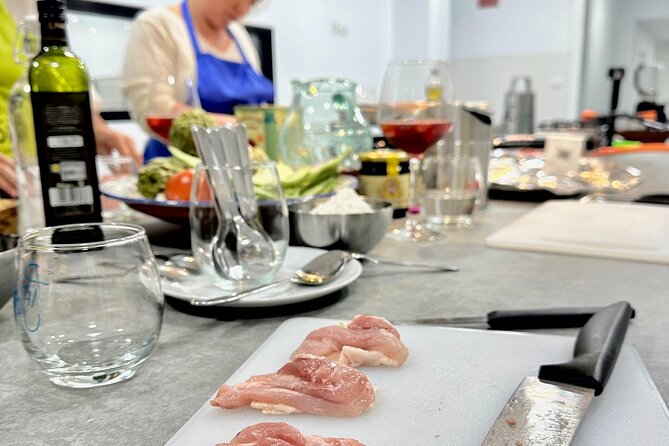
- Three dishes in one sitting, not a demo you watch from the sidelines
- Sangria made during the workshop, so you’re not waiting until the end
- Small group size (max 14) for real interaction with the chef and helpers
- Step-by-step paella technique, especially around the rice and liquid ratio
- Dietary options available (vegan, vegetarian, gluten-free) if you request ahead of time
Why This 3-Hour Málaga Workshop Feels Worth Your Time
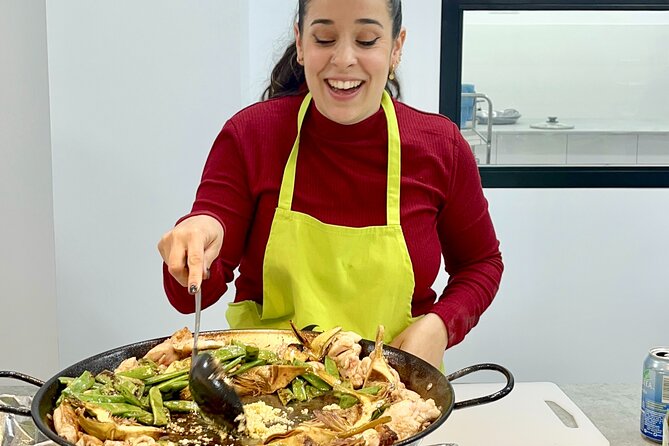
This class is built like a good meal plan: short, focused, and hands-on. You’re in the kitchen for about 3 hours, and you’re not just learning words like “sofrito” and “stock.” You’re actually chopping, mixing, and building dishes until you can taste the results.
For me, the best part is that you leave with something practical. Cooking paella at home often fails because the rice-to-liquid timing is tricky. Here, the instruction is aimed at the technique behind that, and you get to practice it while the chef is right there to correct your instinct before it becomes a ruined pan.
Also, this isn’t a giant tourist bus experience. The group is limited to 14 people, which matters. In a small class, you can ask questions and you’re more likely to get personal feedback, especially if you’re a first-timer.
A few more Malaga tours and experiences worth a look

Finding the Place in Málaga’s Centro (C. Martínez Campos)
The meeting point is C. Martínez Campos, 15, Distrito Centro, 29001 Málaga, Spain. It’s in central Málaga, and the location is noted as being near public transportation. That’s useful because you can plan a simple arrival without adding stress.
You’ll also return to the meeting point at the end, so you’re not scrambling afterward to figure out where to go for your next stop. This is the kind of activity that fits well into a day where you also want to walk around Málaga’s historic core.
One more practical note: you get a mobile ticket, which is handy if you’re juggling plans on your phone instead of carrying paper.
Getting Started: Cold Ajoblanco (White Garlic) First
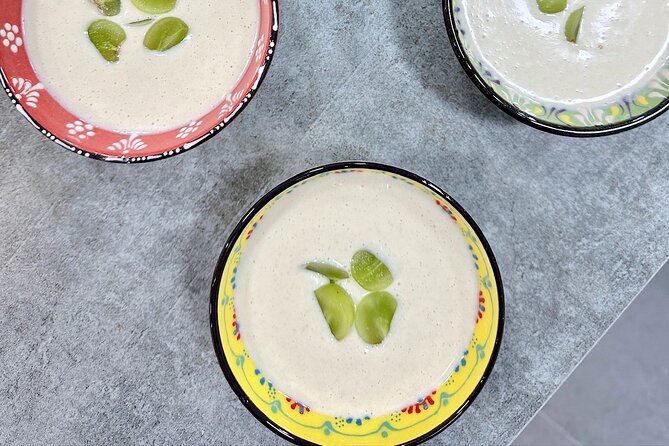
The class opens with ajoblanco, described as a cold soup made with almonds. In the sample menu it shows up as white garlic, which lines up well with what ajoblanco is known for: a creamy, chilled starter that’s gentle, nutty, and very Andalusian.
Starting cold is smart. You’re not rushing to heat or pan-cook yet. Instead, you focus on texture—getting the base mixed correctly and understanding how the flavor balances work. Ajoblanco is also a good “training dish,” because it teaches you how the ingredients should come together without depending on a hot stove to save you.
And yes, it’s tasty. Several comments in the class experience highlight the starters as a big success, especially when the chef guides you step-by-step rather than assuming you already know what the final consistency should look like.
Malagueño Soak: Costa del Sol Comfort on a Plate
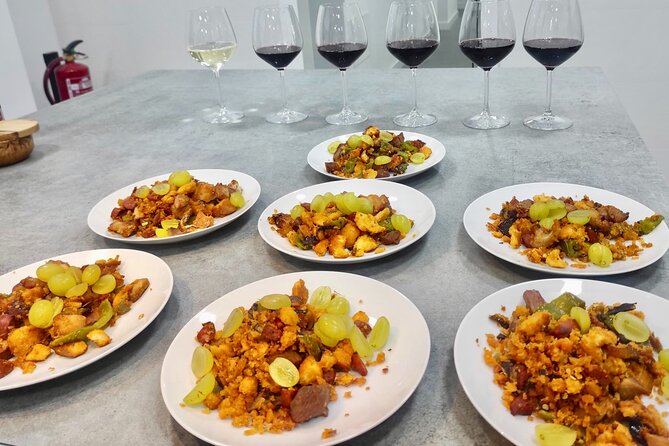
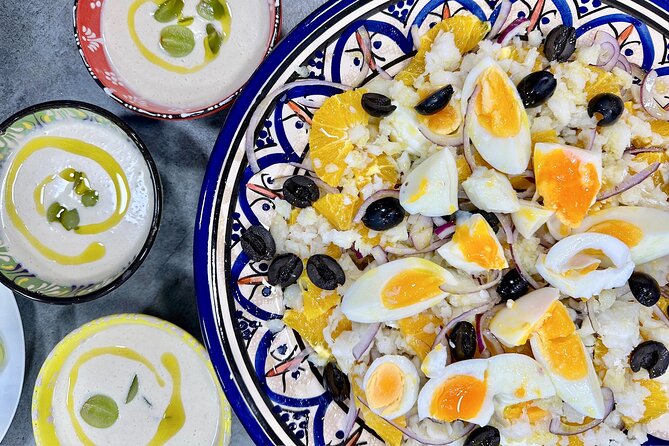
Next up is malagueño soak, one of those Málaga-area dishes that feels local and familiar. The exact presentation can vary in how it’s described, but the key idea is the same: you’re making a typical Costa del Sol dish as part of a three-course-style experience.
What I like about including this second course is pacing. After the cold almond soup, you get a different texture and flavor direction. It keeps the class interesting and prevents the “same food, different bowl” problem that sometimes happens in cooking classes.
In some accounts of the experience, the second starter is described as including a salad-like element. So if you enjoy fresh, chilled, and savory flavors, this is one of the parts you’ll probably remember.
Valencian Paella: The Rice Technique Lesson You’ll Use Again
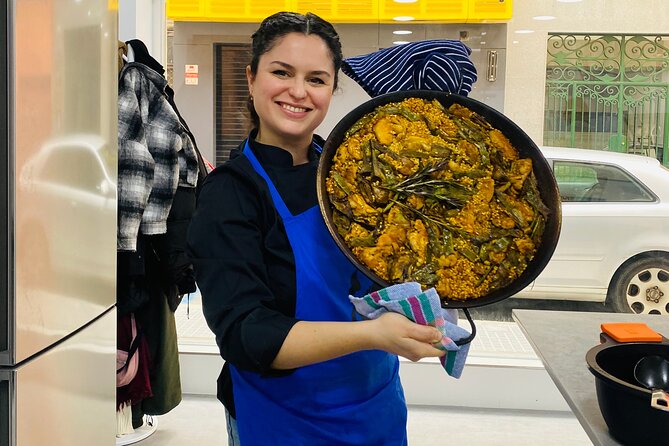
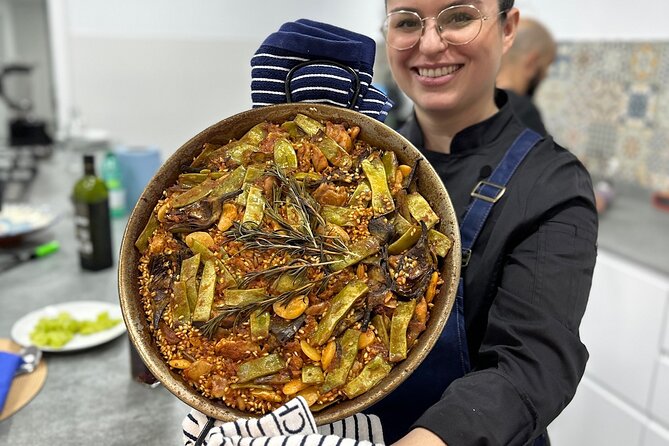
This is the star of the show: Valencian paella, taught using traditional methods. The class is explicitly focused on technique, and the best paella advice you’ll get is the kind that sounds small but changes everything.
People highlight learning the secret to getting paella right—especially the rice and liquid ratio. That’s the stuff that makes the difference between a pan that’s perfect and a pan that’s either soupy or dry.
You’ll also hear practical coaching that goes beyond just timing:
- how to approach the cook
- how to avoid common mistakes with rice amounts
- how to keep the result consistent enough that it tastes like paella, not just rice
A couple of important taste considerations. One account notes the paella was made using a more traditional chicken approach rather than a seafood-only version. Another comment mentions that seasoning style (including paprika) may feel strong to some people. Neither issue means the paella is wrong—it just means you should go into the class knowing that the chef’s version is the version you’ll learn.
Also, the way the class is run matters. Instructors named by previous participants include Diego, Laura, Nahuel, and Nicolas. If you get one of them (or their team), you’re likely to get the same vibe people praised: clear instruction, real technique explanations, and room to ask questions without feeling rushed.





Sangria During the Workshop: Not Just a Drink Ticket
While you cook, you’ll make sangria to complete the experience. This is more than a background beverage. It’s part of the lesson flow and part of the fun.
A lot of the positive energy from the class comes from how sangria feels integrated. You’re working in the kitchen, then you’re mixing a drink, and later you’re eating together with it. The result is that the class feels like an event, not a classroom.
You’ll likely find that sangria is served alongside the meal, with multiple beverage options mentioned. So if you don’t want to go all-in on sangria, you still shouldn’t feel stuck with only one drink.
If you’re someone who likes food and drink pairings, this part helps you understand the Andalusian rhythm: cook, sip, taste, adjust, repeat.
Andalusian Sorbet Dessert: A Cool Finish
To end, you get a very typical Andalusian dessert. The sample menu calls it Andalusian sorbet.
Dessert here is a breather. You’ve just done a lot—mixing, tasting, cooking, and then eating your own dishes. Sorbet is a fitting ending because it’s light and cold, which helps after richer flavors like almond and paella.
It’s also a nice reminder of why this class is designed as three courses plus drinks. The structure helps you focus on each step and still feel like you’ve had a complete meal when you’re done.
The Group Size That Actually Changes the Experience
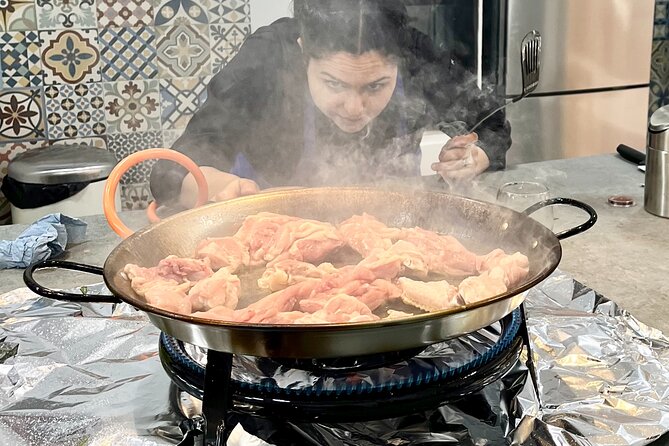
Max 14 travelers doesn’t sound like a big deal until you’re in the kitchen. Then you feel it right away.
In a larger group, you end up watching more than doing. Here, the comments repeatedly point out how interactive the experience is and how much participants do themselves. Even people who said they were not “a chef” type still felt involved—hands in, not just eyes on.
That matters for families too. One account specifically notes a 13-year-old had a blast and was active in the cooking. So if you’re traveling with teens, this is often a better fit than tours where kids just sit and listen.
English Instruction, With Real Cultural Context
This workshop is offered in English, which is a big practical win. But the bigger value is that instruction is tied to culture, not only recipes.
In multiple accounts, instructors shared the background behind dishes and explained traditional cooking methods. That’s what turns a recipe list into something you understand. You don’t just memorize what goes in. You learn why it goes in and what to watch for.
That kind of context is also helpful when you try cooking later. When a dish doesn’t look right at home, you’ll have a mental checklist for what might be off—like the texture for ajoblanco or the rice behavior in paella.
Price and Value: Does $84.66 Actually Make Sense?
At $84.66 per person for about 3 hours, this isn’t the cheapest thing you can do in Málaga. But it’s also not a “pay to watch” class.
You’re getting:
- instruction in a hands-on format
- three typical dishes (cold starter, malagueño soak, paella)
- sangria made during the workshop
- dessert at the end
And you’re in a group capped at 14, which keeps the experience more personal than the typical mass-class.
If your goal is to learn how to make something you can repeat at home, the value lands more clearly. If your goal is only to eat paella once, you could do that in a restaurant for less. But you won’t come home with technique practice and a kitchen-based understanding of what makes the dish work.
So I see this as a “skills + meal” purchase. For many people, that’s the sweet spot.
Who Should Book This (And Who Might Skip It)
This workshop is especially good for:
- first-time cooks who want clear steps (and fast results)
- food lovers who enjoy learning how Spanish dishes are built
- families, since it’s described as suitable for a range of ages
- travelers who want a local experience that feels more personal than a standard tasting tour
You might want to choose another option if:
- you strongly want a specific paella style (like seafood-only) and you don’t want surprises
- you’re very sensitive to paprika-heavy seasoning styles (some comments mention it)
But if you like learning by doing, this class fits nicely.
Should You Book the Paella and Sangria Workshop?
I think you should book it if you want a fun, practical Málaga food experience where you actively cook and then eat the results. The class structure makes sense: cold ajoblanco, a Málaga/Costa del Sol second dish, and then paella with real rice technique coaching, finished with sangria and dessert.
It also has a strong track record: a 4.8 rating with many recommendations and repeated praise for the chefs’ teaching style. If you’re the type of traveler who enjoys hands-on moments and wants to leave with more than photos, this is a smart use of a half-day (about 3 hours).
FAQ
What is the duration of the Paella and Sangria Workshop in Málaga?
It lasts about 3 hours.
Where does the workshop start?
The meeting point is C. Martínez Campos, 15, Distrito Centro, 29001 Málaga, Spain.
Is the workshop offered in English?
Yes, it is offered in English.
What dishes will we cook during the class?
You will cook three typical dishes: ajoblanco (white garlic), malagueño soak, and Valencian paella.
Do you make sangria during the workshop?
Yes. Sangria is made during the class as part of the experience.
Is there dessert included?
Yes. The class includes an Andalusian dessert, with the sample menu listing Andalusian sorbet.
How large is the group?
The workshop has a maximum of 14 travelers.
Are vegan, vegetarian, or gluten-free options available?
Yes. Vegan, vegetarian, and gluten-free options are available if you notify the customer in advance.
What is the cancellation policy?
Free cancellation is available up to 24 hours in advance for a full refund. Canceling less than 24 hours before the start time is not refunded.