REVIEW · GRAN CANARIA
Playa del Inglés surf lessons
Book on GetYourGuide →Operated by Canary Wave Surf School · Bookable on GetYourGuide
Surfing in Gran Canaria sounds wild. This course makes it feel doable, with coaching, small groups, and plenty of time in the water near Maspalomas.
I like that the lesson is built for all levels. Whether you’ve never seen a surfboard in real life or you’ve tried before, the instruction is designed to get you moving with better technique instead of just chasing waves.
One consideration: the exact beach and start time can shift with sea conditions. So you’ll want a flexible morning and a little patience when the sea decides the plan.
In This Review
- Key things to know before you go
- Why Playa del Inglés surfers start in Maspalomas
- Canary Wave Surf School by Nixon: the easiest place to start
- Picking the right level: this course is built for beginners and improvers
- The 3-hour rhythm: from suit prep to your best wave attempts
- Small groups up to 8: why you get attention, not just encouragement
- Beach locations near Playa del Inglés and Maspalomas lighthouse
- Instructor coaching in English, Italian, Spanish, and French
- Price and value: what $58 buys you in real terms
- Who this lesson suits best (and who should prepare differently)
- Should you book Playa del Inglés surf lessons?
- FAQ
- Where do I meet for the surf lesson?
- How long is the lesson and what does it include?
- Is hotel transfer included?
- How big are the groups?
- What languages are the instructors?
- Do I need to bring water?
Key things to know before you go
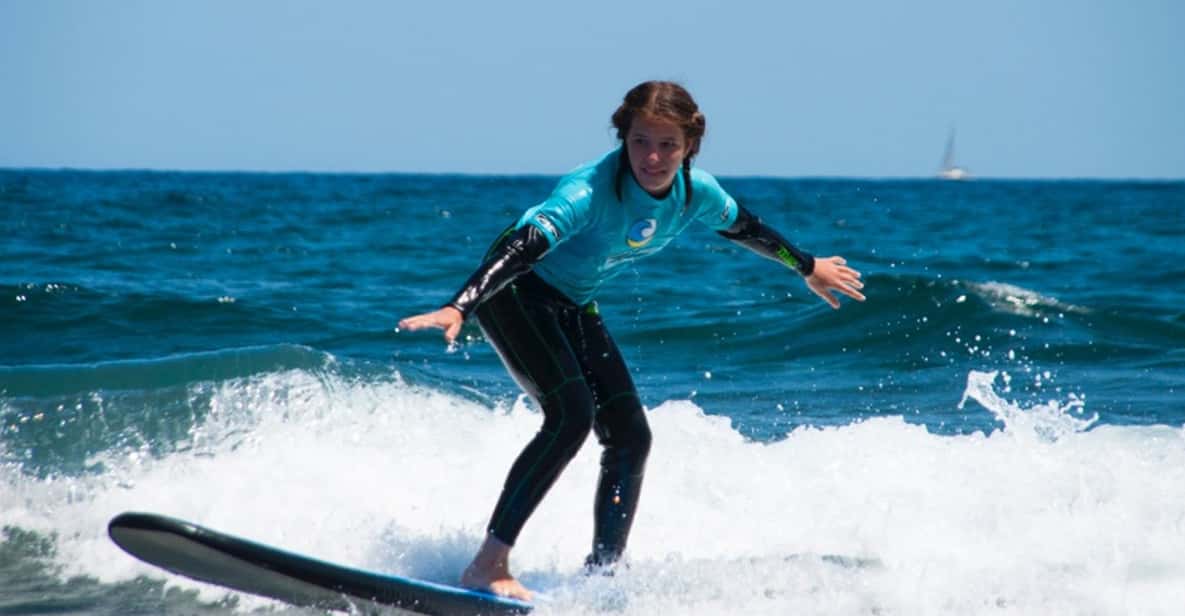
- Small groups (up to 8) means more individual feedback when you’re wobbling
- Equipment provided so you’re not hunting for boards or dealing with rentals
- Location can change between Playa del Inglés and Maspalomas near the lighthouse based on the weather and sea
- English and other languages (English, Italian, Spanish, French) for clear coaching
- The full 3 hours includes prep like suit setup and board allocation, not just wave time
Why Playa del Inglés surfers start in Maspalomas
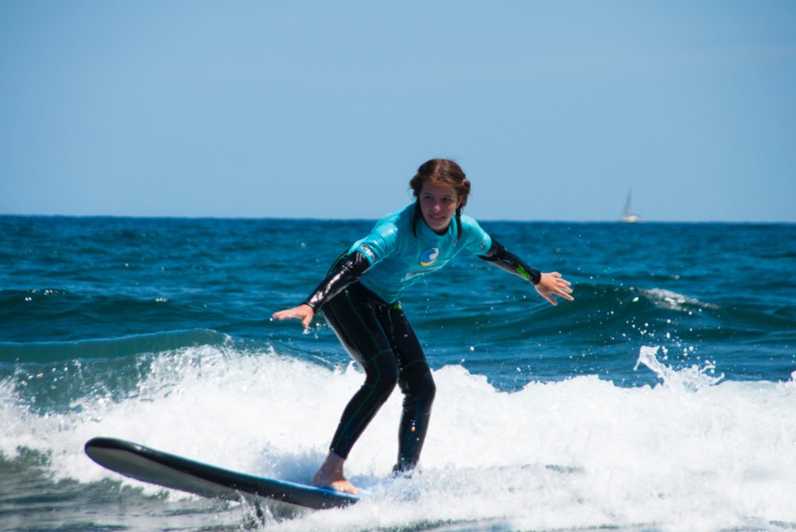
Even if you’ve pictured Playa del Inglés as your surf backdrop, the real advantage here is the south-coast setup. The surf school meets at Canary Wave Surf School by Nixon in Maspalomas, and the lesson typically runs on nearby beaches that are easier to work with when conditions change.
That flexibility matters. Surfing is simple in theory and moody in practice. The provider often adjusts location between Playa del Inglés and Maspalomas near the lighthouse depending on what the sea is doing that morning.
For your first surf lesson, that’s a big deal: you don’t want to fight random waves and unclear water. You want the staff to find a working spot, then teach you the basics and build you into the set of waves that match your level.
And yes, the vibe is fun-first. The instructors aim to keep things moving, with lots of tries instead of long lectures.
A few more Gran Canaria tours and experiences worth a look
Canary Wave Surf School by Nixon: the easiest place to start
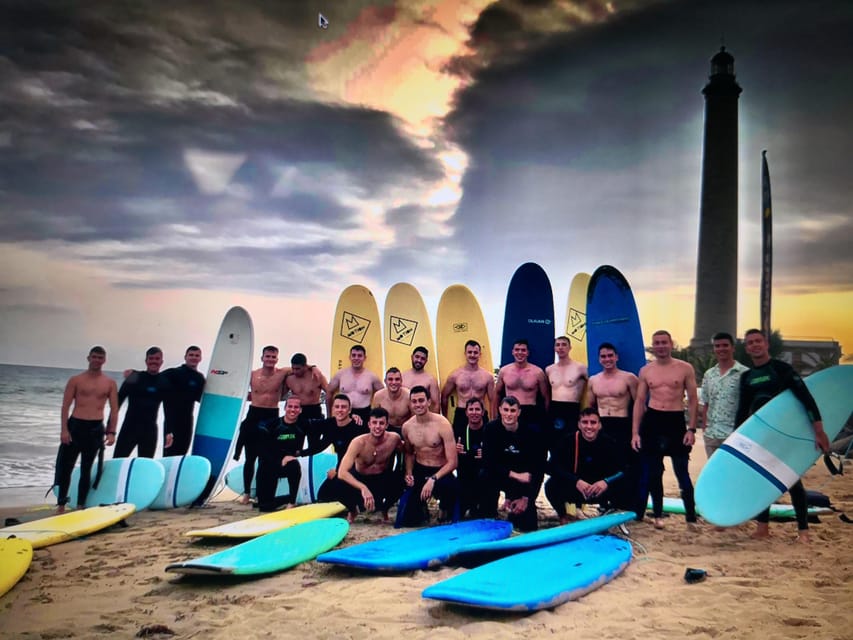
You’ll meet at Canary Wave Surf School by Nixon inside the Oasis Shopping Center at the Maspalomas beach area, behind the Red Cross lifeguard tower. That’s a solid landmark setup. In a windy coastal area, having a clear “behind the lifeguard tower” reference helps you find the group without stress.
If you’re driving or arriving on your own, plan time to park. One reviewer specifically noted that parking can be tricky and that arriving earlier helps. They also reported using a secured paid parking option for about 6 euros.
If you’re staying in the south of the island, your reservation can include hotel transfer to and from your accommodation. If not, you’ll handle your own way to the meeting point. Either way, the meeting structure is straightforward: check in, get organized, then head to the sand.
The biggest practical win: you start with the same place every time. Once you find that Oasis Shopping Center spot, you’re done guessing.
Picking the right level: this course is built for beginners and improvers
This surf lesson is adapted for all levels, and you feel that in how the coaching is delivered. On day one, you need basics that stick: how to handle the board, how to position your body, and how to move with control instead of flailing.
The format also supports improvement. Instructors help you refine technique so you’re not just standing once and then disappearing behind the next wave. The small group setup makes it easier for them to watch you and correct what matters most.
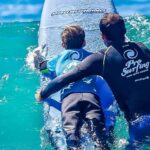
In the feedback for this school, I keep seeing the same theme: quick explanations on the beach, then right away into the water. Coaches like Doramas, Rayco, Charlie, and Toramas (names appear in multiple bookings) are described as patient and encouraging, including with total beginners and kids.
That matters because your first attempts usually look messy. If the instructor stays calm and keeps teaching in short, clear steps, you improve faster. If they only give generic tips, you’ll feel lost.
So if you’re nervous, you’re not alone. This lesson is designed for that exact moment where you’re holding the board and wondering if you’ll ever stand.
The 3-hour rhythm: from suit prep to your best wave attempts
The total duration is 3 hours. What’s important is that those hours include prep, not just time riding waves. People note that the session includes setup tasks like suit preparation and board allocation.
Here’s how it typically plays out in real terms:
- You gather at the school, then get your board ready for your session.
- You head to the beach where the instructor runs the class that day.
- On sand, you practice the fundamentals: how to get on the board, balance, and move into position.
- Then you transition into the water for repeated tries and technique fixes.
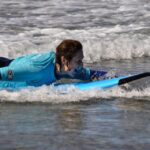
One reviewer with kids highlighted that they managed to stand, which tells me the course aims to create frequent success moments. Another booking mentioned a full 2 hours of surfing, which lines up with the idea that prep and coaching fit inside the broader schedule.
A gentle reality check: don’t expect to surf like a local after one lesson. But you can expect to leave with practical skills. You’ll know what to do when a wave approaches, how to handle the board for your level, and what you should focus on next time.
Also, bring your own water. Water is not included. Coastal sun and effort add up fast, especially if you’re doing repeated paddling and trying again and again.
Small groups up to 8: why you get attention, not just encouragement
Surf lessons can be chaotic. The board in the wrong place, someone waiting too long, and one instructor trying to coach five people at once. This lesson avoids that by keeping groups to up to 8 participants.
In real booking experiences, groups often feel even smaller. Reviews describe groups of 4, 5, and even just 3 participants at times. When the group is that size, you tend to get quicker feedback and clearer corrections.
That attention is what helps beginners progress. You can’t improve your balance without someone pointing out what your feet or torso are doing. You can’t fix paddle timing without the coach watching your approach.
In this course, instructors are described as patient and flexible, including when weather changes. One reviewer said the coach adapted location and also gave extra time to keep the experience good. That kind of flexibility matters when you’re learning.
And because the group stays small, you spend less time waiting and more time practicing. Surfing rewards repetition. This structure makes it easier to get plenty of attempts in your 3-hour window.





Beach locations near Playa del Inglés and Maspalomas lighthouse
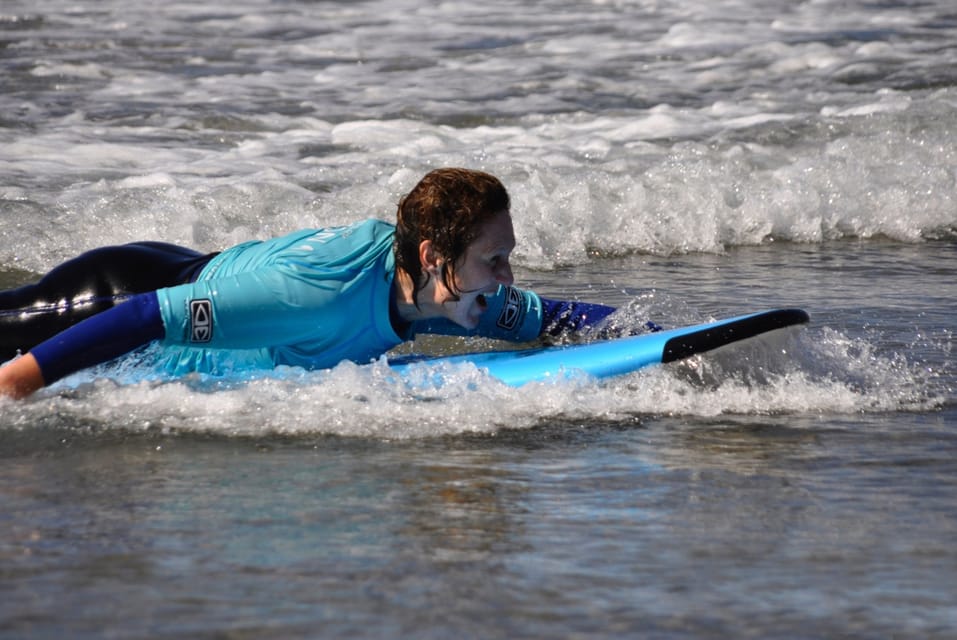
This activity is usually carried out on Playa del Inglés or Maspalomas beach next to the lighthouse area. It can change depending on weather conditions. The provider contacts you to confirm the starting time, and that timing can shift based on sea conditions too.
So what should you do with this information?
- Keep your morning flexible.
- Don’t plan a tight schedule right before or right after the lesson.
- Be ready for a short adjustment in where you meet the instructor’s beach plan.
Why does this help you? Because the instructor isn’t forcing you into random waves. They’re choosing a spot that works better for teaching. Beginners typically learn faster when the wave conditions match your ability.
It also explains why reviews mention location and schedule adjustments. When the sea changes, the school changes with it, instead of pretending the ocean won’t matter.
One more on-the-ground tip: watch out for other swimmers. A reviewer specifically warned that other people can get in the way. It’s a crowded beach environment, so keep your head up and follow instructor guidance.
Instructor coaching in English, Italian, Spanish, and French
Clear coaching is everything when you’re learning a technical sport. This course lists instructors who speak English, Italian, Spanish, and French. That’s a strong plus if you’re traveling with friends or family who don’t speak Spanish.
In multiple bookings, instructors are described as welcoming and enthusiastic. Names that show up include Rayco, Raico (spelling variant), Doramas, Toramas, and Charlie. It’s a good sign that the school has instructors who can keep beginners calm and moving.
When coaching is effective, it feels simple. The instructor explains the key points quickly on the beach, then gives you chances to apply them immediately. That reduces confusion and boosts confidence, especially if you’re starting from zero.
If you’re traveling as a family, this can matter even more. One booking called out an excellent experience for kids around ages 10 to 12, with an emphasis on patience. Another mention describes an older teen who needed schedule flexibility because of illness, and the school handled it by collecting the participant the next day instead.
That kind of staff responsiveness is part of the value. Surfing is physical, and plans change. A school that adapts the day-to-day experience makes the trip feel smoother.
Price and value: what $58 buys you in real terms
The price listed is $58 per person for a 3-hour lesson. On paper that looks straightforward. In practice, the value comes from what’s included:
- Surf equipment
- Instructor coaching
- Transfer to/from your hotel for guests staying in the south island
If you were to piece these together yourself, the costs and stress would add up. Here, the surfboards are handled, the staff leads the session, and the logistics are partly covered depending on your location.
Two smart value checks:
- Small group size means you’re not paying for vague instruction. You’re paying for feedback while you practice.
- Prep is included in the 3 hours, so you’re not showing up and instantly losing paid time to suit setup and equipment allocation.
One thing not included: water. That’s easy to fix. Buy a bottle on your way in, or you’ll feel it later.
Also, remember that start times and beach location can shift with conditions. That can be frustrating if you hate change. But from a value standpoint, it usually means the school is prioritizing teachable surf over rigid scheduling.
Who this lesson suits best (and who should prepare differently)
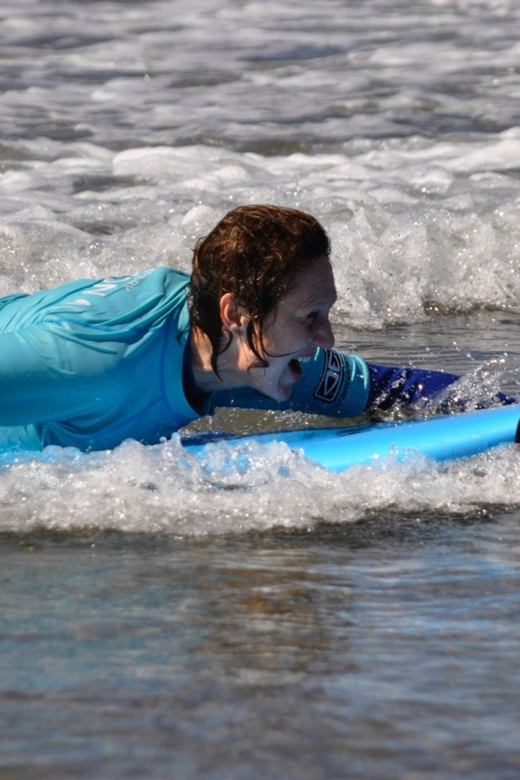
This is a great pick if:
- You’re a beginner who wants structure and patience
- You want a short, focused activity (3 hours) instead of a day-long commitment
- You’re traveling with mixed experience levels and want a course adapted for all levels
- You want a small group so you can actually get help when you’re stuck
It also fits families and teens based on reported experiences. A booking with a 10-year-old loved it. Others describe 12-year-old daughters learning quickly and standing up. A teen surf student also had a reschedule handled without turning the situation into a problem.
Who should prepare differently?
- If you’re very time-sensitive, build in buffer time because the sea can change the start.
- If you don’t like being around other swimmers in the water, pay attention to instructor safety notes and spacing.
- If you hate physical activity, know that paddling and balancing are part of the deal. This is not a sit-and-watch class.
If you’re deciding between solo practice and a guided course, guidance usually wins. Learning the right mechanics early saves you time later.
Should you book Playa del Inglés surf lessons?
Yes, you should book this if you want a practical beginner-friendly surf lesson with real instructor attention. The small group size, included equipment, and multi-language coaching make it an easy activity to say yes to when you arrive in Gran Canaria.
I’d also book it if you’re the type who likes clear structure: meet at the school, get organized, practice basics on sand, then go into the waves. The way the staff adapts to conditions makes the experience more likely to feel worthwhile, even if the sea is moody.
If you’re still on the fence, choose this lesson if you can handle two realities: the beach location might shift between Playa del Inglés and Maspalomas near the lighthouse, and your start time may confirm closer to departure based on sea conditions.
FAQ
Where do I meet for the surf lesson?
Meet at Canary Wave Surf School by Nixon in the Oasis Shopping Center at the Maspalomas beach, behind the Red Cross lifeguard tower.
How long is the lesson and what does it include?
The total activity duration is 3 hours. It includes prep time such as suit setup and board allocation, not just time in the water.
Is hotel transfer included?
Transfer to and from your hotel is included only for guests staying in the south of the island.
How big are the groups?
The course is a small-group activity limited to up to 8 participants.
What languages are the instructors?
Instructors speak English, Italian, Spanish, and French.
Do I need to bring water?
Water is not included, so it’s smart to bring some with you.