REVIEW · GRAN CANARIA
Small-Group Surf Lessons in Gran Canaria
Book on Viator →Operated by Surf Canaries · Bookable on Viator
Small group surf beats big chaos. I love the max of 5 coaching in Playa del Inglés, and I love the focused video theory that helps you get up on the board faster.
One thing to plan for: you’ll carry your surfboard to the beach, and you should have moderate fitness for two water sessions.
In This Review
- Key Things You’ll Notice
- Playa del Inglés Surf Lessons That Don’t Feel Rushed
- Meeting at Surf Canaries (9:30am) and Getting Set Up
- How the Video Theory Actually Helps You Stand Up
- Beach Simulation First: Learn the Motions Before the Ocean
- Two Surf Sessions, with a Real Break in Between
- What’s Included (and Why It’s Better Than Cheap Lessons)
- Coaching in a Group of Five: Expect Feedback You Can Use
- What to Bring and How to Prepare (So You Don’t Lose Time)
- Price, Value, and Who This Lesson Fits Best
- Should You Book This Surf Lesson in Gran Canaria?
- FAQ
- What time does the surf lesson start?
- Where is the meeting point?
- How long is the experience?
- Is it a small-group lesson?
- Is the lesson offered in English?
- What’s included in the price?
- Do I get the photos at the end?
- Do I need moderate physical fitness?
- What happens if weather is poor?
- What is the cancellation policy?
Key Things You’ll Notice
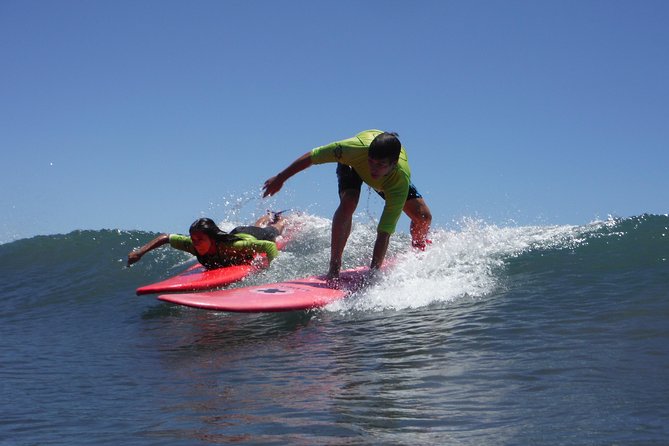
- Small group (max 5) means you get real coaching, not just a crowd vibe
- Video-based theory that targets the rules that actually matter in surf practice
- Two practical sessions with a planned break so you can reset, not just burn out
- Everything included: surf equipment, snacks, bottled water, and free downloadable photos
- Instructor feedback on form during your time in the water, helpful for beginners and returners
Playa del Inglés Surf Lessons That Don’t Feel Rushed
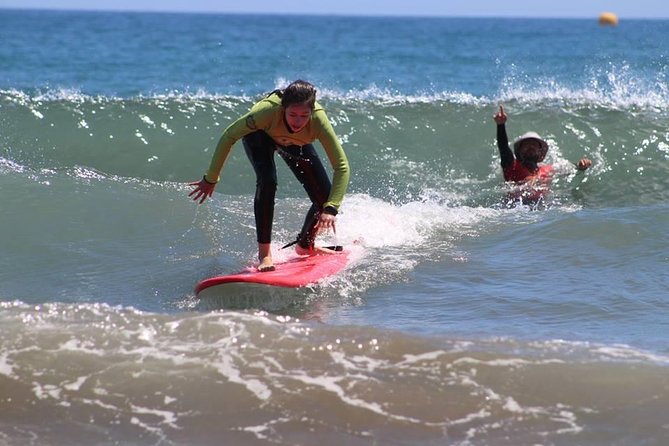
Gran Canaria is a great place to learn because conditions can be beginner-friendly, and the surf culture is strong without being intimidating. This half-day format is designed for progress, not just time in the water, so you leave with skills you can use again next time.
I like that it’s not a random sequence. You start with instruction, do a quick beach warm-up, then get coached in two separate sessions with a rest break in the middle. That structure matters if you’re new, or if you’ve surfed before but want to tighten up the basics.
A few more Gran Canaria tours and experiences worth a look
Meeting at Surf Canaries (9:30am) and Getting Set Up
Plan on meeting around 9:30am at Surf Canaries, Av. Alf Provisionales, Anexo II, Av. 8 de Marzo, Anexo II, Local 1H, 35100 Maspalomas, Las Palmas, Spain. The exact timing can shift with surf conditions, so arrive a few minutes early and be ready to start when the day says go.
This is also a practical win for logistics: it’s near public transportation, and the activity ends back at the meeting point. If you’re building a day around surfing, that reduces the usual end-of-tour scramble.
You’ll get a mobile ticket at booking time, and you’ll receive confirmation as well. The day is about one focused experience, not a long multi-stop schedule.
How the Video Theory Actually Helps You Stand Up
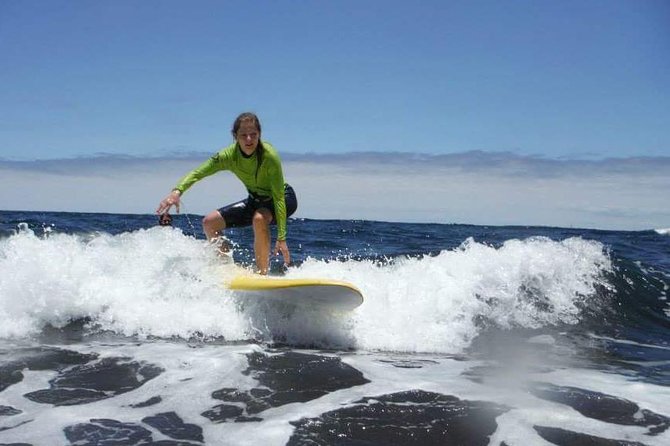
Before you get wet, you’ll do a short theory session in a classroom, including a video class. The key detail here is that it’s not generic. It’s based on the school’s hands-on teaching experience—over ten years—and it’s aimed at the points that make a difference when you’re trying to get up.
If you’ve ever taken surf lessons where everyone watches videos and then you’re thrown into the ocean, you’ll appreciate the pacing here. The theory is meant to give you a small set of golden rules you can apply right away.
It also works for both first-timers and people with some surf experience. That’s important because the biggest frustration for returning surfers is repeating beginner steps that don’t match their problem. Instead, you’re guided toward fundamentals with a practical goal: use them immediately on the board.
Beach Simulation First: Learn the Motions Before the Ocean
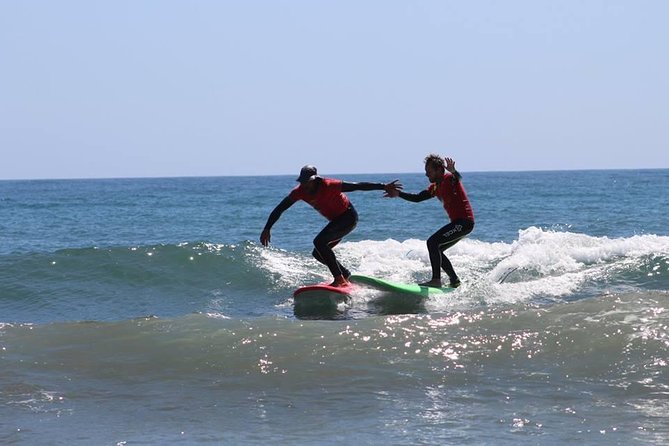
After you get the rules, you move to a short beach simulation. This is one of those steps that can feel optional in some programs, but it’s exactly what makes the first session less chaotic.
In this format, you’re learning the movement sequence and setup before you’re dealing with waves, wind, and timing. You’re also less likely to burn energy in the wrong effort, which is common when people jump straight into the water without getting the body mechanics sorted.
And because the coaching is hands-on with a small group, you can adjust your technique without feeling lost. The day is set up so you’re not rushed once you reach the surf.
Two Surf Sessions, with a Real Break in Between
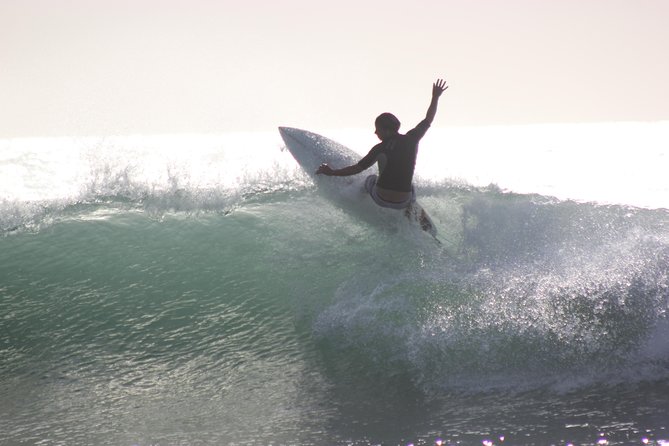
You’ll spend about 50 minutes in the water for the first practical surf session. Then you take a 20-minute break—time to rest, recharge, and reset mentally before you go again.
That break is a big deal. Surfing is tiring in a way that’s hard to explain until you do it: paddling, balancing, and getting up all demand a lot, especially if you’re learning. The lesson design respects that by giving you a breathing space before the second round.
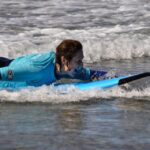
Then you head back out for the second surf session. By the time you return to the water, you’ve had at least one chance to try the rules from theory and the motions from the beach work. That loop—watch, practice, apply—turns time into progress.





What’s Included (and Why It’s Better Than Cheap Lessons)
The price is $72.56 per person, and the biggest value is what you don’t have to figure out yourself. Your surfboards and equipment are included, along with snacks and bottled water. You also get souvenir photos at the end of the lesson.
Those photos are not an afterthought. You’ll finish back at the surf school with relaxed photo viewing, so you can actually see what happened during your time in the water. Even better: photos are included and free to download, with no upselling or surprise add-ons.
This matters because many “low-cost” surf lessons end up costing more once you buy board rentals, pay for water, and then pay extra for images. Here, the experience feels complete at the price point.
And yes, you’ll carry your surfboard to the beach. It’s not far, but it does add a bit of fitness. I see it as a small trade: you’re doing more of the “real surf day” rhythm, not just being transported around like a sightseeing stop.
Coaching in a Group of Five: Expect Feedback You Can Use
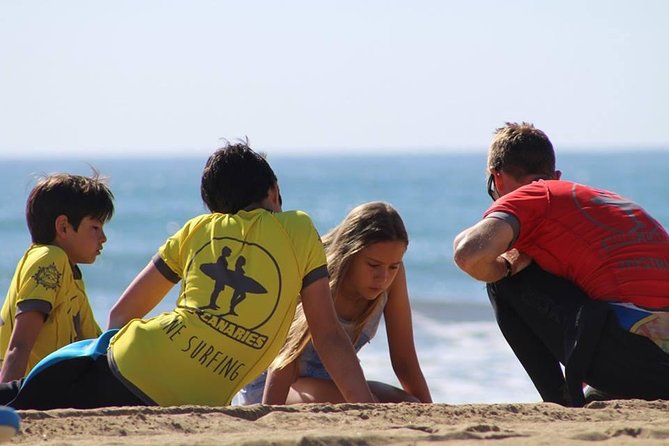
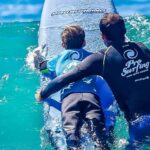
The group size is maximum 5 travelers, which is the sweet spot for learning. You’re close enough to your instructor to get attention, but not packed in a way that turns the lesson into noise.
In practice, that means you’re not just listening—you’re getting guidance when you need it. The day is structured so you can take feedback, make one or two adjustments, and test them immediately in the ocean.
Instructors from the Surf Canaries team include people like Marta and Dani, and Kasperi. If you’re paired with them, you can expect clear explanations, patient coaching, and supportive guidance that builds confidence rather than just chasing performance.
What to Bring and How to Prepare (So You Don’t Lose Time)
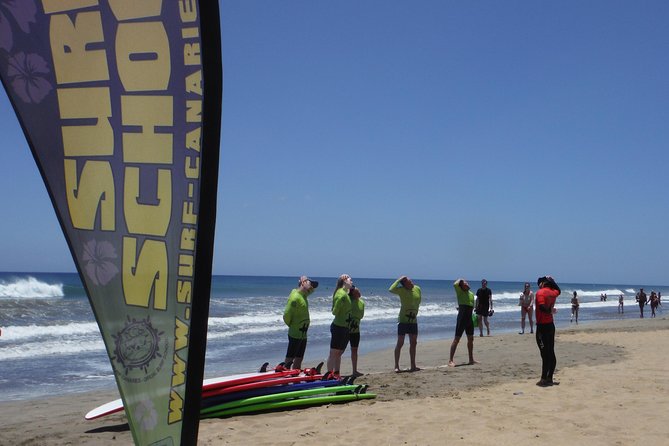
Because the course is built around two water sessions, you’ll want to show up ready to work. Pack like it’s a morning you’ll be in swim gear and wet conditions.
A few practical ideas:
- Wear or bring swimwear you’re comfortable in for getting up repeatedly
- Bring a towel and an extra dry layer for after surfing
- Use sunscreen before you start and consider reapplying later
- Plan for some physical effort from paddling and balance
If you have moderate fitness, you’ll be in good shape for the format. If you’re brand-new, the beach simulation and coaching help you ramp up without feeling thrown in at full speed.
Also, surf timing depends on conditions. That’s normal, and it’s why the day starts with a briefing and keeps an eye on the ocean.
Price, Value, and Who This Lesson Fits Best
At $72.56 for a 4-hour, small-group session that includes equipment, snacks, bottled water, and free downloadable photos, the value is strongest if you want a structured learning day. You’re paying for coaching time, not just access to the beach.
This works especially well if:
- You’re a beginner who wants clear steps and plenty of instructor attention
- You’ve surfed before and want to polish technique with feedback
- You want a half-day activity that feels focused, not scattered
If you’re the kind of learner who needs a very long warm-up or you’d rather do an extended session than two shorter bursts, you might consider a longer class. But for most people, two coached water sessions plus breaks is exactly the right amount.
Should You Book This Surf Lesson in Gran Canaria?
I’d book it if you want a small-group lesson with real structure: theory that connects to standing up, a beach simulation so you understand the motion, and two sessions spaced so you can actually learn during the day.
You should think twice if you expect a “no effort” experience. The format includes paddling and the practical work of carrying your board to the water. Also, the lesson requires good weather; if conditions aren’t safe, the activity can shift or be refunded.
If you’re staying around Playa del Inglés or Maspalomas and want an experience that teaches you something you can repeat later, this is the kind of half-day that pays off.
FAQ
What time does the surf lesson start?
The meeting time is around 9:30am, and the exact start can depend on the day’s surf conditions.
Where is the meeting point?
You meet at Surf Canaries, Av. Alf Provisionales, Anexo II, Av. 8 de Marzo, Anexo II, Local 1H, 35100 Maspalomas, Las Palmas, Spain.
How long is the experience?
It’s about 4 hours (approximately).
Is it a small-group lesson?
Yes. The maximum group size is 5 participants.
Is the lesson offered in English?
Yes, it’s offered in English.
What’s included in the price?
Equipment and surf boards are included, plus snacks, bottled water, and souvenir photos.
Do I get the photos at the end?
Yes. Photos are included, shown at the end, and are free to download with no upselling.
Do I need moderate physical fitness?
The experience recommends a moderate physical fitness level, since you’ll be in the water and doing active paddling and board work.
What happens if weather is poor?
This experience requires good weather. If it’s canceled due to poor weather, you’ll be offered a different date or a full refund.
What is the cancellation policy?
Free cancellation is available up to 24 hours in advance for a full refund.