REVIEW · MADRID
Reina Sofia Museum Guided Tour in Madrid
Book on Viator →Operated by Amigo Tours Spain · Bookable on Viator
Modern art hits harder here. The Reina Sofía is housed in a former hospital, and this guided visit turns the museum’s scattered modern masterpieces into an understandable story—especially around Guernica. I like that the tour is led by an art-expert guide who explains major movements like cubism and surrealism, and I also like the museum “walk-and-talk” style, where you’re guided through the hallways instead of stuck in one room.
One caution: this is a fast 1 hour 15 minutes visit, so you may feel like you’re only seeing a handful of key works instead of the whole museum—great if you want focus, less great if you want to linger on every corner.
In This Review
- Key things to know before you go
- Reina Sofía in a Former Hospital: Why This Tour Works
- Meeting at Sta. Isabel and Finding the Correct Entrance
- The 1 Hour 15 Minute Flow: Pace, Seating, and What Gets Cut
- Inside the Museum: A Guided Route Through Modern Art Movements
- Guernica: The Painting You’ll Be Prepared to Understand
- Picasso, Dalí, Miró: Seeing Spanish Big Names with Context
- Diego Rivera and the International Thread in a Mostly Spanish World
- Temporary Exhibitions and Why You Might Want Extra Time
- Language, Headsets, and the Audio Reality
- Price and Value: Is $34.99 Worth It?
- Practical Tips: What to Bring (and What to Avoid)
- Who Should Book This Reina Sofía Tour?
- Should You Book This Reina Sofía Guided Tour?
- FAQ
- How long is the Reina Sofía guided tour?
- What does the tour cost?
- Is admission to the museum included?
- What language is the tour offered in?
- Where do I meet the guide?
- Are photos allowed inside the museum?
- Can I cancel for free?
Key things to know before you go
- Former hospital setting: You’ll see art in a building with an old-institution feel, which changes the mood of modern works.
- A headset-guided pace: You’ll be moving through the museum while listening to a professional art-history guide.
- Cubism-to-surrealism context: Expect clear explanations of how these styles evolved, not just names and dates.
- Guernica as the centerpiece: The tour is built to help you read why this painting matters.
- Small group size: Max 15 travelers, which generally makes it easier to hear and ask questions.
- Photography is blocked inside: Plan your memory and notes accordingly.
Reina Sofía in a Former Hospital: Why This Tour Works
If you’ve ever felt modern art is either too confusing or too disconnected, this kind of tour is made for you. The Reina Sofía doesn’t behave like a traditional museum: rooms flow into each other, works don’t come in a neat chronological line, and the building itself has presence. Touring it with a guide helps you connect what you’re seeing to what’s going on historically and artistically.
This experience is also built around the museum’s most important gravitational pull: Pablo Picasso’s Guernica. You’re not just told it’s famous. You get help understanding how the painting’s style and symbolism came to mean so much beyond Spain. That context is the difference between standing in front of a masterpiece and actually reading it.
And you’ll get a guided tour of the museum’s highlights featuring Spanish artists such as Picasso, Salvador Dalí, and Joan Miró, plus an international thread through works by Mexican painter Diego Rivera. If you’re short on time in Madrid, this format gives you a high-impact route through a big museum.
You can also read our reviews of more guided tours in Madrid



Meeting at Sta. Isabel and Finding the Correct Entrance
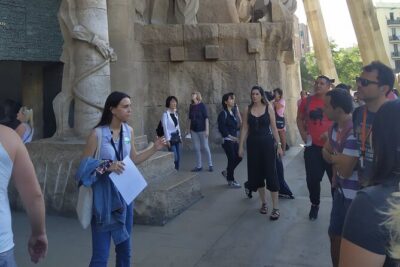
Your start point is C. de Sta. Isabel, 52, Centro, 28012 Madrid, with the tour beginning at 12:45 pm. The instructions say to meet your guide by a statue outside the main entrance, and the whole activity ends back at the meeting point.
Here’s the practical part I’d treat as non-negotiable: arrive early enough to spot the correct statue and confirm you’re with the right group. Some map apps can be annoyingly misleading around large museum complexes, so don’t bet your timing on your phone’s interpretation of the area. Use the meeting directions you’re given and look for the statue reference, not the nearest-looking entry.
Also, this tour includes a mobile ticket, so have it ready on your phone (offline access can save stress if Wi‑Fi gets weird). Once you’re inside, you’ll be using the museum’s rules and access flow as guided.
The 1 Hour 15 Minute Flow: Pace, Seating, and What Gets Cut
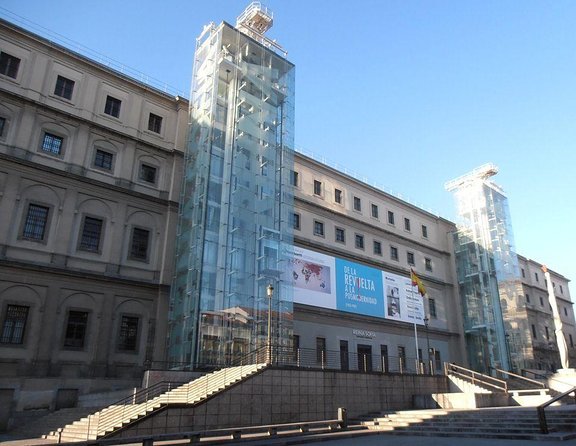
This is a compact museum outing—about 1 hour 15 minutes—and that shapes everything. The guide’s job is to do selective teaching: explain the styles that matter, point you toward a few key works, and help you connect the dots. The good news is it keeps you focused. The tradeoff is that you won’t see everything.
In practice, that means you may walk past more than you stop for. Several visitors have felt the tour can be rushed and cover fewer than they hoped, even with detailed explanation of the pieces you do see. So if you’re a slow museum walker who loves scanning every wall label, you might want to pair this with additional self-guided time afterward.
One more thing to plan for: photography isn’t allowed inside the museum, so bring a notebook habit if you like remembering details. And if you’re carrying bigger bags, the museum’s access rules may mean you’ll need lockers (plan light).
Inside the Museum: A Guided Route Through Modern Art Movements
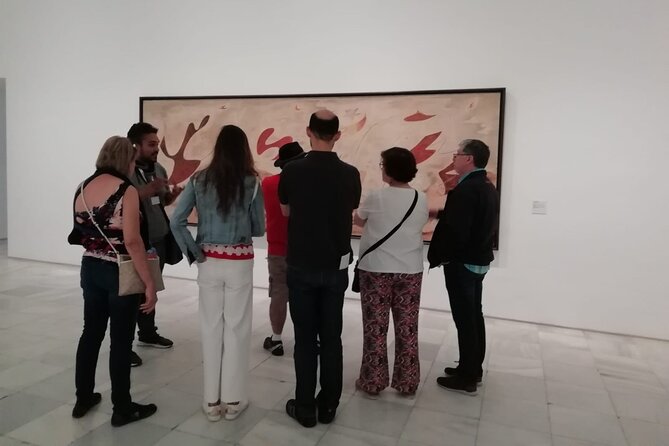
The heart of this tour is turning modern art into something you can follow. The guide walks you through the main artistic currents that shaped the museum’s collection: abstractionism, cubism, surrealism, and modernism. The goal isn’t to turn you into an art critic. It’s to give you the language to interpret what looks unfamiliar at first glance.
You’ll hear how cubism breaks objects into parts and how surrealism leans into dream logic. You’ll also get the “why now” behind these movements—how artists reacted to a changing world. This matters because many famous works can feel random if you don’t know what problem the artist was trying to solve.
A nice bonus from the guide style: some guides are especially good at keeping the explanations simple and understandable, and they’ll often work the group with prompts. If you want the experience to feel conversational rather than like a lecture, this is a good match.
And because temporary exhibitions may be on view during your visit, the tour may also point you to what’s relevant in the museum beyond the permanent collection.
Guernica: The Painting You’ll Be Prepared to Understand
No modern-art visit to Madrid feels complete without seeing Guernica, and this tour is built around it. The standout value isn’t just admiring the image—it’s getting the history and style explained in a way that makes the painting’s impact feel immediate.
Guernica is complex, both visually and emotionally. Cubism’s fractured forms help it feel broken and urgent, while the composition channels shock and grief. A good guide makes you slow down mentally even if you’re still moving physically through the museum. You learn how to connect the artwork’s choices to why it has landed in global consciousness as a symbol far beyond Spain.
If you’re worried you won’t “get” Guernica, don’t. That’s exactly where a focused guided explanation helps. The tour’s structure—ending at the most important moment—means you don’t reach Guernica mid-route feeling scattered and tired.
You can also read our reviews of more museum experiences in Madrid




Picasso, Dalí, Miró: Seeing Spanish Big Names with Context
After you understand the major styles, you’ll connect them to the artists you came for. This tour highlights Spain’s modern-art leaders: Pablo Picasso, Salvador Dalí, and Joan Miró. You’ll also be shown other works beyond just one superstar painting, which helps you see that Spanish modern art isn’t one single vibe.
The guide’s job is to explain not only what the artist made, but what those choices mean inside the broader story of modernism. That’s why you’ll hear movement terms repeatedly and then watch them become visible in brushwork, composition, and subject matter.
From the guidance quality reflected in multiple guide names praised by guests—such as Flor, Gabriela, Borja, Helena, Alicia, Narea, Lisa, and Elena—the strongest pattern is clear: guides who do well with this tour tend to make you understand why the art exists, not just what it is called.
If you’re coming from a visit to the Prado (Spain’s masterclass in old painting), the Reina Sofía can feel like a different planet. A guided primer helps you switch gears without getting lost.
Diego Rivera and the International Thread in a Mostly Spanish World
One detail worth knowing up front: international artists aren’t the main focus. Still, you’ll get pointed attention to notable outside-Spain work, including Diego Rivera.
That matters for your understanding of the museum. Spain’s modern art is deeply tied to Spanish history, but modernism was never just national. Rivera’s presence gives you a reminder that these visual languages traveled and evolved across borders—so your mental map grows beyond Spain-only references.
This tour doesn’t try to be a world museum survey. It’s more like a well-lit hallway route: Spanish modernism first, then a few signals pointing outward so you don’t walk away thinking the movement was isolated.
Temporary Exhibitions and Why You Might Want Extra Time
Even with a guided route, it’s smart to think of this as the “best highlights” version of Reina Sofía, not the entire experience. Temporary exhibitions may be on view, and the guide may reference them as part of the bigger picture.
After the guided portion ends, you can stay longer inside the museum if you want. That’s a big deal because modern museums reward pacing. If this first pass helps you understand what you’re seeing, you’ll likely enjoy your self-guided time more—especially if you decide you want to see one artist again or pause longer in the rooms that surprised you.
I’d treat this tour like a map and a key. You get orientation during the guide time, then you use that to spend your own attention where it actually clicks.
Language, Headsets, and the Audio Reality
The tour is guided in a bilingual format—simultaneously in English and Spanish. In practice, that means you’re hearing two languages at once, and you’ll rely on the headset audio to keep things clear.
That leads to a reality check: audio quality matters. Some visitors have reported sound-system issues, including clarity problems and moments where English was harder to follow through the audio. I can’t predict how your day will sound, but it’s reasonable to plan for it.
If you know you’re sensitive to audio (or you wear hearing aids), arrive a bit early so you’re not rushed while getting situated. Also, if you prefer one language over another, you might find the experience easier with a guide who speaks clearly at a steady pace—several guides have been praised for that direct, understandable delivery.
Price and Value: Is $34.99 Worth It?
At $34.99 per person, you’re paying for three things:
- a professional art historian guide
- admission to the Reina Sofía included
- a structured high-impact route in English-focused bilingual format
You’re not just buying a ticket and strolling. You’re paying for interpretation—someone helps you connect cubism and surrealism to what’s on the wall. For a museum this big, that kind of guidance can save time and reduce the frustration of walking in circles.
This price can feel pricey if you’re expecting a slow, deep tour of dozens of works. But if you want the big hits—especially Guernica, plus key Spanish artists—this is usually a good way to turn limited time into a meaningful visit.
One extra value signal: this tour is commonly booked in advance (often weeks ahead), which suggests demand from people who want a guided hit at a museum where self-navigation can be overwhelming.
Practical Tips: What to Bring (and What to Avoid)
Because the museum doesn’t allow photography inside, use that time to actually look and take quick notes. If you love details, write down 2–3 things you want to revisit during any extra self-guided time after the tour ends.
Keep your bag situation simple. You may need to use lockers for items like large bags, and the museum may restrict drinks inside. Wearing comfortable shoes matters because the experience is a guided walk-through, not a sit-and-watch program.
Finally, don’t treat the meeting time like a suggestion. This tour ends back where it starts, it’s capped at 15 travelers, and it’s designed around a schedule. Being on time keeps the group from losing minutes, which is usually where “rushed” impressions begin.
Who Should Book This Reina Sofía Tour?
This one fits best if you’re:
- a first-timer at Reina Sofía who wants a guided route through modern art styles
- short on time and want Guernica explained clearly
- interested in Spanish modern art with a quick international reference point (Rivera)
- someone who likes questions and stories while you walk
It’s also a smart pick for families, with the note that children must be accompanied by an adult. And with service animals allowed and it being near public transportation, it’s set up to be doable for many visitors.
If you’re the type who wants to read every label, sketch every detail, and linger for an hour in the same room, you’ll probably want to add self-guided time after the tour. Think of the guided part as your ignition, not the whole drive.
Should You Book This Reina Sofía Guided Tour?
Yes, if your goal is a focused, modern-art orientation in a museum famous for works that can feel abstract without context. The strongest reason to book is the way the guide format supports understanding—especially around Guernica and the big movements like cubism and surrealism—while keeping you moving through the building efficiently.
Skip (or plan extra time) if you hate being on a schedule or you need lots of seating and slow pacing. Also, because timed tours rely on meeting point accuracy and clear audio, I’d arrive early and be ready to manage the headset situation calmly.
If you want a single good Madrid museum day with maximum learning per minute, this is a solid bet—particularly if you’re pairing Reina Sofía with other classics later in your trip.
FAQ
How long is the Reina Sofía guided tour?
The tour lasts about 1 hour 15 minutes.
What does the tour cost?
It costs $34.99 per person.
Is admission to the museum included?
Yes. Entrance to the Reina Sofía is included with the tour.
What language is the tour offered in?
The guided visit is offered in English, and the tour is guided in bilingual format with English and Spanish simultaneously.
Where do I meet the guide?
Meet at C. de Sta. Isabel, 52, Centro, 28012 Madrid, Spain. The meeting point is by the statue outside the main entrance.
Are photos allowed inside the museum?
No. Photography is not allowed inside the museum.
Can I cancel for free?
Yes. You can cancel for a full refund if you cancel at least 24 hours before the experience’s start time.