REVIEW · TENERIFE
Tenerife: Guided Historical Bike Tour with E-Bike Option
Book on GetYourGuide →Operated by Guided City Tours by Bike and e-Bike · Bookable on GetYourGuide
Pedal through Santa Cruz’s most memorable blocks. This guided bike tour in Tenerife pairs easy city riding with photo stops and stop-by-stop stories, letting you see far more than you would on foot. You can choose a traditional bike or an e-bike, which makes the experience feel relaxed instead of sweaty.
I like how the route mixes big sights with calmer corners. You roll past places like Parque La Granja, García Sanabria Park, the cruise terminal area, and the Castle of St John the Baptist, then finish at Plaza de España with a leisurely ride through the center.
One thing to plan for: the ride can run a bit shorter than the stated time. If you’re trying to hit a tight next appointment, give yourself a small buffer.
In This Review
- Key points to know before you go
- Meeting at Calle Dr. Allart and picking your bike
- The 2.5-hour city circuit: what the pace feels like
- Stop by stop: Parque La Granja to Plaza de España
- Parque La Granja: a calm start with garden energy
- Plaza de toros: a photo-friendly landmark moment
- Monumento al Capitán Diego Fernández Ortega: local identity on wheels
- The “Nivel” sculpture: public art you can actually frame
- Viewpoint break: take it slow and let the city open up
- Parque García Sanabria: gardens plus city character
- Monument to His Excellency the Head of State: a civic pause
- Terminal de Cruceros de Tenerife: see the port-side reality
- San Francisco Battery and the Castle of St John the Baptist: built to last
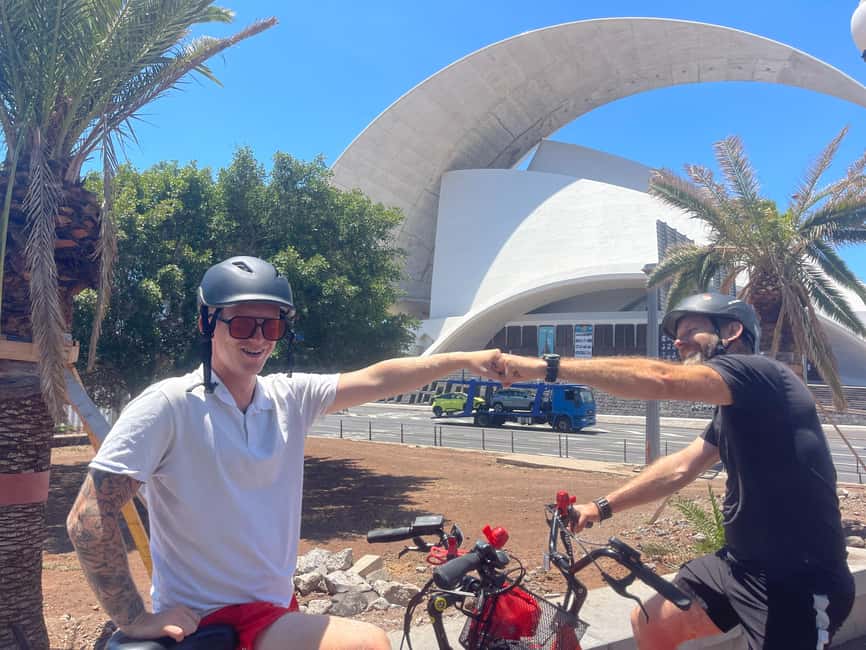
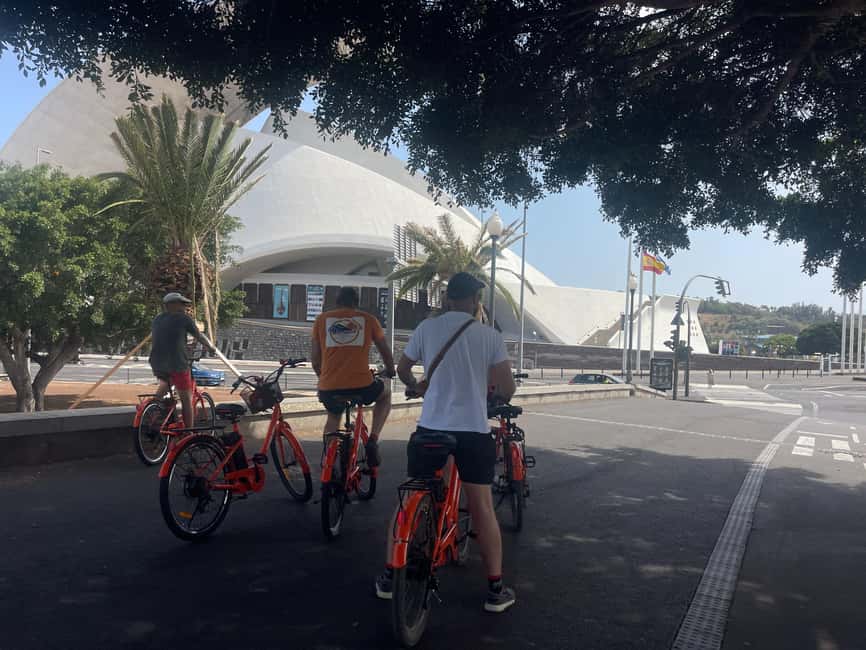
- Auditorio de Tenerife Adán Martín: modern architecture at speed
- A tucked-away stop and Cabildo Insular: small moments, big payoff
- Plaza de la Candelaria and Plaza de España: the center of gravity
- E-bikes vs. traditional bikes: which choice fits your body and your day
- Rain, small groups, and the guide style that makes the difference
- What’s included for the $35 price, and where the value comes from
- What to bring and how to ride smart in Santa Cruz
- Who should book this Tenerife bike tour?
- Should you book this guided historical bike tour in Tenerife?
- FAQ
- Is the tour available with an electric bike?
- How long is the Tenerife guided bike tour?
- Where do I meet the guide?
- What stops will we see during the ride?
- What’s included in the price?
- Is food included?
- Can children join the tour?
Key points to know before you go
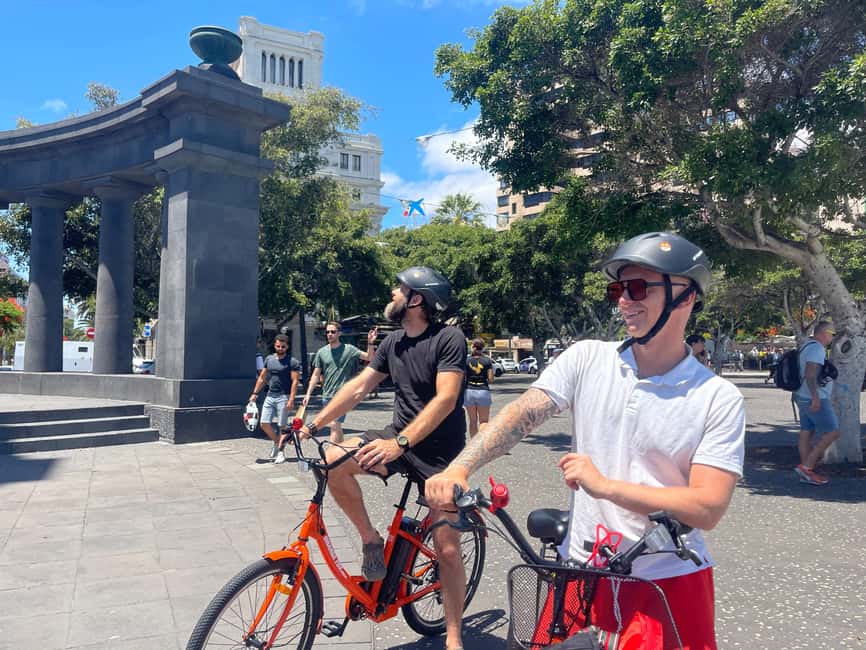
- Bike choice matters: the e-bike option makes a city loop feel effortless, especially if you want energy for sightseeing after.
- Photo stops are real stops: you’re not just rolling through—there are planned pauses for pictures and commentary.
- A classic Santa Cruz mix: parks, public art, an auditorium, the port/cruise terminal area, and major squares.
- Guides can steer the vibe: small-group tours can feel more flexible if you want extra time at certain stops.
- Rain isn’t a deal-breaker: you may get light rain ponchos if weather turns.
- Languages are offered, but timing varies: English is a safe bet, and German availability can be inconsistent on some dates.
Meeting at Calle Dr. Allart and picking your bike
The tour starts at Calle Dr. Allart 17 in Santa Cruz de Tenerife (38003). It’s straightforward to get to if you’re already exploring central Santa Cruz, and the meeting setup is designed for you to get rolling quickly.
When you arrive, you’ll choose your ride: a regular bike or an e-bike. If you’re the type who wants to keep your legs for walking later, I’d lean e-bike. Even in a mostly gentle city circuit, the e-bike takes the edge off traffic-adjacent riding and any light slopes you may hit along the way.
You can also read our reviews of more cycling tours in Tenerife

The 2.5-hour city circuit: what the pace feels like
This is a guided loop that uses short photo stops and “pass by” segments so you can cover a lot of ground without turning it into a workout. The tour is scheduled for about 2.5 hours, but a real-world heads-up is that some departures can be closer to just under that mark. Plan around a 2–2.5 hour window so you’re not stressed.
You’ll be riding in town, so comfort depends on basic biking ability. The best part is the guidance: you’re not navigating streets solo, and you’ll get direction on where to look and when to pause for photos.
Stop by stop: Parque La Granja to Plaza de España
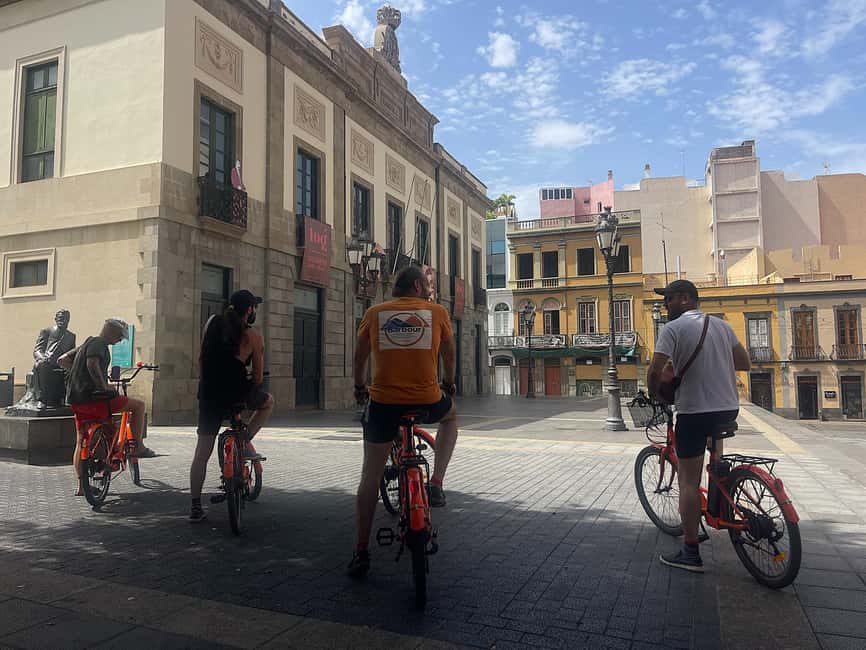
Here’s how the route typically unfolds, and why each stop is worth it. The common thread is that you’re mixing greenery, monuments, architecture, and civic life—so the tour feels like a guided “how Santa Cruz works” map.
Parque La Granja: a calm start with garden energy
Your first major stop is Parque La Granja. Expect it to feel like a breather right after you mount your bike—tree cover, open space, and a setting that’s made for photos.
This is a smart early stop because it helps you get comfortable on the bike while your guide sets the tone. If you’re traveling with kids, this kind of start often makes the whole outing feel smoother.
Plaza de toros: a photo-friendly landmark moment
Next comes Plaza de toros (the bullring area). Even if you’re not into bullfighting, it’s a striking landmark with a clear visual shape that photographers love.
This segment also tends to give you a sense of Santa Cruz’s scale—what the city looks like when you zoom out from side streets into larger, landmark-heavy zones.
You can also read our reviews of more guided tours in Tenerife


Monumento al Capitán Diego Fernández Ortega: local identity on wheels
You’ll stop for photos at the Monumento al Capitán Diego Fernández Ortega. It’s one of those places where the guide’s commentary matters: you’ll learn what the monument represents and why it connects to the city’s identity.
Practical tip: monuments are easy photo targets, but make sure you’re positioned for clean angles—these stops can be short, so don’t wait until the last second to find your best view.
The “Nivel” sculpture: public art you can actually frame
Then you hit the “Nivel” sculpture by Joaquín Rubio Camín. Public art like this is great on a bike tour because it’s built for quick, satisfying photo stops.
If you enjoy architecture and details, this is one of the moments where the city feels thoughtfully designed rather than just scenic.
Viewpoint break: take it slow and let the city open up
There’s also a viewpoint stop with free time. This is your chance to step off the bike rhythm, look around, and reset your eyes before the next section.
What I like about including a viewpoint is that it turns the tour from only “I saw places” into “I understood where these places sit.” Even a few minutes here can make the rest of the route click.
Parque García Sanabria: gardens plus city character
Parque García Sanabria is another highlight, and it’s often where the tour feels most peaceful. It’s a big park stop, so it works for both casual sightseers and travelers who want that greenery-and-walk vibe.
You’ll also get a sense of how Santa Cruz builds rest areas into a working city. If you’ve been stuck indoors on vacation, this park moment is a welcome reset.
Monument to His Excellency the Head of State: a civic pause
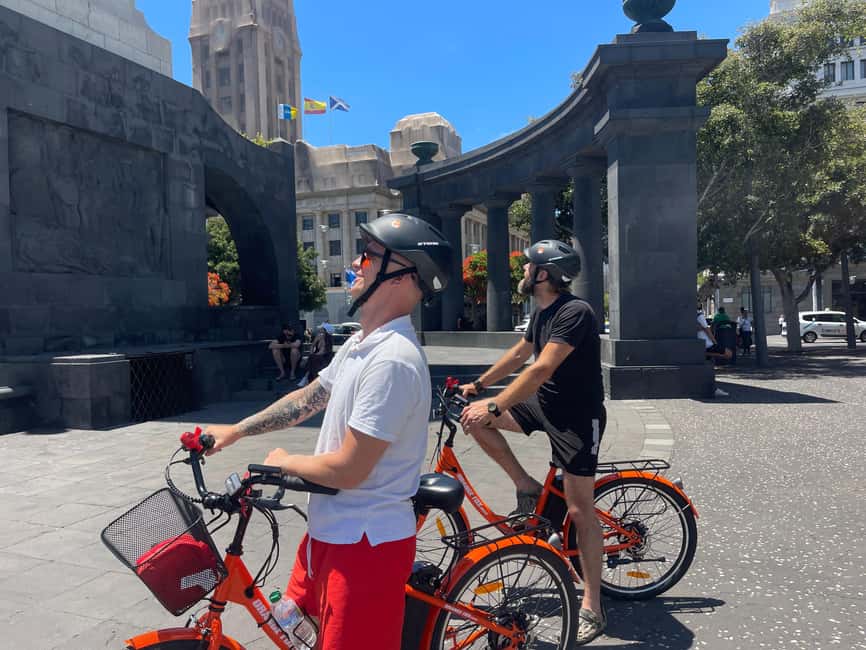
You’ll stop at the Monumento a Su Excelencia el Jefe del Estado. Like the earlier monument, the value is in understanding the person and the civic meaning behind the structure.
This is a good moment for anyone who enjoys how cities mark important figures in public space—especially when you’re already primed by the earlier stops.
Terminal de Cruceros de Tenerife: see the port-side reality
Next is the Terminal de Cruceros de Tenerife area. This is where the tour turns from “garden and landmarks” to “Santa Cruz as a living hub.”
On a bike, you get a different perspective than you would from a bus window or a cruise-shore bus. It’s a practical way to see the city’s rhythm without needing a separate port excursion.
San Francisco Battery and the Castle of St John the Baptist: built to last
The route includes the San Francisco Battery and the Castle of St John the Baptist. The castle stop stands out, and in practice it’s the kind of landmark that makes you slow down—because it’s easy to imagine what the walls guarded.
A review also pointed out the castle as the city’s oldest, which makes this stop extra meaningful if you like older architecture. Even if you’re not a history buff, it’s a strong visual anchor for the tour.
Auditorio de Tenerife Adán Martín: modern architecture at speed
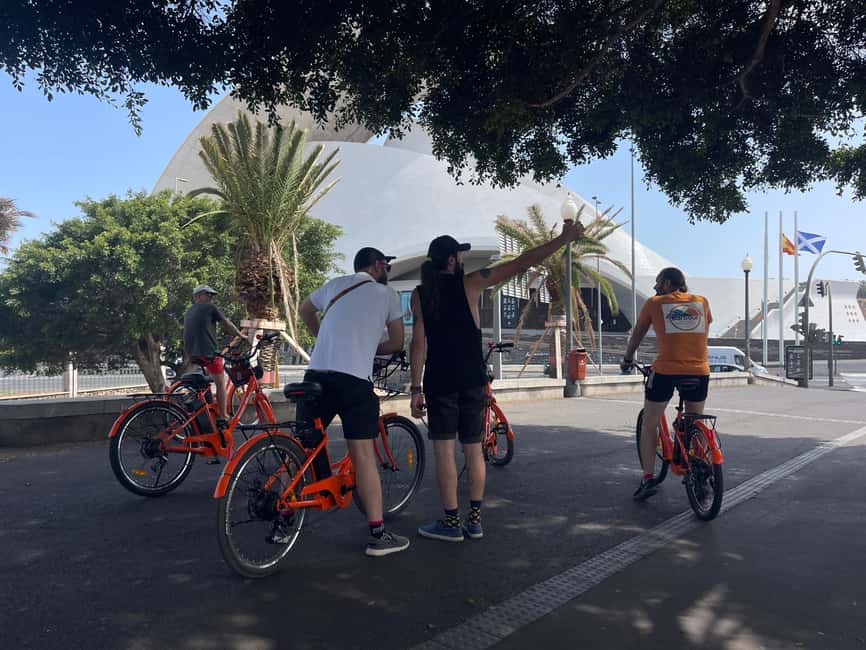
Then you’ll reach the Auditorio de Tenerife Adán Martín. This is one of those places where the guide commentary helps you appreciate the building’s role, not just its looks.
Because it’s a bike tour, you see the auditorium in context—how the surrounding blocks shape movement and views.
A tucked-away stop and Cabildo Insular: small moments, big payoff
There’s also a stop that’s positioned as a surprise/tucked-away moment, plus a photo stop at Cabildo Insular. These are the parts that can feel less famous on a map, but they help the tour feel like you went deeper than the obvious highlights.
If you’re the type who hates “checklist tourism,” this section is where you’ll likely enjoy the payoff most.
Plaza de la Candelaria and Plaza de España: the center of gravity
Finally, you’ll head to Plaza de la Candelaria and then Plaza de España. Plaza de España is where the tour tends to land with a more leisurely feel—perfect for photos and a last look before you head back.
These squares are ideal closing points because they’re easy to orient yourself. Once you’ve been there, it’s easier to return on foot later and keep exploring.
E-bikes vs. traditional bikes: which choice fits your body and your day
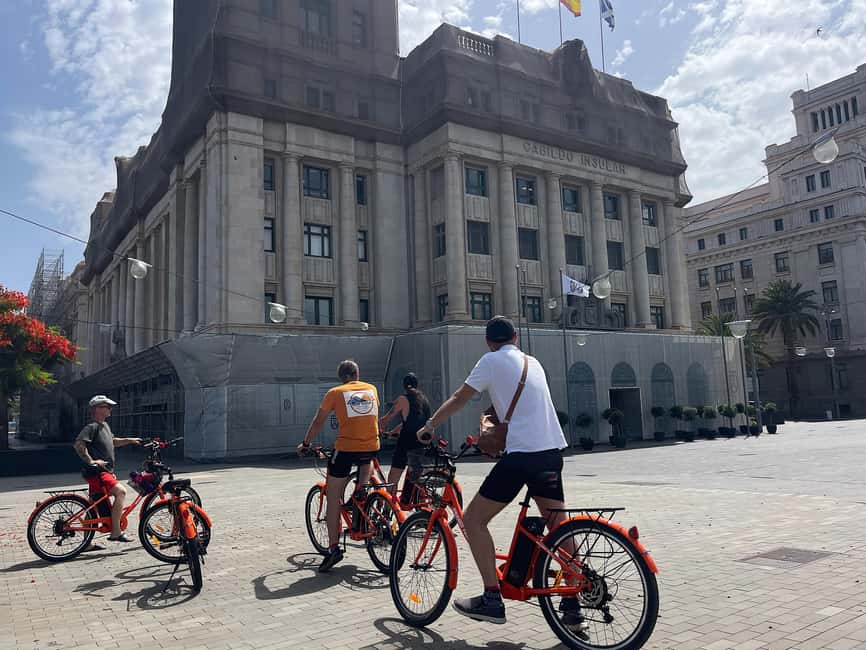
The e-bike option is the big comfort upgrade here. You’ll still ride, but the assist makes a city loop feel controlled instead of demanding. This matters most if you’re:
- not used to biking on roads,
- traveling with kids,
- or you want to enjoy the views without arriving tired.
Traditional bikes are totally fine if you’re comfortable with city riding and want maximum effort-mood. Just remember: even on a guided route, you’re moving with traffic flow, stopping, and starting. Choose what matches your comfort level, not your ego.
One practical caution from past riders: some e-bike setups may not be set up for frequent gear changes. If you’re on an e-bike, follow the bike instructions you’re given and avoid experimenting mid-ride—keep it simple and stable.
Rain, small groups, and the guide style that makes the difference
Santa Cruz weather can change fast, and having a plan for rain is smart. In at least one recent outing, the guide provided light rain ponchos, which helped the tour keep going without turning into a damp disaster.
Group size can also change how the experience feels. Some tours run with small groups, and the guide may adjust the route pacing based on what you want to see. That’s a real advantage in a city bike tour: you’re not stuck with a rigid script.
Language support is solid on paper (Dutch, English, French, German, Italian, Spanish), but one thing you should do is plan around English if you care about being fully understood. German guide availability can vary by date.
What’s included for the $35 price, and where the value comes from
At about $35 per person, this tour is priced like a short, guided city experience. For your money, you get:
- the guided bike tour itself,
- your choice of traditional bike or e-bike,
- planned photo stops,
- history/landmark commentary from the guide,
- and a bottle of water.
Food isn’t included, so you’ll want to eat before or after. The value is that you’re paying for time efficiency plus local interpretation. Two and a half hours by bike beats spending half a day figuring out routes and trying to spot every landmark on your own.
If you’re doing Santa Cruz while also juggling cruise timing or a limited day in town, this format is especially strong: you cover key areas (parks, port-side zone, auditorium, castle, and major plazas) without needing additional transport.
What to bring and how to ride smart in Santa Cruz
Pack for comfort, not just sightseeing. Bring:
- ID card or passport,
- camera,
- sunscreen,
- water,
- comfortable clothes.
Even with e-bikes, you’ll still be in the city, so comfortable shoes matter. If you’re sensitive to weather swings, bring a light layer or a small rain cover.
And one common-sense rule: you’re on a guided bike route, so don’t treat it like a casual selfie walk. Stay aware, follow the guide’s cues, and you’ll get safer photos with less rushing.
Who should book this Tenerife bike tour?
This tour is a good match if you want to see Santa Cruz efficiently and enjoy a guided explanation as you go.
I’d especially recommend it for:
- first-timers to Santa Cruz who want a solid overview without relying on a rental car,
- travelers who like parks and public architecture as much as big attractions,
- families, since children under 6 can ride free on a child seat (with the stated size/weight limits),
- anyone who prefers a calm, guided pace over a DIY scramble.
It’s not a fit if you can’t ride a bike. Also, if your day is packed with tight timing, remember the tour may land closer to about 2 hours on some departures.
Should you book this guided historical bike tour in Tenerife?
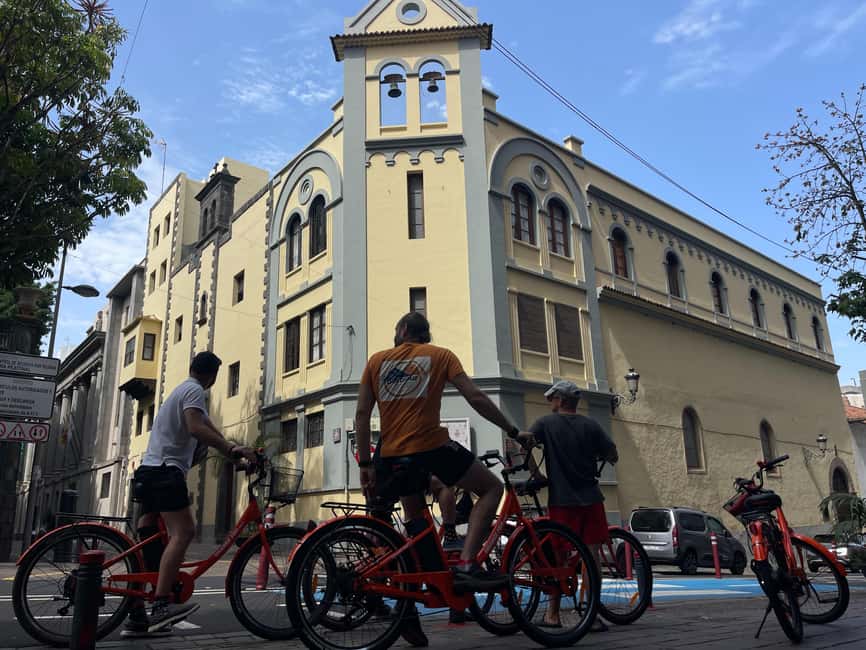
If you’re trying to make the most of a short stop in Santa Cruz, I’d book it. The mix of parks, public art, auditorium, port-side terminal area, and the Castle of St John the Baptist gives you a real “this is the city” feel. Add the e-bike option, and it becomes a low-stress way to get outdoors and see more than a single walking circuit.
The main reason to hesitate is timing uncertainty. If you have a hard appointment right after, leave extra slack. Otherwise, this is one of the more practical ways to experience central Santa Cruz on two wheels, with stops chosen for photos and context.
FAQ
Is the tour available with an electric bike?
Yes. You can choose between a traditional bike and an electric bike when you meet your guide.
How long is the Tenerife guided bike tour?
The duration is 2.5 hours.
Where do I meet the guide?
Meet your guide at Calle Dr. Allart, 17, 38003 Santa Cruz de Tenerife.
What stops will we see during the ride?
The tour includes photo stops at places such as Parque La Granja, Plaza de toros, the Monumento al Capitán Diego Fernández Ortega, Parque García Sanabria, Cabildo Insular, Plaza de la Candelaria, and Plaza de España, plus other notable stops like the cruise terminal area and the Castle of St John the Baptist.
What’s included in the price?
Included are the bike tour with a local guide, choice of traditional or electric bike, photo stops, commentary on history and landmarks, and a bottle of water.
Is food included?
No. Food is not included.
Can children join the tour?
Children under 6 can ride free on a child seat, within the stated limits (max 20 kg and 140 cm). The tour is not suitable for people who can’t ride a bike.